Rose Bertin
“Marie Antoinette's 'Minister of Fashion': the Paris milliner who made the queen's poufs and gowns and became the first celebrity fashion designer.”
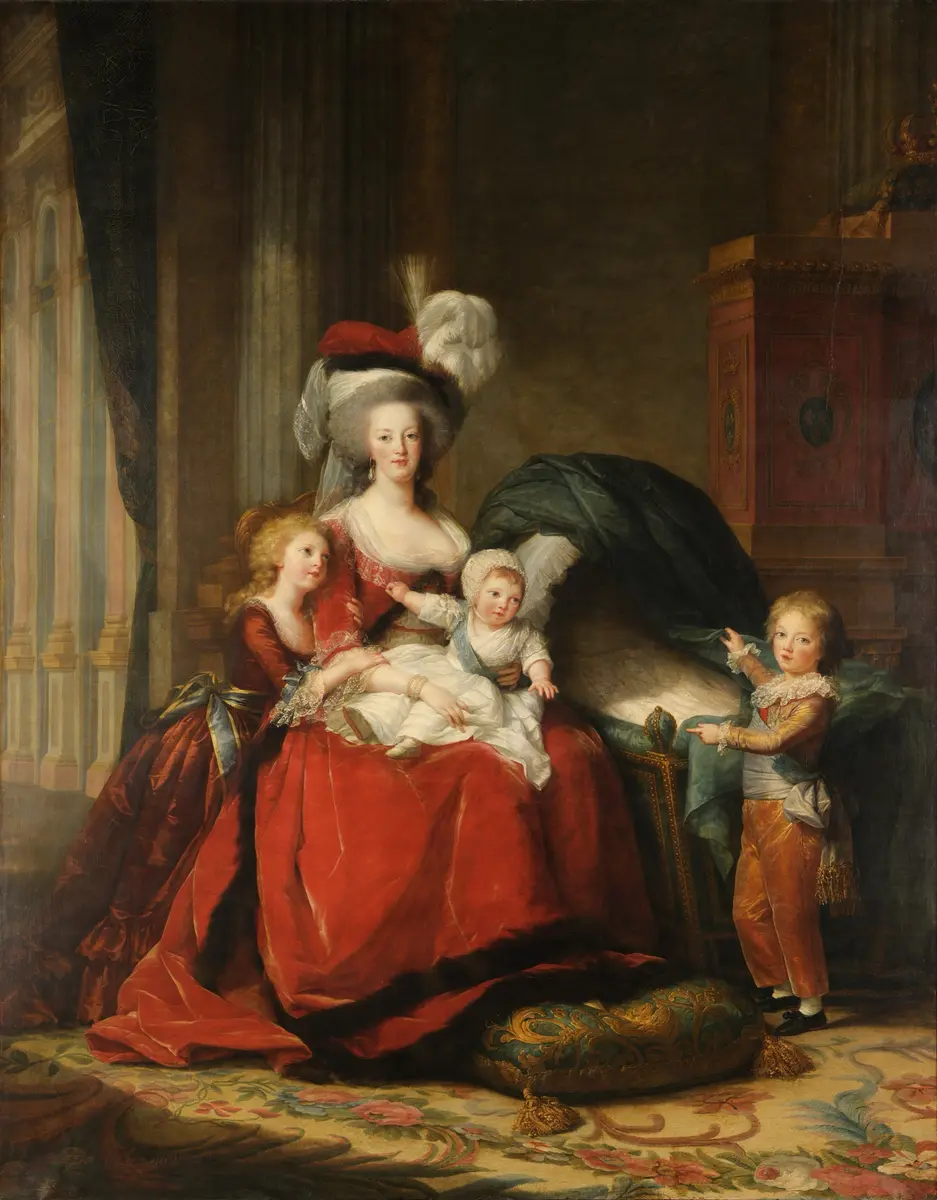
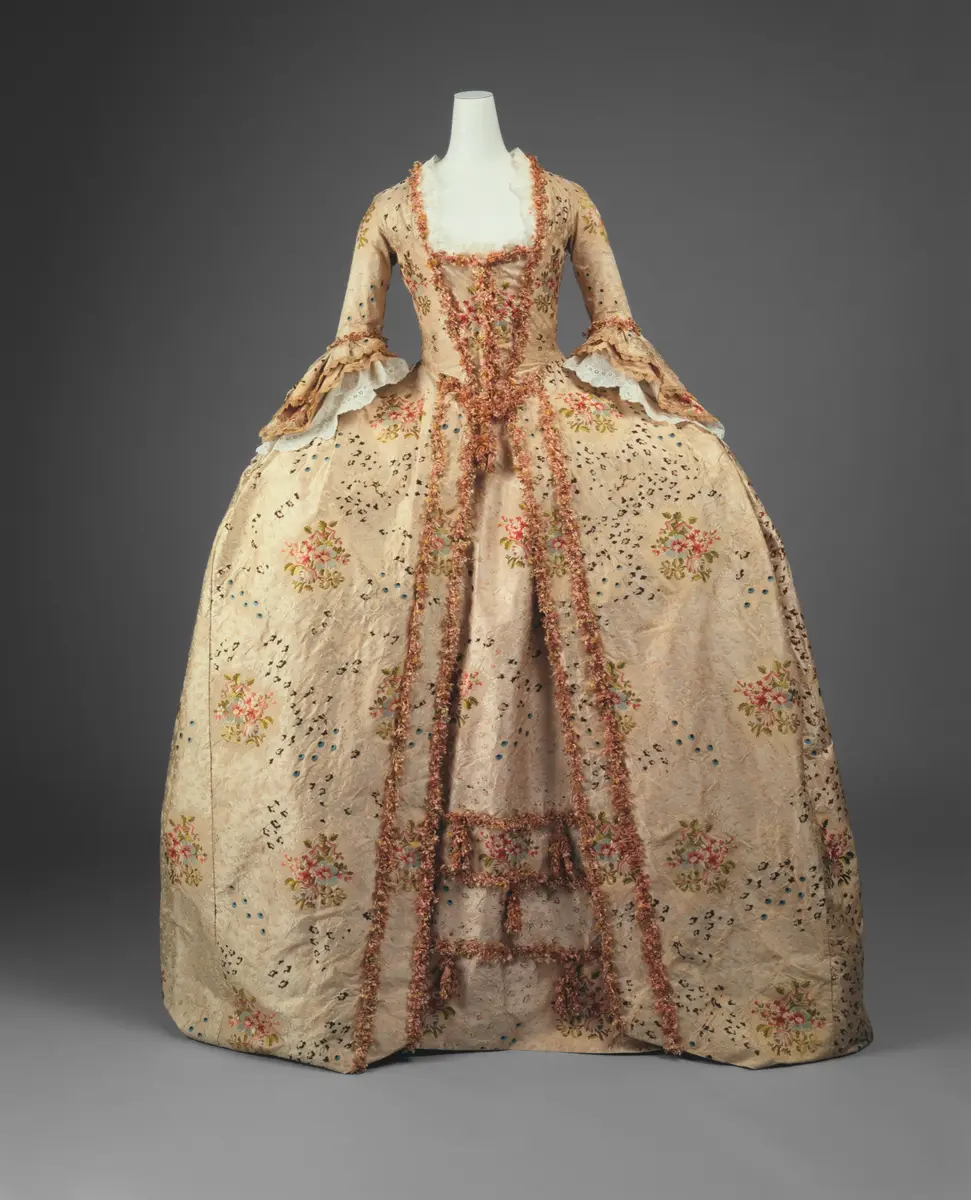
Rose Bertin (Marie-Jeanne Bertin) was the Paris fashion merchant who dressed Queen Marie Antoinette. A marchande de modes did not cut gowns; she trimmed and finished them, and made the headdresses, bonnets, ribbons, lace and artificial flowers that decided what was in fashion. From her shop Au Grand Mogol on the rue Saint-Honoré, Bertin supplied the queen from 1774 until the fall of the monarchy in 1792, as well as much of the court and several foreign royal families. Her critics called her the 'Minister of Fashion', and she is often named the first celebrity fashion designer, an ancestor of Paris haute couture.
She was born at Abbeville in Picardy on 2 July 1747 into a poor family: her father served in the local constabulary and her mother worked as a nurse. As a teenager she went to Paris and worked for the milliner Mademoiselle Pagelle at the shop called Le Trait Galant. Great ladies such as the Princesse de Conti and the Duchesse de Chartres took her up, and with the duchess's backing she set up on her own: she was selling under her own name by late 1772 and opened Au Grand Mogol in 1773. Presented to the new queen in 1774, she made her robes for the coronation of 1775 and was received by her in private to plan new outfits, against the old etiquette of the court. When Paris reorganised its trade guilds in 1776, she was chosen as the first head of the new guild of fashion merchants.
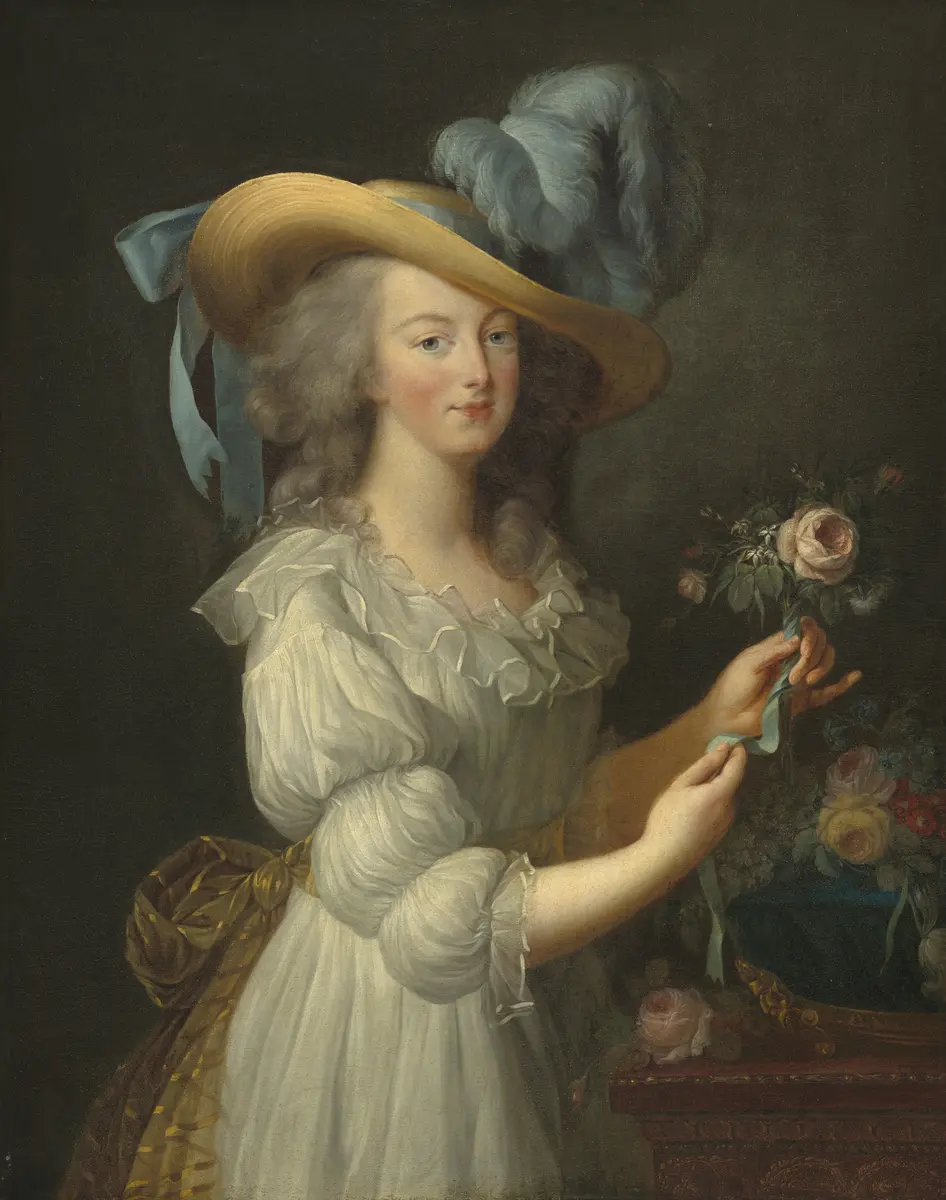
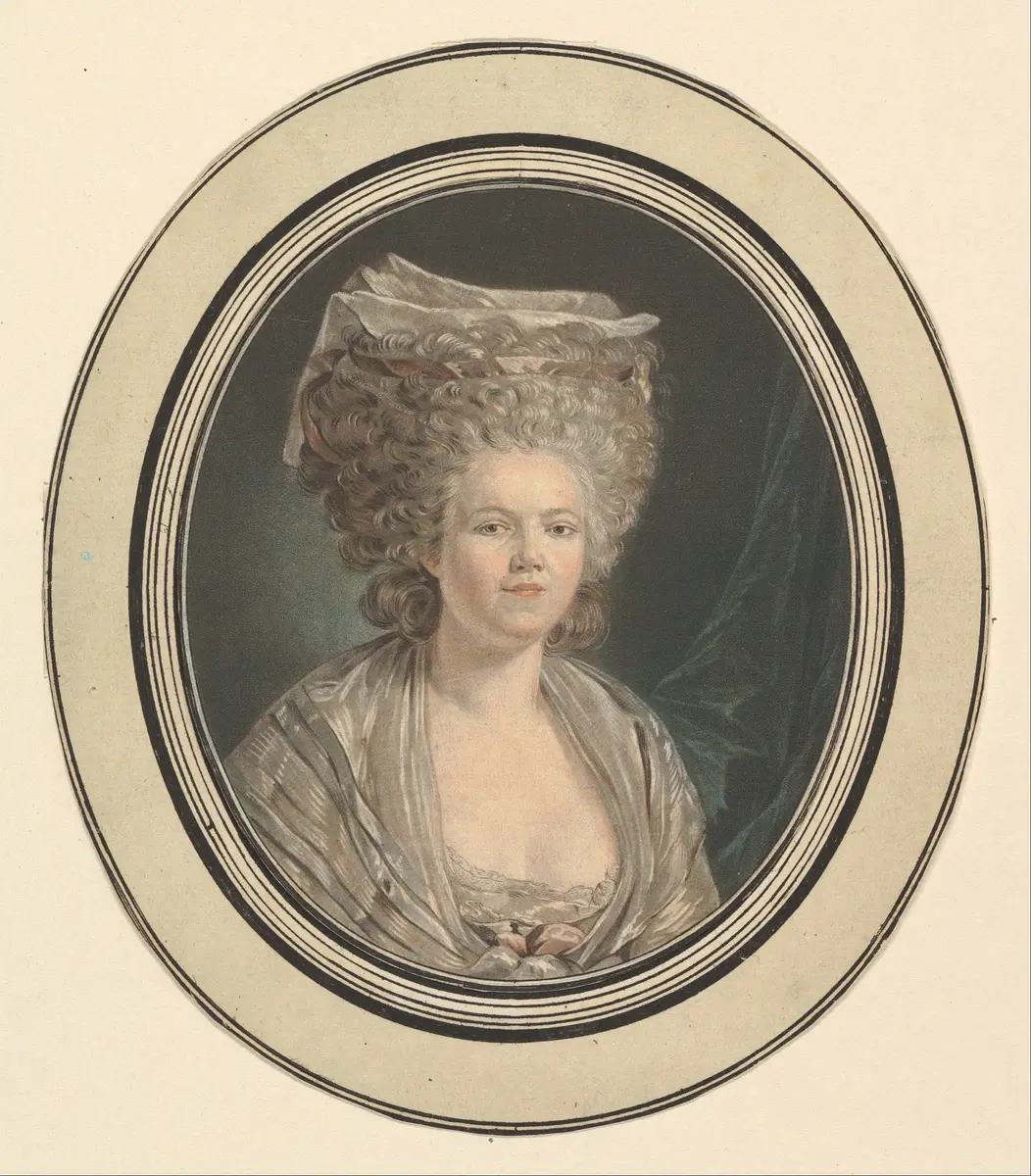
Her name is tied to the extravagant styles of the 1770s and 1780s: towering 'poufs' of hair, gauze and feathers that could carry a model ship or a scene from the news, lavish court gowns, and later the plain white muslin dresses the queen wore at the Trianon. Bertin was famously proud, and her prices and the queen's spending made both of them targets: pamphlets called her a corrupt merchant of luxury. In January 1787 Paris gossiped that she had gone bankrupt, which her biographer could find no record of. In 1789 she moved her business to 26 rue de Richelieu, near the Palais-Royal.
The Revolution ruined her trade. She kept serving the queen through 1791 and 1792, and the bills for those last months were never paid; the clothes Marie Antoinette wore when she was taken to the Conciergerie in 1793 came from Bertin's shop. Business trips to Koblenz, Frankfurt and London, where the exiled nobility now lived, put her name on the list of émigrés, from which she was struck off in January 1795. She reopened in Paris, but fashion had moved on, and her nephews took over the shop. She spent her last years in her country house at Épinay-sur-Seine and died there on 22 September 1813. Her heirs then spent years chasing 1,170 customers who still owed her money, and those unpaid bills are today one of the best records of what fashionable Europe bought in the late eighteenth century.
What happened
- 1747
Marie-Jeanne Bertin is born at Abbeville in Picardy, in the parish of Saint-Gilles, into a family of small means: her father serves in the local constabulary and her mother works as a nurse.
Church of Saint-Gilles, Abbeville: she was born in this parish on 2 July 1747, and her birth is entered in its register- 1754
Her father, Nicolas Bertin, dies, leaving her mother to raise the children.
- 1763
At about sixteen she takes the coach to Paris and finds work with the fashionable milliner Mademoiselle Pagelle at the shop Le Trait Galant, which supplies the courts of France and Spain. Orders from great ladies, first the Princesse de Conti, then the Duchesse de Chartres and the Princesse de Lamballe, make her name.
- 1772
The first orders under her own name appear in her surviving credit records, set up with the backing of the Duchesse de Chartres.
- 1773
Her shop Au Grand Mogol opens on the rue Saint-Honoré, the great shopping street of Paris, a few minutes from the Palais-Royal and the Tuileries. Her workshops turn out bonnets 'à la Chartres', named in thanks to her patroness.
Rue Saint-Honoré, Paris: her shop Au Grand Mogol stood on this street from 1773 to 1789, a few minutes' walk from the Palais-Royal and the Tuileries - 1774
Louis XV dies in May and Marie Antoinette becomes queen. Bertin is presented to her and becomes her favourite fashion merchant: the queen receives her in private to plan new outfits, against the old rules of court dress. Bertin now signs herself Mademoiselle Bertin, milliner to the queen.
Palace of Versailles: she met the queen here in private to plan her clothes, from 1774 until the court left in October 1789In the season of the new reign Paris dances in the fashions she sells: tall dressed hair, flowered silks and wide skirts.
- 1775
Louis XVI is crowned in Reims cathedral; the queen watches from a gallery in the robes Bertin has designed for her.
- 1776
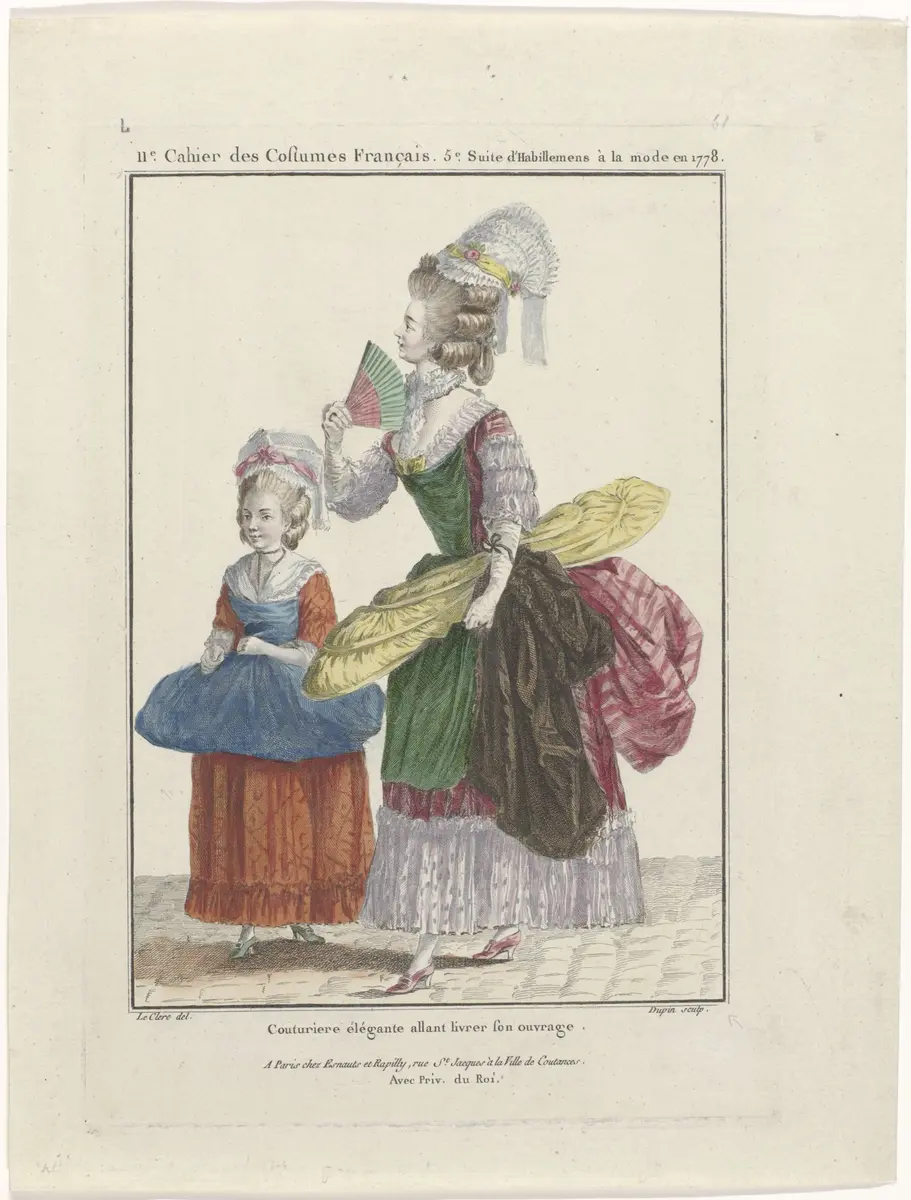
The poufs are at their height: towers of hair, pads, gauze and feathers that milliners such as Bertin build and trim, some covered with a veil of transparent gauze.
After the royal edict of August 1776 rebuilds the Paris guilds, admitting women as masters, Bertin takes office as the first head of the new guild of fashion merchants, feather-dealers and florists, for a year.
- 1778
Paris celebrates the frigate La Belle Poule, which fought an English ship on 17 June as France entered the American war, with a pouf carrying a model of the ship: the kind of headdress on the news that made the milliners' fortune.
The new fashion plates of the Gallerie des Modes show the queen in grand court dress of cherry satin, with flounces of lace and a long train.
- 1782
Bertin buys a country house at Épinay-sur-Seine, north of Paris, on the rue du Bord de l'Eau, selling her earlier house at Cires-lès-Mello. At Versailles the queen's lady of the wardrobe keeps a book of fabric samples for the year's gowns.
Épinay-sur-Seine, north of Paris: her country house from 1782, her home in her last years, and where she died on 22 September 1813 - 1787
Paris has been saying all month that Bertin is bankrupt, for two million livres. The Mémoires secrets report that on this Sunday she went to Versailles and was not admitted to the queen. No bankruptcy papers for her survive, and some contemporaries thought she spread the rumour herself to make the court pay its debts.
Palace of Versailles: she met the queen here in private to plan her clothes, from 1774 until the court left in October 1789- 1789
She moves her business a short distance to 26 rue de Richelieu, by the Palais-Royal.
26 rue de Richelieu, Paris (called the rue de la Loi from 1793 to 1806): her shop and house from 1789, later run by her nephew - 1791
The queen receives no new dresses from her for three months: Bertin is in Germany, at Koblenz, where the émigré nobles hold court, and her presence is noted among them. She returns to Paris for the winter.
- 1792
She leaves Paris on business with a passport; in August and September she sends money back to her shop from Frankfurt.
The monarchy falls and the royal family is taken to the Temple. The queen's account with Bertin from 1 January 1791 to this day, 36,462 livres with the children's and Madame Élisabeth's, is never paid.
Her absence has put her name on the list of émigrés; a decree rules that she keeps her civil rights, and she spends the winter in Paris.
- 1793
Her agent Martincourt writes that she has left him in charge of her affairs and is now in London, where she sells to the exiled nobility.
- 1795
A decree of the Committee of Legislation strikes her name from the list of émigrés for good, and she returns to France from London. Towards the end of the year she reopens her shop in the rue de la Loi (the renamed rue de Richelieu), but she never regains her old fame.
- 1798
In the night a gang sacks the fashionable ice-cream shop of the Neapolitan Garchi, her tenant in the house on the rue de la Loi, killing people inside.
- 1803
Her nephew Louis-Nicolas Bertin takes over the shop, though she still oversees much of the business and spends more and more of her time at Épinay.
- 1813
- 9:00 a.m.
Rose Bertin dies at nine in the morning at her house at Épinay-sur-Seine, aged 66; her nephews Louis-Nicolas and Claude-Charlemagne Bertin register the death that afternoon.
Épinay-sur-Seine, north of Paris: her country house from 1782, her home in her last years, and where she died on 22 September 1813