The Galerie des Modes
“From 1778 to 1787 two Paris print-sellers issued the Galerie des Modes: hand-coloured plates of the newest hair and dress, drawn from life, the finest fashion record of Marie Antoinette's Paris.”
The Galerie des Modes et Costumes Français was a series of prints of the latest Paris fashions, published from 1778 to 1787 by two print-sellers, Jacques Esnauts and Michel Rapilly, at their shop 'à la Ville de Coutances' in the rue Saint-Jacques, a street of print-sellers. The plates came out at irregular intervals in sets of six called cahiers, which customers could buy in the shop or receive by subscription, either hand-coloured or plain to colour at home. The title page promised costumes 'drawn from life', engraved 'by the most celebrated artists' and coloured 'with the greatest care by Madame Le Beau'.
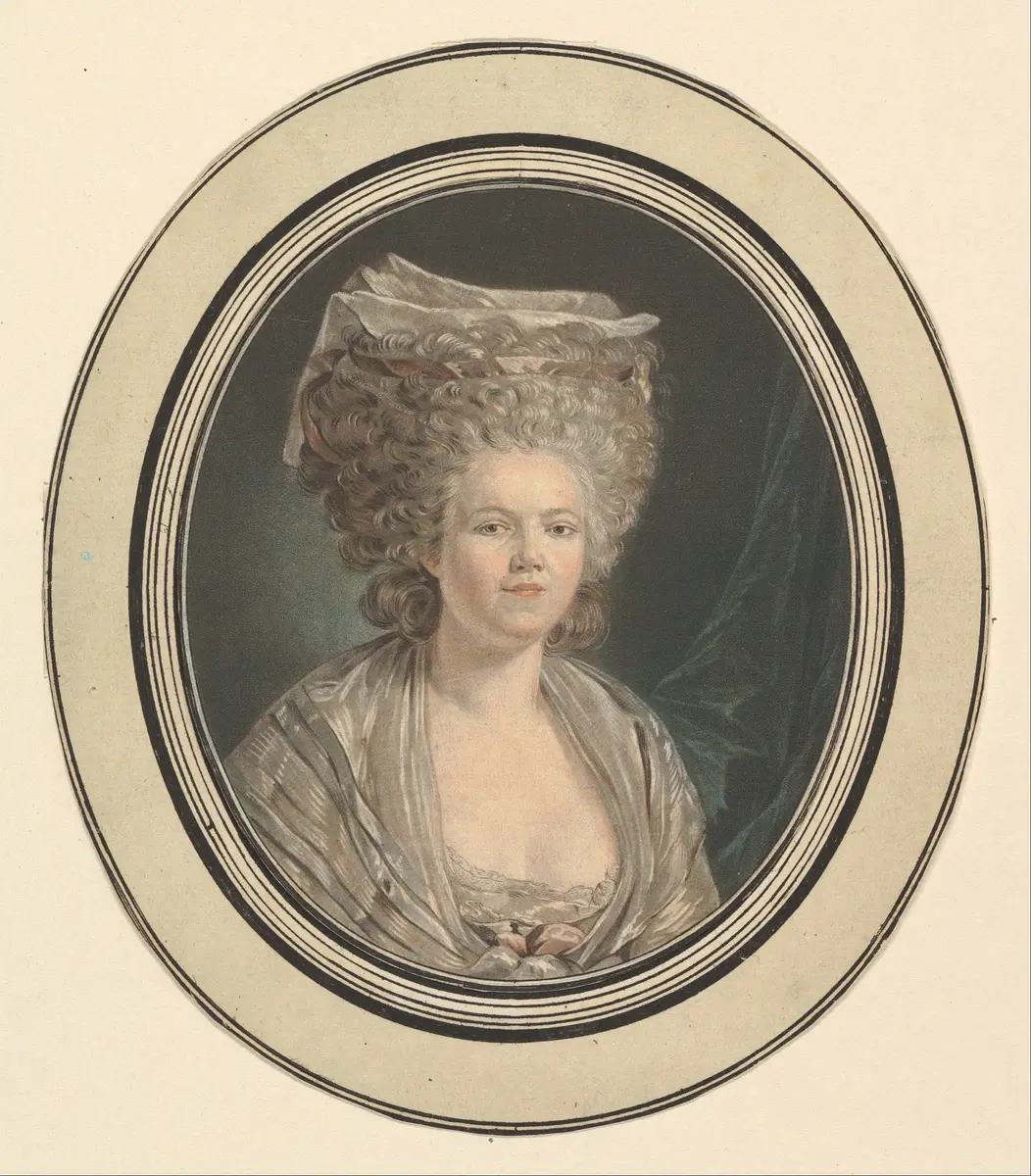
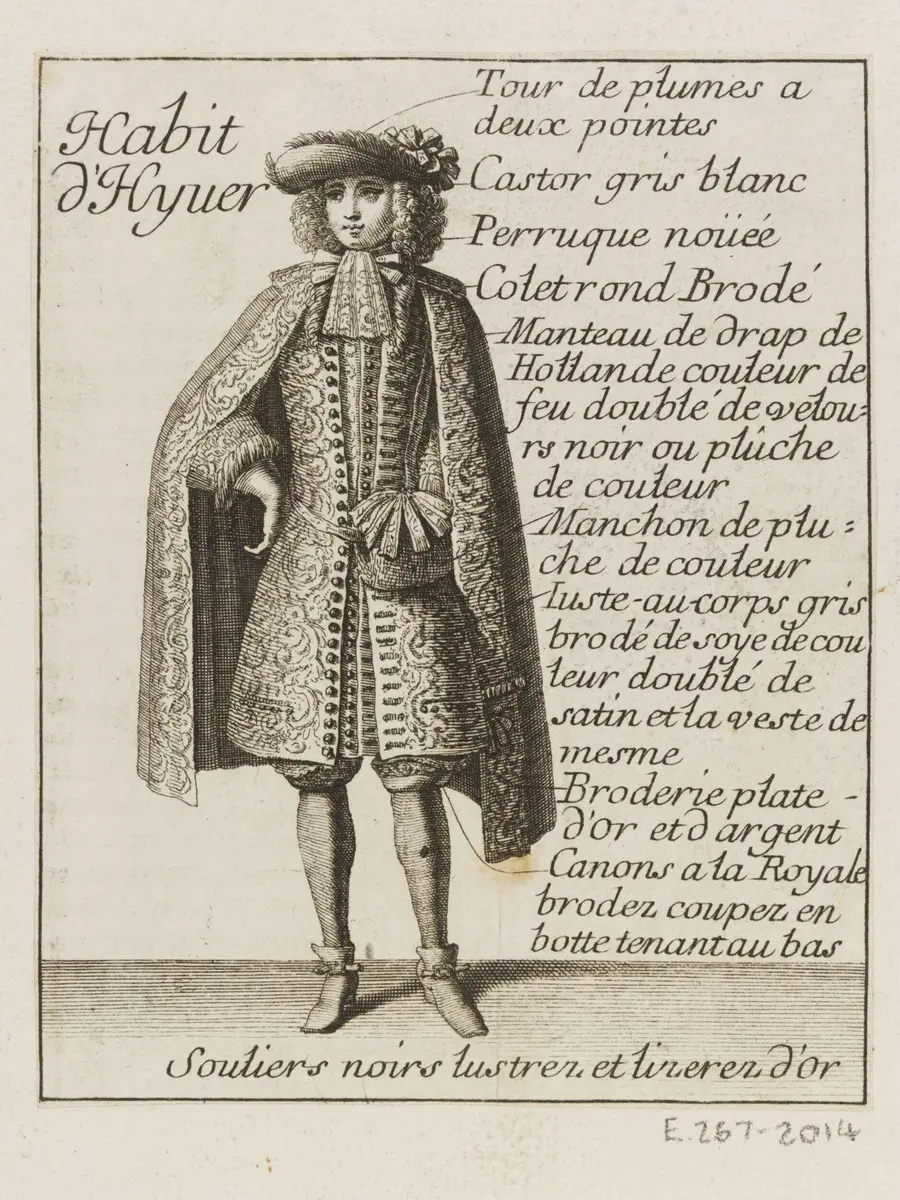
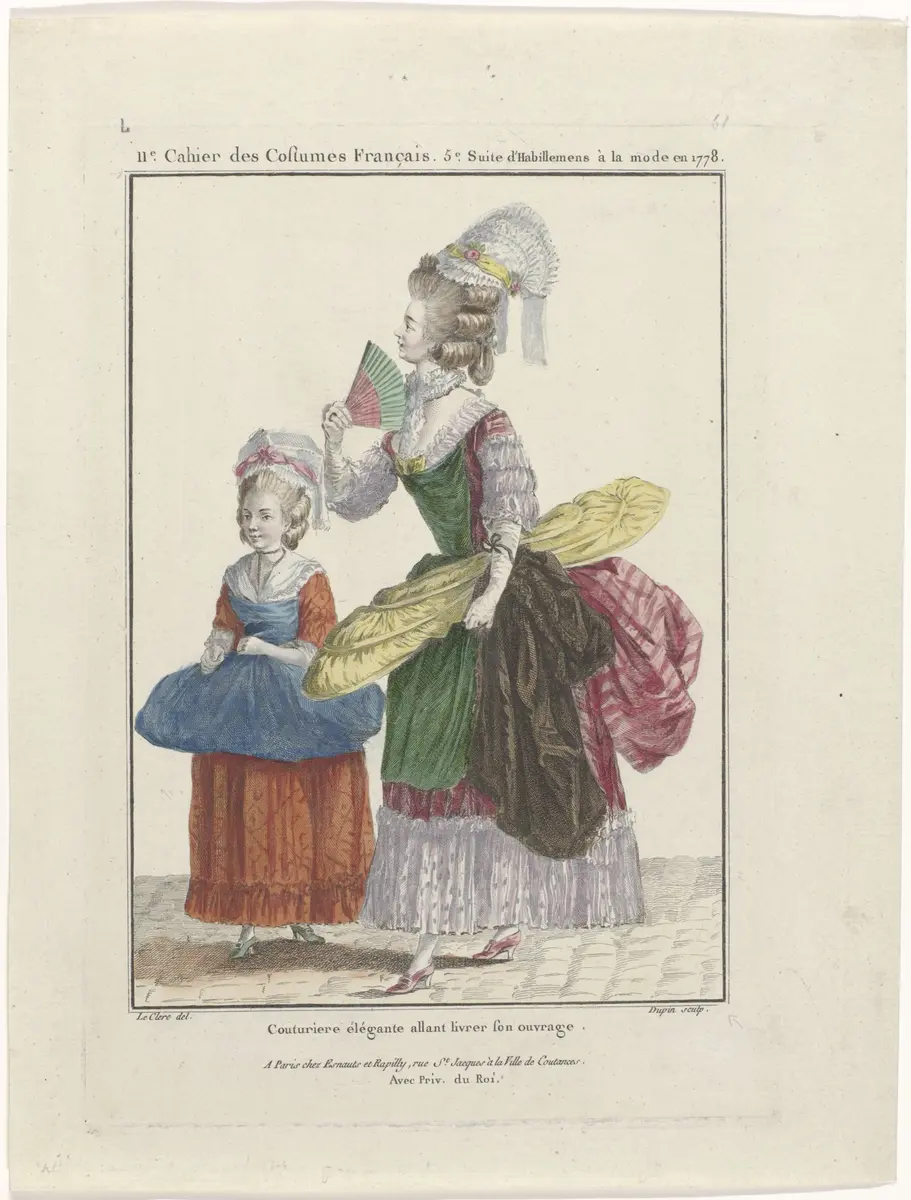
The first cahiers showed only hair, four heads to a plate, at the height of the towering pouf: curls built up over cushions and decorated with feathers, ribbons, flowers and, in one plate, a model frigate. From the seventh cahier the plates showed whole figures, head to toe, each with a caption naming the gown, its trimming and the hat. They were not all ladies of the court. A seamstress delivers her work, a cook just arrived from the provinces copies Paris airs, a tailor fits a young woman's stays, and there are abbés, officers, children and the king himself in cherry-red velvet. Most drawings came from Pierre-Thomas Le Clerc, Claude-Louis Desrais and François-Louis-Joseph Watteau, and were engraved by Nicolas Dupin, Étienne-Claude Voysard and others.
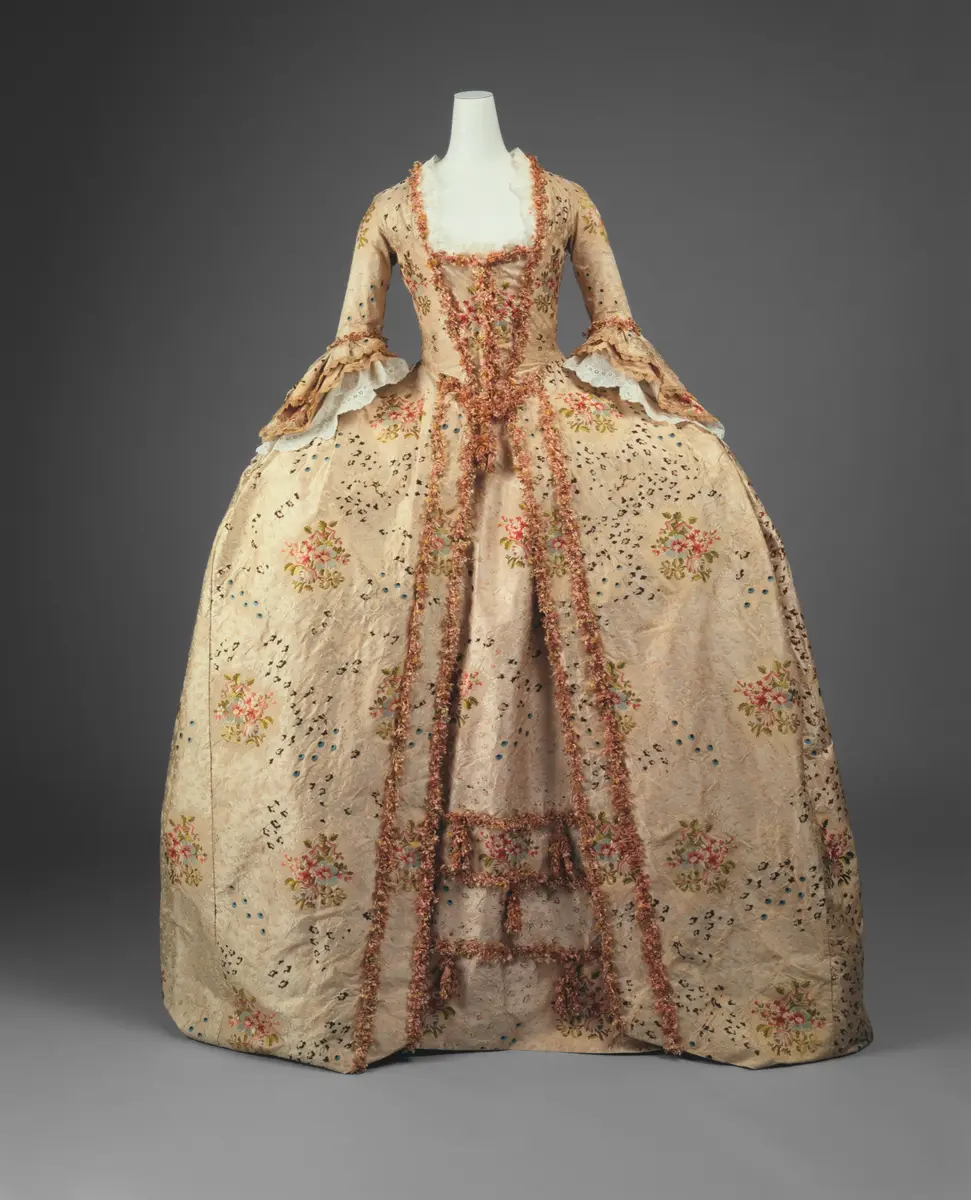
Followed plate by plate, the series is a diary of changing taste: the robe à la polonaise with its looped-up skirts, the loose lévite, a plain white muslin gown in 1781, the fitted English robe à l'anglaise, and in 1784 a 'half-balloon' hat after the first balloon flights. The plates sold well enough to be pirated: in 1778 André Basset, a few doors up the same street, issued illegal copies, and smaller copies were still circulating around 1785. In 1787, the last year, Augustin de Saint-Aubin drew a set of formal court robes over wide panniers; by then the plate numbers had passed 400, in more than sixty cahiers.
The Galerie was not yet a magazine: it had no fixed dates and no pages of news. That step came on 15 November 1785 with the Cabinet des Modes, which appeared regularly by subscription. But the Galerie is the finest record of what fashionable Paris wore in the years before the Revolution, which it did not outlive. Many plates were later lost, and no complete set is known; parts of it are kept in the Bibliothèque nationale de France, the Metropolitan Museum, the Rijksmuseum and the V&A. In 1911–12 the Paris publisher Émile Lévy reissued 325 plates in colour, with a preface by the librarian Paul Cornu, and many pictures of the series seen today come from that reprint.
What happened
- 1778
From their shop 'à la Ville de Coutances' in the rue Saint-Jacques, the print-sellers Jacques Esnauts and Michel Rapilly launch the Gallerie des Modes et Costumes Français, sold in cahiers of six plates, coloured or plain, in the shop or by subscription. The first cahiers show only hair, four heads to a plate, under the heading 'French hairstyles since 1776'.
Rue Saint-Jacques, Paris: the print-sellers' street, where Esnauts and Rapilly sold the Galerie 'à la Ville de Coutances' (from 1787 lettered No. 259) and André Basset sold his copies at the corner of the rue des MathurinsThe sixth cahier of hairstyles shows the pouf at its height: 'a new hairstyle called the frigate Junon', a model sailing ship riding on piled-up curls, beside a 'hedgehog' of feathers, flowers and ribbons.
With the seventh cahier the plates show whole figures from head to toe: the first suite of women's dress opens with a young lady in a robe à la polonaise of painted cotton, reading a letter.
The plates go beyond the court: the eleventh cahier, 'fashionable dress in 1778', shows a seamstress in a polonaise and pinned apron delivering her work, and others show a cook just up from the provinces and a tailor fitting a pair of stays.
The fourteenth cahier, marked 'first cahier for the first volume', shows Louis XVI as 'a just and benevolent monarch' in cherry-red velvet embroidered with gold spangles.
Palace of Versailles: the court whose dress the plates recorded, from the king in velvet to the great court robes of 1787André Basset, a print-seller at the corner of the rue Saint-Jacques and the rue des Mathurins, sells illegal copies of the Galerie's plates, among them the Comtesse d'Artois in court dress after Desrais.
Rue Saint-Jacques, Paris: the print-sellers' street, where Esnauts and Rapilly sold the Galerie 'à la Ville de Coutances' (from 1787 lettered No. 259) and André Basset sold his copies at the corner of the rue des Mathurins- 1779
The 22nd cahier ('fashionable dress in 1779') brings the stage into the series: the costume of an infernal goddess, invented by P. N. Sarrazin, costumier to the king's brothers.
- 1781
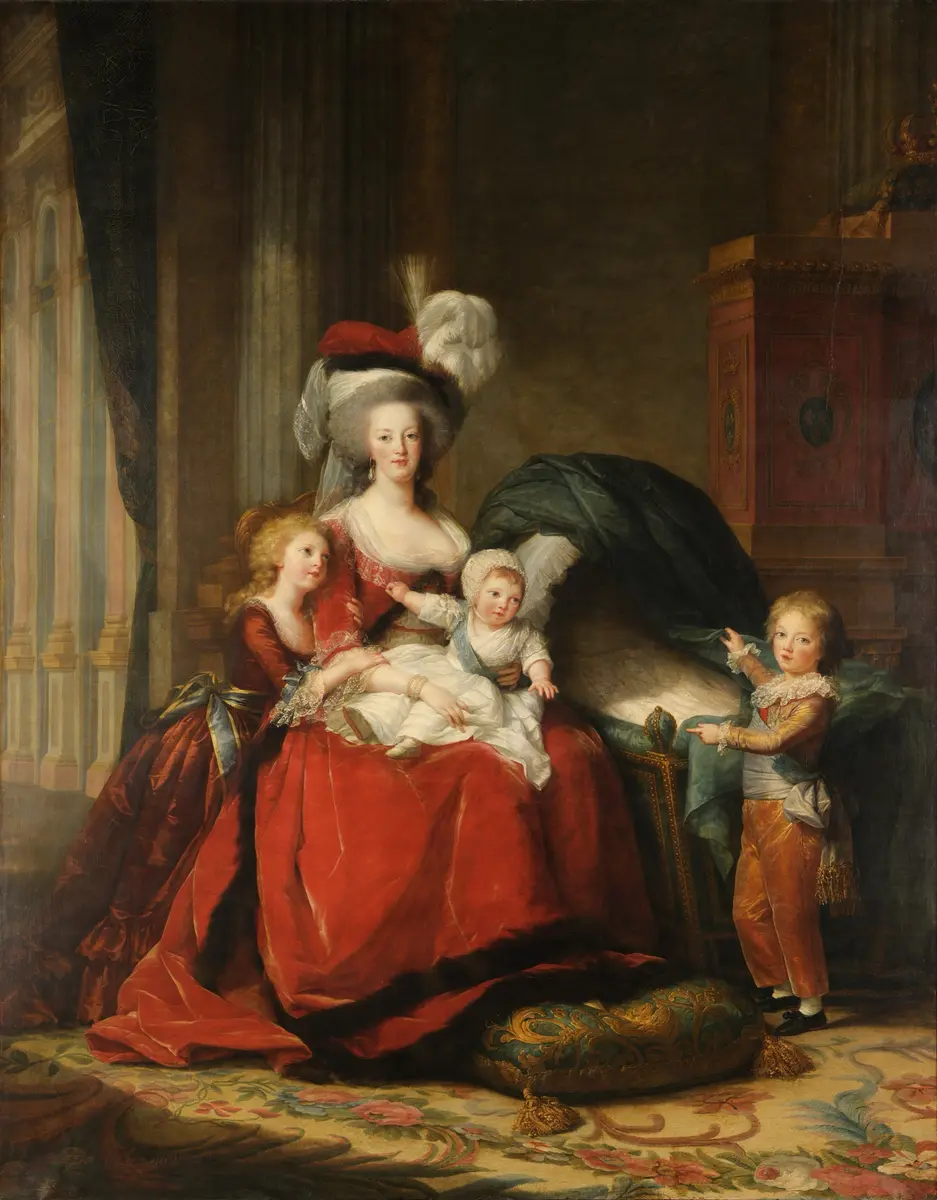
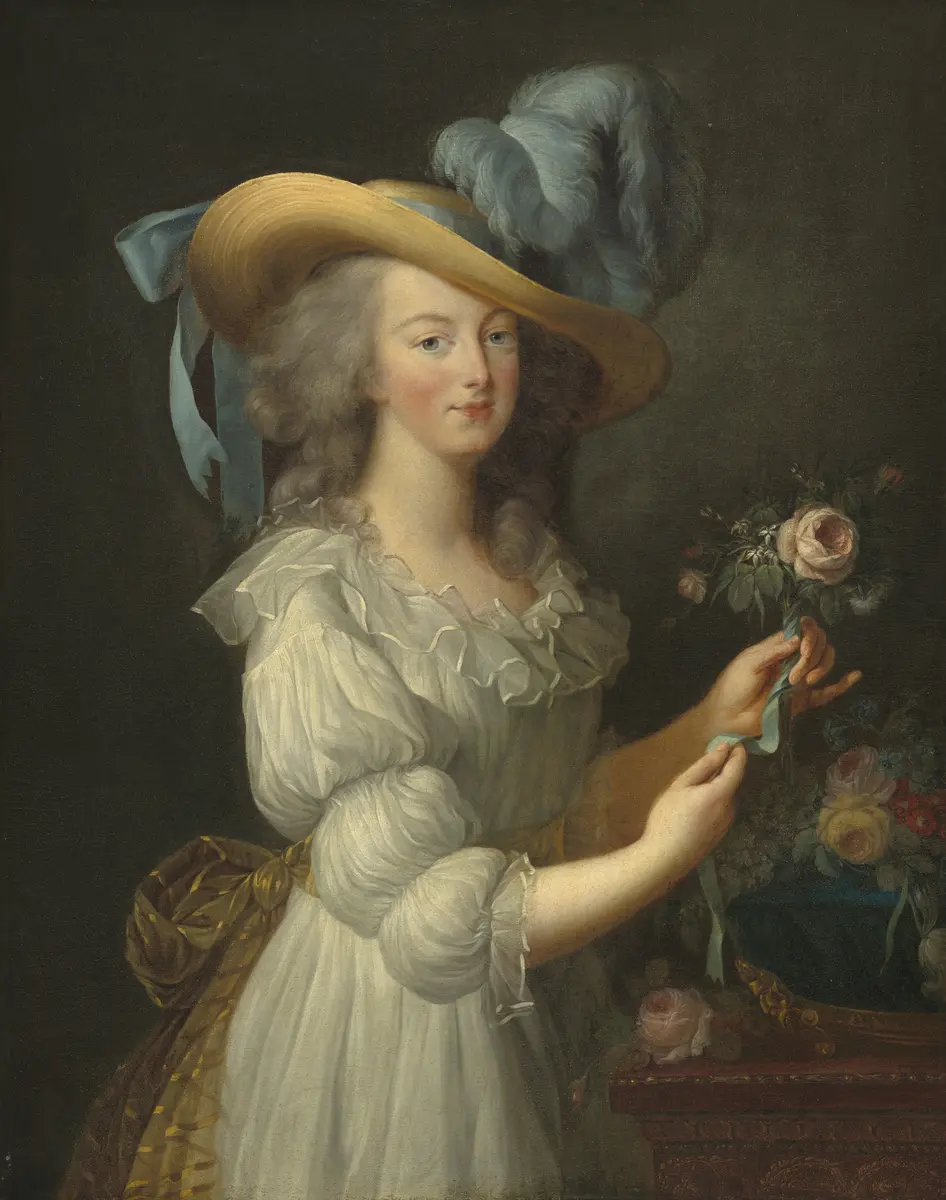
The 35th cahier shows a plain white muslin gown over a petticoat of striped Indian muslin, a lighter fashion two years before Vigée Le Brun painted the queen in a muslin chemise.
The 36th cahier, the first for a third volume, shows the Comte d'Artois's three children with their governesses and a duchess of the queen's household in court dress over the great pannier.
The 37th cahier records the etiquette of 'grand deuil de cour', full court mourning: black from head to foot, woollen stockings, and crape on hat and sword.
- 1782
The 40th cahier shows the robe à l'anglaise, the fitted English gown, seen from the back; English fashions grow more frequent in the plates from now on.
- 1784
In the 44th cahier, after the Montgolfiers' balloon flights of 1783, 'La Virtuose sensible' plays the harpsichord in a robe à l'anglaise and a 'chapeau au demi-ballon', a half-balloon hat.
- 1785
Smaller copies of the early plates circulate, lettered only 'A Paris chez l'Auteur', perhaps engraved by Pierre Gleich: the series is still in demand seven years on.
A rival appears: the Cabinet des Modes, the first real fashion magazine, published on a regular schedule by subscription with three hand-coloured plates in each eight-page issue.
- 1787
In the series' last year Augustin de Saint-Aubin draws cahiers of 'great court robes of etiquette', panniered gowns garlanded with oak leaves; the shop's address now carries its number, 259.
Palace of Versailles: the court whose dress the plates recorded, from the king in velvet to the great court robes of 1787Watteau's plates of the last cahiers show the fashionable town: a young lady of the Palais-Royal in a 'robe à la Musulmane', and a young Englishwoman 'wanting to make her fortune in Paris by taking up French fashions', plate 401 of the 62nd cahier.
Palais-Royal, Paris: the garden and arcades where Paris showed and bought its fashions, named in the Galerie's plates of 1787