Cortés begins the conquest of the Aztecs
“Between 1519 and 13 August 1521 Cortés, a few hundred Spaniards, tens of thousands of native allies and smallpox brought down Tenochtitlan and the Aztec Empire.”
In February 1519 Hernán Cortés, a Spanish settler in Cuba, sailed for the coast of Mexico with eleven ships, some 500 soldiers, 100 sailors and 16 horses, against the wishes of the governor who had first appointed him. In Tabasco he was given twenty enslaved women; one of them, Malintzin, baptised Marina and later called La Malinche, spoke Maya and Nahuatl, soon learned Spanish, and became the voice through which the whole conquest was negotiated. On the coast near Veracruz he had his men found a town and elect him their captain, which made him answer to the king alone, sank his ships so that no one could turn back, and marched inland with the Totonacs of Cempoala as his first allies.
The Tlaxcalans, an independent people long at war with the Mexica, fought him in September and then joined him; at Cholula in October his men and their new allies killed thousands of unarmed townspeople. On 8 November 1519 Moctezuma II came out with the lords of the Triple Alliance and received him in Tenochtitlan with great ceremony, a welcome the historian Matthew Restall calls a magisterial reception, not a surrender. The Spaniards soon made the ruler their prisoner. In May 1520, while Cortés was on the coast beating an army sent from Cuba to arrest him, Pedro de Alvarado's men massacred the Mexica nobility at the feast of Toxcatl. The city rose, Moctezuma died, and on the night of 30 June the Spaniards fled along the western causeway, losing most of their men and their gold in the canals: the Noche Triste.
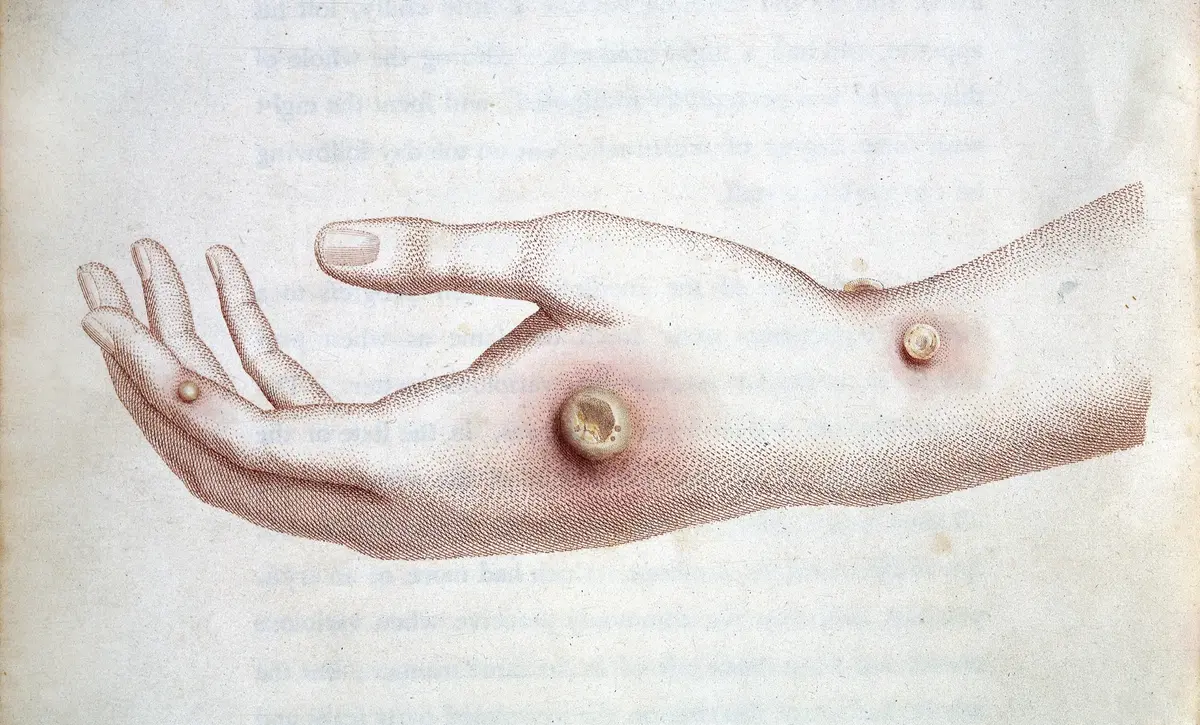
Two things turned that defeat into victory: disease and the native allies. Smallpox, carried in by the Spaniards, swept through Tenochtitlan for sixty days in the autumn of 1520 and killed the new ruler Cuitláhuac with a great part of the city. Cortés rebuilt his army in Tlaxcala, had thirteen brigantines built to command the lake, and from May 1521 besieged the island city with more than 800 Spaniards and tens of thousands of Tlaxcalan and other native warriors, cutting its causeways, its water and its food. The Mexica fought back for months; after 93 days of hunger and street fighting the last defenders were cornered in Tlatelolco, and on 13 August 1521 their young ruler Cuauhtémoc was taken.
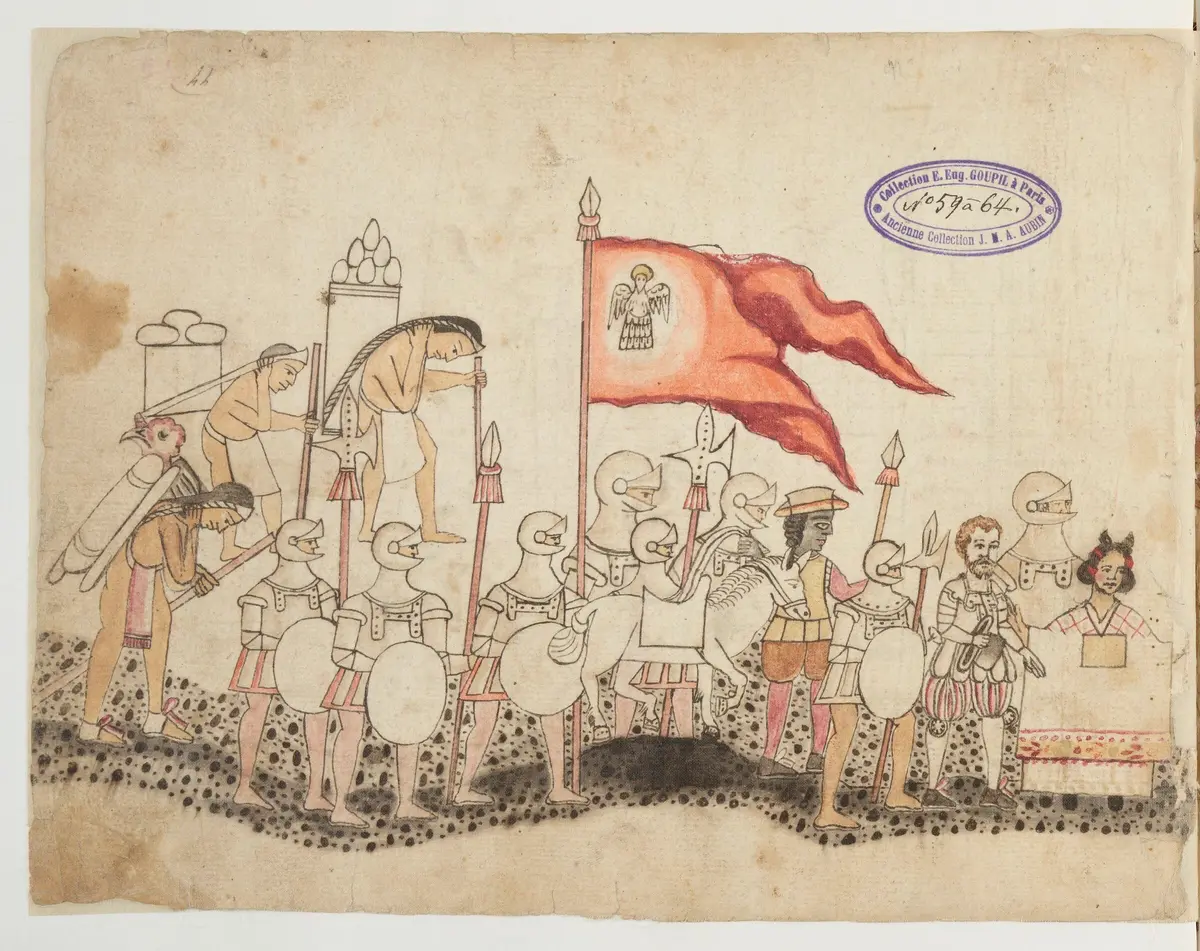
The fall of Tenochtitlan made Mexico the core of the Spanish colony of New Spain, and Mexico City was built on the ruins. For centuries the story was told from Cortés's own letters to Charles V, as a few hundred Spaniards overthrowing an empire. Historians such as Restall and Camilla Townsend now tell it as a war in which native allies did most of the fighting and smallpox most of the killing, and which began rather than ended the making of colonial Mexico; the Nahua and the Tlaxcalans told it too, in the Florentine Codex and the painted Lienzo de Tlaxcala. At Tlatelolco a plaque calls the fall neither a triumph nor a defeat, but the painful birth of the mestizo people that Mexico is today.
What happened
- 1519
Having sailed from Cuba on 18 February with eleven ships, about 500 soldiers, 100 sailors and 16 horses, Cortés lands in Tabasco, beats the Maya of Potonchan and is given twenty enslaved women. One of them, Malintzin, baptised Marina, speaks Maya and Nahuatl and becomes his interpreter.
The fleet anchors at San Juan de Ulúa. Moctezuma's envoys come with lavish gifts, and with every reason to keep the strangers away from the capital.
San Juan de Ulúa, Veracruz: the island anchorage where Cortés's fleet arrived in April 1519His men found La Villa Rica de la Vera Cruz and elect him their captain, freeing him from the governor of Cuba; he sinks his ships so that no one can turn back, and marches inland with Totonac allies from Cempoala.
Quiahuiztlan: the Totonac hill town near which the first Villa Rica de la Vera Cruz was built in 1519The Tlaxcalans, old enemies of the Mexica, fight the Spaniards in a series of battles, then make peace and become their most faithful allies.
Tizatlán, Tlaxcala: seat of Xicotencatl, lord of the Tlaxcalans who fought Cortés and then became his allies in September 1519At Cholula, the holy city of Quetzalcoatl, Cortés's men and the Tlaxcalans kill thousands of unarmed townspeople, claiming the Cholulans planned an ambush.
Cholula: the Great Pyramid of the holy city where thousands were massacred in October 1519Moctezuma comes out with the lords of the Triple Alliance and receives Cortés with great honour at the entrance to Tenochtitlan, Malintzin interpreting; the Spaniards and about 1,000 Tlaxcalans are lodged in a royal palace in the centre of the city. They soon make Moctezuma their prisoner and rule through him: at once, in the Nahua account; about a week later, in the Spanish ones.
The Templo Mayor, Tenochtitlan: the heart of the city where Moctezuma received the Spaniards and Alvarado's men massacred the celebrants of Toxcatl- 1520
Pánfilo de Narváez lands with about 900 men sent by the governor of Cuba to arrest Cortés. Leaving Pedro de Alvarado in the city, Cortés surprises him at Cempoala, takes him prisoner and enlists his army.
Cempoala: the Totonac capital that joined Cortés in 1519, where he surprised and beat Narváez in May 1520At the feast of Toxcatl in the courtyard of the Templo Mayor, Alvarado's men fall on the dancers and kill several hundred Mexica nobles and warriors; the city rises and besieges the Spaniards in their palace.
The Templo Mayor, Tenochtitlan: the heart of the city where Moctezuma received the Spaniards and Alvarado's men massacred the celebrants of ToxcatlCortés fights his way back into the city with Narváez's men. Moctezuma dies: struck by stones from his own people as the Spaniards tell it, killed by the Spaniards as the Mexica tell it; his body is burned at Copolco.
The Templo Mayor, Tenochtitlan: the heart of the city where Moctezuma received the Spaniards and Alvarado's men massacred the celebrants of ToxcatlBy night the Spaniards and their allies slip out along the causeway to Tlacopan. Discovered, they are attacked from canoes, and many drown in the Tolteca canal, weighed down with gold; the survivors reach Popotla at dawn. This is the Noche Triste, the 'sad night'.
Popotla: where the survivors of the Noche Triste reached land at dawn; by tradition Cortés wept under its old treeAt Otumba the pursuing Mexica army catches the fugitives and is beaten; the Spaniards reach Tlaxcala, where they spend five months recovering.
Otumba: the battle of 7 July 1520 that let the beaten Spaniards reach TlaxcalaSmallpox, brought in by the Spaniards, sweeps Tenochtitlan for sixty days; it kills the new ruler Cuitláhuac and a great part of the city, and Cuauhtémoc succeeds him.
The Templo Mayor, Tenochtitlan: the heart of the city where Moctezuma received the Spaniards and Alvarado's men massacred the celebrants of ToxcatlCortés leaves Tlaxcala and marches back into the Valley of Mexico, subduing the towns around the lake; thirteen brigantines, built in Tlaxcala, are carried to the lake in pieces.
- 1521
With more than 800 Spaniards, the brigantines and tens of thousands of native warriors, Cortés lays siege to Tenochtitlan, cutting its causeways, its fresh water and its food.
The Templo Mayor, Tenochtitlan: the heart of the city where Moctezuma received the Spaniards and Alvarado's men massacred the celebrants of ToxcatlAfter 93 days of famine, disease and street fighting the last defenders are cornered in Tlatelolco. Cuauhtémoc is taken (captured in a canoe in the Spanish accounts, giving himself up in the Nahua one), and the Mexica lay down their arms.
Tlatelolco: where the last defenders held out until 13 August 1521