England's Glorious Revolution
“1688–89: William of Orange lands at Torbay, James II flees to France, and Parliament gives the crown to William and Mary with a Bill of Rights: from now on the monarch rules with Parliament.”
James II became king of England, Scotland and Ireland in 1685. He was a Catholic in a mostly Protestant country, and he used the Crown's powers to push laws aside: he excused Catholics from the Test Acts that kept them out of office, put them into the army, onto the magistrates' benches and into an Oxford college, and in 1687 and again in 1688 issued a Declaration of Indulgence that suspended the laws against Catholics and Protestant Dissenters without asking Parliament. When the Archbishop of Canterbury and six other bishops asked to be excused from reading it in their churches, James sent them to the Tower and had them tried for seditious libel; on 30 June 1688 a jury in Westminster Hall found them not guilty, and London celebrated. Many people had put up with James because his heirs were his Protestant daughters, Mary and Anne. But on 10 June his Catholic queen, Mary of Modena, had given birth to a son. A Catholic dynasty now seemed certain, and a story spread that the baby was not hers at all but had been smuggled into her bed in a warming pan.
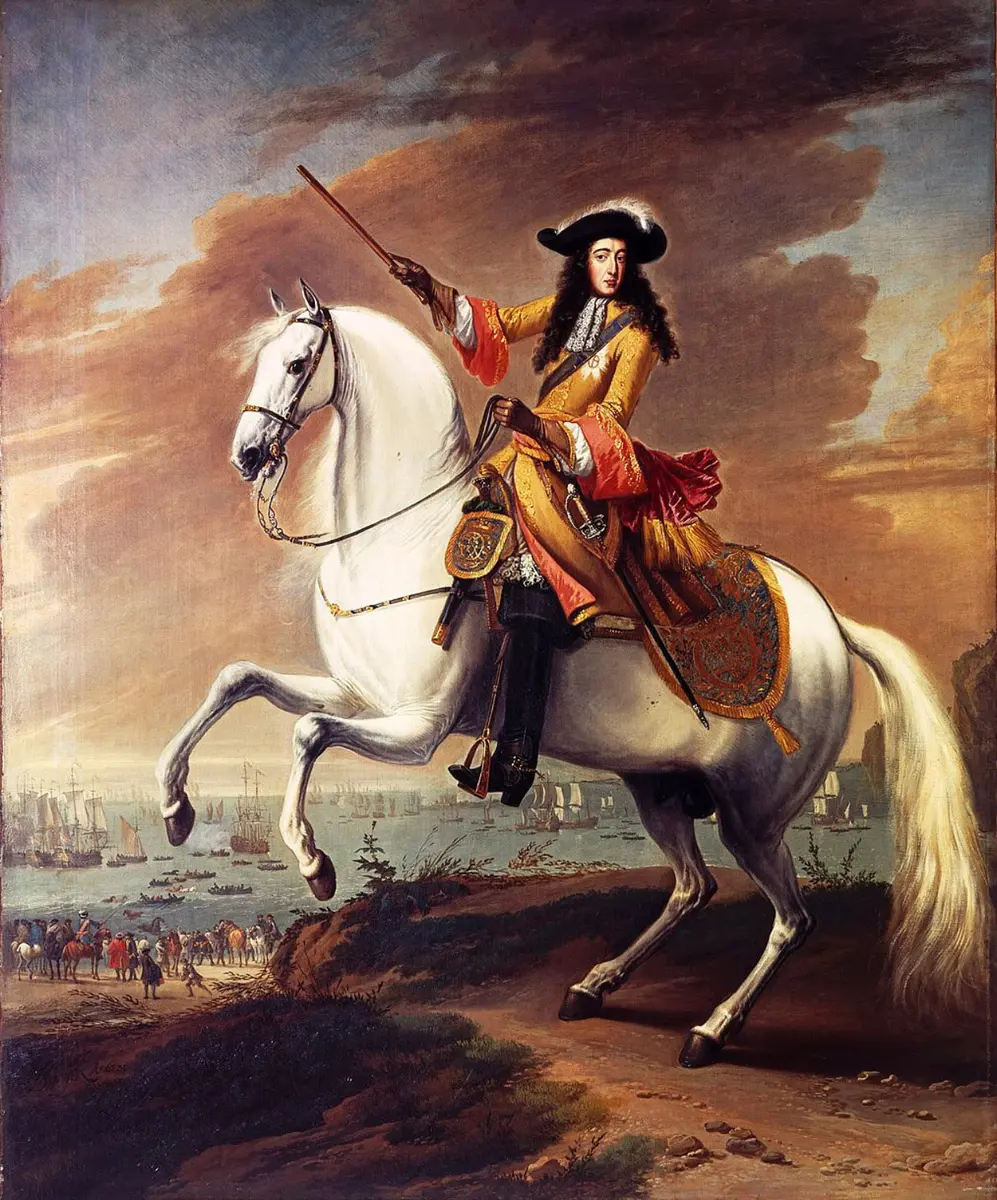
On the day of the acquittal seven leading men, Whigs and Tories, among them the Earl of Danby and Henry Compton, Bishop of London, wrote to William of Orange, the leader of the Dutch Republic, who was James's nephew and Mary's husband, and asked him to come with an army. William wanted England on his side against Louis XIV of France. His fleet of about 500 ships was driven back by storms in October, sailed again on 1 November with what was later called the 'Protestant wind', and on 5 November landed some 14,000 soldiers at Brixham on Tor Bay. James marched west to Salisbury, then lost his nerve and ordered a retreat on 23 November; that night his best general, John Churchill, went over to William, and two days later his daughter Anne fled. On 11 December James ran away, throwing the Great Seal into the Thames, while peers met at the Guildhall to keep order. Fishermen caught him in Kent and he was brought back, but on 18 December, as William reached St James's Palace, he left for Rochester, and on 23 December he was allowed to slip away to France. In England hardly any blood had been shed.
William would not take the crown as a conqueror. A Convention, a Parliament elected without a king's summons, met at Westminster on 22 January 1689. On 28 January the Commons voted that James had 'abdicated the government' and left the throne 'vacant'; Tory lords held out for a regency until William made it clear he would accept nothing less than the crown, and on 6 February the Lords agreed. On 13 February both Houses came to the Banqueting House in Whitehall, read out a Declaration of Rights and offered the crown to William and Mary together. They were crowned in Westminster Abbey on 11 April, the first joint monarchs in English history, and swore to govern by 'the statutes in Parliament agreed on'. The Declaration listed James's misdeeds and laid down rules: no suspending of laws, no taxes and no army in peacetime without Parliament's consent, free elections, free speech in Parliament, frequent Parliaments, no excessive bail and no 'cruel and unusual punishments'. A Toleration Act of 24 May let Protestant Dissenters worship in public, and on 16 December 1689 the Declaration became law as the Bill of Rights, which also barred Catholics, and anyone married to one, from the throne.
The revolution was not bloodless everywhere. James landed in Ireland in March 1689 and was beaten by William at the Boyne in July 1690, and Jacobites, his supporters, rose in Scotland. In May 1689 William took England into a war with France that, with one five-year truce, lasted a quarter of a century. To pay for it the Commons voted money only for set purposes and kept the King short, so Parliament had to sit every year; new taxes, audits of public spending and in 1694 the Bank of England followed. No later monarch ruled without Parliament, and the Act of Settlement of 1701 fixed a Protestant succession.
Whig historians such as Macaulay called the revolution 'glorious' because it changed the constitution with so little bloodshed; others see a Dutch invasion, or a coup in which one branch of the Stuart family replaced another with the help of a small elite. Either way, the balance had moved for good from the King to Parliament. The Bill of Rights is still part of British law and is still cited in the courts, and it served as a model for later charters of rights, among them the American Bill of Rights of 1789.
What happened
- 1688
James II's queen, Mary of Modena, gives birth to a son, James Francis Edward, at St James's Palace. A Catholic heir now stands ahead of the King's Protestant daughters, and rumour soon says the baby was smuggled into the queen's bed in a warming pan.
St James's Palace, London: where the Prince of Wales was born on 10 June 1688, and where William took up residence on 18 December 1688After a trial that ran through the night, a jury in Westminster Hall finds the Seven Bishops not guilty of seditious libel for their petition against reading the Declaration of Indulgence. Crowds celebrate in the streets.
Westminster Hall: the Seven Bishops were tried here before the Court of King's Bench and acquitted on 30 June 1688The same day seven men, the earls of Shrewsbury, Devonshire and Danby, Lord Lumley, Bishop Henry Compton of London, Edward Russell and Henry Sidney, write to William of Orange inviting him to come over with an army, and promise to join him.
William's fleet of about 500 ships, under the English admiral Arthur Herbert, puts out from Hellevoetsluis, but strong north-west winds drive it back to its anchorage.
Hellevoetsluis, at the mouth of the Maas: where William's invasion fleet put to sea in October and again on 1 November 1688To answer the warming-pan story, James calls a special meeting of the Privy Council, which hears the people present at the birth and has their sworn testimony registered in Chancery.
The fleet sails again, and a wind blowing unusually in its favour, later called the 'Protestant wind', carries it down the Channel past the English fleet.
Hellevoetsluis, at the mouth of the Maas: where William's invasion fleet put to sea in October and again on 1 November 1688William lands unopposed at Brixham on Tor Bay with about 14,000 soldiers, Dutch, French Huguenot, German, Swedish and Finnish among them. It is Guy Fawkes Day, the anniversary of the Gunpowder Plot.
Brixham, on Tor Bay in Devon: where William's army came ashore on 5 November 1688William rides into Exeter, on a white horse and in shining armour, it was said. The townspeople welcome him, but the bishop has fled to London and the gentry wait to see who will win; Exeter is his headquarters until 21 November.
Exeter Cathedral and its close: Exeter was William's headquarters from 9 to 21 November 1688, and he lodged in the Deanery beside the cathedralAt Salisbury, though his army outnumbers William's two to one, James orders a retreat towards London. That night his ablest officer, John Churchill, rides over to William with the Duke of Grafton and about 400 officers and men.
Salisbury: James II joined his army here and on 23 November 1688 ordered it to retreat towards LondonThe King's younger daughter, Anne, whose husband Prince George has also gone over, escapes from her rooms at Whitehall by the back stairs with Lady Churchill and is taken north to Nottingham.
The Banqueting House, the surviving part of Whitehall Palace: James fled from Whitehall on 11 December 1688, and here on 13 February 1689 Lords and Commons offered the crown to William and Mary with the Declaration of RightsWith the queen and the baby already sent to France, James slips out of Whitehall before dawn and throws the Great Seal into the Thames, so that no lawful government business can be done without him.
The Banqueting House, the surviving part of Whitehall Palace: James fled from Whitehall on 11 December 1688, and here on 13 February 1689 Lords and Commons offered the crown to William and Mary with the Declaration of RightsSix bishops and 21 lords meet at the Guildhall as a provisional government, with the Marquess of Halifax in the chair; they order the army and navy to stop fighting and declare they will help William call a free Parliament.
Guildhall, City of London: six bishops and 21 lords met here on 11 December 1688 as a provisional governmentFaversham fishermen take the King off a boat lying at Shellness in Kent. They search him roughly and hold him in the town while the lords in London decide what to do.
Faversham, Kent: local fishermen caught the fleeing King on 12 December 1688 and held him hereBrought back to London, James is cheered in the streets and takes up his government again, for two days.
The Banqueting House, the surviving part of Whitehall Palace: James fled from Whitehall on 11 December 1688, and here on 13 February 1689 Lords and Commons offered the crown to William and Mary with the Declaration of RightsDutch Guards having taken over Whitehall in the night, James accepts William's 'advice' to leave London for his own safety and goes to Rochester. The same day William arrives in London and takes up residence at St James's Palace.
St James's Palace, London: where the Prince of Wales was born on 10 June 1688, and where William took up residence on 18 December 1688At night James leaves Sir Richard Head's house in Rochester and sails for France, where Louis XIV gives him the palace of Saint-Germain. William, who wants him out of the way, almost certainly lets him go.
Rochester, Kent: James stayed in Sir Richard Head's house here from 18 December 1688 and escaped to France on the night of the 23rd- 1689
The Convention, elected on letters sent out at William's request, meets at Westminster. The Whigs have a comfortable majority in the Commons and choose Henry Powle as Speaker.
The Palace of Westminster: the Convention met here from 22 January 1689 and voted the throne vacantThe Commons vote that James, by 'breaking the original contract between king and people' and withdrawing himself, has 'abdicated the government' and left the throne vacant. Tory lords push back with talk of a regency.
The Palace of Westminster: the Convention met here from 22 January 1689 and voted the throne vacantWilliam having said he will take nothing less than the crown, the Lords give way: both Houses agree that James has abdicated and that William and Mary should be King and Queen.
The Palace of Westminster: the Convention met here from 22 January 1689 and voted the throne vacantLords and Commons settle the text of their Declaration of Rights, the document later enrolled in Chancery as 'the Declaration of the 12 February'.
In the Banqueting House both Houses read the Declaration of Rights to William and Mary and offer them the crown together. They accept, and are proclaimed King and Queen.
The Banqueting House, the surviving part of Whitehall Palace: James fled from Whitehall on 11 December 1688, and here on 13 February 1689 Lords and Commons offered the crown to William and Mary with the Declaration of RightsJames lands in Ireland with French help, to win his kingdoms back from there; the war ends with William's victory at the Boyne on 1 July 1690.
William and Mary are crowned together in Westminster Abbey, the first joint coronation in England; a second coronation chair is made for Mary. Their new oath binds them to govern according to 'the statutes in Parliament agreed on'.
Westminster Abbey: William and Mary were crowned here together on 11 April 1689England declares war on France. The wars that follow, with one five-year truce, last 25 years and keep Parliament sitting almost without a break to vote the money.
The Toleration Act becomes law: Protestant Dissenters may worship in public in their own meeting houses, though the Test Acts still keep them out of office.
The Declaration receives the royal assent as 'An Act declaring the Rights and Liberties of the Subject and Settling the Succession of the Crown', the Bill of Rights. It also bars Catholics, and anyone married to one, from the throne.