The Bank of England is founded
“In 1694 London merchants lent William III's government £1.2 million for its war with France, and in return Parliament let them form a bank: the Bank of England, today the UK's central bank.”
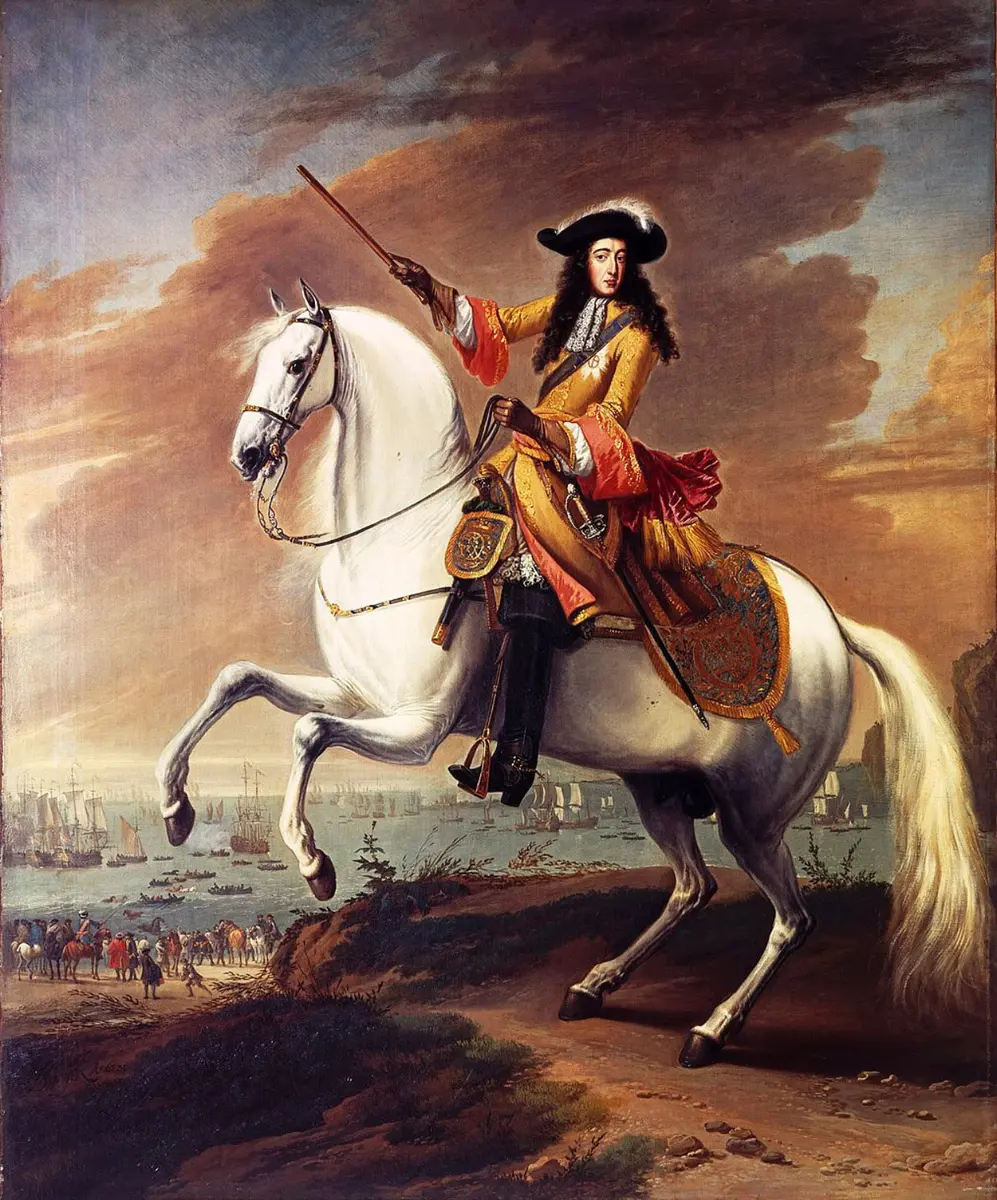
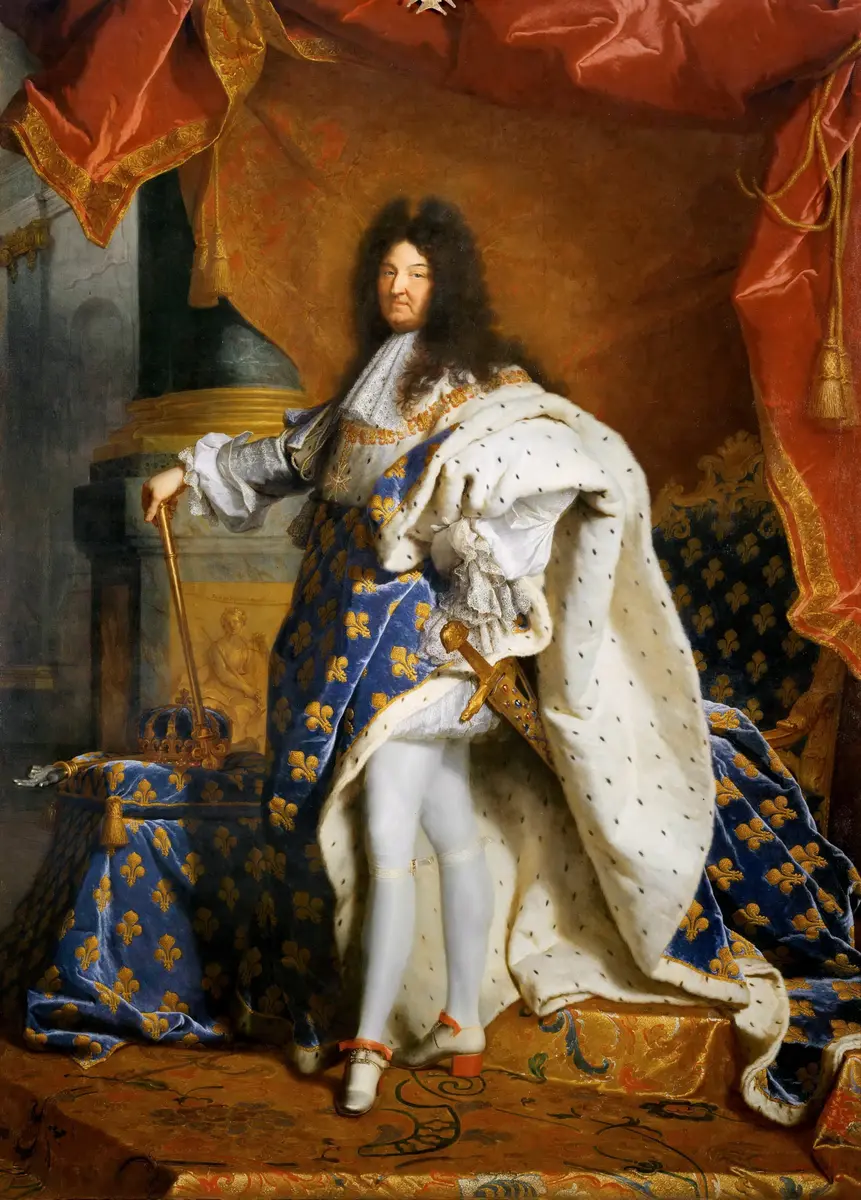
The Bank of England was born of a war. By 1694 England had been fighting Louis XIV's France for five years, led by William III, the Dutch prince who had taken the throne with his wife Mary II in the revolution of 1688. The war was ruinously expensive, and the government found it ever harder to borrow: London's goldsmith bankers remembered how Charles II had stopped paying interest on his debts to them in 1672. Among the many money-raising schemes sent to the Treasury, one came from a group of City merchants. William Paterson, a Scottish merchant and promoter, Michael Godfrey and their friends offered to lend the state a large sum with no date for repayment, in return for a fixed yearly interest paid out of taxes, if Parliament would let the lenders form a bank. Charles Montagu, a Lord of the Treasury and soon Chancellor of the Exchequer, took up the plan.
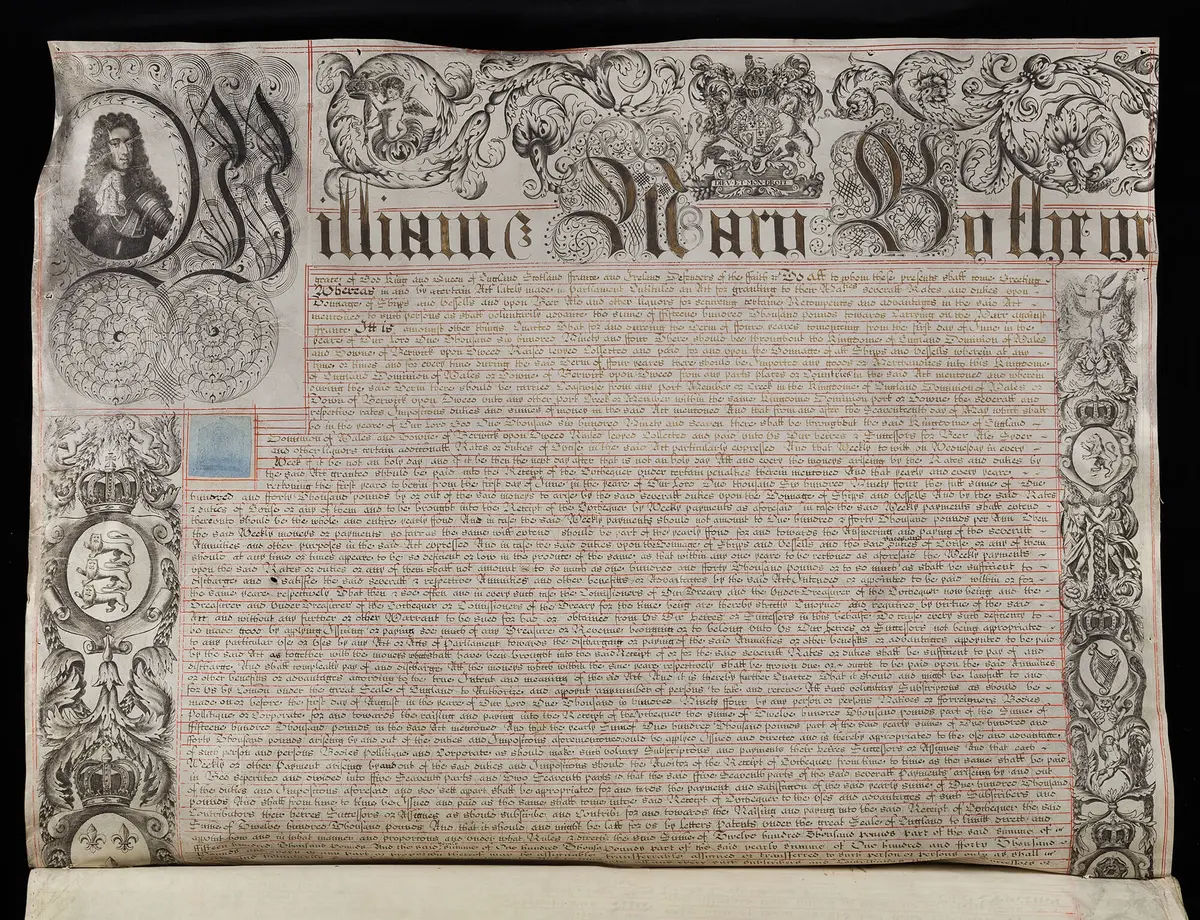
It was written into a tax law, the Tonnage Act, which received the royal assent on 25 April 1694. The Act put new duties on ships and on beer and other drinks, to reward those who would lend £1.5 million towards 'carrying on the War against France'. Of that sum, £1.2 million was to come from subscribers who could be made a company called 'the Governor and Company of the Bank of England'. They would receive £100,000 a year: eight per cent interest plus £4,000 for running the business. No one could put in more than £20,000, and a quarter had to be paid at once. The books opened at Mercers' Hall on Cheapside on 21 June, and the whole £1.2 million was promised in under two weeks by 1,272 people, with King William and Queen Mary down for £10,000. The Royal Charter was sealed on 27 July, Sir John Houblon became the first Governor and Godfrey his deputy, and on 1 August the Bank opened for business at Mercers' Hall with seventeen clerks and two gatekeepers. Before the year was out it had paid almost the whole loan into the Exchequer and moved to the larger Grocers' Hall in the Poultry, where it stayed for forty years.
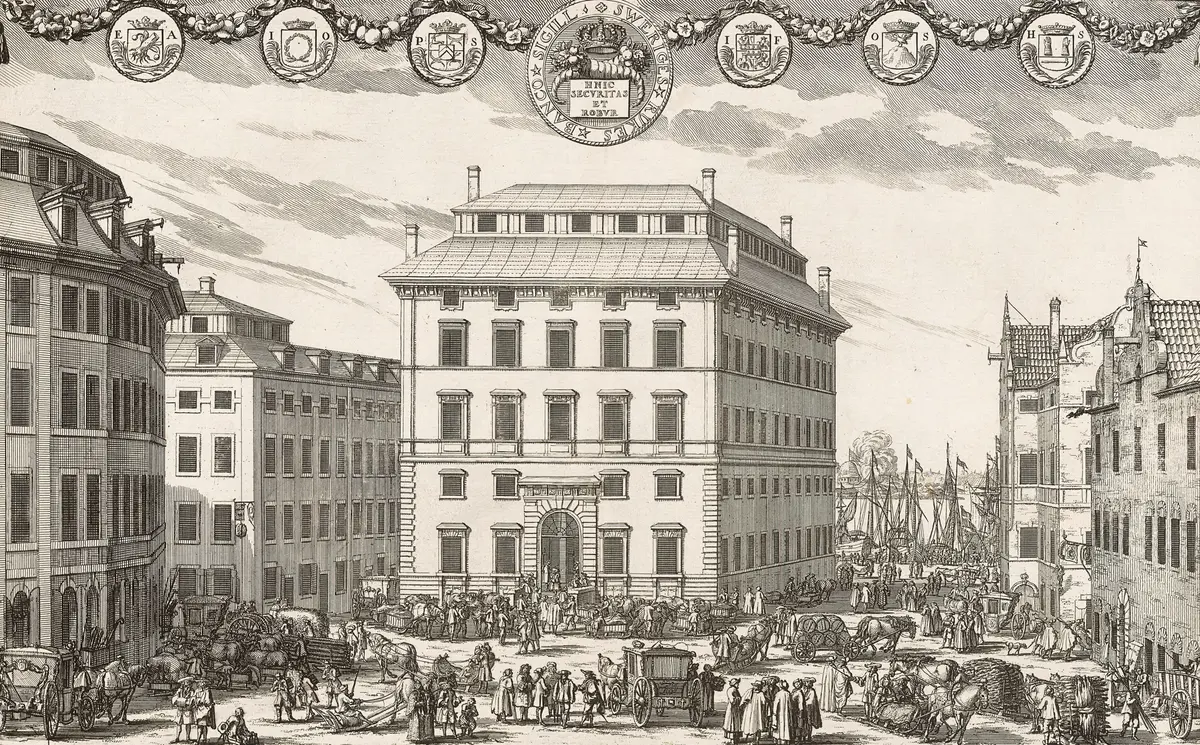
Banking itself was not new: London's goldsmiths kept deposits and wrote notes, and public banks already existed in Genoa and in Stockholm, where Sweden's Riksbank dates from 1668. What was new was the tie between a bank and Parliament. The loan was secured on taxes that Parliament voted, so it was a debt of the nation rather than the private debt of a king who could refuse to pay. The Act also limited the Bank: it could not lend to the Crown without Parliament's consent or trade in goods, though it could deal in bills of exchange and in gold and silver. From the first weeks it took deposits and handed out 'running cash notes', promises to pay the bearer on demand, written by hand on forms the directors ordered printed on 31 July 1694; the oldest notes that survive date from 1697. The young Bank nearly failed in May 1696, when a run on it during the recoinage of England's worn silver, the work Isaac Newton had just joined the Mint to help with, forced it to pay its notes only in part.
It survived, and grew with every war. The Bank managed the government's accounts and its debt, raised money for the long wars against France, and became the bank that other banks kept their money with. In 1734 it moved into its own building on Threadneedle Street, enlarged by Sir John Soane from 1788 and rebuilt inside Soane's outer wall by Sir Herbert Baker between 1925 and 1939. In 1797, at war with France again, it was ordered to stop paying gold for its notes, and James Gillray's cartoon of the Prime Minister courting 'the Old Lady of Threadneedle Street' gave it the nickname it still carries. The Bank Charter Act of 1844 stopped any new bank from issuing notes, the Bank was nationalised in 1946, and in 1997 it was given the power to set interest rates. Founded as a private company to lend to a king at war, it is today the United Kingdom's central bank, on the same site, and its stated mission still echoes its charter's promise to 'promote the public Good and Benefit of our People'.
What happened
- 1694
In the House of Lords, William III gives the royal assent to the Tonnage Act: new duties on ships and on beer and other drinks to reward those who lend £1.5 million for the war against France, with the power to make the lenders of £1.2 million a bank.
Palace of Westminster: William III gave the royal assent to the Tonnage Act in the House of Lords here on 25 April 1694The subscription books open at Mercers' Hall on Cheapside. Investors sign in their own hand for up to £20,000 each and pay a quarter down; the King and Queen are entered for £10,000.
Mercers' Hall, Cheapside: the subscription books opened here on 21 June 1694, the first Court of Directors met here on 27 July, and the Bank opened for business here on 1 August- 12:00 p.m.
At noon the whole £1.2 million has been subscribed, in under two weeks, by 1,272 people, faster than anyone had expected.
Mercers' Hall, Cheapside: the subscription books opened here on 21 June 1694, the first Court of Directors met here on 27 July, and the Bank opened for business here on 1 August The Royal Charter is sealed, creating 'the Governor and Company of the Bank of England', 'to promote the public Good and Benefit of our People'.
That afternoon the first Court of Directors meets at Mercers' Hall: Sir John Houblon is Governor, Michael Godfrey Deputy Governor, and William Paterson one of the directors.
Mercers' Hall, Cheapside: the subscription books opened here on 21 June 1694, the first Court of Directors met here on 27 July, and the Bank opened for business here on 1 AugustThe directors vote that running cash notes be printed, forms with blanks for the name, the sum and the cashier's signature: the start of the Bank's banknotes.
Mercers' Hall, Cheapside: the subscription books opened here on 21 June 1694, the first Court of Directors met here on 27 July, and the Bank opened for business here on 1 AugustThe Bank opens for business at Mercers' Hall with seventeen clerks and two gatekeepers, and makes its first payment into the Exchequer, in bills under its new seal of Britannia sitting on a bank of money.
Mercers' Hall, Cheapside: the subscription books opened here on 21 June 1694, the first Court of Directors met here on 27 July, and the Bank opened for business here on 1 AugustThe Bank signs an eleven-year lease of Grocers' Hall in the Poultry, a larger house a few streets east.
Grocers' Hall, in the Poultry: the Bank's home from the end of 1694 until 1734The Bank moves into Grocers' Hall, where it will stay for forty years, until its own building on Threadneedle Street is ready in 1734.
Grocers' Hall, in the Poultry: the Bank's home from the end of 1694 until 1734The Governor tells the shareholders that only £44,335 of the £1.2 million is still to be paid to the Exchequer; it is paid in the Bank's own notes, and the whole loan is made before the 1 January deadline.