Louis XIV
“The Sun King: king of France for 72 years (1643–1715), who ruled without a chief minister, built Versailles and became the model of the absolute monarch.”
Louis XIV was king of France for 72 years, from 1643, when he was four, until his death in 1715: the longest reign in French history and, in the historian Philip Mansel's words, the longest in modern history. From 1661 he governed without a chief minister, from 1682 he ruled from the palace he had built at Versailles, and he made himself the model of the absolute monarch, a king by divine right answerable to no one but God. He took the sun as his emblem, and for half a century his France was the power the rest of Europe feared, fought and copied.
He was born at Saint-Germain-en-Laye on 5 September 1638, an heir his parents had waited 23 years for, and succeeded his father, Louis XIII, on 14 May 1643. His mother, Anne of Austria, ruled as regent with Cardinal Mazarin. From 1648 to 1653 the civil wars of the Fronde, first of the Paris Parlement and then of the great nobles, forced the boy king out of his capital, and he never forgave Paris, the nobles or the crowd. In 1653 he danced the rising sun in the Ballet de la Nuit, and in 1660, to seal the peace with Spain, he married his cousin Maria Theresa, the Spanish infanta. When Mazarin died on 9 March 1661, Louis told his astonished ministers the next day that he would govern by himself.
He kept at it for 54 years, eight hours a day. With Jean-Baptiste Colbert he put the finances in order and built up a navy, trading companies, manufactures and the Academy of Sciences; with Louvois he reformed the army. He drew the great nobles to his court, where etiquette, favour and endless entertainments kept them busy and dependent, and from 1682 Versailles, with a Hall of Mirrors painted with his own deeds, was the seat of government. He was the greatest patron of his age: Molière, Racine and Lully wrote and composed for him, Le Vau, Le Nôtre, Le Brun and Hardouin-Mansart built and decorated for him, and Bernini came from Rome to carve his bust.
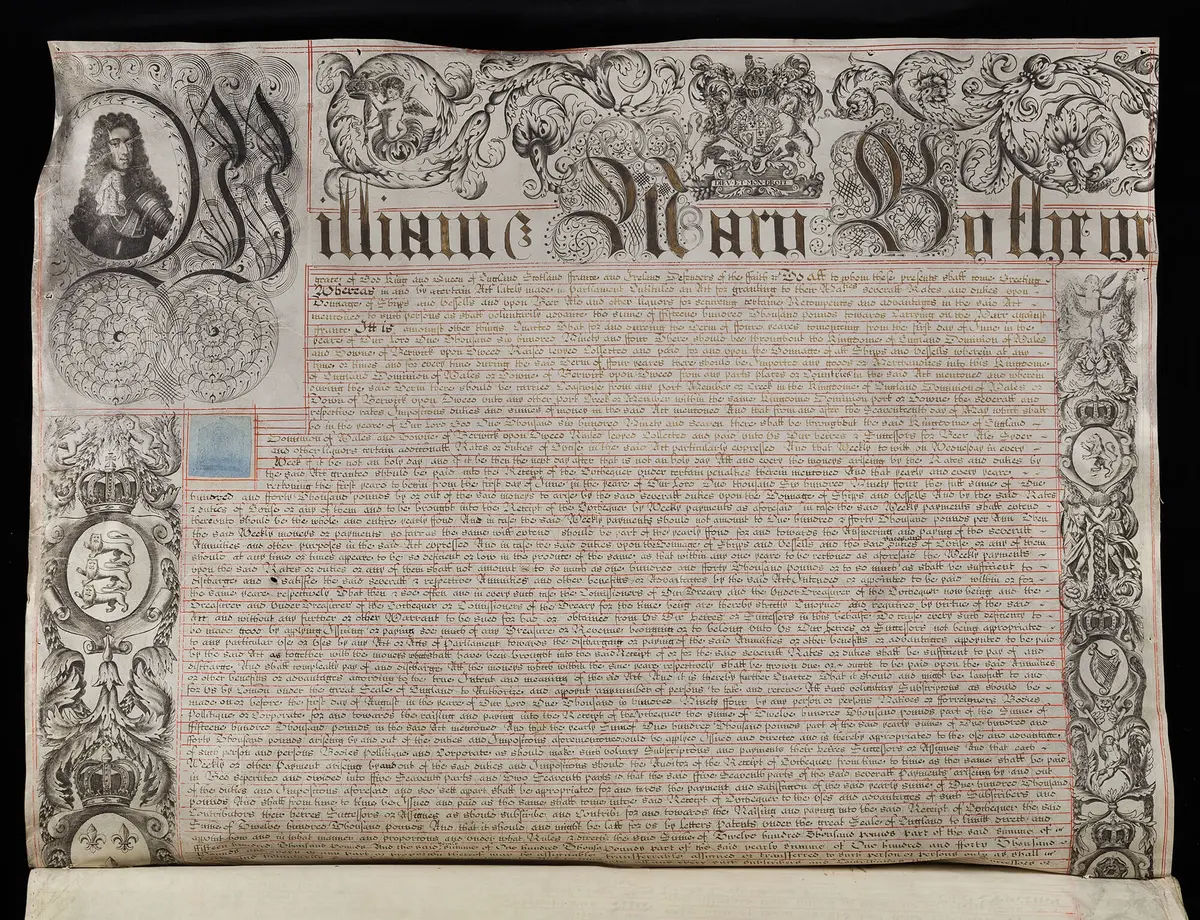
He also loved war. The War of Devolution (1667–68) and the Dutch War (1672–78) pushed France's frontiers north and east into Flanders and Franche-Comté, and by 1678 Paris called him 'the Great'. Then the tide turned. In 1685 he revoked the Edict of Nantes and outlawed the Protestant church, and at least two hundred thousand Huguenots fled abroad. The Nine Years' War (1688–97) against a coalition led by William III, whose England founded the Bank of England to pay for fighting him, and the War of the Spanish Succession (1701–14), fought to keep his grandson Philip V on the throne of Spain, brought France close to collapse in 1709. The peace of Utrecht in 1713 left Philip in Madrid and France's new frontiers intact, but ended its supremacy.
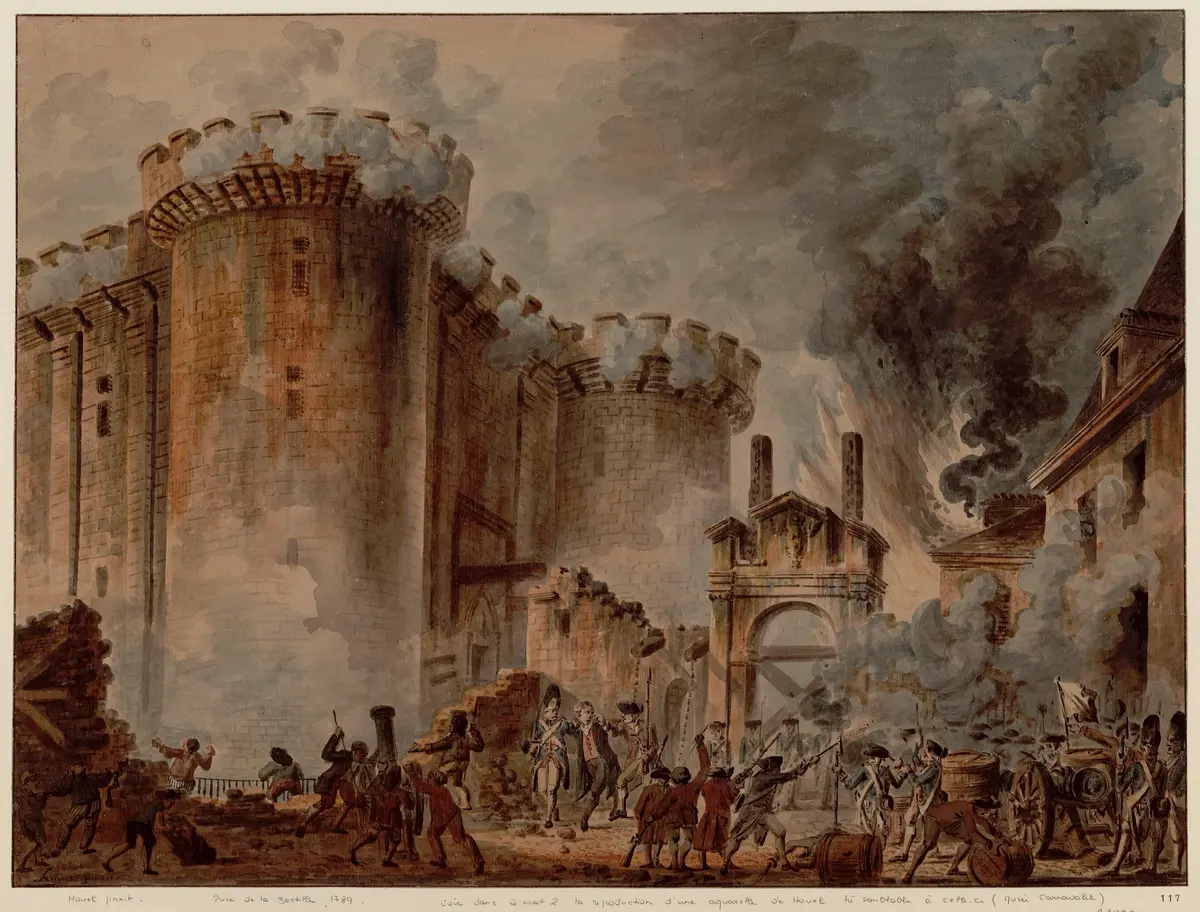
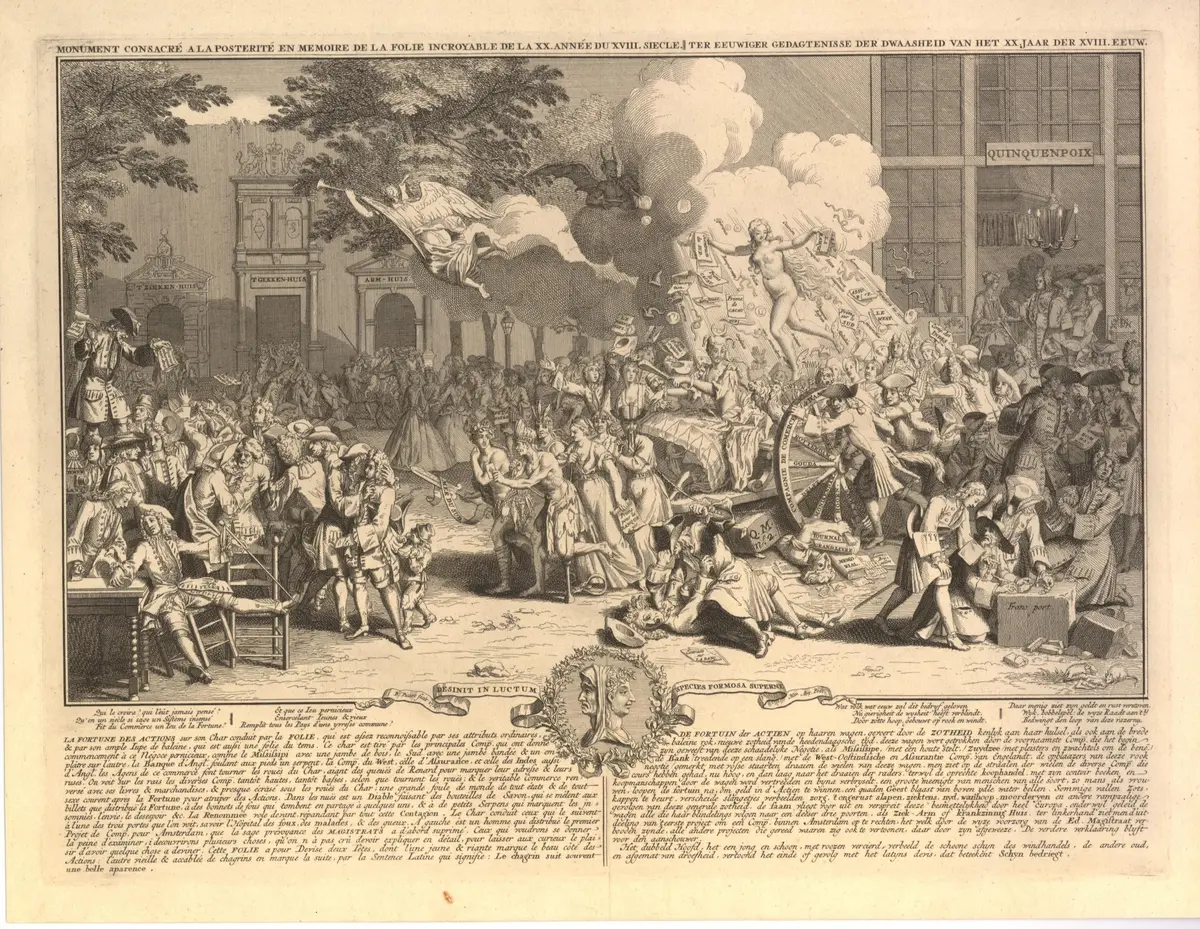
In 1711 and 1712 he lost his son, his grandson and a great-grandson. He died at Versailles on 1 September 1715, four days before his 77th birthday, leaving the throne to a great-grandson of five, Louis XV, whom he told to avoid war, and debts of some 2,800 million livres, which the regent tried to clear with John Law's paper money. Historians still argue whether he raised the monarchy to its height or, by gathering the whole state into one man and isolating the court from the people, dug the grave the Revolution opened in 1789. Versailles, French as the language of Europe's courts and the image of the Sun King are what he left behind.
What happened
- 1638
Born in the Château-Neuf at Saint-Germain-en-Laye, the son of Louis XIII and Anne of Austria, after 23 years of waiting for an heir: France calls him 'Louis the God-given'.
Saint-Germain-en-Laye: the Château-Neuf, where he was born in 1638 and his father died in 1643; abandoned in the 1660s and later demolished, little of it survives- 1643
His father dies at Saint-Germain and he is king at four years and eight months; his mother rules as regent, with Cardinal Mazarin as her minister and the boy's tutor in politics.
Saint-Germain-en-Laye: the Château-Neuf, where he was born in 1638 and his father died in 1643; abandoned in the 1660s and later demolished, little of it survives- 1648
The Fronde begins: the Paris Parlement, then the great nobles, rise against Mazarin's government, and Paris barricades its streets. The civil wars last until 1653.
- 1649
The court has to leave Paris in haste to escape the Fronde. The king never forgets the humiliation and the fear, and never trusts Paris again.
- 1653
In the Ballet royal de la Nuit, danced through the night at court, the fourteen-year-old king appears as the rising sun that ends the night of rebellion: the birth of the Sun King.
- 1654
He is crowned at Reims and swears, as kings did, to defend the Catholic faith.
- 1660
At Saint-Jean-de-Luz he marries his cousin Maria Theresa, the Spanish infanta, as the Peace of the Pyrenees of 7 November 1659 required, giving up his love for Mazarin's niece Marie Mancini.
- 1661
The day after Mazarin's death he tells his astonished ministers that from now on he will govern by himself, without a chief minister.
Less than three weeks after a dazzling fête at Vaux-le-Vicomte, his finance superintendent Nicolas Fouquet is arrested at Nantes by d'Artagnan of the musketeers; Colbert takes over the finances.
- 1664
The Pleasures of the Enchanted Island, the first great party at Versailles, runs for a week; on 12 May Molière's Tartuffe is played for the first time.
The Palace of Versailles: his creation, the seat of his court and government from 1682, and where he died in 1715- 1665
Bernini comes from Rome to redesign the Louvre and carves the king's bust; the king later chooses a French design for the Louvre's east front, the Colonnade, finished in 1677.
The Louvre, Paris: the royal palace of his youth, whose east front, the Colonnade, he chose in place of Bernini's design - 1666
Colbert founds the Academy of Sciences, and in 1667 the Paris Observatory, under the king's protection.
- 1667
Claiming the Spanish Netherlands as his wife's inheritance, he invades them: the War of Devolution. At the peace of Aix-la-Chapelle in May 1668 he keeps Lille, Douai and other Flemish towns.
- 1668
He celebrates the peace with the Great Royal Entertainment at Versailles, the place he is beginning to prefer to all others; Pierre Patel paints the château that year.
The Palace of Versailles: his creation, the seat of his court and government from 1682, and where he died in 1715 - 1672
Allied with Charles II of England, he invades the Dutch Republic; the Dutch open the dikes and William III of Orange rallies them behind the water line.
- 1673
His army besieges and takes Maastricht, the great Dutch fortress on the Meuse.
- 1678
The Peace of Nijmegen ends the Dutch War in his favour, with Franche-Comté and more of Flanders for France; Paris calls him 'the Great'. Work starts on the Hall of Mirrors.
- 1682
Versailles becomes the seat of the court and the government; Paris stays the capital in name, but the kingdom is ruled from here until 1789.
The Palace of Versailles: his creation, the seat of his court and government from 1682, and where he died in 1715- 1683
After the deaths of Queen Maria Theresa in July and of Colbert on 6 September, he secretly marries Madame de Maintenon during the night of 9 to 10 October.
The Palace of Versailles: his creation, the seat of his court and government from 1682, and where he died in 1715- 1685
By the Edict of Fontainebleau he revokes the Edict of Nantes and outlaws the Protestant church; hundreds of thousands of Huguenots flee to England, the Dutch Republic, Prussia and America.
- 1688
His army crosses the Rhine and besieges Philippsburg: the start of the Nine Years' War against the Empire, the Dutch and, after the revolution of November 1688, William III's England.
- 1697
The Peace of Ryswick: he gives up part of his conquests and recognises William of Orange as King of England.
- 1700
Having accepted the will of the childless Charles II of Spain, he presents his grandson Philip of Anjou to the court in the Hall of Mirrors as Philip V, King of Spain.
The Palace of Versailles: his creation, the seat of his court and government from 1682, and where he died in 1715- 1701
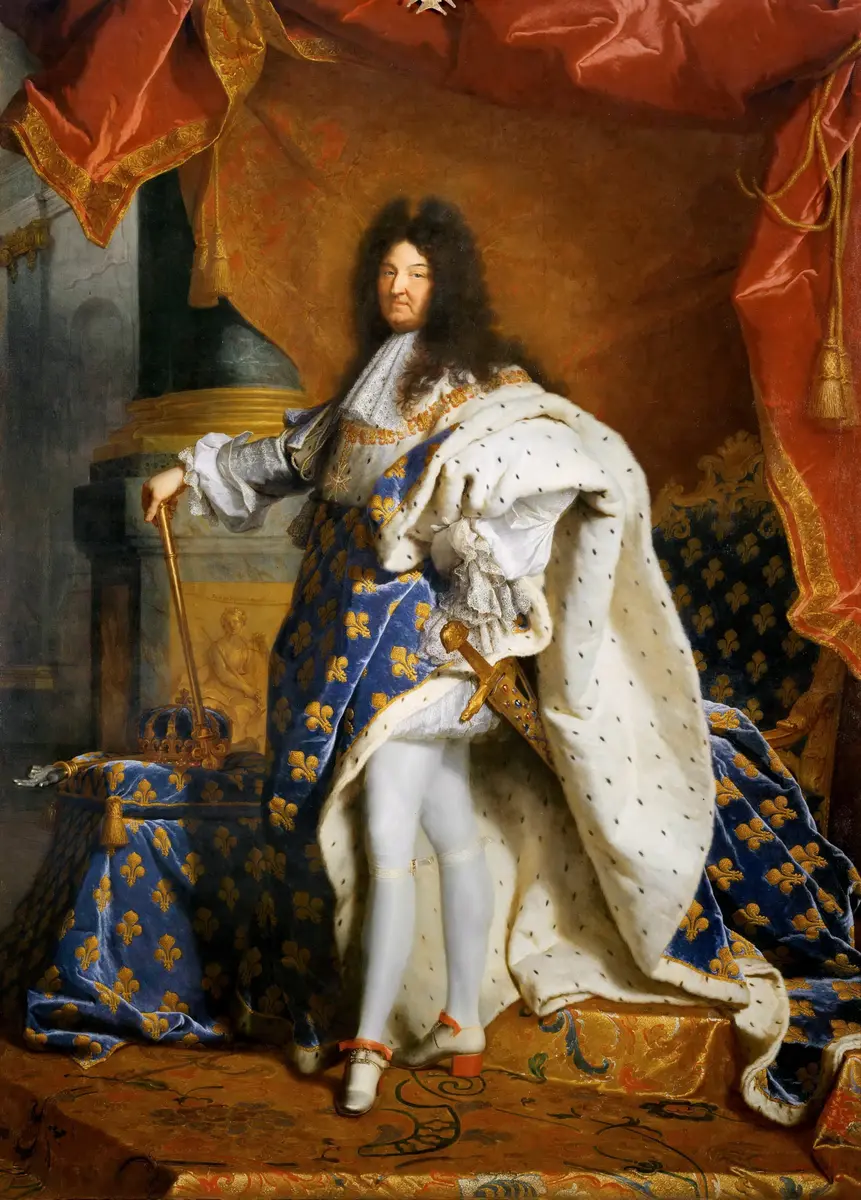
Hyacinthe Rigaud paints him in his coronation robes. In March French troops seize Spanish fortresses in the Spanish Netherlands, and the War of the Spanish Succession begins.
- 1706
He dedicates the domed church of the Invalides, the hospital for old soldiers he founded in 1670, Hardouin-Mansart's masterpiece.
Les Invalides, Paris: the hospital for old and wounded soldiers he founded in 1670; he dedicated its domed church in 1706- 1709
After the defeats of Blenheim (1704) and Ramillies (1706) and peace talks that fail on the allies' terms, Villars's army is driven from Malplaquet at a cost to the allies so high that France survives its worst year.
- 1712
His grandson the Duke of Burgundy dies, days after his wife, ten months after the Grand Dauphin; in March their elder son follows them, leaving a two-year-old great-grandson as heir.
- 1713
After Villars's victory at Denain the year before, the treaties of Utrecht end the war: Philip V keeps Spain, France keeps its frontiers, but loses its supremacy in Europe.
- 1715
Dying of gangrene in the leg, he receives his five-year-old great-grandson and tells him to spare his people and avoid war, 'the ruin of the peoples', and to be a peaceful prince.
The Palace of Versailles: his creation, the seat of his court and government from 1682, and where he died in 1715- 8:15 a.m.
He dies at Versailles just after a quarter past eight in the morning, four days before his 77th birthday, after 72 years on the throne. On 9 September his body is taken to Saint-Denis.
The Palace of Versailles: his creation, the seat of his court and government from 1682, and where he died in 1715