The Mississippi Bubble
“In 1719 shares in John Law's Mississippi Company, bought with his bank's new paper money, rose twentyfold to 10,000 livres; in 1720 shares and notes collapsed together and Law fled France.”
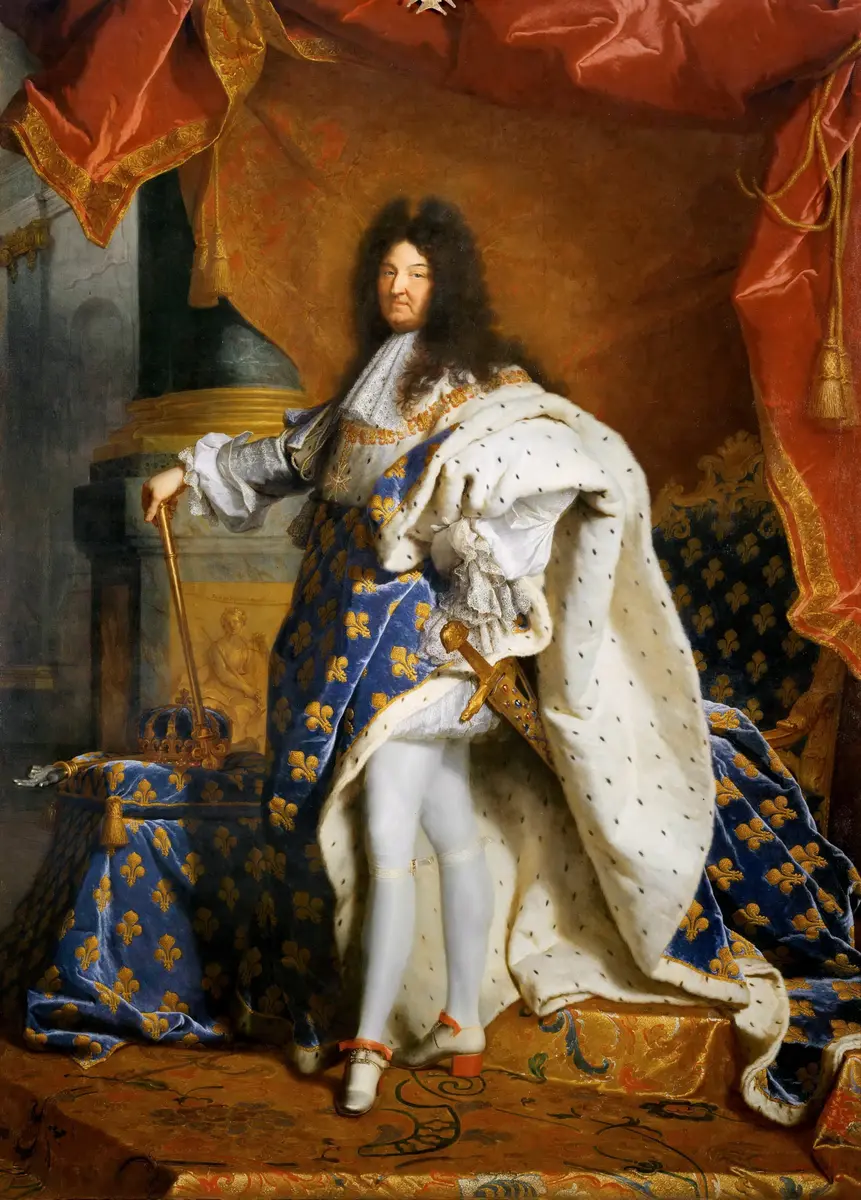
The Mississippi Bubble was the rise and fall of John Law's 'System' in France between 1716 and 1720, the country's first experiment with paper money. When Louis XIV died in September 1715 he left the throne to his five-year-old great-grandson, Louis XV, the government to a regent, his nephew Philippe, duc d'Orléans, and debts of about 2.8 billion livres, roughly a year's output of the whole kingdom; the interest alone was two or three times the surplus the treasury had left after its other spending. The regent turned to John Law, a Scottish gambler and monetary theorist born in Edinburgh in 1671, who had fled England after killing a man in a duel and had settled in Paris around 1714. Law believed that money was a creative force: a bank that issued paper notes in place of scarce gold and silver would increase credit, revive trade and make the state's debts bearable.
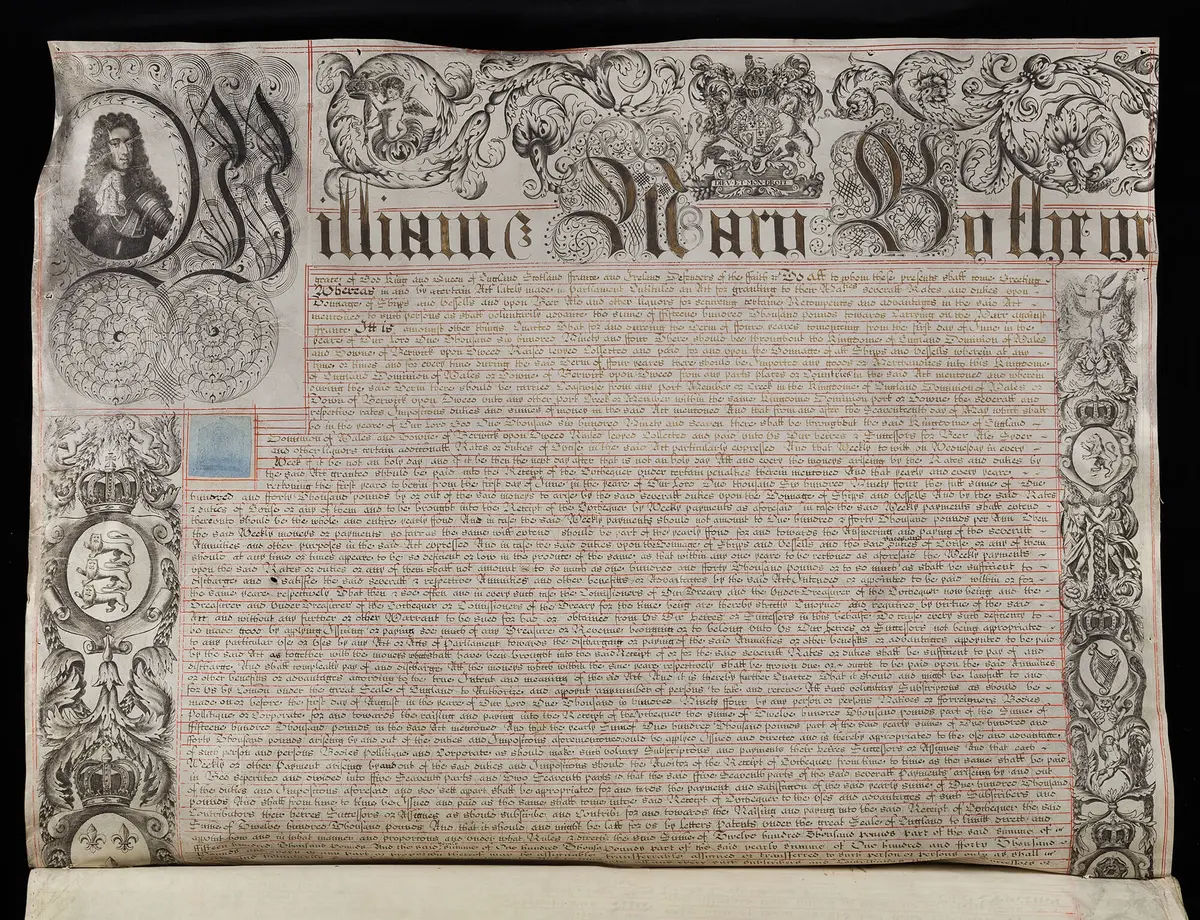
Law built the System step by step. Letters patent of May 2, 1716 let him open a private bank in Paris, the Banque Générale, whose notes the king's tax collectors soon had to accept. In August 1717 he founded the Compagnie d'Occident, which received the monopoly of trade with Louisiana, then the whole valley of the Mississippi, and sold 200,000 shares at 500 livres, payable in the state's discounted paper debt; in 1718 it founded New Orleans, named after the regent. In December 1718 the king bought out the bank's owners and made it the Banque Royale, still run by Law. By the end of 1719 the company had taken over the tobacco monopoly, the Senegal slave-trading company, the French East India and China companies, the mints and the collection of most taxes, and as the Compagnie des Indes, the 'Mississippi Company' of popular speech, it had offered to lend the king enough to repay the whole national debt, raising the money by selling new shares that the repaid creditors could buy with what they received.
The shares became the craze of Europe. New issues were sold in instalments at 550, 1,000 and then 5,000 livres, and the bank printed notes to keep the market supplied: the notes it had issued rose from 40 million livres in December 1718 to a billion in January 1720. In the narrow rue Quincampoix, where the trading was done, the crowds grew so thick that horses and carriages were banned, and the word millionaire came into use. A share issued at 500 livres passed 10,000 in December 1719, and on January 5, 1720 Law became Controller General of Finances. Then holders began to sell to turn their gains into coin. Law answered with force: he merged the bank into the company, forbade anyone to keep more than 500 livres in gold or silver, and from March 5 had the company buy every share offered at 9,000 livres, paid in new notes. The notes in circulation doubled in less than three months, prices rose and the livre fell abroad, and on May 21 a decree cut the value of both the shares and the notes, in stages, by about half.
The outcry forced the government to revoke the decree six days later, and Law was dismissed, then recalled. Through the summer he tried to soak up the notes with bonds, bank accounts and new shares, but crowds fought at the bank to change small notes for coin, and on July 17 it stopped paying out coin altogether. In August the government decided to withdraw the notes; the large ones were burned at the Hôtel de Ville, and from November 1 none of them was money any more. By December a 100-livre note fetched about ten livres in silver, and a share, measured in silver, had lost more than nine-tenths of its spring value. Law left France that month, giving up his houses and estates to his creditors, and died poor in Venice on March 21, 1729. In 1721 the financiers known as the Paris brothers checked every paper claim in a great review, the Visa, and turned what was left into ordinary government bonds, cut on average by about a quarter; the Compagnie des Indes survived as a trading company until 1769.
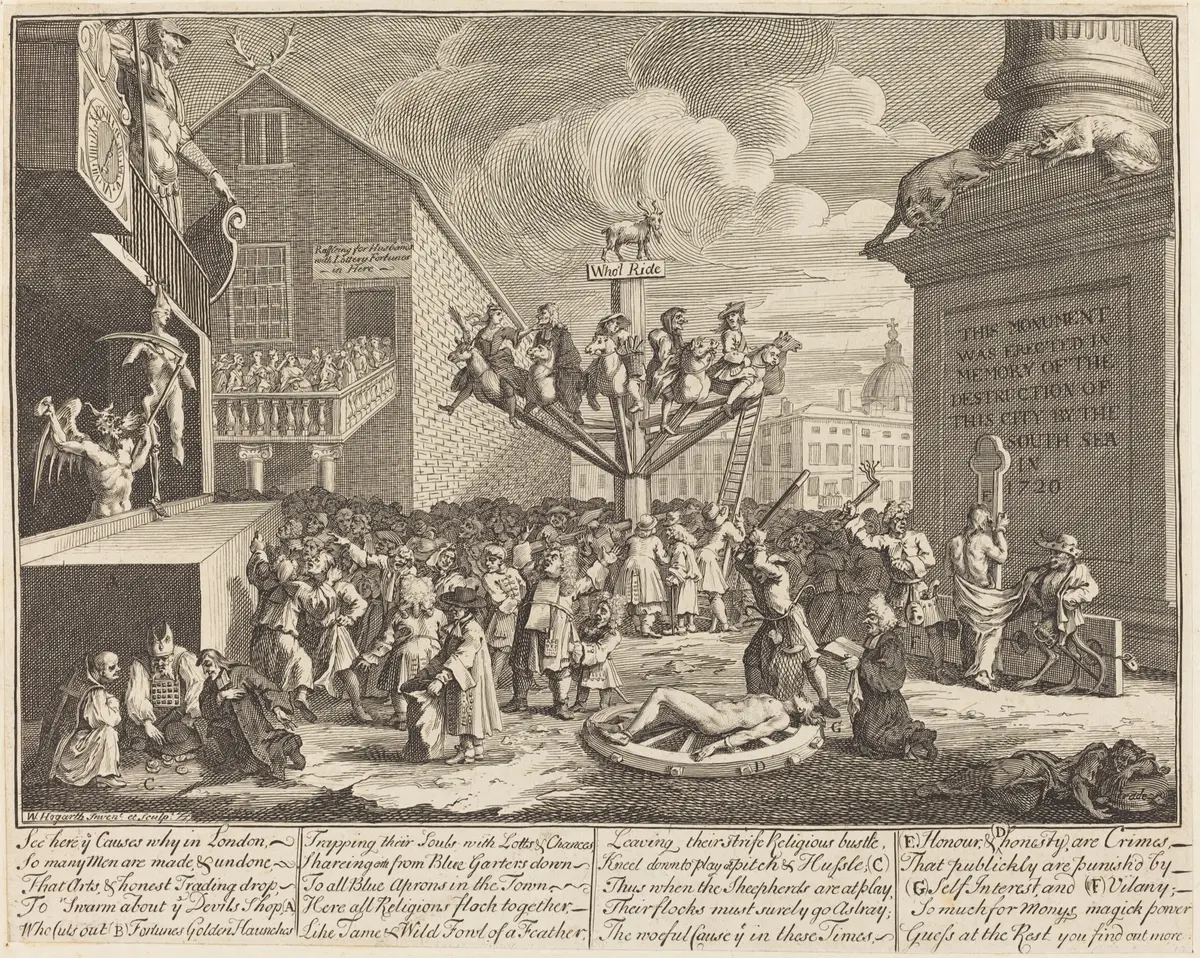
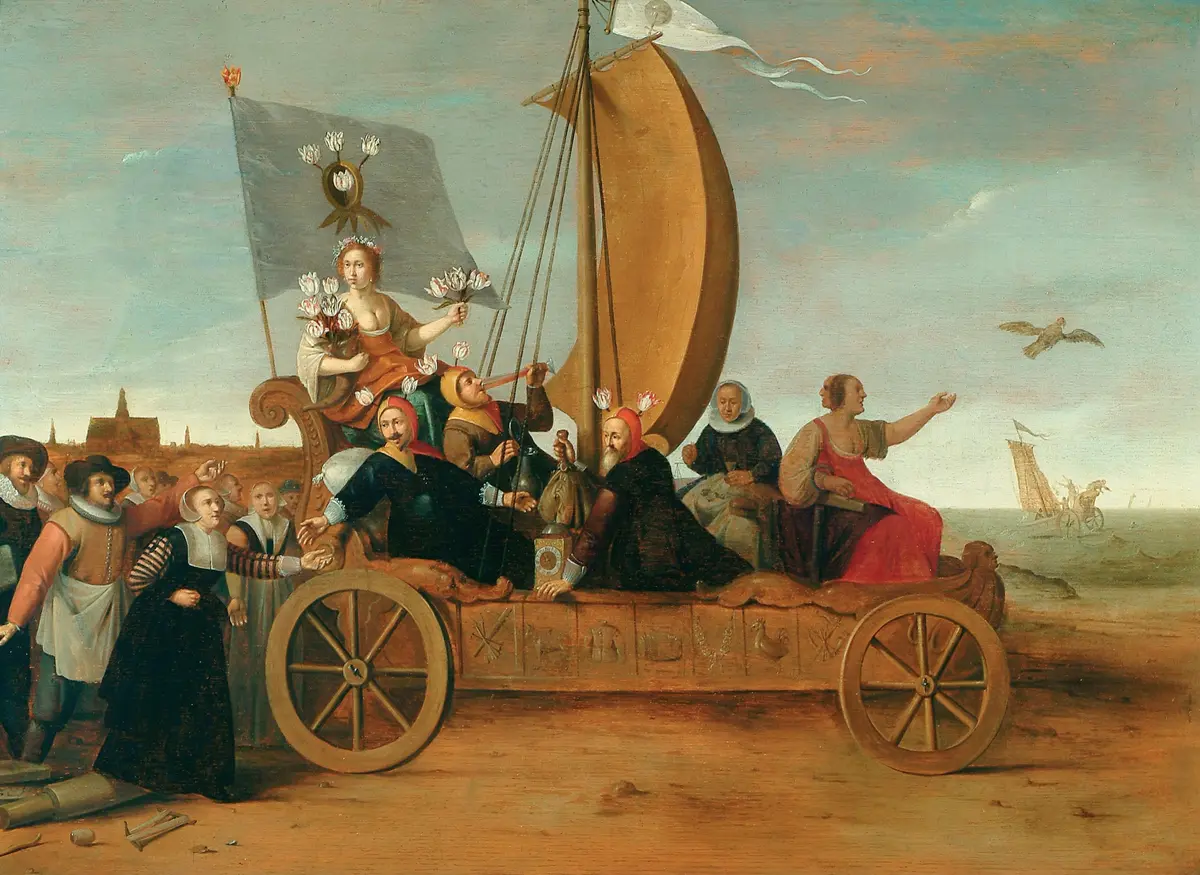
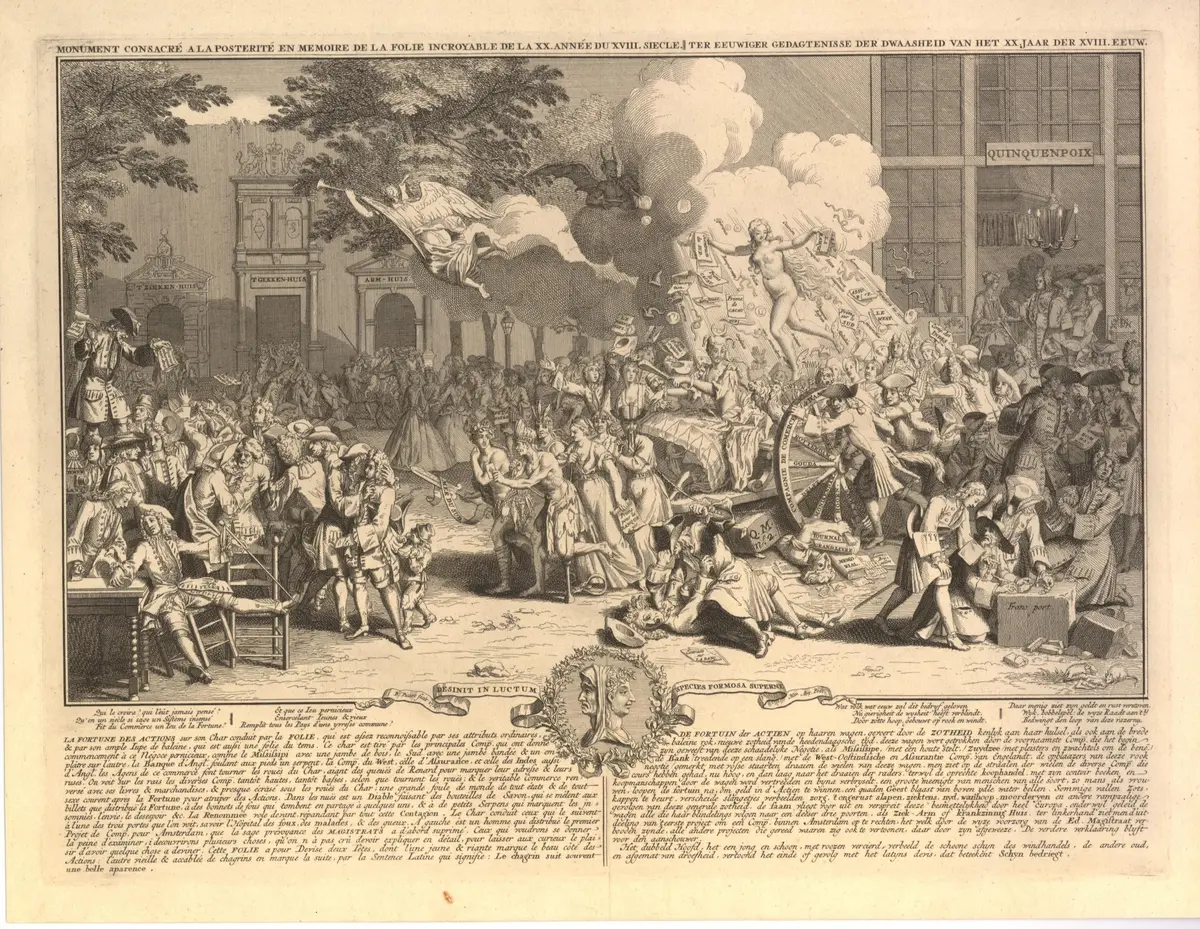
The crash ran alongside the South Sea Bubble in London, which money leaving Paris had helped to inflate, and the Dutch mocked both in the satirical prints of 'The Great Mirror of Folly'. In Britain the damage soon passed; in France, the collapse of Law's System had long-lasting effects on politics. Historians judge Law more kindly than his ruined investors did. Joseph Schumpeter placed him in the front rank of monetary theorists of all time, and the economist François Velde argues that the System was a reasonable idea, swapping a crushing debt for something like shares in the kingdom's revenue, wrecked by Law's insistence on holding the share price two to five times too high. Its most lasting product is a city: New Orleans.
What happened
- 1716
Letters patent signed in the boy king's name, with the regent present, let John Law and his company open a private bank in Paris, the Banque Générale, whose notes promise silver écus 'of the weight and fineness of this day'.
A decree orders the king's tax collectors to pay out the bank's notes in coin on demand, which makes them almost as good as cash for paying taxes.
- 1717
Letters patent create the Compagnie d'Occident, the Company of the West, with a 25-year monopoly of trade with Louisiana, the whole Mississippi valley, and of the Canadian beaver trade.
The company's shares go on sale at 500 livres, payable in the state's discounted billets d'État; the sale drags on until the end of 1718, when 100 million livres have been raised.
- 1718
The company founds New Orleans on the Mississippi, named after the regent; Paris prints soon show it as a walled city in a land of plenty.
French Quarter, New Orleans: the town the Company of the West founded in 1718 and named after the regentThe company takes over the tobacco monopoly, its first step from trade into collecting the king's revenues.
A royal declaration buys out the bank's shareholders and makes it the Banque Royale, the king's bank, still run by Law.
- 1719
The Banque Royale begins to issue notes in livres, for 10, 100 and 1,000, payable in silver but no longer tied to a set weight of coin.
The company buys the French East India and China companies and becomes the Compagnie des Indes, with all of France's trade outside Europe; its share stands at about 500 livres.
The company buys the right to run the royal mints for nine years.
It takes over the General Farms, which collect most of the indirect taxes, and offers to lend the king 1.2 billion livres, later 1.6 billion, at 3 per cent to repay the national debt. The share is at about 3,600 livres.
Since mid-September the company has sold 300,000 new shares at 5,000 livres each, payable in instalments or with the drafts paid to the state's creditors. The trading spills from its office into the rue Quincampoix, where horses and carriages are banned to keep the crowd from being trampled.
Rue Quincampoix, Paris: the street where Law's shares were traded in 1719 and 1720The share passes 10,000 livres, twenty times its issue price, and the bank's notes in circulation approach 800 million livres.
- 1720
Law is made Controller General of Finances, in charge of all France's finances, while still running the bank and the company.
The shareholders' meeting merges the Banque Royale into the Compagnie des Indes; the company stops supporting the share price, which falls from 9,925 to about 8,500 livres by March 1.
A decree forbids anyone to keep more than 500 livres in gold or silver coin; larger sums must be held and paid in notes.
Law reverses course: the company will buy any share offered at 9,000 livres, in notes. Holders sell, and the notes in circulation double by the end of May.
A decree cuts the value of the shares, month by month, from 9,000 to 5,000 livres, and of the notes to half their face value. Paris is outraged.
The council revokes the decree. Within a day or two the regent dismisses Law and has him guarded at home, but calls him back early in June.
The bank, which began paying small sums in coin on July 9, stops paying out coin for good after days of melees at its doors.
The government announces the end of the paper money: the large notes will stop being money on October 1, the small ones on May 1, 1721.
The council orders the 10,000- and 1,000-livre notes paid into bank accounts to be recorded and burned at the Hôtel de Ville.
Hôtel de Ville, Paris: where the large bank notes were burned in 1720The notes cease to be money for all payments; a 100-livre note now fetches only about twenty livres in silver.
The bank closes its doors.
Law leaves France for good, giving up his houses and estates to his creditors; he will die poor in Venice in 1729.