Tulip mania collapses
“In February 1637 the Dutch trade in tulip bulbs, sold on paper in taverns for the price of houses, collapsed in days; famous as the first bubble, it ruined far fewer people than the legend says.”
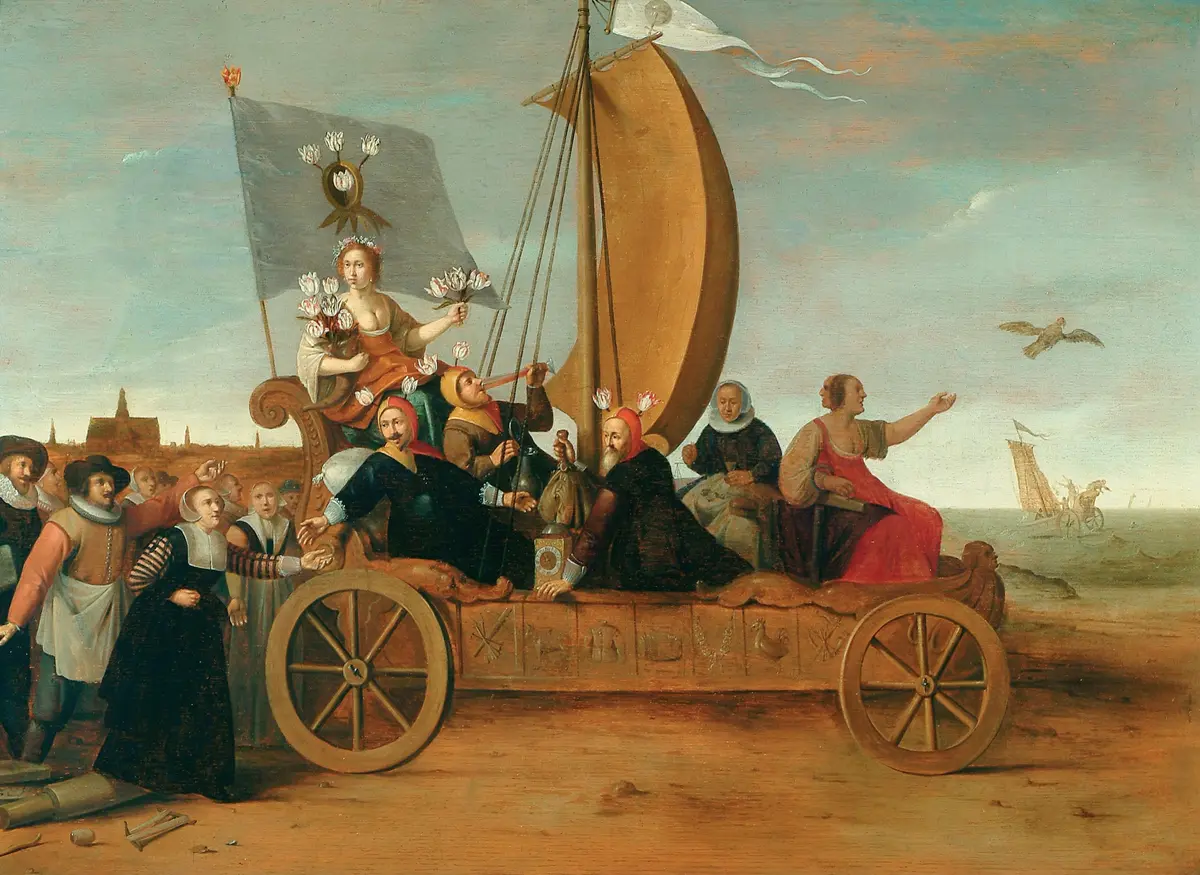
Tulips came to Europe from the Ottoman Empire in the 1550s, and by the 1630s they were the most fashionable flower in the Dutch Republic. The most prized were 'broken' tulips, with flames and stripes in their petals; we now know a virus caused the pattern, which could only be passed on slowly through the small buds that grow on the mother bulb. Because a bulb spends most of the year in the ground, the trade ran on promises: the bulb and the money were to change hands only when the bulbs were lifted in June. From the summer of 1636 florists in the towns of Holland met in taverns in groups they called colleges, where bids followed fixed rules and the buyer paid only a small fee of 'wine money'. People later called this the windhandel, the trade in wind. In November 1636 the trade spread from rare bulbs to common ones sold by the pound, and in January 1637 the price of some rose twentyfold in a few weeks.
The top came in the first week of February 1637. On February 5, in the hall of the new militia range at Alkmaar, the town's orphan masters auctioned the bulbs of the late innkeeper Wouter Bartholomeusz Winckel for his children. The printed list of the sale shows a Viceroy bulb going for 4,200 guilders and a total of 90,000 guilders, at a time when a master craftsman earned about 300 a year. But two days earlier a sale in Haarlem, the centre of the trade, had gone badly, and within days the news reached the other towns: buyers who had promised fortunes would not pay. On February 7 florists in Utrecht chose delegates, and on February 23 and 24 delegates from Haarlem, Delft, Gouda, Leiden, Utrecht, Alkmaar, Rotterdam, Hoorn, Enkhuizen and other places met in Amsterdam. Before a notary they agreed that sales made up to November 30, 1636 should stand, while later buyers could walk away by paying the seller ten per cent; Amsterdam's own florists refused to join.
Then the authorities were asked to step in, and they stepped back. On April 27, 1637, the States of Holland, on the advice of the Court of Holland, left the disputes to the magistrates of each town, suspended all tulip contracts in the meantime, and allowed growers to sell bulbs that buyers would not take. In June, when the bulbs came out of the ground, most buyers did not come to collect them, and in September, when they had to go back in, they still refused. The quarrels went on for years before notaries and arbitrators. Haarlem, according to the economist Peter Garber's reading of the records, finally let buyers off in May 1638 for 3.5 per cent of the price. Most deals were never paid in full, and since money had rarely changed hands, the real losses were far smaller than the paper ones.
How bad was it? The famous story, of chimney sweeps and weavers ruined, a sailor who ate a bulb worth a fortune, and a Dutch economy left in shock, comes mostly from moralising songs and pamphlets of 1637, such as the Haarlem printer Adriaen Roman's dialogue between Waermondt and Gaergoedt. Later writers copied them, and the Scottish journalist Charles Mackay made the tale world-famous in 1841. Garber showed in 1989 that steep falls in the price of rare new bulbs were normal in the flower trade, and that only the last weeks of trading in common bulbs look like a bubble. The historian Anne Goldgar, who read the archives of Haarlem, Amsterdam and Enkhuizen for her book Tulipmania (2007), found a few hundred traders, mostly merchants and master craftsmen who could afford the risk, and not one bankruptcy she could blame on tulips. The Dutch economy kept growing. What the crash damaged was trust and people's sense of what things are worth, not their wealth; reference books such as Britannica still tell the older story.
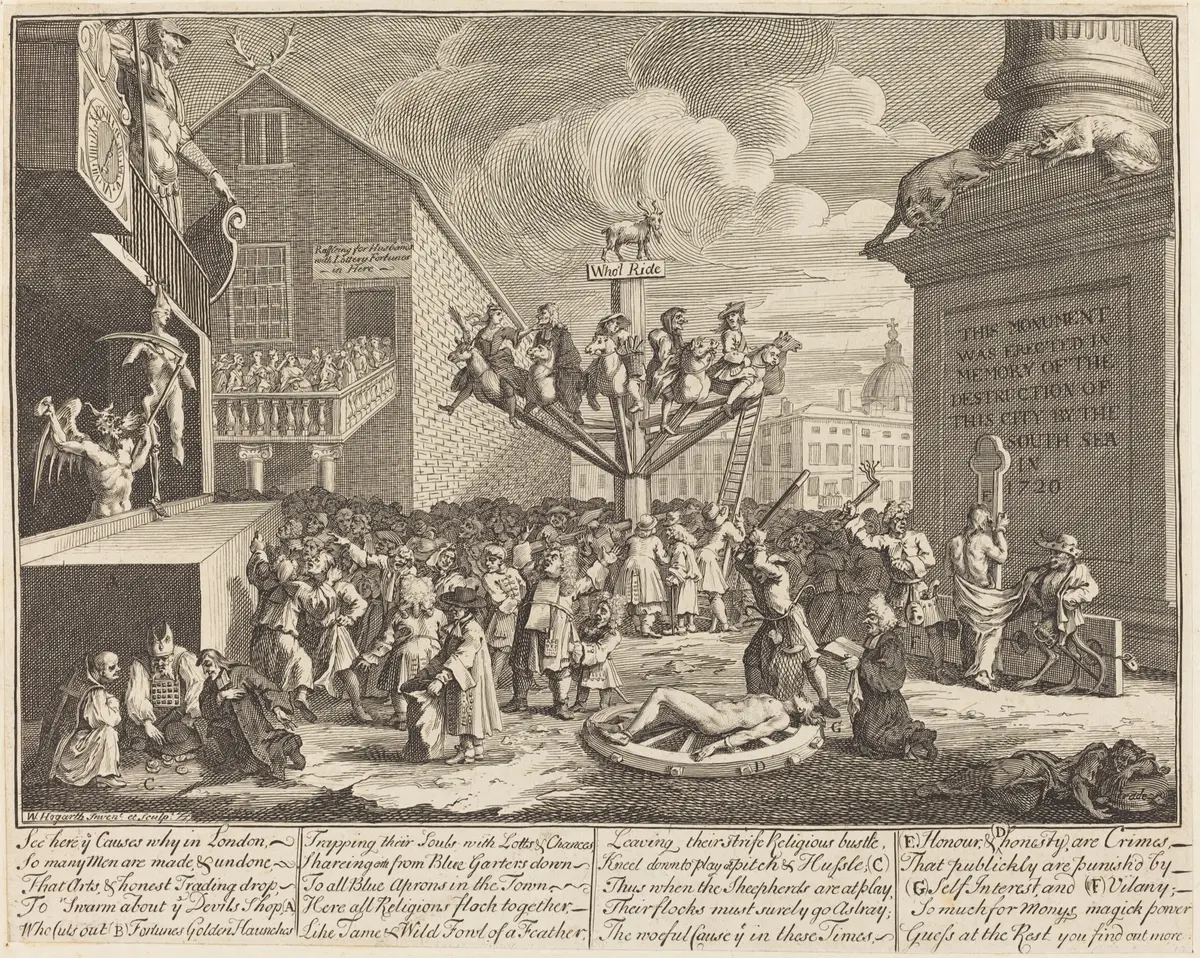
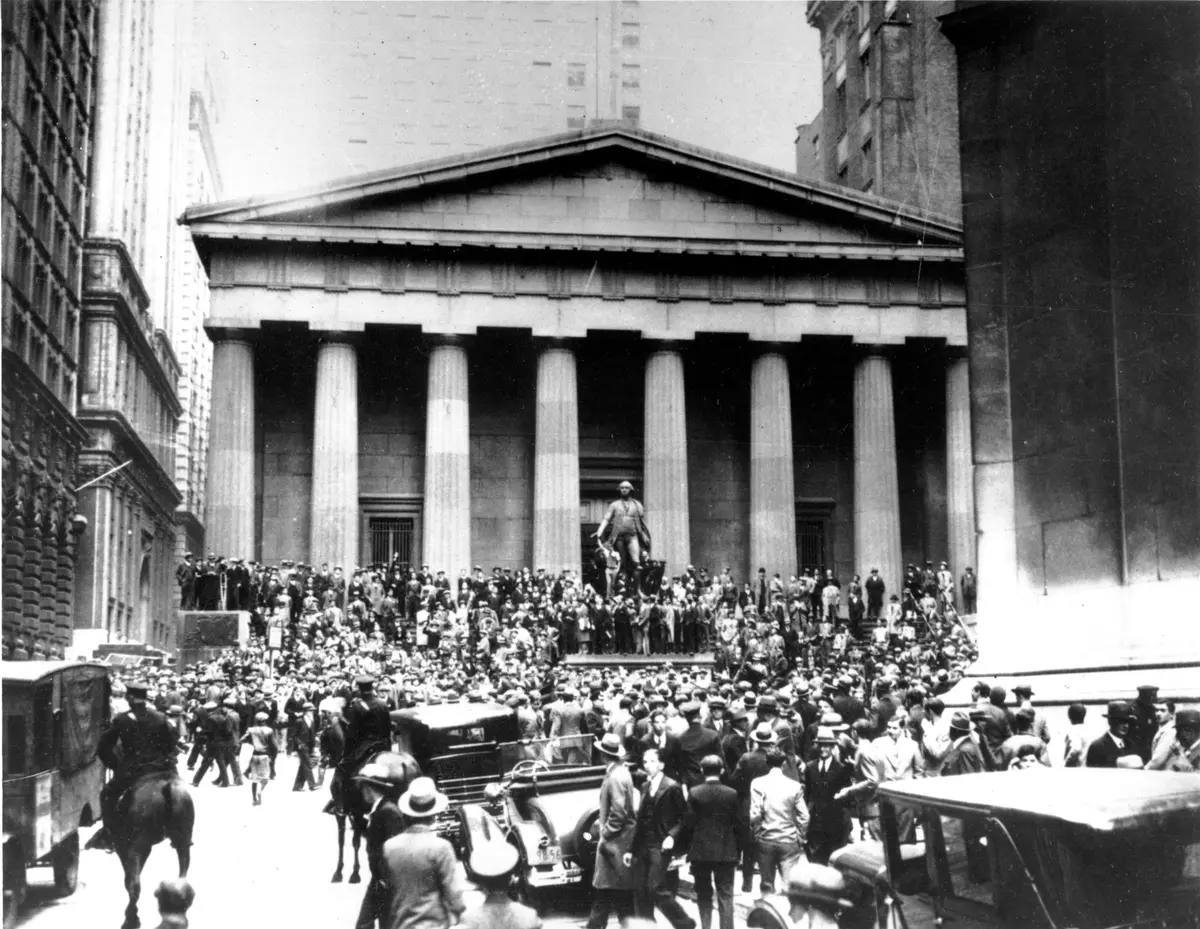
Tulip mania still matters because it became the world's shorthand for a speculative bubble: it was invoked in the South Sea Bubble of 1720, the crash of 1929, the dot-com boom and the rise of bitcoin. It was also an early example of something modern finance knows well, a trade in promises for future delivery, with no deposit and no central exchange, that worked only while prices rose. And it shows how a good story, retold for four centuries, can grow far beyond the facts behind it.
What happened
- 1636
In the tavern colleges of Holland's towns, where florists have traded bulbs on paper since the summer, the trade spreads from rare tulips to common ones sold by the pound, all still in the ground, with only 'wine money' paid on the spot.
Haarlem: the centre of the tulip trade; a sale here went wrong on February 3, 1637, and the town let buyers off for 3.5 per cent in 1638- 1637
Prices race upward: some common bulbs rise twentyfold in a few weeks, the steepest climb of the whole craze.
In Haarlem, the centre of the trade, a tulip sale does not go as expected: the first sign that buyers are losing their nerve.
Haarlem: the centre of the tulip trade; a sale here went wrong on February 3, 1637, and the town let buyers off for 3.5 per cent in 1638At Alkmaar the orphan masters auction the bulbs of the late innkeeper Wouter Winckel for his children: a Viceroy goes for 4,200 guilders and the sale totals 90,000. Buyers from Haarlem take part, not yet knowing what was said there two days before.
Nieuwe Doelen, Alkmaar: the militia hall where the bulbs of Wouter Winckel's orphans were auctioned for 90,000 guilders on February 5, 1637In the Menniste Bruyloft tavern in Amsterdam, the Haarlem cooper Andries de Busscher sells a pound of Switsers to Joost van Cuyck for 1,100 guilders. By the next morning Van Cuyck is looking for a way out of the deal.
Amsterdam: the tavern sale at the Menniste Bruyloft on February 6, and the florists' meeting and agreement of February 23-24, 1637Florists in Utrecht meet to elect representatives to a meeting in Amsterdam about the crash.
Utrecht: florists met on February 7, 1637 to choose delegates for the meeting in AmsterdamDelegates of the florists of a dozen towns, gathered in Amsterdam since the day before, agree before a notary that sales up to November 30, 1636 must stand, while later buyers may withdraw by paying ten per cent. Amsterdam's florists refuse to join, and the authorities do not adopt the plan.
Amsterdam: the tavern sale at the Menniste Bruyloft on February 6, and the florists' meeting and agreement of February 23-24, 1637The States of Holland, on the advice of the Court of Holland, leave the disputes to the town magistrates and suspend all tulip contracts; growers may sell bulbs that buyers will not take and claim the difference.
Binnenhof, The Hague: seat of the States of Holland and the Court of Holland; the resolution of April 27, 1637The bulbs come out of the ground and the deals fall due, but most buyers do not come to inspect or collect their bulbs, and sellers send notaries after them.
The bulbs must go back into the ground, and buyers still refuse to take them: 'I shall do as another has done' is the usual answer to the notaries.
- 1638
Haarlem's council lets buyers end their tulip contracts by paying 3.5 per cent of the price, and other towns follow its example.
Haarlem: the centre of the tulip trade; a sale here went wrong on February 3, 1637, and the town let buyers off for 3.5 per cent in 1638