Dot-com bubble
“From Netscape's 1995 IPO to March 2000, internet shares soared and the Nasdaq rose fivefold to 5,048; it then fell 78 percent by October 2002, taking Pets.com, Webvan and hundreds of start-ups with it.”
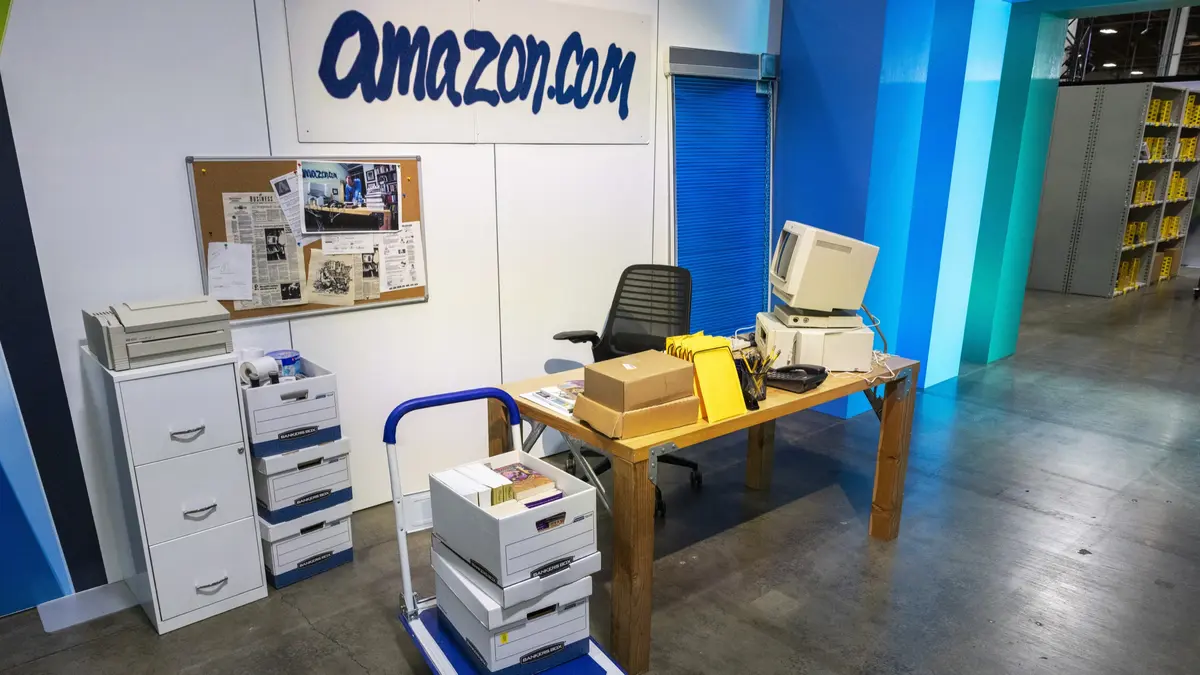
The dot-com bubble was the stock-market mania of the late 1990s, when the arrival of the World Wide Web convinced investors that young internet companies, many with no profits at all, would own the future. It is usually dated from 9 August 1995, when Netscape, the maker of the first popular web browser and barely sixteen months old, began trading on the Nasdaq stock market: its shares, priced at $28, traded as high as $74.75 within weeks. Hundreds of firms followed it to the market: Yahoo! in April 1996, Amazon in May 1997, and in 1999 alone 476 companies, almost four in five of them technology firms and three in four of them losing money. Their shares rose on average 71 percent on their first day of trading. Venture capital poured into start-ups, and employees paid in stock options became millionaires when their companies listed.
At its peak the bubble was everywhere. The Nasdaq Composite, an index full of technology shares, stood near 1,000 on the day Netscape listed; it gained 86 percent in 1999 alone and closed at a record 5,048.62 on 10 March 2000, five times higher. In December 1996 the chairman of the Federal Reserve, Alan Greenspan, had asked aloud how one would know when 'irrational exuberance' had pushed prices too high, but the Fed cut interest rates in the autumn of 1998, after Russia's default and the rescue of the hedge fund Long-Term Capital Management, and the last climb was the steepest. In January 2000 America Online, the largest online service, agreed to merge with the media giant Time Warner in a deal valued at $350 billion, and internet start-ups bought about a fifth of the commercials at that month's Super Bowl, among them Pets.com with its talking sock puppet.
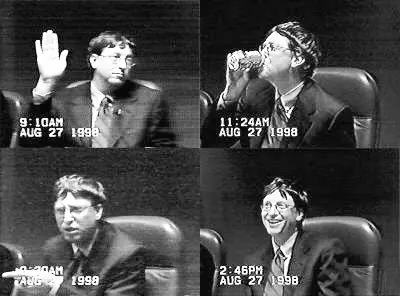
Then the money ran out. The Fed had raised its key rate six times, from 4.75 to 6.5 percent between June 1999 and May 2000. On 3 April 2000 a federal judge ruled that Microsoft had broken the antitrust laws, and in the week to 14 April the Nasdaq lost a quarter of its value. Companies that had spent their investors' money on advertising and warehouses could not raise more: Pets.com closed in November 2000, nine months after its stock-market debut, and the grocery-delivery firm Webvan went bankrupt in July 2001. The United States slid into recession in March 2001, the terrorist attacks of 11 September shut the markets for four days, and the bust exposed frauds such as the $3.8 billion of false profits at the telecom company WorldCom. The Nasdaq hit bottom on 9 October 2002 at 1,114.11, 78 percent below its peak; it did not pass its 2000 high again until April 2015.
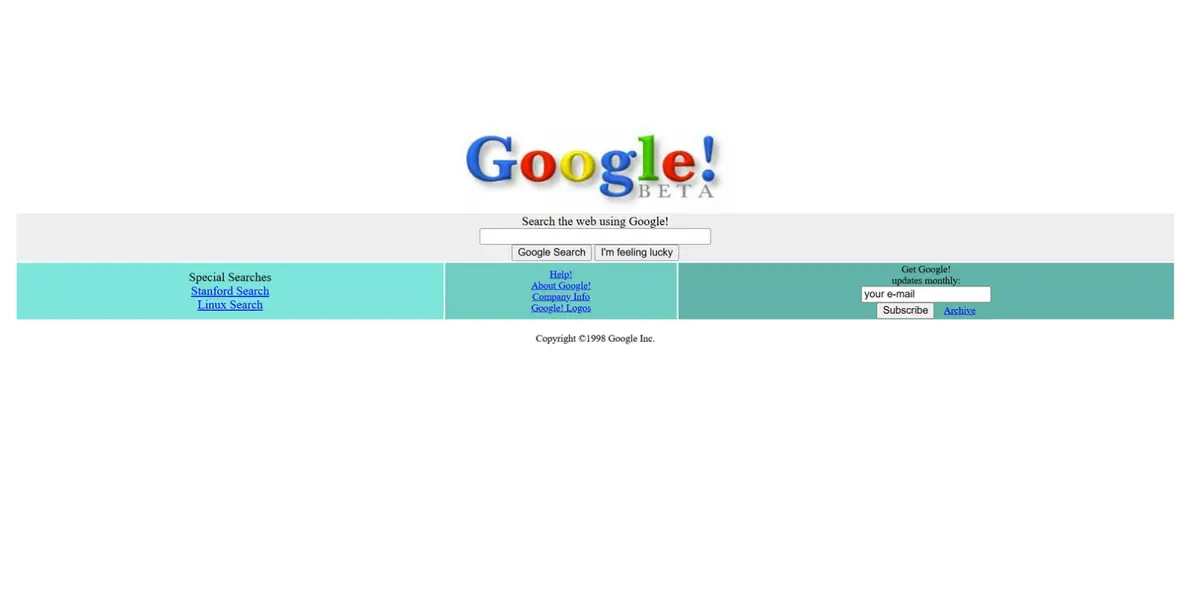
Not everything was lost. The web itself kept growing through the bust, and a few survivors, above all Amazon and Google (founded in 1998, public only in 2004), became some of the most valuable companies in the world, while AOL Time Warner wrote off $54 billion of the value of its merger in a single quarter of 2002. Congress answered the accounting scandals with the Sarbanes–Oxley Act of July 2002, which made chief executives vouch for their companies' accounts. The Fed cut rates to 1 percent by 2003 to fight the bust, and critics later argued that this cheap money helped inflate the housing bubble that burst in 2008. Ever since, every new technology boom, from crypto-currencies to artificial intelligence, has invited comparison with the dot-com bubble.
What happened
- 1995
Netscape Communications, maker of the Navigator web browser and incorporated only in April 1994, begins trading on the Nasdaq as NSCP. Its shares were priced the evening before at $28; by the end of September they trade as high as $74.75. The offering brings in $148.2 million, and the Nasdaq Composite closes at 1,005.10.
Netscape Communications, 501 East Middlefield Road, Mountain View: the browser-maker whose IPO began the boom- 1996
Yahoo!, the web directory that Stanford graduate students David Filo and Jerry Yang built in 1994, goes public on the Nasdaq as YHOO. More than 670 American companies go public in 1996, a record for the decade.
At the American Enterprise Institute's annual dinner in Washington, Fed Chairman Alan Greenspan asks: 'how do we know when irrational exuberance has unduly escalated asset values?' The Nasdaq, at 1,300.12 that day, slips to 1,287.68 the next, and the climb soon resumes.
- 1998
After Russia's default in August and the rescue of the hedge fund Long-Term Capital Management on 23 September, the Fed cuts rates for the second time in three weeks, between its scheduled meetings, and a third time on 17 November, to 4.75 percent. The Nasdaq, which fell from 2,000 in July to 1,419.12 on 8 October, more than doubles over the next twelve months.
Federal Reserve Board, Eccles Building, Washington: the rate cuts of 1998 and 2001 and the rises of 1999–2000Netscape, losing the browser war to Microsoft's free Internet Explorer, signs an agreement to be taken over by America Online in an all-share deal: 0.45 AOL share for each Netscape share. The deal closes in March 1999.
Dulles, Virginia: America Online's headquarters, where the Time Warner merger was announced- 1999
With the economy booming, the Federal Reserve raises its target rate from 4.75 to 5 percent, the first of six increases that will take it to 6.5 percent by May 2000.
Federal Reserve Board, Eccles Building, Washington: the rate cuts of 1998 and 2001 and the rises of 1999–2000Webvan, which promises to deliver groceries ordered online within a 30-minute window, starts trading on the Nasdaq after selling 28.75 million shares at $15, raising $431.3 million; by the end of the year its shares touch $34.
Webvan's head office, 310 Lakeside Drive, Foster City: the grocery-delivery start-up that went bankrupt in July 2001A giant balloon of the Pets.com sock puppet floats in the Macy's Thanksgiving Day Parade in New York, nine months after the company was founded.
The Nasdaq ends 1999 at 4,069.31, up 86 percent in a year; it first closed above 3,000 on 3 November and above 4,000 on 29 December. In 1999, 476 companies went public in the United States, and their shares rose on average 71 percent on the first day.
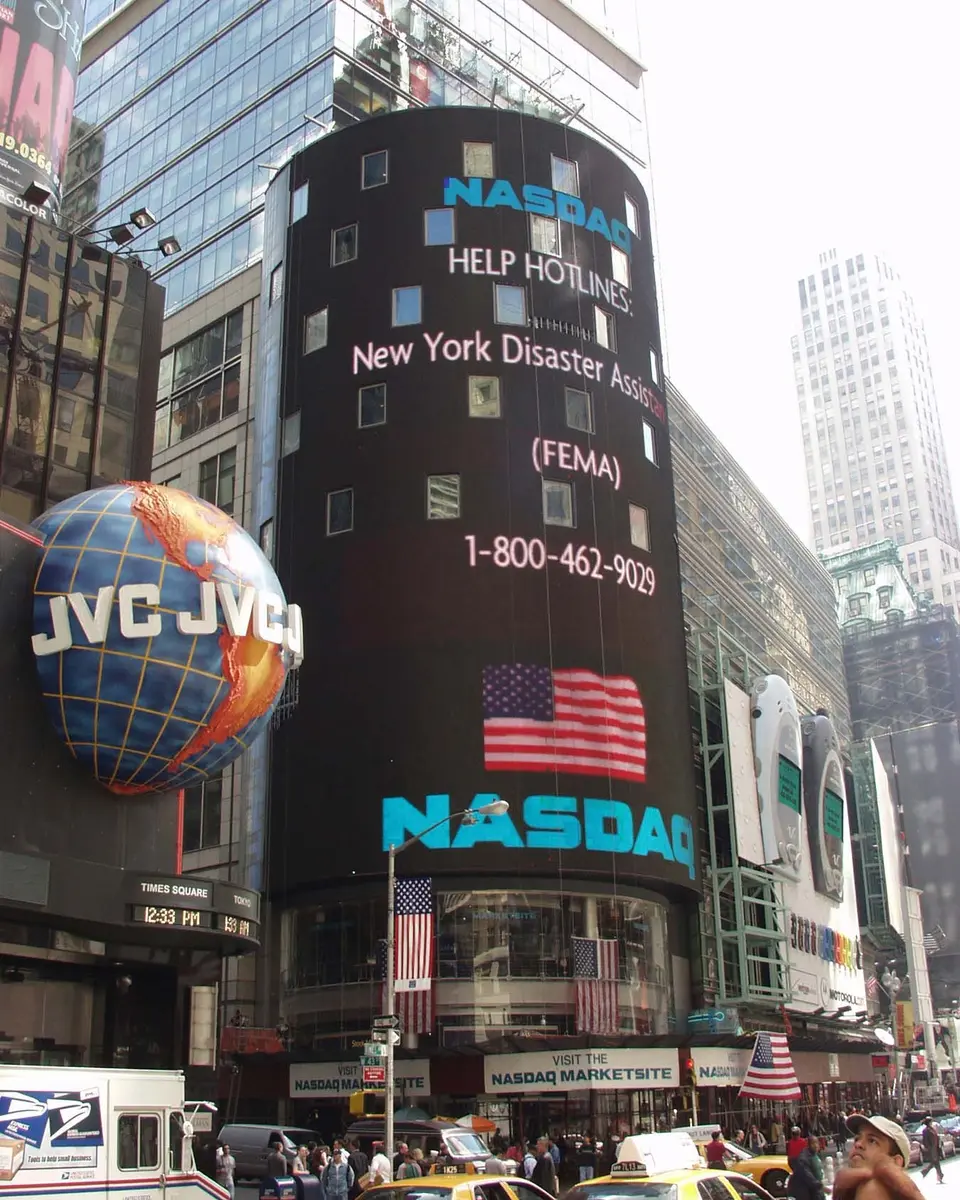
Nasdaq MarketSite, 4 Times Square, New York: the market's showcase, where the Composite peaked at 5,048.62- 2000
America Online and Time Warner announce a 'merger of equals' valued at $350 billion: the internet company, with a fraction of Time Warner's revenue, will own about 55 percent of AOL Time Warner, thanks to its soaring share price.
Dulles, Virginia: America Online's headquarters, where the Time Warner merger was announcedSuper Bowl XXXIV at the Georgia Dome becomes the 'dot-com Super Bowl': internet companies buy nearly a fifth of the 61 commercial spots, at about $2.2 million for 30 seconds. Pets.com's sock puppet is among them; a year earlier only two dot-coms had advertised.
Georgia Dome, Atlanta: Super Bowl XXXIV, the 'dot-com Super Bowl' of 30 January 2000Pets.com goes public on the Nasdaq as IPET, selling 7.5 million shares at $11; it lost $61.8 million in its first ten months, and Amazon.com is its largest shareholder.
435 Brannan Street, San Francisco: Pets.com's offices when it went publicThe Nasdaq Composite closes at its record of 5,048.62, five times its level on the day Netscape listed and three and a half times its low of October 1998. It will not close this high again for fifteen years.
Nasdaq MarketSite, 4 Times Square, New York: the market's showcase, where the Composite peaked at 5,048.62Judge Thomas Penfield Jackson rules that Microsoft broke the Sherman Antitrust Act. The Nasdaq falls 349.15 points, 7.6 percent, to 4,223.68.
E. Barrett Prettyman Courthouse, Washington: the Microsoft ruling of 3 April 2000The Nasdaq falls 355.49 points, or 9.7 percent, to 3,321.29, ending a week in which it lost a quarter of its value; it is now 34 percent below the peak of five weeks earlier.
Nasdaq MarketSite, 4 Times Square, New York: the market's showcase, where the Composite peaked at 5,048.62The Federal Reserve raises its target rate by half a point to 6.5 percent, the largest and last of its six increases since June 1999.
Federal Reserve Board, Eccles Building, Washington: the rate cuts of 1998 and 2001 and the rises of 1999–2000Unable to find a buyer or new money among more than 50 investors approached, Pets.com announces it will wind down, laying off about 255 of its 320 employees and selling its assets, the sock puppet included.
435 Brannan Street, San Francisco: Pets.com's offices when it went public- 2001
In a surprise move between meetings, the Fed cuts its target rate by half a point to 6 percent. The Nasdaq jumps 324.83 points, or 14.17 percent, to 2,616.69: its largest one-day percentage gain ever. Ten more cuts follow in 2001.
Federal Reserve Board, Eccles Building, Washington: the rate cuts of 1998 and 2001 and the rises of 1999–2000The merger of America Online and Time Warner is completed, creating AOL Time Warner, a year and a day after it was announced.
Dulles, Virginia: America Online's headquarters, where the Time Warner merger was announcedThe United States enters recession, ending an expansion of 120 months that began in March 1991, the longest on record at the time; investment in computers and communications equipment collapses.
Webvan and its subsidiaries, among them HomeGrocer.com, which it had bought in 2000, file for Chapter 11 bankruptcy in Delaware; the company plans to sell all its businesses and assets.
Webvan's head office, 310 Lakeside Drive, Foster City: the grocery-delivery start-up that went bankrupt in July 2001The stock markets reopen after the attacks of 11 September, closed since that morning. Before the opening the Fed cuts its target rate by half a point to 3 percent; the Nasdaq closes at 1,579.55, 6.8 percent below its level of 10 September.
Nasdaq MarketSite, 4 Times Square, New York: the market's showcase, where the Composite peaked at 5,048.62The recession ends after eight months, one of the shortest on record, though jobs and technology shares keep falling into 2002.
The Fed makes its eleventh cut of the year, bringing its target rate to 1.75 percent from 6.5 percent in January.
Federal Reserve Board, Eccles Building, Washington: the rate cuts of 1998 and 2001 and the rises of 1999–2000- 2002
AOL Time Warner's quarterly report records a charge of $54 billion for the lost value of the merger, 'reflecting overall market declines since the Merger was announced', and a net loss of $54.24 billion for the first three months of 2002; its loss for the year will reach $98.7 billion.
Dulles, Virginia: America Online's headquarters, where the Time Warner merger was announcedThe Securities and Exchange Commission charges WorldCom, a giant of the telecom boom and owner of much of the internet's backbone, with an accounting fraud of more than $3.8 billion; scandals at WorldCom, Enron and others deepen the fall in share prices.
Greenspan tells the Senate Banking Committee that 'an infectious greed seemed to grip much of our business community' during the boom, as executives tried to 'harvest' the gains of the late 1990s.
- 10:15 a.m.
In the East Room of the White House, President George W. Bush signs the Sarbanes–Oxley Act, 'the most far-reaching reforms of American business practices since the time of Franklin Delano Roosevelt'.
The White House, Washington: Bush signs the Sarbanes–Oxley Act in the East Room, 30 July 2002 The Nasdaq Composite closes at 1,114.11, its lowest point of the bust: 77.9 percent below the peak of March 2000. It will not pass 5,048.62 again until 23 April 2015.
Nasdaq MarketSite, 4 Times Square, New York: the market's showcase, where the Composite peaked at 5,048.62