United States v. Microsoft
“In 1998 the US government sued Microsoft for illegally protecting its Windows monopoly against Netscape's browser; a 2000 order to split the company was overturned in 2001, and a settlement imposed rules instead.”
United States v. Microsoft was the great monopoly case of the computer age. On 18 May 1998 the US Justice Department, and on the same day twenty states and the District of Columbia, sued Microsoft in the federal court in Washington. They said the company had broken the Sherman Antitrust Act of 1890 to protect the monopoly of Windows, which ran on more than nine out of ten personal computers. The main battlefield was the web browser. Netscape's Navigator, released in December 1994, had quickly become the way most people saw the young World Wide Web, and Microsoft feared that programs written for the browser could one day run on any operating system, which would end the advantage that kept Windows on almost every PC. To stop that, the government said, Microsoft built its own Internet Explorer into Windows so that it could not be removed, forced PC makers to show it, and signed deals with online services and software firms that kept Navigator out.
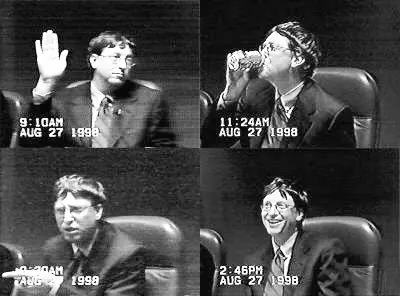
The trial began on 19 October 1998 before Judge Thomas Penfield Jackson. Over 78 days he heard 26 witnesses, read the depositions of 79 more and admitted 2,733 exhibits. The government's lead trial lawyer, David Boies, built the case from Microsoft's own e-mails and from Bill Gates's videotaped deposition, in which the chairman said again and again that he did not recall e-mails and meetings put to him. On 5 November 1999 Jackson found that Microsoft held monopoly power and had used it to harm consumers and rivals. Four months of settlement talks led by Judge Richard Posner in Chicago failed, and on 3 April 2000 Jackson ruled that Microsoft had broken the law. On 7 June 2000 he ordered the company split in two: one firm for Windows, the other for everything else.
The break-up never happened. The Supreme Court refused to take the case directly, and on 28 June 2001 the seven judges of the appeals court in Washington, ruling together, agreed that Microsoft had illegally kept its monopoly but threw out the break-up, dropped the finding that Microsoft had tried to monopolise browsers, and removed Jackson from the case because he had given secret interviews to reporters while it was still going on. A new judge, Colleen Kollar-Kotelly, was chosen by lot. The Justice Department, now under President George W. Bush, said in September 2001 that it would no longer seek a break-up, and on 2 November 2001 it reached a settlement with Microsoft that nine of the states later joined. The other nine states and the District of Columbia fought on in a second hearing in 2002. On 1 November 2002 the judge approved the settlement with one change, and she gave the holdout states almost the same terms.
The final judgment, entered on 12 November 2002, did not break Microsoft up. It told the company how to behave for five years: PC makers had to be free to install and promote rival software, users had to be able to hide Microsoft's own programs and choose others, Microsoft had to share the technical interfaces that other programs need to work with Windows, and it could not punish anyone for supporting competitors. Three full-time technical experts watched it from inside the company. Most of the rules ended in November 2007; those on how Windows talks to servers were extended until 2011. The nine holdout states had asked for much more, and critics of the deal called it too weak; Microsoft had argued throughout that it had broken no law and had only improved its product.
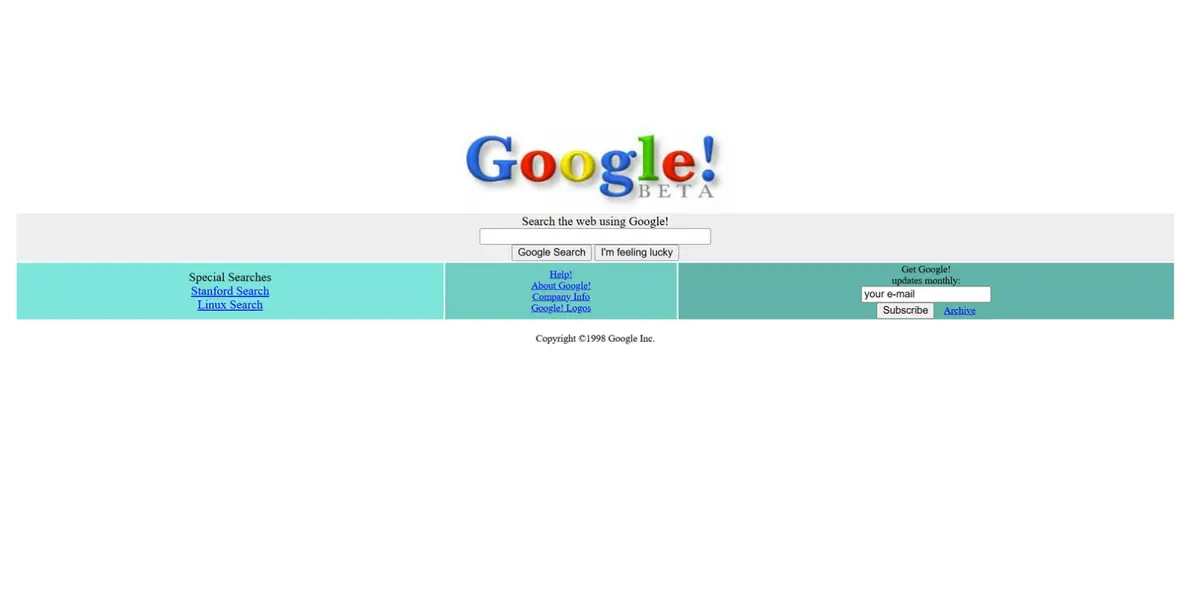
The case still matters because it set the rules for monopolies in technology. The appeals court's long opinion of 2001 explained how the old Sherman Act applies to software, networks and platforms, and courts still follow it: when Judge Amit Mehta, of the same court in Washington, ruled in August 2024 that Google had illegally kept its search monopoly, he cited the Microsoft case on page after page. The trial also showed how much the computer industry had come to matter to the economy, and it ran through the years of the dot-com boom, while companies like Google, founded in 1998, were starting out on the web that the browser war had been about.
What happened
- 1998
The Justice Department sues Microsoft in the federal court in Washington for illegally protecting its Windows monopoly and trying to extend it to web browsers; twenty states and the District of Columbia file a similar suit the same day. Attorney General Janet Reno and Joel Klein, head of the Antitrust Division, announce it.
Robert F. Kennedy Department of Justice Building, 950 Pennsylvania Avenue NW, Washington: the Justice Department, which brought the case and announced it, and where Ashcroft and James met the press on 1 November 2002Windows 98 goes on sale in more than forty countries, with Internet Explorer bound into it so that users cannot remove it; the court will later hear that Microsoft held the product back until the browser was ready to ship with it.
Microsoft's headquarters, One Microsoft Way, Redmond, Washington: the defendant, where Windows 98 was announced- 9:10 a.m.
Bill Gates is sworn in for his videotaped deposition and questioned by the government's David Boies; the questioning goes on on 28 August and 2 September. The time is the one shown on the tape.
The trial opens before Judge Thomas Penfield Jackson, without a jury. The government's first witness is Netscape's chief executive, Jim Barksdale, whose written testimony is filed that day.
E. Barrett Prettyman United States Courthouse, 333 Constitution Avenue NW, Washington: the district court where Jackson tried the case and Kollar-Kotelly settled it, and the court of appeals that heard Microsoft's appealThe government plays the first excerpts of Gates's videotaped deposition in court. Boies uses them, and Microsoft's own e-mails, to show the chairman's role in pressing Apple and in the 1995 meeting with Netscape; Gates, on screen, often says he does not recall, and his testimony takes centre stage in the trial.
E. Barrett Prettyman United States Courthouse, 333 Constitution Avenue NW, Washington: the district court where Jackson tried the case and Kollar-Kotelly settled it, and the court of appeals that heard Microsoft's appealAmerica Online agrees to buy Netscape, the rival at the centre of the case, for 0.9 of an AOL share for each Netscape share; the purchase is completed on 17 March 1999.
- 1999
The evidence closes after 78 trial days: 26 witnesses heard in court, the depositions of 79 others and 2,733 exhibits.
E. Barrett Prettyman United States Courthouse, 333 Constitution Avenue NW, Washington: the district court where Jackson tried the case and Kollar-Kotelly settled it, and the court of appeals that heard Microsoft's appealClosing arguments on the facts. In this month, the appeals court later finds, Jackson begins giving secret interviews to reporters, on condition that nothing appears before his final judgment.
E. Barrett Prettyman United States Courthouse, 333 Constitution Avenue NW, Washington: the district court where Jackson tried the case and Kollar-Kotelly settled it, and the court of appeals that heard Microsoft's appealJackson issues his Findings of Fact: Microsoft holds monopoly power, with more than 90 percent of PC operating systems for a decade, and has used it to harm consumers, rivals and innovation. Klein calls it 'a tremendous victory for America's consumers'.
E. Barrett Prettyman United States Courthouse, 333 Constitution Avenue NW, Washington: the district court where Jackson tried the case and Kollar-Kotelly settled it, and the court of appeals that heard Microsoft's appealJackson appoints Richard Posner, chief judge of the Seventh Circuit in Chicago, to mediate settlement talks; both sides welcome him.
Dirksen Federal Building, 219 South Dearborn Street, Chicago: the court of Chief Judge Richard Posner, who led the failed settlement talks of November 1999 to April 2000 in Chicago- 2000
Closing arguments on the law, while the talks in Chicago go on behind closed doors.
E. Barrett Prettyman United States Courthouse, 333 Constitution Avenue NW, Washington: the district court where Jackson tried the case and Kollar-Kotelly settled it, and the court of appeals that heard Microsoft's appealPosner announces that his four months of mediation have failed; Klein thanks him and says any remedy must solve the problems the court found.
Dirksen Federal Building, 219 South Dearborn Street, Chicago: the court of Chief Judge Richard Posner, who led the failed settlement talks of November 1999 to April 2000 in ChicagoJackson's Conclusions of Law: Microsoft broke the Sherman Act by keeping its monopoly through anticompetitive acts, by trying to monopolise the browser market and by tying Internet Explorer to Windows, and it broke the laws of the plaintiff states.
E. Barrett Prettyman United States Courthouse, 333 Constitution Avenue NW, Washington: the district court where Jackson tried the case and Kollar-Kotelly settled it, and the court of appeals that heard Microsoft's appealThe government and the states ask the court to split Microsoft into an operating-system company and an applications company, with strict conduct rules in the meantime.
Robert F. Kennedy Department of Justice Building, 950 Pennsylvania Avenue NW, Washington: the Justice Department, which brought the case and announced it, and where Ashcroft and James met the press on 1 November 2002The only hearing on the remedy; Jackson refuses Microsoft's request for months of further evidence.
E. Barrett Prettyman United States Courthouse, 333 Constitution Avenue NW, Washington: the district court where Jackson tried the case and Kollar-Kotelly settled it, and the court of appeals that heard Microsoft's appealJackson orders Microsoft broken in two and gives it four months to submit a plan. Klein calls it 'the right remedy'.
E. Barrett Prettyman United States Courthouse, 333 Constitution Avenue NW, Washington: the district court where Jackson tried the case and Kollar-Kotelly settled it, and the court of appeals that heard Microsoft's appealThe Wall Street Journal publishes John Wilke's interview with Jackson, the first of the accounts showing that the judge had talked to reporters about the case while it was before him.
Jackson suspends his judgment until the appeal is decided and sends the government's case straight to the Supreme Court.
E. Barrett Prettyman United States Courthouse, 333 Constitution Avenue NW, Washington: the district court where Jackson tried the case and Kollar-Kotelly settled it, and the court of appeals that heard Microsoft's appealThe Supreme Court, by 8 votes to 1, refuses to hear the appeal directly and sends it to the appeals court in Washington; Justice Breyer dissents.
Supreme Court of the United States, 1 First Street NE, Washington: it refused the direct appeal on 26 September 2000 and Microsoft's petition on 9 October 2001- 2001
The seven judges of the D.C. Circuit hear two days of argument, on 26 and 27 February, and question both sides sharply, including about Jackson's comments to the press.
E. Barrett Prettyman United States Courthouse, 333 Constitution Avenue NW, Washington: the district court where Jackson tried the case and Kollar-Kotelly settled it, and the court of appeals that heard Microsoft's appealThe appeals court, unanimous, upholds the finding that Microsoft illegally kept its monopoly, reverses the browser-monopolisation finding, sends the tying claim back for a new test, throws out the break-up and removes Jackson from the case.
E. Barrett Prettyman United States Courthouse, 333 Constitution Avenue NW, Washington: the district court where Jackson tried the case and Kollar-Kotelly settled it, and the court of appeals that heard Microsoft's appealThe appeals court sends the case back; the district court chooses a new judge at random, Colleen Kollar-Kotelly.
E. Barrett Prettyman United States Courthouse, 333 Constitution Avenue NW, Washington: the district court where Jackson tried the case and Kollar-Kotelly settled it, and the court of appeals that heard Microsoft's appealThe Justice Department tells Microsoft that it will no longer seek a break-up or pursue the tying claim, to win a quicker remedy.
Robert F. Kennedy Department of Justice Building, 950 Pennsylvania Avenue NW, Washington: the Justice Department, which brought the case and announced it, and where Ashcroft and James met the press on 1 November 2002Court-ordered settlement talks begin, with a deadline of 2 November.
The Supreme Court declines to hear Microsoft's appeal against the June ruling.
Supreme Court of the United States, 1 First Street NE, Washington: it refused the direct appeal on 26 September 2000 and Microsoft's petition on 9 October 2001The United States and Microsoft file a proposed settlement: conduct rules for five years instead of a break-up.
E. Barrett Prettyman United States Courthouse, 333 Constitution Avenue NW, Washington: the district court where Jackson tried the case and Kollar-Kotelly settled it, and the court of appeals that heard Microsoft's appealA revised settlement is filed, joined by nine states; nine others and the District of Columbia refuse it and decide to fight on.
E. Barrett Prettyman United States Courthouse, 333 Constitution Avenue NW, Washington: the district court where Jackson tried the case and Kollar-Kotelly settled it, and the court of appeals that heard Microsoft's appealThe Senate Judiciary Committee holds a hearing on the settlement, 'A Look to the Future'; Charles James, the new head of the Antitrust Division, defends it.
- 2002
After more than 30,000 public comments under the Tunney Act, the Justice Department announces changes to the settlement, filed the day before.
Robert F. Kennedy Department of Justice Building, 950 Pennsylvania Avenue NW, Washington: the Justice Department, which brought the case and announced it, and where Ashcroft and James met the press on 1 November 2002Kollar-Kotelly holds the Tunney Act hearing on whether the settlement is in the public interest.
E. Barrett Prettyman United States Courthouse, 333 Constitution Avenue NW, Washington: the district court where Jackson tried the case and Kollar-Kotelly settled it, and the court of appeals that heard Microsoft's appealThe holdout states' hearing on a tougher remedy begins; it runs thirty-two trial days, until 19 June.
E. Barrett Prettyman United States Courthouse, 333 Constitution Avenue NW, Washington: the district court where Jackson tried the case and Kollar-Kotelly settled it, and the court of appeals that heard Microsoft's appealGates takes the stand in person for the first time in the case and warns that the states' proposals could force Microsoft to withdraw Windows.
E. Barrett Prettyman United States Courthouse, 333 Constitution Avenue NW, Washington: the district court where Jackson tried the case and Kollar-Kotelly settled it, and the court of appeals that heard Microsoft's appealKollar-Kotelly approves the settlement as in the public interest, asking for one change to the section on the court's own powers, and gives the holdout states a remedy almost the same as the settlement.
E. Barrett Prettyman United States Courthouse, 333 Constitution Avenue NW, Washington: the district court where Jackson tried the case and Kollar-Kotelly settled it, and the court of appeals that heard Microsoft's appeal- 5:00 p.m.
Attorney General John Ashcroft and Charles James hold a news conference at the Justice Department on the ruling.
Robert F. Kennedy Department of Justice Building, 950 Pennsylvania Avenue NW, Washington: the Justice Department, which brought the case and announced it, and where Ashcroft and James met the press on 1 November 2002 The government files the third revised settlement with the change the judge asked for.
E. Barrett Prettyman United States Courthouse, 333 Constitution Avenue NW, Washington: the district court where Jackson tried the case and Kollar-Kotelly settled it, and the court of appeals that heard Microsoft's appealThe court enters the Final Judgment, which ends the case: five years of rules on Microsoft's dealings with PC makers and software firms, the sharing of technical interfaces, and three full-time monitors.
E. Barrett Prettyman United States Courthouse, 333 Constitution Avenue NW, Washington: the district court where Jackson tried the case and Kollar-Kotelly settled it, and the court of appeals that heard Microsoft's appeal