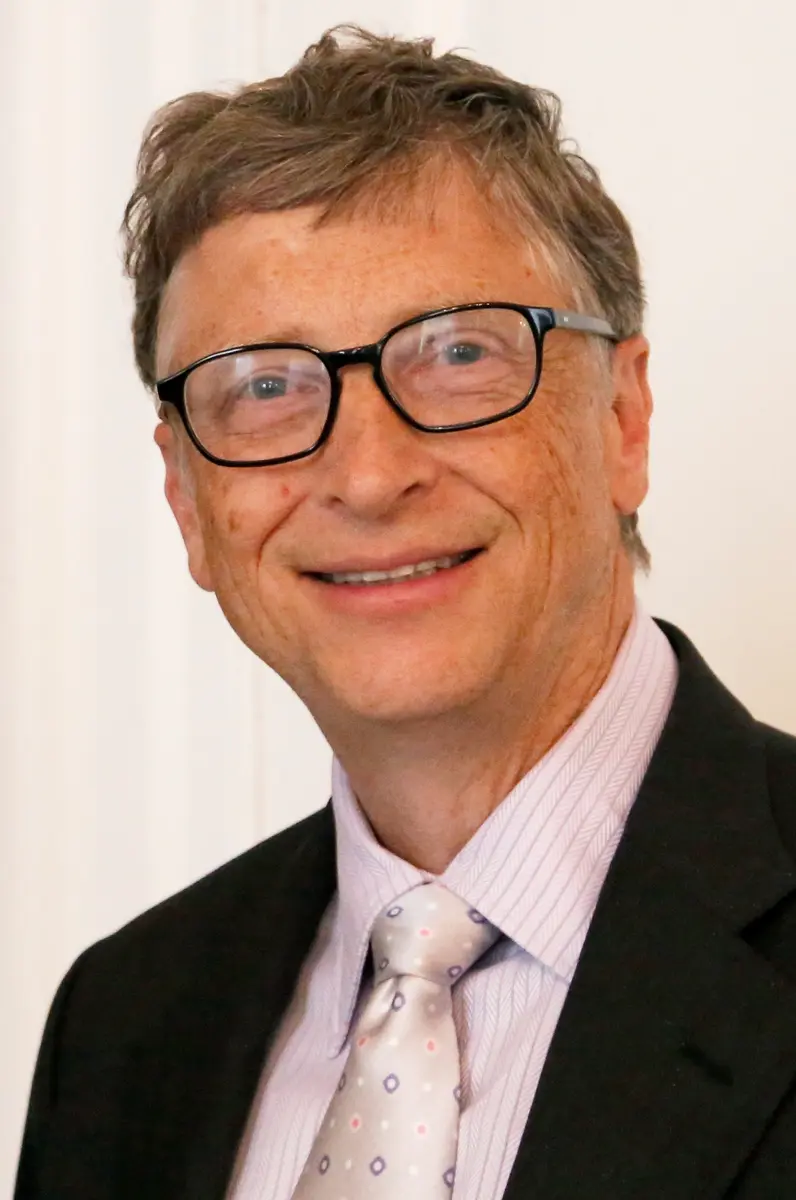
Bill Gates
“The Seattle programmer who co-founded Microsoft in 1975, put its MS-DOS and Windows on most of the world's PCs and became the world's richest man, then turned to giving his fortune away through his foundation.”
Bill Gates is the American programmer and businessman who co-founded Microsoft with his school friend Paul Allen in 1975 and, as its leader until 2000, made its software the standard of the personal computer: first a BASIC for the earliest hobby computers, then MS-DOS, the operating system of the IBM PC of 1981 and of the many machines that copied it, and finally Windows and the Office programs, which by the 1990s ran on most of the world's PCs. As Microsoft's largest shareholder he became a billionaire soon after the company went public in 1986 and, by many estimates, the richest person in the world by the mid-1990s. Supporters praised his business sense and his drive, rivals painted him as driven and duplicitous, and in 1998 the United States government took Microsoft to court for illegally defending its monopoly. Since 2000 he has given most of his time and fortune to the foundation he started with his then wife, Melinda French Gates, one of the largest private funders of vaccines and global health; in 2025 he said he would give away virtually all his remaining wealth through it and close it at the end of 2045.
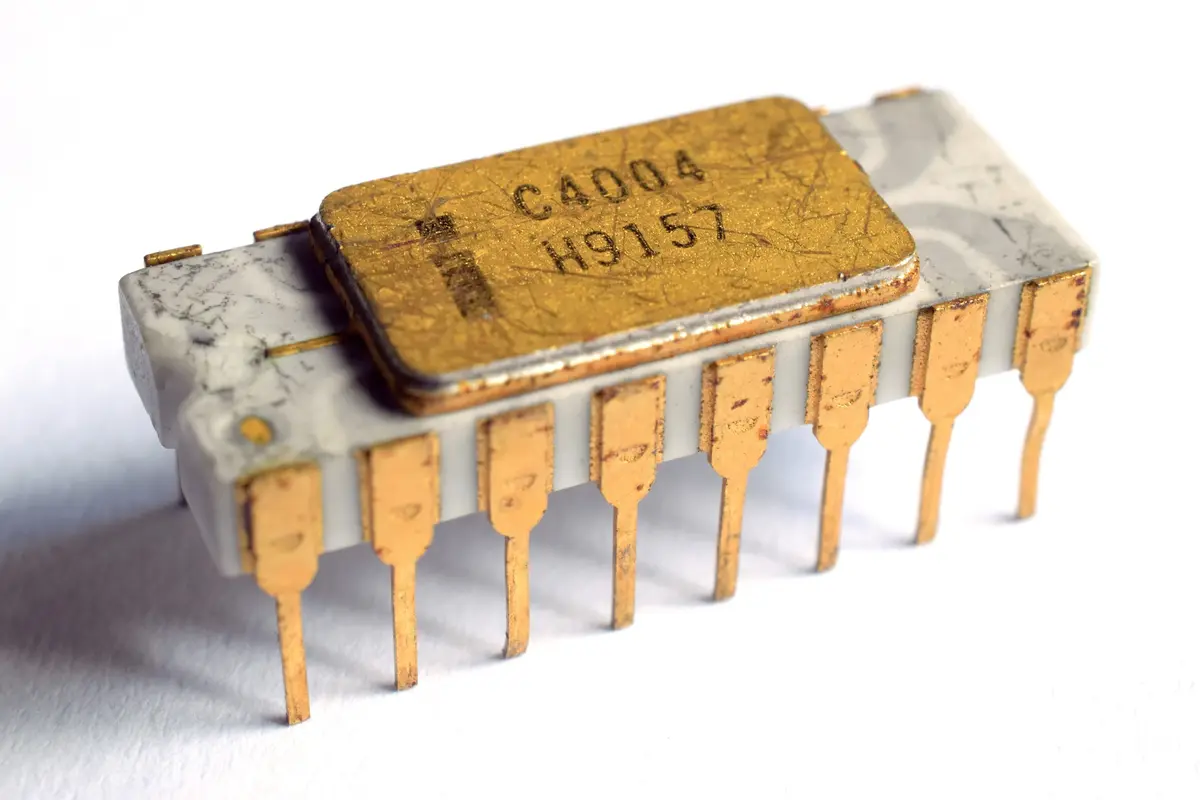
He was born in Seattle on 28 October 1955, the only son of William H. Gates Sr., a lawyer, and Mary Gates, who sat on the boards of charities, banks and the University of Washington. At about twelve he went to Lakeside, a strict private boys' school, and in the autumn of 1968, in eighth grade, he found its new computer room: with money from a rummage sale the Mothers' Club had rented a Teletype terminal linked by telephone to a General Electric time-sharing computer. There he wrote his first programs, among them a game of tic-tac-toe, and met an older pupil, Paul Allen. As the 'Lakeside Programming Group' they found bugs in exchange for free computer time, wrote a payroll program for a company in Portland and, in 1972, the school's class schedule; with Allen and a third friend Gates also ran Traf-O-Data, which turned roadside traffic-counter tapes into reports for local governments, using a small machine built around Intel's 8008 chip. In 1973, after a spell debugging software for a power-grid project of the defence firm TRW, he went to Harvard.
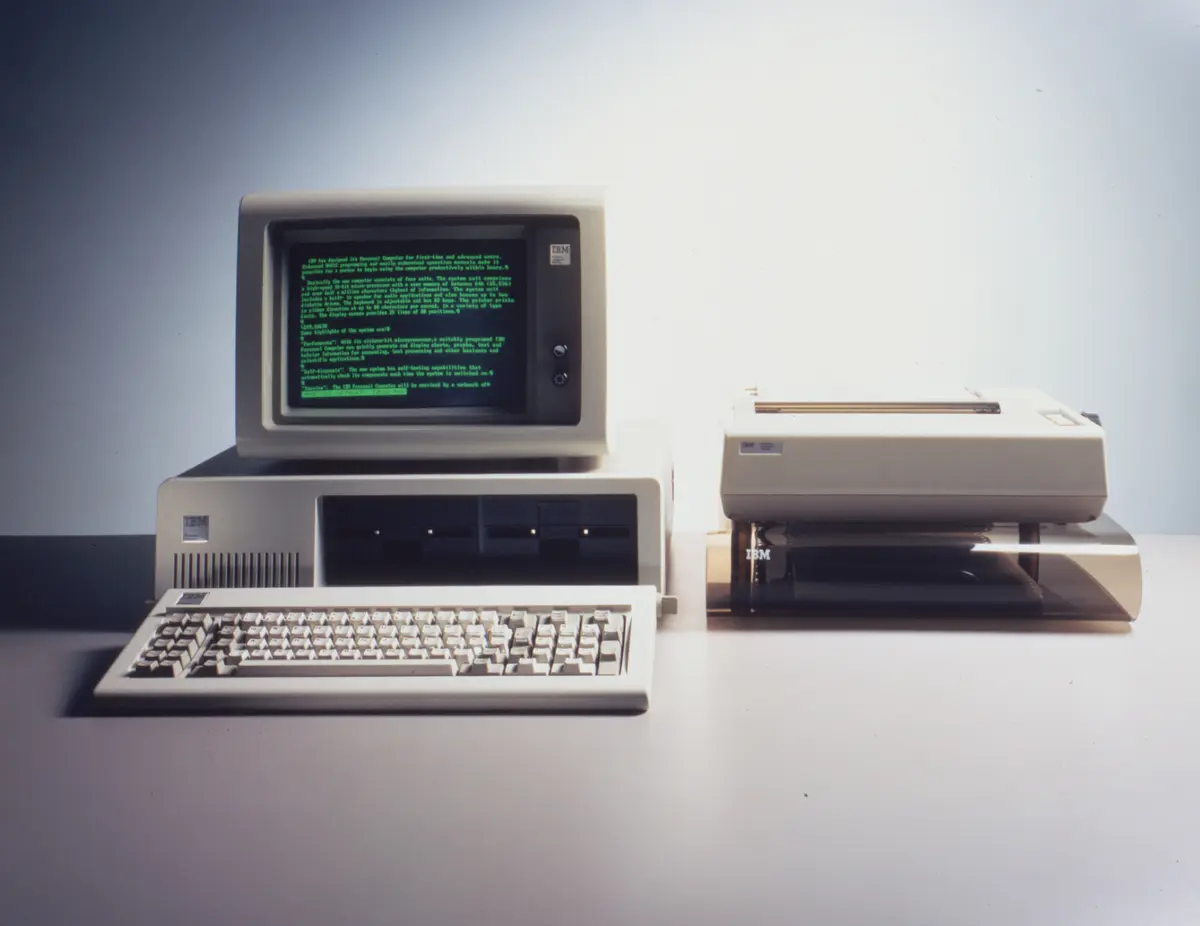
In December 1974 Allen found the Altair 8800, a $397 computer kit from MITS of Albuquerque, on the cover of the January 1975 Popular Electronics. Gates offered MITS a BASIC for it, and in about eight weeks he, Allen and Monte Davidoff wrote one on Harvard's computer, testing it on a simulator because they had no Altair; in March 1975 Allen loaded the paper tape at MITS and, at the second try, it worked. On 4 April 1975 the two friends formed a partnership, Micro-Soft, with Gates taking the larger share. In an 'Open Letter to Hobbyists' of February 1976 he complained that most Altair owners copied BASIC instead of buying it, an early statement of the idea that software is a product to be paid for. He left Harvard for good in January 1977, won a dispute with MITS over the right to license BASIC to other computer makers, and on 1 January 1979 moved the company to Bellevue, near Seattle. When IBM came in 1980 for languages and then an operating system for its secret personal computer, Microsoft bought an existing system, 86-DOS, from Seattle Computer Products for $50,000 and adapted it. MS-DOS shipped with the IBM PC in August 1981, and as other makers built machines compatible with IBM's, they too bought their operating system from Microsoft.
Microsoft added programs such as Word and Multiplan, announced Windows in November 1983 and shipped it in November 1985, moved to a campus in Redmond in February 1986 and went public on 13 March 1986 at $21 a share; Gates, who owned about 45 percent, was a billionaire within about a year. Windows 3.0 (1990) and Windows 95 (1995) made Windows the face of the PC. In May 1995 his memo 'The Internet Tidal Wave' turned the company toward the Internet, and the way Microsoft then pushed its free Internet Explorer browser through Windows led the Justice Department and some twenty states to sue it in May 1998. Judge Thomas Penfield Jackson found that Microsoft had illegally protected its monopoly and in June 2000 ordered it split in two; in 2001 an appeals court upheld the violation but threw out the break-up, and the company settled. In January 2000 Gates handed the post of chief executive to Steve Ballmer, his friend from Harvard, staying on as chairman and chief software architect.
His giving began with the William H. Gates Foundation in 1994 and became, in 2000, the Bill & Melinda Gates Foundation, which helped found Gavi, the vaccine alliance, with a pledge of $750 million and from 2007 became a core partner of the campaign to eradicate polio; Warren Buffett pledged more than $30 billion to it in 2006, and in 2010 Gates, his wife and Buffett launched the Giving Pledge, asking the very rich to give away most of their wealth. Gates left Microsoft's daily running in June 2008, its chairmanship in 2014 and its board in 2020; he also founded the clean-energy investor Breakthrough Energy and the nuclear company TerraPower. He and Melinda French Gates announced their divorce in 2021, and she left the foundation in 2024. In May 2025 he said the foundation would spend about $200 billion and close on 31 December 2045. In June 2026 he answered questions, behind closed doors, from the Oversight Committee of the US House of Representatives about his past relationship with the late, disgraced financier Jeffrey Epstein.
What happened
- 1955
William Henry Gates III is born in Seattle, the second of three children and only son of the lawyer William H. Gates Sr. and Mary Gates.
Seattle: born here on 28 October 1955 and raised here; the Gates family had lived in the city since the 1880s- 1967
At about twelve he starts seventh grade at Lakeside, a strict private boys' school in north Seattle, chosen by his parents to give him discipline and smaller classes.
Lakeside School, 1st Avenue NE, north Seattle: his school from about 1967 to 1973, where he learned to program on the Teletype in the computer room from the autumn of 1968 and met Paul Allen - 1968
In the autumn, in eighth grade, he discovers Lakeside's new computer room: the Mothers' Club has used money from a rummage sale to rent a Teletype terminal linked by telephone to a General Electric time-sharing computer. He writes his first programs, among them tic-tac-toe, and meets an older pupil, Paul Allen.
Lakeside School, 1st Avenue NE, north Seattle: his school from about 1967 to 1973, where he learned to program on the Teletype in the computer room from the autumn of 1968 and met Paul Allen - 1970
A time-sharing company in Portland, Oregon, hires the 'Lakeside Programming Group', Gates, Allen and two friends, to write a payroll program, paying them in free computer time.
- 1972
The school pays him $4,200 to write the program that schedules its classes. About this time he and Allen also run Traf-O-Data, processing roadside traffic-count tapes for local governments.
Lakeside School, 1st Avenue NE, north Seattle: his school from about 1967 to 1973, where he learned to program on the Teletype in the computer room from the autumn of 1968 and met Paul Allen - 1973
After part of his last school year debugging software for TRW's power-grid project for the Bonneville Power Administration in Vancouver, Washington, he graduates from Lakeside and in the autumn enters Harvard, living in Currier House.
- 1974
In Harvard Square Allen buys the January 1975 issue of Popular Electronics, with the Altair 8800, a $397 computer kit from MITS of Albuquerque built around Intel's 8080 chip, on its cover, and runs to show Gates.
- 1975
Gates and Allen write to MITS, on Traf-O-Data notepaper, offering a BASIC for the Altair, and that month Gates phones the company from his dormitory. They spend about eight weeks writing it on Harvard's computer, with Monte Davidoff doing the maths routines.
Allen flies to Albuquerque with the paper tape. At the second try it runs on MITS's Altair: he types PRINT 2+2 and it prints the answer. MITS takes the BASIC and hires Allen.
Gates and Allen found Micro-Soft as a partnership, 60 percent to Gates, who argues that he did more of the work unpaid. MITS pays $3,000 on signing and royalties on each copy. Gates spends the summer in Albuquerque.
- 1976
He signs 'An Open Letter to Hobbyists', printed in the Homebrew Computer Club's newsletter and computer magazines: most Altair owners, he says, copy BASIC instead of buying it, which stops anyone from writing good software.
- 1977
He leaves Harvard for good and works in Albuquerque full time. Since the autumn of 1976 Microsoft has rented rooms on the eighth floor of Two Park Central Tower, near the airport.
Two Park Central Tower, San Mateo Boulevard NE, Albuquerque: Microsoft's office, suite 819 on the eighth floor, from the autumn of 1976 until the move to Seattle at the end of 1978Gates and Allen sign their formal partnership agreement, now 64 to 36 in Gates's favour.
After MITS tries to stop them licensing BASIC to other computer makers, they write to end their licence with it. The dispute goes to arbitration, which Microsoft wins, freeing it to sell BASIC to the whole industry.
Stopped by the Albuquerque police for a traffic offence, he is photographed by them; the mugshot becomes part of Microsoft's lore.
- 1978
Eleven of Microsoft's people pose for a group portrait, weeks before the company leaves for Seattle, as a memo of March 1978 had announced.
- 1979
Microsoft moves to Bellevue, across Lake Washington from Seattle, into the eighth floor of the Old Bank Building on NE 8th Street, with about a dozen employees.
- 1980
IBM's Jack Sams visits Microsoft in Bellevue about software for IBM's secret personal computer. When IBM fails to agree with Digital Research on its CP/M system, Gates and Steve Ballmer, his Harvard friend who joined in June, offer an operating system Microsoft does not yet own: it licenses and then buys Tim Paterson's 86-DOS from Seattle Computer Products for $50,000.
- 1981
Microsoft becomes a corporation, with Gates as chairman holding 53 percent of the shares, Allen 31 and Ballmer 8. Its revenue for the year is about $16 million.
IBM introduces its Personal Computer with Microsoft's operating system, MS-DOS 1.0. Makers of compatible machines soon license it too, and it becomes the standard.
- 1983
Paul Allen, treated for Hodgkin's disease since the autumn and increasingly at odds with Gates, resigns from Microsoft, though he stays on its board.
Microsoft announces Windows, a graphical working environment for MS-DOS computers, long before it is ready.
- 1985
After several delays Windows 1.0 goes on sale.
- 1986
Microsoft moves into its own campus at Overlake in Redmond: six buildings on 30 acres for its 800 employees.
Microsoft's headquarters campus at Redmond (Overlake), where the company moved on 26 February 1986; Gates worked here as chief executive, chairman and chief software architect until June 2008Microsoft goes public at $21 a share; on the first day the price closes at $27.25. Gates, 30, owns about 45 percent of the company, and within about a year he is a billionaire.
- 1990
Microsoft launches Windows 3.0, the first widely successful version; by 1993 Windows sells a million copies a month.
- 1994
He marries Melinda French, who has worked at Microsoft since 1987. He starts the William H. Gates Foundation, named after his father, and buys Leonardo da Vinci's notebook, the Codex Leicester, for $30.8 million.
- 1995
His memo 'The Internet Tidal Wave' tells Microsoft's managers that the Internet now matters more than anything since the IBM PC and must reshape every product.
Microsoft launches Windows 95, with its Start button, which for the first time fully joins MS-DOS and Windows; with it comes Microsoft's own browser, Internet Explorer.
- 1997
Bill and Melinda Gates start the Gates Library Foundation to bring computers and the Internet to US public libraries. Shocked by reports of children dying of preventable diseases, he sends an article to his father with a note: 'Dad, maybe we can do something about this.'
- 1998
The Justice Department and some twenty states sue Microsoft for illegally protecting its Windows monopoly, above all by tying its browser to Windows against Netscape.
Gates is questioned under oath on videotape by the government's lawyers, on 27 and 28 August and 2 September.
- 1999
Judge Thomas Penfield Jackson issues his findings of fact in the case, the first step toward his ruling against Microsoft.
- 2000
The William H. Gates Foundation and the Gates Learning Foundation merge into the Bill & Melinda Gates Foundation. At the World Economic Forum in Davos it helps launch Gavi, an alliance to vaccinate children in poor countries, pledging $750 million for its first five years.
Steve Ballmer becomes Microsoft's chief executive; Gates stays chairman and takes the new title of chief software architect.
Microsoft's headquarters campus at Redmond (Overlake), where the company moved on 26 February 1986; Gates worked here as chief executive, chairman and chief software architect until June 2008Judge Jackson rules that Microsoft has broken the Sherman Antitrust Act. On 7 June he orders it split into two companies, one for the operating system and one for the rest.
- 2001
The appeals court in Washington upholds the finding that Microsoft illegally kept its monopoly but throws out the break-up and removes Judge Jackson from the case.
The Justice Department and Microsoft file their settlement in court; Judge Colleen Kollar-Kotelly, who replaced Jackson, enters the final judgment on 12 November 2002.
- 2006
Microsoft announces that Gates will leave his day-to-day role in July 2008 to work full time at the foundation. The same month Warren Buffett pledges more than $30 billion to it.
- 2007
The foundation makes its first large grant against polio, a $100 million challenge to Rotary International, and becomes a core partner of the Global Polio Eradication Initiative.
Harvard gives its most famous dropout an honorary degree; in his commencement address he urges graduates to work against the world's inequities in health, wealth and opportunity.
- 2008
His last day as a full-time Microsoft employee; he stays chairman and moves to the foundation.
- 2010
With Melinda Gates and Warren Buffett he launches the Giving Pledge, asking the world's richest families to give away most of their wealth.
- 2014
Satya Nadella becomes Microsoft's third chief executive and Gates steps down as chairman, staying on the board as technology adviser.
- 2016
He and Melinda Gates receive the Presidential Medal of Freedom.
- 2020
He leaves Microsoft's board to give more time to global health, development, education and climate change.
His father, William H. Gates Sr., whom the foundation calls its 'north star', dies at home.
- 2021
Bill and Melinda Gates announce that they are ending their marriage of 27 years, while continuing to work together at the foundation.
- 2024
Melinda French Gates steps down as co-chair and leaves the foundation to pursue her own philanthropy.
- 2025
His memoir of his early years, Source Code, has just appeared; at the Computer History Museum he talks about it with Stripe's Patrick Collison.
On the foundation's 25th anniversary he announces that he will give away virtually all his remaining wealth through it: about $200 billion over twenty years, after which the foundation will close on 31 December 2045.
Gates Foundation headquarters, 500 Fifth Avenue North, Seattle: the foundation he has chaired since 2000 and which is to close on 31 December 2045- 2026
He goes to Capitol Hill, voluntarily he says, for a closed-door interview with the House Oversight Committee about his past relationship with the late financier Jeffrey Epstein.