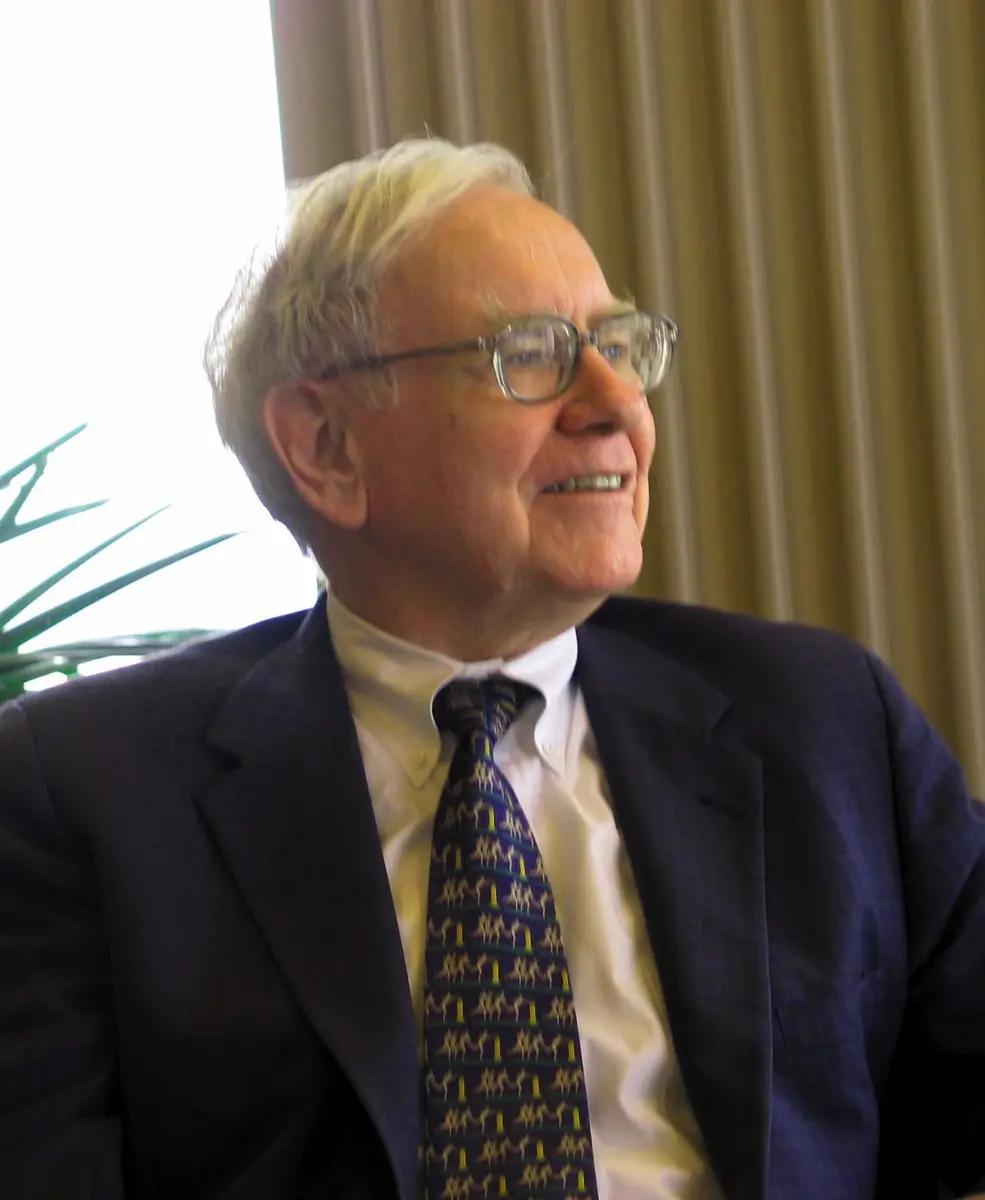
Warren Buffett
“The Omaha investor who turned a failing textile company, Berkshire Hathaway, into a giant by buying good businesses at fair prices and holding them, then pledged almost all his fortune to charity.”
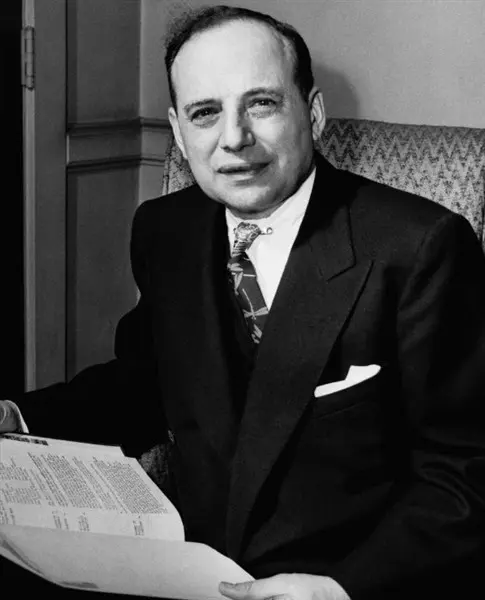
Warren Buffett is the American investor who turned Berkshire Hathaway, a failing cotton-mill company in New Bedford, Massachusetts, into one of the largest corporations in the United States, and became one of the richest people in the world while living in the Omaha house he bought in 1958. A pupil of Benjamin Graham, he bought shares and whole companies when their price stood well below what he judged them to be worth, and then held them for decades: GEICO, See's Candies, The Washington Post, Coca-Cola, the BNSF railroad. From 1965 to 2024 the market price of a Berkshire share rose by an average of 19.9 per cent a year, against 10.4 per cent for the S&P 500 with dividends included. His long, plain-spoken letters to shareholders and the annual meeting in Omaha, which drew tens of thousands of people, made him the best-known investor of his time, the 'Oracle of Omaha'. Since 2006 he has been giving his fortune away.
He was born in Omaha, Nebraska, on 30 August 1930, the only son of Howard Buffett, who had gone into the investment business in 1926, and Leila Stahl Buffett. Money fascinated him early. In 1936 he bought Coca-Cola at six bottles for 25 cents from his grandfather's grocery and sold them around the neighbourhood for five cents each, and on 11 March 1942, aged eleven, he put his savings of $114.75 into three shares of Cities Service preferred stock. That year his father was elected to Congress, and the family moved to Washington, where Warren went to school, delivered newspapers and ran a pinball-machine business. He studied at the Wharton School in Philadelphia from 1947, finished his degree at the University of Nebraska in 1950, read Graham's The Intelligent Investor in his last year there, and went to Columbia University in New York to study under Graham himself, taking a master's degree in 1951. On a Saturday in January 1951 he knocked on the door of GEICO's closed office in Washington and spent four hours learning the insurance business from Lorimer Davidson; he then put 65 per cent of his $9,800 savings into GEICO shares.
Back in Omaha he sold securities at his father's brokerage, married Susan Thompson in 1952 and for ten years taught an investment class at the city's municipal university. In 1954 Graham hired him at Graham-Newman in New York, but in 1956 he went home for good and started an investment partnership with $105,000 from seven limited partners and $100 of his own. In 1959 he met Charlie Munger, a lawyer who had grown up a few hundred feet from Buffett's later home; Munger became his partner for 64 years and steered him away from Graham's cheap 'cigar butts' towards 'wonderful businesses at fair prices'. In December 1962 the partnership began buying Berkshire Hathaway, a textile maker formed by a merger in 1955, and in May 1965 it took control. Buffett kept the mills running for twenty years but sent their cash elsewhere: into National Indemnity, an Omaha insurer bought for $8.6 million in 1967 that became the base of Berkshire's huge insurance business; See's Candies for $25 million in 1972; shares of The Washington Post in 1973 and of GEICO in 1976. He wound up the partnership in 1969, signed his first letter to shareholders as Berkshire's chairman in March 1971 and closed the last textile operation in 1985.
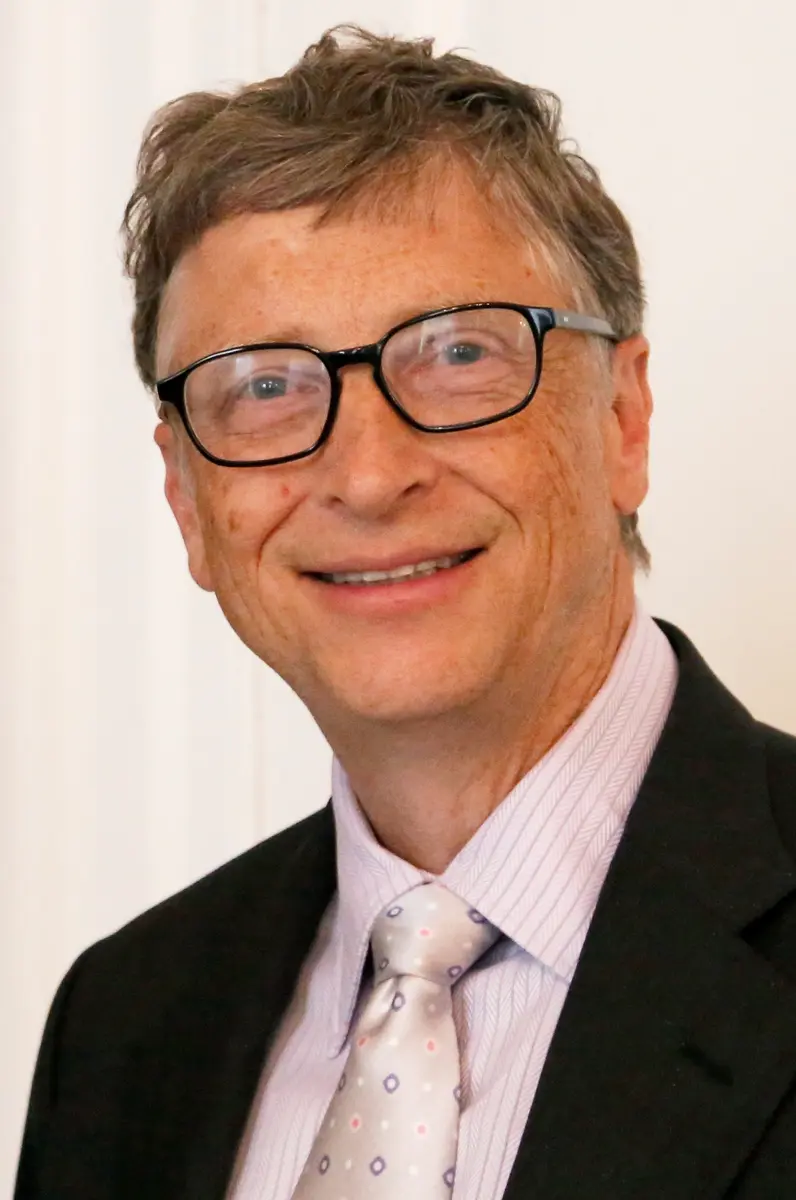
From the 1980s Berkshire bought ever larger businesses and stakes: the Nebraska Furniture Mart in 1983, more than a billion dollars of Coca-Cola shares in 1988 and 1989, the half of GEICO it did not yet own for $2.3 billion in 1996, and the BNSF railroad in 2010, a deal valued at about $44 billion with its debt. In August 1991, when the investment bank Salomon, in which Berkshire was the largest shareholder, was caught breaking the rules of Treasury auctions, he became its interim chairman for ten months and told a House subcommittee he would be understanding about lost money but 'ruthless' about a lost shred of reputation. In the financial crisis of 2008 he put $5 billion into Goldman Sachs and $3 billion into General Electric, and wrote in The New York Times that his rule was to 'be fearful when others are greedy, and be greedy when others are fearful'. His friendship with Bill Gates began in 1991. After his wife Susan died in 2004, he pledged in June 2006 to give all his Berkshire shares away during his life, most of them to the Bill & Melinda Gates Foundation; in 2010 he and the Gateses started the Giving Pledge, which asks the very rich to give away most of their wealth, and he promised more than 99 per cent of his. President Obama gave him the Presidential Medal of Freedom in 2011.
Munger died in November 2023. Buffett wrote his last annual letter in February 2025 and, before the annual meeting on 3 May 2025, told shareholders that Greg Abel, the vice chairman for Berkshire's non-insurance businesses, should succeed him as chief executive at the end of the year; the board agreed the next day, and Abel took over on 1 January 2026. In November 2025 Buffett said he was 'going quiet' and would speed up his gifts to his children's foundations, and on 18 September 2026, at 96, he became chairman emeritus, staying on as a director, while his son Howard succeeded him as chairman. His habit of owning good businesses for decades, his annual letters and his view that great wealth carries a duty to society have shaped how generations of investors think about owning a company.
What happened
- 1930
Warren Edward Buffett is born in Omaha, Nebraska, the only son of Howard Buffett, an investment man, and Leila Stahl Buffett.
- 1936
Aged about six, he buys Coca-Cola at six bottles for 25 cents from Buffett & Son, his grandfather's grocery, and sells them around the neighbourhood for five cents each.
- 1942
At eleven he puts his savings, $114.75, into three shares of Cities Service preferred stock, his first investment.
- 1943
His father, elected to Congress in 1942, takes his seat in the House; the family moves to Washington, where Warren goes to junior high and high school and runs newspaper routes and a pinball-machine business.
- 1947
He finishes high school in Washington and enrols at the Wharton School of the University of Pennsylvania, which he leaves after two years.
- 1950
He graduates from the University of Nebraska in Lincoln. In his last year he has read Benjamin Graham's The Intelligent Investor, and he applies to Columbia to study under Graham.
- 1951
On a Saturday he takes the train to Washington, finds GEICO's office closed, knocks until a custodian lets him in, and spends four hours with Lorimer Davidson learning how the insurer works. He soon puts 65 per cent of his $9,800 savings into GEICO.
He takes his master's degree in economics at Columbia, where Graham has been his teacher, then goes back to Omaha to sell securities at his father's brokerage after Graham turns down his offer to work for him.
Columbia University, Morningside Heights, New York: his master's degree under Benjamin Graham in 1950–51- 1952
He marries Susan Thompson, daughter of an Omaha dean, and starts teaching an evening class in investing at the Municipal University of Omaha, which he does for ten years.
- 1954
Graham hires him at his investment firm, Graham-Newman, in New York.
- 1956
After a year and a half in New York he returns to Omaha for good and starts his own investment partnership, with $105,000 from seven limited partners and $100 of his own.
- 1958
He buys the house on Farnam Street in Omaha's Dundee neighbourhood, his first and only home.
His house on Farnam Street in Omaha's Dundee neighbourhood, bought in 1958 and his home ever since, about two miles from where he grew up; he was born in Omaha in 1930 - 1959
An Omaha doctor introduces him to Charlie Munger, a Los Angeles lawyer who grew up near his house; Munger becomes his partner for the rest of his life.
- 1962
His partnerships, now combined in one, move into the new Kiewit Plaza on Farnam Street, his office from then on.
Kiewit Plaza, 3555 Farnam Street, Omaha (renamed Blackstone Plaza after its sale in 2019): his office and Berkshire Hathaway's headquarters since 1962The Buffett Partnership buys its first shares of Berkshire Hathaway, a struggling New England textile maker, at $7.50, well below the value of its working capital.
The Hathaway mill in New Bedford's South End, between Harbor, Gifford and Cove streets: Berkshire Hathaway's textile plant, whose shares he began buying in 1962 and whose mills he closed in 1985- 1965
Angered by a tender offer of May 1964 that undercut the price he had agreed with president Seabury Stanton, Buffett has kept buying; with 392,633 of the 1,017,547 shares, his partnership takes control of Berkshire Hathaway at an early-May board meeting.
The Hathaway mill in New Bedford's South End, between Harbor, Gifford and Cove streets: Berkshire Hathaway's textile plant, whose shares he began buying in 1962 and whose mills he closed in 1985- 1967
Berkshire buys National Indemnity, a small Omaha insurer, for $8.6 million: the base of the insurance business whose funds pay for much of what follows.
- 1969
He winds up the Buffett Partnership; he keeps his Berkshire shares and offers his partners a choice of cash, Berkshire stock or a fund run by his Columbia classmate William Ruane.
- 1971
Now Berkshire's chairman, he signs the annual letter to stockholders himself for the first time; he will write it every year until 2025.
- 1972
Early in the year Blue Chip Stamps, a company he and Munger control, buys See's Candies of California for $25 million, three times its tangible assets: his first lesson in the value of a strong brand.
- 1973
Berkshire buys its stake in The Washington Post Company at about a quarter of what he judges it to be worth.
- 1976
With GEICO close to bankruptcy and a new chief, Jack Byrne, at work, Berkshire buys a large stake in it in the second half of the year.
- 1983
Berkshire buys 90 per cent of the Nebraska Furniture Mart from Rose Blumkin, the Russian-born founder who built it from $500 in 1937.
- 1985
He decides to close Berkshire's textile operation, twenty years after taking control; by the end of the year the mills are shut.
The Hathaway mill in New Bedford's South End, between Harbor, Gifford and Cove streets: Berkshire Hathaway's textile plant, whose shares he began buying in 1962 and whose mills he closed in 1985- 1988
Berkshire starts buying Coca-Cola shares; by the end of 1989 it holds 23.35 million of them, bought for just over $1 billion.
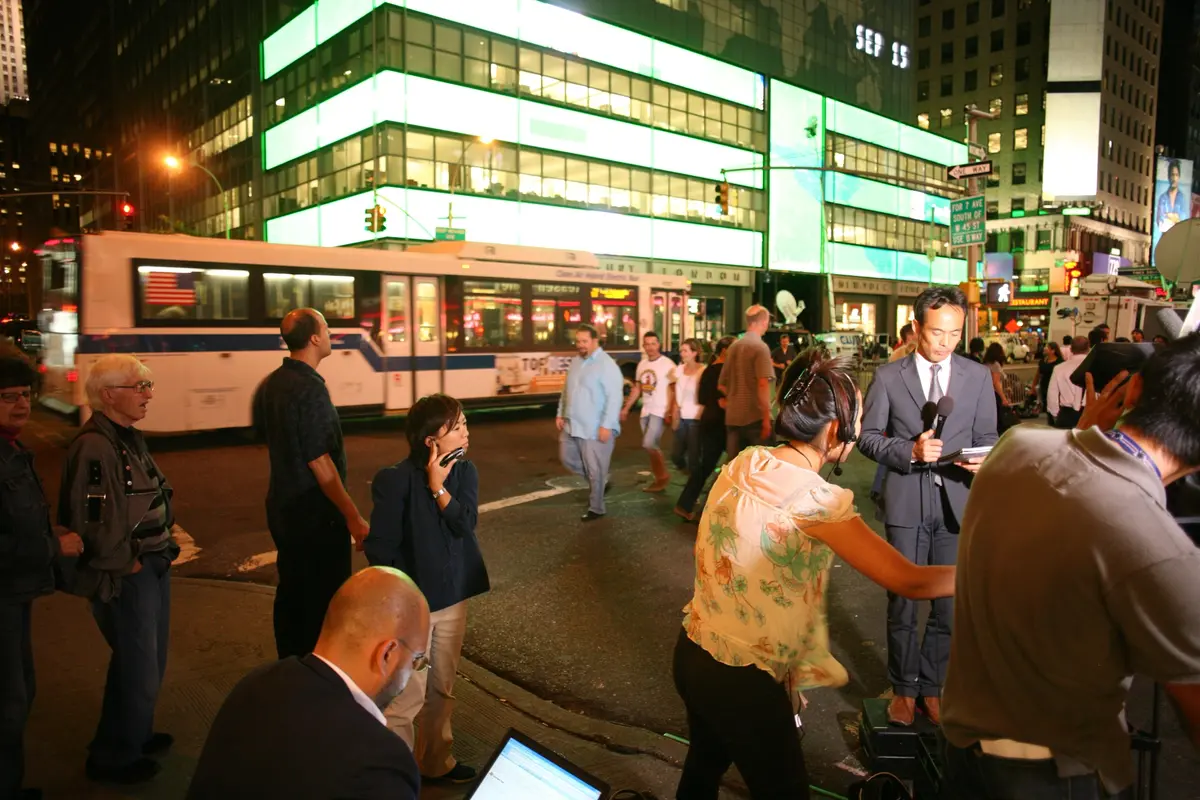
Berkshire Hathaway's shares are listed on the New York Stock Exchange.
- 1991
At the Gates family's holiday home on Hood Canal, in Washington state, he meets Bill Gates, who has come reluctantly; they become close friends.
On the day the Treasury bans Salomon, Berkshire's big investment-bank holding, from its auctions after a trader's illegal bids, he is elected Salomon's interim chairman; he stays ten months, until June 1992.
Apologizing for Salomon before a House subcommittee, he describes the message he has given its staff: 'Lose money for the firm, and I will be understanding; lose a shred of reputation for the firm, and I will be ruthless.'
- 1996
GEICO becomes wholly owned by Berkshire, which pays $2.3 billion for the half it did not own.
- 2004
His wife Susan dies. They had planned that she would give away the fortune after his death, and he begins to rethink his plans.
- 2006
At the New York Public Library, with Bill and Melinda Gates beside him, he signs pledges to give all his Berkshire shares away in yearly gifts, most of them to the Gates Foundation and the rest to four family foundations; they are then worth about $37 billion.
- 2008
In the depths of the financial crisis, Berkshire agrees to put $5 billion into Goldman Sachs for preferred stock paying 10 per cent, with warrants for $5 billion more of its shares.
Weeks after Berkshire puts $3 billion into General Electric preferred stock, his article 'Buy American. I Am.' in The New York Times tells readers to be greedy when others are fearful.
- 2010
Berkshire completes its purchase of the BNSF railroad, a deal valued at about $44 billion including debt, the largest in its history.
He and Bill and Melinda Gates announce the first forty signers of the Giving Pledge, a promise by the very rich to give away most of their wealth; his own letter promises more than 99 per cent.
- 2011
President Obama awards him the Presidential Medal of Freedom at the White House.
- 2023
Charlie Munger, his partner of 64 years, dies in a California hospital.
- 2025
His last annual letter to Berkshire's shareholders is published; at 94, he writes that Greg Abel will soon replace him and write the letters.
Before the annual meeting in Omaha he tells shareholders he will ask the board to make Greg Abel chief executive from 1 January 2026; the board agrees unanimously the next day, and Buffett stays on as chairman.
The CHI Health Center (formerly the Qwest and CenturyLink Center), Omaha: the arena of Berkshire's annual meetings, where on 3 May 2025 he named Greg Abel as his successorIn a Thanksgiving letter he says he is 'going quiet', will write no more annual reports, and gives 2.7 million B shares to his family's four foundations to speed up his giving.
- 2026
Greg Abel becomes president and chief executive of Berkshire Hathaway; Buffett remains chairman.
At 96 he becomes chairman emeritus and stays on the board; his son Howard, a Berkshire director since 1993, succeeds him as chairman.