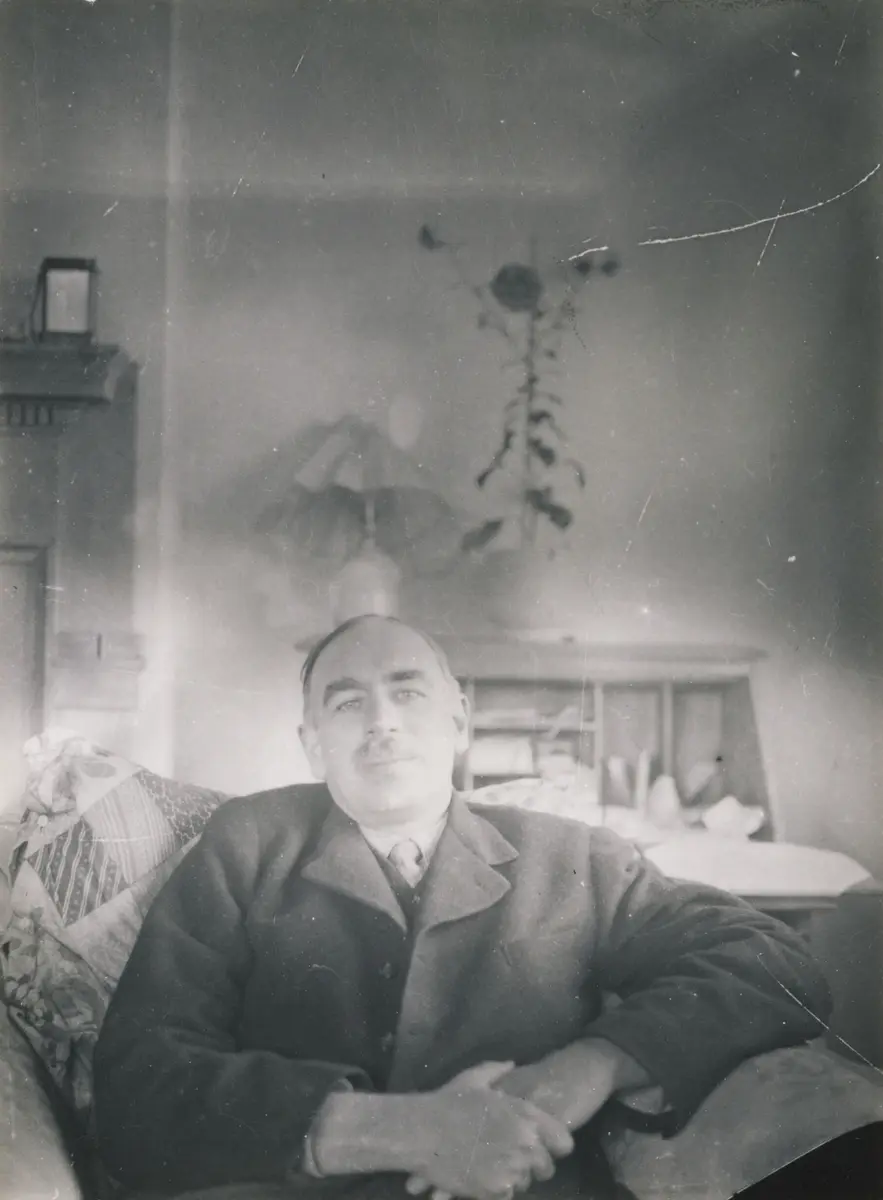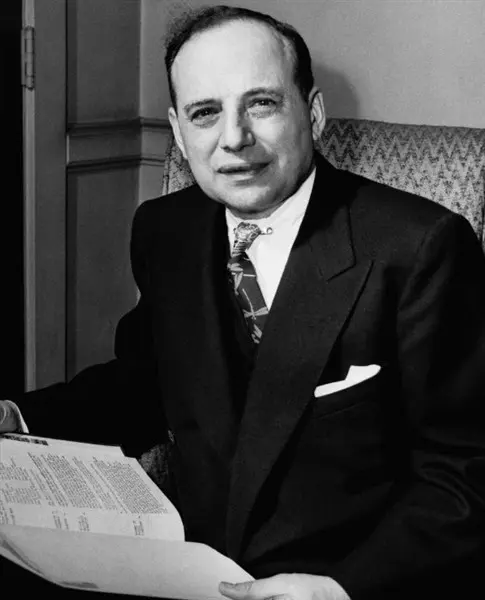
Benjamin Graham
“The Wall Street analyst and Columbia teacher who founded value investing: buy a share as part of a business, below its real worth, with a margin of safety; author of Security Analysis and Warren Buffett's teacher.”
Benjamin Graham was a London-born American investor and teacher who turned stock picking from guesswork and gossip into a discipline. With David Dodd, a younger colleague at Columbia University, he wrote Security Analysis (1934), the textbook that taught Wall Street to study a company's accounts and judge what its shares are really worth. In The Intelligent Investor (1949) he explained the same ideas to ordinary savers. For forty years he ran investment funds of his own, ending with the Graham-Newman Corporation, and for twenty-eight years he taught an evening class at Columbia, where his best-known student was the young Warren Buffett. He is called the father of value investing, and the profession of the financial analyst, with its own examinations, grew out of his work.
He was born in London on 9 May 1894, the youngest of three sons of a family that imported china and ornaments from Austria and Germany, and was taken to New York as a baby, when the family opened an American branch of the business. His father died young, the business failed, and in the Panic of 1907 his mother lost the small margin account in which she had bought shares of U.S. Steel. Poor but brilliant, he went from Boys High School in Brooklyn to Columbia, which he finished second in the class of 1914. Three departments offered him a teaching post; instead the dean sent him to Wall Street, to the brokerage firm Newburger, Henderson & Loeb, at twelve dollars a week. Within a few years he was its expert in arbitrage, its first 'statistician' (the word then for an analyst), a writer for The Magazine of Wall Street and, from 1920, a junior partner.
In the 1920s Graham managed money for friends, from 1926 through the Benjamin Graham Joint Account, later run with Jerome Newman. He looked for shares selling for less than the cash and other assets behind them, and he was ready to fight for shareholders: in 1927–28 he took on the board of the Northern Pipe Line Company, a former Standard Oil firm sitting on millions of dollars it did not need, won two seats and made it pay the money out. But he borrowed to invest, and between 1929 and 1932 the Joint Account lost about 70 percent of its value. The lesson shaped everything he later wrote. In 1928 he had begun teaching security analysis at Columbia's business school; in 1932 he showed in Forbes that many companies were selling for less than the cash in their tills, and with Dodd he wrote Security Analysis.
His central ideas are simple to state. A share is part of a real business, not a ticket in a lottery. The market is a moody partner, whom he later called 'Mr. Market', offering every day to buy or sell at prices that swing between gloom and excitement; the investor should use those moods, not follow them. And he should buy only with a 'margin of safety', a price well below his careful estimate of value, so that mistakes and bad luck do not ruin him. The Graham-Newman Corporation, formed in 1936, applied these rules for twenty years. Its largest success broke them: in 1948 it bought half of the Government Employees Insurance Company (GEICO) for about $720,000, and Graham became its chairman; the shares, handed out to Graham-Newman's own shareholders, multiplied many times over.
Buffett read The Intelligent Investor at college, came to Columbia in 1950 to study under Graham, and worked for him at Graham-Newman from 1954 until Graham retired in 1956. Graham then moved to California, taught at the University of California, Los Angeles, and spent his last years between La Jolla and Aix-en-Provence in France, where he died on 21 September 1976. He was also a writer on money and commodities, an amateur playwright, a translator from Spanish and Latin, and a patient teacher. Graham and Dodd's 'Security Analysis' is still in print, and generations of investors, Buffett first among them, have called The Intelligent Investor the best book about investing ever written.
What happened
- 1894
Benjamin Graham is born in London, the youngest of three sons; his father's family imports china and ornaments from Austria and Germany.
London: born here on 9 May 1894, the youngest of three sons of a family of importers of china and ornaments; the family left for New York about a year later- 1895
Aged about one, he is taken to New York, where the family opens an American branch of the business; he goes to P.S. 10 in upper Manhattan.
- 1907
His father has died at 35 and the business has failed; now, in the Panic of 1907, his mother's small margin account in U.S. Steel is wiped out. It is the 13-year-old's first contact with the stock market.
- 1910
After graduating near the top of his class at Boys High School in Brooklyn he wins a scholarship to Columbia; a clerical error delays it a term, and he works full time for the United States Express company.
- 1914
He graduates second in Columbia's class of 1914. The philosophy, mathematics and English departments each offer him a post, but Dean Frederick Keppel recommends him to a broker, and he joins Newburger, Henderson & Loeb at $12 a week, first as a runner, then in the bond department. Two months later the First World War closes the Stock Exchange.
Columbia University, Morningside Heights, Manhattan: his college, which he finished second in the class of 1914, and from 1928 to 1956 the business school where he taught security analysis in the evening; the outline is Low Memorial Library at the centre of the campus - 1916
The Guggenheim Exploration Company is dissolved as planned. Graham had worked out in 1915 that its shares were worth more than the copper shares it held, and his firm's arbitrage on the gap makes his reputation and his first money.
Wall Street and the Financial District, Lower Manhattan: his working world from 1914 to 1956, at Newburger, Henderson & Loeb, then the Joint Account and the Graham-Newman Corporation- 1917
When the United States enters the war he applies for officer training and is turned down because he is still a British subject; he joins the New York State Guard instead.
- 1920
At the beginning of the year Newburger, Henderson & Loeb make him a partner, with 2.5 percent of the profits, to keep him from leaving for The Magazine of Wall Street.
- 1922
The Magazine of Wall Street prints his 'Arithmetic and Stock Values', one of many articles in which he shows readers how to read a company's figures.
- 1923
Grahar Corporation, a $250,000 fund put up by friends and run by Graham from an office at his old firm, begins trading; its first deal buys Du Pont and sells General Motors short.
- 1926
The Benjamin Graham Joint Account begins with $450,000 from friends and Graham himself; Jerome Newman joins him at the end of the year and stays his partner for thirty years.
Wall Street and the Financial District, Lower Manhattan: his working world from 1914 to 1956, at Newburger, Henderson & Loeb, then the Joint Account and the Graham-Newman Corporation- 1927
At the annual meeting of the Northern Pipe Line Company in Oil City, Pennsylvania, he asks to present his case that the company should pay out the railroad bonds it does not need; nobody seconds him and the meeting closes.
- 1928
With proxies for 38 percent of the shares he wins two seats on Northern Pipe Line's board, the first outsider elected to a former Standard Oil company; it soon pays out $70 a share. The same year he begins teaching an evening course in security analysis at Columbia; David Dodd sits in his first class.
Columbia University, Morningside Heights, Manhattan: his college, which he finished second in the class of 1914, and from 1928 to 1956 the business school where he taught security analysis in the evening; the outline is Low Memorial Library at the centre of the campus - 1929
Bernard Baruch, who has bought several of Graham's bargains, asks him to become his partner; Graham, who earned over $600,000 in 1928, declines.
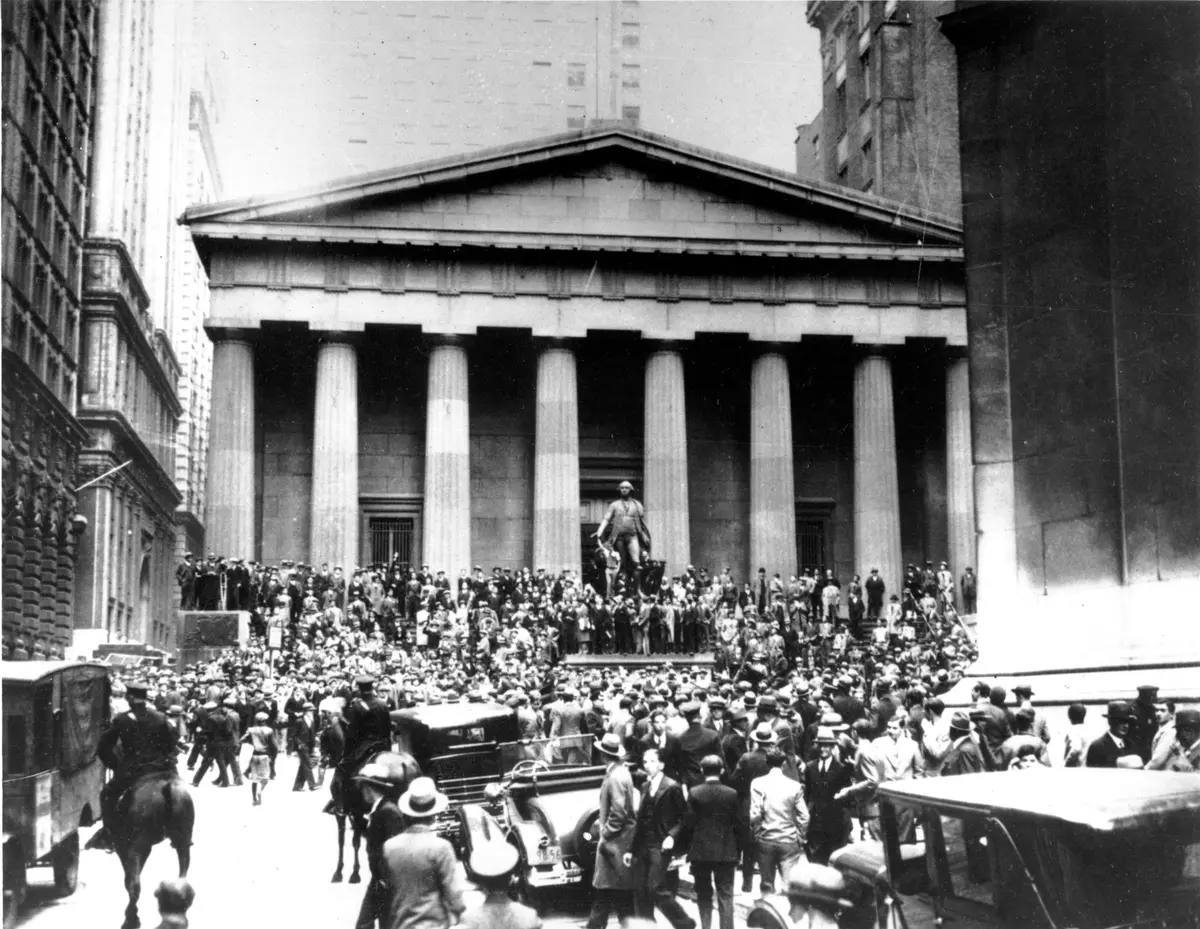
Black Thursday on Wall Street. The crash ends the plan for a $25 million Hentz-Graham investment fund, and the Joint Account, which has borrowed to invest, ends the year down 20 percent.
Wall Street and the Financial District, Lower Manhattan: his working world from 1914 to 1956, at Newburger, Henderson & Loeb, then the Joint Account and the Graham-Newman Corporation- 1930
His worst year: the Joint Account loses 50 percent; by the end of 1932 it has lost about 70 percent in all, a little less than the Dow. He keeps it alive by paying down its debt, and never again invests with borrowed money.
- 1932
Forbes begins a series of three articles by 'a lecturer at Columbia University' showing that many companies sell for less than their cash; near the end of the year he and Dodd sign with McGraw-Hill for a textbook.
- 1934
McGraw-Hill publishes Security Analysis by Graham and Dodd, which becomes the profession's textbook. In the same year his comedy 'Baby Pompadour' plays on Broadway and closes after four performances.
- 1936
The Graham-Newman Corporation takes over from the Joint Account; Graham and Newman will run it for twenty years.
- 1937
He publishes Storage and Stability, his plan to back the dollar with a basket of basic commodities, and a short guide, The Interpretation of Financial Statements.
- 1947
At the first conference of the Financial Analysts Federation he argues that security analysts need a course of study and an examination, like other professions: the idea behind today's Chartered Financial Analyst.
- 1948
Graham-Newman has bought half of the Government Employees Insurance Company (GEICO), which sells car insurance by post to government workers, for about $720,000; because the law forbids a fund to own more than 10 percent of an insurer, the shares are handed out to its own shareholders. Graham becomes GEICO's chairman.
- 1949
The Intelligent Investor, his book for ordinary investors, is published.
- 1951
Warren Buffett, who came to Columbia in 1950 to study under him, learns that Graham is GEICO's chairman and spends a Saturday at its Washington office; he earns an A+ in Graham's class.
- 1954
After turning him down once, Graham hires Buffett at Graham-Newman in New York.
- 1955
As chairman of Graham-Newman and of GEICO he gives evidence to Senator Fulbright's Committee on Banking and Currency in its stock market study: leading shares, he says, are not yet overvalued but are 'definitely not cheap'.
- 1956
He retires from Wall Street and from Columbia; Graham-Newman is wound up, Buffett goes home to Omaha, and Graham moves to California, where he becomes an adjunct professor of finance at UCLA.
University of California, Los Angeles (Westwood): adjunct professor of finance after he left New York in 1956 - 1975
The Financial Analysts Federation gives him its highest award, the Molodovsky Award; he uses the prize money for research on simple screens for cheap shares.
- 1976
In La Jolla, California, he gives a long interview about his career to the Financial Analysts Research Foundation.
Benjamin Graham dies at his home in Aix-en-Provence, France, aged 82; a memorial service is later held in Columbia University's chapel.
Aix-en-Provence, France: where he spent half of each year in his last years and died at home on 21 September 1976