Steve Jobs
“Apple's co-founder, who made computers, music players and phones simple and beautiful: the Apple II, the Macintosh, the iPod, the iPhone and the iPad; he also built Pixar.”
Steve Jobs was the co-founder of Apple and the best-known leader of the personal computer age. He was neither an engineer nor a programmer. His gift was to decide what a machine should be, how it should look and feel, and to push the people who built it until it was simple enough for anyone to use. Under him Apple made the Apple II, one of the first personal computers sold ready to use, the Macintosh, which brought the mouse and on-screen windows to ordinary people, and later the iMac, the iPod, the iPhone and the iPad, which changed how the world listens to music and uses phones. Outside Apple he built Pixar, the studio that made the first feature film animated entirely by computer, Toy Story.
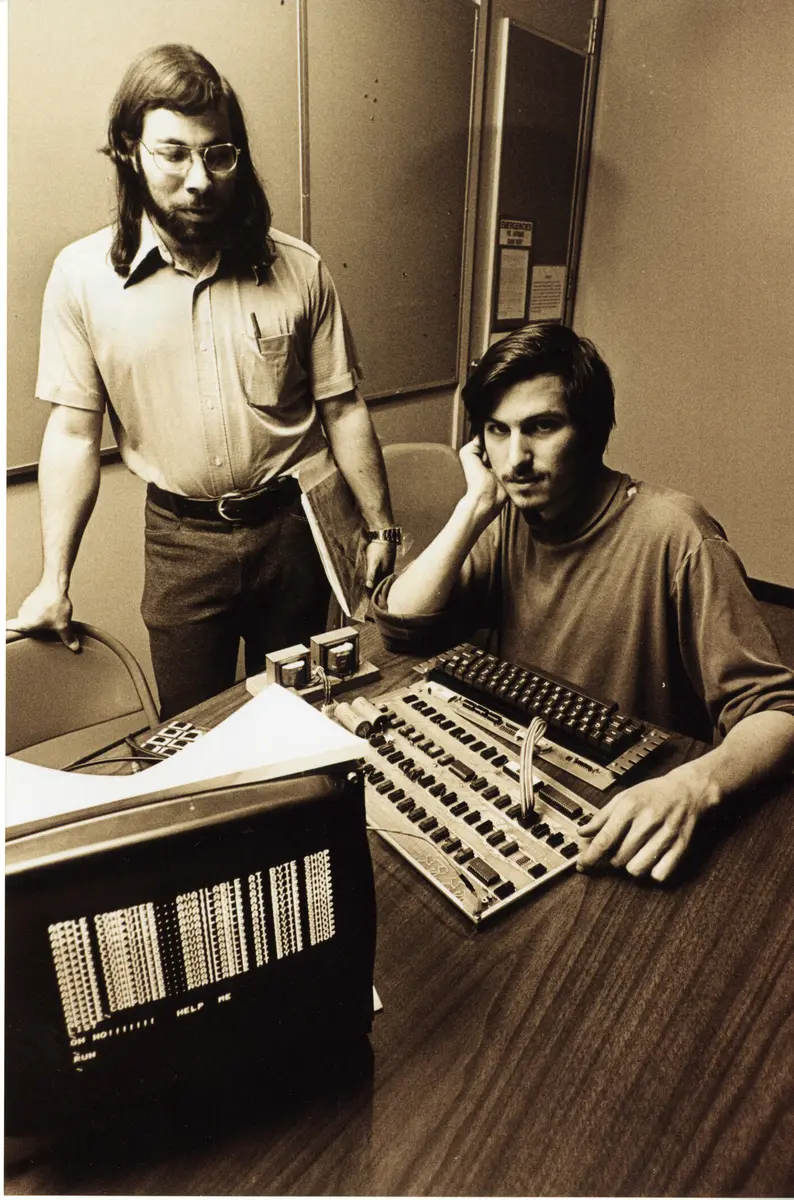
He was born in San Francisco on 24 February 1955 to two unmarried graduate students, who gave him up for adoption. Paul and Clara Jobs, a machinist and an accountant, raised him in Mountain View and Los Altos, south of San Francisco, in what is now called Silicon Valley. After high school in Cupertino he spent one semester at Reed College in Portland, Oregon, in 1972, then stayed on for a year and a half without paying, sitting in on classes such as calligraphy. In 1974 he worked at the video-game maker Atari and travelled in India. With his friend Steve Wozniak, a brilliant engineer, he began selling Wozniak's Apple I computer in 1976, building the first boards in his parents' garage, and in 1977 they launched the Apple II, which made Apple one of the fastest-growing companies in America; it went public in December 1980.
A visit to Xerox's research centre in Palo Alto in 1979, where he saw a computer controlled by a mouse and pictures on the screen, convinced him that all computers would one day work that way. He took charge of the small team building the Macintosh and launched it in January 1984 with a famous television advertisement. Sales were disappointing, and in 1985 Apple's board, siding with the chief executive John Sculley, whom Jobs had hired, took away his job; he left at thirty. He founded NeXT, whose elegant black workstation was used at CERN to write the first World Wide Web software, and in 1986 he bought the computer graphics group of George Lucas's film company, which became Pixar, and he married Laurene Powell, a Stanford business graduate. In December 1996 a struggling Apple agreed to buy NeXT; by the summer of 1997 Jobs was running Apple again, from September as its interim chief executive.
His second time at Apple was a rare business comeback. He cut the product line, made peace with Microsoft and launched the colourful iMac in 1998, the iPod in 2001, the iTunes Music Store in 2003, the iPhone in 2007 and the iPad in 2010, while NeXT's software became the base of Apple's new operating system. Disney bought Pixar in 2006, making him Disney's largest shareholder. In 2003 he was told he had a rare form of pancreatic cancer; he had surgery in 2004 and a liver transplant in 2009. He resigned as Apple's chief executive on 24 August 2011, handing over to Tim Cook, and died at his home in Palo Alto on 5 October 2011, aged 56.
Jobs was a child of the 1960s Bay Area: he studied Zen Buddhism, admired the Whole Earth Catalog and told Stanford's graduates in 2005 to 'stay hungry, stay foolish'. He was also a famously demanding boss, often harsh with colleagues, and for two years denied that he was the father of his first daughter, Lisa, before accepting her. His insistence that technology should be beautiful and easy, and his staged product launches, shaped the whole industry. When he stepped down, Apple's board called it 'the world's most innovative and valuable technology company'.
What happened
- 1955
Steven Paul Jobs is born in San Francisco to two unmarried graduate students, Joanne Schieble and Abdulfattah Jandali, who give him up for adoption. He is raised by Paul Jobs, a machinist, and his wife Clara, first in Mountain View and then in Los Altos.
San Francisco: born here on 24 February 1955 and given up for adoption to Paul and Clara Jobs- 1972
He graduates from Homestead High School in Cupertino, near the family's house on Crist Drive in Los Altos. In these years he and his friend Steve Wozniak build and sell illegal 'blue boxes' for free long-distance calls.
2066 Crist Drive, Los Altos: the family house of his teens, where the first Apple I boards were built in 1976; a Los Altos historic resource since 2013He starts at Reed College in Portland, Oregon. After one semester he stops paying for classes but stays on for another eighteen months, sleeping on friends' floors and sitting in on courses he likes, among them Robert Palladino's calligraphy class.
- 1974
Back in the Bay Area early in the year, he takes a job as a technician at Atari, the video-game company, then spends about four months in India with his Reed friend Daniel Kottke on a pilgrimage to learn about Buddhism, returning to Atari in the autumn.
- 1975
He and Wozniak, then an engineer at Hewlett-Packard, start going to the Homebrew Computer Club, a hobbyists' group that meets at the Stanford Linear Accelerator Center in Menlo Park.
- 1976
Jobs, Wozniak and Ronald Wayne sign the partnership that founds the Apple Computer Company (see 'Apple is founded'). With Jobs doing the selling, the Byte Shop in Mountain View orders 50 of Wozniak's Apple I boards, and the first hundred are built in the Crist Drive garage.
2066 Crist Drive, Los Altos: the family house of his teens, where the first Apple I boards were built in 1976; a Los Altos historic resource since 2013- 1977
Apple, incorporated that January with the backing of the former Intel manager Mike Markkula, shows the Apple II at the West Coast Computer Faire in San Francisco: a complete computer in a plastic case, ready to use. It creates a sensation and goes on sale in June.
- 1979
He leads a group from Apple to Xerox's Palo Alto Research Center and sees the Alto, a computer with windows on its screen worked by a mouse. 'Within ten minutes', he later said, he knew every computer would work this way some day.
- 1980
Apple goes public at $22 a share in a record-setting stock offering.
- 1981
He joins and soon leads the small team designing the Macintosh, a cheaper computer meant to bring the ideas he saw at Xerox to ordinary people, after leaving the Lisa project.
- 1983
He persuades John Sculley, president of PepsiCo, to become Apple's chief executive, asking whether he wants to sell sugar water for the rest of his life.
With the designers Jerry Manock and Terry Oyama he files for a design patent on the Macintosh's upright case, granted in 1986 with Jobs named as an inventor.
- 1984
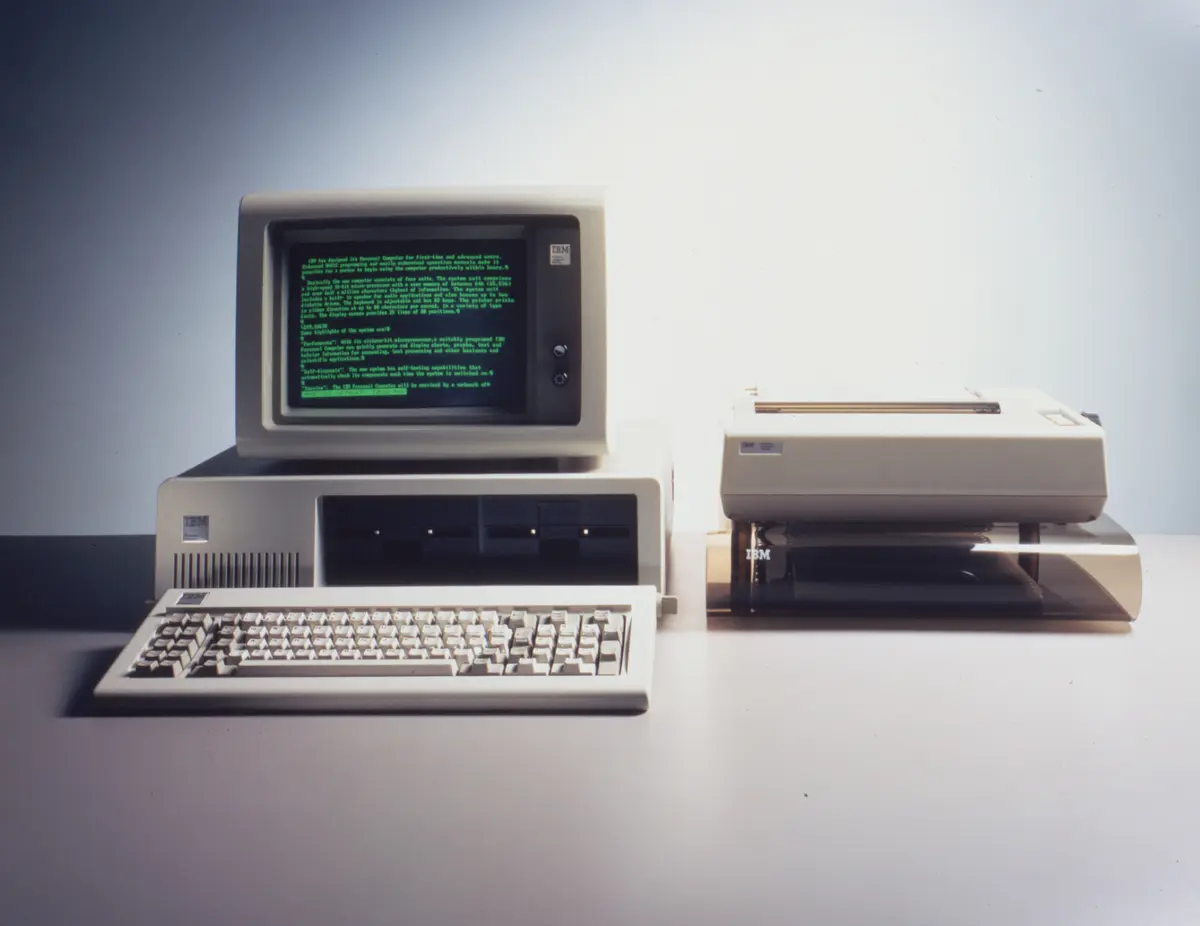
Apple's '1984' advertisement, directed by Ridley Scott, is shown once, during the Super Bowl: a woman hurls a hammer at a Big Brother on a giant screen, a jab at IBM.
At Apple's annual shareholders' meeting in the Flint Center in Cupertino he unveils the Macintosh before a packed hall of some 2,500 people, in a show that became the model for his later product launches.
He presents the Macintosh again to the Boston Computer Society, followed by a panel of the engineers who built it.
- 1985
President Reagan gives him and Wozniak the National Medal of Technology at the White House 'for their development and introduction of the personal computer'.
After a power struggle with Sculley, in which the board had taken away his role in running the company, he leaves Apple, aged thirty, and announces a new company, NeXT, to build powerful workstations for universities.
- 1986
He signs the agreements by which he buys the computer graphics division of George Lucas's Lucasfilm for $5 million and puts $5 million more into it as Pixar, taking 70 percent and the chair of its board.
- 1988
He unveils the NeXT Computer, a black cube with an optical disk drive and advanced object-oriented software, priced at $6,500; it is admired but sells poorly.
- 1990
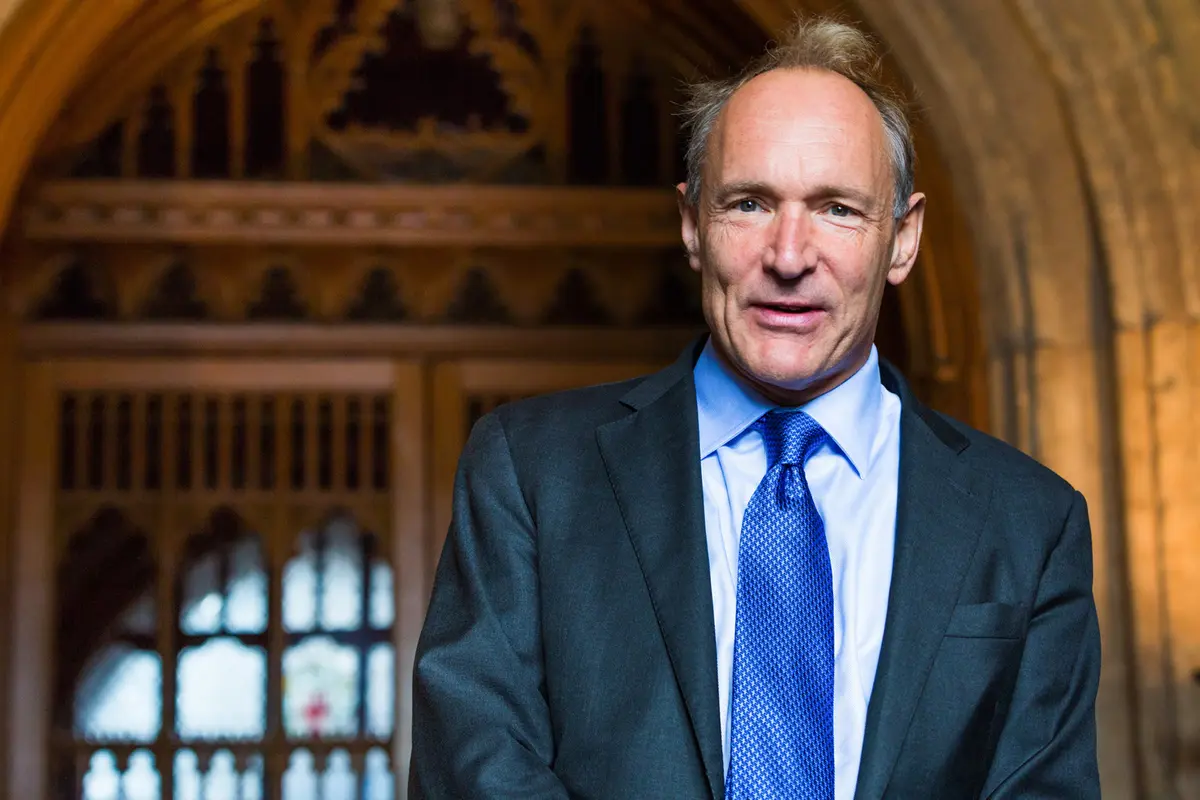
At CERN in Geneva, Tim Berners-Lee uses a NeXT machine to write the first version of the World Wide Web.
- 1995
Pixar's Toy Story, made with Disney, the first feature film animated entirely by computer, becomes a hit; Pixar's stock offering the same year makes Jobs a billionaire.
- 1996
Apple, losing money and short of a modern operating system, announces that it will buy NeXT for about $400 million; Jobs comes back as an adviser when the deal closes on 7 February 1997.
- 1997
Apple's board ousts its chief executive, Gilbert Amelio, and Jobs becomes the company's de facto leader; within weeks he makes peace with Microsoft, which invests $150 million.
Apple announces that its new board has named him interim chief executive. He cuts the product line and launches the 'Think different' advertisements.
1 Infinite Loop, Cupertino: Apple's headquarters in his second time at the company, from his return in 1997 to his resignation in 2011- 1998
The Bondi Blue iMac, an all-in-one computer in translucent plastic, becomes America's best-selling personal computer by the end of the year and returns Apple to profit.
- 2000
At Macworld in San Francisco he drops 'interim' from his title and becomes Apple's chief executive, joking that he will call himself 'iCEO'.
- 2001
Apple introduces the iPod, a pocket music player holding up to 1,000 songs, which goes on sale on 10 November for $399.
1 Infinite Loop, Cupertino: Apple's headquarters in his second time at the company, from his return in 1997 to his resignation in 2011- 2003
Apple opens the iTunes Music Store, selling songs from the major record companies for 99 cents each.
- 2004
Diagnosed in 2003 with a rare form of pancreatic cancer that can be cured by surgery, he puts off surgery for about nine months while trying alternative remedies, then has a major operation and returns to work.
- 2005
He gives the commencement address at Stanford University: three stories about connecting the dots, love and loss, and death, ending 'Stay hungry. Stay foolish.'
- 2006
Pixar's shareholders approve its sale to Disney for $7.4 billion in stock, making Jobs Disney's largest shareholder and a member of its board.
The Steve Jobs Building, Pixar Animation Studios, Emeryville: the studio he bought in 1986 and chaired until Disney bought it in 2006- 2007
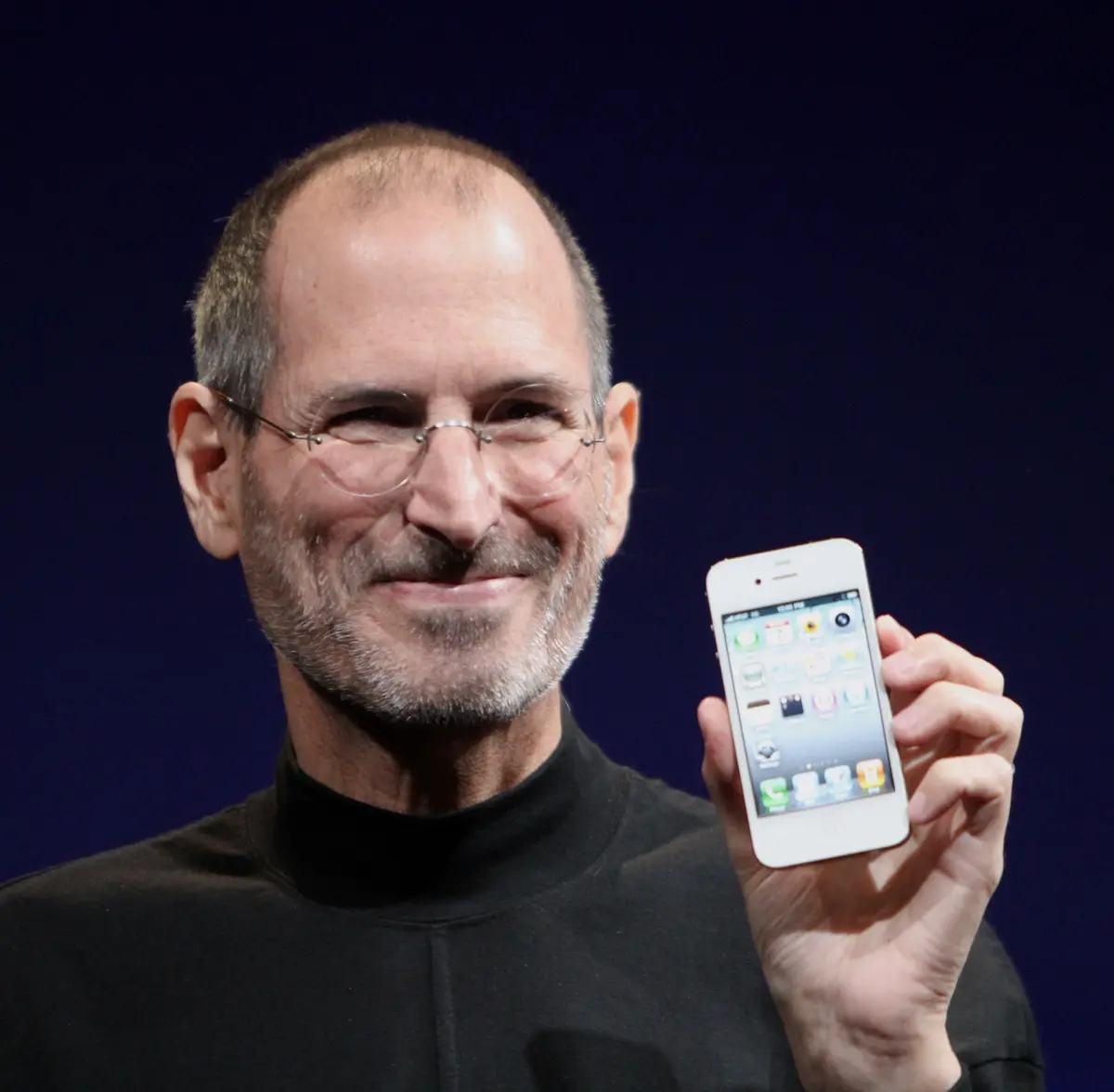
He introduces the iPhone (see 'The iPhone') and Apple Computer becomes Apple Inc.
- 2009
During a medical leave that began in January, he has a liver transplant in Tennessee; he is back at work on 29 June.
- 2010
In San Francisco he introduces the iPad, a tablet computer for browsing, reading, video and games, from $499.
- 2011
Saying he can no longer meet his duties, he resigns as Apple's chief executive, recommends Tim Cook as his successor and becomes chairman of the board.
1 Infinite Loop, Cupertino: Apple's headquarters in his second time at the company, from his return in 1997 to his resignation in 2011- 3:00 p.m.
He dies at his home in Palo Alto at about 3 p.m., of respiratory arrest caused by the spread of his pancreatic tumour, aged 56, the day after Apple showed its next iPhone.
Palo Alto: his family home in his later years, where he died on 5 October 2011