The iPhone
“On 9 January 2007 Steve Jobs showed the iPhone, a phone worked by fingers on glass; with the App Store of July 2008 it turned the phone into a computer in every pocket.”
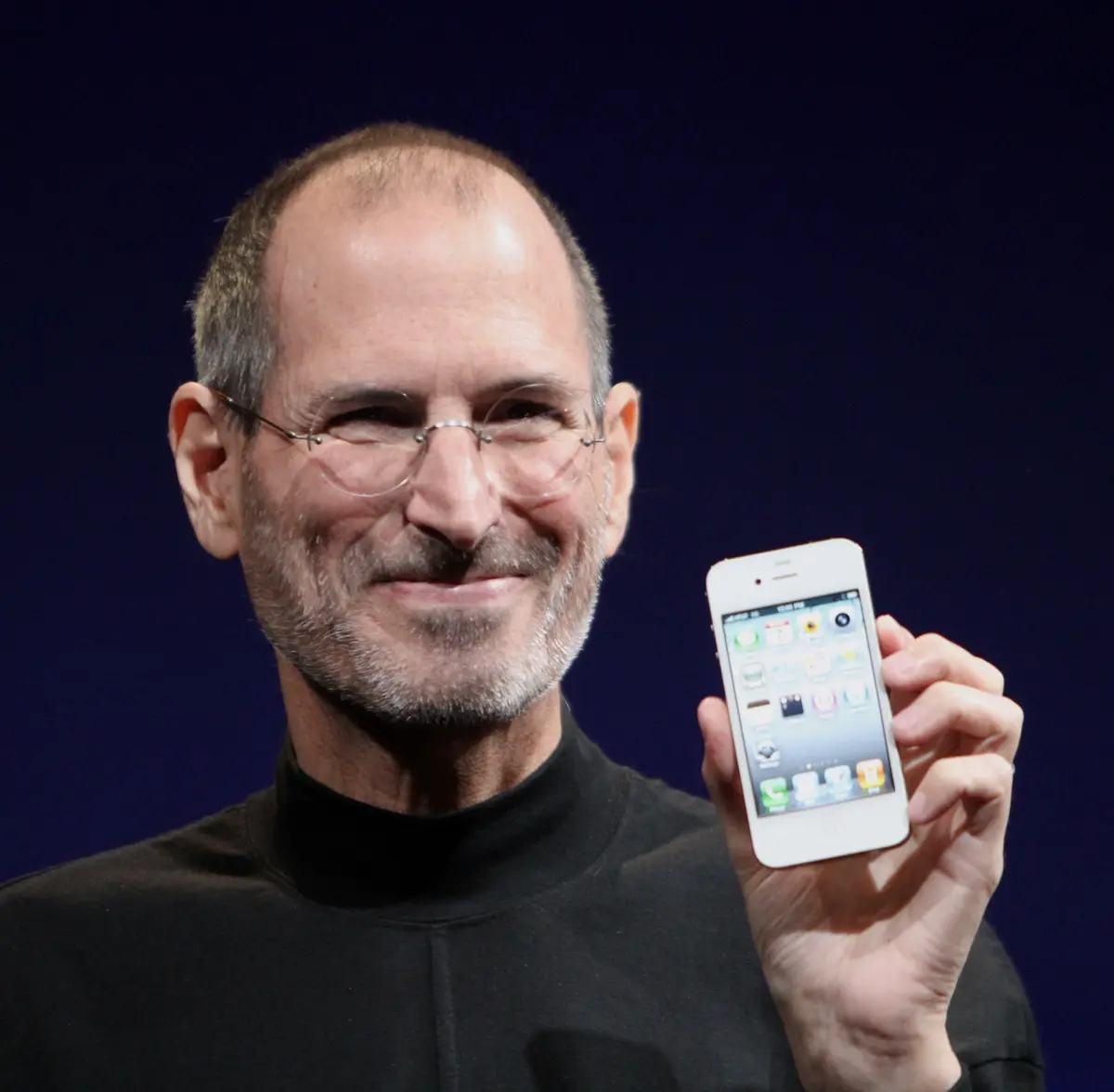
The iPhone is the touch-screen phone that Steve Jobs, Apple's chief executive, unveiled on 9 January 2007 at the Macworld show in San Francisco, and that went on sale in the United States on 29 June 2007. Jobs presented it as three products in one: a widescreen iPod with touch controls, a revolutionary mobile phone and a breakthrough internet communicator. Instead of buttons and a plastic keyboard it had a single 3.5-inch glass screen that you worked with your fingers, tapping, flicking and pinching. It ran a version of Apple's Mac OS X, showed whole web pages in the Safari browser, had Google Maps, email, visual voicemail and a 2-megapixel camera, and sensors that turned the picture when you turned the phone. It cost $499 for 4 GB or $599 for 8 GB, with a two-year plan from AT&T (Cingular, renamed AT&T that year), Apple's only carrier in the United States.
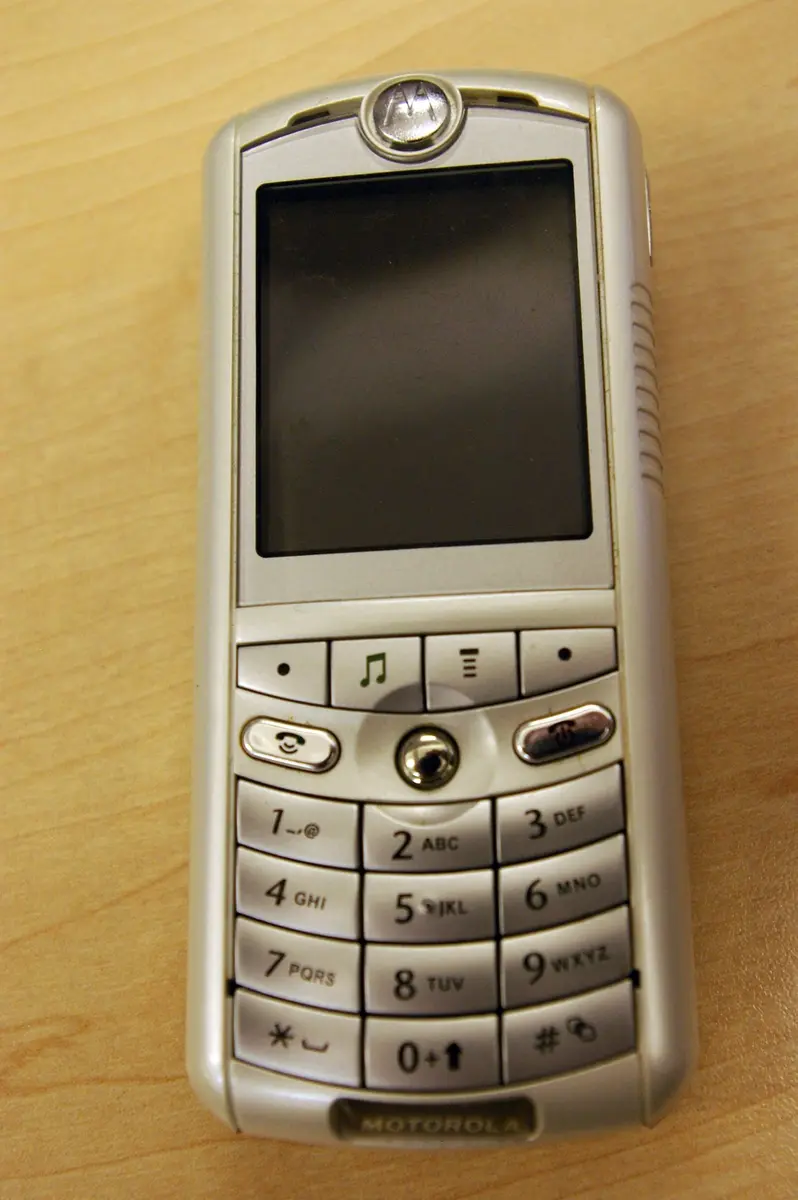
Apple had grown strong again on the iPod and the iTunes Store, which showed that it could make a hit gadget and join hardware, software and an online shop into one system. Its first step into phones, in September 2005, was iTunes on somebody else's phone: the Motorola ROKR, sold by Cingular, which held only 100 songs. By then Apple was already building a phone of its own in deep secrecy, more than two years of work in all. Tony Fadell, who had designed the first iPod, led the hardware and Scott Forstall the software. Forstall later told the Computer History Museum that the push for a screen worked by fingers rather than a pen came after a Microsoft engineer boasted to Jobs that pen tablets would rule computing: 'let's show them how it's really done.' The touch work also drew on FingerWorks, a small Delaware company whose patents passed to Apple and whose co-founder Wayne Westerman is named, with Jobs and two dozen others, on Apple's touch-screen patent.
Even the name had to be fought for: Cisco owned the 'iPhone' trademark, sued the day after the keynote, and settled in February, when the two companies agreed that both could use it. The first iPhone had clear limits. It used AT&T's slow EDGE data network rather than 3G, had no GPS, and ran only Apple's own programs: in June 2007 Jobs told outside developers to write web applications instead. Even so, people queued for the 6 p.m. start of sales, Apple sold its millionth iPhone after 74 days, and in September it cut the price of the 8 GB model to $399. In October Jobs promised a software kit for outside developers; it came in March 2008 together with the App Store, where developers set their own price and kept 70 percent. The store opened on 10 July 2008 with more than 500 apps, and the next day the iPhone 3G, with fast 3G data and GPS for $199 with a contract, went on sale in 21 countries. It sold a million in three days, and users downloaded 10 million apps in the first weekend.
The iPhone changed what a phone is. In 2006 smartphones were a niche led by Nokia and its Symbian software, BlackBerry's email devices for business and the Palm Treo; after the iPhone, the smartphone became a computer in everyone's pocket. Google answered with Android, announced in November 2007 with a group of phone makers and carriers, and the first Android phone, T-Mobile's G1, was presented in September 2008. Nokia, Palm and BlackBerry, whose systems were built for a world of scarce memory and slow networks, lost out. Powered by the iPhone, Apple became the world's most valuable company in August 2012, and in July 2016 it sold its billionth iPhone.
Almost every smartphone today works like it, as the Computer History Museum puts it: a slab of glass with few buttons, software that fills the screen, and an app store to install programs from. The App Store created an 'app economy' that the Computer History Museum's 2017 panel put at 1.3 trillion dollars of revenue in 2016, helped services from rides to reviews take off, and gave Apple its biggest business, more than 60 percent of its revenue a decade after the launch. The line printed on the box, 'Designed by Apple in California, Assembled in China', sums up how it was made.
What happened
- 2005
Apple, Motorola and Cingular launch the Motorola ROKR, 'the world's first mobile phone with iTunes'. It holds only 100 songs.
- 2006
Inside Apple, in deep secrecy, engineers build prototypes of the phone under the code name M68: red development boards and test units with plastic screens. Tony Fadell leads the hardware, Scott Forstall the software.
Apple's headquarters, 1 Infinite Loop, Cupertino: where the iPhone was designed (the address on its box), and the dateline of the software kit and App Store announcement of 6 March 2008 - 2007
Apple files the design patent for the phone's shape, 'Electronic device', four days before the unveiling; it is granted on 1 January 2008.
At Macworld in San Francisco, Steve Jobs introduces the iPhone: a widescreen iPod, a mobile phone and an internet communicator in one, run by fingers on a multi-touch screen. It will cost $499 or $599, Cingular will be the only US carrier, and sales start in June. Apple Computer also becomes Apple Inc.
Moscone Center West, San Francisco: Jobs unveiled the iPhone here at Macworld on 9 January 2007A working iPhone goes on show under a glass dome at the exhibition, and crowds press round the case.
Cisco sues Apple in federal court in California: it has owned the 'iPhone' trademark since it bought Infogear in 2000, and its Linksys division already sells iPhone internet phones.
Cisco and Apple settle: both may use the name 'iPhone' anywhere in the world.
At Apple's developer conference, Jobs announces that outside developers can write web applications for the iPhone, which run in its browser; there will be no native third-party apps at launch.
- 6:00 p.m.
The iPhone goes on sale at 6 p.m. local time in Apple's 164 US stores and at AT&T stores, where people have queued since the afternoon or longer; Apple's stores stay open until midnight and sell up to two per customer.
Apple cuts the price of the 8 GB iPhone from $599 to $399; the 4 GB model is sold only while supplies last.
Apple sells its one millionth iPhone, 74 days after the launch; the iPod had taken almost two years.
Jobs writes on Apple's website: 'We want native third party applications on the iPhone', with a software kit promised for February.
Google and more than 30 phone makers, carriers and chip firms announce the Open Handset Alliance and Android, an open software platform for phones: the answer to the iPhone begins.
- 2008
Apple releases the iPhone software kit (SDK) and announces the App Store: developers set their own prices and keep 70 percent, and every app must be approved by Apple.
Apple's headquarters, 1 Infinite Loop, Cupertino: where the iPhone was designed (the address on its box), and the dateline of the software kit and App Store announcement of 6 March 2008In San Francisco, Jobs introduces the iPhone 3G: 3G data twice as fast, GPS, and $199 with a two-year contract, for more than 70 countries that year.
The App Store opens with more than 500 apps, over 125 of them free; within three days users download 10 million.
The iPhone 3G and the iPhone 2.0 software, with the App Store, arrive in 21 countries; a million iPhone 3Gs are sold in three days, where the first iPhone needed 74 days.
Apple Fifth Avenue, New York: Apple's glass-cube store, with queues for the iPhone 3G in July 2008