Apple is founded
“On 1 April 1976 Steve Jobs, Steve Wozniak and Ronald Wayne formed Apple to sell Wozniak's home-built computer; Mike Markkula's money made it a company in 1977, and its 1980 stock offering was the biggest since Ford's.”
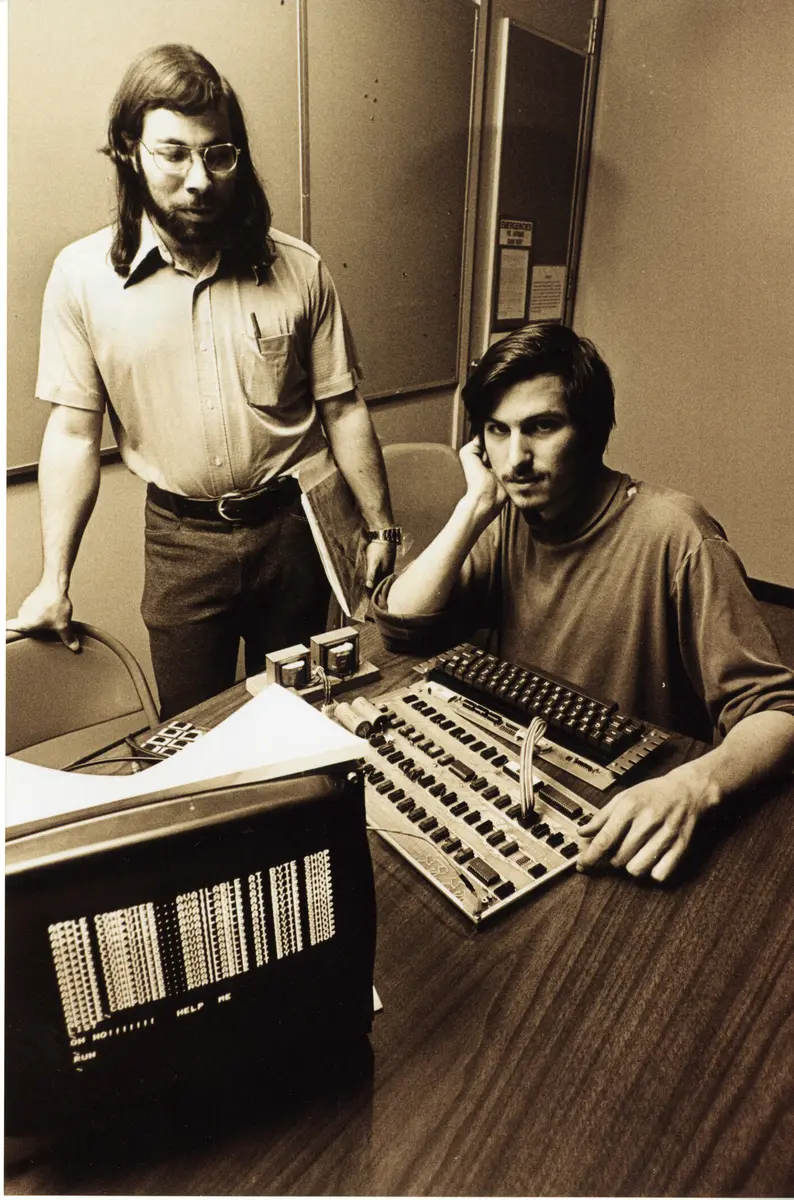
Apple began as a three-page partnership agreement. On 1 April 1976, in Ronald Wayne's apartment in Mountain View, California, Steve Jobs (21), Steve Wozniak (25) and Wayne (41) signed a typed contract that gave Jobs and Wozniak 45 percent each of the Apple Computer Company and Wayne 10 percent. Wozniak, an engineer at Hewlett-Packard, had designed a small computer on a single circuit board after the meetings of the Homebrew Computer Club, a group of hobbyists that first met in a Menlo Park garage in March 1975. Jobs saw that it could be sold. Eleven days later Wayne, afraid of being personally liable for the young partnership's debts, signed an amendment that ended his share for $800.
The first money came from a shop. Paul Terrell of the Byte Shop in Mountain View, one of the first computer stores, agreed to buy 50 boards at $500 each if they came fully assembled. Jobs and Wozniak raised cash by selling Jobs's Volkswagen bus and Wozniak's calculator, bought parts on credit and put the boards together with friends at the Jobs family home on Crist Drive in Los Altos. The Apple-1 sold for $666.66 from the summer of 1976 as a bare board: the buyer added a keyboard, a power supply and a screen. Only about 200 were made.
The real company came with the next machine and with grown-up money. Mike Markkula, a 34-year-old marketing manager who had grown rich at Fairchild and Intel, was sent to the two Steves through the venture capitalist Don Valentine. He wrote a business plan, arranged a bank credit line and bought a third of the founders' shares for $91,000. Apple Computer, Inc. was incorporated in California on 3 January 1977; Mike Scott, a manager from National Semiconductor, became its president, and the agency of the publicist Regis McKenna gave it its striped apple and its advertisements. The Apple II, a complete computer in a plastic case with colour graphics, was shown at the first West Coast Computer Faire in San Francisco in April 1977. In January 1978 venture investors, among them Valentine's Sequoia Capital, Venrock and Arthur Rock, bought shares for $517,500.
Growth was enormous. Sales rose from $774,000 in Apple's first nine months to $117 million in the year to September 1980, when the company had about 1,000 employees and sold through some 800 shops in North America. On 12 December 1980 Morgan Stanley and Hambrecht & Quist offered 4.6 million shares to the public at $22 each, the largest American stock offering since Ford's in 1956. At that price the whole company was worth more than $1.2 billion, and its founders and early employees became rich overnight.
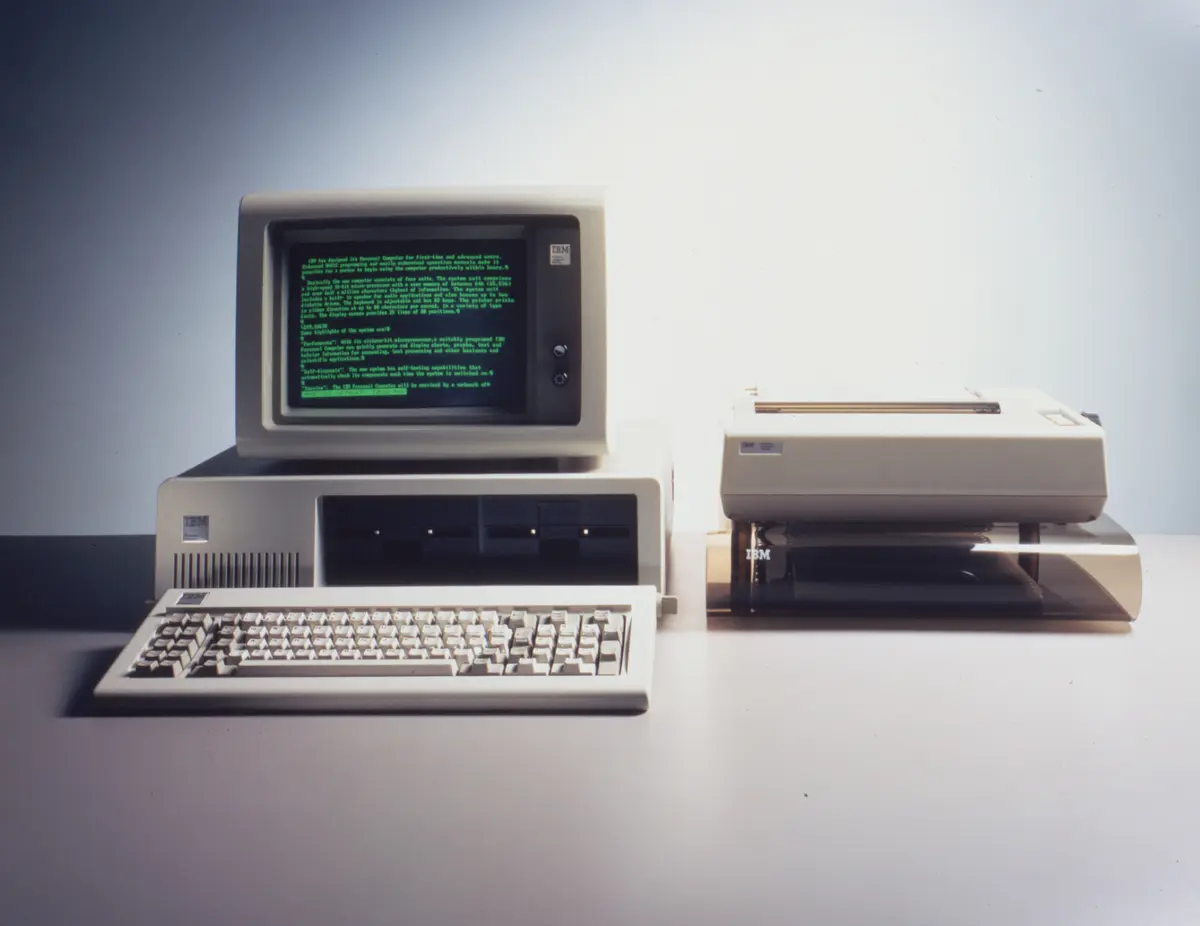
Apple's founding is the model of the Silicon Valley story that many later companies copied: a hobbyist's invention, a co-founder who sells it, an experienced investor who brings in venture capital, and a public offering that rewards them all. It also shows how quickly the personal computer turned from a kit for enthusiasts into a business; within a year of Apple's offering IBM entered the market with its own PC.
What happened
- 1976
In Ronald Wayne's apartment in Mountain View, Steve Jobs, Steve Wozniak and Wayne sign the partnership agreement of the Apple Computer Company, which Wayne has typed: 45 percent each to Jobs and Wozniak, 10 percent to Wayne, who is to look after mechanical engineering and documentation.
At a Homebrew Computer Club meeting in SLAC's auditorium Jobs and Wozniak show the Apple-1, the single-board computer Wozniak has built since the club's first meetings. Apple's photographs of that month already show the screen announcing it as 'available at Byte Shop'.
SLAC (Stanford Linear Accelerator Center), Menlo Park: the Homebrew Computer Club met in its auditorium from 1975, where Wozniak showed the Apple-1Paul Terrell of the Byte Shop in Mountain View orders 50 Apple-1s at $500 each, on condition that they come fully assembled, not as kits. To buy the parts Jobs sells his Volkswagen bus and Wozniak his calculator, and suppliers give them credit.
The Byte Shop, 1063 West El Camino Real, Mountain View: Paul Terrell's computer store, which ordered 50 Apple-1s in 1976Wayne signs an amendment ending his partnership in exchange for $800 and files a statement of withdrawal with the County of Santa Clara; he fears being liable for debts the two young partners might run up.
The Apple-1 goes on sale for $666.66 as a tested board without case, keyboard, power supply or screen. Jobs, Wozniak and friends such as Daniel Kottke assemble the boards at the Jobs family home in Los Altos; about 200 are made.
The Jobs family house, 2066 Crist Drive, Los Altos: where the first Apple-1 boards were assembled in 1976, in the house and its garageApple's first advertisement, 'Byte into an Apple', runs in Interface Age (September and October issues), giving the company's address as 770 Welch Road, Palo Alto.
770 Welch Road, Palo Alto: the address of the Apple Computer Company on the Apple-1's manual and advertisements of 1976- 1977
Apple Computer, Inc. is incorporated in California, with the backing of Mike Markkula, the retired Intel marketing manager who met the two Steves through the venture capitalist Don Valentine, wrote their business plan and arranged their credit.
The corporation issues 8,320,000 shares each to Jobs and Wozniak, in exchange for the designs and assets of Apple's first products, valued at $2,654.48 each; Jobs, Wozniak and Markkula become its directors.
The Apple II is shown at the first West Coast Computer Faire in San Francisco's Civic Auditorium and Brooks Hall (16 to 17 April), where about 180 exhibitors meet more than 12,000 visitors.
San Francisco Civic Auditorium (today Bill Graham Civic Auditorium), with Brooks Hall beneath the plaza beside it: the first West Coast Computer Faire, 16 to 17 April 1977, where the Apple II was shownMike Scott, a manufacturing director from National Semiconductor, becomes president; Markkula becomes chairman and head of marketing and Jobs a vice-president. Apple's advertisements, made with Regis McKenna's agency, begin to present the Apple II as a home computer.
Apple signs the lease of 10260 Bandley Drive in Cupertino, the building that becomes its headquarters.
10260 Bandley Drive, Cupertino: Apple's headquarters from early 1978, leased in October 1977Markkula pays $91,000 in cash for 8,320,000 shares, as many as each founder holds, so that the three own equal stakes; Scott and the engineer Rod Holt buy shares the same day.
Byte prints Apple's two-page Apple II advertisement with the striped apple and the address 20863 Stevens Creek Boulevard, Cupertino; the Apple II costs $1,298.
20863 Stevens Creek Boulevard, Cupertino: Apple's first office outside the Jobs home, from 1977- 1978
In Apple's first venture round, Venrock (the Rockefeller family's fund), Sequoia Capital, Arthur Rock, Intel's Andrew Grove and others buy 5,520,000 shares for $517,500; Venrock gets a seat on the board.
A second round closes: Continental Illinois Venture Corporation and Venrock buy Series A preferred shares for $703,998.
- 1980
Apple's fiscal year ends with net sales of $117.1 million and a profit of $11.7 million, against $774,000 of sales in its first nine months; it has about 1,015 employees and some 800 dealers in the United States and Canada.
Apple goes public: Morgan Stanley and Hambrecht & Quist sell 4.6 million shares at $22, the largest American stock offering since Ford's in 1956. At that price the company is worth over $1.2 billion; Jobs holds 7.5 million shares, Markkula 7.0 million.