The Dutch VOC: the first publicly traded company
“In 1602 the Dutch Republic merged its East Indies traders into one chartered company and let anyone buy a share: the first company with traded shares, and the first stock market, in Amsterdam.”
On March 20, 1602, the States General of the Dutch Republic granted a charter to the Vereenigde Oostindische Compagnie, the United East India Company, known by its monogram as the VOC. It merged the rival companies that had been sending ships to the East Indies since Cornelis de Houtman's first voyage of 1595, gave the new company a monopoly of all Dutch trade east of the Cape of Good Hope and west of the Strait of Magellan for twenty-one years, and let it build forts, keep soldiers and make treaties with Asian rulers. The man behind the merger was Johan van Oldenbarnevelt, the leading statesman of Holland, who wanted one strong company rather than six weak ones competing with each other and with the Portuguese and the English.
What made it new was its money. The charter's tenth article said that any inhabitant of the Republic could buy a share, and in August 1602 the company's six chambers, in Amsterdam, Middelburg, Enkhuizen, Delft, Hoorn and Rotterdam, opened their books. Some 1,143 people subscribed 6.4 million guilders, from great merchants like Isaac le Maire, who put in 85,000, to servants and widows who put in a few hundred. The capital was not to be repaid for ten years; instead the shares could be sold on to others, and the subscription book itself explained how to transfer one. Within months they were being traded in Amsterdam, and the trade in them, with forward contracts, short selling and the first attempt to corner a stock, created the world's first stock market, housed from 1611 in Hendrick de Keyser's exchange building on the Rokin.
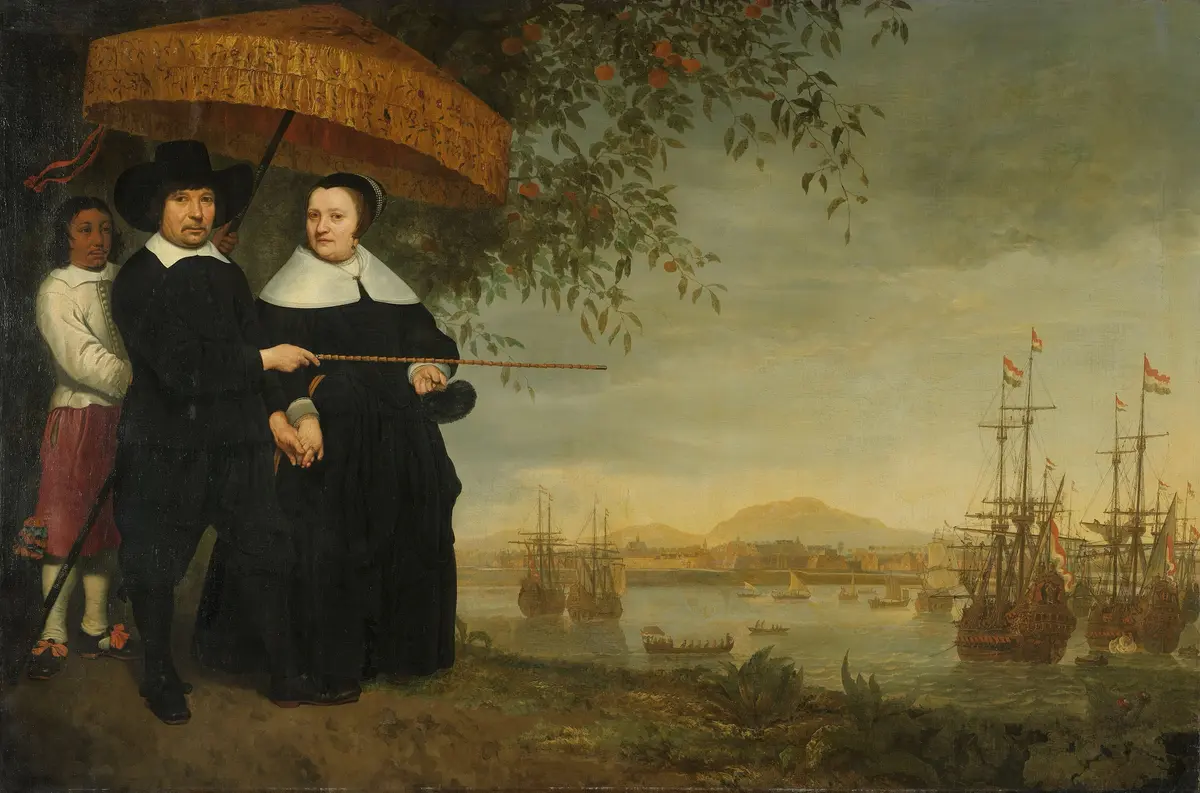
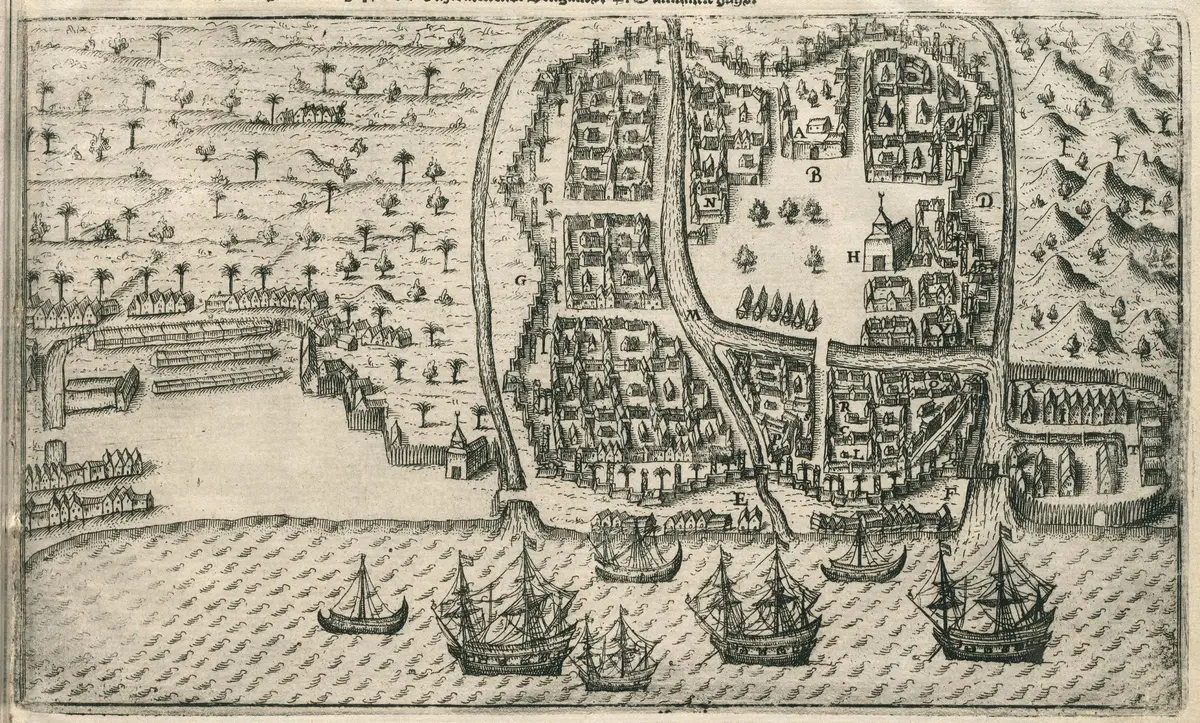
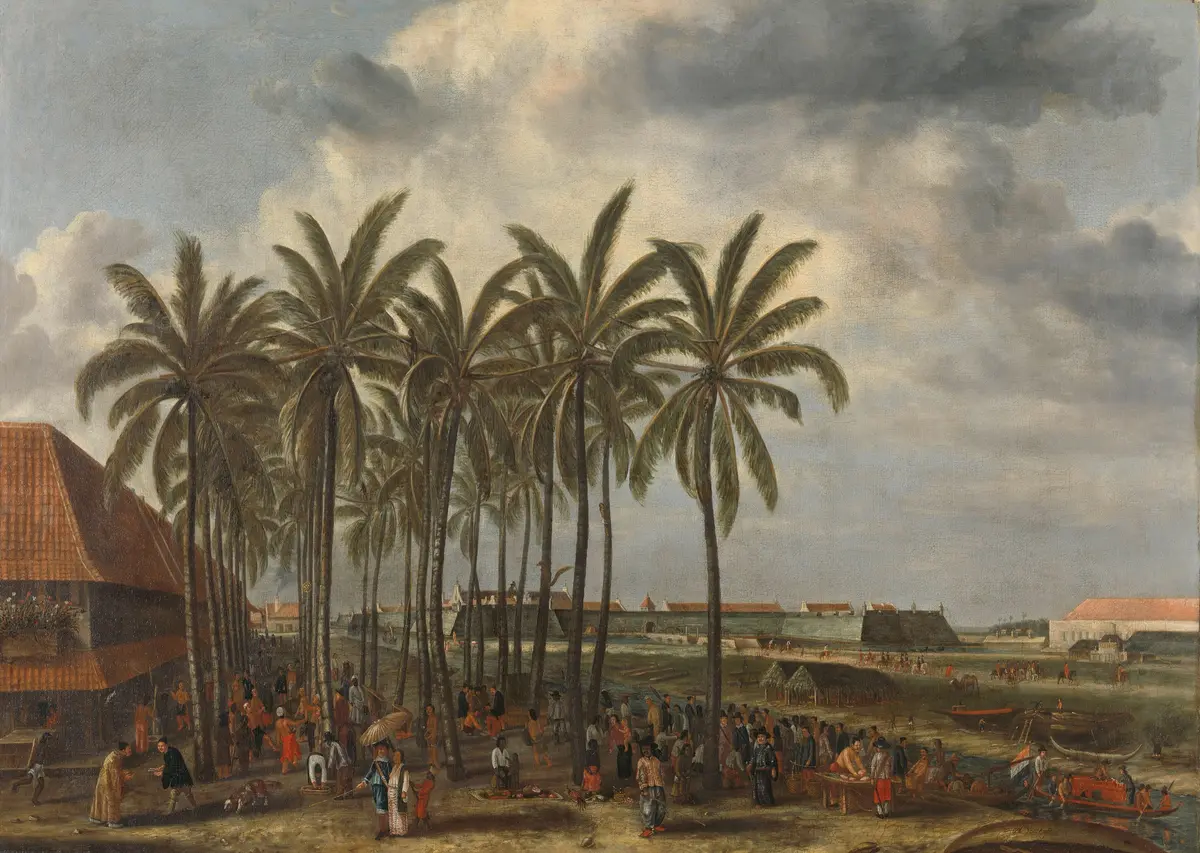
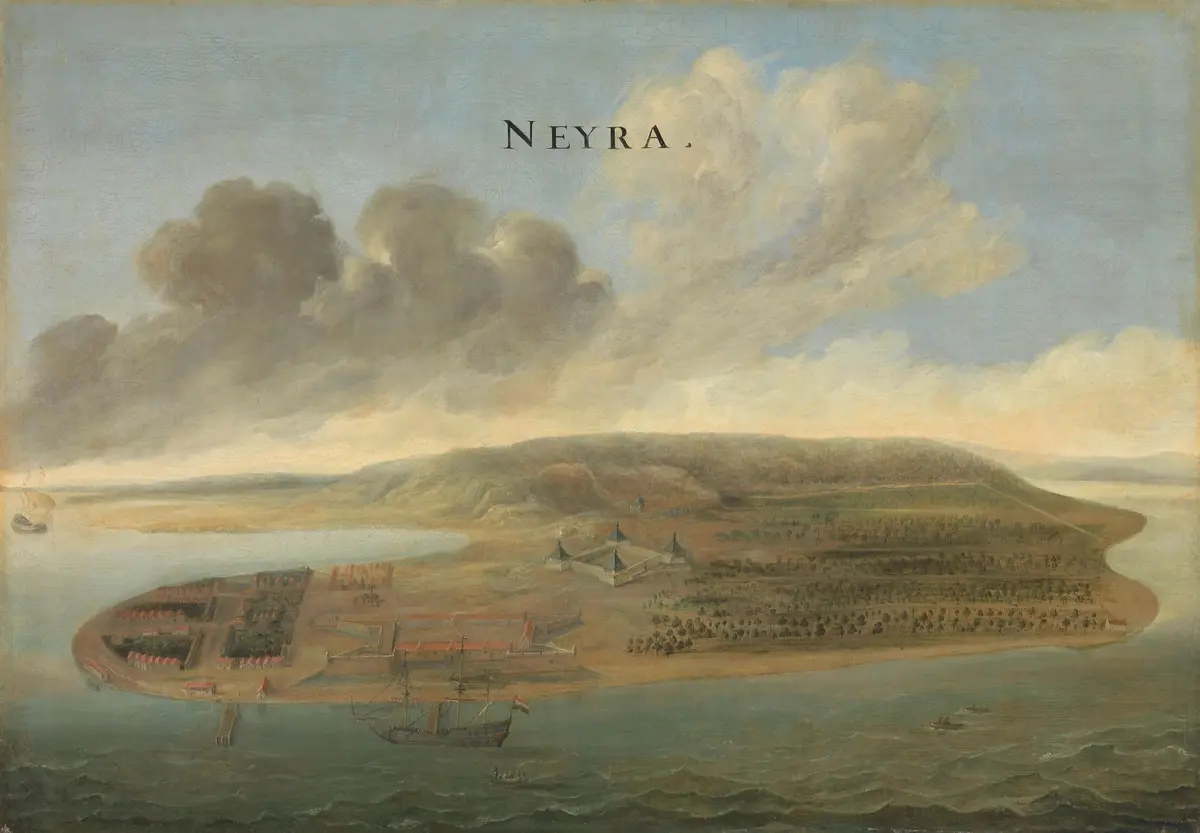
The company was run by seventeen directors, the Heeren XVII, drawn from the chambers, and its shareholders had no say, which they soon complained about: the first shareholder protest in history came in 1622. The ships sailed from Texel and the Zeeland ports to Java, Ceylon, India, Japan and the Spice Islands, and came home with pepper, nutmeg, cloves, cinnamon, silk, porcelain and tea. The VOC founded Batavia, now Jakarta, as its Asian capital in 1619, took the nutmeg islands of Banda by force in 1621, became the only Europeans allowed to trade with Japan from 1641, and planted a supply station at the Cape in 1652 that became South Africa.
For almost two centuries it was the largest company in the world, sending nearly a million Europeans to Asia on some 4,800 voyages and paying dividends that averaged eighteen per cent a year. It also ran plantations with enslaved labour, destroyed the economies of the islands it monopolised, and lost more than half the men it shipped out. Debt, war with Britain and corruption sank it; the Republic took it over in 1796 and dissolved it on the last day of 1799, keeping its Asian possessions as the Dutch East Indies. Its invention outlived it: the joint-stock company with freely traded shares, limited liability and a board of directors is the form in which almost all large business has been done since.
What happened
- 1602
The States General in The Hague grant the charter: the rival East Indies companies become one, with a monopoly of the trade for twenty-one years and the right to build forts and make treaties.
Binnenhof, The Hague: the States General granted the charter here on March 20, 1602The six chambers open their subscription books to anyone in the Republic; 1,143 people put in 6.4 million guilders, and the ledger explains how a share can be sold on to someone else.
Oost-Indisch Huis, Amsterdam: the headquarters of the Amsterdam chamber, built 1606By the end of the year shares are changing hands in Amsterdam, where the merchants meet on the Nieuwe Brug and in the Warmoesstraat until the exchange building opens in 1611: the stock market has begun.
Oost-Indisch Huis, Amsterdam: the headquarters of the Amsterdam chamber, built 1606