The VOC founds Batavia (Jakarta)
“In 1619 the Dutch East India Company under Jan Pieterszoon Coen burned the Javanese port of Jayakarta and built Batavia on its ruins: the company's capital in Asia, and the old heart of Jakarta.”
On 30 May 1619 the soldiers of the Dutch East India Company, the VOC, led by its governor-general Jan Pieterszoon Coen, drove the troops of the sultanate of Banten out of the Javanese port of Jayakarta and burned the town to the ground. On its ruins the company built Batavia, a walled town with a castle and canals that became the capital of its trading empire in Asia and is today the old town of Jakarta. Jayakarta lay at the mouth of the Ciliwung river on the north-west coast of Java. The city counts its history from 1527, when Banten's forces defeated the Portuguese there and renamed the old port Jayakerta, 'glorious fortress'; by 1619 it was ruled by a prince who was Banten's vassal.
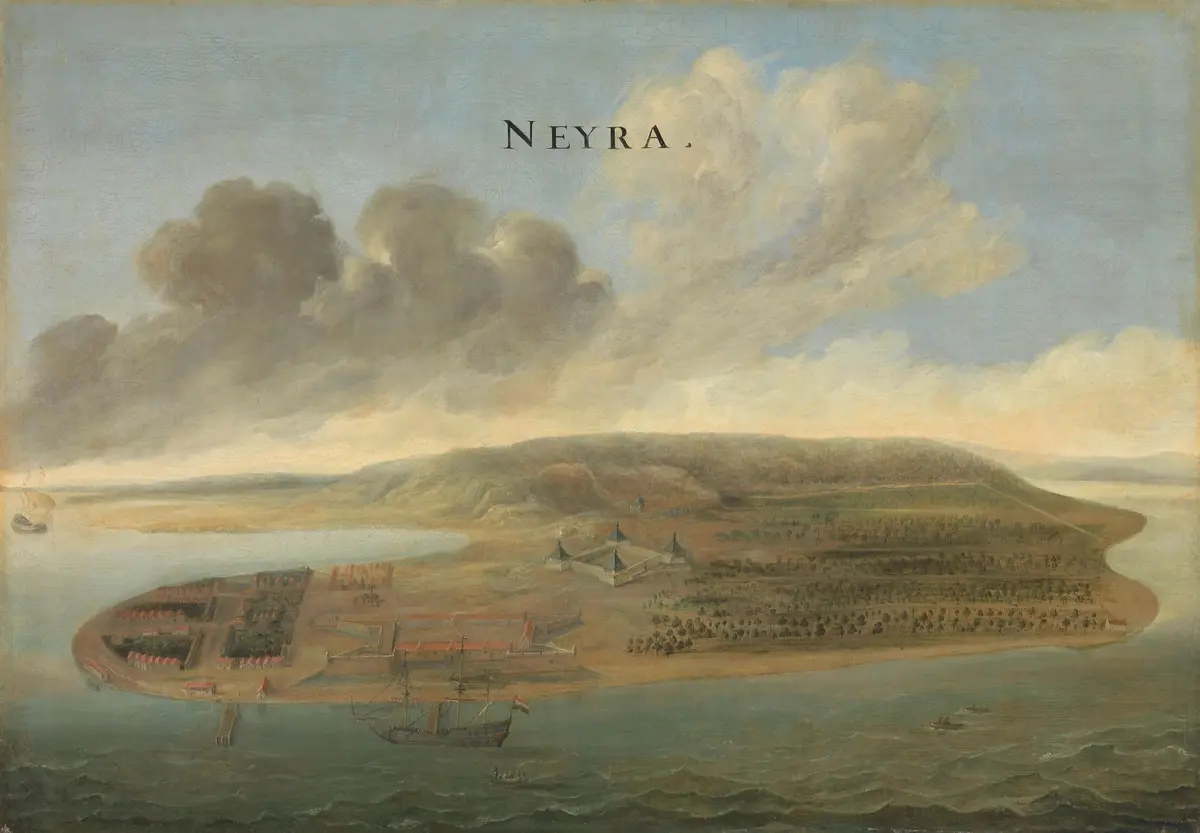
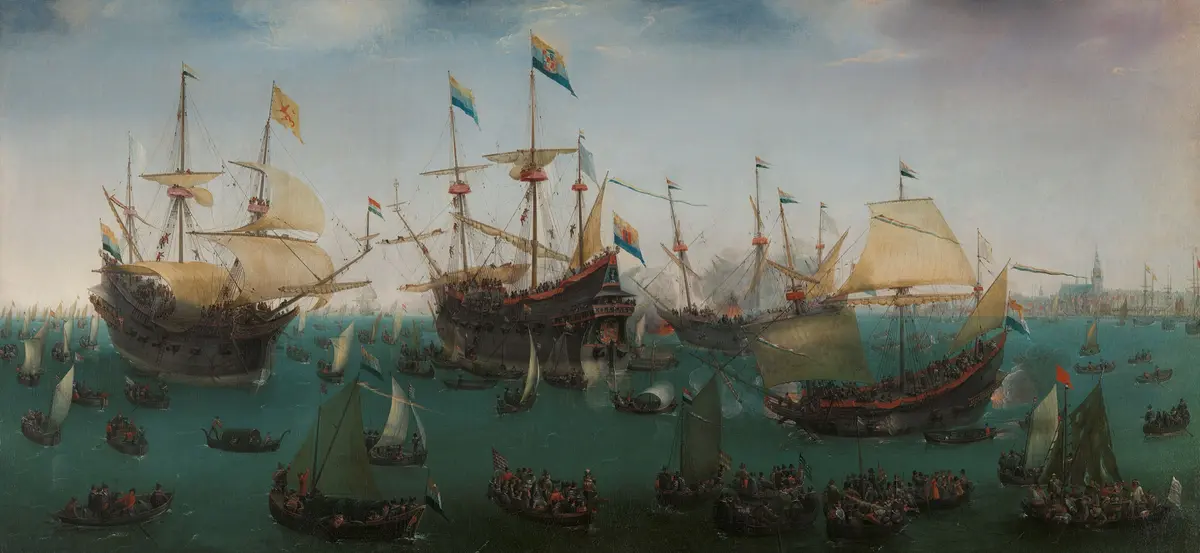
The Dutch had traded first at Banten, the great pepper market of western Java, but its sultan would not let them set the terms of the pepper trade. Coen, governor-general from 1617, wanted a base where the company answered to no Asian ruler, a fixed headquarters where its ships from Europe and its trade across Asia could meet, so he moved his headquarters to the company's post at Jayakarta and fortified it. At the end of 1618 an English fleet under Sir Thomas Dale arrived to contest the place, and the prince of Jayakarta's men joined the English. After an indecisive fight at sea Coen ordered the fort held and sailed east to the Moluccas for more ships. In February 1619 Banten took Jayakarta from its own prince, sent the English away and laid siege to the fort. When Coen came back at the end of May the garrison was still holding out, and on the 30th he took the town.
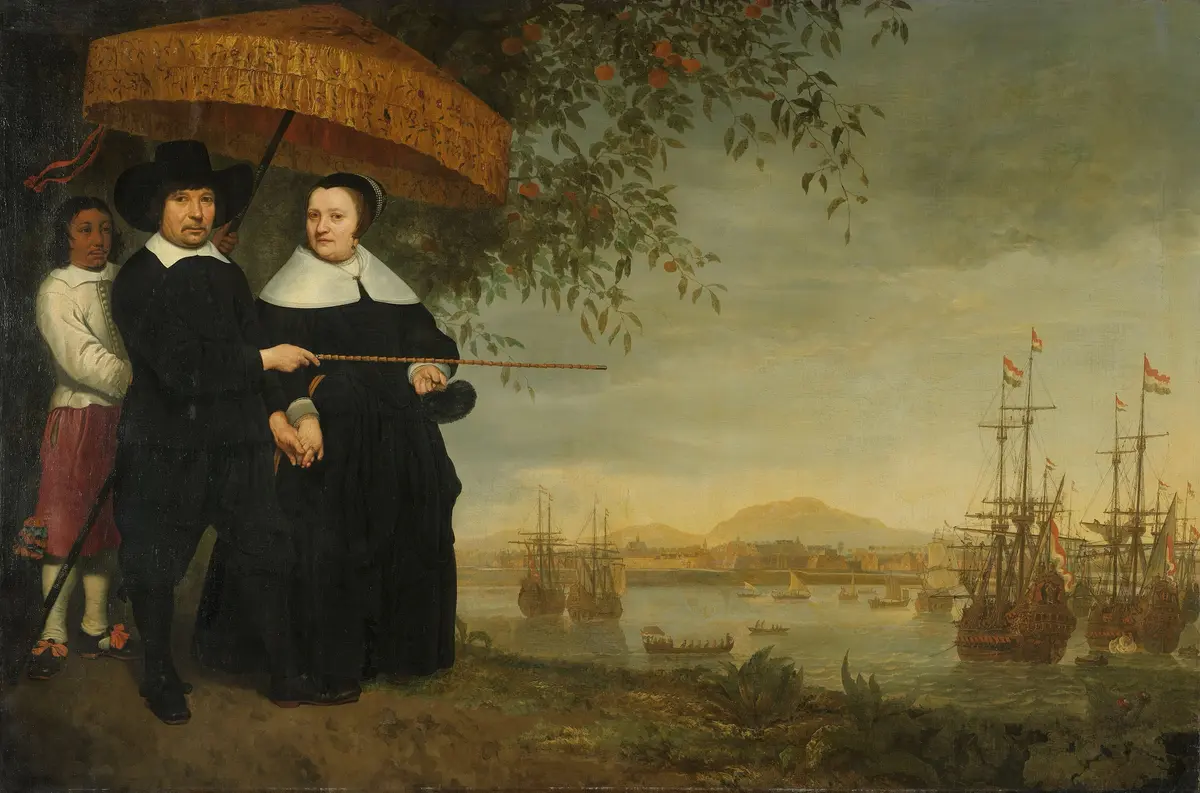
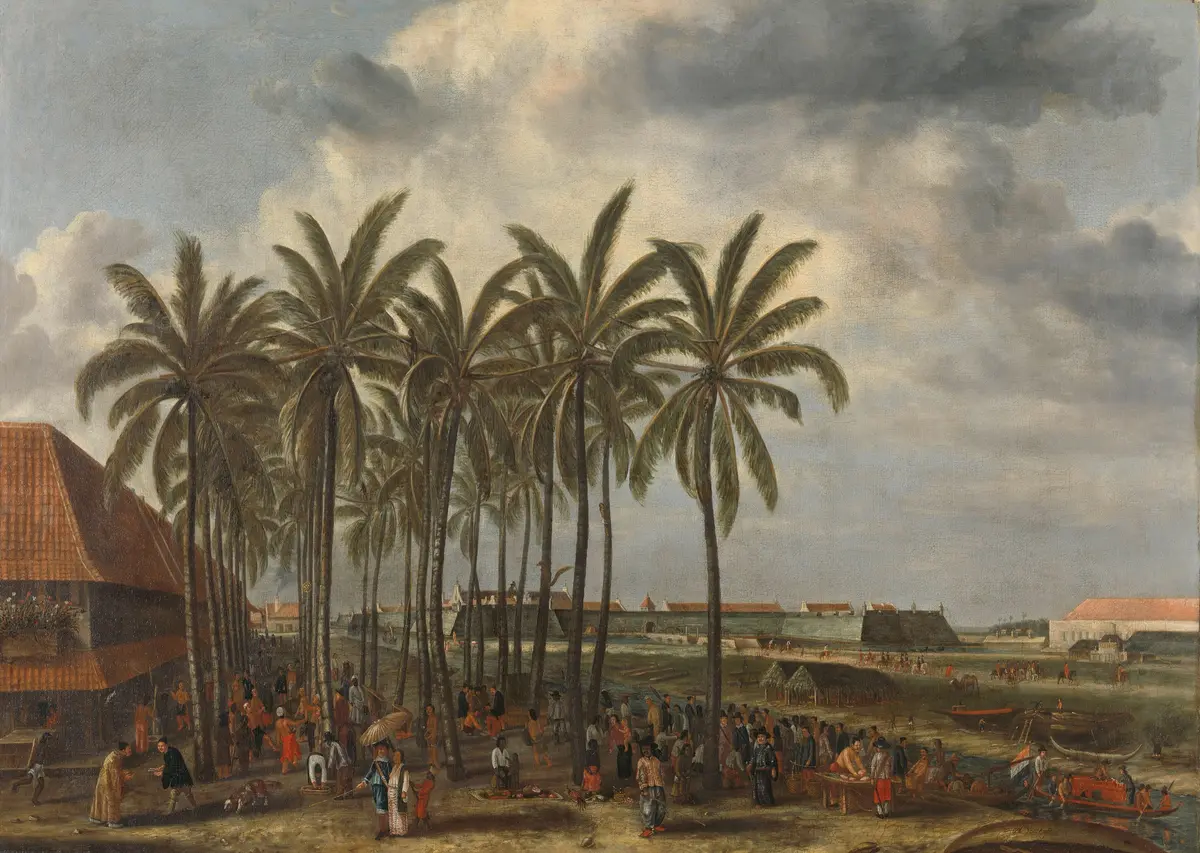
Batavia was a company town from the start. The old fort became the core of a larger castle, whose plan Coen sent home in October 1619; canals were dug and streets laid out on the east bank of the river, and by 1650 the town plan was complete. In June 1620 the first bench of aldermen was named, two company officials and three free citizens with the captain of the Chinese at their side, and in January 1621 the first church council met. The town was named after the Batavi, the ancient tribe the Dutch took for their ancestors. Coen hoped for an eastern Amsterdam full of Dutch settlers, but the town that grew was Asian: Chinese settlers, whose quarter was 'already full of houses' within months of the conquest, enslaved people and company soldiers; around 1700 only about 6,000 of its 70,000 people were of non-Asian origin. In 1628 and 1629 Sultan Agung of Mataram besieged it twice and failed, and Coen died during the second siege.
Batavia remained the company's capital until the company was dissolved in 1799, then the capital of the Dutch East Indies until the Japanese occupation of 1942; the Dutch name stayed until 1949, when Djakarta was proclaimed the capital of independent Indonesia. The castle was pulled down under Governor-General Daendels in 1808–11, but the town hall of 1710 still stands on the old square as the Jakarta History Museum, and wooden sailing ships from all over Indonesia still unload at Sunda Kelapa, the harbour at the river mouth. The city was Dutch for more than three centuries; Indonesia was not. The company held its forts, the spice islands and, step by step, much of Java, but most of Sumatra, Borneo, Bali and the eastern islands came under Dutch rule only between 1870 and 1910.
What happened
- 1618
Coen, governor-general since 1617, has moved the company's headquarters from Banten to its fortified post at Jayakarta. At the end of the year an English fleet under Sir Thomas Dale arrives to contest it, and the prince of Jayakarta's men join the English; after an indecisive fight at sea Coen orders the fort held and sails east to Ambon for more ships.
Batavia Castle: the company's fortress and seat of government, grown from the Dutch fort at Jayakarta; demolished in 1808–11- 1619
Pieter van den Broecke, the commander of the Dutch post, is taken prisoner during talks with the besiegers; the garrison holds the fort without him.
Batavia Castle: the company's fortress and seat of government, grown from the Dutch fort at Jayakarta; demolished in 1808–11The regent of Banten suddenly overpowers his vassal, the prince of Jayakarta, makes the English withdraw, and lays siege to the Dutch fort himself.
Banten (Bantam): the sultanate's capital and pepper port, the company's first base in Java, whose regent took Jayakarta in February 1619Coen, back from the Moluccas with a fleet at the end of May, drives the Bantenese out of Jayakarta and burns the town; the fort's defenders are relieved. The company will celebrate 'the Conquest' every year, and on the ruins it builds Batavia.
Kali Besar, the Ciliwung's old course through the town: Jayakarta stood on its west side, opposite the Dutch fortWith his letter of 7 October Coen sends home a plan of the fort and of the larger castle to be built around it. Its key marks 'the place where the town of Jacatra used to be', the fishermen's quarter where the English lodge had stood, and a Chinese quarter 'already full of houses'.
Batavia Castle: the company's fortress and seat of government, grown from the Dutch fort at Jayakarta; demolished in 1808–11- 1620
News reaches Coen that the Dutch and English companies have made peace in London and are to share the trade. To keep the English out of Java he declares the company's 'kingdom of Jacatra' to run inland as far as the sea south of the island.
The first bench of aldermen is named for the new town: two company officials and three free citizens, with the captain of the Chinese attached; the same year a court of justice begins to sit in the castle.
Fatahillah Square, the old town square of Batavia, with the town hall of 1710 (now the Jakarta History Museum) on its south side- 1621
In January about forty Calvinists celebrate the town's first Lord's Supper and its first church council meets. The settlement now bears the name Batavia, after the Batavi, the ancient tribe of the Rhine delta whom the Dutch took for their ancestors.
In January Coen sails from Batavia with an all-Dutch fleet to conquer the Banda Islands, the only source of nutmeg: the new town is now the base from which the company makes war across the archipelago.