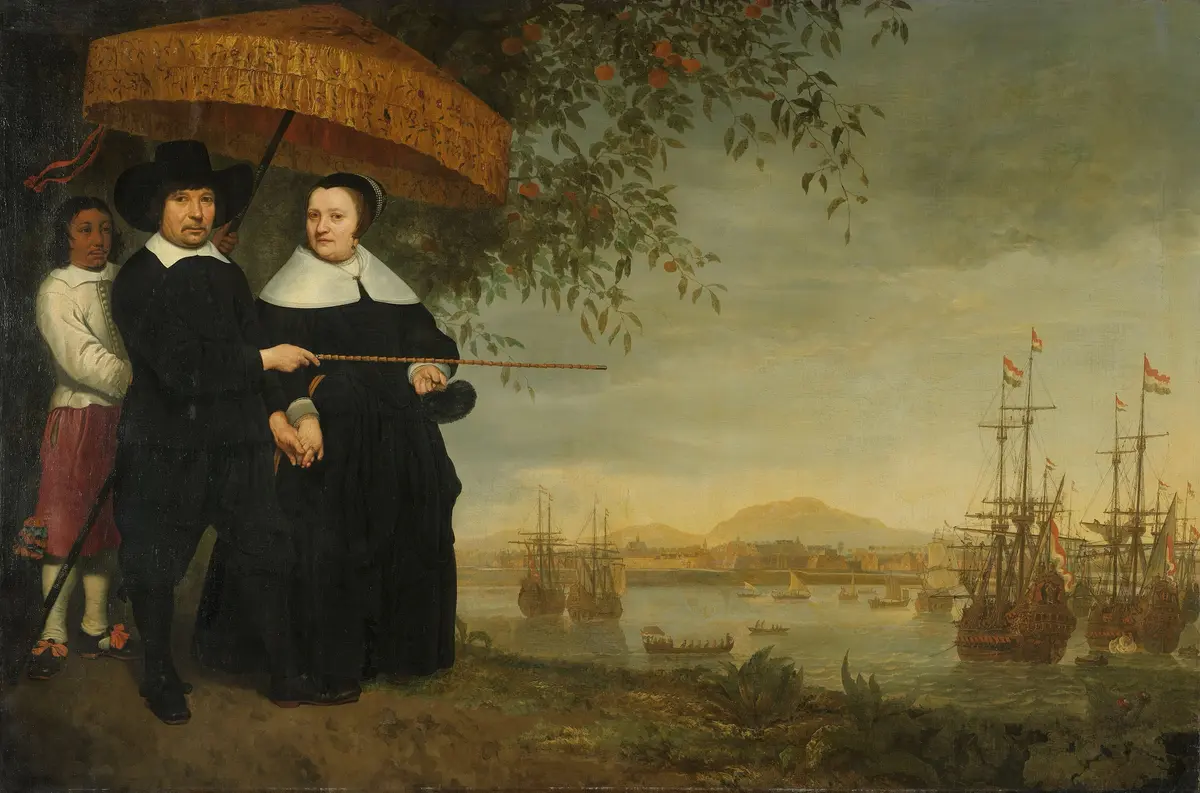
VOC rule in the Indies
“For two centuries (1602–1799) the Dutch East India Company ruled from Batavia a web of forts and monopolies across the archipelago, conquering the spice islands and much of Java, until war and debt ended it.”
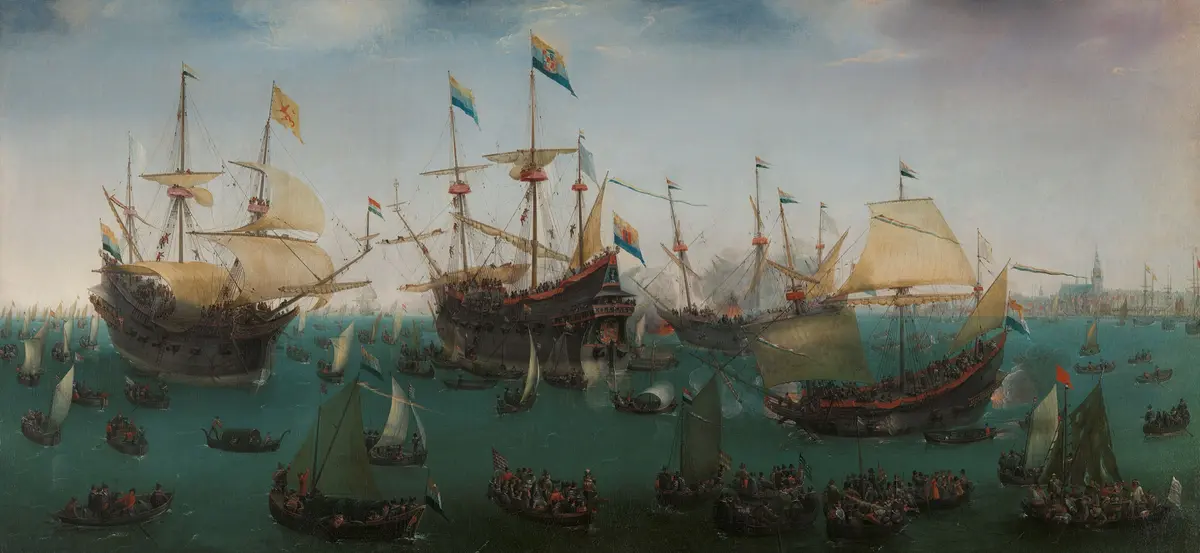
For almost two centuries, from its charter of 20 March 1602 to its end on the last day of 1799, the Dutch East India Company, the VOC, was the strongest power in the Indonesian archipelago. It was a trading company, but the States General gave it the monopoly of Dutch trade east of the Cape of Good Hope and powers that were practically those of a state: it could make treaties with Asian rulers, build forts, keep soldiers and wage war. What it wanted was not land but monopoly, above all of the spices that grew nowhere else: cloves in the Moluccas, nutmeg and mace on the Banda Islands, then pepper, and in the eighteenth century coffee from Java. Its first territory was the Portuguese fort on Ambon, taken without a shot in 1605. From 1619 its capital was Batavia, the town Jan Pieterszoon Coen built on the ruins of Jayakarta, where a governor-general and the Council of the Indies ran posts that reached from Japan to the west coast of India.
The company won its monopolies by force. In 1621 Coen conquered the Banda Islands and killed, enslaved or drove out most of their people. In 1623 the company's men on Ambon tortured and executed English merchants for an alleged plot, and the English soon abandoned their posts in the spice islands. Malacca, the old gateway to the archipelago, was taken from the Portuguese in 1641, and fleets of local war canoes, the hongi, toured the Moluccas to destroy any spice the company did not want. Makassar, the free port that sold spices to all comers, was broken in a war of 1666 to 1669 that Cornelis Speelman fought together with the Bugis prince Arung Palakka, and Banten, the pepper port of western Java, came under the company's control in 1682 to 1684. Under governors-general such as Anthony van Diemen (1636–45) and Joan Maetsuyker (1653–78) the company became the paramount power of the archipelago. Yet outside Java and the spice islands it held little more than its forts and the towns around them.
In Java the company was drawn, step by step, into the wars of the kingdom of Mataram, and was paid in land. For helping Amangkurat II against the rebel Trunajaya it received in 1677–78 the monopoly of Mataram's trade, part of the Priangan uplands and the port of Semarang; a war of succession in 1704–05 brought more. In October 1740 the Chinese inside the walls of Batavia were massacred, and the war that followed spread to central Java; in 1743 the king ceded the whole north coast. At Giyanti on 13 February 1755 the company split what was left of Mataram between the rulers of Surakarta and Yogyakarta, who both acknowledged it as their overlord. It governed through the Javanese regents, who had to deliver rice, indigo, coffee and other crops in fixed quotas at prices it set: 'tribute disguised as trade', in the words of the British scholar J. S. Furnivall. Coffee, brought to Java late in the seventeenth century, became the great crop of the Priangan.
The company was in trouble long before its end. Smuggling broke its monopolies, the costs of governing more and more land ate its profits, and its servants were corrupt. War with Britain in 1781–84 was the blow it did not survive: it could not sell its produce, its sales fell from 20.9 million guilders in 1781 to 5.9 million in 1782, and it had to ask the state for help. In 1791 two commissioners-general were sent to Batavia to root out abuses. In 1795 France overran the Dutch Republic, which became the Batavian Republic; its new government replaced the company's directors with a committee in 1796, ended the company in 1799, and on 1 January 1800 took over its possessions and its debts of 134.7 million guilders.
The company's forts, its capital and its hold on Java became the Dutch East Indies of the nineteenth century, although most of the other islands came under Dutch rule only between 1870 and 1910. Its monopolies pushed aside the Indonesian traders and the old ports of Java's north coast, and Batavia itself became an Asian town: around 1700 only about 6,000 of its 70,000 people were of non-Asian origin, many of the rest Chinese settlers and enslaved people. The two principalities created at Giyanti, Surakarta and Yogyakarta, survived to the end of Dutch rule, and the papers of the company's government survive in the national archives of the Netherlands and Indonesia.
What happened
- 1602
The States General grant the charter that merges the Dutch companies trading to the East into one United East India Company: a monopoly of Dutch trade east of the Cape of Good Hope for twenty-one years, with the right to make treaties, build forts, keep soldiers and wage war, powers 'practically sovereign'.
- 1605
Admiral Steven van der Hagen's fleet arrives in the bay of Ambon and the Portuguese surrender their fort without a shot. Renamed Victoria, it becomes the seat of the first Dutch territory in the Indies, the Government of Amboina, with Frederik de Houtman as its first governor; its purpose is the clove trade.
Fort Victoria, Ambon: the Portuguese fort taken in 1605, seat of the first Dutch territory in the Indies and of the clove monopoly- 1609
The company sets up its High Government in Asia: a governor-general and a Council of the Indies to run 'trade, war, government' and justice. Until 1619 the governors-general have no fixed seat and live by turns at Fort Victoria on Ambon and Fort Oranje on Ternate.
- 1619
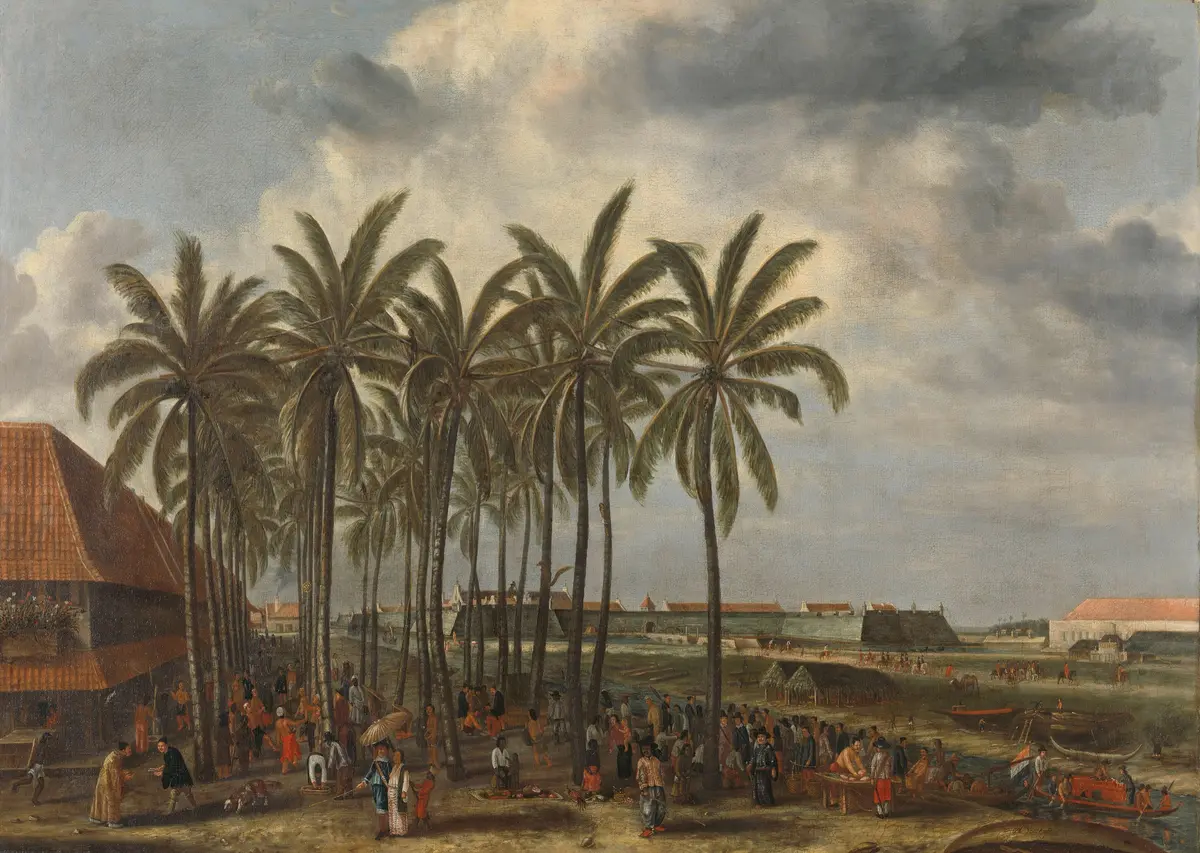
Jan Pieterszoon Coen drives the forces of Banten out of Jayakarta, burns the town and builds Batavia on its ruins. The High Government moves there, and the castle stays the hub of the company's government in Asia until the end.
Batavia Castle: the seat of the governor-general and the Council of the Indies, the hub of the company's government in Asia from 1619; demolished in 1808–11- 1621
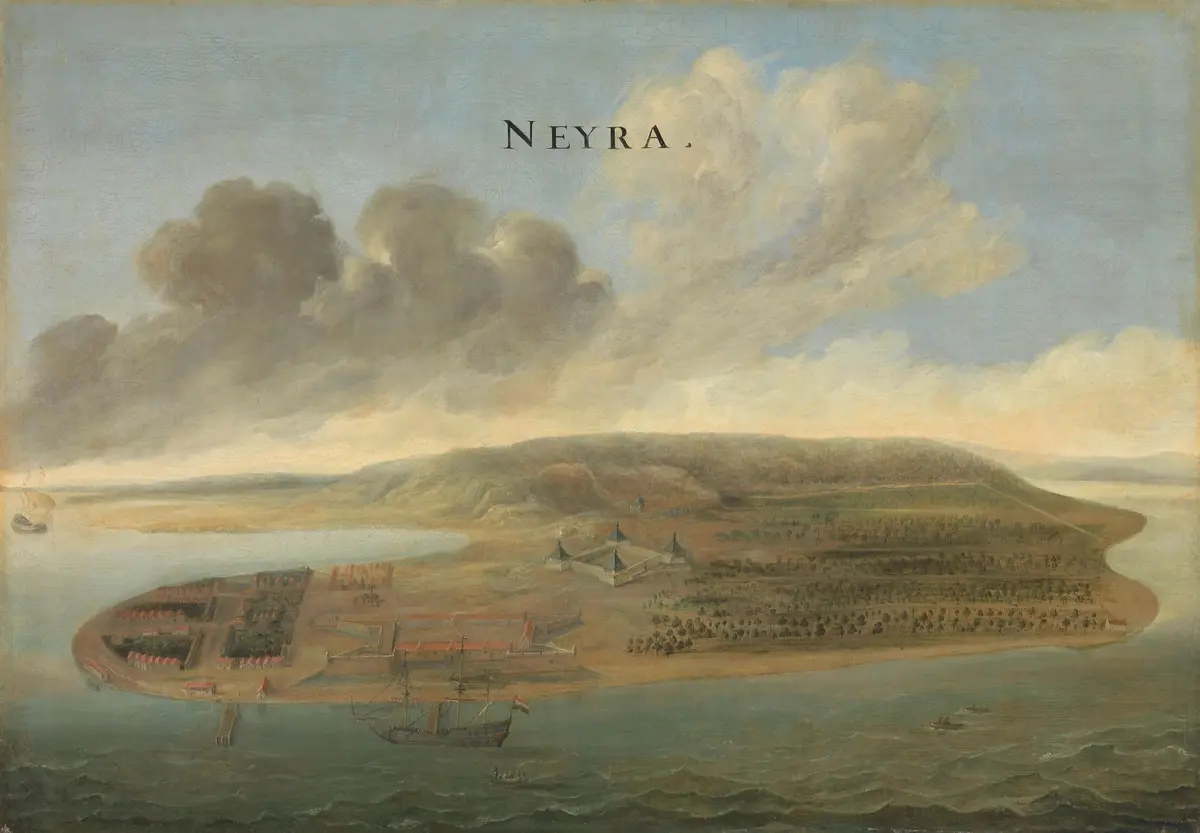
Coen conquers the Banda Islands, the only source of nutmeg and mace: their people are killed, enslaved or driven out, and the nutmeg gardens are handed to company servants and settlers who must sell the whole crop to the company.
Banda Neira: the company's seat on the Banda Islands, the only source of nutmeg and mace, conquered in 1621 - 1623
On Ambon the governor, Herman van Speult, has English merchants and Japanese soldiers arrested for an alleged plot to seize Fort Victoria. Tortured into confessing, ten Englishmen are executed with Japanese mercenaries and a Portuguese. The English call it the Amboyna massacre, and abandon their posts in the spice islands.
Fort Victoria, Ambon: the Portuguese fort taken in 1605, seat of the first Dutch territory in the Indies and of the clove monopoly - 1628
Sultan Agung of Mataram lays siege to Batavia; a second siege follows in 1629. Both fail, and Coen dies in the town during the second; Mataram and the company are left wary of each other's strength.
Batavia Castle: the seat of the governor-general and the Council of the Indies, the hub of the company's government in Asia from 1619; demolished in 1808–11- 1636
Anthony van Diemen becomes governor-general (1636–45). Under him, and later under Joan Maetsuyker (1653–78), the company becomes the paramount power of the archipelago, able to force its trading terms on other rulers.
- 1641
The company takes Malacca from the Portuguese, ending 128 years of Portuguese rule there and seizing the main gateway to the archipelago; it was the last Portuguese stronghold in the region.
Malacca: taken from the Portuguese in 1641, the company's post on the strait until the English took it in 1795 - 1657
An agreement with the sultan of Ternate confines clove growing to Ambon and the nearby Uliasers, as nutmeg is confined to Banda. Fleets of local war canoes, the hongi, tour the Moluccas to destroy any spice beyond what the company wants.
Fort Victoria, Ambon: the Portuguese fort taken in 1605, seat of the first Dutch territory in the Indies and of the clove monopoly - 1667
After a year of war, Cornelis Speelman's fleet and the Bugis prince Arung Palakka force Sultan Hasanuddin of Gowa to sign the Treaty of Bongaya: Makassar may sell its produce to no one but the company, and the fort of Ujung Pandang is handed over and renamed Fort Rotterdam, after Speelman's birthplace.
Fort Rotterdam, Makassar: Gowa's fort of Ujung Pandang, ceded to the company by the Treaty of Bongaya in 1667 - 1669
The war flares up again and Somba Opu, the walled capital and court of Gowa, is taken by storm. Makassar's part in the spice trade is over, and Arung Palakka becomes the strongest ruler of South Sulawesi as the company's ally.
Fort Rotterdam, Makassar: Gowa's fort of Ujung Pandang, ceded to the company by the Treaty of Bongaya in 1667- 1677
The company comes to the aid of Amangkurat II of Mataram, whose throne is threatened by the rebel Trunajaya. In return he closes his ports to all other nations and gives the company the monopoly of importing opium and cloth; in 1678 he cedes Krawang and part of the Priangan and grants it Semarang.
- 1680
With company troops behind him, Amangkurat II puts down the rebellion and Trunajaya is killed. The king sets up his court at Kartasura; with the company's help he then defeats a rival court at Plered, and Kartasura becomes the undisputed capital of Mataram.
Kartasura: the capital of Mataram from 1680, where the company's allies reigned until the court was sacked in 1742 - 1682
In Banten the company sides with Sultan Haji in his war against his father, Sultan Ageng Tirtayasa. Company soldiers decide the civil war, and the English and the French leave Banten.
Fort Speelwijk, Banten: built in 1685–86 beside the sultan's city to hold Banten to the company's monopoly - 1684
Sultan Haji signs a treaty that gives the company the sole right to trade in his kingdom. To hold him to it the company builds Fort Speelwijk opposite his palace, begun in 1685 and finished in 1686.
Fort Speelwijk, Banten: built in 1685–86 beside the sultan's city to hold Banten to the company's monopoly- 1705
After helping to put Pakubuwana I on the throne of Mataram in 1704, the company receives the rest of the Priangan, sovereignty over Semarang and Mataram's claims to Cirebon; in 1708 it moves its headquarters for Java's north-east coast to Semarang.
- 1712
The first Java coffee comes to market; the trees had come to Java as a curiosity in 1696. The regents of the Priangan are ordered to deliver it in fixed quotas at the company's price, and by 1733 the Priangan grows enough for the whole market.
- 1740
In Batavia, after the government has ordered Chinese who cannot prove a living to be deported to Ceylon and Chinese bands outside the walls have attacked the town, the Chinese inside the walls are massacred and their quarter burns. Afterwards only 3,431 Chinese remain in the town.
The town square of Batavia with its town hall, at the heart of the walled town where the Chinese were massacred in October 1740- 1743
The war that followed the massacre has spread across Java, and in 1742 Chinese rebels sack the court at Kartasura. Restored by the company, Pakubuwana II cedes it the whole north coast of Java, Madura and the eastern corner of the island; on 17 February 1745 he moves into a new palace at Surakarta.
Kartasura: the capital of Mataram from 1680, where the company's allies reigned until the court was sacked in 1742 - 1755
At Giyanti the company brokers the division of what is left of Mataram: Pakubuwana III keeps Surakarta, and Mangkubumi becomes sultan of the newly established Yogyakarta. Both rulers acknowledge the company as their overlord.
The kraton of Yogyakarta: the court of the sultanate created by the partition of Mataram at Giyanti in 1755- 1781
War with Britain (1781–84, in Furnivall's dates) leaves the company unable to sell its produce: its sales fall from 20.9 million guilders in 1781 to 5.9 million in 1782, and its Amsterdam chamber has to ask the state for a moratorium on its debts. It never recovers.
Batavia Castle: the seat of the governor-general and the Council of the Indies, the hub of the company's government in Asia from 1619; demolished in 1808–11 - 1791
The directors and the stadtholder appoint two commissioners-general, Sebastiaan Nederburgh and Simon Frijkenius, to go to Batavia as a High Commission and root out the abuses of the company's administration.
Batavia Castle: the seat of the governor-general and the Council of the Indies, the hub of the company's government in Asia from 1619; demolished in 1808–11- 1796
France has overrun the Dutch Republic, which became the Batavian Republic in 1795. The new government replaces the company's directors, the Heeren XVII, with a Committee for the Eastern Possessions.
- 1799
The company's last day. On 1 January 1800 the Batavian Republic takes over its possessions and its debts of 134.7 million guilders, and the VOC ceases to exist.