Isaac Newton
“The Cambridge mathematician whose Principia of 1687 gave the laws of motion and universal gravitation, and who also invented the calculus and split white light into colours.”
Isaac Newton was the English mathematician and natural philosopher whose Principia of 1687 set out the three laws of motion and the law of universal gravitation, showing that the force that makes an apple fall also holds the Moon and the planets in their orbits. He also invented the calculus in the 1660s, most of a decade before Gottfried Wilhelm Leibniz did so independently; he showed that white light is a mixture of colours; and he built the first working reflecting telescope. Britannica calls him the culminating figure of the Scientific Revolution, and the physics taught in schools is still, for most purposes, his.
He was born at Woolsthorpe, a farmhouse in Lincolnshire, on Christmas Day 1642 by the calendar England then used (4 January 1643 by ours), three months after the death of his father, a farmer who could not sign his name. He was so small and weak that no one expected him to live through his first day. When he was two his mother married a clergyman and left him with his grandmother, which left him bitter for years. He went to the grammar school at Grantham, failed as a farmer when his mother brought him home to run the estate, reading under a tree instead of minding the cattle, and in 1661 went up to Trinity College, Cambridge, paying his way by waiting on richer students. There he read Descartes, Galileo and Kepler on his own.
When the plague closed the university in 1665, he went home to Woolsthorpe and, in less than two years and still under 25, laid the foundations of the calculus, split sunlight with prisms and began to think about gravity; late in life he told a friend that the idea came to him as an apple fell in the garden. Back at Trinity he became Lucasian Professor of Mathematics at 26, gave the Royal Society his telescope and published his theory of colours, and then, stung by Robert Hooke's criticism, largely stopped publishing. In 1684 the astronomer Edmond Halley asked him what path a planet would follow if the Sun pulled it with a force that weakened with the square of the distance. Newton answered an ellipse, and Halley's prodding, and Halley's money, turned his proof into the Principia, published in July 1687.
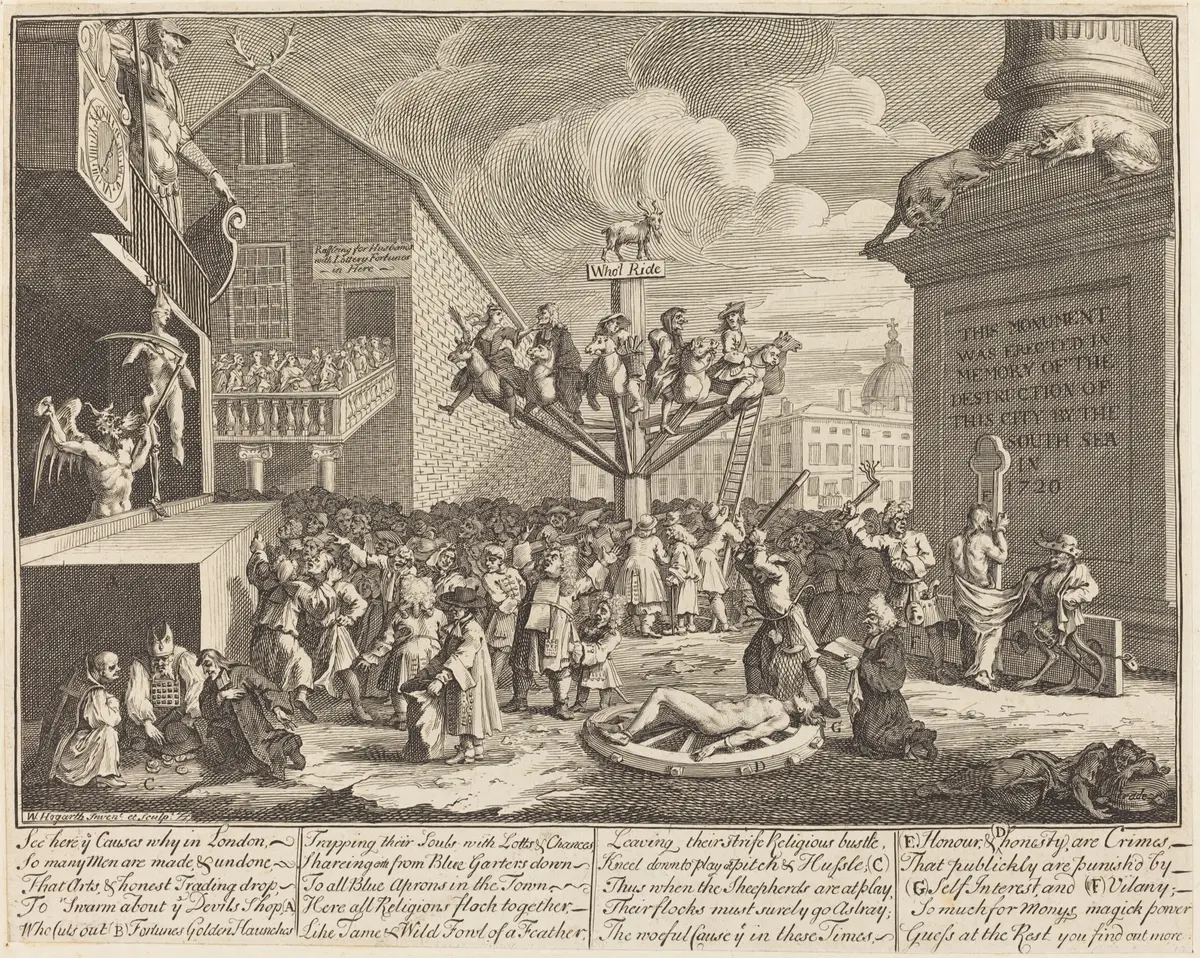
He gave as much time to alchemy and to the Bible as to mathematics, and privately rejected the doctrine of the Trinity. In 1696 he left Cambridge for London as Warden, then Master, of the Royal Mint in the Tower, where he ran the great recoinage of England's silver, hunted down counterfeiters himself and stayed for thirty years. He was President of the Royal Society from 1703 until his death, published his Opticks in 1704 after Hooke had died, and was knighted by Queen Anne in 1705. His last decades were soured by quarrels, above all with Leibniz over who had invented the calculus, which he had the Royal Society settle in his own favour. He lost a fortune in the South Sea Bubble of 1720 and still died rich.
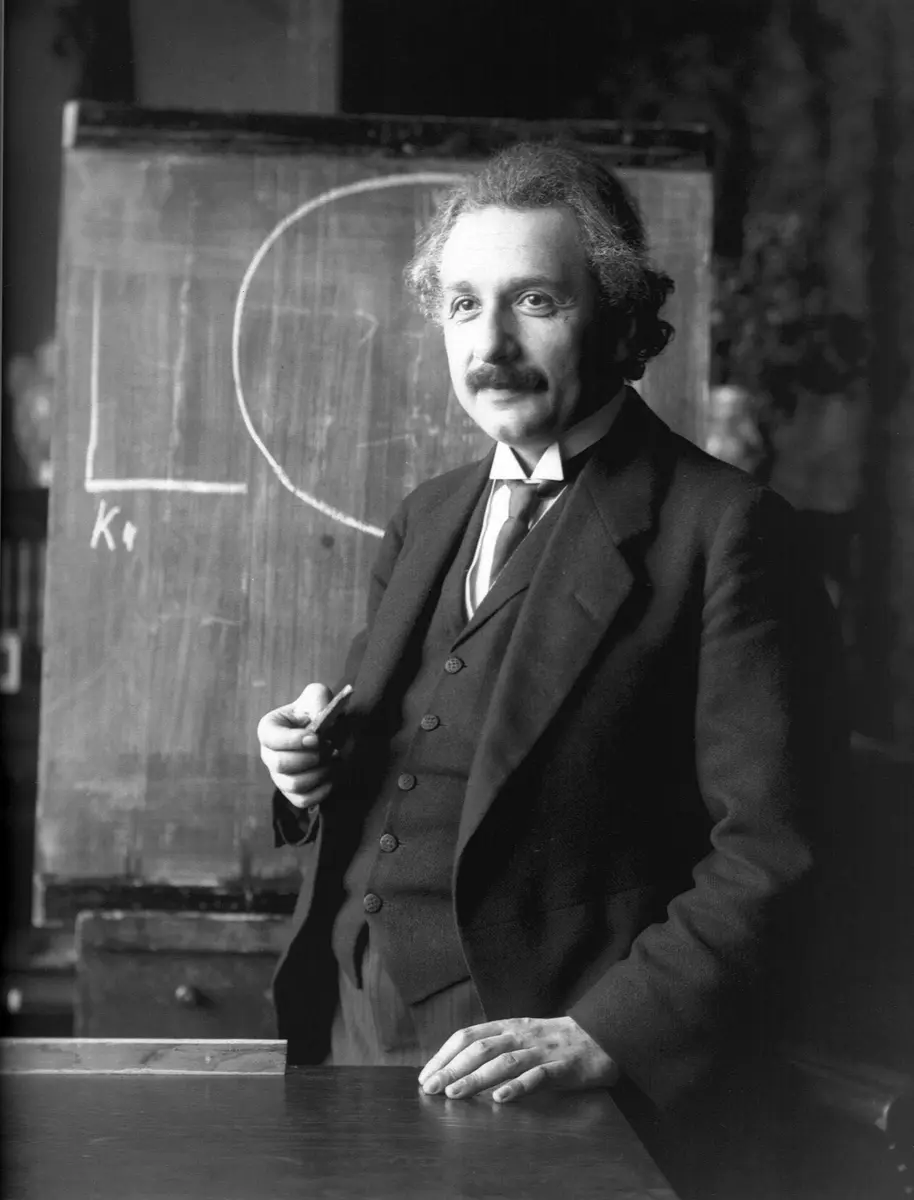
He died at Kensington in March 1727, aged 84, and was buried in Westminster Abbey with peers carrying his pall. His mechanics went unchallenged for two centuries, until Einstein's relativity refined it, and it is still what engineers use to build bridges and send spacecraft to the planets.
What happened
- 1643
Born at Woolsthorpe on Christmas Day 1642 by England's calendar of the day, three months after his father's death, so small that no one expects him to live.
Woolsthorpe Manor, Lincolnshire: his birthplace, where he worked through the plague years of 1665 to 1667- 1655
From about the age of twelve he goes to the King's School in Grantham, lodging in the town.
The King's School, Grantham: the grammar school where he was taught - 1660
After failing to run his mother's farm, reading under a tree instead of watching the cattle, he goes back to Grantham to prepare for university.
The King's School, Grantham: the grammar school where he was taught - 1661
He enters Trinity College, Cambridge, as a subsizar, paying his way by waiting on other students, and fills his notebooks with Descartes, Galileo and Kepler.
Trinity College, Cambridge: his college from 1661 and his home until 1696- 1665
He takes his degree in April; in the summer the plague closes the university and he goes home to Woolsthorpe, where in less than two years he lays the foundations of the calculus, his theory of colours and his thinking on gravity.
Woolsthorpe Manor, Lincolnshire: his birthplace, where he worked through the plague years of 1665 to 1667 - 1667
Back in Cambridge after the plague, he is elected a fellow of Trinity.
Trinity College, Cambridge: his college from 1661 and his home until 1696- 1668
He builds the first working reflecting telescope, with a mirror instead of a lens.
- 1669
At 26 he succeeds his teacher Isaac Barrow as Lucasian Professor of Mathematics; his tract on the new mathematics, De analysi, circulates in manuscript.
Trinity College, Cambridge: his college from 1661 and his home until 1696 - 1672
Elected to the Royal Society after sending it his telescope, he publishes his paper on light and colours; Robert Hooke's objections start a lifelong feud.
- 1684
Edmond Halley comes to Cambridge to ask what path a planet would follow under a force that weakens with the square of the distance; Newton says an ellipse, and sends him the proof.
- 1687
The Principia is published in London, at Halley's own expense: the laws of motion and universal gravitation.
- 1689
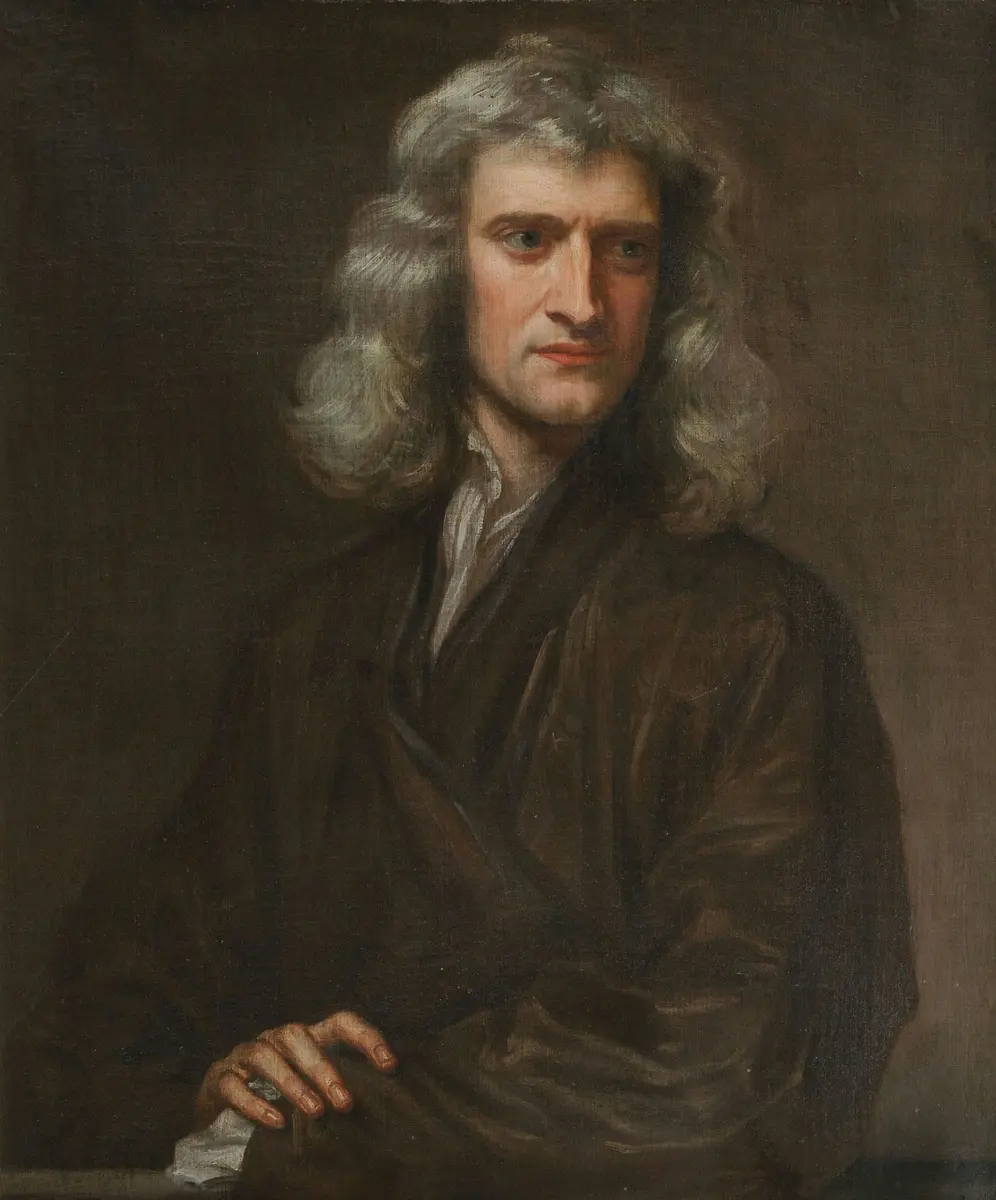
Cambridge University elects him one of its two Members of Parliament in the Convention Parliament that offers the crown to William and Mary; Kneller paints his portrait.
- 1693
He suffers a breakdown and all but gives up research.
- 1696
He moves to London as Warden of the Royal Mint in the Tower, in the middle of the recoinage of England's silver, and hunts clippers and counterfeiters, interviewing them himself.
The Tower of London: home of the Royal Mint, where he was Warden from 1696 and Master from 1699 to his death- 1699
From Christmas Day he is Master of the Mint, a richer post he keeps until his death.
The Tower of London: home of the Royal Mint, where he was Warden from 1696 and Master from 1699 to his death - 1703
He is elected President of the Royal Society, and re-elected every year until he dies.
- 1704
With Hooke dead, he publishes his Opticks, his work on light and colour.
- 1705
Queen Anne knights him during a royal visit to Trinity College.
Trinity College, Cambridge: his college from 1661 and his home until 1696- 1713
The Royal Society's report on the quarrel over the calculus, the Commercium Epistolicum, finds for Newton against Leibniz; Newton wrote it himself.
- 1717
His report on the value of gold leads to the guinea being fixed at 21 shillings.
- 1720
He loses at least £10,000 when the South Sea Bubble bursts.
- 1726
In the garden of his house at Kensington, he tells William Stukeley that the idea of gravitation came to him as an apple fell at Woolsthorpe.
- 1727
He dies at Kensington, aged 84 (20 March by the English calendar). He lies in state in the Jerusalem Chamber and is buried in Westminster Abbey, with peers carrying his pall.
Westminster Abbey: where he was buried in March 1727, with a monument in the nave