Scientific Revolution
“The century and a half from Copernicus (1543) to Newton's Principia (1687) in which observation, experiment and mathematics replaced ancient authority, and the Earth was set moving round the Sun.”
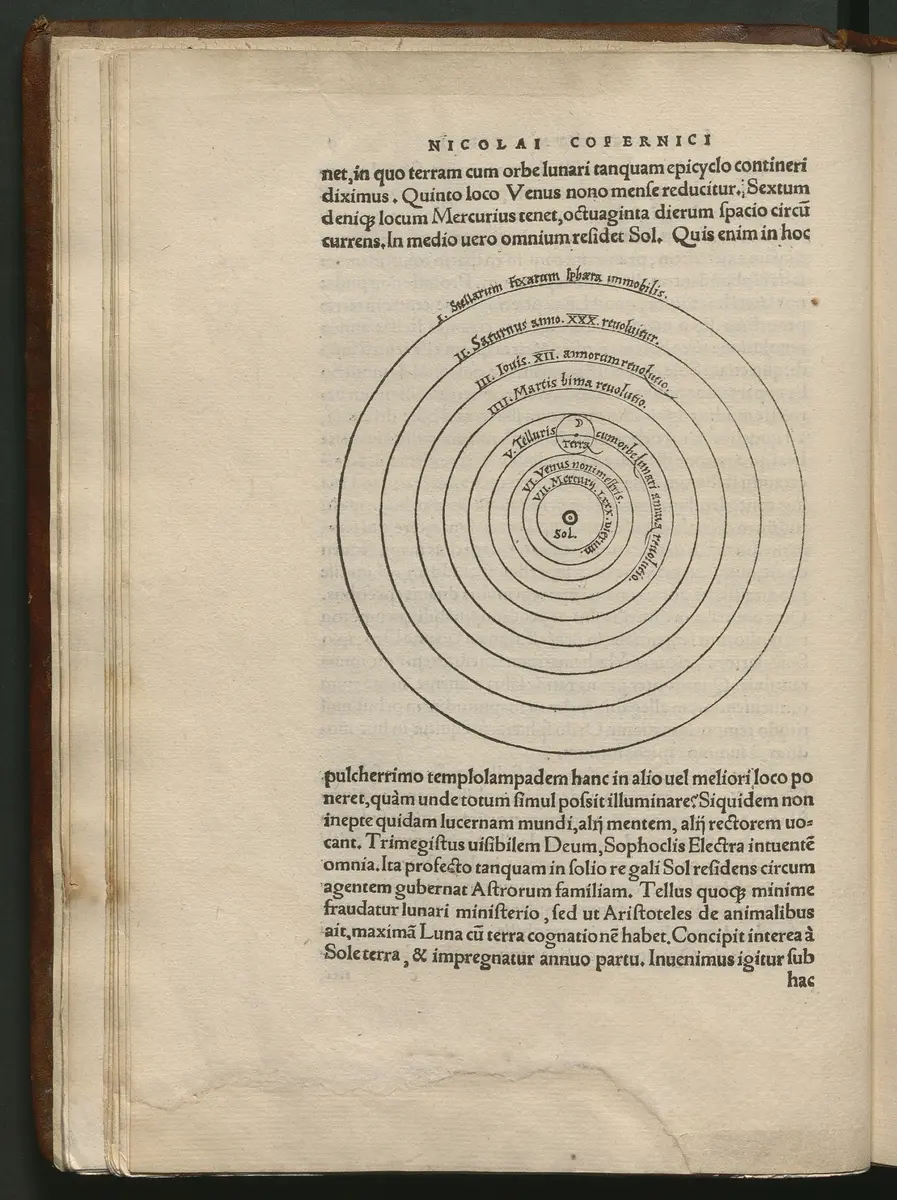
The Scientific Revolution is the name historians give to the century and a half in which Europe's thinkers replaced the picture of nature they had inherited from Aristotle and the ancient Greeks with the one science still works with: an Earth that turns and travels around the Sun, a universe that runs by mathematical laws, and knowledge tested by observation and experiment instead of taken on authority. Its usual bookends are books. In 1543 Nicolaus Copernicus's On the Revolutions of the Heavenly Spheres put the Sun at the centre of the planets, and Andreas Vesalius's Fabrica rebuilt human anatomy from dissection; in 1687 Isaac Newton's Principia explained the heavens and the Earth with the same laws. In between, in Britannica's words, science became a discipline of its own, distinct from philosophy, and nature came to be seen as a machine rather than a living thing.
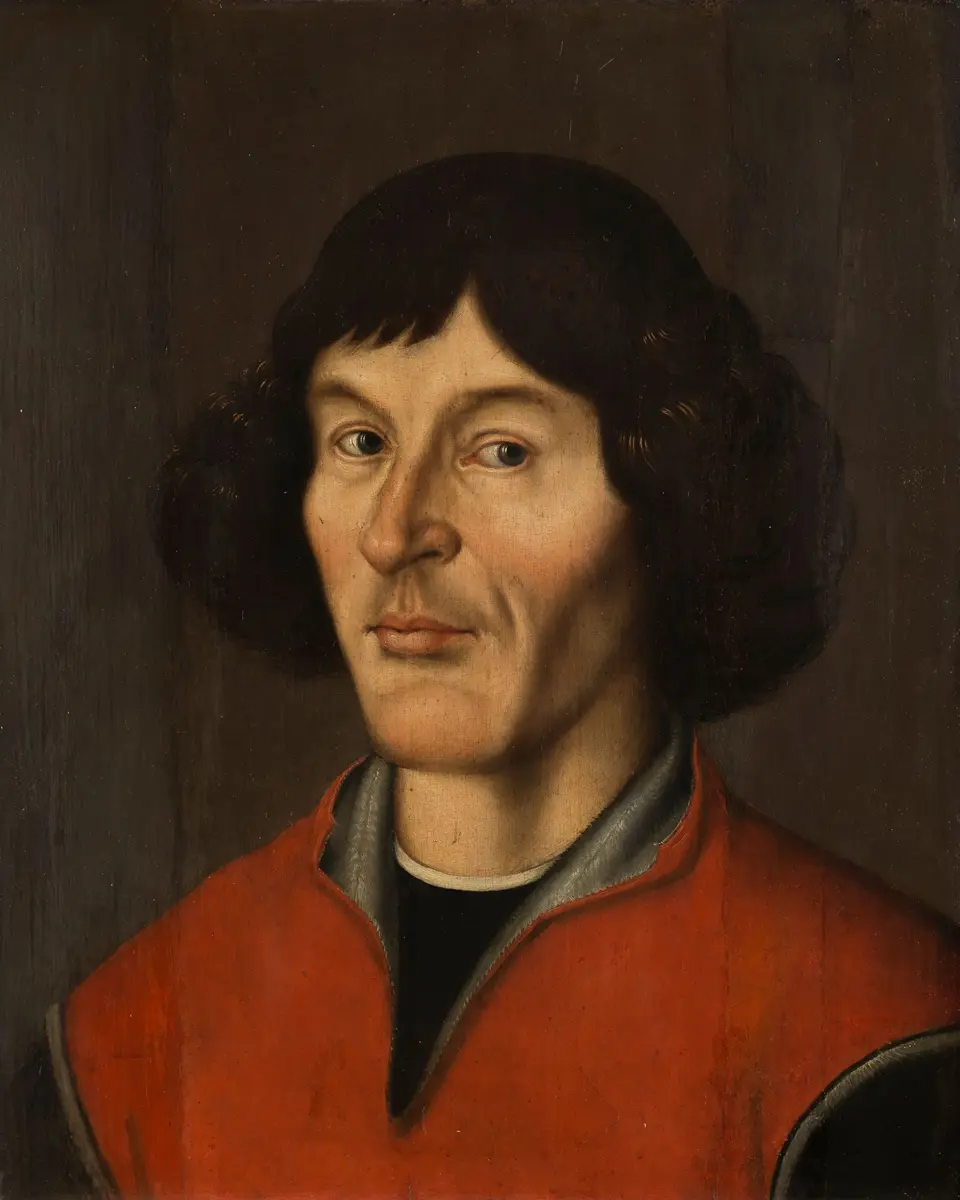
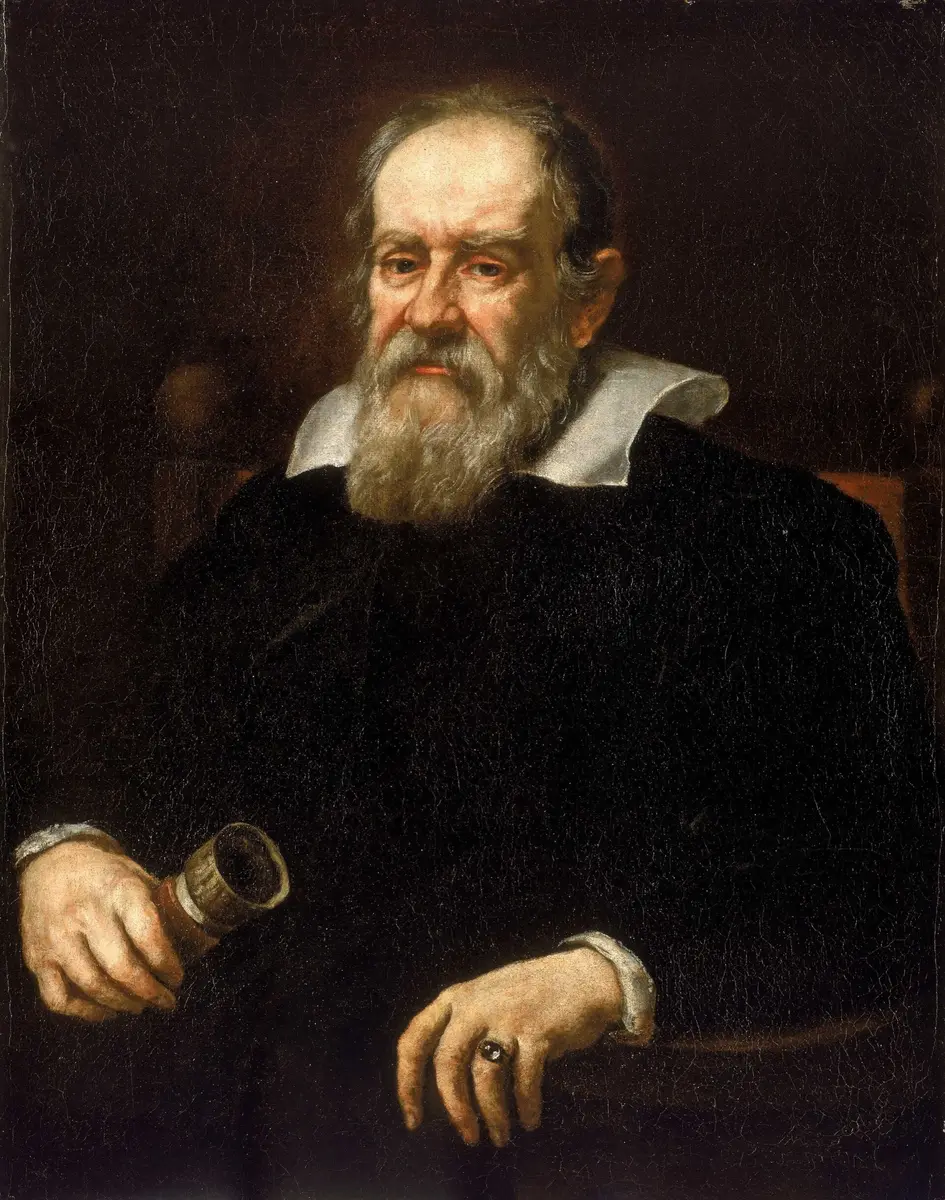
It began in astronomy. Copernicus, a canon of the cathedral at Frombork on the Baltic, had the Earth spin daily and circle the Sun yearly, but for decades his book was read mostly for its mathematics. The Danish nobleman Tycho Brahe, on the island of Hven that his king gave him in 1576, measured the stars and planets more accurately than anyone before the telescope, and showed that the new star of 1572 and the comet of 1577 lay beyond the Moon, in heavens Aristotle had said never change. In Prague his assistant Johannes Kepler used Tycho's observations of Mars to show, in 1609, that planets move in ellipses. That same year Galileo Galilei, professor of mathematics at Padua, built a telescope, and in March 1610 he announced mountains on the Moon and four moons circling Jupiter.
The new picture had powerful enemies. In 1616 the Church suspended Copernicus's book, and in 1633 the Roman Inquisition condemned Galileo after his Dialogue had openly favoured the Sun-centred system; he spent his last years under house arrest above Florence. But the new ways of working spread. William Harvey showed in 1628 that the blood goes round the body, pumped by the heart; Francis Bacon called for knowledge built up from experiments; René Descartes, writing in the Dutch Republic, set out to explain the whole of nature as matter in motion. In London in 1660 a group of physicians, lawyers, gentlemen and scholars meeting at Gresham College founded the Royal Society, whose motto, 'Nullius in verba', means 'take nobody's word for it'. With the Paris Académie des Sciences of 1666 it gave the new science journals and shared rules for reporting experiments, so that others could repeat them.
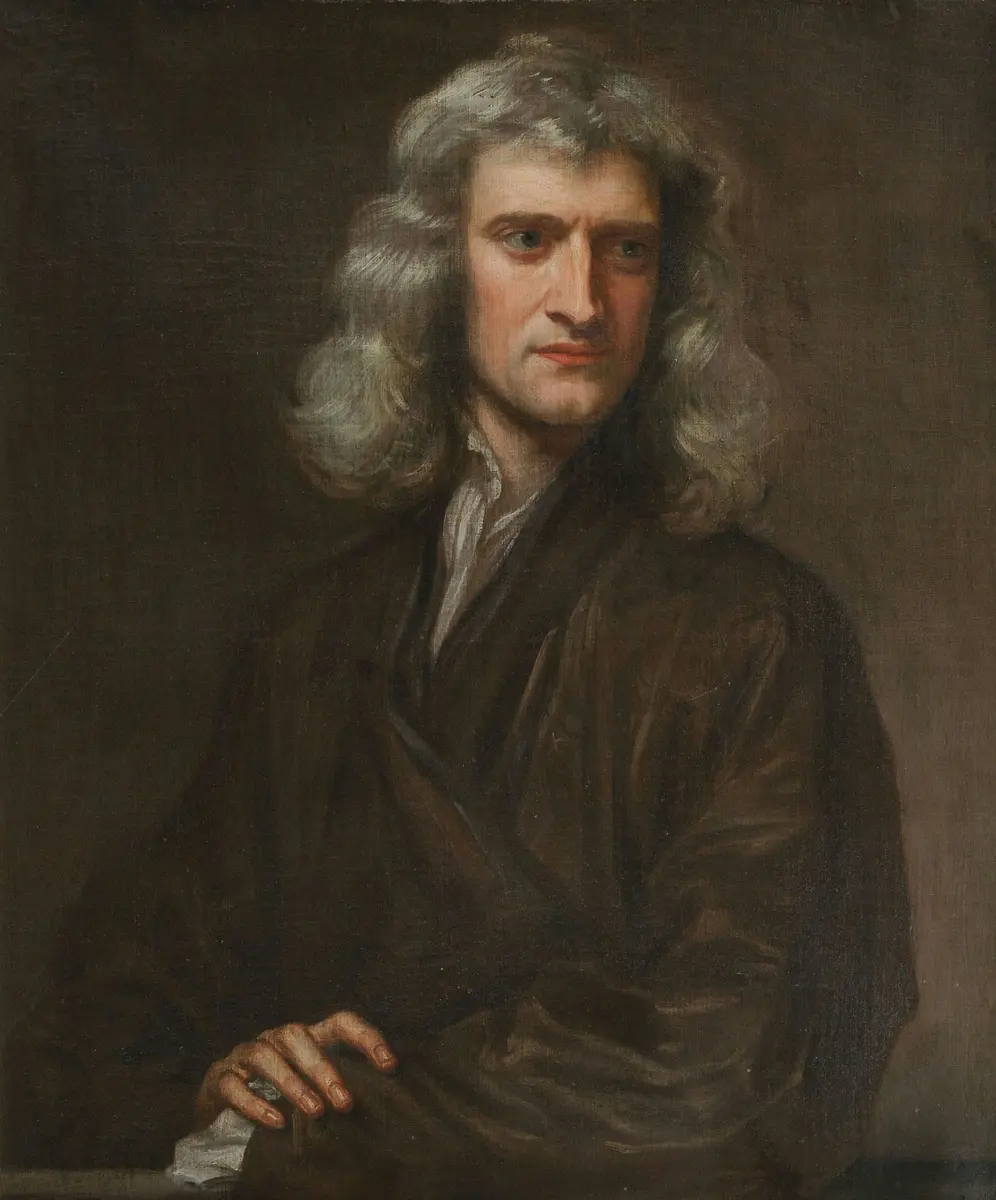
The period closes with Newton. Prompted by the astronomer Edmond Halley, who also paid for the printing, the Cambridge professor published his Principia in 1687 under the Royal Society's licence. Its three laws of motion and its law of universal gravitation showed that the force that pulls an apple to the ground also holds the Moon and the planets in their orbits, and Kepler's laws followed from them. For Britannica, Newton's work is the culmination of the Scientific Revolution.
Its legacy is the way the modern world finds things out: by measuring, by experiment, by mathematical law, and by publishing results so that others can check them. Its trust in reason flowed straight into the Enlightenment of the eighteenth century. Historians still argue over the name, because the change was gradual and its heroes were also astrologers, alchemists and devout believers (Tycho kept an alchemical laboratory under Uraniborg, and Newton gave more time to alchemy and the Bible than to mathematics and physics), and Britannica's own dates run from about 1400 to about 1690. But the line from Copernicus to Newton remains the classic story of how modern science began.
What happened
- 1543
Copernicus's On the Revolutions of the Heavenly Spheres is printed in Nuremberg by Johann Petreius, after the young Wittenberg mathematician Georg Joachim Rheticus had persuaded him to publish: the Earth turns daily and circles the Sun with the other planets. An unsigned preface by the Lutheran minister Andreas Osiander calls it only a hypothesis.
Frombork Cathedral, on the Baltic: Copernicus was a canon here, worked out his Sun-centred system here and died here in May 1543Copernicus dies at Frombork, where he had been a canon of the cathedral, a copy of the finished book in his hands on his deathbed.
Frombork Cathedral, on the Baltic: Copernicus was a canon here, worked out his Sun-centred system here and died here in May 1543In Basel, Johannes Oporinus prints Andreas Vesalius's On the Fabric of the Human Body, an anatomy built on dissections the Padua professor did with his own hands, which corrects the ancient authority Galen in many places.
The University of Padua (the point is its old anatomy theatre): Vesalius taught anatomy here from 1537, Galileo mathematics from 1592 to 1610, and Harvey took his doctorate here in 1602- 1572
The Danish nobleman Tycho Brahe sees a new star in Cassiopeia, brighter than Venus. His measurements show it lies far beyond the Moon, among the fixed stars that Aristotle had said never change.
- 1576
King Frederick II of Denmark gives Tycho the island of Hven and the money to build Uraniborg, an observatory with the largest and most accurate instruments yet made.
Uraniborg, on the island of Hven (Ven) in the Sound: Tycho Brahe's castle-observatory from 1576 to 1597 - 1577
Tycho first sees the great comet of 1577 and proves that it, too, moves beyond the Moon, through the region where the crystal spheres of the old astronomy were supposed to be.
Uraniborg, on the island of Hven (Ven) in the Sound: Tycho Brahe's castle-observatory from 1576 to 1597- 1598
At odds with the king, the church and the nobility, Tycho has left Hven the year before; near Hamburg he publishes a book on his instruments, with the picture of himself at his great mural quadrant.
- 1599
Tycho settles in Prague as Imperial Mathematician to Emperor Rudolf II.
Prague Castle, the court of Emperor Rudolf II: Tycho Brahe was his Imperial Mathematician from 1599, and Kepler after him - 1600
Johannes Kepler, a Protestant schoolteacher pushed out of Graz, joins Tycho in Prague as his assistant and is set to work on the orbit of Mars.
Prague Castle, the court of Emperor Rudolf II: Tycho Brahe was his Imperial Mathematician from 1599, and Kepler after himIn London, William Gilbert's On the Magnet describes the Earth itself as a great magnet, a book Kepler will use to explain what moves the planets.
- 1601
Tycho dies in Prague, leaving his observations to Kepler, who succeeds him as Imperial Mathematician.
Prague Castle, the court of Emperor Rudolf II: Tycho Brahe was his Imperial Mathematician from 1599, and Kepler after him- 1609
Kepler publishes his New Astronomy: worked out from Tycho's observations of Mars, it shows that a planet moves in an ellipse with the Sun at one focus, sweeping out equal areas in equal times.
Prague Castle, the court of Emperor Rudolf II: Tycho Brahe was his Imperial Mathematician from 1599, and Kepler after himGalileo, professor of mathematics at Padua, hears of the Dutch spyglass, works out how it must be made and builds his own, soon magnifying twenty times; by late autumn he has turned it on the sky.
The University of Padua (the point is its old anatomy theatre): Vesalius taught anatomy here from 1537, Galileo mathematics from 1592 to 1610, and Harvey took his doctorate here in 1602- 1610
Galileo's Starry Messenger is published in Venice: mountains on the Moon, countless stars in the Milky Way, and four moons circling Jupiter, which he names the Medicean stars after the ruling family of Tuscany.
The University of Padua (the point is its old anatomy theatre): Vesalius taught anatomy here from 1537, Galileo mathematics from 1592 to 1610, and Harvey took his doctorate here in 1602Galileo leaves Padua to become mathematician and philosopher to the Grand Duke of Tuscany in Florence. Later that year he sees Venus show phases like the Moon's, as it can only if it circles the Sun.
- 1616
In Rome, the Congregation of the Index suspends Copernicus's book 'until corrected', and Cardinal Bellarmine warns Galileo not to hold or defend the motion of the Earth.
Santa Maria sopra Minerva, Rome: where Galileo knelt to hear his condemnation and abjured on 22 June 1633- 1619
Kepler's Harmony of the World, printed at Linz, gives his third law, which ties the time each planet takes to go round the Sun to its distance from it.
- 1620
Francis Bacon publishes his Great Instauration with the New Organon, a plan for learning about nature by experiment and careful induction rather than from ancient books.
- 1627
Kepler's Rudolphine Tables, named for his first patron and built on Tycho's observations and his own laws, are printed at Ulm, the most accurate tables of the planets yet made.
- 1628
William Harvey, a London physician trained at Padua, publishes in Frankfurt On the Motion of the Heart and Blood: the heart pumps the blood out, and it comes back to it in a circle.
- 1632
Galileo's Dialogue Concerning the Two Chief World Systems, which plainly favours Copernicus, comes off the press in Florence; within months the Inquisition stops its sale and orders him to Rome.
- 1633
In the church of Santa Maria sopra Minerva in Rome, Galileo kneels to hear himself declared 'vehemently suspect of heresy' and signs an abjuration of the Earth's motion.
Santa Maria sopra Minerva, Rome: where Galileo knelt to hear his condemnation and abjured on 22 June 1633His sentence of imprisonment is turned into house arrest at his villa at Arcetri, above Florence, where he spends the rest of his life and writes his last book, on motion.
Villa Il Gioiello, Arcetri, above Florence: Galileo's house, where he lived under house arrest from December 1633 until his death in January 1642- 1637
Descartes, living in the Dutch Republic since 1628, publishes his Discourse on Method at Leiden, with essays on optics, meteors and geometry; he had held back his book on the world after hearing of Galileo's condemnation.
Leiden: Descartes, who lived in the Dutch Republic from 1628, published his Discourse on Method here in 1637, and the Elzeviers printed Galileo's Two New Sciences here in 1638 - 1638
Galileo's Two New Sciences, the mechanics of falling bodies and projectiles he had worked out at Padua decades before, is smuggled out of Italy and printed at Leiden by the Elzeviers.
Leiden: Descartes, who lived in the Dutch Republic from 1628, published his Discourse on Method here in 1637, and the Elzeviers printed Galileo's Two New Sciences here in 1638 - 1642
Galileo dies at Arcetri, aged 77.
Villa Il Gioiello, Arcetri, above Florence: Galileo's house, where he lived under house arrest from December 1633 until his death in January 1642- 1660
After a lecture by Christopher Wren, the professor of astronomy, at Gresham College in London, the men who will form the Royal Society hold their first meeting.
The site of Gresham College in Bishopsgate, London (now Tower 42): the Royal Society first met here on 28 November 1660 and kept meeting here for about fifty years- 1662
Charles II's royal charter founds the Royal Society of London, motto 'Nullius in verba', take nobody's word for it; in November Robert Hooke becomes its Curator of Experiments.
The site of Gresham College in Bishopsgate, London (now Tower 42): the Royal Society first met here on 28 November 1660 and kept meeting here for about fifty years- 1665
Hooke's Micrographia shows a flea and many other small things as he saw them through a microscope he had made himself; Samuel Pepys sits up till two in the morning reading it.
The site of Gresham College in Bishopsgate, London (now Tower 42): the Royal Society first met here on 28 November 1660 and kept meeting here for about fifty yearsHenry Oldenburg, the Society's secretary, launches the Philosophical Transactions, the first scientific journal.
The site of Gresham College in Bishopsgate, London (now Tower 42): the Royal Society first met here on 28 November 1660 and kept meeting here for about fifty years- 1666
The Académie des Sciences is founded in Paris, the second of the two great national societies of science.
- 1667
Thomas Sprat's History of the Royal Society, a manifesto for the new experimental philosophy, is published with Francis Bacon on its frontispiece.
The site of Gresham College in Bishopsgate, London (now Tower 42): the Royal Society first met here on 28 November 1660 and kept meeting here for about fifty years - 1672
Newton, Lucasian Professor at Cambridge, is elected to the Royal Society after giving it a reflecting telescope, and publishes his first paper, on light and colours, in its Philosophical Transactions.
Trinity College, Cambridge: Newton's college from 1661, where he made his reflecting telescope and wrote the Principia - 1684
The astronomer Edmond Halley asks Newton what orbit a planet would follow under a force that weakens with the square of the distance. Newton answers an ellipse, and Halley persuades him to write out his whole new physics.
Trinity College, Cambridge: Newton's college from 1661, where he made his reflecting telescope and wrote the Principia - 1687
The Principia is published in London under the Royal Society's licence, at Halley's expense: three laws of motion and one law of gravity for the Moon, the planets and a falling apple alike.
The site of Gresham College in Bishopsgate, London (now Tower 42): the Royal Society first met here on 28 November 1660 and kept meeting here for about fifty years