Copernicus
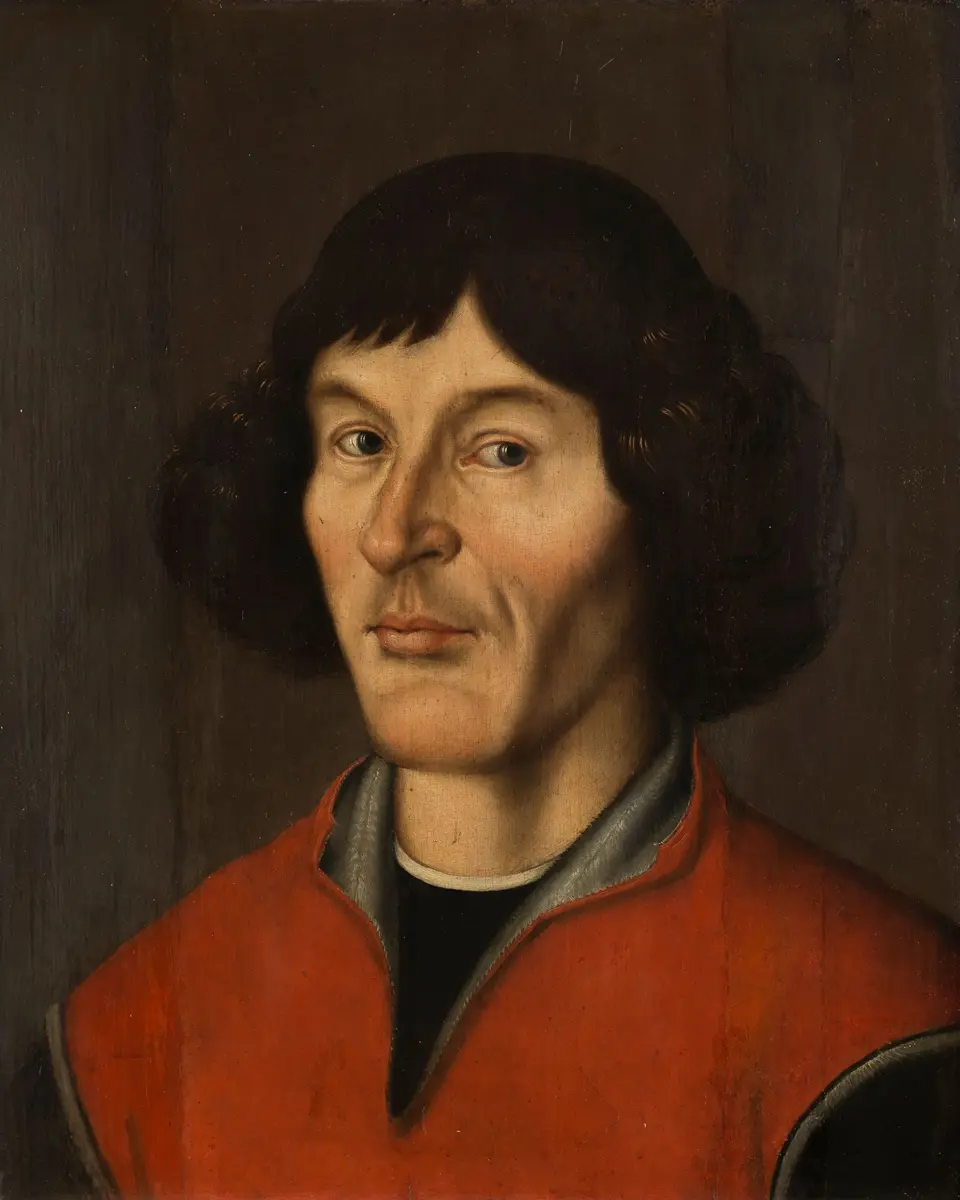
“The astronomer from Toruń who put the Sun at the centre and made the Earth a planet, in On the Revolutions of the Heavenly Spheres, printed in 1543, the year he died.”
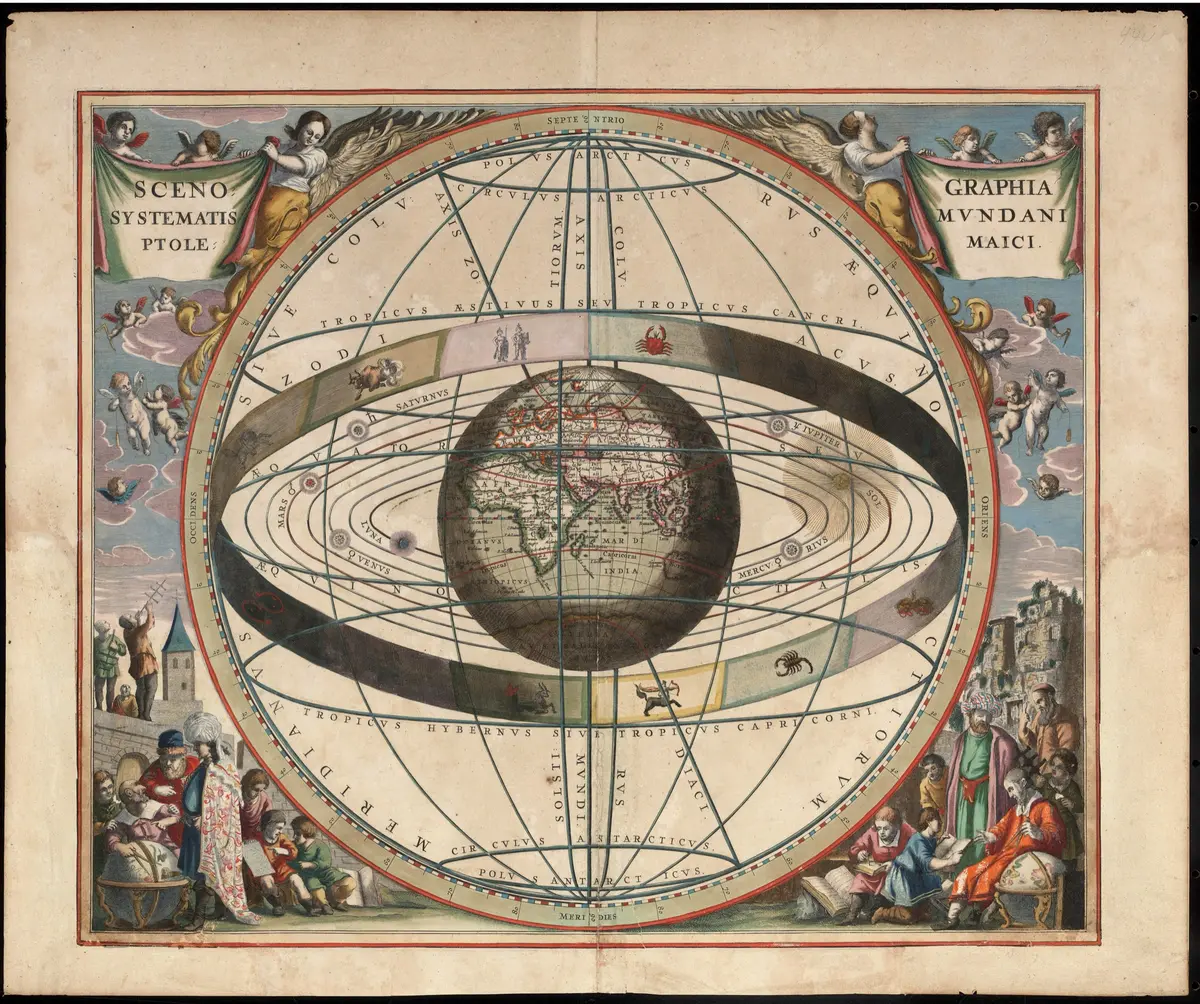
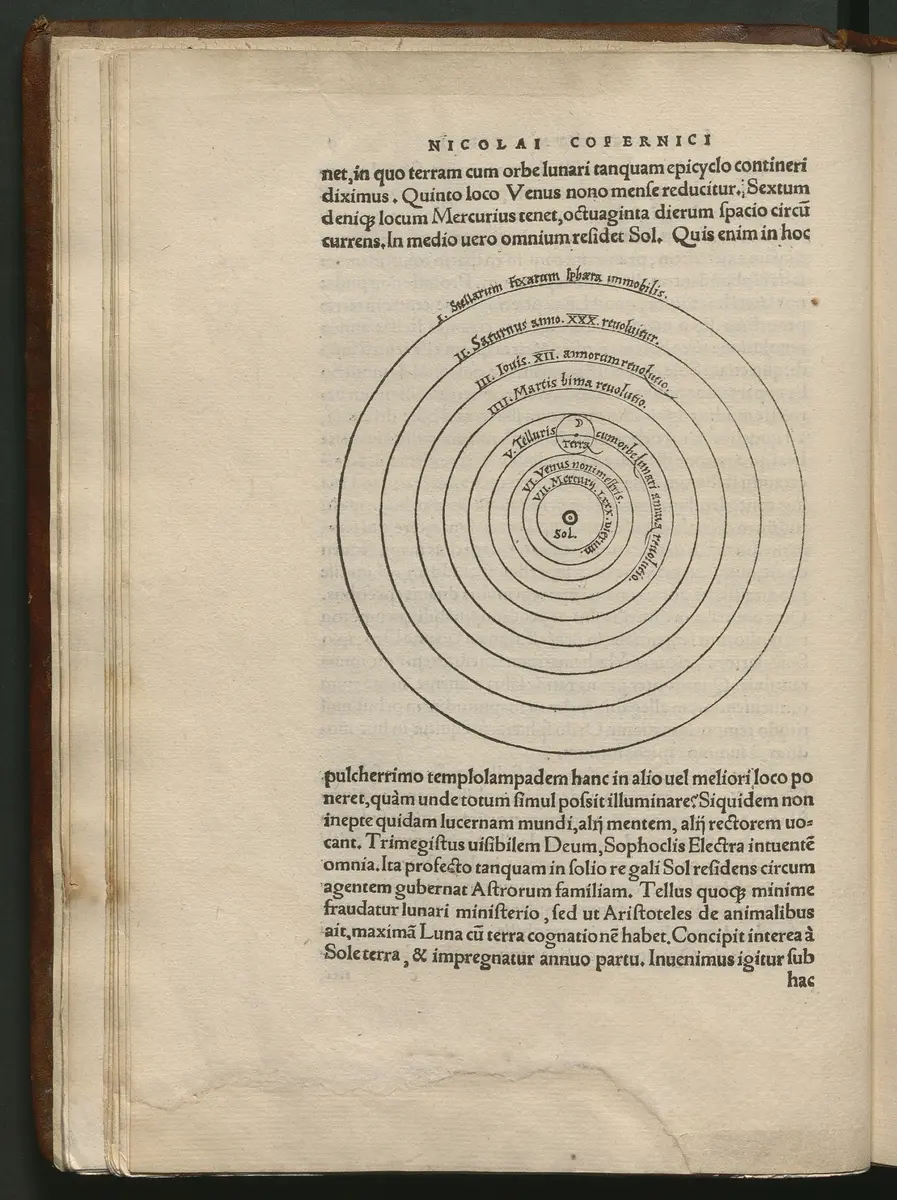
Nicolaus Copernicus (Mikołaj Kopernik in Polish, Nikolaus Kopernikus in German) was the astronomer who moved the Sun to the centre of the planets' motions and made the Earth a planet. In his book On the Revolutions of the Heavenly Spheres, printed in 1543, the year he died, he argued that the Earth turns once a day on its axis and goes round the Sun once a year, and that the strange backward loops the planets make in the sky are only an effect of our own motion. With the Sun in the middle, he showed, the planets fall into one orderly system, the farther ones taking longer to go round, from Mercury in about three months to Saturn in thirty years. He kept the perfect circles of ancient astronomy and could not prove that the Earth moves, but his book began what is now called the Scientific Revolution.
He was born on 19 February 1473 in Toruń, a trading town on the Vistula in Royal Prussia, which had passed to the Kingdom of Poland a few years before: the child of a German-speaking merchant family and a subject of the Polish king. His father, a copper merchant from Kraków, died when he was ten, and his mother's brother, Lucas Watzenrode, bishop of Warmia from 1489, paid for his education and planned a career for him in the Church. He studied the liberal arts, mathematics and astronomy at Kraków from 1491, then canon law at Bologna from 1496, where he lodged with the astronomy professor Domenico Maria Novara and helped him observe; on 9 March 1497 he watched the Moon pass in front of the bright star Aldebaran, the first observation of his that is recorded. His uncle had him made a canon of Frombork cathedral, an income for life. After lecturing on mathematics in Rome in 1500 and studying medicine at Padua, he took a doctorate in canon law at Ferrara in 1503. He never became a priest.
Back in Warmia he served his uncle at the bishop's castle in Lidzbark as secretary and physician, and from 1510 he lived among the canons on the walled cathedral hill at Frombork, by the Baltic, for the rest of his life. Most of his time belonged to the chapter: he ran its estates from Olsztyn castle and settled peasants on deserted farms, organised the castle's defence in the war with the Teutonic Knights in 1520 and 1521, wrote papers on the reform of Prussian money (noting that bad coins drive good ones out of circulation), and treated his fellow canons as a doctor. Astronomy filled his spare hours. Sometime between 1508 and 1514 he wrote a short unsigned treatise, later called the Commentariolus, the 'little commentary', which set out a moving Earth; copies passed from hand to hand, and by May 1514 a Kraków professor had one in his library. He then spent decades on the observations and long calculations for a full book.
He was slow to publish: the mathematics was hard, his tables still had errors, his duties left little time, and Frombork was far from the big printing towns. In 1539 a young Lutheran professor of mathematics from Wittenberg, Georg Joachim Rheticus, came to study with him, printed a summary, the First Account, in Gdańsk in 1540, and persuaded him to let the whole work go to press. Copernicus dedicated it to Pope Paul III. In Nuremberg the printer Johann Petreius set it, and the Lutheran minister Andreas Osiander, who saw it through the press, slipped in an unsigned note calling its ideas mere hypotheses for calculation, which contradicts the book itself. Partly paralysed by a stroke in December 1542, Copernicus died at Frombork on 24 May 1543 and was buried in the cathedral in an unmarked grave. In 2005 bones were dug up near the altar he had looked after; their DNA matched hairs found in a book he had owned, and on 22 May 2010 he was buried again with honours.
At first few people accepted that the Earth moves, but astronomers across Europe used his models and figures, and Tycho Brahe called him a second Ptolemy. Kepler made the system work with ellipses and Galileo argued for it with the telescope; in 1616 the Catholic Church suspended his book until it was corrected, and Newton's theory of gravity at last explained why the planets go round the Sun. His manuscript of the book, in his own hand, is kept in the Jagiellonian Library in Kraków and is on UNESCO's Memory of the World register.
What happened
- 1473
Nicolaus Copernicus is born in Toruń, on the Vistula, the youngest of four children of a merchant of the same name, who had come from Kraków, and Barbara Watzenrode, of a leading Toruń family. He is baptised in the parish church of St John.
The Copernicus House, 17 Copernicus Street, Toruń: his parents' house when he was born in the town on 19 February 1473, now a museum- 1483
His father dies. Their mother's brother, Lucas Watzenrode, a churchman who becomes bishop of Warmia in 1489, takes the children under his protection and plans Nicolaus's education and a career in the Church.
The Copernicus House, 17 Copernicus Street, Toruń: his parents' house when he was born in the town on 19 February 1473, now a museum - 1491
In the autumn he and his brother Andreas enrol at the University of Kraków, then famous for mathematics and astronomy. He studies the liberal arts, astronomy and astrology for about four years, buys his first astronomy books, and leaves without a degree, as many students do.
Collegium Maius, the University of Kraków (now the Jagiellonian University): he studied the liberal arts, mathematics and astronomy here from the autumn of 1491 to about 1495 - 1496
He arrives at Bologna to study canon law, the training his uncle wants for him. He lodges with the professor of astronomy, Domenico Maria Novara, and becomes his assistant at the observations; he also learns Greek.
Via Galliera, Bologna: a plaque marks where the house of the astronomer Domenico Maria Novara stood; Copernicus, a law student, lodged and observed the sky with him from 1497 to 1500- 1497
With Novara he watches the Moon pass in front of the bright star Aldebaran, in the eye of the Bull: the first of his observations that is recorded. He reports it in his book 46 years later.
Via Galliera, Bologna: a plaque marks where the house of the astronomer Domenico Maria Novara stood; Copernicus, a law student, lodged and observed the sky with him from 1497 to 1500News reaches him in Bologna that, thanks to his uncle, he is now a canon of the cathedral chapter of Warmia at Frombork, an income for life with no need to go home.
- 1500
In the jubilee year he goes to Rome, where he lectures on mathematics before an audience of students and experts.
- 1501
On a short visit to Frombork he is given two more years' leave, to study medicine at Padua, since the chapter wants a doctor.
Frombork Cathedral, on the Vistula Lagoon: a canon here from 1497, he lived on the cathedral hill from 1510, wrote On the Revolutions here, died here on 24 May 1543 and is buried in the cathedral- 1503
Without a degree from Padua, he goes to nearby Ferrara, where the examinations cost less, and earns a doctorate in canon law. Later that year he returns to Warmia for good.
- 1504
He lives in his uncle's castle at Lidzbark (Heilsberg) as secretary, adviser and physician, and goes with him to the Prussian diets. Here, most probably, he first works out that the Earth moves round the Sun.
- 1509
His Latin translation of the letters of the Byzantine writer Theophylactus Simocatta is printed in Kraków, dedicated to his uncle: the only book he publishes before his great one.
Collegium Maius, the University of Kraków (now the Jagiellonian University): he studied the liberal arts, mathematics and astronomy here from the autumn of 1491 to about 1495 - 1510
He leaves his uncle's court and settles among the canons on the cathedral hill at Frombork, where he will live for the rest of his life; in November the chapter makes him its chancellor.
Frombork Cathedral, on the Vistula Lagoon: a canon here from 1497, he lived on the cathedral hill from 1510, wrote On the Revolutions here, died here on 24 May 1543 and is buried in the cathedral - 1512
Bishop Lucas Watzenrode, his uncle and patron, dies.
- 1513
He builds an open-air observation platform, a pavimentum, in the garden of his house at Frombork.
Frombork Cathedral, on the Vistula Lagoon: a canon here from 1497, he lived on the cathedral hill from 1510, wrote On the Revolutions here, died here on 24 May 1543 and is buried in the cathedral - 1514
Already known as an astronomer, he is asked for his opinion on the reform of the calendar for the Fifth Lateran Council in Rome. He does not go to Rome, and the answer he is said to have sent is lost.
The Kraków professor Matthew of Miechów finishes the catalogue of his library, which lists a little manuscript, with no author's name, of 'an author who asserts that the earth moves while the sun stands still'. It is Copernicus's Commentariolus, written sometime after 1508, which he has quietly sent to a few friends.
Collegium Maius, the University of Kraków (now the Jagiellonian University): he studied the liberal arts, mathematics and astronomy here from the autumn of 1491 to about 1495- 1516
Elected administrator of the chapter's lands, he moves into Olsztyn castle. For three years he collects rents and settles new farmers on deserted holdings in over a hundred villages; on the wall of the cloister he draws a table for timing the equinox.
Olsztyn castle, the stronghold of the Warmian cathedral chapter: he lived here as administrator of its estates from November 1516 to 1519 and from 1520 to 1521, when he organised its defence against the Teutonic Knights- 1520
In the war between Poland and the Teutonic Knights, the Order's troops burn Frombork and the canons' houses. The canons flee to Olsztyn, and Copernicus goes back to the castle as administrator.
Frombork Cathedral, on the Vistula Lagoon: a canon here from 1497, he lived on the cathedral hill from 1510, wrote On the Revolutions here, died here on 24 May 1543 and is buried in the cathedralFearing a siege, he writes to King Sigismund I of Poland for help; the king sends troops, and Copernicus strengthens the castle's defences.
Olsztyn castle, the stronghold of the Warmian cathedral chapter: he lived here as administrator of its estates from November 1516 to 1519 and from 1520 to 1521, when he organised its defence against the Teutonic Knights- 1521
The Teutonic Knights fail to take Olsztyn, and an armistice ends the fighting. The chapter makes him Commissioner of Warmia to win back and rebuild its war-torn estates.
Olsztyn castle, the stronghold of the Warmian cathedral chapter: he lived here as administrator of its estates from November 1516 to 1519 and from 1520 to 1521, when he organised its defence against the Teutonic Knights - 1522
At the diet of Royal Prussia at Grudziądz he presents his treatise on money, which warns that debased coins ruin a state and that bad money drives good money out of circulation. His reform is not adopted.
- 1539
The new bishop, Johannes Dantiscus, accuses him of living with his housekeeper, Anna Schilling, and makes him send her away.
Frombork Cathedral, on the Vistula Lagoon: a canon here from 1497, he lived on the cathedral hill from 1510, wrote On the Revolutions here, died here on 24 May 1543 and is buried in the cathedralGeorg Joachim Rheticus, a 25-year-old Lutheran professor of mathematics from Wittenberg, arrives at Frombork to learn from him, bringing printed books as gifts, and stays for about two years.
Frombork Cathedral, on the Vistula Lagoon: a canon here from 1497, he lived on the cathedral hill from 1510, wrote On the Revolutions here, died here on 24 May 1543 and is buried in the cathedral- 1540
Rheticus's First Account (Narratio prima), a summary of the new system written as a letter to the Nuremberg scholar Johann Schöner, is printed in Gdańsk: the first printed description of the Copernican system.
- 1541
His manuscript, written and corrected over two decades, is ready. In the autumn Rheticus leaves for Wittenberg with a copy for the printer; Copernicus keeps his own autograph, which is now in Kraków.
Frombork Cathedral, on the Vistula Lagoon: a canon here from 1497, he lived on the cathedral hill from 1510, wrote On the Revolutions here, died here on 24 May 1543 and is buried in the cathedral - 1542
The printing begins in Nuremberg at the press of Johann Petreius. Copernicus writes a dedication to Pope Paul III, saying he has held the work back for 36 years and that 'mathematics is written for mathematicians'.
A stroke leaves him paralysed on his left side; his friend Bishop Tiedemann Giese writes of his worry for the lonely old man.
Frombork Cathedral, on the Vistula Lagoon: a canon here from 1497, he lived on the cathedral hill from 1510, wrote On the Revolutions here, died here on 24 May 1543 and is buried in the cathedral- 1543
That spring On the Revolutions of the Heavenly Spheres has come off the press in Nuremberg, in six books, with a changed title and an unsigned note to the reader by the Lutheran minister Andreas Osiander, who finished overseeing the printing, calling it only a hypothesis for calculation. On 24 May he dies at Frombork, aged 70; his friends said he saw the printed book only on his last day. He is buried in the cathedral without a marked grave. In 2005 bones were found near the altar he had looked after, identified by DNA from hairs in one of his books, and on 22 May 2010 he was buried again there with honours.
Frombork Cathedral, on the Vistula Lagoon: a canon here from 1497, he lived on the cathedral hill from 1510, wrote On the Revolutions here, died here on 24 May 1543 and is buried in the cathedral