Johannes Kepler
“The German astronomer who, from Tycho Brahe's observations of Mars, found that planets move in ellipses around the Sun, and gave the three laws of planetary motion that Newton later explained by gravity.”
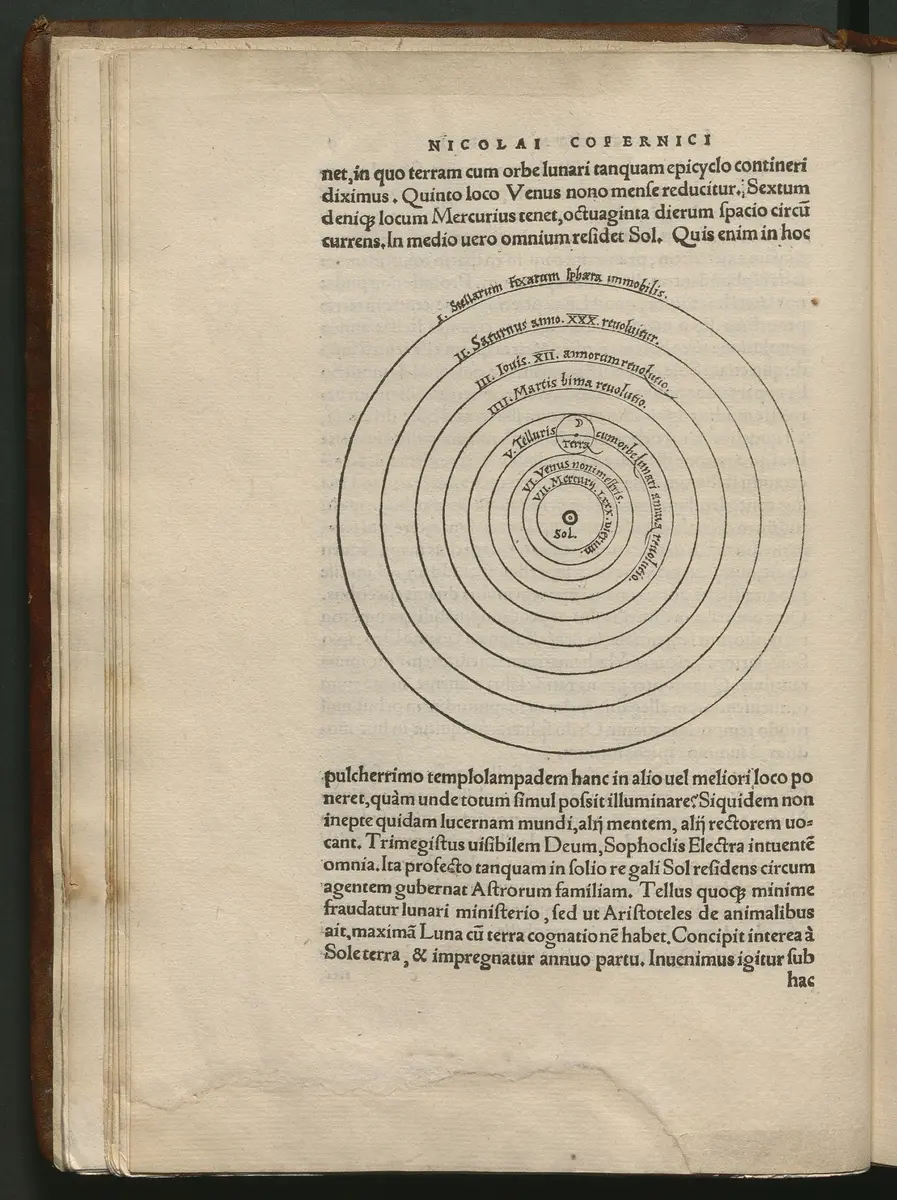
Johannes Kepler was the German astronomer and mathematician who discovered that the planets move around the Sun not in circles but in ellipses. His three laws of planetary motion say that each planet's orbit is an ellipse with the Sun at one focus; that the line from the Sun to a planet sweeps out equal areas in equal times, so a planet moves faster when it is closer to the Sun; and that the square of the time a planet takes to go round the Sun is in a fixed proportion to the cube of its distance. With them he turned Copernicus's Sun-centred system from a calculating device into a working physical machine, driven, he believed, by a force from the Sun. He also explained how the eye forms an upside-down image on the retina, designed the telescope with two convex lenses that became the standard astronomical telescope, and made the most accurate tables of the planets of his age. A deeply religious Lutheran, he saw his work as reading the geometry God had built into the world.
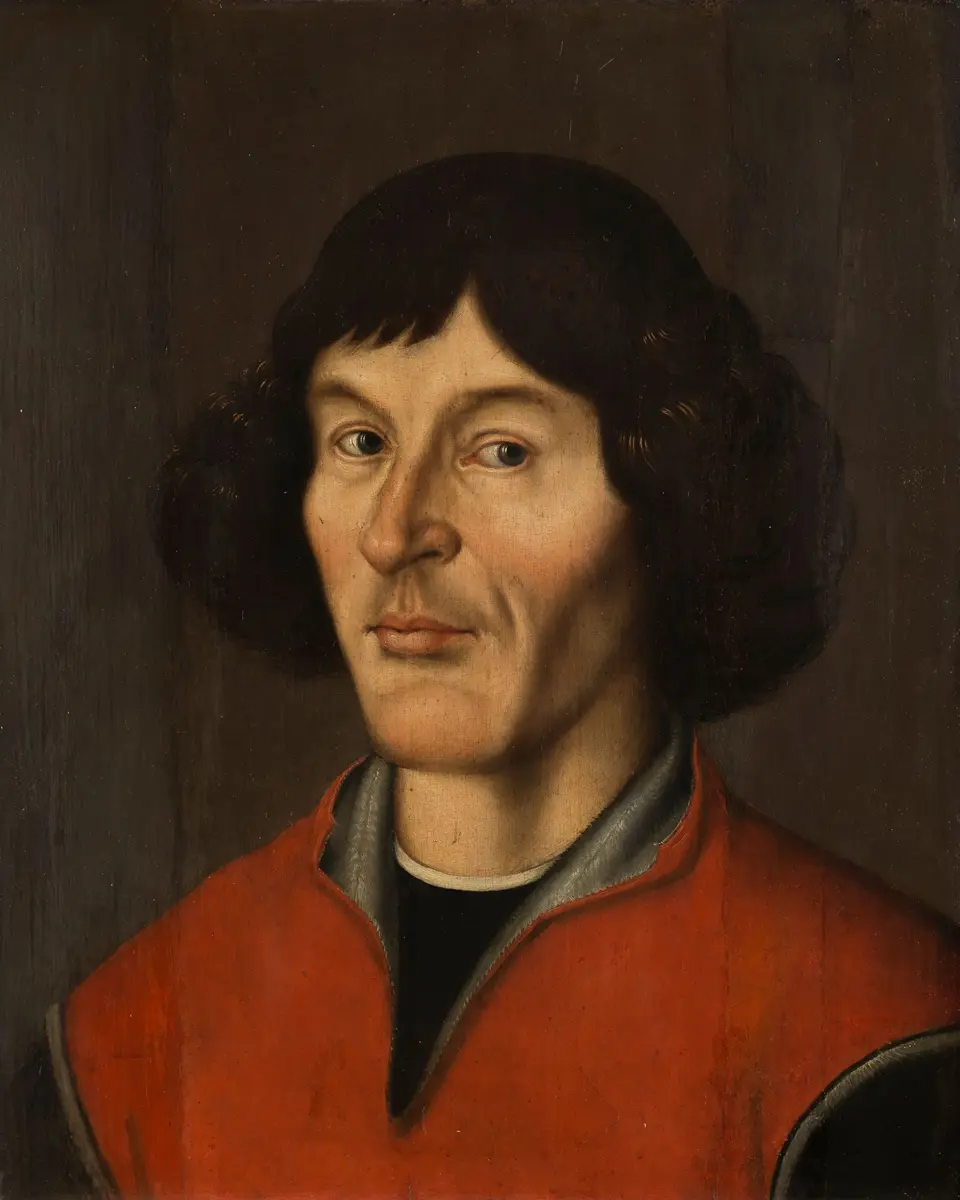
He was born on 27 December 1571 in Weil der Stadt, a small town in Swabia, the son of a mercenary soldier who soon left the family and of an innkeeper's daughter, and grew up in nearby Leonberg. The Duke of Württemberg's scholarships for poor, gifted boys carried him through church schools to the seminary at the University of Tübingen in 1589, where he meant to become a Lutheran pastor. There the professor of mathematics, Michael Maestlin, quietly taught his best students the system of Copernicus, and Kepler accepted it at once as the true picture of the world. In 1594 he was sent instead to teach mathematics at the Protestant school in Graz, where he also wrote the yearly calendar of forecasts. His first book, the Cosmographic Mystery (1596), claimed that God had spaced the six planets by nesting the five regular solids of geometry between their spheres. It was wrong, but it made his name.
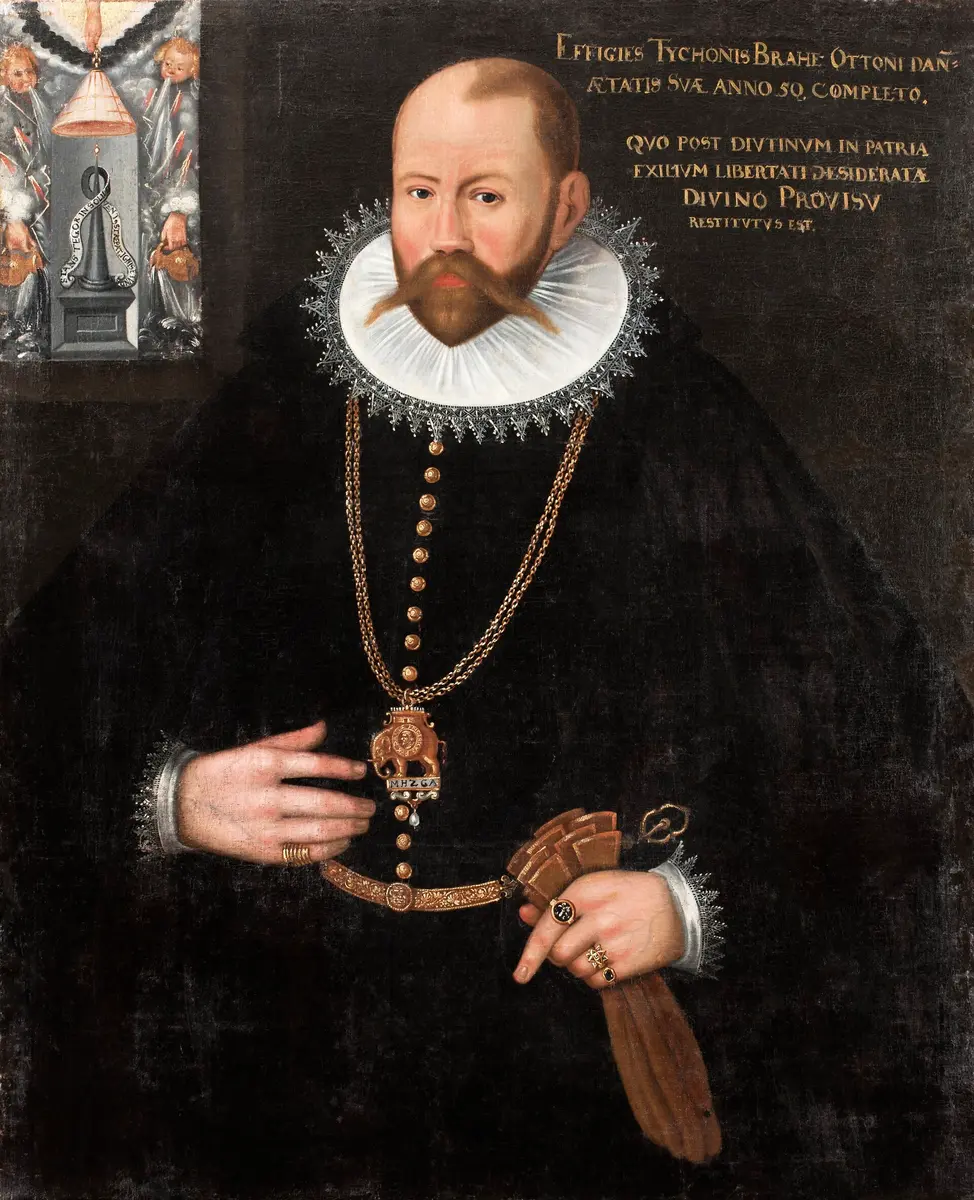
When the Protestants of Graz were ordered in 1600 to become Catholic or leave, Kepler went to Prague as assistant to the Danish nobleman Tycho Brahe, the greatest observer of the age, who set him to work on the orbit of Mars. Tycho died in October 1601, and Kepler succeeded him as Imperial Mathematician to Emperor Rudolf II, with Tycho's twenty years of precise observations in his hands. His 'war with Mars' took years: a circular orbit that missed Tycho's positions by only eight minutes of arc was not good enough for him, and in the end only an ellipse fitted. He published the result, with his first two laws, as the New Astronomy in 1609. In the same Prague years he explained vision and the camera obscura (1604), studied the new star of 1604, welcomed Galileo's telescope discoveries in print in 1610, and in 1611 worked out the theory of the telescope.
Then his world fell apart. In 1611 his young son and his wife died and Rudolf was forced from power, and in 1612 Kepler moved to Linz in Upper Austria as mathematician to the provincial estates. His own Lutheran church shut him out of communion for his independent views, Catholic reforms pressed on Protestants around him, and from 1615 his old mother Katharina was accused of witchcraft in Leonberg; he took over her defence, and after more than a year in chains she was freed in 1621. Through it all he kept working. In The Harmony of the World (1619) he gave his third law, found on 15 May 1618, and in the Epitome of Copernican Astronomy (1618 to 1621) he wrote the first textbook of the new astronomy. Driven from Linz by war in 1626, he finally printed the Rudolphine Tables, named for his first patron, at Ulm in 1627; they stayed accurate for decades and did more than any argument to win astronomers over to the Sun-centred system.
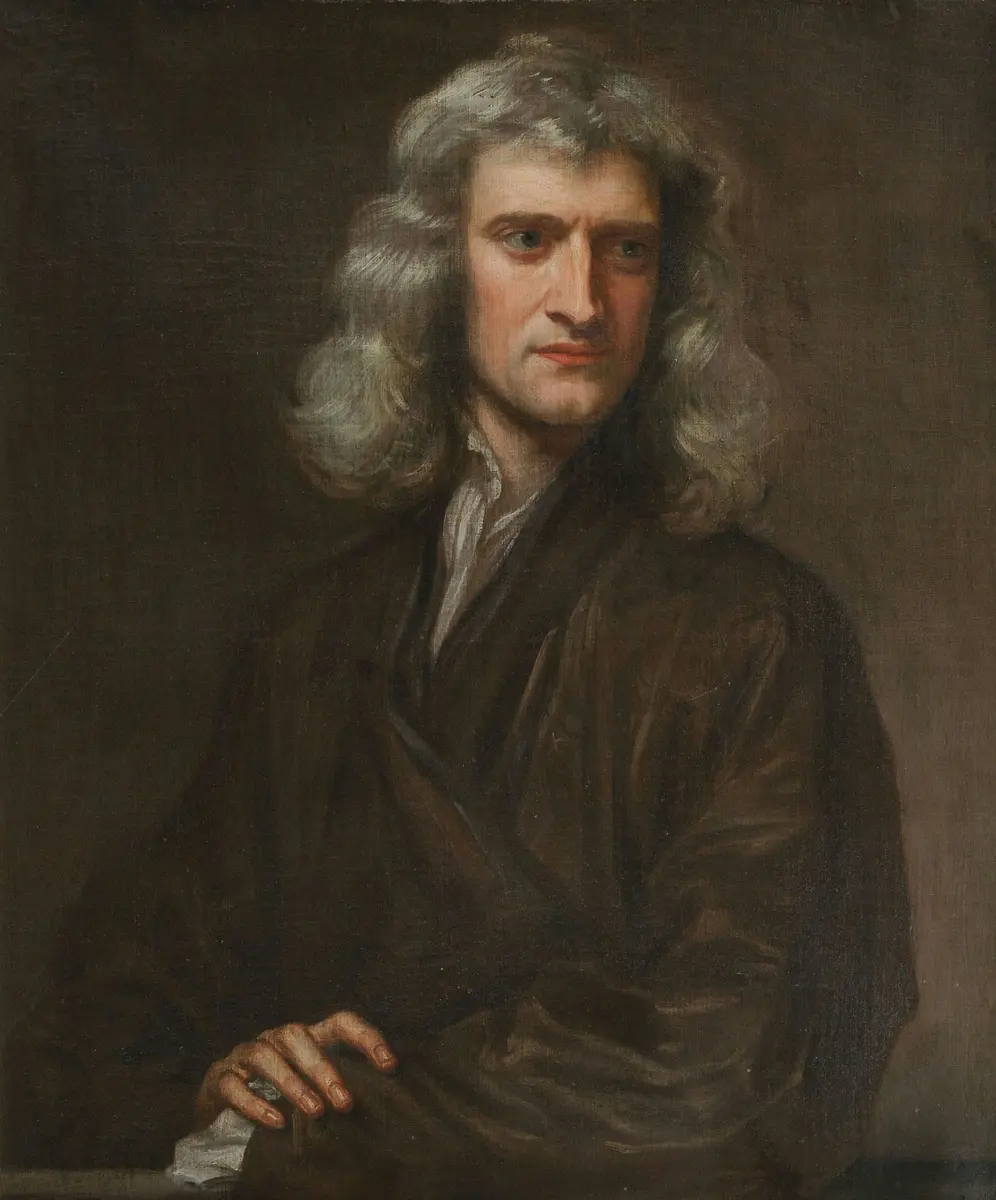
In 1628 he entered the service of the imperial general Albrecht von Wallenstein at Sagan in Silesia. In the autumn of 1630 he went to Regensburg to try to collect money owed to him, fell ill with a fever, and died there on 15 November 1630, aged 58. His grave was destroyed a few years later in the Thirty Years' War. Half a century on, Isaac Newton showed that Kepler's three laws follow from a single law of gravity, and they still steer every spacecraft; in 2009 NASA named its planet-hunting space telescope after him.
What happened
- 1571
Johannes Kepler is born in Weil der Stadt, a small town in Swabia, the first child of Heinrich Kepler, a mercenary soldier, and Katharina, an innkeeper's daughter.
Weil der Stadt, Swabia: Kepler was born here on 27 December 1571; the house at Keplergasse 2 is now the Kepler Museum- 1576
His parents move to nearby Leonberg, where he goes to the Latin school; his father soon leaves the family for good.
- 1584
A ducal scholarship for gifted poor boys takes him to the Protestant seminary at Adelberg, and in 1586 to Maulbronn.
- 1589
He enters the Lutheran seminary at the University of Tübingen to become a pastor. The professor of mathematics, Michael Maestlin, teaches him Copernicus's Sun-centred system, and Kepler takes it as the true picture of the world.
- 1594
Before finishing his theology, he accepts a post teaching mathematics at the Protestant school in Graz, where he is also district mathematician and writes the yearly calendar of forecasts.
Graz, Styria: he taught mathematics at the Protestant school from 1594 until the Protestants were driven out in 1600, and wrote the Cosmographic Mystery here - 1595
Drawing the cycle of conjunctions of Jupiter and Saturn on the board for his class, he is struck by the idea that God spaced the planets by fitting the five regular solids between their spheres.
Graz, Styria: he taught mathematics at the Protestant school from 1594 until the Protestants were driven out in 1600, and wrote the Cosmographic Mystery here - 1596
His first book, the Mysterium cosmographicum (Cosmographic Mystery), is printed at Tübingen under Maestlin's eye. It makes him known, and he sends a copy to Tycho Brahe.
- 1597
He marries Barbara Müller in Graz.
Graz, Styria: he taught mathematics at the Protestant school from 1594 until the Protestants were driven out in 1600, and wrote the Cosmographic Mystery here- 1600
As the Protestants of Graz are ordered to become Catholic or leave, Kepler joins Tycho Brahe, now the emperor's astronomer, at Benátky castle near Prague, and is set to work on the orbit of Mars.
- 1601
Tycho dies in Prague, charging Kepler to complete the tables of the planets. Kepler succeeds him as Imperial Mathematician to Rudolf II, and with the post gains Tycho's observations.
Prague Castle: the court of Emperor Rudolf II, where Kepler worked with Tycho Brahe and, from 1601 to 1612, served as Imperial Mathematician- 1604
His book on optics, the Ad Vitellionem paralipomena, gives the first correct account of how the eye works, with an upside-down image formed on the retina.
Prague Castle: the court of Emperor Rudolf II, where Kepler worked with Tycho Brahe and, from 1601 to 1612, served as Imperial MathematicianOn the night of 17 to 18 October he first sees a brilliant new star in Ophiuchus. Measuring it for a year, he finds it does not shift against the stars, so it lies among them: the heavens can change. His book on it, De stella nova, appears in 1606.
Prague Castle: the court of Emperor Rudolf II, where Kepler worked with Tycho Brahe and, from 1601 to 1612, served as Imperial Mathematician- 1605
After years of calculation he finds that Mars moves not in a circle but in an ellipse, with the Sun at one focus.
Prague Castle: the court of Emperor Rudolf II, where Kepler worked with Tycho Brahe and, from 1601 to 1612, served as Imperial Mathematician - 1609
The Astronomia nova (New Astronomy) is printed at Heidelberg. It sets out his first two laws: the ellipse, and the rule that a planet sweeps out equal areas in equal times.
- 1610
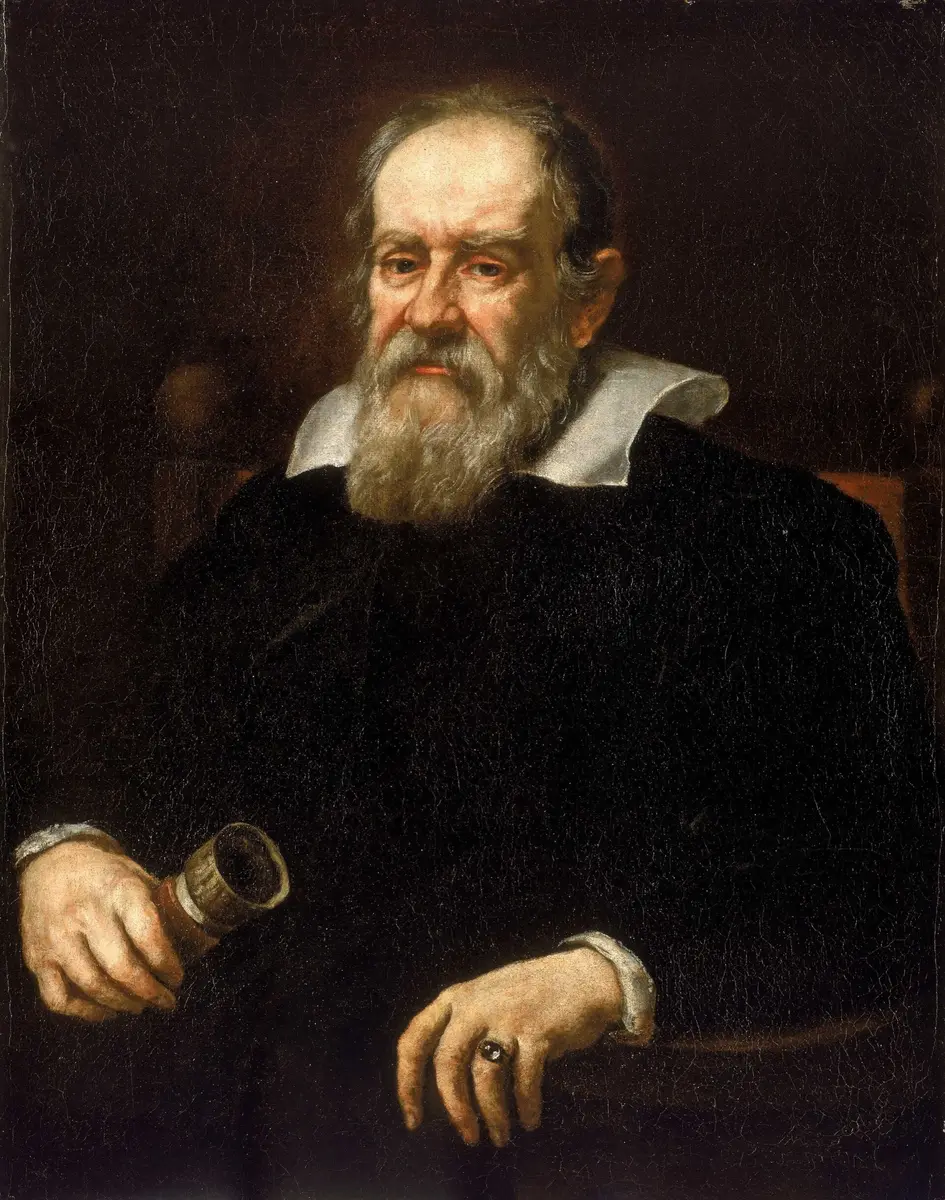
He answers Galileo's Starry Messenger with an open letter of support, the Dissertatio cum Nuncio Sidereo, and dreams of 'ships and sails suitable for the air of heaven'.
Prague Castle: the court of Emperor Rudolf II, where Kepler worked with Tycho Brahe and, from 1601 to 1612, served as Imperial MathematicianGiven the use of a good telescope, he watches Jupiter's moons for himself until 9 September, and confirms Galileo's discovery in print. In 1611 his Dioptrice explains how the telescope works and describes one with two convex lenses.
Prague Castle: the court of Emperor Rudolf II, where Kepler worked with Tycho Brahe and, from 1601 to 1612, served as Imperial Mathematician- 1611
A year of disaster: his children catch smallpox and his young son Friedrich dies, his wife Barbara dies, and Emperor Rudolf is forced to give up his throne to his brother Matthias.
- 1612
He moves to Linz as mathematician to the Estates of Upper Austria, keeping his title of Imperial Mathematician. The Lutheran church shuts him out of communion for his independent views, a ban he never gets lifted.
Linz, Upper Austria: mathematician to the Upper Austrian Estates from 1612 to 1626; he lived in the house at Rathausgasse 5 and wrote The Harmony of the World here - 1613
He marries Susanna Reuttinger. Measuring the wine barrels at the wedding sets him on his Stereometria doliorum of 1615, the first book printed in Linz.
Linz, Upper Austria: mathematician to the Upper Austrian Estates from 1612 to 1626; he lived in the house at Rathausgasse 5 and wrote The Harmony of the World here - 1615
In Leonberg his mother Katharina, about 68, is accused of poisoning a neighbour by witchcraft. The case drags on for six years.
- 1616
He reports to the Estates on his slow work on the Rudolphine Tables, and comes across Napier's logarithms, which he will use for them.
Linz, Upper Austria: mathematician to the Upper Austrian Estates from 1612 to 1626; he lived in the house at Rathausgasse 5 and wrote The Harmony of the World here - 1618
The first part of his Epitome of Copernican Astronomy appears, the first textbook of the Sun-centred system; it is completed in 1621.
Linz, Upper Austria: mathematician to the Upper Austrian Estates from 1612 to 1626; he lived in the house at Rathausgasse 5 and wrote The Harmony of the World hereAfter a false start on 8 March, he finds his third law: the squares of the planets' periods are as the cubes of their mean distances from the Sun. 'At first I believed I was dreaming,' he writes.
Linz, Upper Austria: mathematician to the Upper Austrian Estates from 1612 to 1626; he lived in the house at Rathausgasse 5 and wrote The Harmony of the World here- 1619
The Harmony of the World is printed at Linz: geometry, music, astrology and the soul, and in Book 5 the third law.
Linz, Upper Austria: mathematician to the Upper Austrian Estates from 1612 to 1626; he lived in the house at Rathausgasse 5 and wrote The Harmony of the World here - 1620
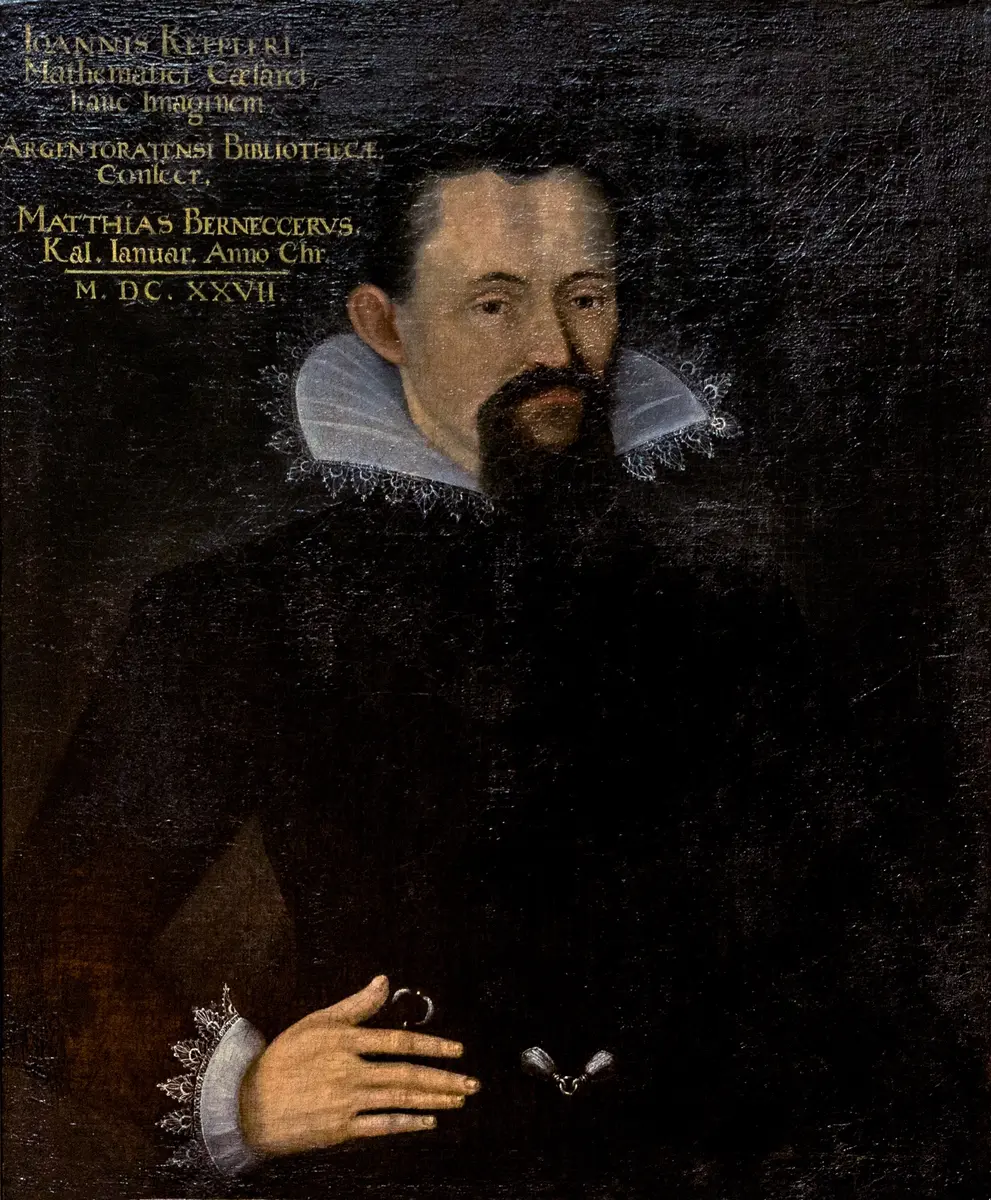
His mother is arrested and imprisoned, then moved to the small town of Güglingen. Before leaving Linz to help her, Kepler has his portrait painted.
By the end of September he reaches Güglingen, visits his mother in her tower, and takes over her defence, arguing point by point that the witnesses' illnesses had natural causes.
- 1621
After more than a year in chains, Katharina is set free; she dies within months. The same year Kepler reprints his Cosmographic Mystery, the only book he ever reissued.
- 1625
The Counter-Reformation reaches Linz: the Catholic authorities take away his library for a time and order his children to attend Mass.
Linz, Upper Austria: mathematician to the Upper Austrian Estates from 1612 to 1626; he lived in the house at Rathausgasse 5 and wrote The Harmony of the World here - 1626
Rebel peasants besiege Linz; a fire destroys the printer's house and much of what had been printed of the tables, and soldiers are quartered in Kepler's home. He leaves Linz for good and settles in Ulm to finish the printing.
Linz, Upper Austria: mathematician to the Upper Austrian Estates from 1612 to 1626; he lived in the house at Rathausgasse 5 and wrote The Harmony of the World here - 1627
The Rudolphine Tables, built on Tycho's observations and Kepler's laws and named for Rudolf II, are printed at Ulm: the most accurate tables of the planets yet made, they stay reliable for decades.
- 1628
He enters the service of the imperial general Albrecht von Wallenstein at Sagan in Silesia, who gives him a printing press and expects horoscopes in return.
- 1630
With Wallenstein dismissed in August, Kepler travels to Regensburg to collect money owed to him.
Regensburg: he died here on 15 November 1630; his grave was destroyed in the Thirty Years' War, and a memorial temple with his bust stands in the cityHe dies of a fever in Regensburg, aged 58. He is buried in the Protestant churchyard outside the walls, which is destroyed a few years later in the Thirty Years' War; nothing of the grave remains.
Regensburg: he died here on 15 November 1630; his grave was destroyed in the Thirty Years' War, and a memorial temple with his bust stands in the city