Rome's Senate bans silk for men
“In 16 CE Rome's Senate forbade men to wear silk, the see-through eastern cloth moralists called effeminate; six years later Tiberius admitted such luxury laws could not be enforced.”
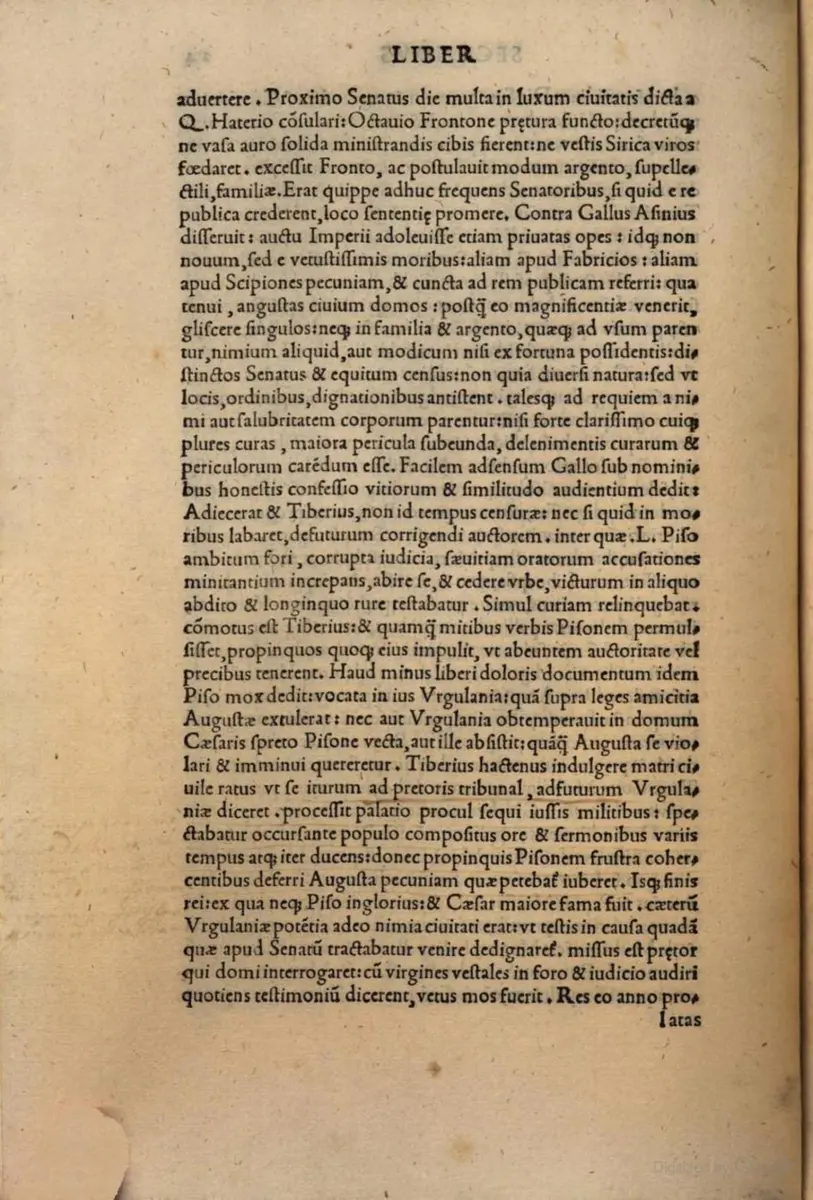
In the year 16 CE, two years into the reign of the emperor Tiberius, the Roman Senate turned against luxury. At the sitting after the trial of the young noble Libo Drusus, who had killed himself on 13 September, the former consul Quintus Haterius and the former praetor Octavius Fronto spoke at length against the extravagance of the city. The Senate resolved that dishes of solid gold should no longer be used to serve food, and that 'Oriental silk' (vestis Serica, the cloth of the Seres, the silk people of the far east) should no longer disgrace men. That is all the historian Tacitus records of the decree: no penalty, no wording. Cassius Dio, writing two centuries later, gives the same two bans to Tiberius himself.
Fronto wanted more: limits on silver plate, furniture and household slaves. The senator Asinius Gallus answered that a great empire naturally made great private fortunes, and that men of rank deserved comforts to match their burdens; the house agreed with him, and Tiberius added that it was not the moment for a censor's clean-up. So the law hit two easy targets. Silk was a rare, almost transparent cloth that reached Rome from Han China, then ruled by the usurper Wang Mang, overland through Central Asia and Parthia to Syria, or by sea through India and the Red Sea ports, from which, the geographer Strabo says, some 120 ships a year sailed for India in Augustus' time. A wild silk was also woven on the Greek island of Kos. To a Roman moralist a man in see-through silk was effeminate: a citizen was meant to wear wool, above all the toga that Augustus had made the dress of public life.
The ban did not hold. In 22 CE the aediles complained that the old law on spending was a dead letter and food prices kept rising. Tiberius replied in a letter to the Senate that listed what was wrong, from huge villas and armies of slaves to gold and silver plate, men dressed like women, and the women's jewels for which, he said, Roman money was carried off to foreign and even hostile peoples. Then he refused to pass laws that no one would obey. Half a century later Pliny the Elder wrote that men were not ashamed to wear silk in summer because it was light, and reckoned that India, the Seres and Arabia took a hundred million sesterces a year out of the empire; the philosopher Seneca mocked silk dresses that hid nothing.
The decree is one of the first laws we know of aimed at a single imported fabric, and it mixes the three worries that run through every later sumptuary law: morals, the line between men and women, and money flowing abroad. The popular short version, that the Senate banned silk because Romans spent so much gold on it, joins two things the sources keep apart: Tacitus gives a moral reason in 16 CE, and the complaint about money going east comes later, from Tiberius in 22 and Pliny in the 70s. Rome never stopped wanting silk; Chinese annals say Parthia kept Roman envoys away to control the trade, and silkworms reached the Mediterranean only in the 550s.
What happened
- 16
On 13 September Libo Drusus, accused of plotting against Tiberius, kills himself before the Senate can finish his trial; the senators condemn him anyway and make the day of his death a festival. Tacitus places the luxury debate at the Senate's next sitting.
Curia Julia, the Senate house on the Roman Forum, where the Senate met in 16 and 22 CE (the standing building is Diocletian's rebuilding)At that next sitting the former consul Quintus Haterius and the former praetor Octavius Fronto speak against the city's extravagance, and the Senate decrees that food shall not be served on solid gold and that Oriental silk shall no longer disgrace men.
Curia Julia, the Senate house on the Roman Forum, where the Senate met in 16 and 22 CE (the standing building is Diocletian's rebuilding)Fronto asks for limits on silver plate, furniture and household slaves; Asinius Gallus argues that a great empire means great private fortunes and carries the house, and Tiberius says it is not the time for a censorship.
Curia Julia, the Senate house on the Roman Forum, where the Senate met in 16 and 22 CE (the standing building is Diocletian's rebuilding)As Cassius Dio tells it, Tiberius himself forbids men to wear silk and anyone to use gold vessels except in sacred rites; asked about silver with gold inlay, he wants a decree but will not let the Greek word 'emblema' into it.
Curia Julia, the Senate house on the Roman Forum, where the Senate met in 16 and 22 CE (the standing building is Diocletian's rebuilding)- 22
The aedile Gaius Bibulus and his colleagues tell the Senate that the law on spending is a dead letter and food prices rise every day; the senators pass the question to Tiberius without a debate.
Curia Julia, the Senate house on the Roman Forum, where the Senate met in 16 and 22 CE (the standing building is Diocletian's rebuilding)Tiberius answers by letter: where would he even start, with the villas, the slaves, the gold and silver, the bronzes and paintings, men and women dressed alike, or the women's jewels for which Roman money goes to foreign and hostile peoples?
Curia Julia, the Senate house on the Roman Forum, where the Senate met in 16 and 22 CE (the standing building is Diocletian's rebuilding)The letter goes on: the laws of the ancestors and of the deified Augustus are forgotten or despised, Italy's real danger is its dependence on imported grain, and reform must come from self-respect, not from new laws.
Curia Julia, the Senate house on the Roman Forum, where the Senate met in 16 and 22 CE (the standing building is Diocletian's rebuilding)After the letter is read the aediles are excused from enforcing the law; Tacitus adds that lavish living went out of fashion only gradually, after Vespasian set a plain example from 69 CE.
Curia Julia, the Senate house on the Roman Forum, where the Senate met in 16 and 22 CE (the standing building is Diocletian's rebuilding)