Sumptuary laws in Europe
“From about 1300 to 1700 European cities and kings made laws saying which fabrics, furs and colours each rank could wear; they were reissued again and again and widely ignored.”
Sumptuary laws were laws against spending too much, above all on clothes. Between about 1300 and 1700 almost every government in Europe made them: the city republics of Italy, the kings of England, France, Spain and Scotland, and the councils of German cities such as Nuremberg. They said which cloth, furs, colours, jewels and trimmings each rank of society might wear, and often how much a wedding, a christening or a funeral might cost. Cloth of gold, purple silk and the finest furs were kept for royalty and the high nobility; servants and labourers were told to wear plain wool. The idea was old (Rome had such laws), but late medieval Europe, with its growing trade, towns and new merchant fortunes, took it up on a new scale.
The Italian cities legislated most. Venice's councils issued well over a hundred decrees between 1299 and 1600, and from 1514 a special board, the Magistrato alle Pompe, watched over them; Florence passed dozens and appointed 'officials on women' as early as 1333, because many rules targeted women's gowns, sleeves, trains and jewels. Some cities turned the laws into a kind of tax: in Bologna in 1401 owners registered their forbidden garments and paid to keep wearing them, and in Florence from 1415 a woman could buy a year's licence to wear anything for 50 florins. In England Parliament passed statutes of apparel from 1337, the most detailed in 1533, and Elizabeth I's government issued proclamation after proclamation to enforce them. Spain's reform law of 1623 and France's edict of 1633 against gold embroidery and lace show the laws still alive in the seventeenth century.
The reasons were mixed. Preachers called luxury a sin, and in 1497 Savonarola's followers in Florence burned fine clothes, wigs and cosmetics on a bonfire. Rulers wanted rank to stay visible, so that a merchant could not pass for a lord. And governments worried about money: silks, velvets and furs were imported at great cost, so many laws also protected home industry, from England's ban on foreign cloth in 1337 to the Cappers Act of 1571, which made ordinary people wear English woollen caps on Sundays. Enforcement was real but patchy: officials stopped people in the street, fined them and confiscated their clothes, yet the endless reissuing of the same rules shows how often they were ignored.
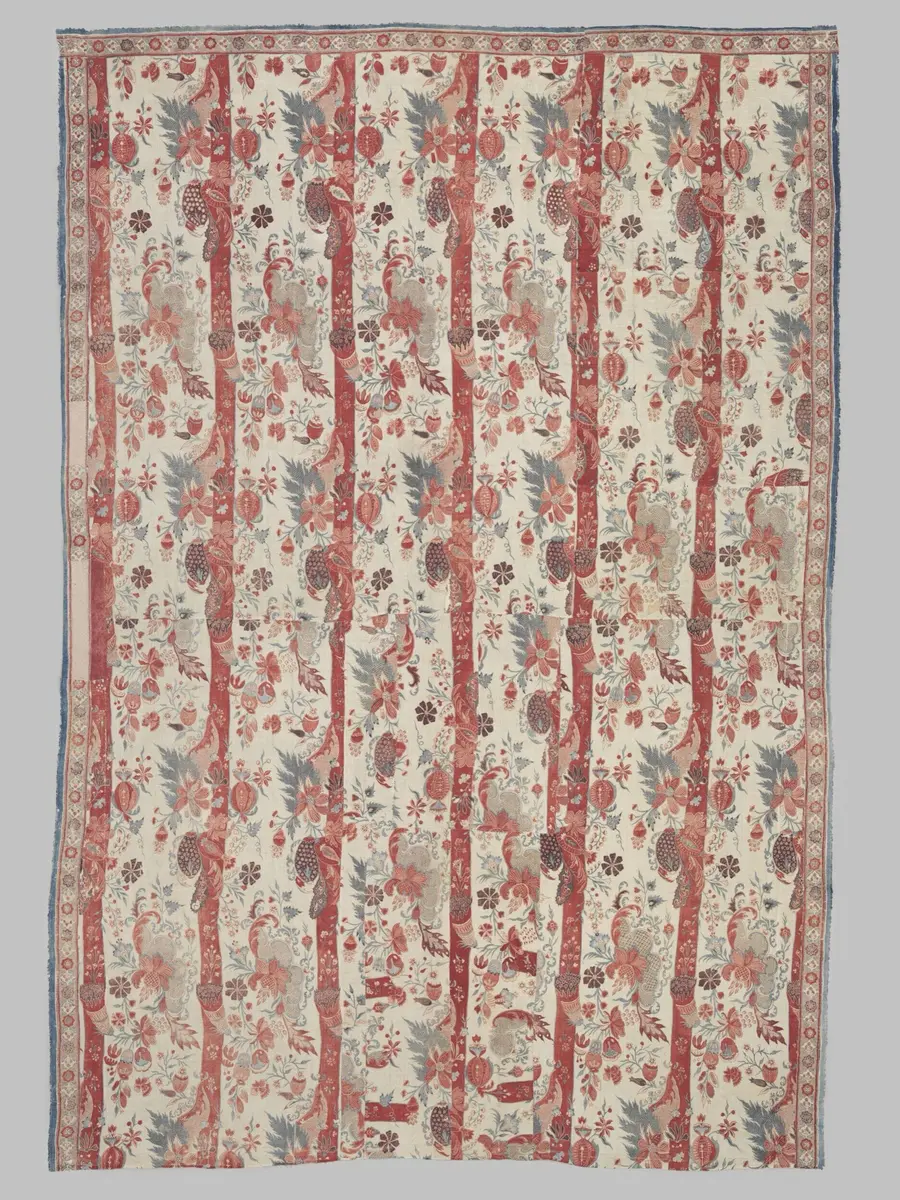
The system faded in the seventeenth century. England's Parliament repealed every statute of apparel in 1604, after centuries of failure to enforce them. Elsewhere the laws turned into trade policy, protecting a country's own weavers rather than its social order, as in Scotland's proclamation of 1686 and Britain's Calico Act of 1721, and they were rarely enforced after about 1700. Their legacy is the idea, still alive in uniforms, court dress and academic gowns, that clothes show who you are; and the laws themselves are among the best records historians have of what people in Renaissance Europe actually wore and wanted to wear.
What happened
- 1333
Florence creates special 'officials on women' (ufficiali delle donne) to enforce its laws on women's dress and ornaments.
Florence: the republic that passed dozens of sumptuary laws, appointed officials on women's dress in 1333, sold licences from 1415 and printed its ordinance of 1516; Savonarola's bonfire of 1497 - 1337
England's Parliament, meeting at Westminster, bans the wearing of cloth made abroad and keeps fur for the royal family, prelates, nobles, knights and clergy with £100 a year: a law against luxury that also protects English cloth-makers. The sheriffs are told to proclaim it in every county court.
Palace of Westminster, London: where England's Parliament passed the statutes of apparel from 1337 to 1533 and repealed them all in 1604- 1356
Florence's sumptuary laws of 1356 try to keep down the cost of weddings; betrothal gifts such as painted caskets are not to be too richly decorated.
Florence: the republic that passed dozens of sumptuary laws, appointed officials on women's dress in 1333, sold licences from 1415 and printed its ordinance of 1516; Savonarola's bonfire of 1497 - 1363
England's 'Statute concerning diet and apparel' sets out what each rank, from knights to farm workers, may eat and wear (its own entry).
Palace of Westminster, London: where England's Parliament passed the statutes of apparel from 1337 to 1533 and repealed them all in 1604 - 1401
Bologna draws up a register of 'vesti bollate': garments that broke the new law but whose owners paid to have them sealed and listed, so they could go on wearing them.
Bologna: in 1401 the city drew up its register of 'vesti bollate', forbidden garments whose owners paid to keep wearing them - 1415
Florence's statutes let a woman wear any forbidden dress, embroidery or jewellery for a year on payment of 50 florins to the city: the law becomes a luxury tax.
Florence: the republic that passed dozens of sumptuary laws, appointed officials on women's dress in 1333, sold licences from 1415 and printed its ordinance of 1516; Savonarola's bonfire of 1497 - 1483
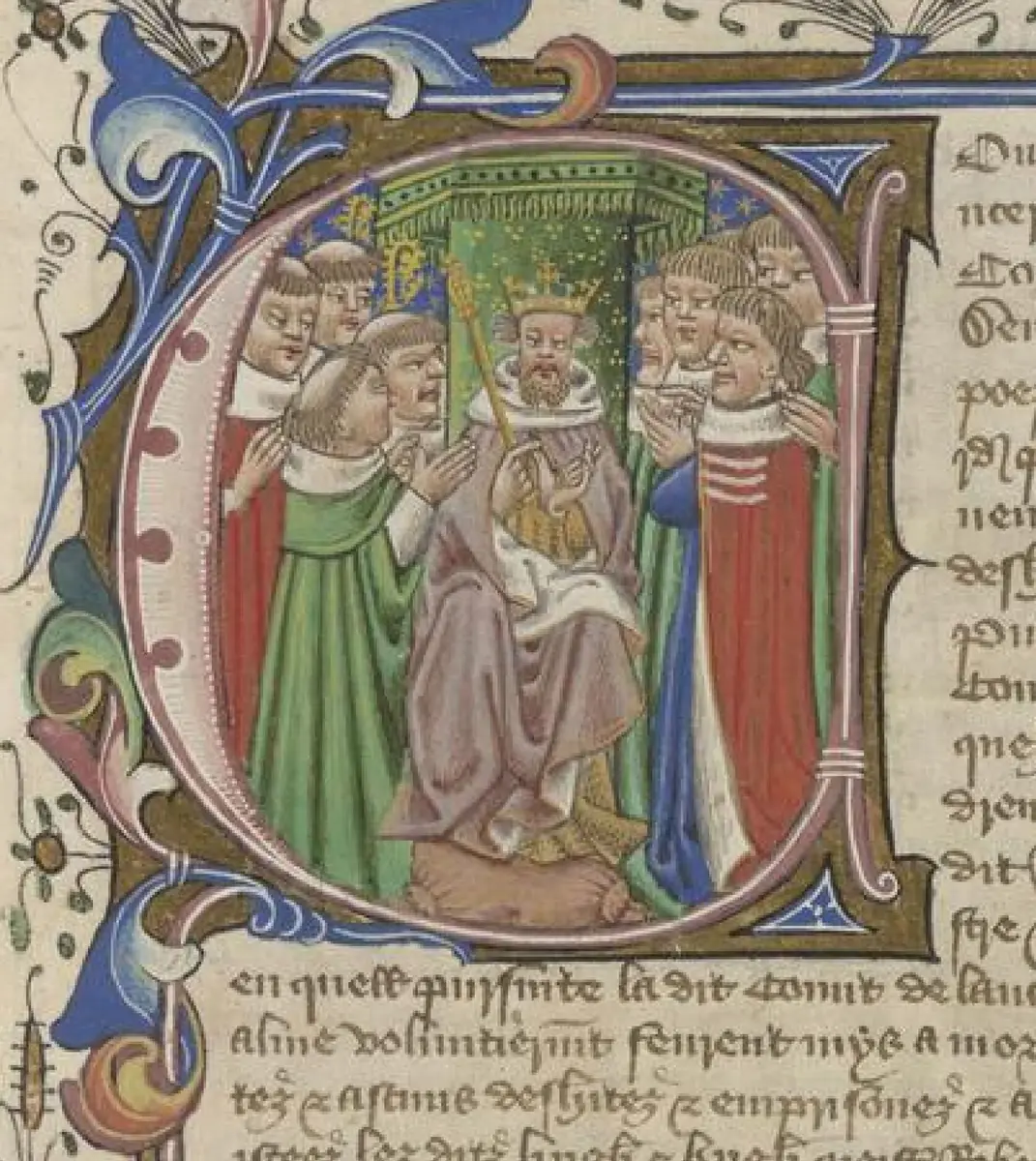
Edward IV's Parliament meets at Westminster and passes a new statute of apparel: only the royal family may wear cloth of gold or purple silk, only dukes cloth of gold of tissue, and men below knights no velvet doublets.
Palace of Westminster, London: where England's Parliament passed the statutes of apparel from 1337 to 1533 and repealed them all in 1604- 1485
Nuremberg's council issues its Wedding-manual, a complete code for every expense of a wedding, from the betrothal (32 witnesses at most) to the tips for servants; it stays in force, revised, until at least 1557.
Nuremberg: the imperial city whose council regulated weddings and dress, as in its Wedding-manual of 1485 - 1497
On Shrove Tuesday Savonarola's followers burn 'vanities' (fine dresses, wigs, masks, cosmetics, perfumes, cards and paintings) on a great bonfire in the Piazza della Signoria in Florence; the same year Florence toughens its 1472 sumptuary law.
Florence: the republic that passed dozens of sumptuary laws, appointed officials on women's dress in 1333, sold licences from 1415 and printed its ordinance of 1516; Savonarola's bonfire of 1497- 1510
Henry VIII's first Parliament meets at Westminster and passes 'an Act against wearing of costly apparel', the first of his statutes of apparel.
Palace of Westminster, London: where England's Parliament passed the statutes of apparel from 1337 to 1533 and repealed them all in 1604- 1514
Venice sets up a standing board to enforce its sumptuary laws, the Magistrato alle Pompe, after two centuries in which other offices had shared the task.
Venice: its councils issued well over a hundred sumptuary decrees between 1299 and 1600, enforced from 1514 by the Magistrato alle Pompe - 1516
Florence repeals its earlier, contradictory dress rules and replaces them with one printed ordinance of 42 rubrics, posted in public, for all men and women under thirty.
Florence: the republic that passed dozens of sumptuary laws, appointed officials on women's dress in 1333, sold licences from 1415 and printed its ordinance of 1516; Savonarola's bonfire of 1497- 1533
England passes its most detailed statute, the Act for Reformation of Excess in Apparel (24 Henry VIII c. 13), to preserve the 'distinction of people according to their estates'; it repeals all earlier statutes and lets justices, sheriffs and aldermen punish offenders.
Palace of Westminster, London: where England's Parliament passed the statutes of apparel from 1337 to 1533 and repealed them all in 1604 - 1559
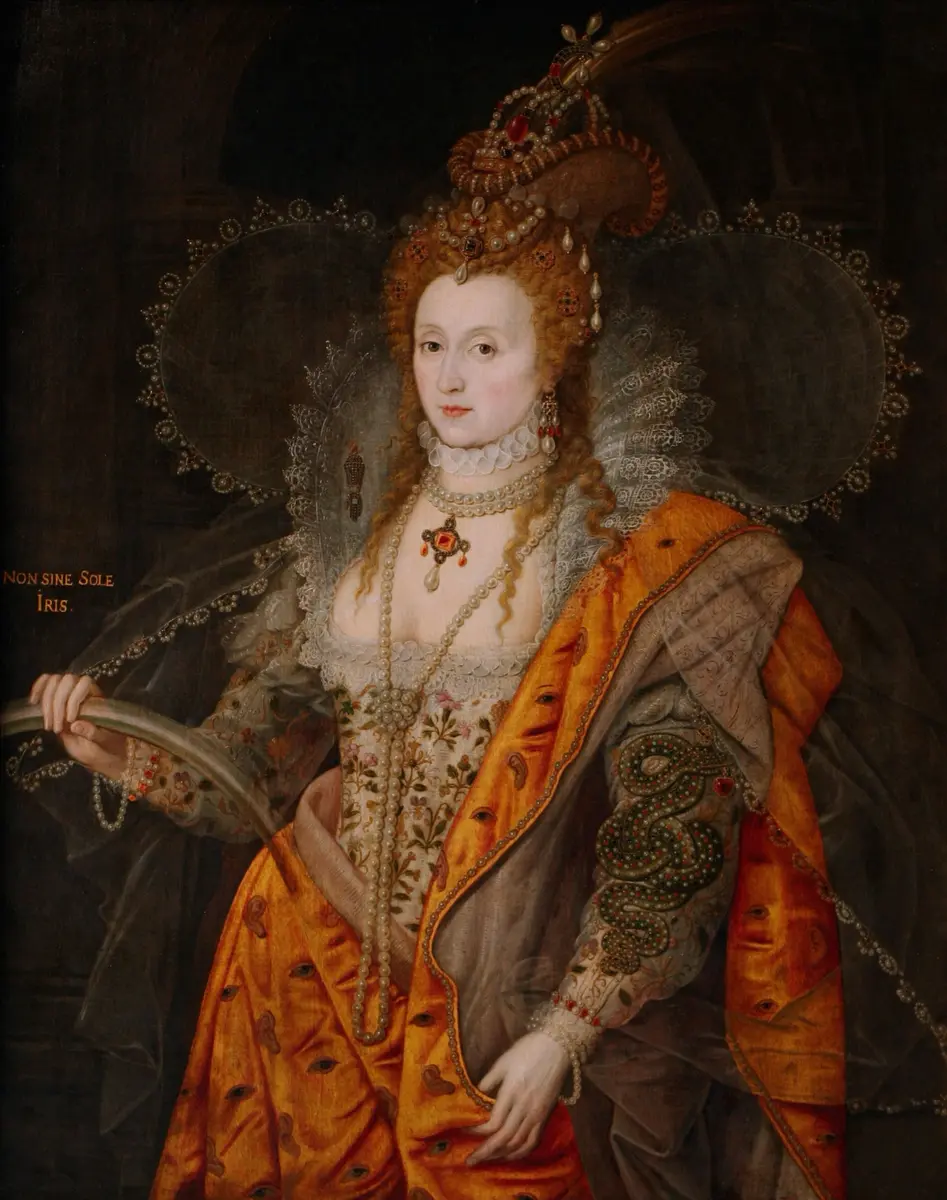
A year into Elizabeth I's reign, the Privy Council, meeting at Westminster, orders every lord to check his servants' clothes and give up any unlawful apparel, to set an example to all.
Palace of Westminster, London: where England's Parliament passed the statutes of apparel from 1337 to 1533 and repealed them all in 1604- 1562
Elizabeth's government issues articles for enforcing the statutes of Henry VIII and Mary, with a 200-mark penalty, and on the next day rules on ruffs, hose and swords; tailors and hosiers who break them face £40 fines.
Palace of Westminster, London: where England's Parliament passed the statutes of apparel from 1337 to 1533 and repealed them all in 1604- 1564
In Padua the sumptuary censors stand at the San Lorenzo bridge and the church of Santa Chiara and stop passers-by: a doctor's wife with a gold chain on her fan, a woman with pearl earrings, men in embroidered velvet cloaks.
Padua: a Venetian city whose sumptuary censors patrolled the streets, as on 16 April 1564- 1571
England's Cappers Act orders everyone over six and below the rank of gentleman to wear an English woollen cap on Sundays and holidays, to protect the cap-makers; it is repealed in 1597.
Palace of Westminster, London: where England's Parliament passed the statutes of apparel from 1337 to 1533 and repealed them all in 1604 - 1574
At Greenwich Elizabeth issues her proclamation enforcing the statutes of apparel: imports of silks and cloth of gold are draining the realm and ruining young gentlemen, and the proclamation lists who may wear velvet, satin, gold and silver.
- 1597
Another proclamation complains that 'no reformation at all' has followed the earlier ones and orders the laws enforced from 13 August; it is the last of Elizabeth's reign.
- 1604
The first Parliament of James I repeals every English statute of apparel (1 James I c. 25), ending nearly three centuries of dress law in England.
Palace of Westminster, London: where England's Parliament passed the statutes of apparel from 1337 to 1533 and repealed them all in 1604 - 1623
Philip IV's reform law, the Capítulos de reformación, forbids gold and silver in cloth and trimmings across Spain; the court gives up the costly ruff for a flat collar on a stiff support, the golilla.
Madrid: Philip IV's reform law of 10 February 1623, printed here by the royal printer- 1633
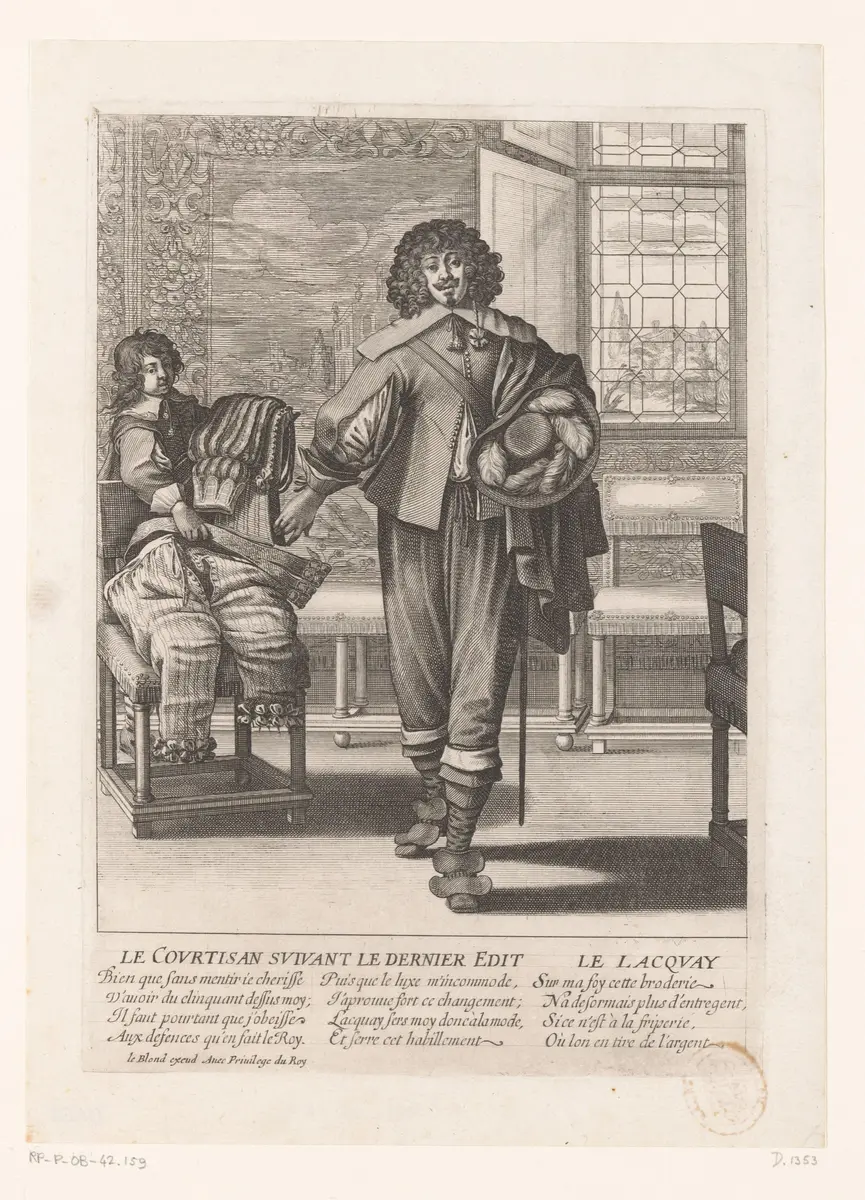
Louis XIII's edict bans clothing embroidered with gold or silver thread or trimmed with lace cutwork; Abraham Bosse's prints of courtiers obeying it go on sale in Paris.
Paris: Louis XIII's edict of 18 November 1633 against gold and silver embroidery and lace; Bosse's prints mocking it were published here- 1686
Scotland's Privy Council, at Edinburgh, revives its sumptuary laws 'in favours of manufactures': no foreign embroidery, no English cloth; the law now protects Scottish weavers more than it guards rank.
Edinburgh: the Scottish Privy Council's sumptuary proclamations, such as that of 16 September 1686, were proclaimed at the Mercat Cross