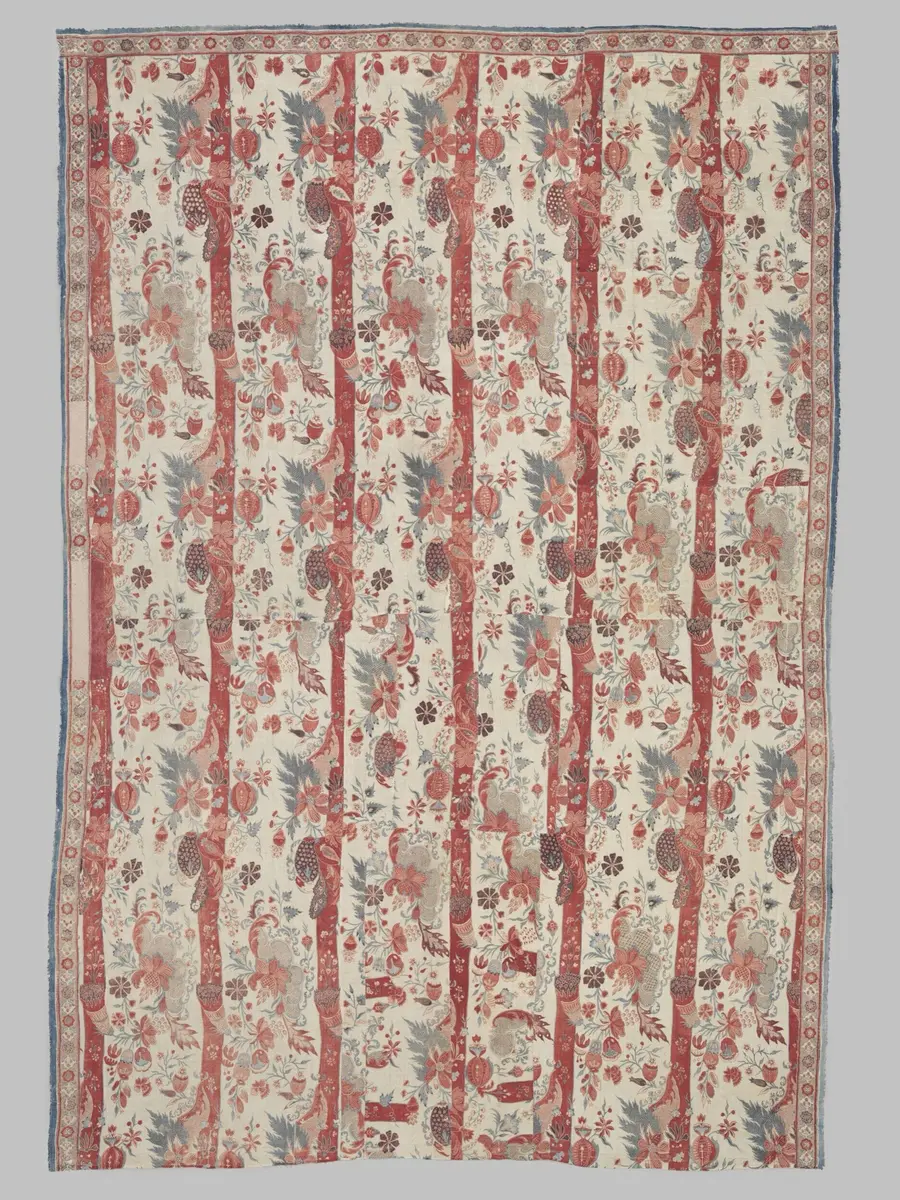
Britain bans printed calico
“The Calico Act of 1721 banned wearing printed cotton in Britain from Christmas 1722 to protect wool and silk; only in 1774 did Parliament allow printed cloth made wholly of British cotton.”
From the 1660s the East India Company shipped cotton cloth from India to London: plain white calico, and chintz, cotton painted and dyed with bright flowers on India's Coromandel Coast. It was light, colourful and washable, and by the 1690s it had become the fashion for gowns, linings and bed hangings. London printers also began to print their own patterns on imported white calico. The wool trade, England's oldest industry, and the silk weavers of Spitalfields saw their sales fall and blamed the new cloth; in January 1697 a crowd of weavers stormed the Company's house in the City.
Parliament answered twice. A law of 11 April 1700 said that silks and printed or dyed calicoes made in Persia, China or India could no longer be worn or used in England from 29 September 1701; they had to be locked in customs warehouses and sold abroad. But white calico could still come in and be printed in London, so the fashion went on. In June 1719, in a slump, thousands of silk weavers marched through the City, tore calico gowns off women's backs and threw ink and acid on them, and the Trained Bands and soldiers were called out. Pamphlets, Daniel Defoe's among them, called the cloth unpatriotic, and the wool towns sent petitions.
The second law, the Calico Act, received the royal assent from George I on 23 March 1721. From 25 December 1722 nobody in Great Britain could wear any printed, painted, stained or dyed calico, wherever it was made, on pain of a £5 fine for each offence, half to the informer; selling it, or using it for furniture and bed hangings, cost £20. Muslins, neckcloths, fustians and calicoes dyed all blue were left out. The Company could still sell Indian cloth to Europe, Africa and Britain's American colonies, where it stayed legal.
The ban did not bring back wool. Women wore printed linen and fustian, a cloth with a linen warp and a cotton weft, and the printers moved to them; the Manchester Act of 1736 confirmed that cloth of linen yarn and cotton made in Britain could be printed and worn. What stayed banned was cloth made wholly of cotton. When Richard Arkwright and his partners began to spin strong cotton yarn by machine and to weave pure cotton calico, they asked Parliament for a way out, and an act of 14 June 1774 allowed printed cotton spun and woven in Britain, marked with three blue threads in each edge and stamped 'British Manufactory'. Indian printed cotton itself stayed shut out.
The Calico Acts are the textbook case of a fashion that a government could not stop, and they kept the home market for Britain's own cloth just as its spinners began to use machines. Historians still argue how much the ban helped the cotton mills of Lancashire and Derbyshire, and how much the machines would have come anyway. The surviving chintz gowns and petticoats in museums are the cloth that the weavers once tore off women in the street.
What happened
- 1700
With William III on the throne, Parliament passes the first Calico Act, 'for the more effectual employing the Poor, by encouraging the Manufactures of this Kingdom': printed and dyed calicoes and silks from Persia, China and India may no longer be worn in England.
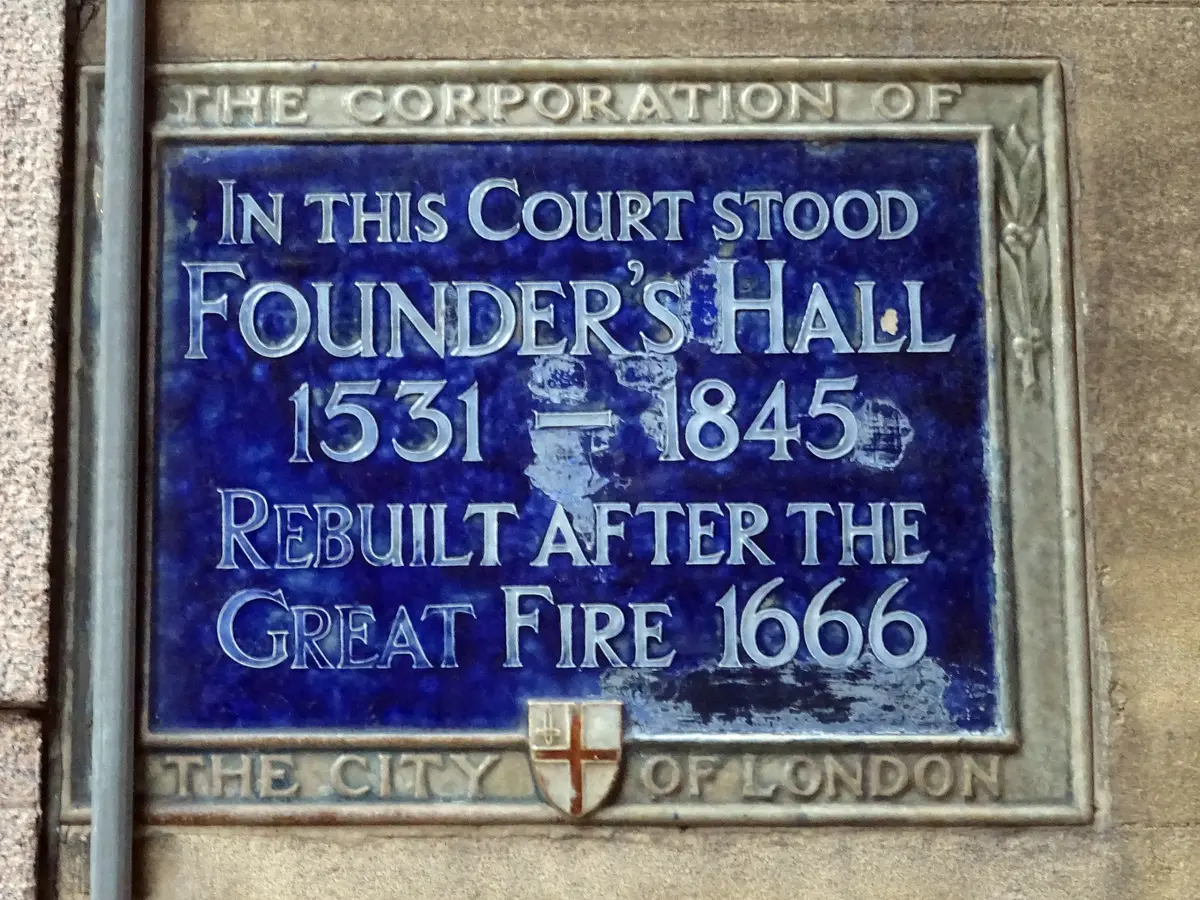
Palace of Westminster: Parliament passed the Calico Acts of 1700 and 1721, the Manchester Act of 1736 and the cotton act of 1774 in the House of Lords and the House of Commons here- 1701
The ban takes effect at Michaelmas: Indian printed calicoes landed in England must go into customs warehouses and be sold abroad; anyone found holding them risks losing them and a £200 penalty. Plain white calico may still come in and be printed in London.
East India House, Leadenhall Street: the East India Company's London headquarters, stormed by weavers in January 1697; its sales sent Indian calico across Britain and the world- 1719
A pamphlet war: Daniel Defoe writes for the London weavers, in The Just Complaint of the Poor Weavers Truly Represented and A Brief State of the Question, and Claudius Rey's The Weavers True Case calls calico 'destructive' to wool and silk; the East India Company and the drapers answer.
In a slump, crowds of weavers attack women wearing calico in the streets of the City and the East End, tearing their gowns; four companies of the City militia are raised.
Spitalfields, London: the silk weavers' quarter, from which thousands marched against calico in June 1719The weavers gather again and try to pull down a house in Brown's Lane where women in calico gowns have taken shelter; the militia seize the ringleaders, two of them dressed in calico to the waist, and Thomas Hardy is taken waving a piece of calico and crying 'down with the Callicoes'.
Spitalfields, London: the silk weavers' quarter, from which thousands marched against calico in June 1719About 4,000 Spitalfields weavers parade the City, throwing ink and aqua fortis on women in calico; the Lord Mayor calls out the Trained Bands, the Horse Grenadiers take two rioters to the Marshalsea, and troops are hurried back from Whitehall when the crowd re-forms.
Spitalfields, London: the silk weavers' quarter, from which thousands marched against calico in June 1719At the Old Bailey, John Humphreys, Samuel Bains, George Picket, Thomas Hardy and Charles Child are found guilty of riot and of tearing women's calico gowns; Humphreys had boasted that the Norwich weavers were coming to help.
The Weavers' Company of London petitions the Board of Trade, through the Lords Justices who govern while George I is in Hanover, against 'the almost universal wearing' of printed calicoes and linens.
- 1721
The Commons send the calico bill up to the Lords. The East India Company asks to be heard by counsel against it; the worsted weavers of Norwich ask for it to pass.
Palace of Westminster: Parliament passed the Calico Acts of 1700 and 1721, the Manchester Act of 1736 and the cotton act of 1774 in the House of Lords and the House of Commons hereThe cotton manufacturers of Manchester, speaking for 'many Thousands of poor People' in Lancashire, back the bill but ask that cloth made in Britain from plantation cotton be allowed.
Manchester: its cotton manufacturers petitioned the Lords in February 1721, and the 1736 'Manchester Act' freed their linen-and-cotton clothThe Lords refuse to bring the ban forward to 1721, some lords protesting that a like bill had been lost the year before; the bill passes its third reading without amendment.
Palace of Westminster: Parliament passed the Calico Acts of 1700 and 1721, the Manchester Act of 1736 and the cotton act of 1774 in the House of Lords and the House of Commons hereGeorge I, on the throne in the House of Lords, gives the royal assent to the Calico Act, 'An Act to preserve and encourage the Woollen and Silk Manufactures of this Kingdom'.
Palace of Westminster: Parliament passed the Calico Acts of 1700 and 1721, the Manchester Act of 1736 and the cotton act of 1774 in the House of Lords and the House of Commons hereThe London Gazette prints the act's terms: from Christmas 1722 a £5 fine for wearing printed calico and £20 for selling it or using it in furniture; muslins, neckcloths, fustians and all-blue calicoes excepted.
Merchants rush calico out of the country before the ban: a London paper counts 207,035 pieces exported in four days, most to Europe and the colonies, where it stays legal.
- 1722
The ban takes effect: from Christmas Day nobody in Great Britain may wear printed, painted, stained or dyed calico, or use it in new bed hangings and furniture.
- 1736
The 'Manchester Act' receives the royal assent: cloth of linen yarn and cotton made in Great Britain, such as fustian, may be printed and worn. Cloth wholly of cotton stays banned.
Manchester: its cotton manufacturers petitioned the Lords in February 1721, and the 1736 'Manchester Act' freed their linen-and-cotton cloth- 1742
In Spitalfields, Anna Maria Garthwaite dates her design for a brocaded silk for the master weaver Mr Pulley: the silk trade the ban was meant to save is at its height.
Spitalfields, London: the silk weavers' quarter, from which thousands marched against calico in June 1719- 1769
Robert Jones & Co. of Old Ford date a copperplate-printed fustian, linen and cotton because all-cotton cloth may not be printed.
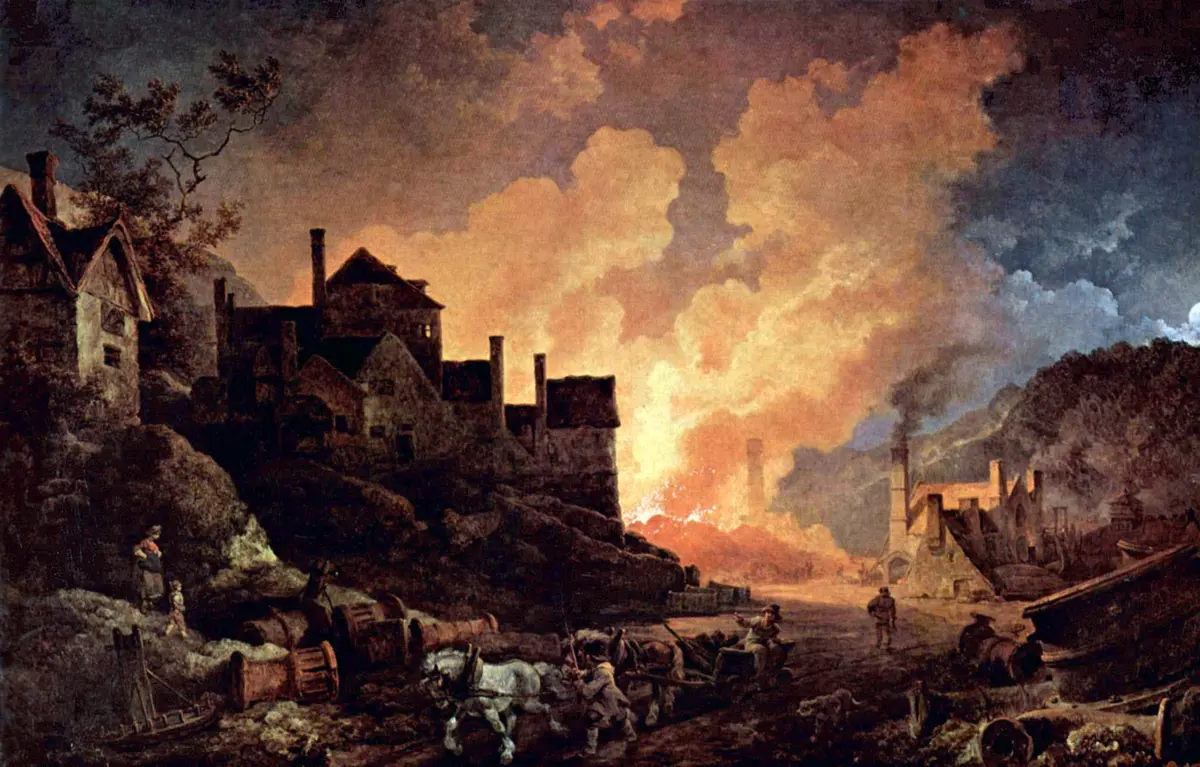
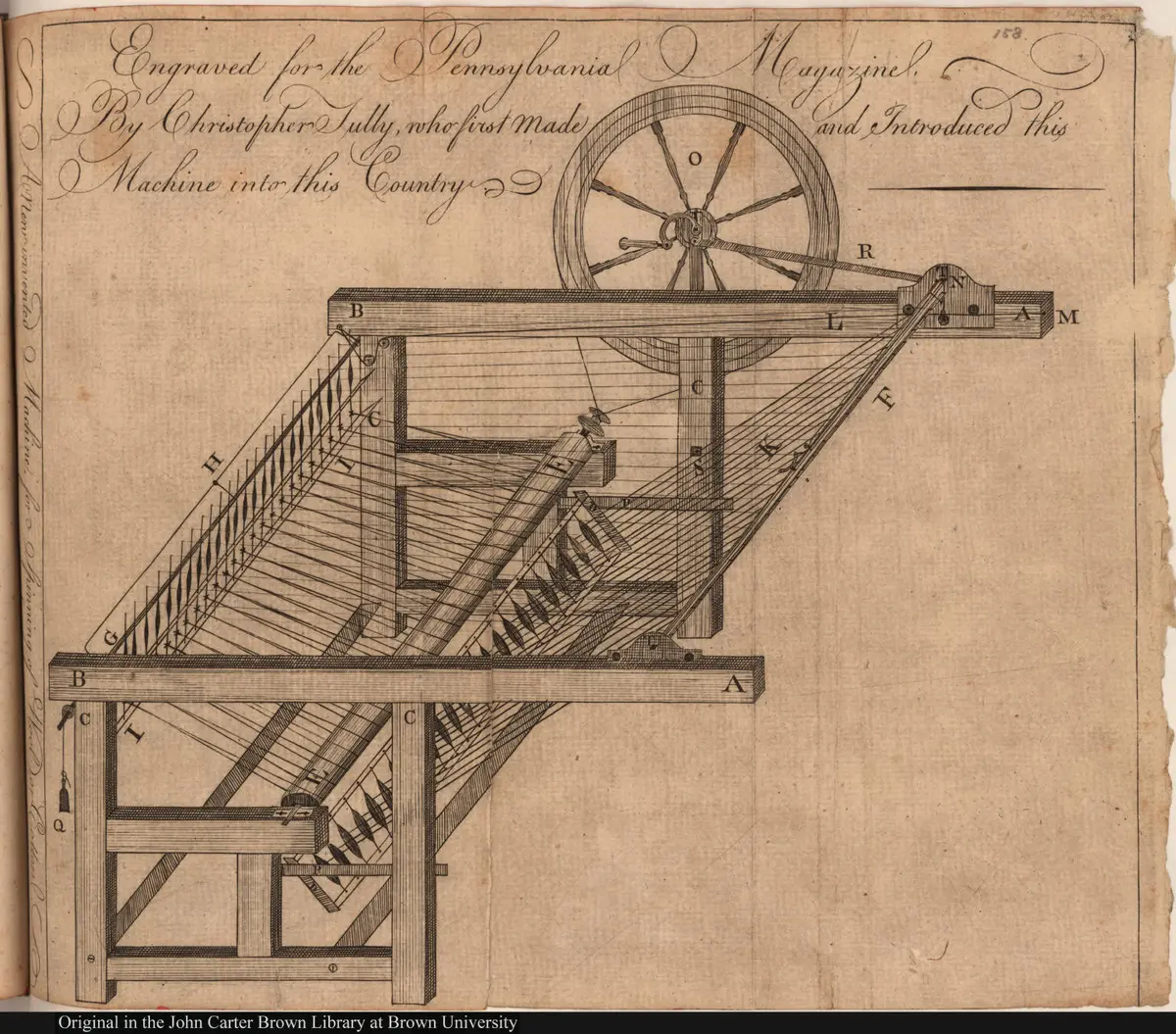
Old Ford: Robert Jones & Co.'s print works, which printed fustian in 1769 because all-cotton cloth was still bannedRichard Arkwright, with the clockmaker John Kay, builds his roller spinning machine, which can spin cotton strong enough for the warp: the first step to cloth made wholly of British cotton.
- 1770
The Nottingham hosiers Samuel Need and Jedediah Strutt put £500 into Arkwright's partnership and join it.
- 1771
The partners lease land at Cromford in Derbyshire, with water and labour to hand, to build spinning mills.
Cromford, Derbyshire: Arkwright and his partners leased land here in August 1771 for water-powered spinning mills, whose cotton yarn led to the 1774 act- 1773
Arkwright's company begins to make calicoes, cloth wholly of British cotton, which under the 1721 Act may not be printed or worn in Britain.
- 1774
The Commissioners of Excise back Arkwright's petition: British cotton is to be marked with coloured threads in each piece, and the ban on printed cotton made in Britain is to go.
George III's commission gives the royal assent to the act allowing printed cotton 'wholly made of cotton spun in Great Britain', taxed at 3d. a yard and marked with three blue threads in each selvage. Indian printed cotton stays banned.
Palace of Westminster: Parliament passed the Calico Acts of 1700 and 1721, the Manchester Act of 1736 and the cotton act of 1774 in the House of Lords and the House of Commons here