Industrial Revolution
“Britain's change from hand work to machines, factories and steam power, from the spinning jenny and Watt's engine of the 1760s to the first railways around 1830.”
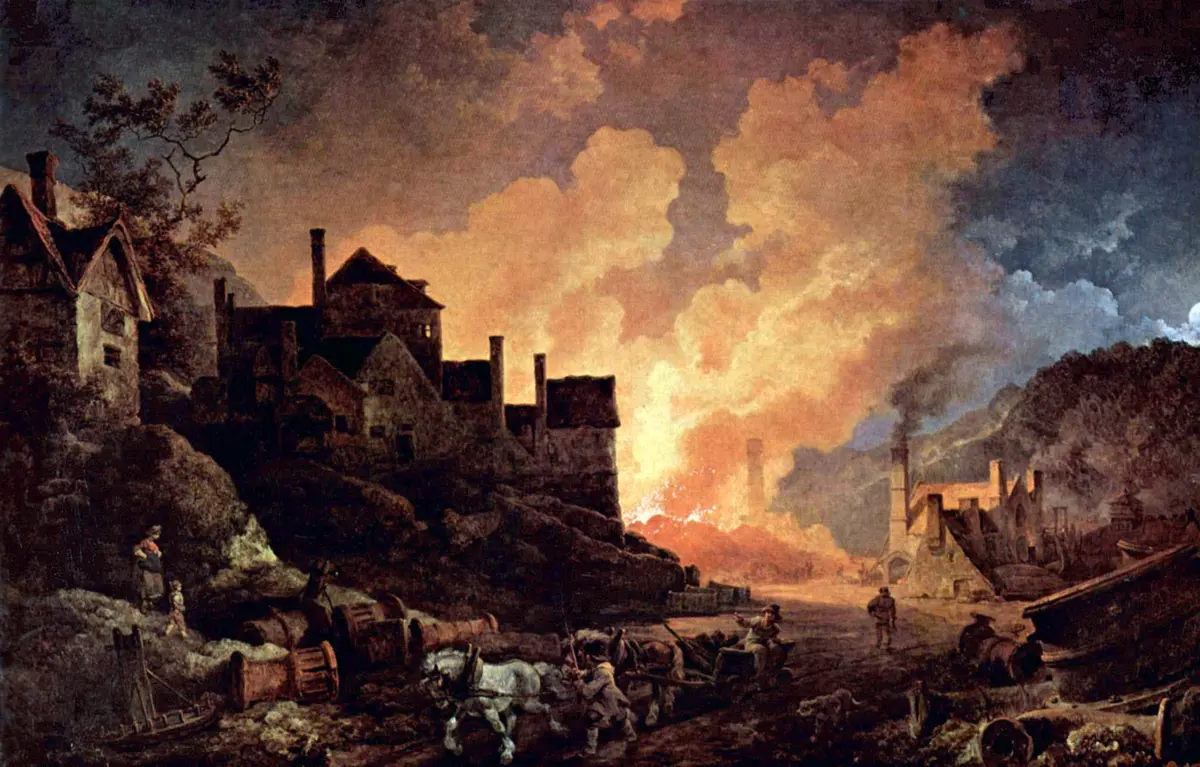
The Industrial Revolution was the change, beginning in Britain, from an economy of farms, hand tools and muscle to one of machines, factories and coal. Historians date its first phase from about 1760 to 1840, the span the economic historian Arnold Toynbee gave it in the lectures of the early 1880s that made the name popular; the dates are a convention, because nothing started in 1760 or stopped in 1840. Britain had what the change needed: farms productive enough to feed growing towns, coal and iron ore lying close together, rivers and soon canals to move them, a large trade in cotton, investors with money, and a state that protected property and patents. The first canal of the new age, the Duke of Bridgewater's, reached Manchester in 1761 and halved the price of its coal.
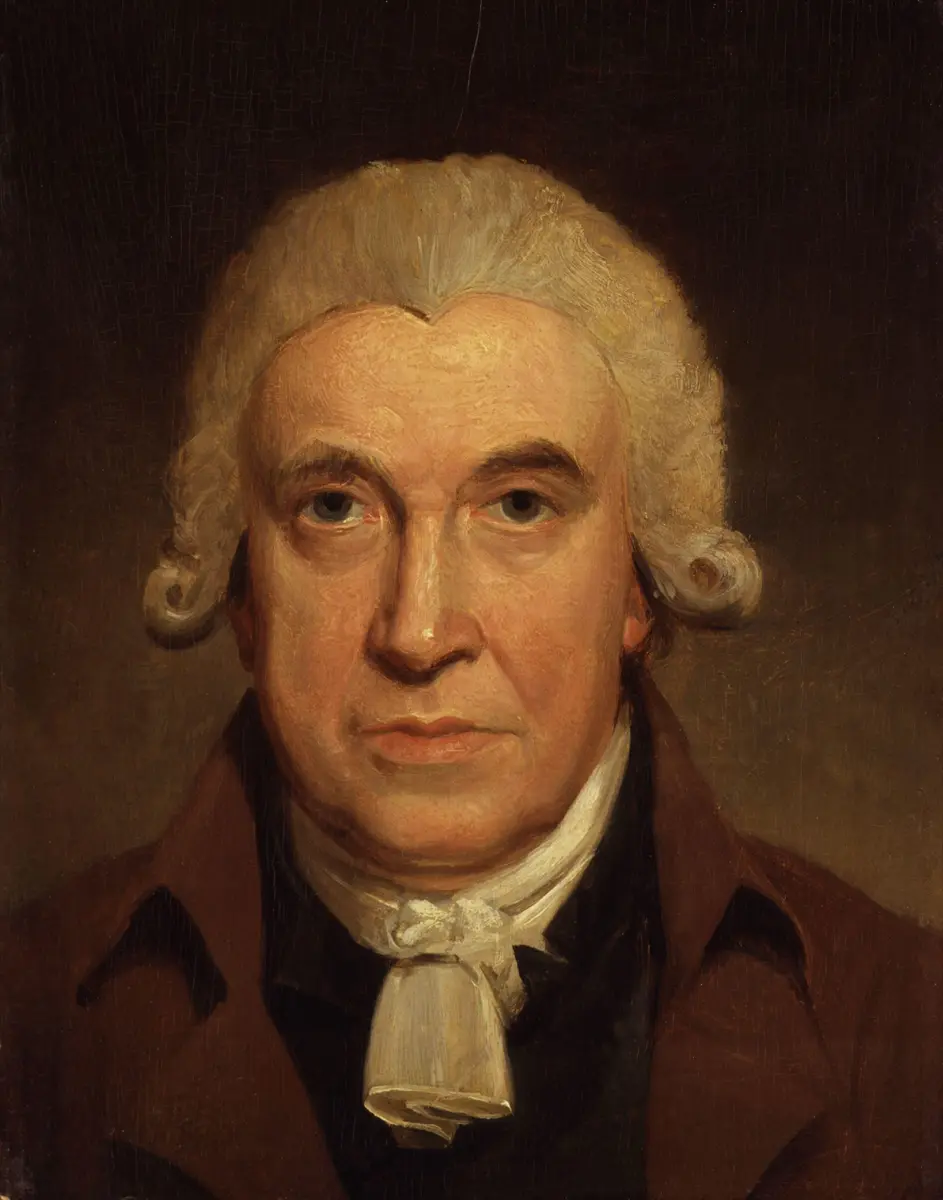
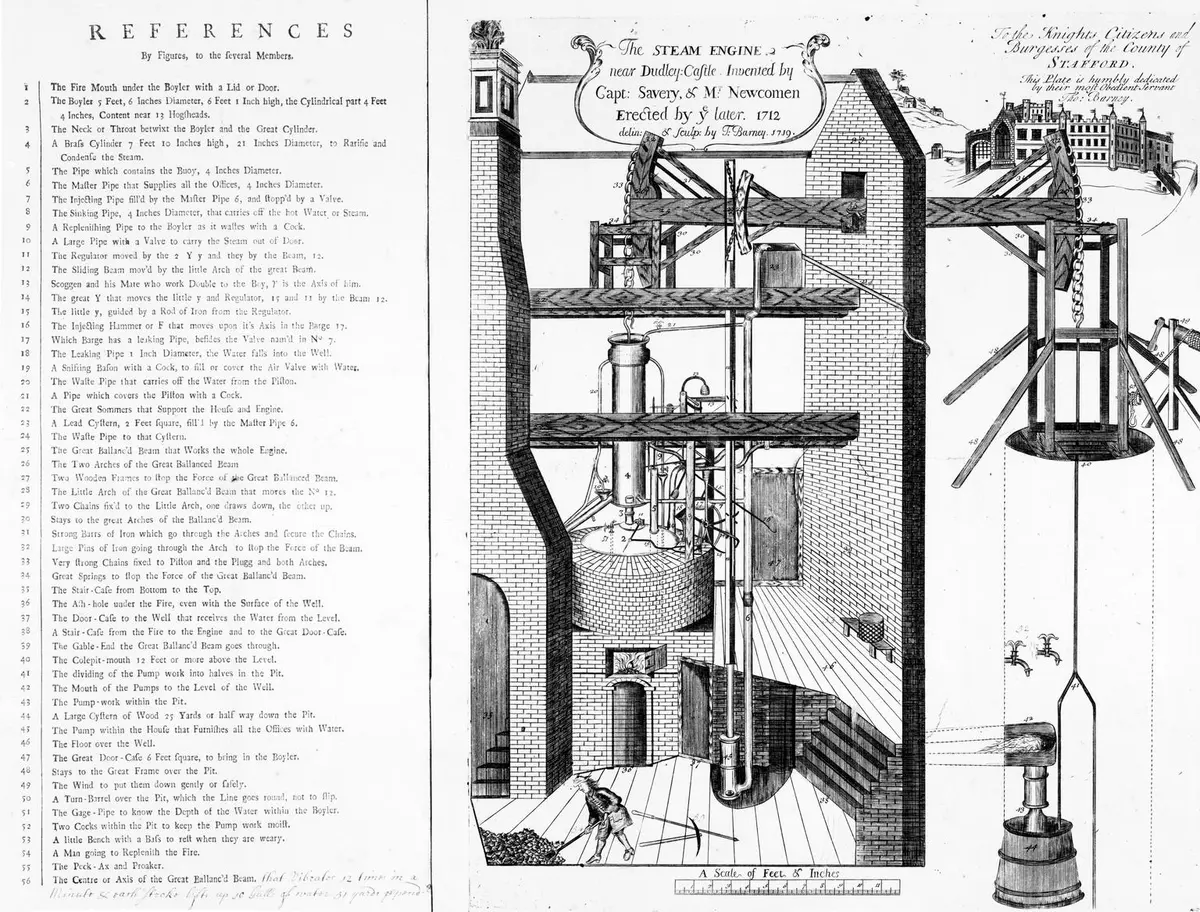
Cotton came first. James Hargreaves's spinning jenny of about 1764 let one spinner work many spindles; Richard Arkwright patented his water frame in 1769 and in 1771 put it in a water-powered mill at Cromford, with shifts, bells and rules, the first factory in the modern sense; Samuel Crompton's mule of 1779 combined the two and spun fine thread by the million spindles. Power came from James Watt, who patented his separate condenser in 1769 and went into partnership with the Birmingham manufacturer Matthew Boulton in 1775; their first engines went to work in 1776, and the rotative engine of the 1780s let steam turn the machinery of mills far from any river. Iron followed: Abraham Darby III cast the Iron Bridge over the Severn in 1779, and Henry Cort's puddling process of 1784 helped British iron output to quadruple in twenty years. Josiah Wedgwood brought the same division of labour to pottery at Etruria in 1769.
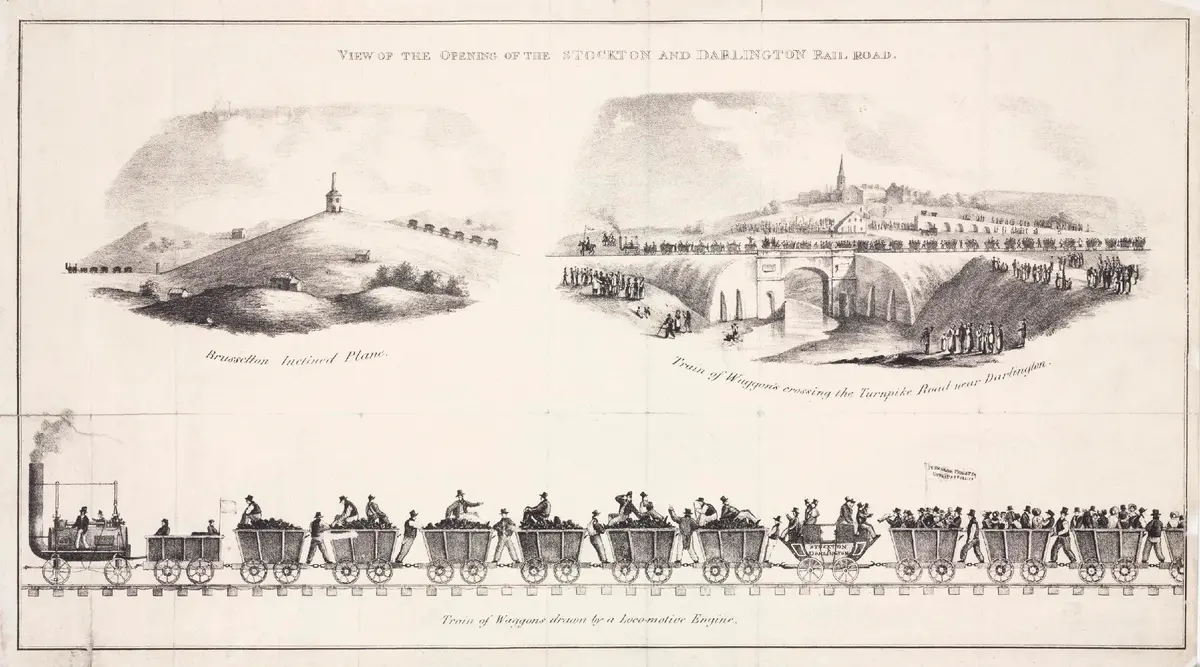
Steam then took to rails. Richard Trevithick's engine pulled the first train at Penydarren in South Wales in 1804; George Stephenson's Locomotion opened the Stockton and Darlington Railway in 1825; his Rocket won the Rainhill Trials in 1829, and in 1830 the Liverpool and Manchester, the first railway between two cities, opened on a day marred by the death of the politician William Huskisson under its wheels. In 1837 Cooke and Wheatstone's telegraph sent messages by wire. The cost fell on the workers: Manchester, 'Cottonopolis', grew sixfold in sixty years, children worked twelve-hour days in the mills, and hand workers who smashed the machines that replaced them, the Luddites of 1811 and 1812, were hanged or transported. Robert Owen at New Lanark showed that a mill could run with schools and shorter hours, and the Factory Act of 1833 banned work under the age of nine.
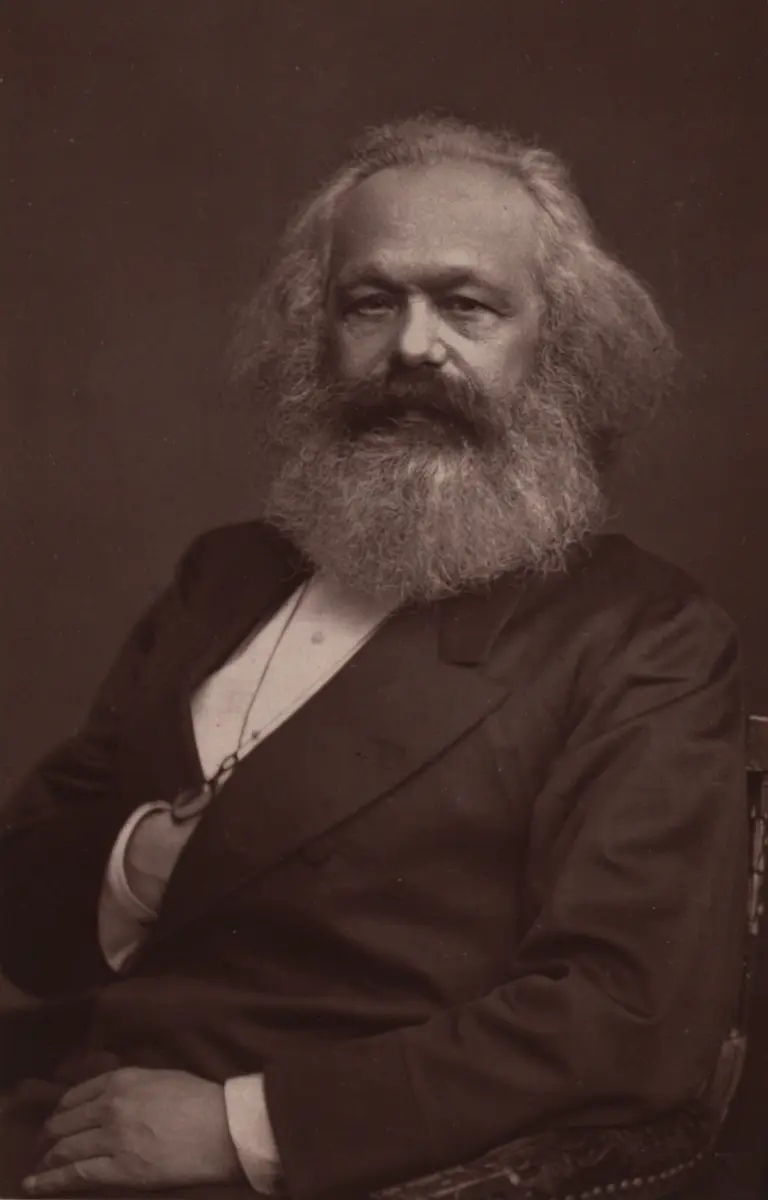
By 1840 the new methods had crossed to Belgium, France and the United States, and the first wave was slowing; growth picked up again after 1870 with a second industrial revolution of steel, chemicals and electricity. For the first time in history both population and income per head kept rising together: England's population doubled in the first half of the nineteenth century. The revolution made Britain the workshop of the world, drew cotton from slave plantations in the American South, filled the cities that Engels and Marx described, and set the pattern every country that has grown rich since has followed in its own way.
What happened
- 1761
The first boat crosses the Irwell on James Brindley's aqueduct at Barton, and the Duke of Bridgewater's canal from his Worsley mines to Manchester is open; the price of coal in Manchester falls by half.
Manchester: 'Cottonopolis', reached by the Bridgewater Canal in 1761 and by the railway from Liverpool in 1830- 1764
James Hargreaves, a poor weaver at Stanhill near Blackburn, builds the spinning jenny, which lets one person spin several threads at once; spinners afraid for their work later break into his house and smash his machines.
Stanhill, near Blackburn: where James Hargreaves built the spinning jenny about 1764 - 1769
Richard Arkwright, a wig-maker from Preston, patents his spinning frame, which spins a cotton yarn strong enough for the warp; driven by water, it becomes the water frame.
James Watt's patent for a separate condenser, which saves most of the fuel the old Newcomen engines wasted, is accepted; it is the basis of every Boulton and Watt engine.
Josiah Wedgwood opens his Etruria works beside the canal then being cut from the Trent to the Mersey, throwing six commemorative vases himself while his partner Thomas Bentley turns the wheel.
Etruria: Josiah Wedgwood's pottery works, opened on June 13, 1769 beside the new canal- 1771
Arkwright and his partners build a water-powered spinning mill at Cromford on the Derwent, with workers' housing around it: the factory system begins.
Cromford Mills: Arkwright's water-powered cotton mills of 1771 on the Derwent, the first factories - 1776
A year after Parliament extends Watt's patent and he goes into partnership with Matthew Boulton of Soho, the first two Boulton and Watt engines go to work, pumping a Staffordshire colliery and blowing John Wilkinson's furnaces.
The Soho Manufactory, Birmingham: Matthew Boulton's works, where Boulton and Watt built their engines - 1779
Samuel Crompton of Bolton finishes his spinning mule, a cross between the jenny and the water frame that spins fine, strong thread; unable to afford a patent, he shows it to manufacturers who pay him in all £60.
- 1781
The Iron Bridge over the Severn, its ribs cast and raised by Abraham Darby III in 1779, opens to traffic: the first major bridge of cast iron, and an advertisement for the ironworks of the Gorge.
The Iron Bridge: the first major bridge of cast iron, cast at Coalbrookdale in 1779 and opened in 1781- 1782
Watt patents the double-acting engine; with his sun-and-planet gear of the year before, it turns a shaft, so steam can now drive the machinery of mills, not only pumps.
- 1784
Henry Cort patents his puddling process for turning pig iron into wrought iron with coal, after his grooved rollers of 1783; in the next twenty years British iron output quadruples.
- 1785
Edmund Cartwright, a clergyman inspired by a visit to Arkwright's mills, patents the first power loom; it is crude, but its descendants will empty the hand-weavers' cottages.
- 1800
Robert Owen takes charge of the New Lanark mills he and his partners bought from his father-in-law David Dale, and turns the village into a showcase of schools, decent housing and shorter hours.
New Lanark: David Dale's cotton mills of 1786 on the Clyde, Robert Owen's model village from 1800 - 1804
Richard Trevithick's high-pressure engine wins a wager for the ironmaster Samuel Homfray, hauling 10 tons of iron and 70 men along ten miles of the Penydarren tramway: the first railway locomotive at work.
Penydarren ironworks, Merthyr Tydfil: where Trevithick's engine pulled the first train on rails, February 21, 1804- 1811
Stocking-knitters near Nottingham begin breaking the frames that cut their wages, in the name of a 'General Ludd'; in 1812 the Luddites spread to Yorkshire and Lancashire, and a mass trial at York in 1813 ends in hangings and transportations.
- 1815
Humphry Davy describes his safety lamp to the Royal Society: a flame screened by metal gauze that will not ignite the firedamp gas of the coal mines; George Stephenson has built a rival lamp.
- 1825
George Stephenson drives Locomotion No. 1 from Shildon through Darlington to Stockton with about 450 people aboard at up to 15 miles an hour: the Stockton and Darlington, the first public steam railway, is open.
Darlington: the Stockton and Darlington Railway, the first public steam railway, opened September 27, 1825- 1829
The Liverpool and Manchester Railway's trials open at Rainhill to show whether locomotives can work the line better than fixed engines; over nine days the Stephensons' Rocket is the only entry to complete them, and is declared the winner.
Rainhill: the level stretch of the Liverpool and Manchester line where the Rocket won the trials of October 1829- 1830
The Liverpool and Manchester Railway, the first line between two cities worked only by steam, opens with eight Stephenson engines; at Parkside, where the trains stop for water, the Liverpool MP William Huskisson is struck by the Rocket and dies that night at Eccles.
Parkside: the watering place where William Huskisson was struck by the Rocket at the opening on September 15, 1830- 1833
Parliament passes the Factory Act: no children under nine in the textile mills, eight hours a day for those aged nine to thirteen, twelve for those under eighteen, schooling, and paid inspectors to enforce it.
- 1837
Cooke and Wheatstone, who patented their needle telegraph that year, demonstrate a line along the new London and Birmingham Railway between Euston and Camden Town.