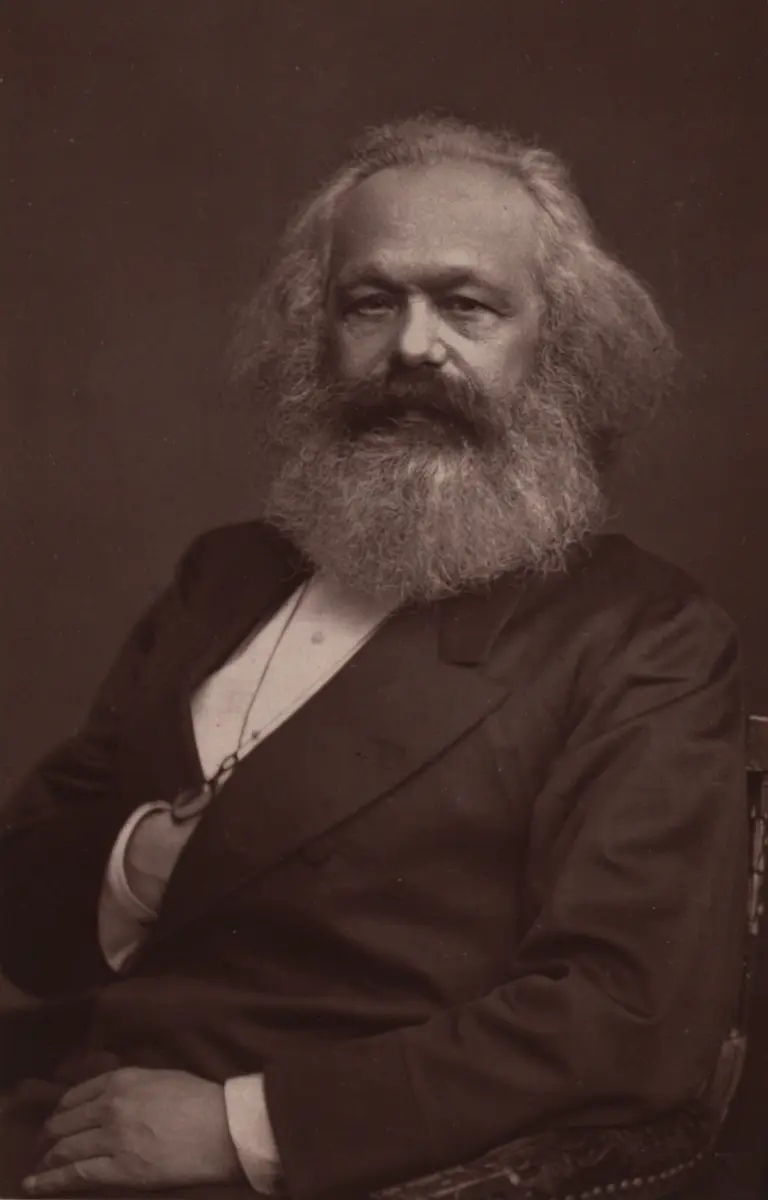
Karl Marx
“The German thinker who wrote the Communist Manifesto (1848) with Engels and Das Kapital (1867), arguing that history is a story of class struggle and that capitalism would give way to communism.”
Karl Marx was the German philosopher, economist and revolutionary whose ideas, known as Marxism, became the creed of the socialist movement and, in the twentieth century, the official doctrine of regimes that ruled much of Europe and Asia. With his friend Friedrich Engels he wrote the Communist Manifesto of 1848, which declares that the history of all society so far is the history of class struggles; on his own he wrote Das Kapital, whose first volume appeared in 1867. He argued that societies rise and fall with the way people produce their living, that capitalism draws its profit from the unpaid part of its workers' labour, the 'surplus value' they create beyond their wages, and that its own crises would bring it down and open the way to a communist society without classes.
He was born in Trier, in the Prussian Rhineland, on 5 May 1818, the son of Heinrich Marx, a successful lawyer and a man of the Enlightenment. Both parents came from long lines of rabbis, but his father had been baptized a Protestant a year or so before Karl was born, and Karl was baptized at six. He studied law at Bonn and then in Berlin, where he fell under the spell of Hegel's philosophy and joined the radical Young Hegelians, and in 1841 he took a doctorate at Jena with a thesis on the Greek thinkers Democritus and Epicurus. With no university post open to a radical, he turned to journalism: in October 1842 he became editor of the Rheinische Zeitung in Cologne, until the Prussian government banned it in 1843. That June he married Jenny von Westphalen, whom he had known since childhood, and in the autumn they moved to Paris, where he became a communist and, in 1844, began his partnership with Engels, the son of a textile manufacturer who had seen the mills of Manchester.
Expelled from France in 1845, he settled in Brussels, where he and Engels worked out what they called the materialist conception of history. At the end of 1847 a small secret society of German craftsmen, the Communist League, asked them for a programme. The Manifesto, written over the winter while the League in London grew impatient, was printed there in February 1848, just as revolution broke out in Paris and spread across Europe. Marx went to Paris and then to Cologne, where he ran a daily paper, the Neue Rheinische Zeitung, through the revolution; tried for calling on the people to refuse their taxes, he was acquitted by the jury, but in May 1849 he was expelled from Prussia, and the paper's last issue came out printed in red. In August 1849 he reached London, his home for the rest of his life.
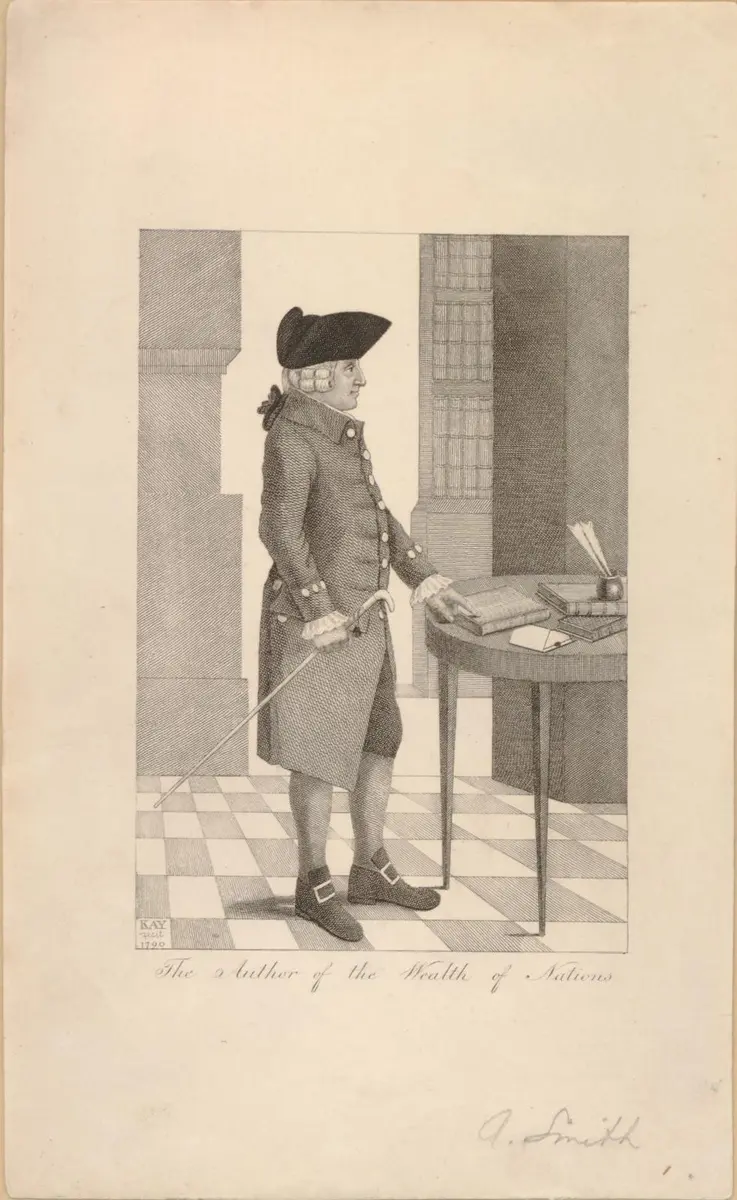
The London years were years of poverty and of his great work. For six years the family lived in two rooms in Soho, often on bread and potatoes, and four of their seven children died young. Engels, back at his family's cotton firm in Manchester, sent money for decades, and from 1851 to 1862 Marx earned a little as the London correspondent of the New York Tribune. Year after year he read in the British Museum, from Adam Smith and David Ricardo to the government's reports on the misery of English factory workers. In 1859 he published a first outline of his economics, in 1864 he became the leading mind of the new International Working Men's Association, and in 1867 he took the manuscript of Das Kapital to his publisher in Hamburg. The book sold slowly, but his defence of the crushed Paris Commune in 1871 made him, in his own words, 'the best calumniated and most menaced man of London'.
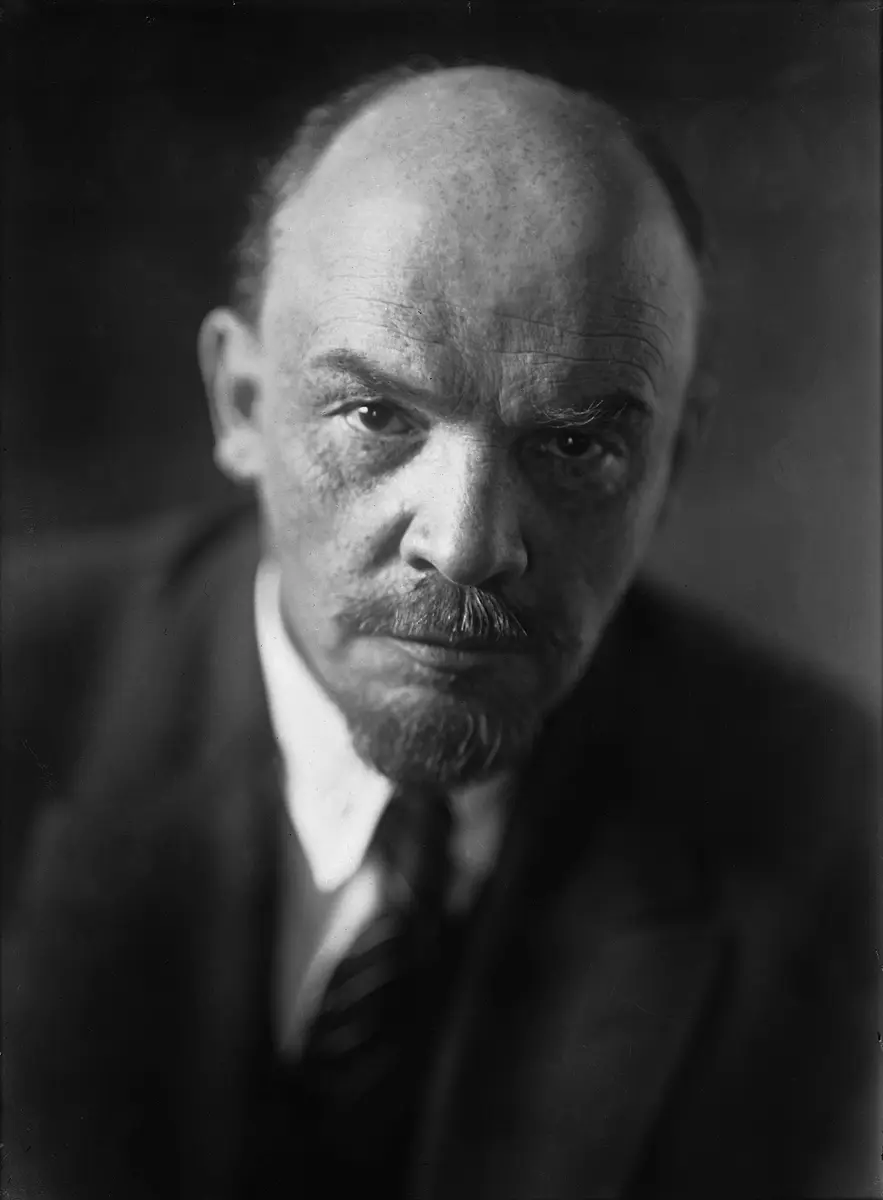
His last decade was one of illness and grief, and the later volumes of Das Kapital stayed unfinished. His wife died in December 1881 and his eldest daughter in January 1883; he died at home in London on 14 March 1883 and was buried in Jenny's grave at Highgate. Engels edited the second and third volumes from his drafts (1885 and 1894) and made his friend's work into a system, 'scientific socialism', that dominated the socialist parties of Europe. Lenin's Bolsheviks made their revolution in his name in Russia in 1917, and after 1945 regimes that called themselves Marxist ruled from Eastern Europe to China, using his words to justify repression and the absolute power of the state, while in Africa, Asia and Latin America his ideas inspired movements of liberation. Still read in sociology, history and economics, his one surviving page of the Manifesto and his own annotated copy of Das Kapital have been on UNESCO's Memory of the World register since 2013.
What happened
- 1818
Born in Trier, in the Prussian Rhineland, in the house now at Brückenstraße 10, the third child of the lawyer Heinrich Marx and his wife Henriette; the family moves out the next autumn.
Trier: the house in the Brückenstraße where he was born in 1818, now the Museum Karl-Marx-Haus- 1835
After the high school in Trier he enrols at the University of Bonn to study law, joins a poets' club, fights a duel and spends a day in jail for being drunk and disorderly.
- 1836
Engaged to Jenny von Westphalen, he moves to the University of Berlin, where Hegel's philosophy rules, and joins the radical Young Hegelians of the 'Doctor Club' around the theologian Bruno Bauer.
- 1841
He takes his doctorate at Jena, a university known for easy requirements, with a thesis on the natural philosophy of Democritus and Epicurus; with Prussia driving the Young Hegelians out of the universities, his hopes of a professorship come to nothing.
- 1842
He becomes editor of the Rheinische Zeitung in Cologne, the liberal paper of a group of Rhineland businessmen; writing on press censorship, the Berlin poor and peasants taking wood from the forests, he trebles its circulation.
Cologne: where he edited the Rheinische Zeitung in 1842–43 and the Neue Rheinische Zeitung in the revolution of 1848–49- 1843
With his paper banned by the Prussian government, he marries Jenny von Westphalen at Kreuznach after a seven-year engagement; in the autumn the couple move to Paris, then the centre of socialist thought.
- 1844
In Paris he co-edits the German-French Yearbooks, where he calls religion 'the opium of the people', becomes a communist and writes his manuscripts on alienated labour. In the summer Friedrich Engels visits him and they find themselves in complete agreement: the start of a partnership of almost forty years.
- 1845
Expelled from France at the request of the German authorities, he moves to Brussels, where Engels joins him; that year he gives up his Prussian nationality, makes his first journey to England with Engels and drafts with him The German Ideology, which finds no publisher.
Brussels: his home in exile from 1845 to 1848, where he and Engels wrote the Communist Manifesto- 1847
The Communist League, a secret society of German craftsmen that he and Engels joined in June, asks them to write its programme; from mid-December to the end of January they work on the Manifesto, and Marx writes the final text.
Brussels: his home in exile from 1845 to 1848, where he and Engels wrote the Communist Manifesto- 1848
The 'Manifesto of the Communist Party' is printed in London, 23 pages in a green cover with no author's name, just as revolution breaks out in Paris on 24 February and spreads across Europe.
About to be expelled from Belgium, he goes to Paris at the invitation of a member of France's new provisional government; as the revolution reaches Germany he returns to the Rhineland.
In Cologne he launches a daily paper, the Neue Rheinische Zeitung, 'Organ of Democracy', and argues in it for an alliance of the workers with the democratic middle class.
Cologne: where he edited the Rheinische Zeitung in 1842–43 and the Neue Rheinische Zeitung in the revolution of 1848–49In Paris the army crushes the workers' rising of the June Days, the first great defeat of the revolutions of 1848, which Marx follows from Cologne in his paper.
- 1849
Tried in Cologne for calling on the people to refuse their taxes after the King of Prussia dissolved the Prussian Assembly, he defends himself, arguing that the crown is making an unlawful counter-revolution; the jury acquits him unanimously and thanks him.
Cologne: where he edited the Rheinische Zeitung in 1842–43 and the Neue Rheinische Zeitung in the revolution of 1848–49His paper begins to print his 'Wage Labour and Capital', an explanation for workers of how wages and profits are made.
Cologne: where he edited the Rheinische Zeitung in 1842–43 and the Neue Rheinische Zeitung in the revolution of 1848–49As the last fighting flares in Dresden and Baden, he is ordered out of Prussia as a foreigner; the final issue of his paper, printed in red, causes a sensation.
Cologne: where he edited the Rheinische Zeitung in 1842–43 and the Neue Rheinische Zeitung in the revolution of 1848–49Expelled once more from Paris, he crosses to London, which will be his home for the rest of his life; Jenny and their three small children follow in September.
- 1850
Without money, the family is evicted and its belongings are seized; in the hungry years that follow in Soho their little son Guido and daughter Franziska die.
- 1851
The family settles in two rooms on the second floor of 28 Dean Street, Soho, until 1856; he becomes the London correspondent of the New York Tribune, which prints close to 500 of his articles by 1862, about a quarter of them written by Engels.
London, 28 Dean Street, Soho: the family's rooms from 1851 to 1856; the British Museum, where he worked, is a kilometre to the north-east - 1852
He publishes The Eighteenth Brumaire of Louis Bonaparte, on how Napoleon's nephew made himself master of France with the support of the peasants, and works for the defence of eleven communists on trial in Cologne.
- 1856
With an inheritance of Jenny's and Engels's help, the family leaves Dean Street for a house in Kentish Town, north London.
- 1859
He publishes A Contribution to the Critique of Political Economy, whose preface sums up his theory of history in a few pages, while the drafts of his great book pile up from years of reading at the British Museum.
- 1864
At a meeting in St Martin's Hall, London, British and French labour leaders found the International Working Men's Association; Marx, elected to its General Council as secretary for Germany, writes its Address and Rules and soon becomes its leading mind.
- 1867
He sails to Hamburg with the finished manuscript of Das Kapital for the publisher Otto Meissner, and is photographed in Hanover shortly after.
The first volume of Das Kapital is printed: 1,000 copies of close to 800 pages. It is met with respect among socialists and silence elsewhere, and takes four years to sell out.
- 1871
After the Paris Commune has been crushed, he hails it in an address to the International, The Civil War in France; his name becomes a byword across Europe for the spirit of revolution.
- 1872
A revised second edition of Das Kapital appears, with a Russian translation and a French edition in instalments; he goes on correcting his own copy of the first edition for later editions.
At The Hague he attends the only congress of the International he ever goes to, has Mikhail Bakunin's anarchists expelled and the General Council moved to New York, where the International fades away.
- 1875
The family moves to 41 Maitland Park Road, his last home; he writes a biting critique of the programme on which his followers and Ferdinand Lassalle's unite at Gotha as the German Social Democratic Party.
- 1881
His wife Jenny dies, leaving him broken, alone and depressed; she is buried at Highgate Cemetery.
Highgate Cemetery, London: his grave; he died nearby, at 41 Maitland Park Road, in 1883- 1882
On a long journey in search of health he spends the spring in Algiers; at the end of April he has his last photograph taken there and sends it to his daughter Jenny, signed 'Old Nick'.
- 1883
His eldest daughter, Jenny Longuet, dies, a blow he does not survive for long.
He dies at home, in his study at 41 Maitland Park Road, aged 64. He is buried in Jenny's grave at Highgate, where Engels, speaking at the graveside, calls him 'before all else a revolutionist'.
Highgate Cemetery, London: his grave; he died nearby, at 41 Maitland Park Road, in 1883