The Russian Revolution
“Two revolutions in 1917: in March the tsar fell, in November Lenin's Bolsheviks took power; after a civil war their Russia became the Soviet Union on 30 December 1922.”
In 1917 Russia had two revolutions. Three years of war had cost the empire millions of men and left its cities short of bread. On 8 March (23 February in Russia's old Julian calendar, which ran thirteen days behind the West's) women in the bread queues of Petrograd, the capital, joined some 130,000 striking workers in the streets. Within four days the garrison refused to fire on the crowds and went over to them. The leaders of the Duma, the parliament, formed a Provisional Government, while workers and soldiers elected a council, or soviet, in the same Tauride Palace. On 15 March Nicholas II abdicated in his train at Pskov, and when his brother refused the crown, three centuries of Romanov rule were over. This was the February Revolution.
For eight months Russia had two powers: a government of liberals, later led by the socialist Aleksandr Kerensky, and the Petrograd Soviet, which the soldiers obeyed. The government kept fighting the war and left land reform and a constitution to a Constituent Assembly still to be elected. In April the Bolshevik leader Lenin came back from Swiss exile, allowed through Germany, and demanded 'all power to the soviets'. A failed summer offensive, the July Days riots in the capital and General Kornilov's failed march on Petrograd in September turned the city towards the Bolsheviks. On the night of 6–7 November (24–25 October) Trotsky's Military Revolutionary Committee took the bridges, stations and telegraph almost without a shot; the Winter Palace fell in the early hours of the 8th, and the Congress of Soviets made Lenin head of a new government. This was the October Revolution.
Holding power was harder than taking it. The new government gave the land to the peasants and asked for peace, but it also created a secret police, the Cheka, and in January 1918 it dispersed the Constituent Assembly after a single sitting because the Bolsheviks had won only a quarter of the vote. In March 1918 the Treaty of Brest-Litovsk took Russia out of the World War at the price of Ukraine, Poland, the Baltic lands and Finland, and the capital moved to Moscow. Then came a civil war between the Reds and the Whites, with British, French, Japanese and American troops on Russian soil. The tsar and his family were shot at Yekaterinburg in July 1918, the Cheka answered resistance with the Red Terror, and the requisitioning of grain helped cause a famine that killed some five million people in 1921–22.
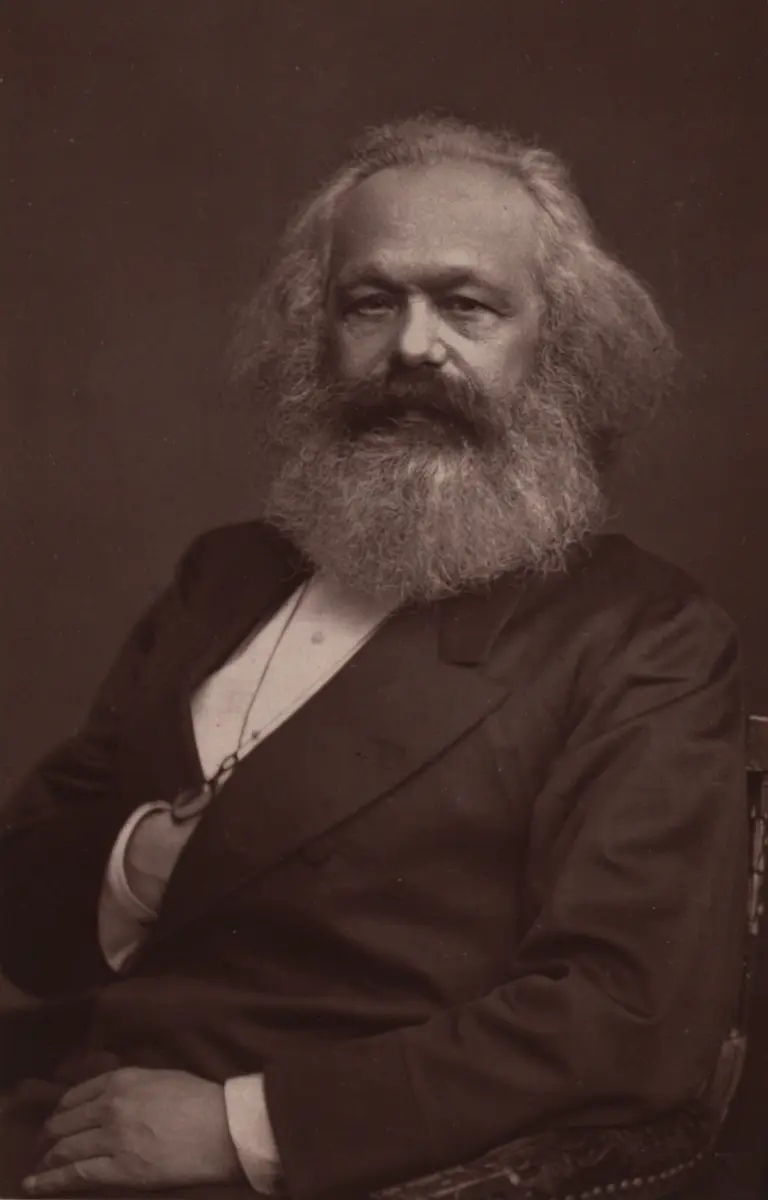
The Red Army won by 1920. When even the sailors of Kronstadt, heroes of 1917, rose against the party in March 1921, Lenin answered with guns and with a retreat in economics, the New Economic Policy. On 30 December 1922 Soviet Russia, Ukraine, Belorussia and Transcaucasia joined in the Union of Soviet Socialist Republics. The first state built on Karl Marx's ideas was a one-party dictatorship that ruled in the name of the soviets; its rivalry with the West shaped the twentieth century until the Soviet Union fell in 1991. Whether October was a revolution of the masses or a coup by a disciplined party is still argued, and the words Bolshevik, soviet and commissar entered every language.
What happened
- 1917
On International Women's Day, 23 February by Russia's old calendar, women from Petrograd's bread queues join some 130,000 striking workers in the streets: the February Revolution begins.
With nearly every factory in the capital shut and crowds calling 'Down with the autocracy!' and 'Down with the war!', Nicholas II orders the troops to fire; the police shoot, but more and more soldiers refuse.
The Volhynian regiment mutinies and the garrison goes over to the crowds, seizing the arsenals; soldiers with red flags lead the marchers down the Nevsky Prospekt.
In the Tauride Palace the Duma's leaders form a Provisional Committee, and that evening about 250 workers, soldiers and socialists found the Petrograd Soviet, with the Menshevik Chkheidze as chairman and Kerensky as a vice-chairman: dual power is born.
The Tauride Palace: the Duma's seat, where the Petrograd Soviet was born on 12 March 1917, Order No. 1 was issued and the Constituent Assembly held its only sitting on 18 January 1918The Soviet's Order No. 1 puts the garrison's weapons under elected soldiers' committees and tells the army to obey the government only where the Soviet agrees.
The Tauride Palace: the Duma's seat, where the Petrograd Soviet was born on 12 March 1917, Order No. 1 was issued and the Constituent Assembly held its only sitting on 18 January 1918A Provisional Government under Prince Lvov takes office, and at Pskov Nicholas II signs his abdication in his train, for himself and his son, in favour of his brother Michael, who refuses the crown the next day: three hundred years of Romanov rule are over.
Pskov station: Nicholas II signed his abdication in the imperial train here on 15 March 1917The former tsar, now 'Nicholas Romanov' to his guards, rejoins his wife and children under arrest at the Alexander Palace in Tsarskoye Selo.
The Alexander Palace, Tsarskoye Selo: the imperial family's home, where they were held under guard from March to August 1917Petrograd buries the victims of the February days on the Field of Mars in a vast civic funeral under red flags.
The Field of Mars: the victims of the February days were buried here on 5 April 1917- 11:10 p.m.
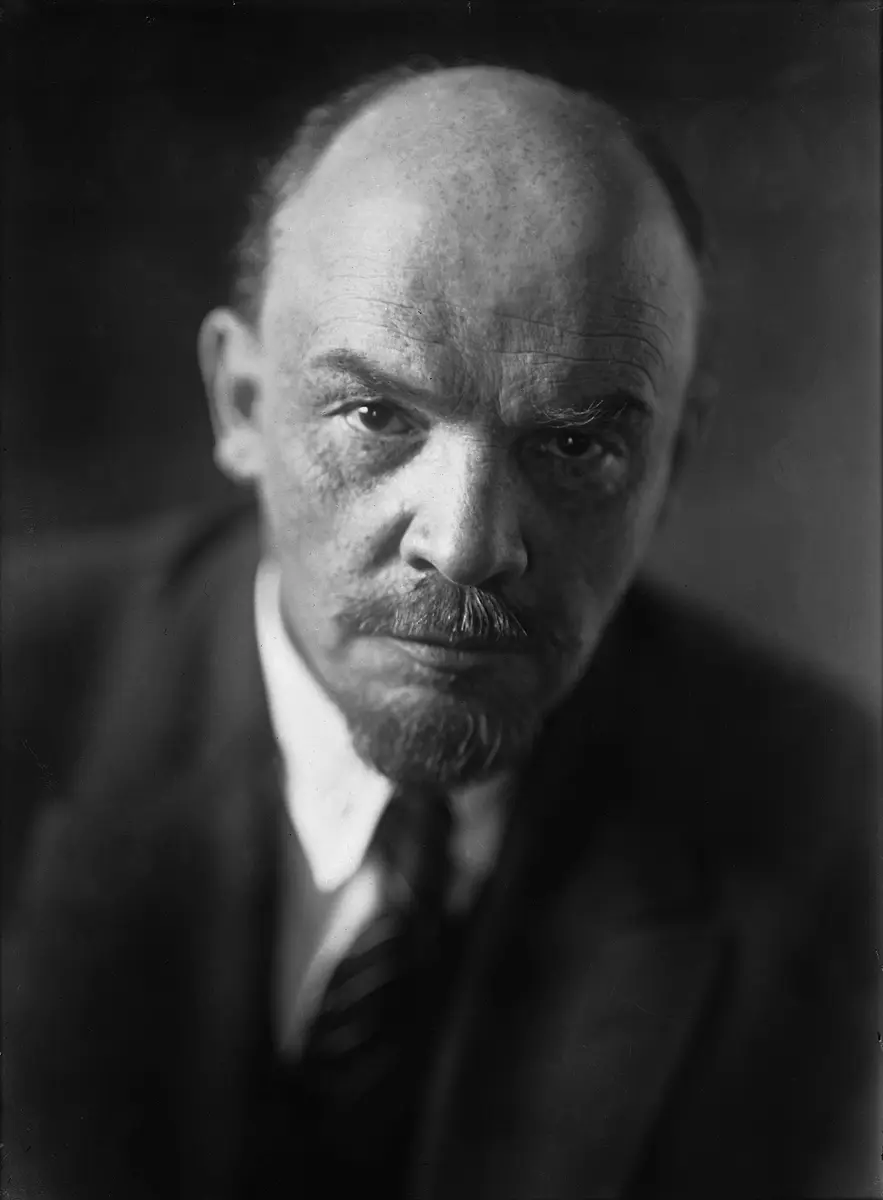
Lenin, let through Germany from Swiss exile, arrives at the Finland Station and at once rejects the new government: 'all power to the soviets', the programme of his April Theses.
The Finland Station: Lenin's train from exile arrived here late on 16 April 1917 After street protests against Milyukov's promise to fight on for Constantinople, a coalition with six socialist ministers takes office, with Kerensky as minister of war.
Kerensky's offensive opens in Galicia; after small gains it stalls, and a German counter-attack two weeks later drives the Russian army back in confusion.
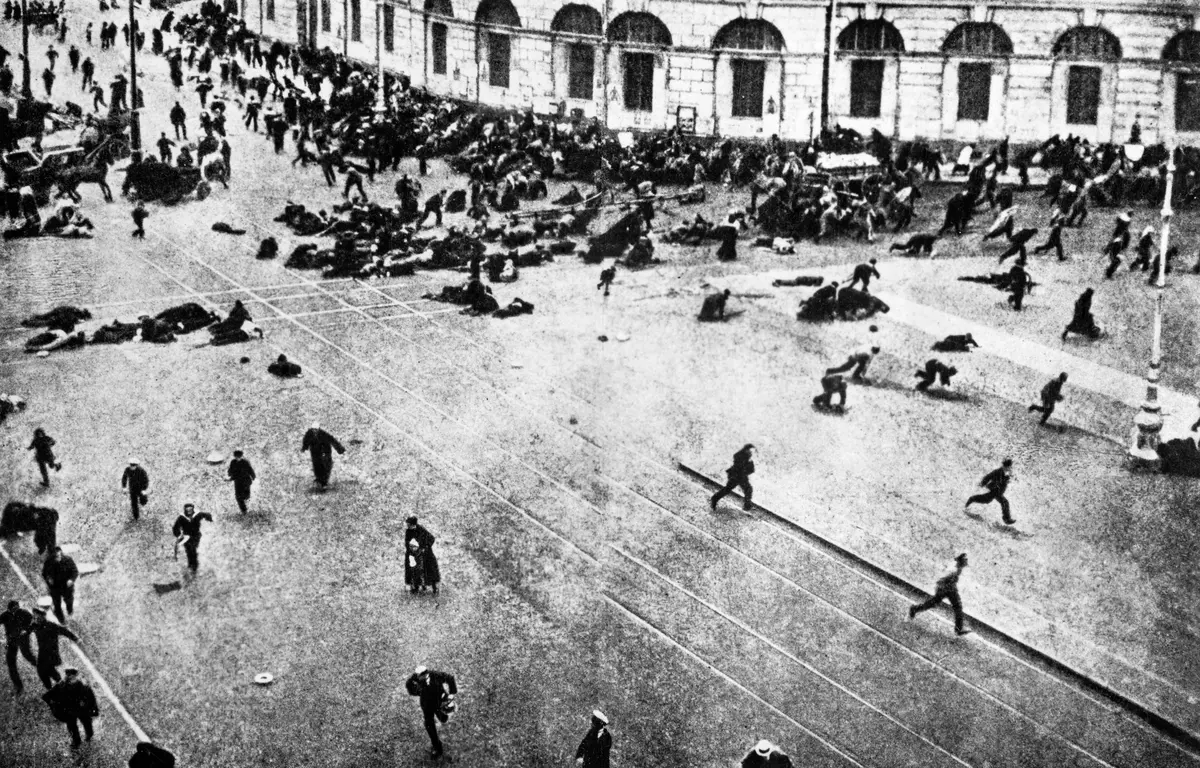
The July Days: armed workers, soldiers and Kronstadt sailors march on the Tauride Palace to make the Soviet take power; troops fire on the crowds on the Nevsky Prospekt and some 400 are injured, but the Soviet refuses and the rising fades.
Kerensky becomes prime minister; accused of being a German agent, Lenin hides in Finland, while Trotsky and other Bolsheviks are jailed.
For their safety the government sends the imperial family east to Tobolsk in Siberia.
Kerensky dismisses his commander in chief, General Kornilov, who sends cavalry against the capital; Red Guards, soldiers and railwaymen stop it, its general shoots himself, and the Bolsheviks are the winners.
Trotsky, freed from prison, becomes chairman of the Petrograd Soviet and sets up its Military Revolutionary Committee; the Bolsheviks now hold majorities in the soviets of both capitals.
Back in the city in disguise, Lenin wins a 10–2 vote of the Bolshevik Central Committee for an armed rising; Zinoviev and Kamenev vote against.
After Kerensky closes two Bolshevik papers, the Military Revolutionary Committee's Red Guards and soldiers take the bridges, stations and telegraph through the night; the cruiser Aurora keeps the Nikolaevsky Bridge open, and Lenin slips into Smolny.
The Nikolaevsky Bridge (today the Blagoveshchensky): the cruiser Aurora lay here on the night of 6–7 November 1917, kept the bridge open and fired the blank shotThe committee declares the Provisional Government overthrown; that evening the Aurora fires its blank shot and the Second Congress of Soviets opens at Smolny, where the Mensheviks and moderate SRs walk out and Trotsky consigns them to 'the rubbish heap of history'.
The Smolny Institute: the Petrograd Soviet's and the Bolsheviks' headquarters, where the Second Congress of Soviets made Lenin head of governmentIn the early hours Red Guards take the Winter Palace and arrest the ministers; that evening the Congress decrees peace and the land to the peasants and names a Council of People's Commissars, with Lenin as chairman, Trotsky for foreign affairs and Stalin for the nationalities.
The Winter Palace: seat of the Provisional Government, taken in the early hours of 8 November 1917Russia elects its Constituent Assembly: the SRs win about half of 42 million votes, the Bolsheviks about a quarter.
Soviet Russia signs an armistice with the Central Powers at Brest-Litovsk; peace talks open there a week later.
Brest-Litovsk: the fortress where Soviet Russia signed its peace with the Central Powers on 3 March 1918The government founds the Cheka, the Extraordinary Commission against counter-revolution, under Feliks Dzerzhinsky: the first Soviet secret police.
- 1918
The Constituent Assembly meets in the Tauride Palace while its supporters march in the streets; after one long sitting the guards send the deputies home, and the next day Red Guards bar the doors for good.
The Tauride Palace: the Duma's seat, where the Petrograd Soviet was born on 12 March 1917, Order No. 1 was issued and the Constituent Assembly held its only sitting on 18 January 1918Sovnarkom decrees a Workers' and Peasants' Red Army; from March Trotsky builds it, with former tsarist officers watched by commissars.
Russia adopts the Western calendar: the day after 31 January is 14 February.
After Trotsky's 'neither war nor peace' and a new German offensive, Soviet Russia signs the Treaty of Brest-Litovsk, giving up Ukraine, its Polish and Baltic lands and Finland.
Brest-Litovsk: the fortress where Soviet Russia signed its peace with the Central Powers on 3 March 1918With the German army within reach of Petrograd, the government moves to Moscow, and Lenin, Trotsky and the other leaders settle in the Kremlin.
The Moscow Kremlin: seat of the Soviet government from March 1918Trotsky orders the Czechoslovak Legion, on its way out through Siberia, to give up its arms; it refuses and seizes the Trans-Siberian Railway, and the Civil War begins in earnest.
In the night of 16–17 July, as the Whites approach Yekaterinburg, the local Bolsheviks shoot Nicholas II, Alexandra, their five children and four servants in the cellar of the Ipatiev House.
The Ipatiev House, Yekaterinburg: Nicholas II, his wife, their five children and four servants were shot in its cellar on the night of 16–17 July 1918; the house was demolished in 1977 and the Church on the Blood stands on its siteLenin orders the communists of Penza to hang at least a hundred kulaks in public and seize their grain, as an example.
After the murder of the Petrograd Cheka chief Uritsky and Fanny Kaplan's shots at Lenin, the government proclaims the Red Terror: hostages are shot, over 500 in Petrograd alone.
Admiral Kolchak makes himself 'Supreme Ruler' of the Whites at Omsk in Siberia, a week after the World War ends in the west.
- 1919
The Civil War's decisive year: Kolchak advances from Siberia, Denikin marches on Moscow from the south and Yudenich reaches the edge of Petrograd in October, but a Red Army of nearly three million drives all three back.
- 1920
The last White army, under General Wrangel, leaves the Crimea by sea; the Civil War is won.
- 1921
The sailors of Kronstadt demand 'soviets without Bolsheviks' and free elections; Trotsky and Tukhachevsky storm the fortress across the ice, and by 18 March the rising is crushed, while the Tenth Party Congress replaces grain requisitioning with a tax in kind, the New Economic Policy.
Kronstadt: the naval base whose sailors rose against the Communists in March 1921Famine grips the Volga after two failed harvests; Gorky appeals abroad, Hoover's American Relief Administration feeds millions, and some five million people die by 1922.
- 1922
Stalin is made General Secretary of the Communist Party, a post that looks administrative.
Lenin suffers the first of the three strokes that will end his rule.
In Moscow the First Congress of Soviets of the USSR approves the Declaration and Treaty of Union: Soviet Russia, Ukraine, Belorussia and Transcaucasia form the Union of Soviet Socialist Republics.