James Watt
“The Scottish instrument maker whose separate condenser (1765), and the engines he built with Matthew Boulton, made steam the power of the Industrial Revolution; the watt is named after him.”
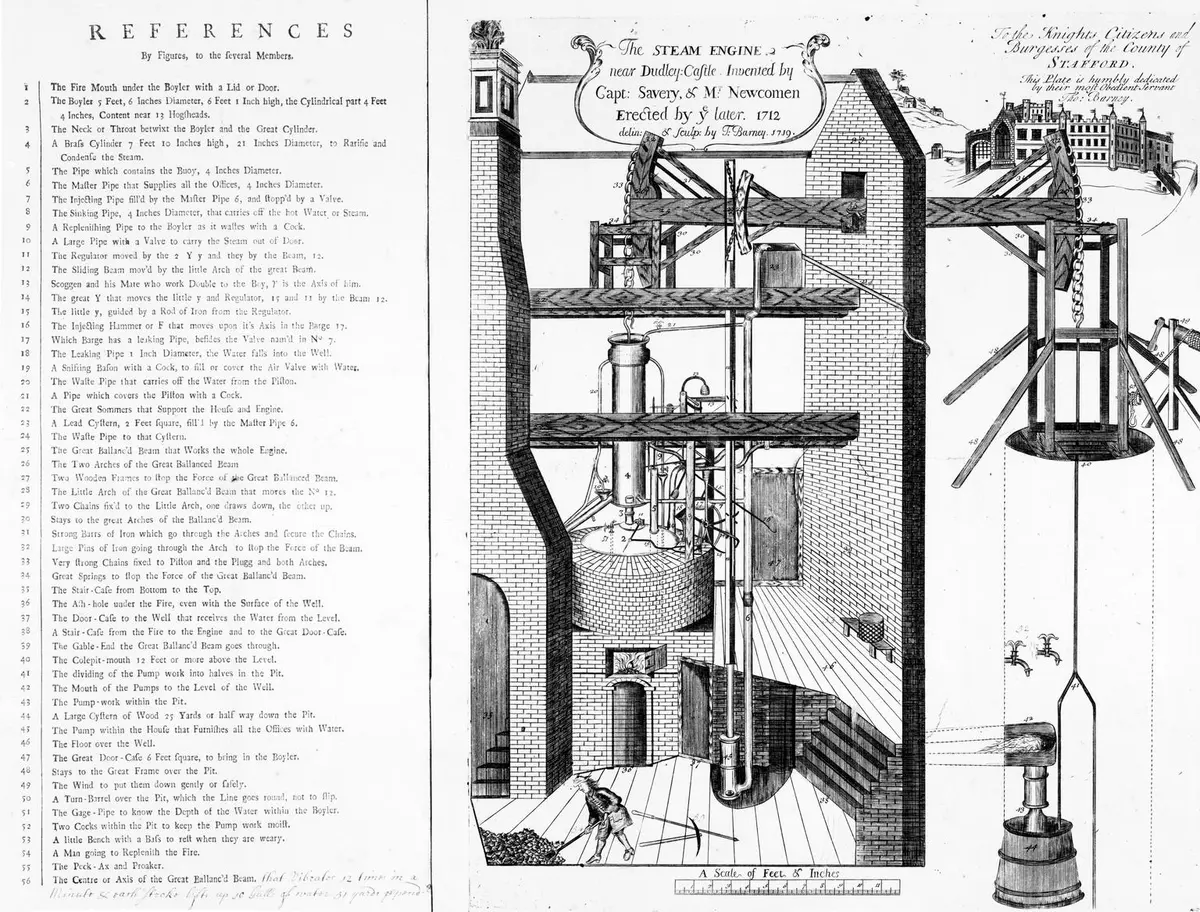
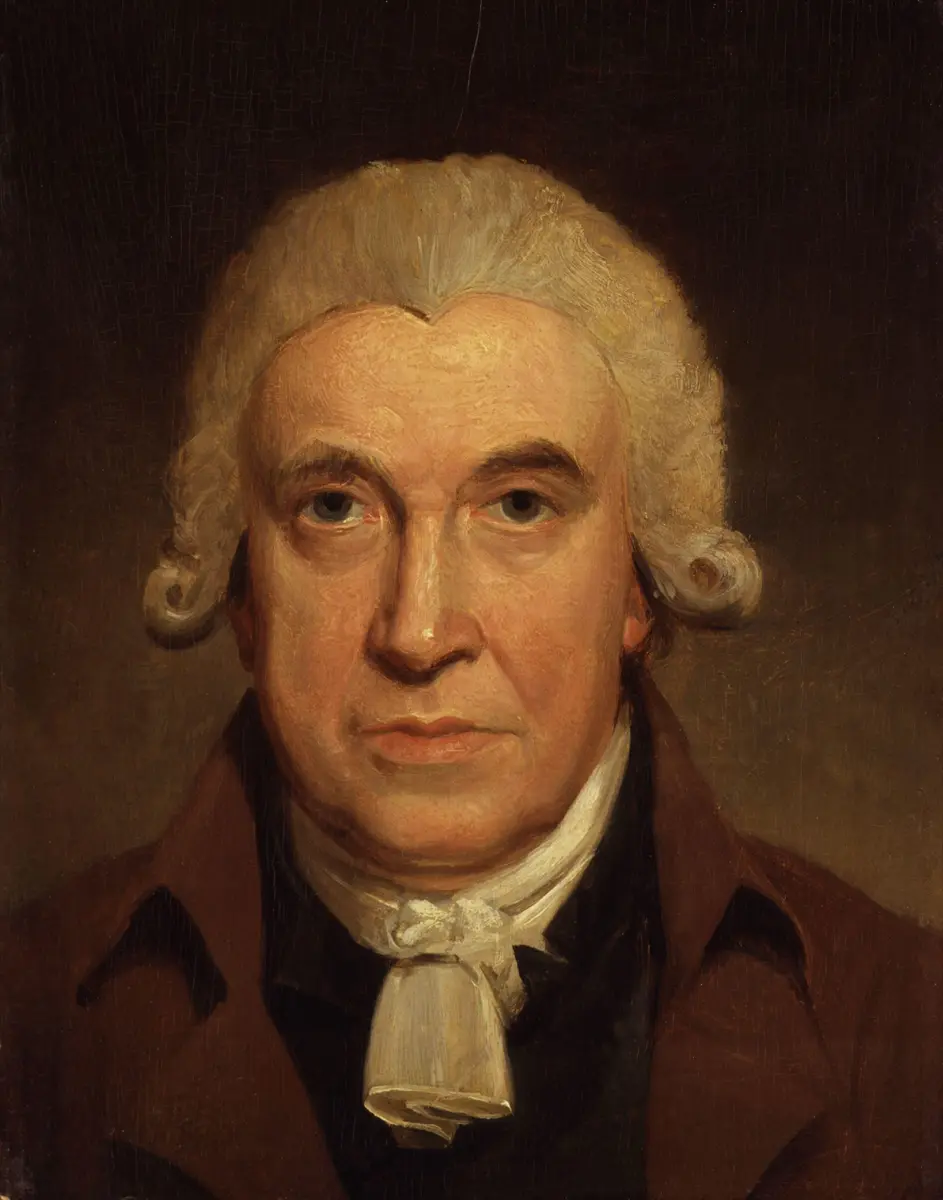
James Watt was the Scottish instrument maker and engineer whose improvements turned the steam engine from a slow, coal-hungry mine pump into the power source of the Industrial Revolution. He did not invent the steam engine: Thomas Newcomen's engines had pumped water out of mines since the 1710s. Watt saw why they wasted so much fuel, and in 1765 found the cure, the separate condenser, which cut the coal an engine burned to a third or less. With his partner Matthew Boulton he then made the engine turn wheels, so that it could drive mills and factories anywhere, not only beside a river. The unit of power, the watt, carries his name.
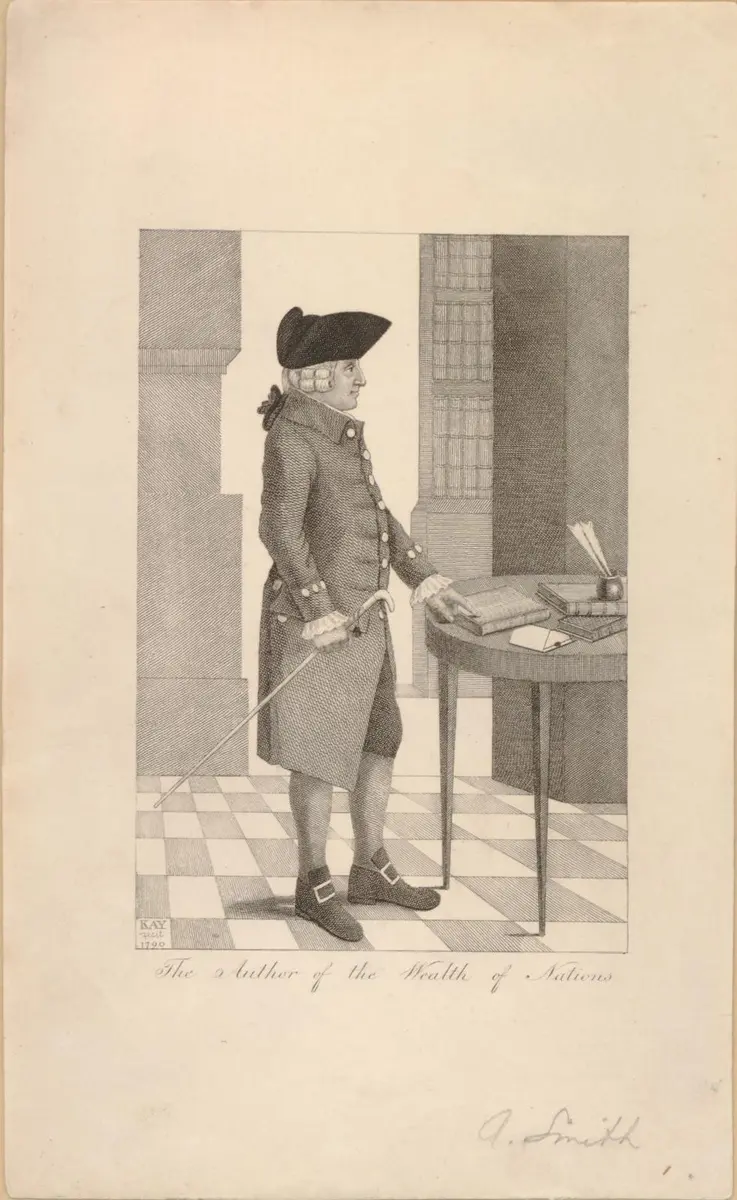
He was born in Greenock, a port on the Clyde, on 19 January 1736, the son of a builder of ships and houses who was also the town's treasurer. A delicate boy, he learned as much in his father's workshop as at school. At seventeen he decided to become a maker of mathematical instruments, trained for a year in London in 1755 and 1756, and found work at the University of Glasgow, which took him into its buildings because the city's craft guild would not let a man without a full apprenticeship open a shop. There, in a university where Adam Smith was then teaching, he made instruments, befriended the chemist Joseph Black, whose idea of latent heat helped him understand steam, and in the winter of 1763 to 1764 was asked to make the college's model Newcomen engine work. It barely ran: each stroke cooled the cylinder with cold water and the next stroke wasted steam heating it again. On a Sunday walk across Glasgow Green in 1765 he saw the answer: condense the steam in a separate, cold vessel and keep the cylinder hot.
Turning the idea into a full-size engine took ten years. Short of money, Watt took the coal and iron master John Roebuck as a partner, built a trial engine at Roebuck's house at Kinneil, and on 5 January 1769 received a patent for 'a new invented method of lessening the consumption of steam and fuel in fire engines'. To feed his family he worked as a surveyor of canals and rivers. In 1773 his wife Margaret died and Roebuck went bankrupt; Matthew Boulton, the Birmingham manufacturer, took over Roebuck's share, and in 1774 Watt moved to Birmingham. In 1775 Parliament extended the patent to 1800 and the firm of Boulton and Watt began. Its first two engines started work in 1776, one pumping a colliery near Tipton, one blowing the iron furnaces of John Wilkinson, whose new way of boring cannon gave Watt cylinders accurate enough at last. Mine owners in Cornwall bought engines and paid a royalty of a third of the coal they saved.
In the 1780s Watt made the engine a general machine. The sun-and-planet gear (patented 1781) turned the piston's up-and-down push into rotation; the double-acting engine (1782) let steam push the piston both ways; the parallel motion (1784), the invention he was proudest of, guided the piston rod in a straight line; and the centrifugal governor (1788) kept the speed steady. Boulton and Watt engines went into cotton, flour and paper mills, ironworks, breweries and waterworks; by 1800 the firm had built 451, of them 268 rotative. Watt also patented a press for copying letters (1780), used in offices for more than a century, and was a member of the Lunar Society, Birmingham's circle of scientists and manufacturers. By 1790 his patents had made him rich.
He retired in 1800, when the patent and the partnership ran out, and handed the business to his and Boulton's sons. At Heathfield Hall, the house he had built at Handsworth near Birmingham, he spent his last years in a garret workshop, inventing machines for copying sculpture. He died there on 25 August 1819, aged 83, and was buried in Handsworth parish church. He became the first engineer honoured with a statue in Westminster Abbey; his workshop, left locked after his death, was moved to the Science Museum in London in 1924; and in 1960 the watt became the unit of power in the International System of Units.
What happened
- 1736
James Watt is born in Greenock on the Clyde, son of James Watt, a builder of ships and houses and the town's treasurer, and Agnes Muirhead. A delicate child, he is taught at home and then at the grammar school, and learns most in his father's workshops.
Greenock, on the Firth of Clyde: born here on 19 January 1736, the son of a local shipbuilder and merchant- 1755
Having decided at seventeen to become a maker of mathematical instruments, he goes to London and squeezes into one year, with John Morgan of Cornhill, a training that usually takes three or four. His health breaks down and he returns to Scotland.
- 1757
Glasgow's guild of hammermen will not let a man without a full apprenticeship open a shop, but the university, outside its reach, takes him in: after putting in order the astronomical instruments Alexander Macfarlane left it, he sets up a workshop in the Old College as 'Mathematical Instrument Maker to the University'.
- 1764
In the winter of 1763 to 1764 John Anderson, professor of natural philosophy, asks him to make the class's model Newcomen engine work. Watt finds that most of the steam is wasted heating a cylinder that cold water has just chilled. That year he marries his cousin Margaret (Peggy) Miller.
- 1765
Walking on Glasgow Green on a Sunday afternoon, he sees the answer: condense the steam in a separate vessel kept cold, and the cylinder can stay as hot as the steam that enters it. He tests it at once with small brass models, two of which survive in the Science Museum; the experiments leave him in debt, and his friend Joseph Black, whose theory of latent heat underlies his reasoning, lends him money.
Glasgow Green: on a Sunday walk here in 1765 the idea of the separate condenser came to him, as he later told it; a boulder marks the spot- 1766
To earn a living he becomes a land surveyor, and for eight years marks out canals and harbours across Scotland: the Forth and Clyde route in 1767, then the Monkland Canal, Strathmore, the lines of the later Crinan and Caledonian canals, and the deepening of the Clyde.
- 1768
John Roebuck, founder of the Carron ironworks, takes two-thirds of the invention in return for paying its costs, and Watt builds a trial engine at Kinneil, Roebuck's house near Bo'ness. The same year, on a visit to Birmingham, he meets Matthew Boulton.
- 1769
He receives his patent for 'a new invented method of lessening the consumption of steam and fuel in fire engines', covering the separate condenser, the steam jacket and the closed cylinder.
- 1773
His wife Peggy dies in childbirth while he is surveying in the Highlands, and a Scottish banking crisis ruins Roebuck. Boulton takes over Roebuck's share of the patent. 'I am heartsick of this accursed country,' Watt writes.
- 1774
He moves to Birmingham, bringing the parts of the Kinneil engine, and sets it up again at Boulton's Soho works.
- 1775
An act of Parliament extends his patent to 1800, and Watt and Boulton go into partnership as Boulton and Watt, a partnership that lasts twenty-five years. John Wilkinson's new way of boring cylinders gives them cylinders true to the thickness of a thin sixpence.
Soho Manufactory, Handsworth, near Birmingham: Matthew Boulton's works, home of the firm of Boulton and Watt from 1775 until Watt retired in 1800 - 1776
The first Boulton and Watt engine is set to work, with ceremony, pumping water from Bloomfield Colliery near Tipton. A second, built at Wilkinson's works at Willey near Broseley, soon blows his blast furnace, the first steam engine used for anything but raising water. Later that year Watt marries again, to Ann MacGregor; they have a son, Gregory, and a daughter.
- 1777
From now until 1781 he spends long months in Cornwall setting up pumping engines for the copper and tin mines, bargaining hard over the royalty: a third of the coal each engine saves.
- 1779
A Boulton and Watt engine starts pumping water back up the locks to the summit of the Birmingham Canal at Smethwick. It still runs today, the oldest working steam engine in the world.
- 1780
He patents a way of copying letters by pressing damp thin paper onto a page written in special ink, and sets up James Watt & Co. to sell the presses, which offices use for more than a century.
Soho Manufactory, Handsworth, near Birmingham: Matthew Boulton's works, home of the firm of Boulton and Watt from 1775 until Watt retired in 1800 - 1781
At Boulton's urging he patents five ways of turning the engine's up-and-down stroke into rotation; the crank is barred by another man's patent, so the firm uses his sun-and-planet gear, whose model, Watt wrote, was built by his engine erector William Murdoch.
- 1782
He patents the double-acting engine, in which steam pushes the piston both ways, and the expansive use of steam, cutting off the supply part-way through the stroke.
- 1784
'I have started a new hare,' he writes to Boulton: the parallel motion, a set of linked rods that guides the piston rod straight up and down, which he calls one of the most ingenious simple pieces of mechanism he has contrived. He is elected to the Royal Society of Edinburgh.
- 1785
He and Boulton are elected Fellows of the Royal Society of London. Watt is by now one of the Lunar Society, the Birmingham friends of science and industry who meet at full moon.
- 1788
At Boulton's suggestion he fits the centrifugal governor, spinning balls that close the steam valve when the engine runs too fast. The 'Lap' engine built that year for the Soho Manufactory is the first to have one.
Soho Manufactory, Handsworth, near Birmingham: Matthew Boulton's works, home of the firm of Boulton and Watt from 1775 until Watt retired in 1800 - 1790
Rich from £76,000 in royalties earned in eleven years, he moves into Heathfield, the house he has built at Handsworth, and adds a pressure gauge to the engine.
Heathfield Hall, Handsworth: the house he built and lived in from 1790, with his garret workshop; he died here on 25 August 1819 - 1794
Looking ahead to 1800, when the patent and the partnership expire, he and Boulton set up a new firm with their sons, Boulton, Watt & Sons, which builds the Soho Foundry to make whole engines.
- 1799
In the last of the lawsuits against rival engine builders, the Court of King's Bench unanimously upholds his patent against Jonathan Hornblower, and the firm can claim its arrears of royalties.
- 1800
His patent and the partnership end, and he retires, leaving the business to his son James and Boulton's son Matthew Robinson Boulton. The firm has built 451 engines, 268 of them rotative.
Soho Manufactory, Handsworth, near Birmingham: Matthew Boulton's works, home of the firm of Boulton and Watt from 1775 until Watt retired in 1800 - 1802
With the Peace of Amiens he travels with his wife to France and Germany.
- 1804
His son Gregory dies. In the garret workshop at Heathfield Watt works for years on machines that copy busts and figures, reduced or full size, and gives the copies to friends.
Heathfield Hall, Handsworth: the house he built and lived in from 1790, with his garret workshop; he died here on 25 August 1819 - 1806
The University of Glasgow, where he had been its instrument maker, makes him a Doctor of Laws.
- 1814
The French Academy of Sciences elects him a foreign associate. He declines a baronetcy.
- 1819
He dies at Heathfield, aged 83, and is buried at St Mary's, the parish church of Handsworth, where Boulton also lies. His workshop is locked and left as it was for a century.
Heathfield Hall, Handsworth: the house he built and lived in from 1790, with his garret workshop; he died here on 25 August 1819