Rome legalizes Christianity
“Galerius in 311 and Constantine and Licinius in 313 ended the persecution of Christians and granted freedom of worship; by 380 Christianity was the empire's official faith.”
For almost three hundred years Christianity had no legal standing in the Roman Empire: Christians were left alone or hunted down as each emperor chose. On 23 February 303 the emperor Diocletian, urged on by his junior colleague Galerius, began the last and greatest persecution at his capital, Nicomedia in Asia Minor. Churches were pulled down, scriptures burned, and Christians lost their rank and their rights at law; many were tortured and killed. It did not work. On 30 April 311 Galerius, dying of a painful illness, admitted as much in an edict that let Christians practise their religion and hold their meetings again, provided they prayed for the emperor. On 28 October 312 Constantine defeated his rival Maxentius at the Milvian Bridge outside Rome, after marking his soldiers' shields with a Christian sign, and in February 313 he met the eastern emperor Licinius at Milan. They agreed that Christians, and everyone else, should be free to follow the religion of their choice, and that the property taken from the churches should be handed back at once. Licinius had the agreement posted at Nicomedia on 13 June 313, ten years and about four months after the first church there had been destroyed.
Why it happened is still argued. The persecution had plainly failed: Galerius's own edict says that most Christians held firm. Constantine, who had protected the Christians in his western lands since he came to power in 306, became convinced that the Christian God had given him his victory. Lactantius, a Christian teacher writing a few years later, says a dream told him to put the sign of Christ on his soldiers' shields; the church historian Eusebius wrote after the emperor's death that Constantine had seen a cross of light in the midday sky with the words 'by this, conquer', and had sworn to him that it was true. Historians such as Paul Freedman at Yale see a Roman emperor treating the Christian God much as earlier emperors had treated the Unconquered Sun, as a divine companion who brings victory: Constantine's coins went on showing the Sun for years, and he was baptised only on his deathbed. The 'Edict of Milan' is a later name. What survives is a letter of Licinius to his provincial governors, copied in Latin by Lactantius and in Greek by Eusebius, and it gives freedom of worship to all religions, not to Christianity alone.
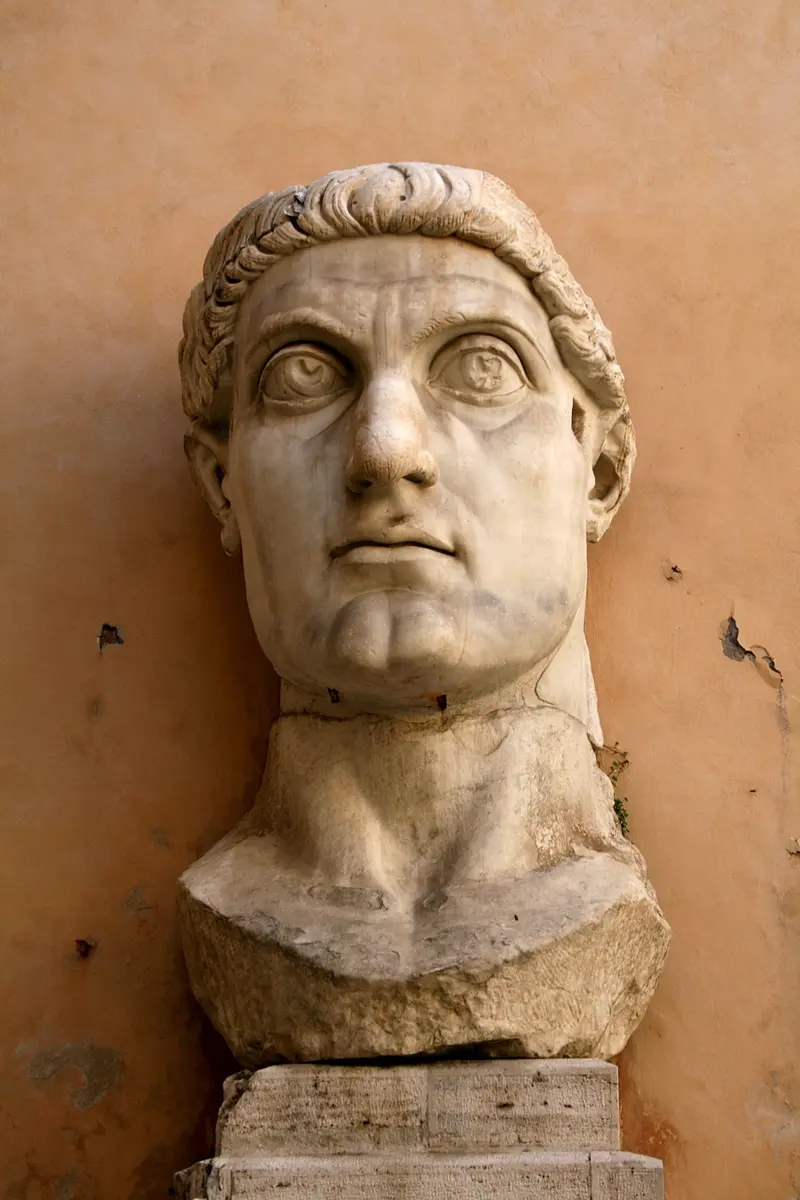
Constantine went far beyond toleration. He gave the churches money and land, freed their clergy from public duties, handed the bishop of Rome the imperial estate at the Lateran, and built great churches there, over the tomb of St Peter and in Jerusalem. In 321 he made Sunday a day of rest. In 325 he called bishops from across the empire to Nicaea, where they condemned the teaching of the priest Arius, that the Son was in some way below the Father, and agreed on a creed. After defeating Licinius in 324 he built a new capital on the Bosporus, Constantinople, dedicated in 330, and in May 337 he was baptised near Nicomedia, days before his death. His nephew Julian tried to bring back the old gods but was killed in 363, less than two years into his sole reign. Then, on 28 February 380, the emperor Theodosius, living at Thessalonica, ordered all the peoples of the empire to hold the faith of Nicaea: only its followers could call themselves Catholic Christians, and all others were branded heretics. In 391 and 392 he went further and outlawed the old pagan cults.
In less than eighty years a persecuted minority had become the religion of the state. Freedman estimates that perhaps half the empire's people were Christian when Constantine died in 337, and nine in ten, at least in name, by the 390s. The turn made Christianity the faith of Europe and of the Byzantine Empire that grew from Constantine's new capital, bound church and state together for centuries, made emperors the callers and arbiters of church councils, and fixed the creed of Nicaea as the measure of Christian orthodoxy. It also showed how quickly the persecuted could become persecutors: the freedom promised in 313, for each person to worship as he pleased, lasted less than eighty years for those who kept to the old gods.
What happened
- 303
At first light on the feast of the god Terminus, the praetorian prefect and his officers force the doors of the church at Nicomedia, Diocletian's capital, burn the scriptures and pull the building down. The next day an edict, which Galerius had pressed on Diocletian all winter, strips Christians of their rank and their rights at law.
Nicomedia (İzmit): Diocletian's capital, where the persecution began on 23 February 303, where Galerius's edict of 311 and Licinius's letter of 313 were published, and near which Constantine was baptised and died in 337- 306
On his father's death Constantine is proclaimed emperor by the soldiers in Britain. His first care in his lands, Lactantius writes, is to give the Christians back their worship.
- 311
Dying of a long and painful illness, Galerius has an edict published at Nicomedia that ends the persecution: since most Christians have held firm, they may be Christians again and hold their meetings, as long as they pray for the emperor and the state. He dies within days.
Nicomedia (İzmit): Diocletian's capital, where the persecution began on 23 February 303, where Galerius's edict of 311 and Licinius's letter of 313 were published, and near which Constantine was baptised and died in 337- 312
On the anniversary of his reign Maxentius rides out to meet Constantine at the Milvian Bridge and is driven into the Tiber. Lactantius says a dream had told Constantine to mark his soldiers' shields with the sign of Christ; Eusebius later tells of a cross of light in the midday sky with the words 'by this, conquer'.
The Milvian Bridge over the Tiber north of Rome, where Constantine defeated Maxentius on 28 October 312- 313
In the winter after his victory Constantine orders the churches of Africa to be given back their property, frees their clergy from public duties and sends money to the bishop of Carthage; in Rome he gives the bishop the imperial estate at the Lateran, where the city's cathedral rises.
The Lateran in Rome, the imperial estate Constantine gave to the bishop of Rome, with the cathedral of St John LateranConstantine and the eastern emperor Licinius meet at Milan, where Licinius marries Constantine's sister Constantia. They agree that Christians and everyone else shall be free to follow the religion each prefers, and that the churches' confiscated property shall be returned.
Milan (Mediolanum), where Constantine and Licinius met in February 313 and agreed on freedom of worshipLicinius defeats his eastern rival Maximinus Daia, who had renewed the persecution in his lands, on the Campus Serenus near Adrianople in Thrace.
At Nicomedia Licinius has the Milan agreement posted as a letter to the governor of the province: Christians and all others may worship freely, and their meeting places and church property are to be returned at once without payment. Lactantius counts ten years and about four months from the destruction of the church to its restoration.
Nicomedia (İzmit): Diocletian's capital, where the persecution began on 23 February 303, where Galerius's edict of 311 and Licinius's letter of 313 were published, and near which Constantine was baptised and died in 337- 315
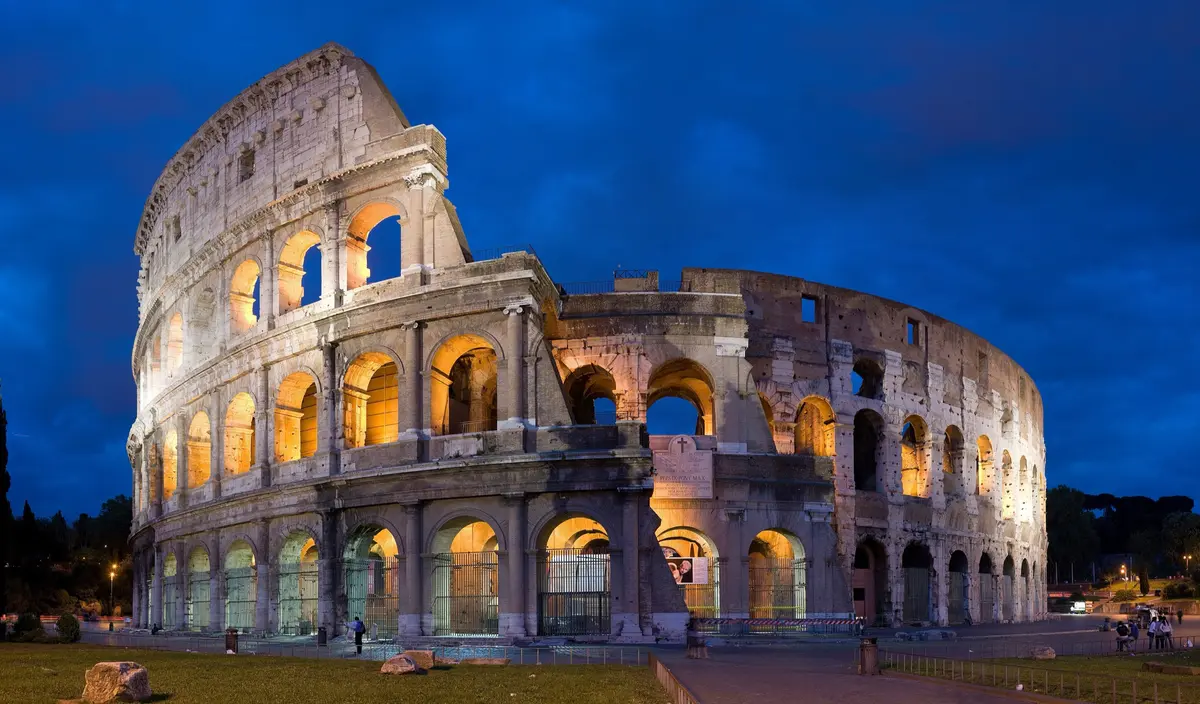
The Senate's arch beside the Colosseum, honouring Constantine's victory over Maxentius, is finished for his tenth year in power.
The Arch of Constantine beside the Colosseum, set up by the Senate for the victory of 312 and finished in 315 or 316 - 321
A law of Constantine makes Sunday, 'the venerable day of the Sun', a day of rest.
- 324
Constantine defeats Licinius, who had turned against the Christians in his last years, at Chrysopolis across the Bosporus and becomes sole ruler of the empire; Licinius is sent into exile at Thessalonica and put to death the next year.
- 325
The first council of the whole church opens at Nicaea, called by Constantine, who attends it in person. By its close on 19 June the bishops have condemned the teaching of the priest Arius, that the Son is in some way below the Father, and agreed on a creed.
Nicaea (İznik), where the first council of the whole church met from 20 May to 19 June 325- 330
Constantine dedicates Constantinople, the old Greek city of Byzantium rebuilt on the Bosporus as the empire's new residence; a porphyry column with his statue stands in its forum.
Constantinople: the Column of Constantine, set up for the dedication of the new capital in 330- 337
Taken ill, Constantine is baptised in the suburbs of Nicomedia by its bishop, Eusebius, during the feast of Pentecost, and dies at about midday on its last day.
Nicomedia (İzmit): Diocletian's capital, where the persecution began on 23 February 303, where Galerius's edict of 311 and Licinius's letter of 313 were published, and near which Constantine was baptised and died in 337- 361
Constantine's nephew Julian, sole emperor after the death of Constantius II, enters Constantinople, openly confesses the old religion and proclaims tolerance for all cults; in June 362 his edict on teaching is aimed at Christian teachers.
Constantinople: the Column of Constantine, set up for the dedication of the new capital in 330 - 363
Julian is killed fighting the Persians in Mesopotamia, less than two years into his sole reign, and his attempt to bring back the old gods ends with him.
- 380
At Thessalonica Theodosius issues an edict that all the peoples of the empire shall hold the faith of Nicaea, the Father, Son and Holy Spirit in equal majesty; only its followers may call themselves Catholic Christians, and all others are branded heretics.
Thessalonica (Thessaloniki): Galerius's capital, with his arch and the Rotunda, and the city where Theodosius issued his edict of 28 February 380