Jesus
“The Jewish preacher from Galilee crucified by the Romans around the year 30, whom his followers proclaimed the Messiah risen from the dead: the founder of Christianity.”
Jesus of Nazareth was a Jewish preacher and healer from Galilee who was crucified by the Roman authorities in Jerusalem around the year 30, and whom his followers proclaimed the Messiah, in Greek the Christos, risen from the dead. The movement that grew from that claim became Christianity, the religion of the Roman Empire within four centuries and one of the great religions of the world. Christians regard him as God made man; Muslims revere him as a prophet, ʿIsā; historians treat him as one of the best-attested lives of his place and time, known almost entirely through the writings of people who believed in him.
He was born to Joseph and Mary, sometime between 6 BCE and the death of Herod the Great in 4 BCE. Matthew and Luke place his birth in Bethlehem, the town of King David, but tell two stories that cannot be fitted together, and he grew up a Galilean in Nazareth, a village near the city of Sepphoris; Joseph is called a craftsman, and Mark calls Jesus one too. As a young man he went to be baptized by the prophet John the Baptist in the Jordan, and then became a wandering preacher and healer around the Sea of Galilee, with the fishing town of Capernaum as his base and fishermen among his first followers. His public career was short, perhaps less than a year.
He announced that the kingdom of God was coming, taught in parables, healed the sick, ate with people others shunned, and argued with other Jewish teachers about the meaning of the Law. Many historians, among them Dale Martin at Yale, see him as an apocalyptic Jewish prophet who expected God to change the world soon. Sometime between 29 and 33, possibly in 30, he went up to Jerusalem for Passover. After a disturbance in the Temple courts he was arrested at night, questioned by the high priest Caiaphas and handed over to the Roman prefect Pontius Pilate, who had him crucified as 'King of the Jews', a charge of rebellion against Rome. His baptism by John and his crucifixion under Pilate are the two facts about him historians are surest of.
Everything known about him was written down later. Paul's letters, from the 50s, are the earliest Christian writings; the Gospel of Mark followed around 70, and Matthew, Luke and John after it. Outside the church, the Jewish historian Josephus mentions him in the 90s, in a passage later Christians touched up, and the Roman historian Tacitus, around 116, records that Christus had been executed by Pontius Pilate under the emperor Tiberius. Archaeology shows the world of the Gospels rather than the man: a stone found at Caesarea in 1961 that names Pilate as prefect of Judaea, the bone box of a high priest named Caiaphas found in Jerusalem in 1990, a fishing boat of the time pulled from the mud of the Sea of Galilee in 1986.
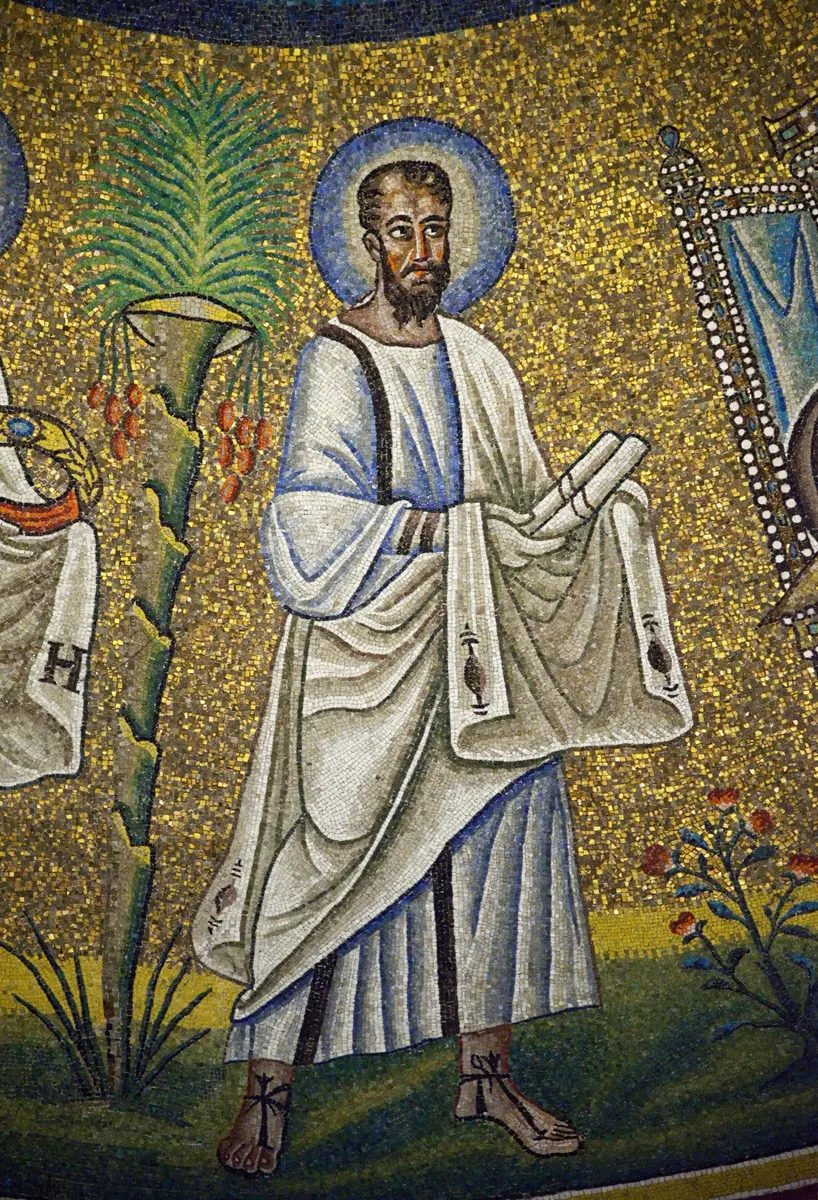
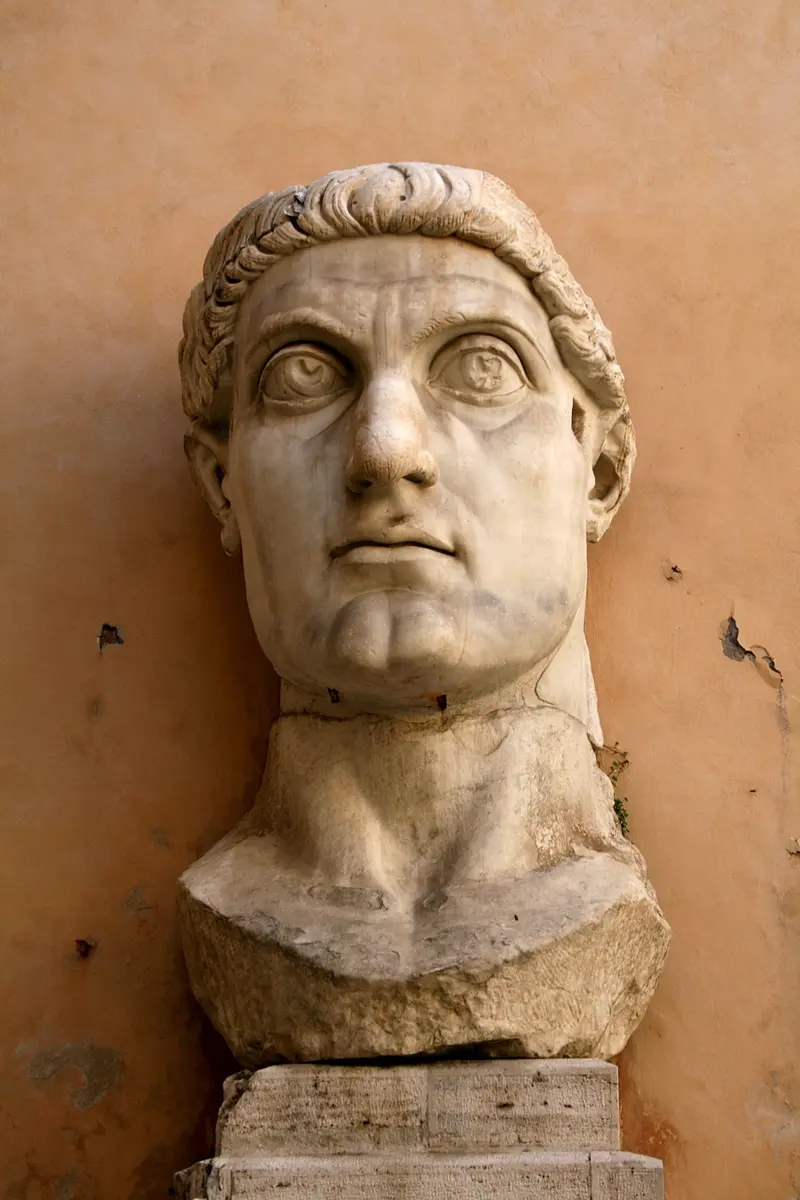
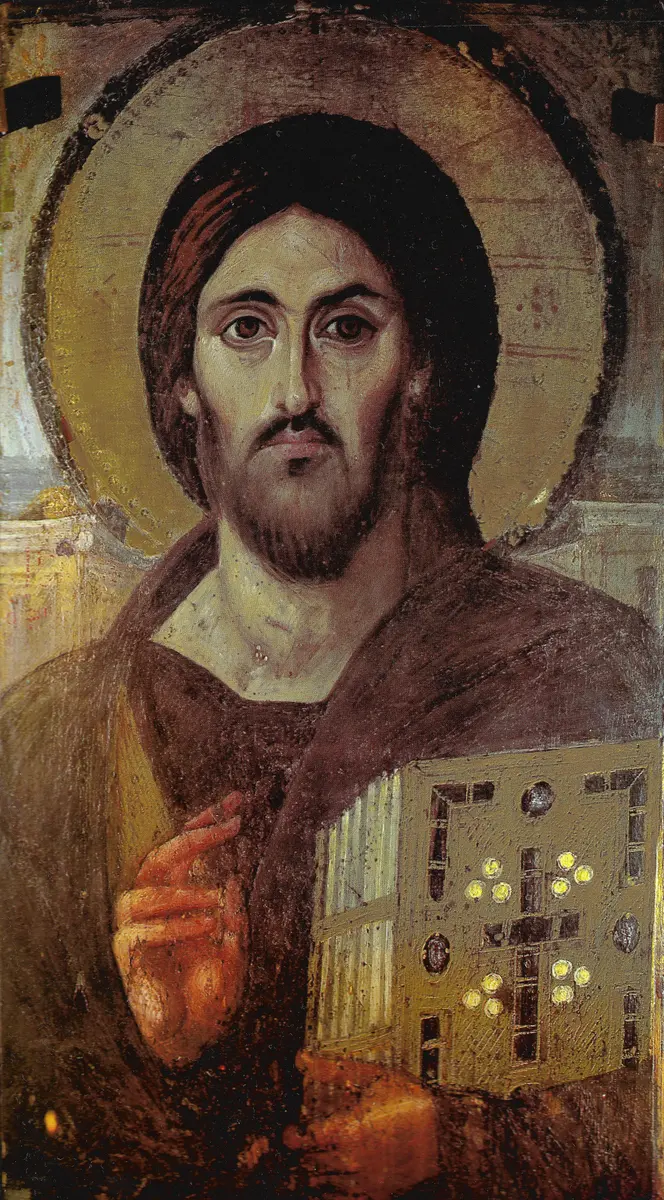
No one who saw him described his face, and no portrait exists. The earliest pictures, from around 200 to 300, show a young, beardless shepherd or healer; the bearded, long-haired Christ that everyone now recognises appeared around 300 and became the rule in the East by the sixth century, as in the icon at Sinai. His followers, led by Peter and by Jesus's brother James and carried by Paul to the cities of the Roman world, spread his message across the empire, which persecuted them and then, under Constantine in 313, legalized their faith.
What happened
- 4 BCE
Born to Joseph and Mary sometime between 6 BCE and the death of Herod the Great in 4 BCE; Matthew and Luke place the birth in Bethlehem, the town of King David.
Bethlehem, the Church of the Nativity: where Matthew and Luke place his birth; the church over the cave was begun under Constantine in 326 - 6
Augustus makes Judaea a Roman province, and the governor of Syria, Quirinius, counts its people for taxes. Luke ties the birth to this census, Matthew to Herod's reign ten years earlier. Galilee, where Jesus grows up in Nazareth, stays under Herod's son Antipas.
Nazareth: the Galilean village where he grew up; the Basilica of the Annunciation stands over the place tradition gives to Mary's house - 26
Pontius Pilate arrives as the Roman prefect of Judaea; he will govern until 36.
- 28
In about the fifteenth year of the emperor Tiberius, Jesus is baptized by John the Baptist in the Jordan and begins to preach.
Qasr al-Yahud on the Jordan: the place a long tradition gives to his baptism by John - 29
He preaches and heals in the towns around the Sea of Galilee, with Capernaum as his base and fishermen among his first followers, announcing that the kingdom of God is at hand.
Capernaum: the fishing town on the Sea of Galilee that the Gospels make his base - 30
He goes up to Jerusalem for Passover; the Gospels tell of his entry to the city to acclaim and of a disturbance in the Temple courts, where he drives out the money-changers.
He is arrested at night on the Mount of Olives, in the garden the Gospels call Gethsemane.
Questioned by the high priest Joseph Caiaphas, he is handed over to the prefect Pontius Pilate.
Pilate has him crucified outside the city walls under a sign naming him 'King of the Jews', a charge of rebellion against Rome. He is buried in a nearby tomb; his followers say they found it empty and that they saw him risen.
The Church of the Holy Sepulchre, Jerusalem: the place of the crucifixion and the tomb, by a tradition going back to Constantine's church of the 320s