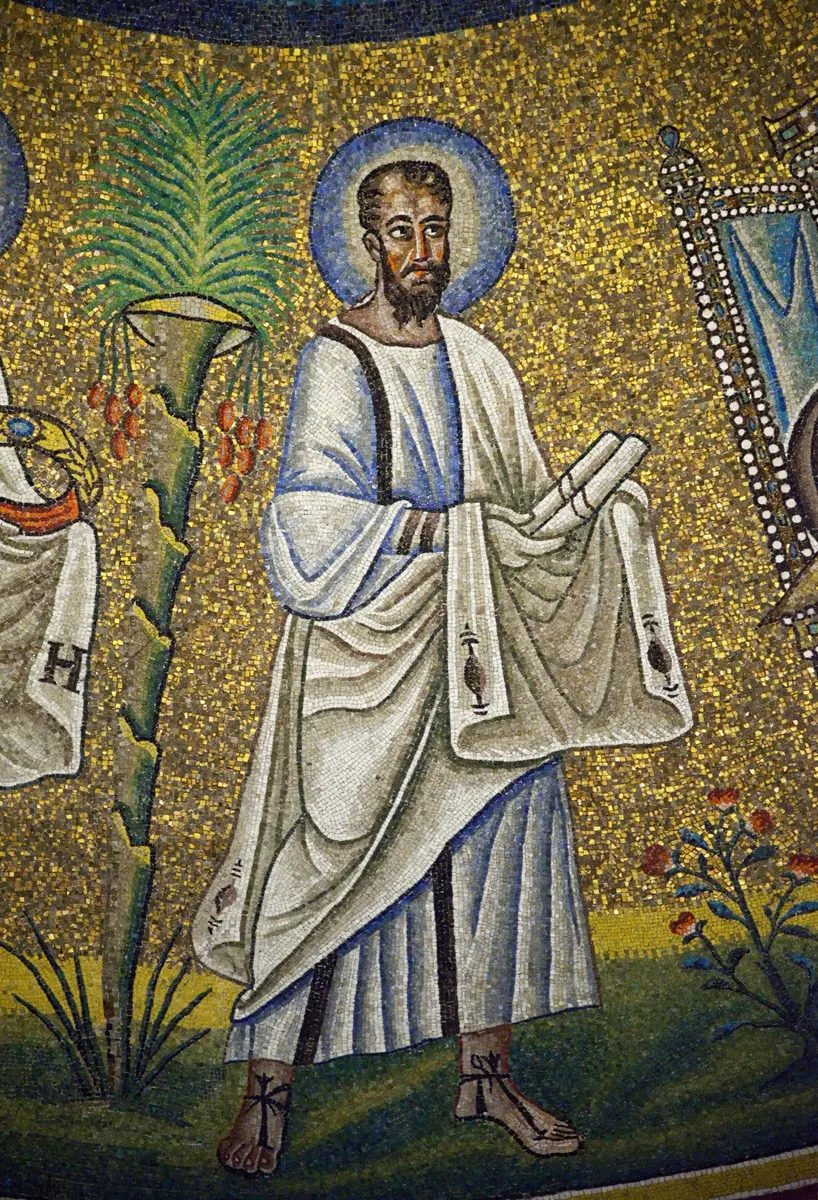
Paul the Apostle
“The Jewish persecutor turned apostle who carried faith in Jesus to non-Jews across the Roman world; his letters are the oldest writings in the New Testament.”
Paul, called Saul in the Acts of the Apostles, was a Greek-speaking Jew from Tarsus in Cilicia, on the south coast of what is now Turkey, born around the same time as Jesus or a little later. He was a Pharisee, proud of his learning in the Jewish law, and he began by persecuting the small movement of Jews who believed that the crucified Jesus was the Messiah. Then, around the year 33, near Damascus, he had a vision in which, as he put it, God revealed his Son to him. He never met Jesus in life, yet he became the movement's most tireless missionary, and Britannica notes that he is often considered the most important person after Jesus in the history of Christianity.
For some twenty years, from the mid-30s to the mid-50s, he travelled, mostly on foot and sometimes by ship, through Syria, Cilicia, Asia Minor, Macedonia and Greece. In cities such as Philippi, Thessalonica, Corinth and Ephesus he gathered small house churches, earning his keep with his hands, by Acts' account as a tentmaker or leatherworker. His message was that Jesus had died for others, had been raised by God and would soon return to judge the world, and that non-Jews could join the people of God through faith in Christ without first becoming Jews: no circumcision was needed. Around 49 he agreed in Jerusalem with Peter, James and John that Peter would go to the Jews and Paul to the Gentiles, but the question kept dividing the first Christians.
He kept his scattered churches together by letter. Seven letters are accepted by almost all scholars as his own: 1 Thessalonians, 1 and 2 Corinthians, Galatians, Philippians, Romans and Philemon. Written in the 50s, some twenty years after Jesus's death, they are the oldest Christian writings that survive, older than any of the Gospels. Six more letters carry his name but were probably written by followers. The Acts of the Apostles, written decades later, tells his travels as a story and sometimes contradicts the letters; his name Saul, his Roman citizenship and his trade come from Acts alone. The one firm date in his life comes from a stone: a letter of the emperor Claudius at Delphi, of the year 52, names Gallio as governor of Achaia, the Roman province of southern Greece, the official before whom Acts says Paul was tried at Corinth.
In the late 50s he brought money collected in his Gentile churches to the poor of Jerusalem. There he was arrested in the Temple, accused of bringing a Gentile past the barrier that only Jews could cross. After two years in custody at Caesarea he appealed, as a Roman citizen, to the emperor; Acts tells of a shipwreck on Malta and ends with Paul in Rome around 60, preaching for two years under house arrest. Christian writers from the end of the first century on say he died a martyr in Rome, and later tradition says he was beheaded, perhaps in Nero's persecution after the great fire of 64. He was buried, by a tradition already known around 200, beside the road to Ostia, where the Basilica of St Paul Outside the Walls stands today.
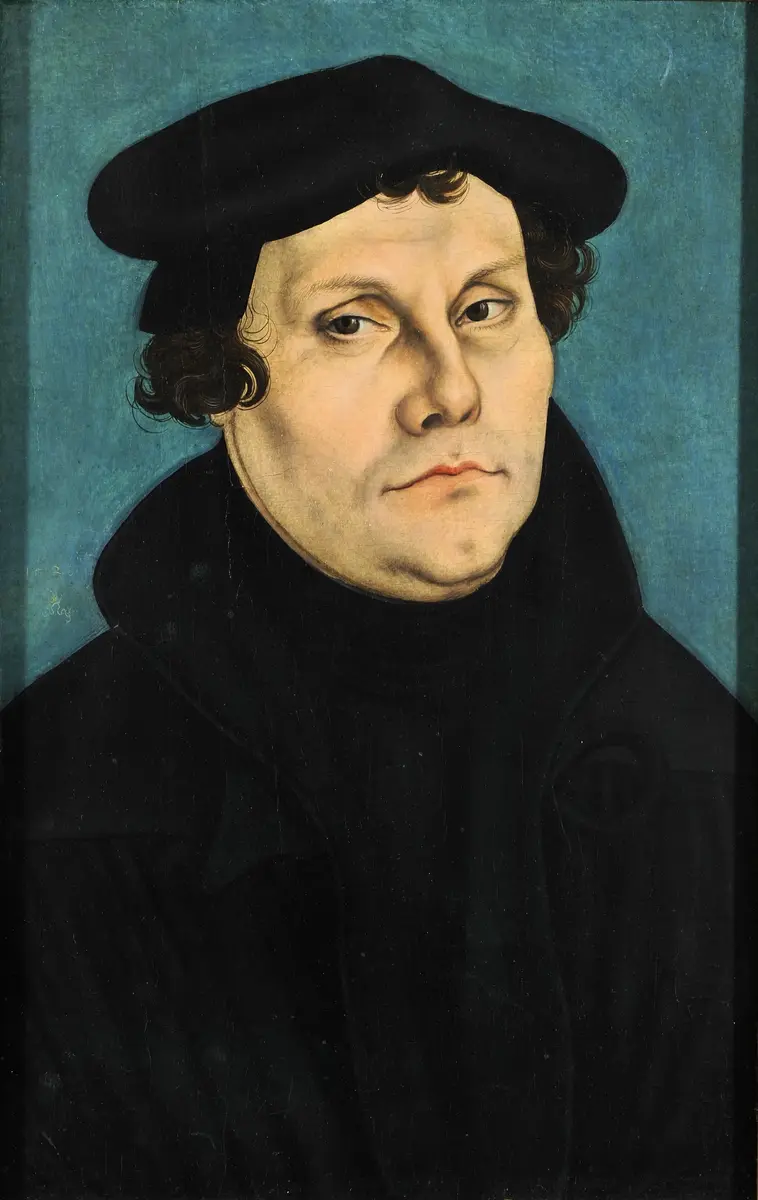
His influence is hard to overstate. Thirteen of the 27 books of the New Testament carry his name, and about half of the Acts of the Apostles is about him. He helped turn a Jewish movement into one open to the whole Roman world, which in the end became a largely Gentile religion. His words on faith, grace and the law shaped Augustine, whose conversion in 386 was helped, by his own account, by reading Paul's letters and whose teaching on grace grew from them, and Martin Luther, whose reading of Paul on faith and grace stood at the heart of the Reformation. The early church remembered him first as a martyr, and by the fourth century artists gave him the face he has kept ever since: a high, balding forehead and a long, dark, pointed beard.
What happened
- 5
Born, around this time, to a Jewish family in Tarsus in Cilicia, a Greek-speaking city of the Roman east. Acts names him Saul and says he was born a Roman citizen; his own letters never use either.
Tarsus, Cilicia: his birthplace, a major city of the eastern Mediterranean coast - 32
A zealous Pharisee, he persecutes the new movement of Jews who say the crucified Jesus is the Messiah, as he later admits in his letters.
- 33
Near Damascus he has the vision that changes his life: in his words, God 'revealed his Son' to him; Acts tells of a blinding light on the road.
Damascus, the street called Straight at the Roman east gate (Bab Sharqi): the city of his conversion and of his escape over the wallActs says he was led blind into Damascus, to a house on the street called Straight, where a follower of Jesus named Ananias restored his sight and baptized him. Paul's letters say nothing of it.
Damascus, the street called Straight at the Roman east gate (Bab Sharqi): the city of his conversion and of his escape over the wall- 36
After a time in 'Arabia' and back in Damascus, he escapes the city, let down through a window in the wall in a basket while the governor of King Aretas guards the gates.
Damascus, the street called Straight at the Roman east gate (Bab Sharqi): the city of his conversion and of his escape over the wallThree years after his conversion he goes up to Jerusalem and stays fifteen days with Peter; of the other apostles he sees only James, the brother of Jesus.
- 37
He preaches in the regions of Syria and Cilicia; Acts says Barnabas brought him to Antioch, where the followers of Jesus were first called Christians.
- 46
With Barnabas, sent out from Antioch, he makes the first journey that Acts describes: to Cyprus and the cities of southern Asia Minor.
- 49
At a meeting in Jerusalem, Peter, James and John accept his mission to the Gentiles without circumcision: Peter will be the apostle to the Jews, Paul to the Gentiles, who will send money for Jerusalem's poor.
At Antioch he confronts Peter to his face for refusing to eat with Gentile converts once men from James arrive; even Barnabas takes Peter's side.
He crosses into Europe and founds churches at Philippi and Thessalonica, cities on the Via Egnatia, the Roman highway across Macedonia.
- 50
In Athens, Acts says, he argues in the agora and speaks before the Areopagus about the altar 'to an unknown god'.
He reaches Corinth and stays about eighteen months, working with the tentmakers Prisca and Aquila. Around now he writes 1 Thessalonians, the oldest Christian writing that survives.
Corinth: the Roman colony where he stayed some eighteen months around 50 to 52 and stood before Gallio- 51
Jews of Corinth bring him before the new proconsul of Achaia, Gallio, brother of the philosopher Seneca, who refuses to judge a dispute about Jewish law. Claudius's letter at Delphi, of 52, dates Gallio's year in office.
Corinth: the Roman colony where he stayed some eighteen months around 50 to 52 and stood before Gallio - 52
He settles in Ephesus for about three years and writes 1 Corinthians there. Acts tells of a riot in the theatre, stirred up by silversmiths who sold images of Artemis.
Ephesus: his base for about three years, around 52 to 55 - 56
Wintering in Corinth, he writes the Letter to the Romans, to a church he has never visited, planning to go on through Rome to Spain. It is his last and longest surviving letter.
- 57
He brings the collection to Jerusalem and is arrested in the Temple, accused of taking a Gentile beyond the barrier that only Jews could cross.
- 58
Held for two years at Caesarea by the governor Felix, he appeals, as a Roman citizen, to the emperor when Festus takes over.
- 59
On the voyage to Rome his ship is caught by a storm and wrecked on Malta, where Acts says all on board reached the shore alive and wintered.
- 60
He reaches Rome and lives two years under guard in rented lodgings, preaching freely; here the Acts of the Apostles ends.
- 64
He dies a martyr in Rome, beheaded by later tradition and perhaps among the Christians Nero put to death after the great fire of July 64. No source of his own time describes his death.
He is buried beside the road to Ostia; around 200 a Roman Christian named Caius could already point to the apostle's 'trophy' there, where the basilica of St Paul now stands over the grave.
The Basilica of St Paul Outside the Walls, Rome: his grave on the road to Ostia, by a tradition known around 200