Martin Luther
“The German friar whose Ninety-five Theses of 1517 against the sale of indulgences began the Protestant Reformation, and whose Bible translation shaped the German language.”
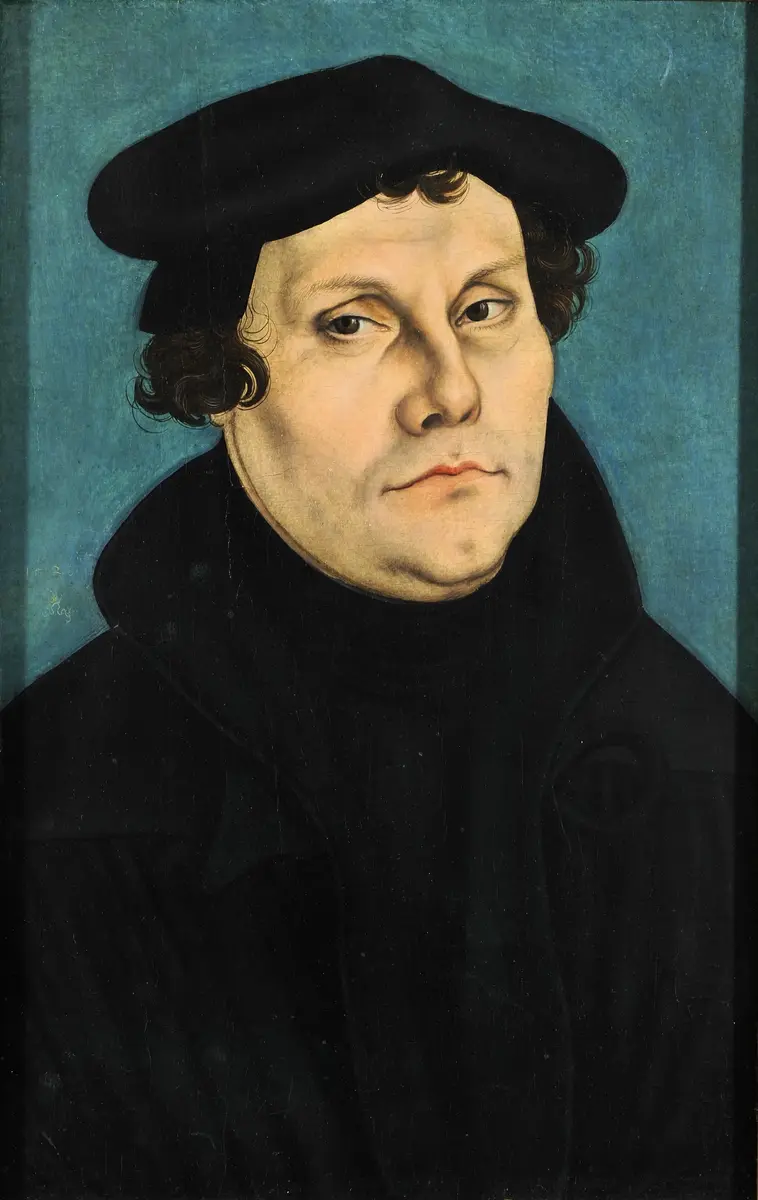
Martin Luther was the German friar and professor whose Ninety-five Theses against the sale of indulgences, in October 1517, set off the Protestant Reformation and split Western Christianity into Catholic and Protestant churches. He taught that people are saved by God's grace through faith alone, not by good works or by payments to the church, and that the Bible alone, not the pope or the councils of the church, is the final authority in matters of faith. His German translation of the Bible shaped the written German language, and the Lutheran churches that carry his name count more than 65 million members today.
He was born in Eisleben, in Saxony, on 10 November 1483, the son of Hans Luder, who did well in copper mining and smelting, and grew up in nearby Mansfeld. His father meant him to be a lawyer. Luther took his degrees at the University of Erfurt, but in July 1505, a few weeks into the study of law, he entered the strict Augustinian friary in Erfurt, keeping a vow he had made in a violent thunderstorm near the village of Stotternheim. He was ordained a priest in 1507, travelled to Rome on the business of his order, and in 1512 became a doctor of theology and professor of the Bible at the young university of Wittenberg, a chair he held until his death. The friary did not quiet his fear of God's judgement; reading Paul's letter to the Romans, he came to believe that righteousness is a free gift received by faith.
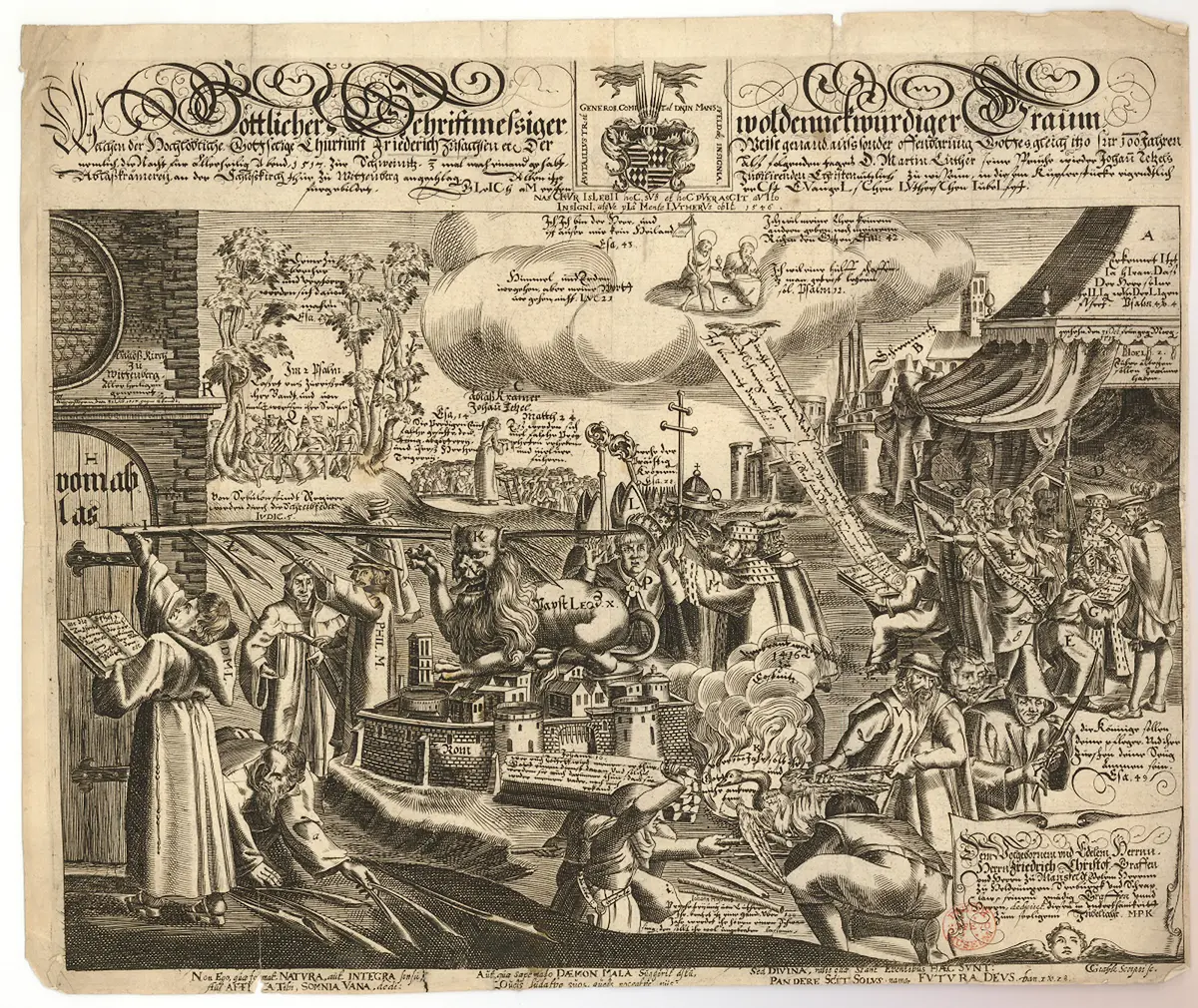
In 1517 the Dominican friar Johann Tetzel was selling indulgences in Germany to help pay for the new St Peter's in Rome. Luther wrote ninety-five theses for an academic debate, sent them to Archbishop Albrecht of Mainz on 31 October and, by tradition, posted them on the door of the Castle Church. Printers in Leipzig, Nuremberg and Basel had them out before the year was over, and within a few years Luther, a master of the short German pamphlet, was the most published author in the West. Questioned by Cardinal Cajetan at Augsburg in 1518 and debating Johann Eck at Leipzig in 1519, he came to deny the authority of popes and councils. Pope Leo X condemned him in the bull Exsurge Domine in June 1520; Luther burned it in public in December and was excommunicated in January 1521. Summoned before the young Emperor Charles V at the Diet of Worms, he refused on 18 April 1521 to take back a word unless he was proved wrong by Scripture or plain reason, and the edict that followed made him an outlaw.
His prince, Frederick the Wise of Saxony, had him seized on the road home and hidden in the Wartburg castle above Eisenach. There, bearded and disguised as a young nobleman, 'Junker Jörg', he translated the New Testament from Erasmus's Greek in about ten weeks; printed in September 1522, it was reprinted more than fifty times in four years, and the whole Bible followed in 1534. Back in Wittenberg he held back the radicals, and in 1525 turned savagely on the rebels of the Peasants' War. In June that year he married Katharina von Bora, a former nun, and the old friary became a busy home with six children. He quarrelled with Erasmus over free will and with Zwingli over the Lord's Supper, and left the Augsburg Confession of 1530 to his colleague Philip Melanchthon. His last years were darkened by illness and by violent writing against the pope, the radicals and the Jews; excerpts of his On the Jews and Their Lies of 1543 were reprinted in the Nazi era.
He died in Eisleben, the town of his birth, on 18 February 1546, after travelling there in poor health to settle a quarrel between the counts of Mansfeld, and was buried in the Castle Church at Wittenberg. The churches that grew from his protest, and from the reformers who came beside and after him, Zwingli, Calvin and the English Church, changed the politics, the schools, the languages and the daily life of northern Europe. His birth and death houses in Eisleben and his home, the Castle Church and the town church in Wittenberg have been a UNESCO World Heritage Site since 1996.
What happened
- 1483
Born in Eisleben, in the county of Mansfeld in Saxony, to Hans and Margarethe Luder; within months the family moves on to Mansfeld, where his father prospers in copper refining.
Eisleben: the house where he was born in 1483; he died a few streets away in 1546- 1501
He enters the University of Erfurt, one of the best in Germany; he takes his bachelor's degree in 1502 and his master's in 1505.
- 1505
A few weeks into the study of law his father wanted, he enters the strict friary of the Augustinian Hermits in Erfurt, keeping a vow he made, terrified, in a thunderstorm near Stotternheim.
Erfurt: the Augustinian friary he entered in 1505- 1507
Ordained a priest, he says his first Mass 'with fear and trembling'; his father, still angry, wonders aloud whether the storm was a trick of the devil.
Erfurt: the Augustinian friary he entered in 1505- 1508
In the autumn he is sent to the friary in Wittenberg to study at the university founded there in 1502; the friary becomes his home for most of his life.
Wittenberg: the Castle Church, where he made his theses public in 1517 and is buried; his home, the Lutherhaus, is at the other end of the town - 1511
He travels to Rome on business for his order, his only journey outside the German lands, and later says he found little spirituality at the heart of Christendom.
- 1512
In the autumn he becomes a doctor of theology and Wittenberg's professor of the Bible, the chair he holds until he dies; he lectures on the Psalms and on Paul's letters.
Wittenberg: the Castle Church, where he made his theses public in 1517 and is buried; his home, the Lutherhaus, is at the other end of the town - 1517
Angered by Johann Tetzel's sale of indulgences, he sends his Ninety-five Theses against them to Archbishop Albrecht of Mainz and, by tradition, posts them on the door of the Castle Church; printed in Leipzig, Nuremberg and Basel, they spread across Germany.
Wittenberg: the Castle Church, where he made his theses public in 1517 and is buried; his home, the Lutherhaus, is at the other end of the town- 1518
At Augsburg, during an imperial Diet, Cardinal Cajetan questions him for three days and demands that he recant; Luther refuses and flees back to Wittenberg.
- 1519
At the Leipzig debate Johann Eck drives him to say that even church councils can err, and that the condemned Czech reformer Jan Hus was right on some points.
- 1520
In three short books, To the Christian Nobility of the German Nation, The Babylonian Captivity of the Church and The Freedom of a Christian, he argues his case against the pope and the church's practices and sets out the freedom of the Christian.
Pope Leo X condemns 41 sentences from his writings in the bull Exsurge Domine and gives him 60 days to recant.
With the time run out, he cancels his classes, walks to a bonfire his students have lit outside a gate of Wittenberg and throws the bull into the flames.
Wittenberg: the Castle Church, where he made his theses public in 1517 and is buried; his home, the Lutherhaus, is at the other end of the town- 1521
The bull Decet Romanum Pontificem excommunicates him as a heretic.
He appears before the Emperor Charles V and the princes at the Diet of Worms, in the bishop's palace; asked whether he will take back his books, he asks for time to think and is given a day.
Worms: the site of the bishop's palace, where he refused to recant before Charles V in April 1521He refuses to recant unless he is proved wrong by Scripture or plain reason, since his conscience is captive to the Word of God; the famous 'Here I stand' was probably added later.
Worms: the site of the bishop's palace, where he refused to recant before Charles V in April 1521On the road home, soldiers of his prince, Frederick the Wise, 'kidnap' him and hide him in the Wartburg above Eisenach; most of Germany thinks he is dead. He grows his hair and beard and lives as Junker Jörg, Squire George.
The Wartburg, Eisenach: his hiding place in 1521–22, where he translated the New TestamentThe Emperor signs the Edict of Worms, which makes Luther and his followers outlaws and orders his books burned.
After a secret visit to Wittenberg, he sets to translating the New Testament from Erasmus's Greek into everyday German, and finishes it in about ten weeks.
The Wartburg, Eisenach: his hiding place in 1521–22, where he translated the New Testament- 1522
He returns openly to Wittenberg, where the rush to put reform into practice has led to riots and protests, and restores order with his Lenten sermons.
Wittenberg: the Castle Church, where he made his theses public in 1517 and is buried; his home, the Lutherhaus, is at the other end of the townHis German New Testament, the September Testament, comes off Melchior Lotter's press in Wittenberg; it sells out so fast that a second edition follows in December, and it is reprinted more than fifty times in four years.
- 1525
As the Peasants' War spreads through Germany, he first writes an Admonition to Peace with some sympathy for the peasants, then Against the Murderous and Robbing Hordes of the Peasants, which savagely denounces them.
He marries Katharina von Bora, a former nun who had fled her convent; they make the empty friary their home and have six children.
Wittenberg: the Castle Church, where he made his theses public in 1517 and is buried; his home, the Lutherhaus, is at the other end of the town- 1529
At Marburg, Philip of Hesse brings him together with the Swiss reformer Huldrych Zwingli in the hope of a united Protestant front; Luther chalks 'This is my body' on the table and will not give way on the Lord's Supper, and the movement stays divided.
- 1530
Still an outlaw, he follows the Diet of Augsburg from Coburg, while his colleague Philip Melanchthon presents the Augsburg Confession, which becomes the guiding statement of Lutheran belief.
- 1534
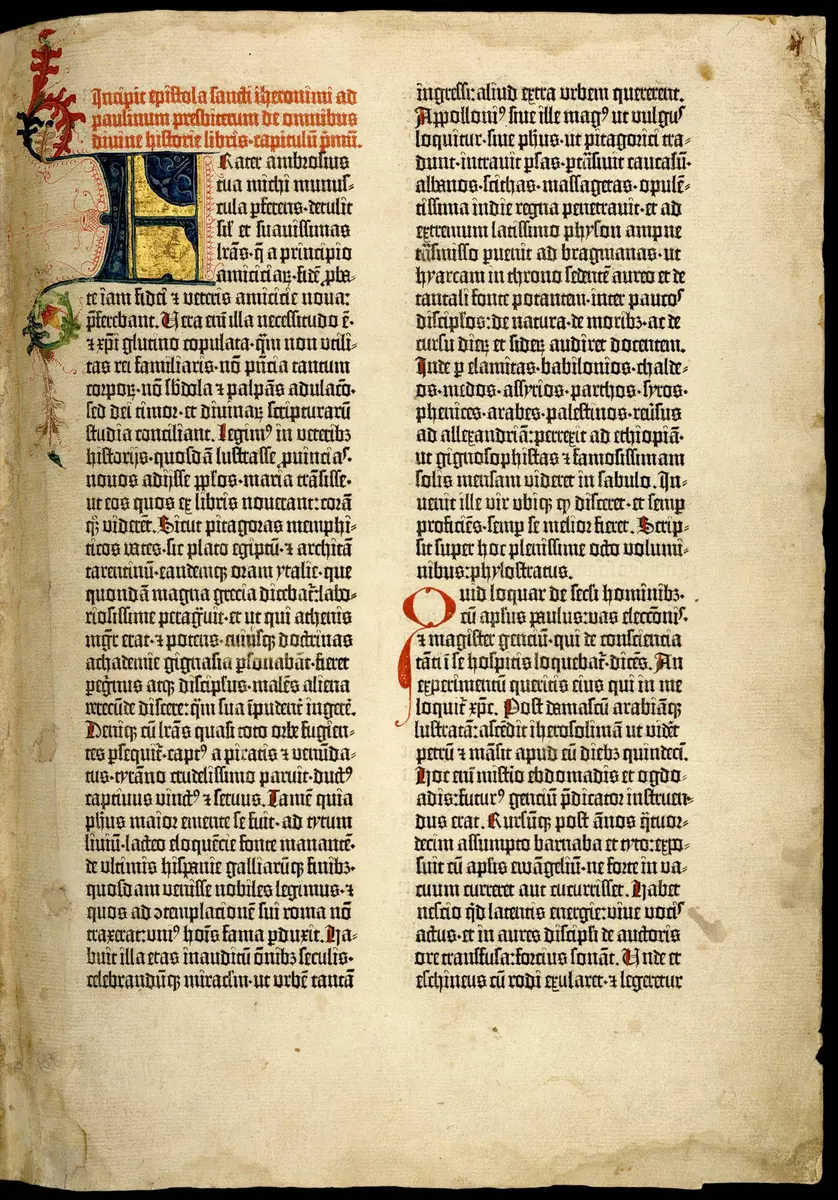
The complete Bible in his German translation is printed at Wittenberg by Hans Lufft.
Wittenberg: the Castle Church, where he made his theses public in 1517 and is buried; his home, the Lutherhaus, is at the other end of the town - 1542
His daughter Magdalene dies in his arms; the loss darkens his last years and his letters fill with thoughts of death.
- 1543
Ill and embittered, he publishes On the Jews and Their Lies, calling for synagogues and Jewish homes to be destroyed: a text later used by the Nazis.
- 1546
He dies in Eisleben, where he was born, having travelled there in failing health to settle a quarrel between the counts of Mansfeld; on 22 February he is buried in the Castle Church at Wittenberg.
Eisleben: the house where he was born in 1483; he died a few streets away in 1546