The Challenger disaster
“On January 28, 1986, Challenger broke apart 73 seconds after launch and all seven crew died; cold-stiffened booster seals leaked, after Thiokol's engineers had warned against launching in the cold the night before.”
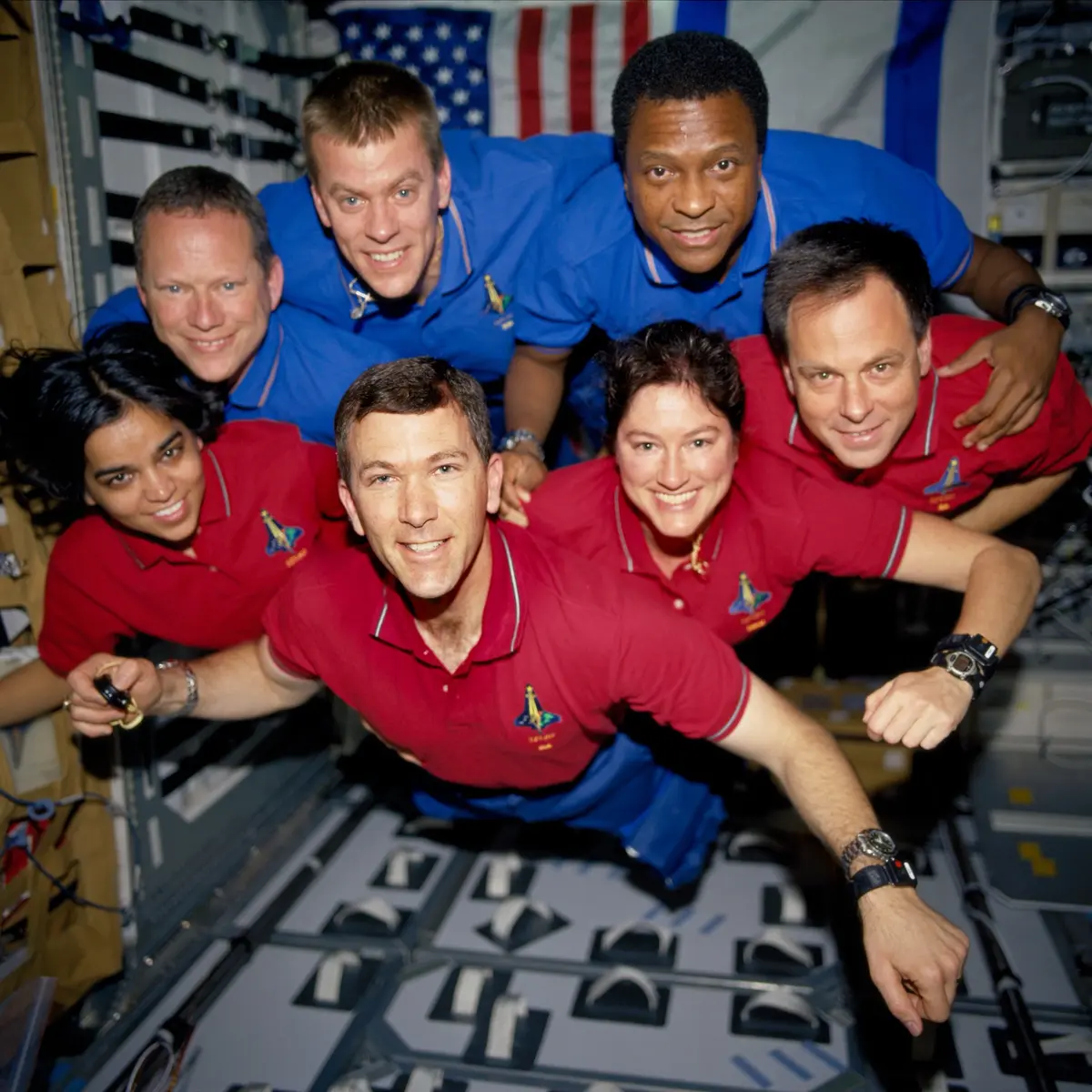
On the morning of January 28, 1986, the space shuttle Challenger lifted off from Launch Pad 39B at the Kennedy Space Center in Florida with seven people aboard. Francis 'Dick' Scobee was the commander and Michael Smith the pilot. Ellison Onizuka, Judith Resnik and Ronald McNair were mission specialists, Gregory Jarvis was a payload specialist from Hughes Aircraft, and Christa McAuliffe, a high-school teacher from New Hampshire chosen from more than 11,000 applicants, was to be the first teacher in space and give two lessons from orbit. At 11:38 a.m. Eastern time the shuttle climbed into a clear, very cold sky. Seventy-three seconds later it broke apart over the Atlantic Ocean, and all seven of them died. Millions of people, many of them schoolchildren, were watching on television.
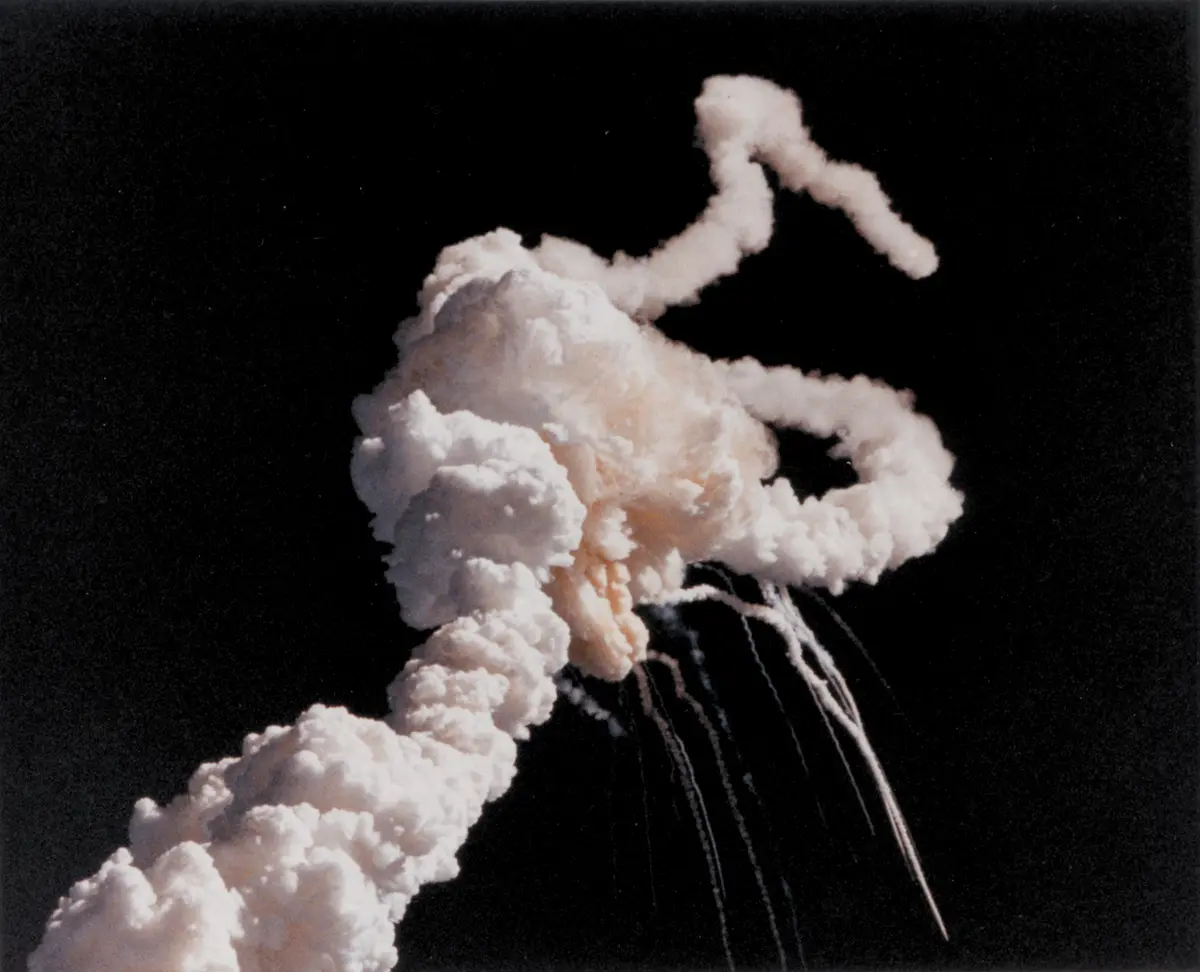
The cause was a leak in the right-hand solid rocket booster. Each booster is built in segments, and the joints between them are sealed by rubber rings called O-rings. On the morning of the launch it was 36 degrees Fahrenheit at the pad, 15 degrees colder than for any earlier launch, and the rings were stiff. Film shows grey smoke squeezing out of the lowest joint of the right booster less than a second after ignition. At about 59 seconds a flame appeared there, burned into the external tank full of liquid hydrogen, and at 73 seconds the tank failed and the shuttle was torn apart by the airflow. NASA's own study of the crew's deaths later concluded that their cause could not be determined with certainty.
The danger had been named the night before. On January 27, engineers at Morton Thiokol's plant in Utah, among them Roger Boisjoly and Arnold Thompson, learned how cold Florida would be and said the joints were not safe to fire below 53 degrees, the temperature of the coldest earlier flight. In a telephone conference with NASA's Marshall Space Flight Center and Kennedy, Thiokol first recommended against launching. NASA managers questioned the data, Thiokol's managers took a private break of about half an hour, and when they came back they said the evidence was not conclusive and recommended launching. Engineers had been warning of seal damage since 1985, and the senior NASA officials responsible for the launch decision were never told of Thiokol's objections. A morning of ice on the pad and a two-hour delay did not change the plan.
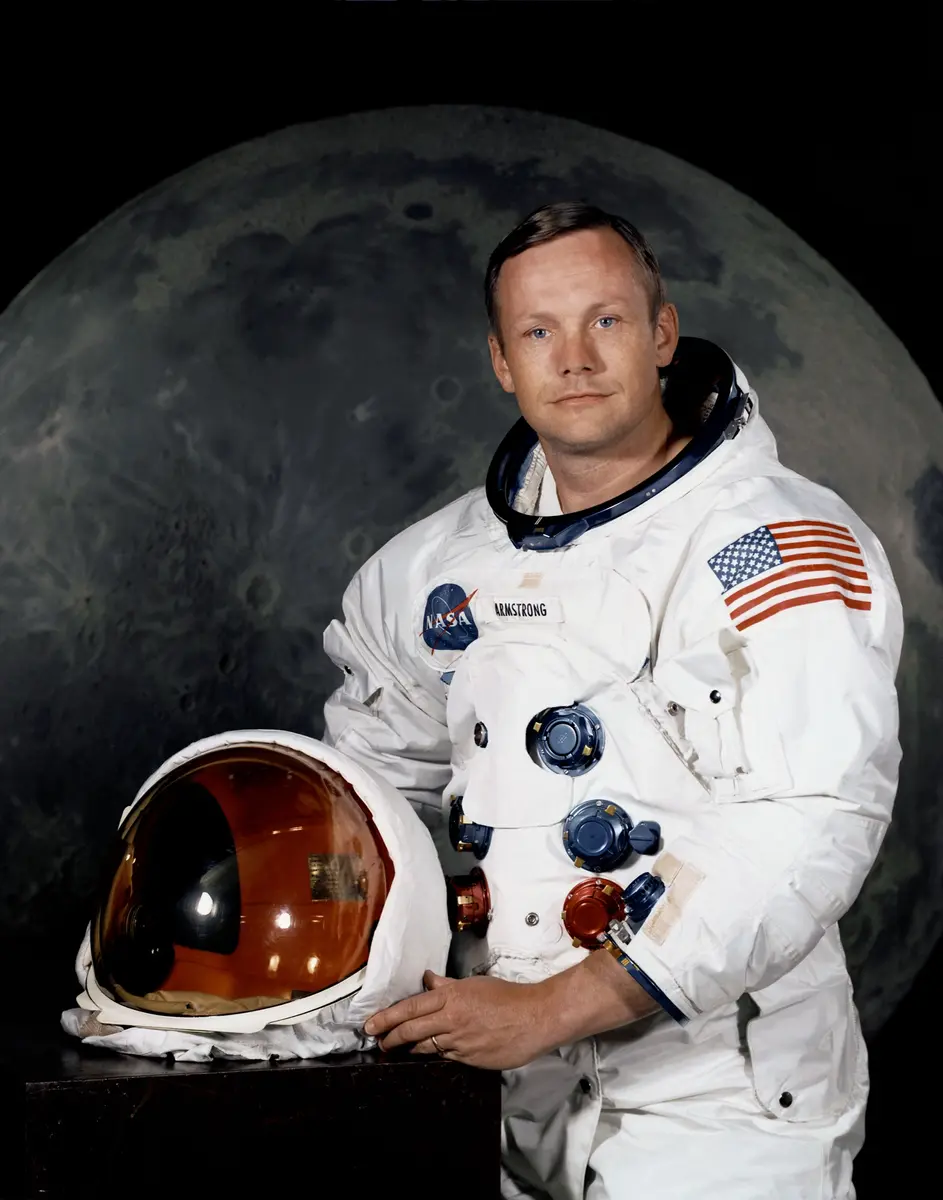
President Reagan named a commission on February 3, led by the former Secretary of State William Rogers, with Neil Armstrong as vice chairman and members including the astronaut Sally Ride, the test pilot Chuck Yeager and the physicist Richard Feynman. On February 11, in a public hearing, Feynman put a piece of seal rubber into ice water and told the room that it stopped springing back at freezing point. The commission's report went to the President in June. It named the failure of the seals in the booster joint, a faulty design, as the cause of the accident and a flawed decision-making process as a contributing cause, and made nine recommendations, among them a redesigned joint, an independent safety office, and a clearer chain of command at NASA.
The shuttle fleet stayed on the ground for 975 days, about 32 months. On September 29, 1988, Discovery lifted off from the same pad on the flight called STS-26, with redesigned booster joints, a pole for the crew to bail out on, and pressure suits for everyone aboard. Challenger's wreckage was buried in old missile silos at Cape Canaveral. The disaster is still taught in engineering and management courses, as a case of what happens when people with warnings are not heard by those who decide, and the crew are remembered at memorials from the Kennedy Space Center to Arlington National Cemetery.
What happened
- 1985
STS 51-C is launched at the coldest temperature of any shuttle flight so far, an O-ring temperature of about 53 degrees Fahrenheit. When the boosters are inspected, both show seal damage, and for the first time a secondary O-ring shows the effect of heat.
Roger Boisjoly of Thiokol writes to the company's vice president for engineering that if a joint seal failed in a field joint the result could be 'a catastrophe of the highest order', the loss of human life, and asks for a team to be set up at once to fix it.
Brigham City, Utah: the home of Morton Thiokol's Wasatch Division, where the booster engineers raised their objections on January 27, 1986- 1986
At the Flight Readiness Review for mission 51-L the solid rocket booster joints are not discussed, and no problem with the boosters is reported. On January 23 the launch is declared ready to fly.
- 12:35 p.m.
The countdown is halted at 9:10 a.m. by a problem with the crew hatch handle; when it is fixed at 10:30 the crosswinds at the Cape's emergency runway are too strong, and at 12:35 p.m. the launch is cancelled until the next morning. The forecast is for a night in the low twenties.
Launch Pad 39B, Kennedy Space Center: where Challenger stood iced over on the night of January 27-28, 1986, lifted off at 11:38 a.m. and where Discovery returned to flight on September 29, 1988 - 2:30 p.m.
At Thiokol's plant in Utah, Robert Ebeling calls his engineers together after learning how cold the Cape will be. In the hour-long meeting Boisjoly, Thompson and others are firmly worried: the joints would be launched far below the temperatures they were tested at.
Brigham City, Utah: the home of Morton Thiokol's Wasatch Division, where the booster engineers raised their objections on January 27, 1986 - 5:45 p.m.
In the first part of the telephone conference between Thiokol, Marshall and Kennedy, Thiokol presents its concern about cold O-rings and says that the launch should be delayed. The call is held late in the afternoon of the 27th, Eastern time, and a suggestion that the shuttle program manager at Johnson Space Center be told is not passed up.
Marshall Space Flight Center, Huntsville, Alabama: the NASA center that managed the boosters; its managers took part in the teleconference with Thiokol on January 27 - 8:45 p.m.
In the second part, with the charts faxed to Florida, Thiokol's engineers go through the history of seal erosion, the tests, and the lack of data below 53 degrees. Thiokol's vice president for engineering, Robert Lund, gives the conclusion: do not launch below 53 degrees. Marshall's George Hardy says he is appalled at the recommendation; Larry Mulloy of NASA questions whether the data really show that cold matters.
Brigham City, Utah: the home of Morton Thiokol's Wasatch Division, where the booster engineers raised their objections on January 27, 1986 - 10:30 p.m.
Thiokol's managers ask for five minutes alone and take about half an hour. According to Boisjoly's testimony, he and Arnold Thompson keep objecting; Jerry Mason says a management decision is needed and asks Lund to 'put on his management hat'. The call is recessed at about 10:30 p.m.
Brigham City, Utah: the home of Morton Thiokol's Wasatch Division, where the booster engineers raised their objections on January 27, 1986 - 11:00 p.m.
When the call resumes at about 11 p.m., Thiokol says the temperature effects are a concern but the data are inconclusive, and Joe Kilminster reads out a recommendation to launch. At Hardy's request it is faxed to Kennedy and to Marshall. Boisjoly later testified that he was not asked for his view of the final recommendation.
Brigham City, Utah: the home of Morton Thiokol's Wasatch Division, where the booster engineers raised their objections on January 27, 1986 - 1:35 a.m.
Overnight ice forms on the pad, because water has been left running to stop the pipes bursting. The ice team inspects the pad from 1:35 to 3 a.m. and reports a large quantity of ice; the program manager decides to carry on with the countdown, with another inspection to follow.
The Launch Control Center, Kennedy Space Center: where the launch team met, heard the ice crews' reports and gave its 'go' for launch - 5:00 a.m.
At about 5 a.m. Larry Mulloy tells Marshall's director William Lucas that there was a discussion with Thiokol about temperature and the O-rings and that it was settled in favour of launch. The Commission found that the seriousness of the objections never reached the top levels of NASA that made the launch decision.
- 8:03 a.m.
The crew eat breakfast and are briefed on the weather; no one tells them of any worry about the cold. They arrive at the pad at 8:03 and are strapped in by 8:36. Infrared readings that morning put the right booster's aft area at about 8 degrees and the left at about 25 degrees Fahrenheit, but the ice crew has no limit to measure them against and does not report them.
Launch Pad 39B, Kennedy Space Center: where Challenger stood iced over on the night of January 27-28, 1986, lifted off at 11:38 a.m. and where Discovery returned to flight on September 29, 1988 - 8:44 a.m.
After a second ice inspection at 8:44 the program manager allows more time for the ice to melt, and a final inspection is set for 20 minutes before launch. The launch is now two hours behind its first time of 9:38. The ice is still on the left booster when the team reports; at 11:15 the inspection is done, and the crew and launch team give their 'go'.
The Launch Control Center, Kennedy Space Center: where the launch team met, heard the ice crews' reports and gave its 'go' for launch - 11:38 a.m.
At 11:38 a.m. Eastern Standard Time, 36 degrees Fahrenheit at the pad, the boosters ignite. Film shows grey smoke at the right booster's aft joint a fraction of a second later, then eight more puffs that grow blacker; the shuttle flies on, and the smoke blurs into the exhaust.
Launch Pad 39B, Kennedy Space Center: where Challenger stood iced over on the night of January 27-28, 1986, lifted off at 11:38 a.m. and where Discovery returned to flight on September 29, 1988 - 11:38 a.m.
About 59 seconds into the flight a flame comes from the same joint and grows into a steady jet that strikes the External Tank and its lower strut. By 64 seconds it has broken through the tank, which is full of liquid hydrogen.
- 11:39 a.m.
At 73 seconds, at 46,000 feet and nearly twice the speed of sound, the External Tank fails and Challenger is torn apart by the loads. The two boosters fly out of the cloud and are destroyed by the Air Force range safety officer at 110 seconds. The last data arrive 73.6 seconds after launch. All seven crew are lost.
- 5:00 p.m.
At 5 p.m., in place of the State of the Union report he had meant to give, President Reagan speaks to the nation from the Oval Office about the Challenger crew.
The White House, Washington: where President Reagan addressed the nation on the evening of January 28, named the Commission on February 3 and received its report in the Rose Garden on June 9, 1986 Debris from the Atlantic is brought ashore at Cape Canaveral: Coast Guard and Navy ships land it at the Trident Basin, from where it is shipped to the Kennedy Space Center for investigation. The Navy's own search operation starts on February 8.
Cape Canaveral Air Force Station (now Space Force Station): the Trident Basin where the recovered debris was landed after the searchA memorial service is held at the Johnson Space Center in Houston, with President and Mrs. Reagan and the families of the crew.
Johnson Space Center, Houston: Mission Control followed the flight, and on January 31, 1986 a memorial service for the crew was held here with President ReaganPresident Reagan announces a commission under former Secretary of State William Rogers, set up by Executive Order 12546, to find the probable cause of the accident and to recommend changes; he gives it 120 days. Neil Armstrong is the vice chairman.
The White House, Washington: where President Reagan addressed the nation on the evening of January 28, named the Commission on February 3 and received its report in the Rose Garden on June 9, 1986The members are sworn in and begin public hearings at the National Academy of Sciences in Washington, where NASA officials explain how the shuttle programme works and what they know of the accident so far.
The National Academy of Sciences building, Washington: the Commission's first public hearings, in its auditorium at 2100 Constitution Avenue on February 6 and 7, 1986In a closed session the Commission begins to learn of the troubled history of the booster joint and, for the first time, that Thiokol had first recommended against launching on the night of January 27.
At a public hearing in Washington, Richard Feynman puts a piece of the seal material in ice water and tells NASA's Larry Mulloy that when it is pressed for a while and then released, it does not spring back: at 32 degrees, for at least several seconds, it has no resilience.
Thiokol's Allan McDonald, who was at the Kennedy Space Center during the night of the call, tells the Commission how he first heard of the engineers' worry about the cold, and what was said.
The Commission spends a day at the Kennedy Space Center for briefings and a tour of the NASA facilities.
Navy divers off Florida spot what may be the crew cabin on the seabed; the next day they return and confirm it, and over several dives the remains of all seven crew members are recovered.
The Navy's submersible NR-1 videotapes a piece of debris with burn marks and NASA orders it recovered; NASA believes it to be part of the right booster. Pieces of the right motor later show a hole burned through the casing from the inside outward.
Brigham City, Utah: the home of Morton Thiokol's Wasatch Division, where the booster engineers raised their objections on January 27, 1986The Commission presents its report to President Reagan in the White House; it is dated June 6. It names the failure of the joint's seals, destroyed by hot gas, as the cause, and a flawed launch decision as the contributing cause, and recommends nine changes. Reagan says the nation will go on in the spirit of the seven.
The White House, Washington: where President Reagan addressed the nation on the evening of January 28, named the Commission on February 3 and received its report in the Rose Garden on June 9, 1986NASA releases Dr. Joseph Kerwin's report on the crew. It finds that the cause of death could not be positively determined, that the forces of the breakup were probably not enough to kill, and that the cabin reached about 65,000 feet before falling to the ocean about two minutes and forty-five seconds after the breakup.
- 1987
The recovered wreckage is lowered into old Minuteman missile silos at Complex 31 at Cape Canaveral, where it still rests.
Cape Canaveral Launch Complex 31: the former Minuteman missile silos where the Challenger wreckage was entombed- 1988
- 11:37 a.m.
At 11:37 a.m. Eastern time Discovery lifts off from Pad 39B on STS-26 with a crew of five, the first shuttle flight in 975 days, with redesigned booster joints, an escape pole and full-pressure suits.
Launch Pad 39B, Kennedy Space Center: where Challenger stood iced over on the night of January 27-28, 1986, lifted off at 11:38 a.m. and where Discovery returned to flight on September 29, 1988