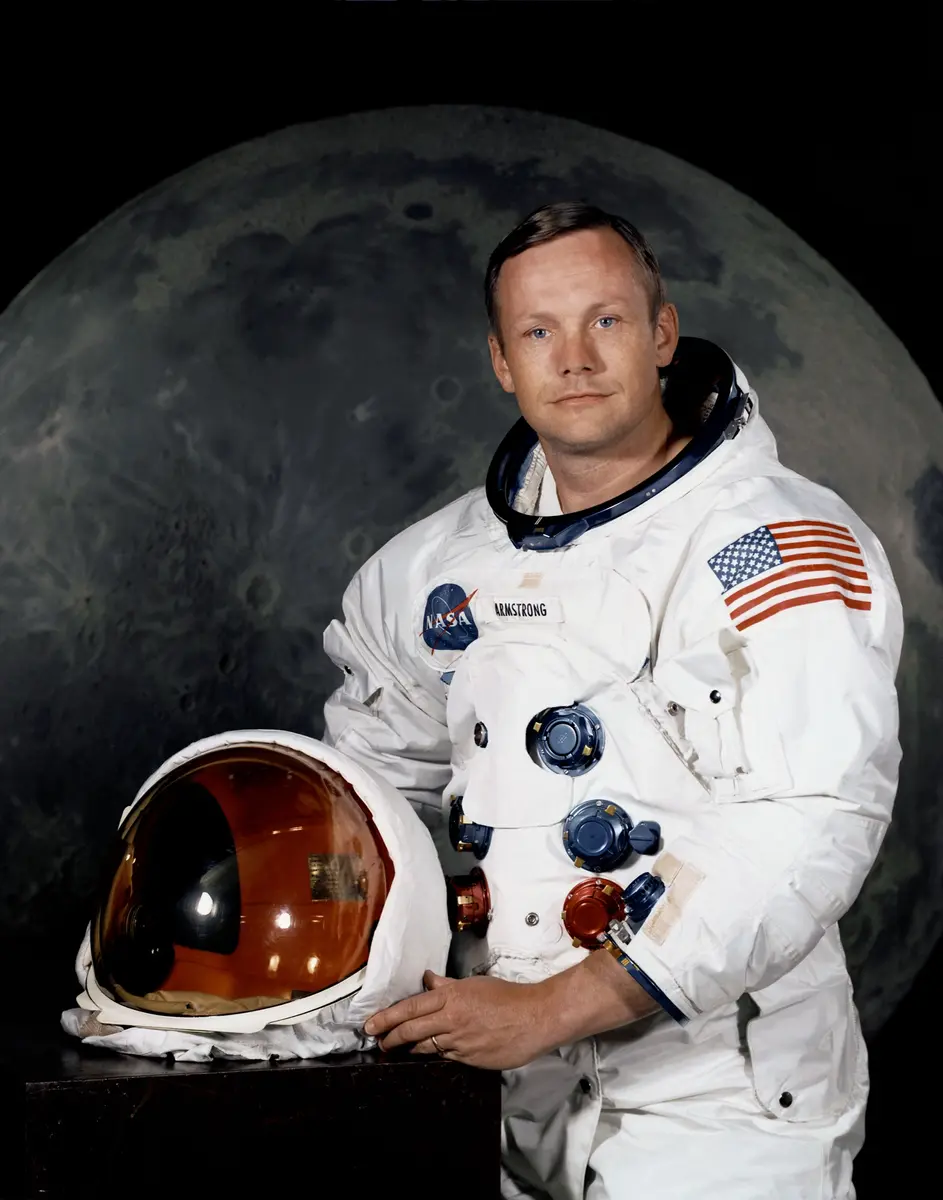
Neil Armstrong
“The quiet Navy pilot, test pilot and engineer who, as commander of Apollo 11, became the first person to walk on the Moon in July 1969, and then lived the rest of his life away from the limelight.”
Neil Alden Armstrong was the American naval aviator, test pilot, engineer and astronaut who, as commander of Apollo 11, became the first person to walk on the Moon, on 20 July 1969 (21 July in universal time). Before that he had flown 78 combat missions in the Korean War, taken the X-15 rocket plane to the edge of space, and saved his crew in the first serious emergency of the American space programme. Afterwards he refused to live as a celebrity: he taught engineering, farmed in Ohio, sat on company boards and on the commission that investigated the Challenger disaster, and gave few interviews. His family called him 'a reluctant American hero who always believed he was just doing his job'.
He was born on 5 August 1930 on his grandparents' farm near Wapakoneta, a small town in western Ohio, the eldest of three children of Viola and Stephen Armstrong, a state auditor whose work moved the family from town to town. At six he had his first airplane ride, in a Ford Trimotor at Warren, Ohio; he built model planes, became an Eagle Scout, and earned a student pilot's licence on his sixteenth birthday, before he could drive. In 1947 he went to Purdue University on a Navy scholarship to study aeronautical engineering. The Navy called him to flight training in 1949, and in 1951 and 1952 he flew F9F Panther jets from the carrier USS Essex over North Korea, the youngest pilot in his squadron. On one low bombing run part of his wing was torn off, by his own account by a cable strung between hills, and he had to eject over friendly territory.
Back at Purdue he finished his degree in 1955 and joined NACA, the agency that became NASA. As a research pilot at Edwards in the California desert he flew dozens of aircraft types, from early jets to rocket planes, and made seven flights in the X-15, reaching 207,500 feet and Mach 5.74. In January 1962 his two-year-old daughter Karen died of a brain tumour. That September NASA chose him as one of its second group of nine astronauts, one of only two civilians. On Gemini 8, on 16 March 1966, he and David Scott made the first docking of two spacecraft in orbit; minutes later a stuck thruster sent them spinning at almost one turn a second. Armstrong shut down the main thrusters and steadied the craft with the re-entry thrusters, and they came down early in the Pacific. Two years later he ejected from a lunar landing trainer seconds before it crashed.
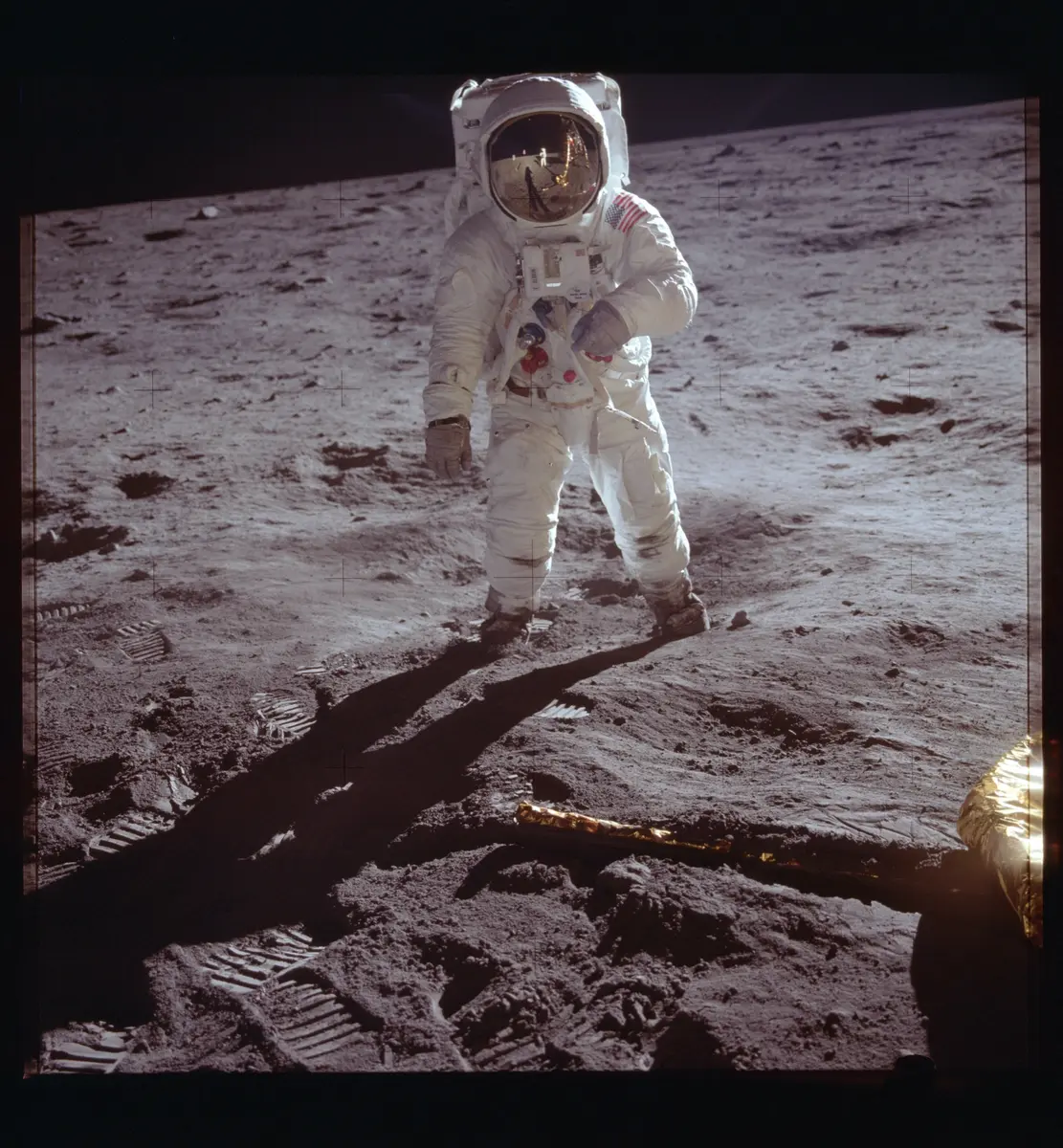
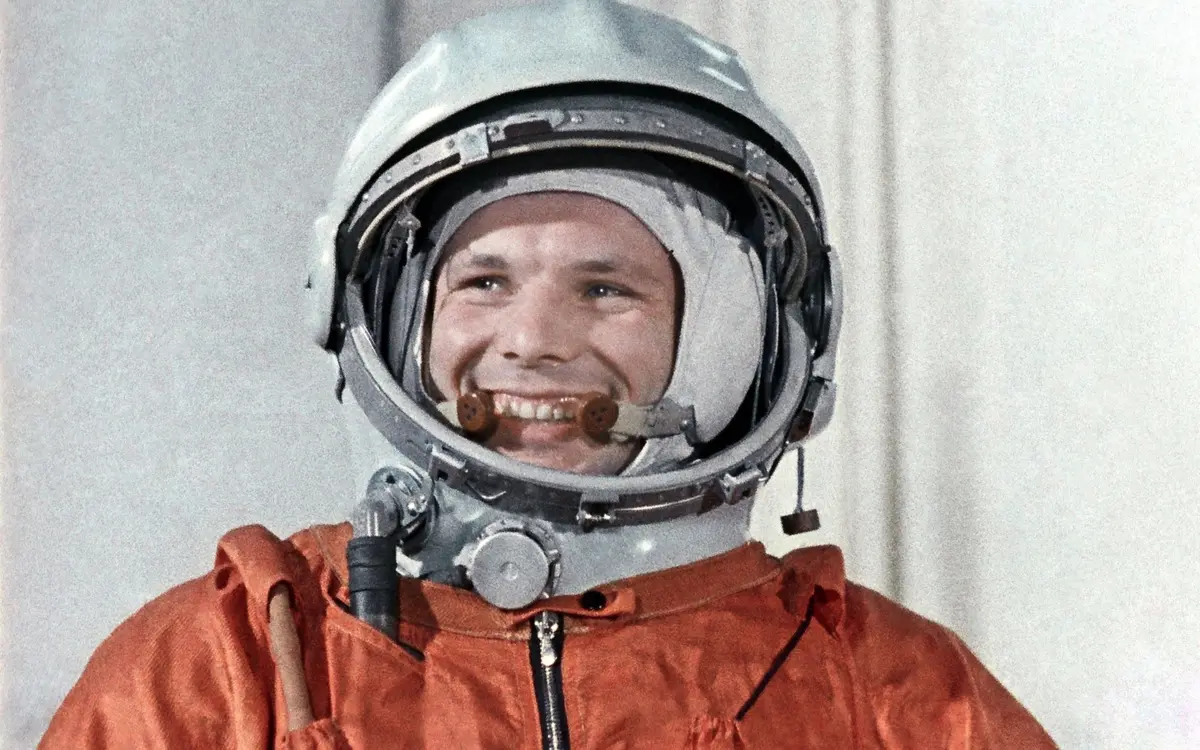
In January 1969 NASA named him commander of Apollo 11. On 20 July he flew the lunar module Eagle by hand past a field of boulders to land in the Sea of Tranquility, and hours later stepped onto the Moon with the words 'That's one small step for man, one giant leap for mankind'. It was the American answer to Yuri Gagarin's flight eight years earlier. Parades, a world tour and medals followed, but he never flew in space again. He worked at NASA headquarters on aeronautics research, left in August 1971 to become a professor of engineering at the University of Cincinnati, and bought a farm near Lebanon, Ohio. In 1986 he was vice-chairman of the presidential commission that traced the loss of the shuttle Challenger to a failed rocket seal and to flawed decisions at NASA.
Armstrong guarded his privacy, rarely spoke about the Moon, and called himself a 'nerdy engineer' rather than a hero. He allowed one authorised biography, James Hansen's First Man (2005), and gave his papers to Purdue. In his last years he spoke out about the future of American spaceflight, and in 2011 he received the Congressional Gold Medal with his Apollo 11 crewmates and John Glenn. He died in Cincinnati on 25 August 2012 after complications from heart surgery. His family asked people who wanted to honour him to look at the Moon on a clear night and 'give him a wink'. NASA's flight research centre at Edwards now bears his name, and his Apollo 11 spacesuit, carefully conserved, stands in the National Air and Space Museum in Washington.
What happened
- 1930
Neil Alden Armstrong is born on his grandparents' farm near Wapakoneta in western Ohio, the eldest of the three children of Viola and Stephen Armstrong, a state auditor whose job moves the family from town to town across Ohio.
Wapakoneta, Ohio: born on his grandparents' farm near the town on 5 August 1930; his boyhood home from his teens, where he learned to fly; it welcomed him home on 6 September 1969 and has the Armstrong Air & Space Museum- 1936
Aged six, he takes his first airplane ride with his father, in a Ford Trimotor at Warren, Ohio. By eight or nine he is building model aircraft and has decided to work in aviation, at first as a designer.
- 1946
On his sixteenth birthday he earns a student pilot's licence, before he has a driving licence, after lessons at a grass airfield at Wapakoneta, where he also makes his first solo flight. He is an Eagle Scout.
Wapakoneta, Ohio: born on his grandparents' farm near the town on 5 August 1930; his boyhood home from his teens, where he learned to fly; it welcomed him home on 6 September 1969 and has the Armstrong Air & Space Museum- 1947
He graduates from Blume High School in Wapakoneta and enrols at Purdue University to study aeronautical engineering on the Navy's Holloway Plan, which pays for college in return for flight training and service as a naval aviator.
Purdue University, West Lafayette, Indiana: he studied aeronautical engineering here from 1947, and after the Navy from 1952 to January 1955; the Neil Armstrong Hall of Engineering (2007) and his papers are here - 1949
Called up after a year and a half at Purdue, Midshipman Armstrong starts naval flight training at Pensacola, Florida. He makes his first solo there on 9 September and his first landing on a carrier, USS Cabot, on 2 March 1950.
- 1950
Two months into the Korean War, he qualifies as a naval aviator, a midshipman with wings, still six months short of his commission.
He joins Fighter Squadron 51 at San Diego, flying the straight-winged F9F Panther jet; he is the youngest pilot in the squadron.
- 1951
Flying from the carrier USS Essex, which sailed for Korea at the end of June, he flies his first combat mission, escorting a photo-reconnaissance plane to Songjin in North Korea. Most of his missions are attacks on bridges, railways and supply depots, from about 100 miles off Wonsan.
On a low bombing run west of Wonsan his Panther loses about six feet of its right wing, by his own account to a cable strung between hills, by the first report to flak. He nurses the jet south and ejects near Pohang, where a jeep driven by an old flight-school roommate picks him up.
- 1952
He flies the last of his 78 combat missions over Korea, most of them in January 1952; he is awarded three Air Medals. The squadron's war inspired James Michener's novel The Bridges at Toko-Ri.
Released from active duty, he goes back to Purdue to finish his degree, while flying with the Naval Reserve; he will resign his reserve commission in 1960.
- 1955
He completes his bachelor's degree in aeronautical engineering at Purdue.
Purdue University, West Lafayette, Indiana: he studied aeronautical engineering here from 1947, and after the Navy from 1952 to January 1955; the Neil Armstrong Hall of Engineering (2007) and his papers are hereHis first job is with NACA, the government's aeronautics research agency, at the Lewis Flight Propulsion Laboratory in Cleveland, as a research pilot and engineer: he flies a transport plane into icing clouds over Lake Erie and launches test rockets from a Twin Mustang over the Atlantic.
He moves to NACA's High-Speed Flight Station at Edwards, California, where he becomes one of its research pilots, flying fighters, the B-29 that drops rocket planes, and in time the rocket planes themselves.
NACA High-Speed Flight Station (later NASA's Flight Research Center, now the Neil A. Armstrong Flight Research Center), Edwards, California: his base as a research pilot from 1955 to 1962, where he flew the X-15- 1956
He marries Janet Shearon, whom he met at Purdue; they will have three children, Eric, Karen and Mark.
- 1957
He makes his first rocket-plane flight, in the Bell X-1B; he will also fly the last flight of the Bell X-5.
NACA High-Speed Flight Station (later NASA's Flight Research Center, now the Neil A. Armstrong Flight Research Center), Edwards, California: his base as a research pilot from 1955 to 1962, where he flew the X-15- 1960
First flight in the X-15, the rocket plane built to fly to the edge of space, in ship No. 1.
NACA High-Speed Flight Station (later NASA's Flight Research Center, now the Neil A. Armstrong Flight Research Center), Edwards, California: his base as a research pilot from 1955 to 1962, where he flew the X-15His second X-15 flight is the first with the new 'ball nose', a sensor that measures airspeed and flow angle at hypersonic speeds.
NACA High-Speed Flight Station (later NASA's Flight Research Center, now the Neil A. Armstrong Flight Research Center), Edwards, California: his base as a research pilot from 1955 to 1962, where he flew the X-15- 1962
His two-year-old daughter Karen dies of an inoperable brain tumour, on the sixth anniversary of his wedding. He goes back to work at once, but those close to him say the loss marked him deeply.
In X-15 No. 3 he climbs to about 207,500 feet, then holds the nose up too long on the way down, skips off the thin air and overshoots Edwards, heading south at Mach 3. He turns back over the Rose Bowl in Pasadena and just reaches the south end of Rogers Dry Lake.
NACA High-Speed Flight Station (later NASA's Flight Research Center, now the Neil A. Armstrong Flight Research Center), Edwards, California: his base as a research pilot from 1955 to 1962, where he flew the X-15He makes his seventh and last X-15 flight. He leaves Edwards with more than 2,450 flying hours.
NACA High-Speed Flight Station (later NASA's Flight Research Center, now the Neil A. Armstrong Flight Research Center), Edwards, California: his base as a research pilot from 1955 to 1962, where he flew the X-15NASA names its second group of astronauts, the 'New Nine', chosen from 253 applicants: Armstrong is one of only two civilians. His application had arrived a week after the deadline.
Manned Spacecraft Center (now the Johnson Space Center), Houston: his base as an astronaut from 1962 to 1970, through Gemini 8 and Apollo 11- 1965
He serves as backup command pilot for Gemini V, an eight-day endurance flight, his first assignment to a mission.
Manned Spacecraft Center (now the Johnson Space Center), Houston: his base as an astronaut from 1962 to 1970, through Gemini 8 and Apollo 11- 1966
Armstrong steers Gemini 8 to the Agena by eye and docks with it: the first docking of two spacecraft in orbit. Out of radio contact, the joined craft begin to roll; when they undock, the spin speeds up to nearly one turn a second. A thruster on their own ship is stuck firing. Armstrong shuts off the main thrusters and steadies Gemini with its re-entry thrusters, and mission rules then require an early return.
- 4:41 p.m.
Gemini 8 lifts off from Pad 19 at Cape Kennedy at 11:41 in the morning Eastern time, 101 minutes after its Agena target rocket; Armstrong is command pilot and David Scott pilot. Having resigned his Navy commission, Armstrong is the first American civilian to fly in space.
- 3:22 a.m.
Ten hours 41 minutes after launch, Gemini 8 splashes down in the western Pacific, about 430 nautical miles east of Okinawa; pararescuemen jump from a plane to hold the capsule until the destroyer USS Leonard F. Mason arrives about three hours later.
- 1968
On his 22nd flight in the Lunar Landing Research Vehicle, the trainer for the final descent to the Moon, at Ellington Air Force Base in Houston, the machine goes out of control about 200 feet up. He ejects seconds before it crashes and burns, and is reportedly back at his desk that afternoon.
He is backup commander for Apollo 8, the first crewed flight around the Moon, with Buzz Aldrin as his backup lunar module pilot.
Manned Spacecraft Center (now the Johnson Space Center), Houston: his base as an astronaut from 1962 to 1970, through Gemini 8 and Apollo 11- 1969
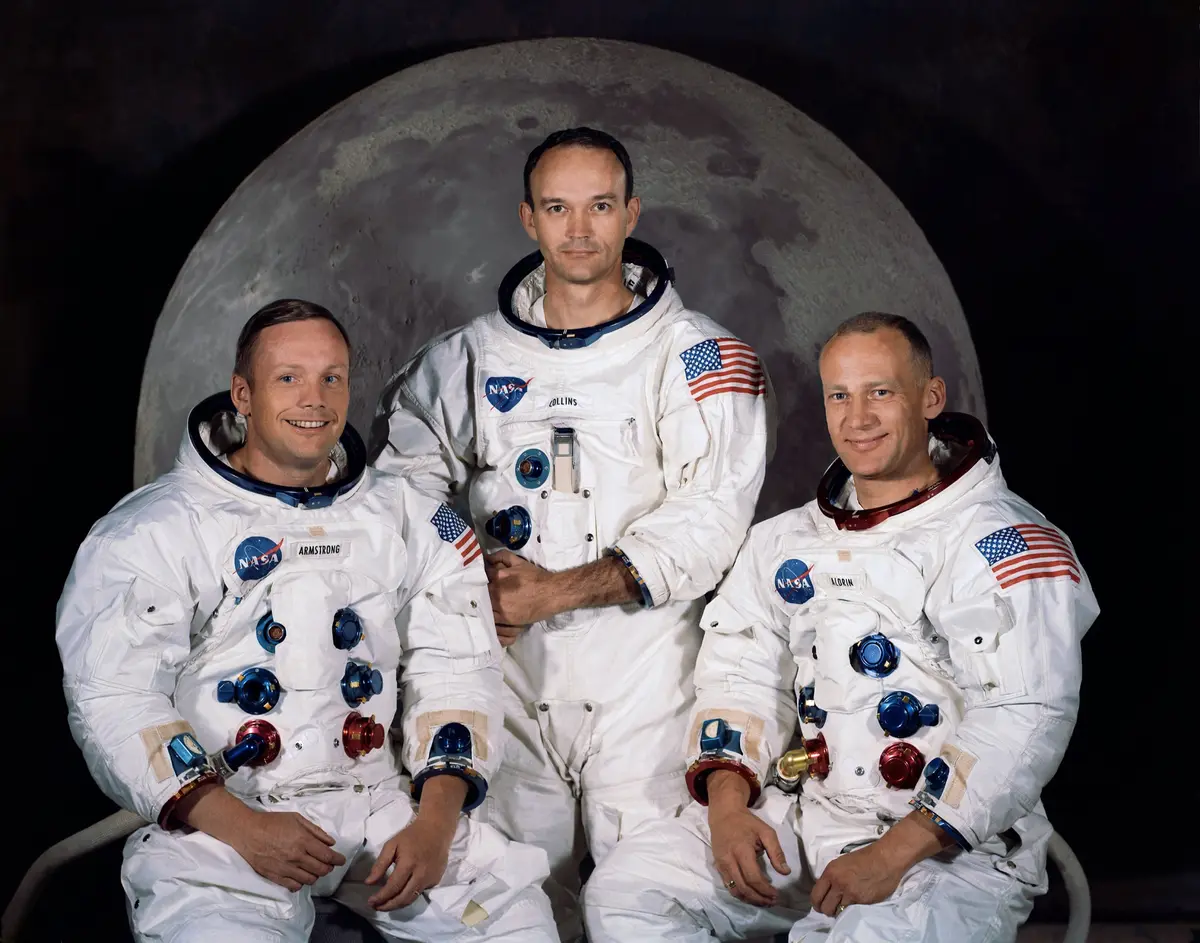
NASA announces the Apollo 11 crew: Armstrong commander, Michael Collins command module pilot and Buzz Aldrin lunar module pilot.
Manned Spacecraft Center (now the Johnson Space Center), Houston: his base as an astronaut from 1962 to 1970, through Gemini 8 and Apollo 11- 1:32 p.m.
Apollo 11 lifts off from Launch Complex 39A at Kennedy Space Center at 9:32 in the morning Florida time.
- 8:17 p.m.
With the guidance computer sounding alarms and the planned spot strewn with boulders, Armstrong takes over and flies Eagle by hand to a clear patch in the Sea of Tranquility: 'Houston, Tranquility Base here. The Eagle has landed.'
- 2:56 a.m.
Armstrong steps onto the Moon: 'That's one small step for man, one giant leap for mankind.' He and Aldrin spend about two and a half hours outside, while hundreds of millions watch on television.
- 4:50 p.m.
Apollo 11 splashes down in the Pacific near the carrier USS Hornet; the crew then spend three weeks in quarantine in case they carry germs from the Moon.
Out of quarantine, the crew are welcomed with parades in New York, Chicago and Los Angeles on a single day.
Wapakoneta holds a Home Coming Day for its most famous son, with a parade down the main street.
Wapakoneta, Ohio: born on his grandparents' farm near the town on 5 August 1930; his boyhood home from his teens, where he learned to fly; it welcomed him home on 6 September 1969 and has the Armstrong Air & Space MuseumAt President Nixon's request the crew and their wives set off from Houston on the 'Giantstep' goodwill tour: 38 days, 29 cities in 24 countries.
- 1970
He becomes Deputy Associate Administrator for Aeronautics at NASA headquarters in Washington, in charge of coordinating NASA's aeronautics research; among the technologies he helps pass to industry is digital fly-by-wire control.
He spends the day at NASA's Lewis Research Center in Cleveland, where he began in 1955, at technical meetings and among its wind tunnels; already he warns that NASA must find 'a balanced approach' as budgets fall.
- 1971
He leaves NASA to become professor of aerospace engineering at the University of Cincinnati, where he teaches aircraft design and flight mechanics; he lives on a farm near Lebanon, Ohio, and rarely speaks about the Moon.
University of Cincinnati, Ohio: professor of aerospace engineering from 1971 to 1979; he died in Cincinnati on 25 August 2012- 1978
President Carter gives him the first Congressional Space Medal of Honor, at Kennedy Space Center.
- 1979
He leaves the University of Cincinnati and turns to business: he chairs companies such as Computing Technologies for Aviation (1982 to 1992) and sits on corporate boards for two decades.
University of Cincinnati, Ohio: professor of aerospace engineering from 1971 to 1979; he died in Cincinnati on 25 August 2012 - 1986
Six days after the shuttle Challenger broke apart, killing its crew of seven, President Reagan creates a presidential commission to find the cause, chaired by William Rogers, with Armstrong as vice-chairman.
The Rogers Commission reports: the failure of a seal in a joint of the right solid rocket booster destroyed Challenger, and NASA's decision to launch in the cold was 'flawed'.
- 2005
James R. Hansen's First Man: The Life of Neil A. Armstrong, the only biography he authorised, is published.
- 2007
Purdue dedicates the Neil Armstrong Hall of Engineering; the day before, a bronze statue of him as a young student is unveiled in front of it. The next year he begins giving his papers to Purdue's archives.
Purdue University, West Lafayette, Indiana: he studied aeronautical engineering here from 1947, and after the Navy from 1952 to January 1955; the Neil Armstrong Hall of Engineering (2007) and his papers are here- 2011
In the Rotunda of the Capitol, Congress presents its Gold Medal to Armstrong, Aldrin, Collins and John Glenn.
- 2012
Neil Armstrong dies in Cincinnati, aged 82, of complications after heart bypass surgery. His family asks people to honour him by looking at the Moon on a clear night and giving him a wink.
University of Cincinnati, Ohio: professor of aerospace engineering from 1971 to 1979; he died in Cincinnati on 25 August 2012