The Moon landing
“Apollo 11: on July 20, 1969, Neil Armstrong and Buzz Aldrin landed Eagle in the Sea of Tranquility, and hours later Armstrong took the first step on the Moon, keeping Kennedy's promise of 1961.”
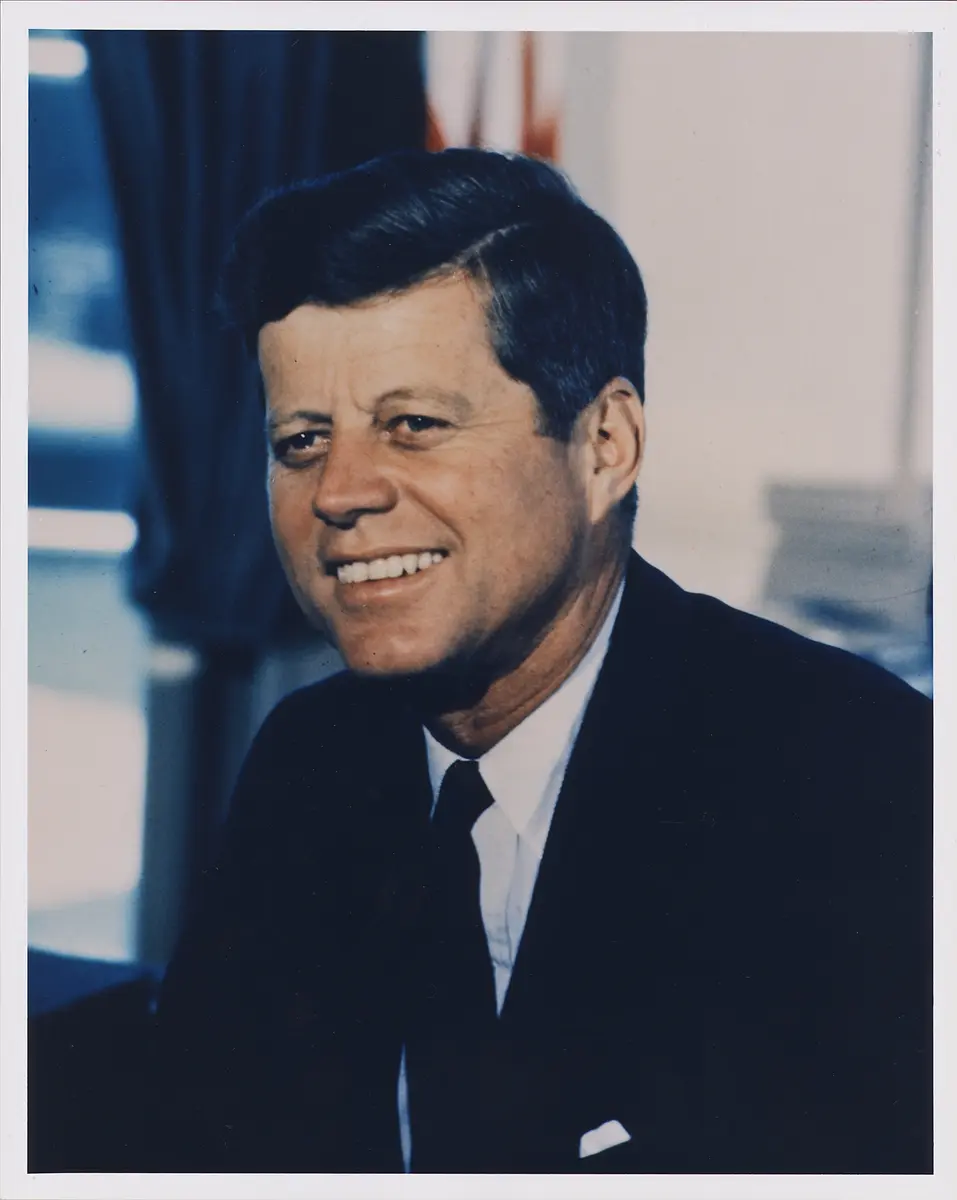
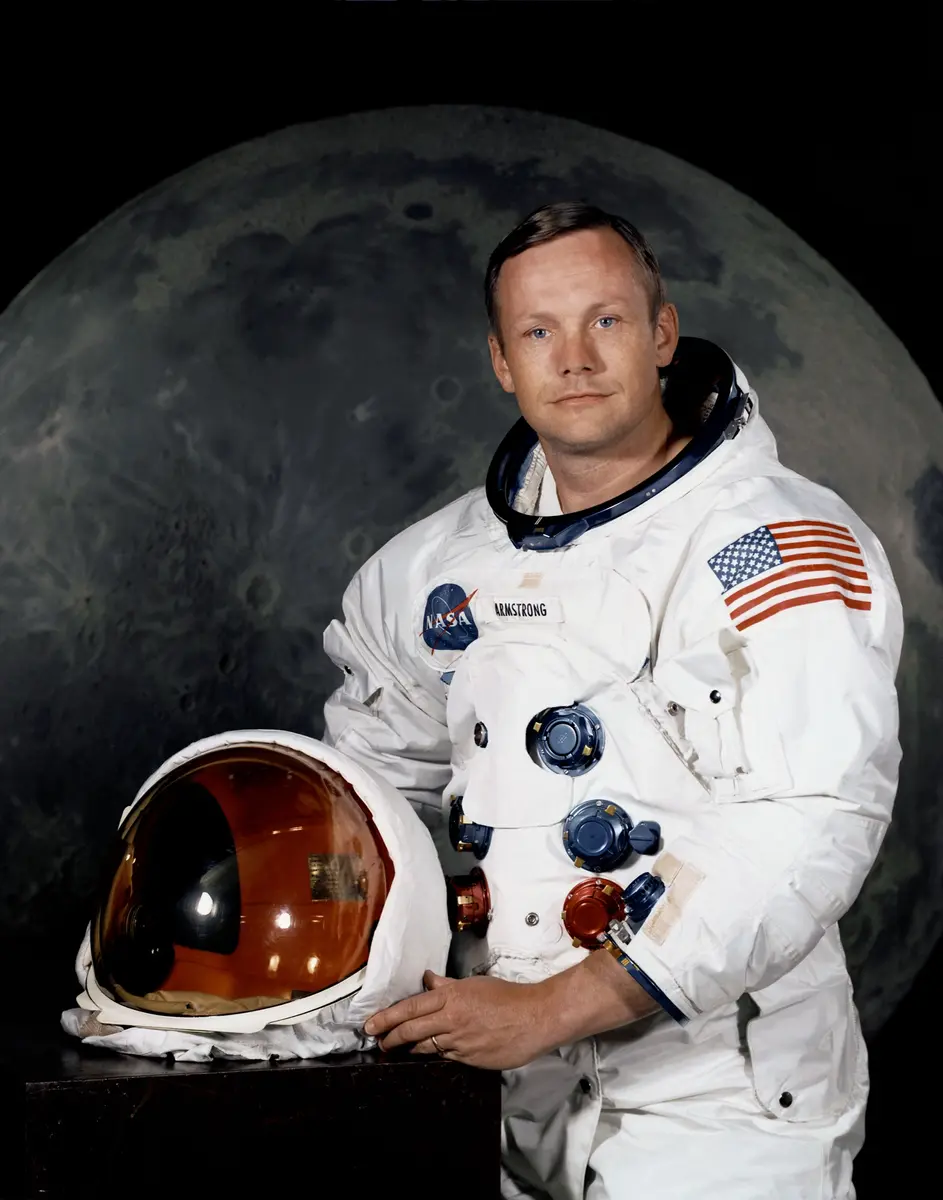
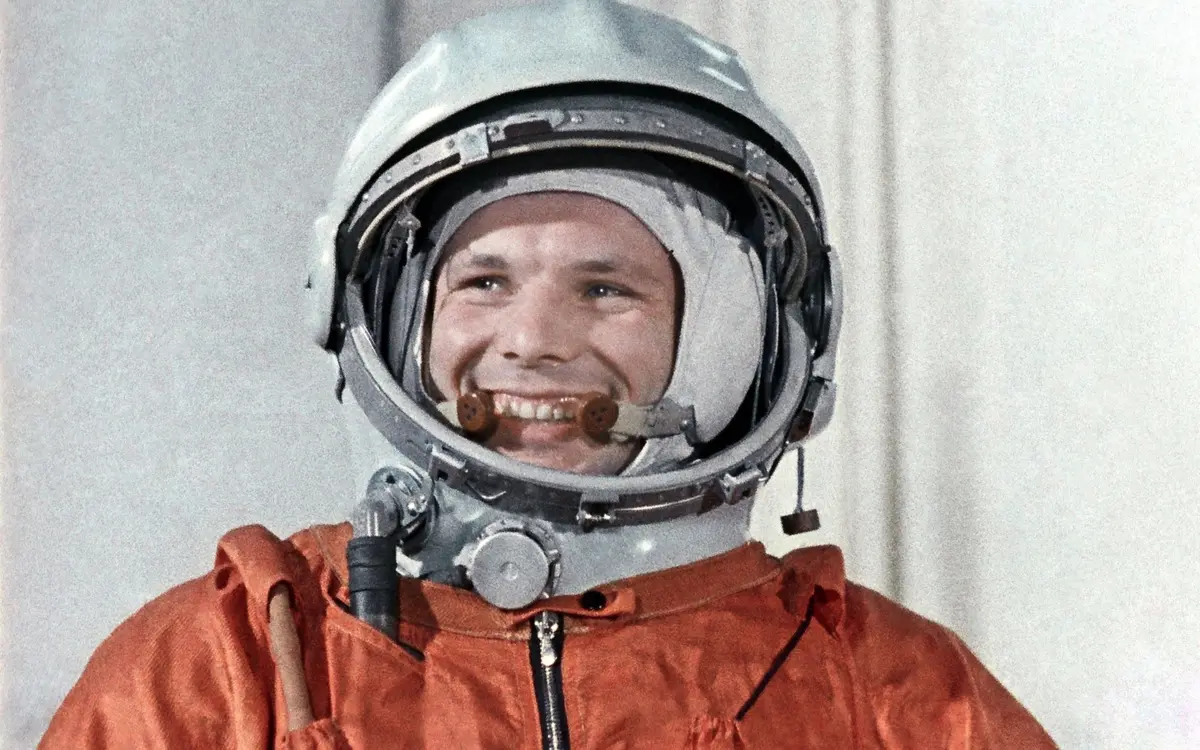
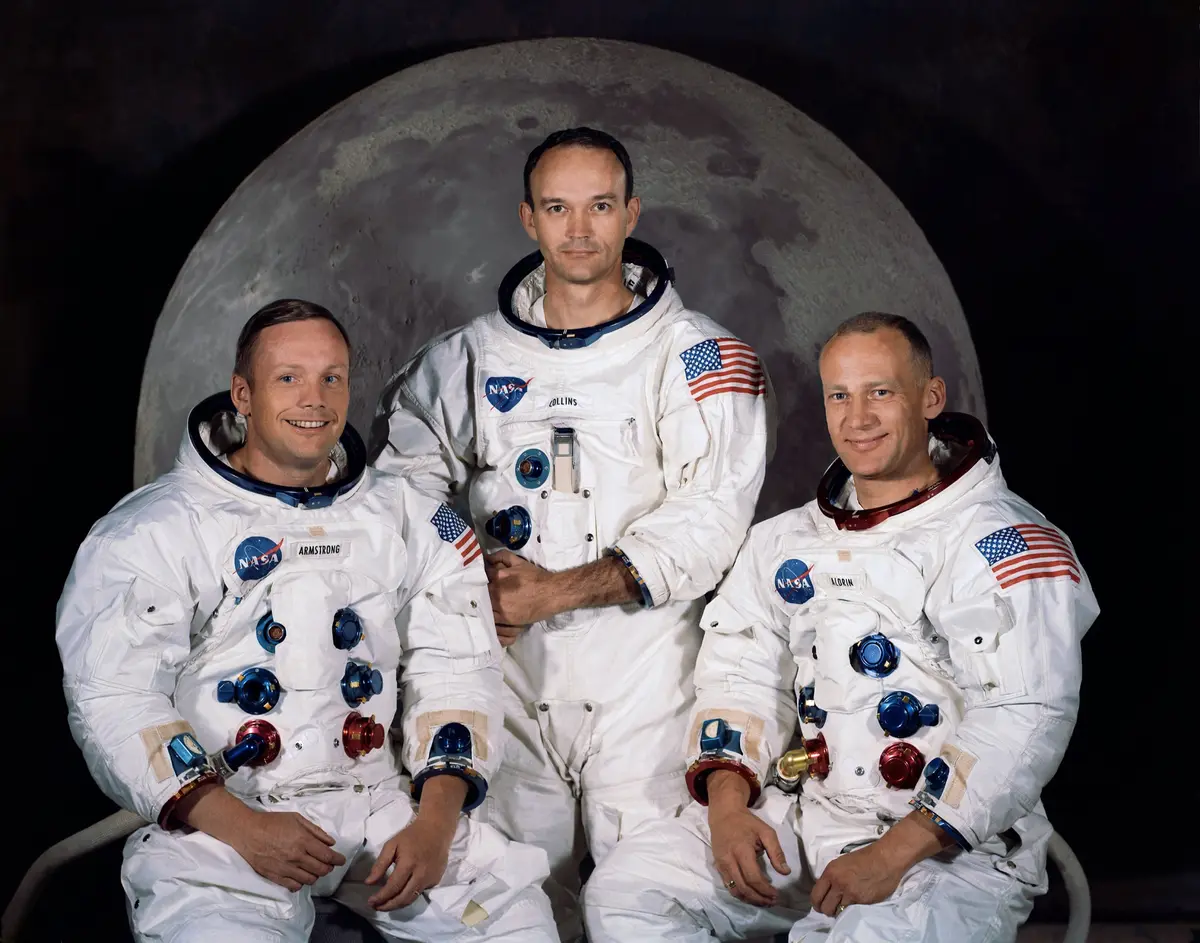
Apollo 11 was the flight that put the first people on the Moon, and it was flown to keep a promise. On May 25, 1961, six weeks after Yuri Gagarin had become the first human in space and three weeks after the United States had managed a fifteen-minute hop, President John F. Kennedy asked Congress to commit the country to landing a man on the Moon and returning him safely to Earth before the decade was out. Nothing, he said, would be more impressive to mankind or harder to do. Keeping the promise took eight years, the 111-metre Saturn V rocket, the deaths of three astronauts in the Apollo 1 fire of January 1967 and four crewed test flights, two of them around the Moon. The crew of the fifth were Neil Armstrong, the commander, Buzz Aldrin, the lunar module pilot, and Michael Collins, who would stay in orbit around the Moon in the command module Columbia while the other two went down in the lunar module Eagle.
The Saturn V lifted off from Launch Complex 39A at the Kennedy Space Center at 13:32 UTC on July 16, 1969, before hundreds of thousands of people on the beaches and roads of Florida and television viewers in 33 countries. Three days later the ship slowed into orbit around the Moon, and on July 20 Armstrong and Aldrin undocked Eagle and began the descent. Their computer sounded alarms that it was overloaded, and Mission Control in Houston told them to keep going; then Armstrong saw that the automatic guidance was taking them into a field of boulders beside a crater and flew the last part by hand, with, as the controllers reckoned it, about 25 seconds of fuel left before the landing would have had to be abandoned. Eagle settled onto the Sea of Tranquility at 20:17 UTC. 'Houston, Tranquility Base here,' Armstrong radioed. 'The Eagle has landed.'
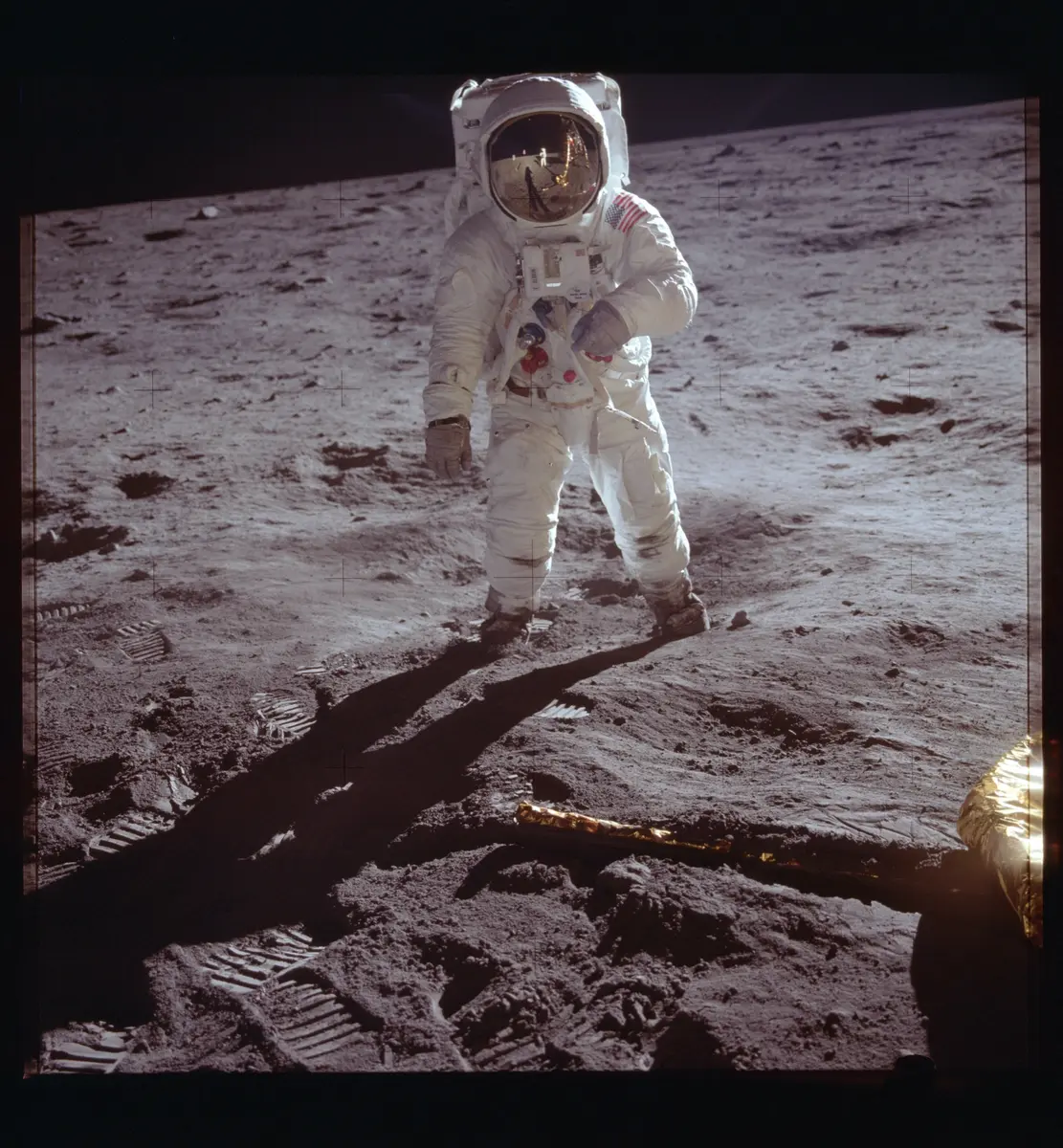
Six and a half hours later, at 02:56 UTC on July 21, Armstrong climbed down Eagle's ladder and stepped onto the Moon with the words 'That's one small step for man, one giant leap for mankind' (he meant to say 'for a man'), while an estimated 600 to 650 million people, a fifth of humanity, watched the ghostly black-and-white television picture relayed through tracking stations in California and Australia. Aldrin joined him nineteen minutes later and called the view 'magnificent desolation'. In two and a half hours outside they planted a flag, took a telephone call from President Nixon, set up a seismometer and a laser reflector for measuring the distance from Earth, and collected 21.5 kilograms of rock and soil. They lifted off after 21 hours 36 minutes on the surface, rejoined Collins, and splashed down in the Pacific beside the carrier USS Hornet on July 24. Because nobody could be sure that Moon dust carried no germs, the three then spent three weeks in quarantine.
The landing ended the Space Race. The Soviet Union, which had launched the first satellite and the first man into space, never built a rocket to match the Saturn V, and its robot probe Luna 15, sent to bring Moon soil home first, crashed while Armstrong and Aldrin were still on the surface. Five more Apollo crews landed, the last in December 1972, and no one has landed there since. The astronauts were paraded through New York, Chicago and Los Angeles on August 13, 1969 and then round the world; Columbia stands in the National Air and Space Museum in Washington, Eagle's descent stage still stands at Tranquility Base, and the rocks brought home, three new minerals among them, gave scientists their first direct reading of another world's history. Apollo 11 remains the furthest people have ever travelled, one of the most-watched events in the history of television, and the proof that a promise made when America had flown fifteen minutes in space could be kept.
What happened
- 1969
- 1:32 p.m.
At 13:32 UTC (9:32 in the morning in Florida) the Saturn V lifts off from Launch Complex 39A with Armstrong, Collins and Aldrin aboard; hundreds of thousands watch from the beaches and roads, and the launch is shown live in 33 countries.
Launch Complex 39A, Kennedy Space Center: the pad from which Apollo 11 lifted off at 13:32 UTC on July 16, 1969 - 4:16 p.m.
After one and a half orbits of the Earth the third stage fires again for six minutes at 16:16 UTC and sends the ship towards the Moon; Collins then turns Columbia round and pulls Eagle out of the spent stage.
On the coast to the Moon the crew photograph the Earth from 98,000 nautical miles, make the only course correction the flight needs, and send the first colour television from so far out.
Armstrong and Aldrin crawl through the tunnel into Eagle for the first time in flight to check it over, and show its cabin on television.
- 5:21 p.m.
Behind the Moon and out of radio contact, the crew fire Columbia's engine for six minutes at 17:21 UTC to slow into lunar orbit; over the next day they circle the Moon, looking down on the landing site in the southern Sea of Tranquility.
- 5:44 p.m.
Eagle undocks from Columbia at 17:44 UTC and turns slowly so that Collins can check its landing gear; 'The Eagle has wings,' says Armstrong. An hour later, behind the Moon, Eagle's engine fires to begin the descent.
- 8:17 p.m.
Alarms from the overloaded computer, a field of boulders beside a crater, and Armstrong flying by hand: Eagle lands in the Sea of Tranquility at 20:17 UTC with, as the controllers reckon it, about 25 seconds of fuel to spare. 'Houston, Tranquility Base here. The Eagle has landed.'
Mission Control, Building 30, Manned Spacecraft Center, Houston: the room that flew the mission and heard 'The Eagle has landed' They set out a solar-wind collector, a seismometer and a laser reflector about twenty metres from Eagle, hammer in two core tubes, take about a hundred photographs and gather 21.5 kilograms of rock and soil, never going more than about 90 metres from the module.
Luna 15, the robot probe the Soviet Union had sent to scoop up Moon soil and bring it home before the Americans, crashes in the Sea of Crises about two hours before Eagle's liftoff.
- 2:56 a.m.
Having chosen to skip the planned sleep, the two open the hatch at 02:39 UTC; Armstrong climbs down the ladder and at 02:56 UTC steps onto the Moon: 'That's one small step for man, one giant leap for mankind.' The television picture, relayed through Goldstone and Honeysuckle Creek, reaches an estimated 600 million people.
Honeysuckle Creek tracking station, near Canberra: its dish gave the clearest television of the first steps, the pictures the world saw - 3:41 a.m.
Aldrin has joined him at 03:15 UTC ('Magnificent desolation'); the two read out the plaque on the ladder leg, plant the flag at about 03:41 UTC, and at 03:48 UTC take a telephone call from President Nixon in the Oval Office, 'the most historic telephone call ever made'.
- 5:11 a.m.
After two and a half hours outside, Aldrin and then Armstrong climb back in, and the hatch is closed at 05:11 UTC; they throw out their backpacks and overshoes to save weight, and try to sleep in their suits, one on the floor and one on the engine cover.
- 5:54 p.m.
After 21 hours 36 minutes on the Moon the ascent stage lifts off at 17:54 UTC, leaving the descent stage, the flag, the instruments and the plaque at Tranquility Base.
- 9:35 p.m.
Eagle docks with Columbia at 21:35 UTC; Armstrong and Aldrin pass the sample boxes and the film through the tunnel, and the ascent stage is cast off into lunar orbit.
In the early hours of July 22 UTC, the evening of July 21 in Houston, Columbia's engine fires for two and a half minutes behind the Moon and the crew head home; one small correction and two television shows fill the two and a half days back.
- 4:50 p.m.
Steered 250 miles from the planned point to avoid a storm, Columbia splashes down in the Pacific at 16:50 UTC, at 13°19′N 169°9′W, 24 km from USS Hornet, after 195 hours 18 minutes; it lands upside down and is righted by its flotation bags, and Navy swimmers hand in the isolation suits.
The splashdown point: Columbia came down here in the central Pacific, 13°19′N 169°9′W, at 16:50 UTC on July 24, 1969, 24 km from USS Hornet - 5:53 p.m.
The helicopter sets the three down on Hornet's deck at 17:53 UTC and they walk into the quarantine trailer; President Nixon, flown out to the carrier, greets them through its window, and the trailer, with Columbia and the rocks, is shipped to Houston for the rest of three weeks of quarantine.
USS Hornet, Alameda, California: the carrier that picked up the crew on July 24, 1969, now a museum ship