The Columbia disaster
“STS-107: a block of foam hit Columbia's left wing at launch on January 16, 2003, and on February 1 the shuttle broke up over Texas, killing all seven astronauts; NASA's habits, not only the foam, were blamed.”
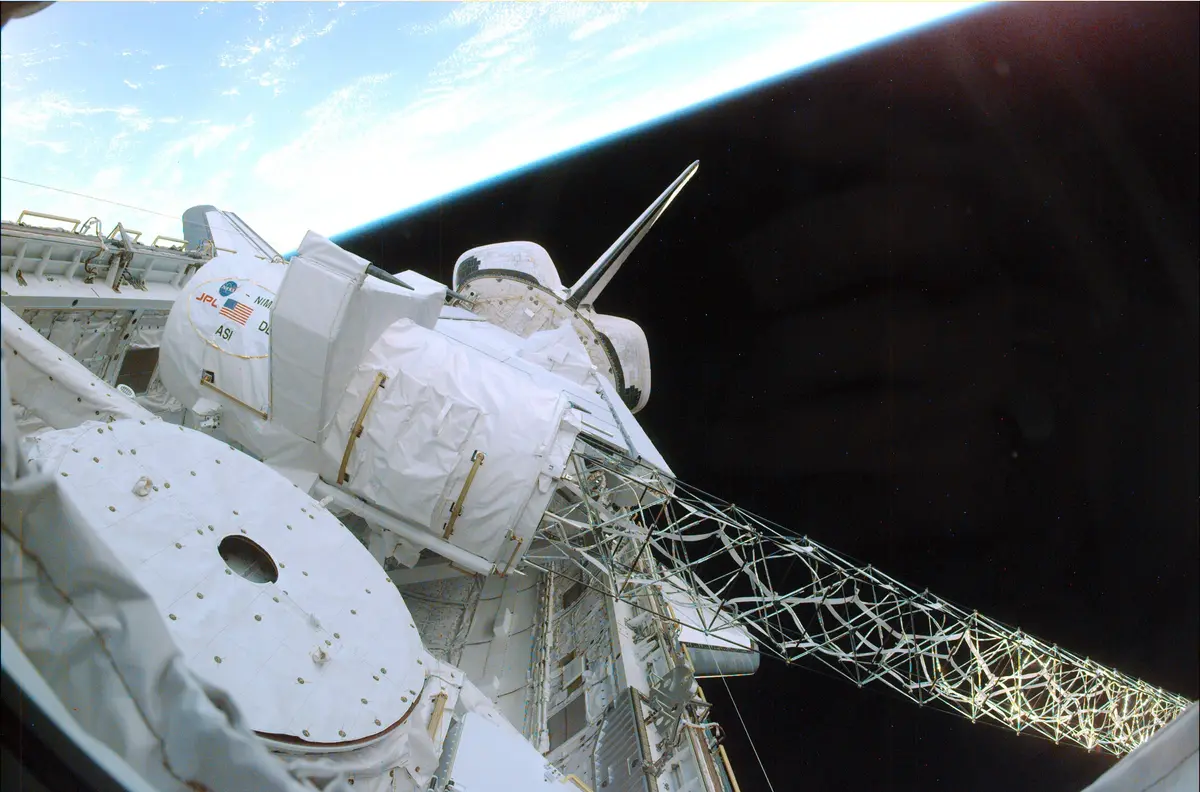
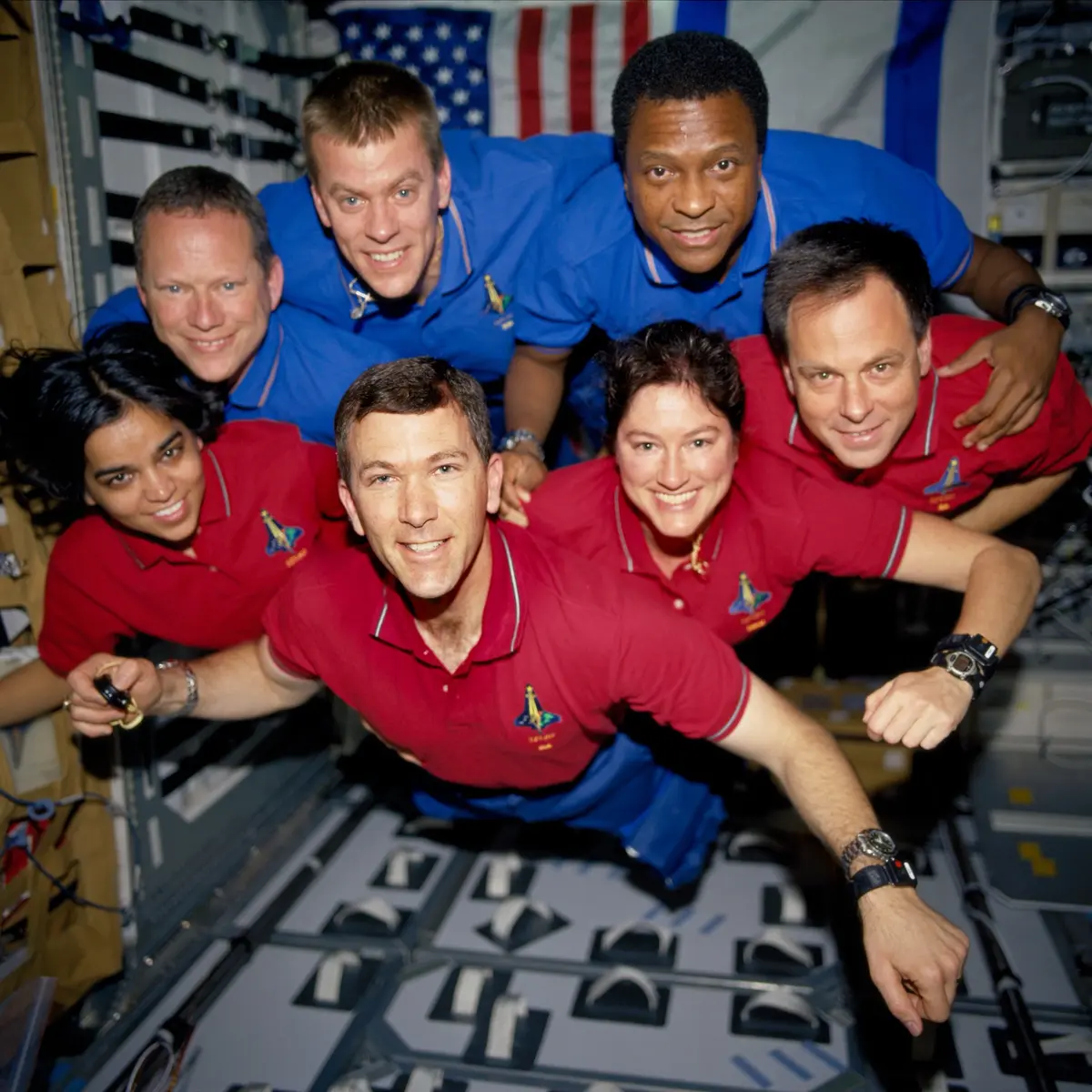
STS-107 was the 113th flight of the Space Shuttle and the 28th of Columbia, the oldest orbiter in the fleet. It was a science flight: seven people working in two shifts around the clock for 16 days, running more than 80 experiments in a research module in the payload bay. The crew were Rick Husband, the commander; William McCool, the pilot; Michael Anderson, the payload commander; Kalpana Chawla, David Brown and Laurel Clark, mission specialists; and Ilan Ramon, a colonel in the Israeli Air Force and the first astronaut from Israel. Columbia lifted off from Launch Complex 39A at Kennedy Space Center at 10:39 a.m. Eastern time on January 16, 2003.
Eighty-one seconds into the climb, a piece of foam insulation about half a metre long broke off the left bipod ramp of the External Tank and hit the leading edge of Columbia's left wing at about 800 kilometres an hour relative to the shuttle. Nobody on board saw it. The next day, engineers looking at launch film noticed the strike, and a Debris Assessment Team was formed. Foam had come off tanks on most earlier flights without disaster, so managers had come to treat it as a normal event. The team could not see the wing, asked three times for pictures of the wing from outside agencies, and its requests were turned down or dropped; the Mission Management Team called the strike a 'turnaround' issue, something to fix between flights.
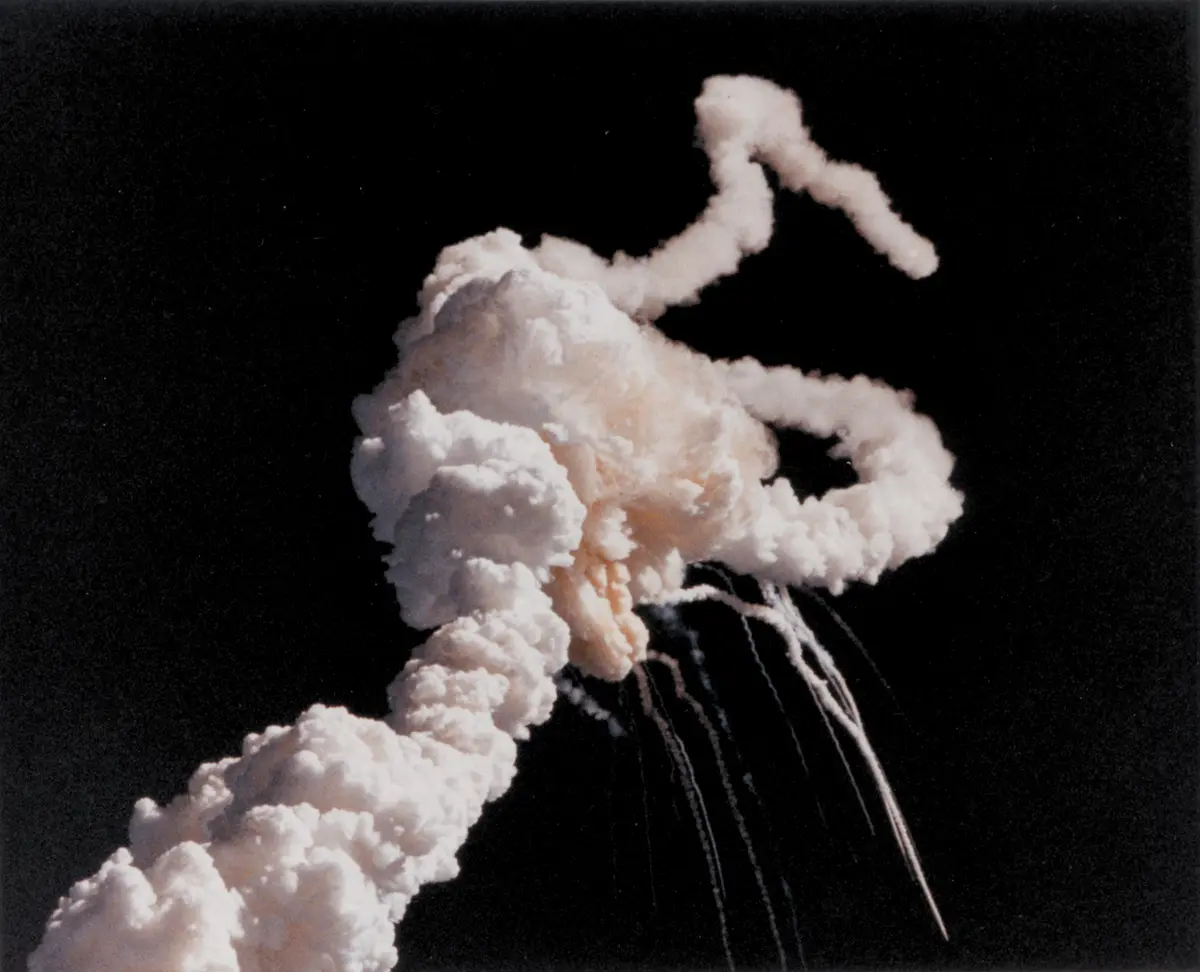
On February 1 Columbia fired its engines over the Indian Ocean and began its fall toward a 9:16 a.m. landing in Florida. Hot gas had been entering the damaged wing since the first minutes of re-entry. At 8:59:32 a.m. Eastern time the commander's last, half-finished word, 'Roger,' was recorded, and about 45 seconds later the shuttle broke apart over Texas at roughly 60 kilometres up. All seven astronauts died; the Board later found that no one could have survived in that phase of flight. Pieces fell along a path from north Texas to western Louisiana. More than 25,000 people searched, on foot, by helicopter and under water, and recovered some 84,000 pieces, 38 percent of the orbiter by weight; two men of the search died in a helicopter crash.
The Columbia Accident Investigation Board, chaired by Admiral Harold Gehman, reported on August 26, 2003. It named two causes. The physical one was the foam strike, proved when engineers fired a foam block from an air gun at a wing panel in July and blew a hole in it. The deeper one was NASA's culture: years of tight budgets and schedule pressure, and a habit of treating past luck as proof of safety, had let engineers' doubts stay unheard. The fleet stayed on the ground for two and a half years.
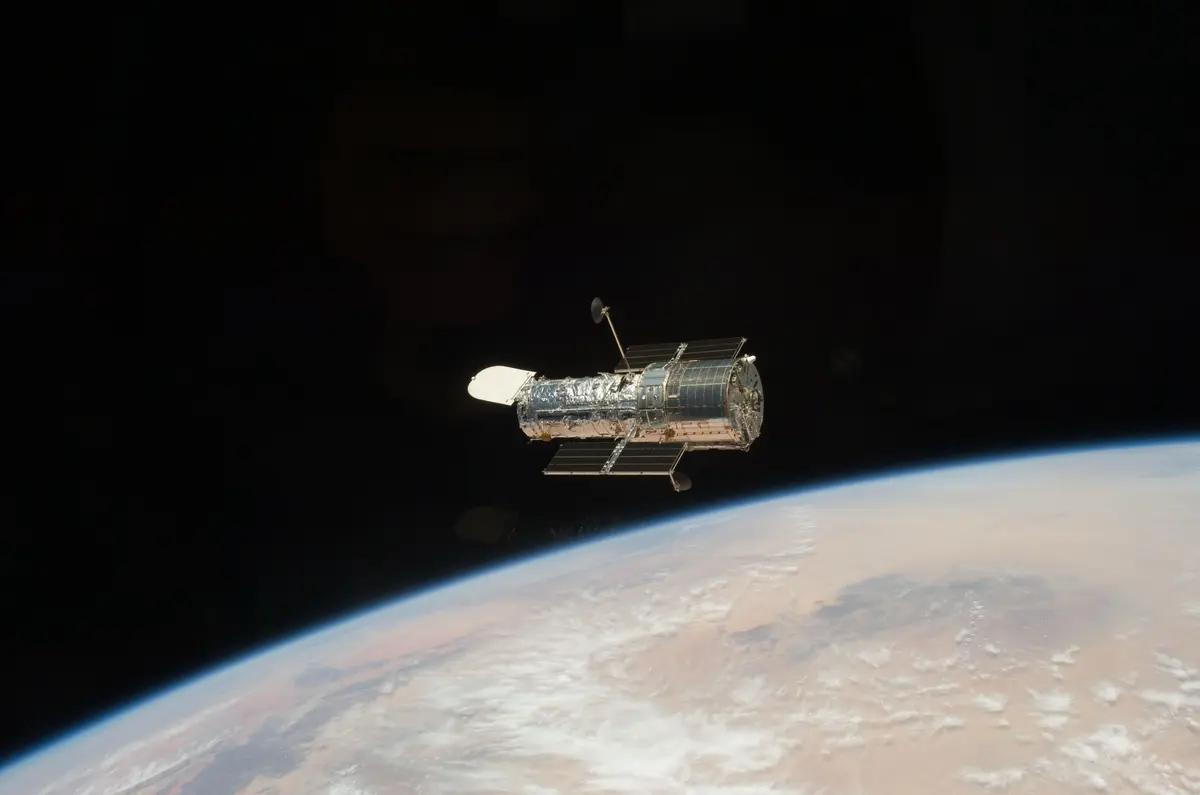
The accident reshaped American spaceflight. In January 2004 President George W. Bush announced a plan to finish the International Space Station, retire the shuttle and send people back to the Moon. The same month NASA cancelled the last repair flight to the Hubble Space Telescope as too risky; a new administrator reversed that in October 2006, and Atlantis carried out the repair in May 2009. The shuttle flew for the last time in July 2011, when Atlantis landed on July 21.
What happened
- 2003
- 3:39 p.m.
At 10:39 a.m. Eastern time (15:39 UTC) Columbia lifts off from Launch Pad 39A on the 113th shuttle flight, carrying seven astronauts on a 16-day science mission; the countdown has run about a day longer than normal because of the large science load.
Launch Complex 39A, Kennedy Space Center: where Columbia lifted off on January 16, 2003, and where Atlantis, on its repair flight to Hubble (2009) and on the shuttle's last flight (2011), also left the Earth - 3:40 p.m.
81.7 seconds after liftoff, at about 20 kilometres up and Mach 2.5, a block of foam breaks off the left bipod ramp of the External Tank; 0.2 seconds later it hits the underside of Columbia's left wing near panels 5 to 9. The crew does not notice.
- 4:58 p.m.
Engineers studying the film see the strike. A log entry at 10:58 a.m. Central time records that the vehicle may be damaged; by mid-afternoon Wayne Hale tells the Mission Management Team chair Linda Ham and shuttle programme manager Ron Dittemore. A new group, the Debris Assessment Team, is formed, and the Mission Management Team holds the first of its five meetings on the flight.
The Debris Assessment Team holds its first formal meeting. Without a picture of the wing it can only use a computer model, Crater, that was not designed for an impact like this; its NASA co-chair, Rodney Rocha, takes its request for imagery of the wing in orbit to his own managers. At the Mission Management Team that morning the foam comes up only after other business.
The team presents its results: some heat damage is likely, but it cannot say the structure would fail. A manager passes a verbal summary, without data, to the Mission Management Team, which treats the strike as a 'turnaround' issue and drops the request for pictures. The crew has been told by e-mail there is 'no concern'.
A senior NASA manager is offered the help of the Department of Defense to take pictures of Columbia in orbit and accepts only on a low-priority 'not-to-interfere' basis, because the strike has been judged not a safety-of-flight issue. No picture is taken.
At the last Mission Management Team meeting before landing the strike is mentioned once, in a line about getting the crew's cameras and tank films to Marshall after landing. The meeting is about water separators, weather and landing opportunities.
The densest debris lies in a strip from south of Fort Worth to Fort Polk, Louisiana. The most easterly pieces, including the main-engine turbopumps, come down at Fort Polk; the westernmost confirmed piece, a tile, is found in Littlefield, Texas.
Fort Polk, Louisiana: where the engine turbopumps and an 800-pound engine piece, among the most easterly debris, came down; one piece dug a six-foot hole in the base golf courseFour base camps are set up for the search, at Corsicana, Palestine, Nacogdoches and Hemphill. Near Nacogdoches a piece of debris lands between two natural gas tanks that stand a few feet apart; no one on the ground is hurt by the falling wreckage.
Nacogdoches, Texas: a search base camp; near the town a piece of debris fell between two natural gas tanks standing a few feet apart- 1:15 p.m.
Flying upside down and tail first over the Indian Ocean, Rick Husband and William McCool fire the engines for 2 minutes 38 seconds at 8:15:30 a.m. Eastern time, the de-orbit burn, on the 255th orbit. Nothing is wrong.
- 1:53 p.m.
Observers in California see Columbia as a bright spot of light moving fast across the sky. At 8:53:46 a.m. the glowing trail suddenly brightens, and four more such events follow within 23 seconds; a bright flash at 8:54:25 as it crosses into Nevada, and 18 more in the next four minutes, mark pieces coming off. Mission Control, which cannot see this, is told at 8:54:24 that four hydraulic sensors in the left wing read off-scale low.
- 1:59 p.m.
At 8:59:32 a.m. Eastern time, with Columbia near Dallas at Mach 18, Mission Control hears the commander say 'Roger,' cut off mid-word. It is the last message from the crew and the last data from the orbiter.
- 2:00 p.m.
At 9:00:18 a.m. cameras on the ground record bright flashes round the orbiter and a change in its trail: the main break-up, 46 seconds after the last signal, over East Texas. A helicopter crew near Fort Hood films it with an infrared camera. All seven astronauts are lost.
- 2:16 p.m.
Columbia should have landed at the Kennedy Space Center at 9:16 a.m. Shortly after that time NASA declares a 'Shuttle Contingency', and at 10:30 a.m. Administrator Sean O'Keefe activates an investigation board and names Admiral Harold Gehman to chair it. President Bush addresses the nation several hours later.
Shuttle Landing Facility, Kennedy Space Center: where Columbia was to land at 9:16 a.m. on February 1, 2003, and where Atlantis touched down for the last time on July 21, 2011 Board members fly to Barksdale Air Force Base in Louisiana and hold their first official meeting at 6:50 p.m. Central time; the board is named the Columbia Accident Investigation Board and chartered by O'Keefe the same day.
Barksdale Air Force Base, Louisiana: where NASA's mishap team first ran the search, where debris was gathered, and where the Columbia Accident Investigation Board held its first meeting on February 2, 2003At a memorial service on the lawn of the Johnson Space Center President Bush, the families, thousands of NASA workers, John Glenn and Neil Armstrong remember the seven; prayers are said in English and in Hebrew for Ilan Ramon. Bush says each of them 'knew that great endeavors are inseparable from great risks'.
Johnson Space Center, Houston: home of Mission Control, the engineers of the Debris Assessment Team, and the memorial service of February 4, 2003At Barksdale the first pieces of Columbia are laid out, catalogued and then shipped to the Kennedy Space Center. In all, searchers from the US Forest Service, NASA, the Environmental Protection Agency and many other bodies will take part from February onwards, more than 25,000 people from 270 organisations.
Barksdale Air Force Base, Louisiana: where NASA's mishap team first ran the search, where debris was gathered, and where the Columbia Accident Investigation Board held its first meeting on February 2, 2003At the Kennedy Space Center, pieces from Texas and Louisiana are laid out on a floor grid in the shape of the orbiter, and a reconstruction team starts to rebuild the underside and the left wing's leading edge. The way the pieces fail points to a breach near panels 8 and 9.
Forest Service wildland firefighters walk grids through the pine and swamp country of East Texas near Hemphill, in lines ten feet apart, with a NASA worker who can tell hazardous shuttle parts. During the air search, two men, contract pilot Jules 'Buzz' Mier and Texas Forest Service employee Charles Krenek, die in a helicopter crash.
Hemphill, Texas: one of the four base camps (with Corsicana, Palestine and Nacogdoches) from which searchers walked the woods for pieces of ColumbiaAt the Southwest Research Institute in San Antonio a foam block fired from a gun at about 850 kilometres an hour into a wing-leading-edge panel from Atlantis blows a hole about 16 inches (40 centimetres) across. The Board says it is 'right in the ballpark' of the damage that downed Columbia.
Southwest Research Institute, San Antonio: where the Board fired foam at wing panels with a modified nitrogen-gas gun, and on July 7, 2003 blew a hole in panel 8The Board delivers its report to NASA. The physical cause is the foam strike on the left wing; the organisational cause is NASA's history and culture. Administrator O'Keefe pledges to fly again only when the shuttle is 'fit to fly'.
NASA Headquarters, Washington: where the Board's report was delivered on August 26, 2003 and where President Bush announced the Vision for Space Exploration on January 14, 2004 (the building is now named for Mary W. Jackson)- 2004
At NASA Headquarters President Bush announces the Vision for Space Exploration: return the shuttle to flight, finish the Space Station, retire the shuttle (then set for 2010), and go back to the Moon and on to Mars. He says 'the loss of the Space Shuttle Columbia was less than one year ago'.
NASA Headquarters, Washington: where the Board's report was delivered on August 26, 2003 and where President Bush announced the Vision for Space Exploration on January 14, 2004 (the building is now named for Mary W. Jackson)Sean O'Keefe tells Hubble's operations teams at Goddard and the Space Telescope Science Institute that the planned fifth repair mission is cancelled: after Columbia, shuttles must be able to reach the Space Station if damaged, and Hubble's orbit is too far away.
Goddard Space Flight Center, Greenbelt, Maryland: where Hubble's operations team learned on January 16, 2004 that its last repair flight was cancelled- 2005
- 2:39 p.m.
Discovery lifts off at 10:39 a.m. Eastern time on STS-114, the first flight since Columbia, after two and a half years of safety changes; cameras again see foam come off the tank, and managers spend days deciding whether the crew must do anything.
- 2006
NASA Administrator Michael Griffin announces that a shuttle will fly one more repair mission to Hubble, reversing his predecessor's decision, now that the shuttle has flown safely since Columbia.
- 2009
- 6:01 p.m.
Atlantis lifts off at 2:01 p.m. Eastern time from Pad 39A on STS-125, the last servicing mission to the Hubble Space Telescope, a flight with no Space Station to shelter in if the shuttle were damaged.
Launch Complex 39A, Kennedy Space Center: where Columbia lifted off on January 16, 2003, and where Atlantis, on its repair flight to Hubble (2009) and on the shuttle's last flight (2011), also left the Earth Atlantis's crew grab Hubble with the robot arm and lock it into the cargo bay. Over the next five days they carry out five spacewalks, install two new instruments, repair two others, and replace gyroscopes and batteries.
- 3:39 p.m.
After releasing Hubble on May 19, Atlantis lands at Edwards Air Force Base, California, at 11:39 a.m. Eastern time. The telescope is expected to work to at least 2014.
- 2011
- 3:29 p.m.
Atlantis lifts off from Pad 39A at 11:29 a.m. Eastern time on STS-135, the last flight of the Space Shuttle, in front of nearly a million spectators.
Launch Complex 39A, Kennedy Space Center: where Columbia lifted off on January 16, 2003, and where Atlantis, on its repair flight to Hubble (2009) and on the shuttle's last flight (2011), also left the Earth - 9:57 a.m.
Atlantis lands in the dark at the Kennedy Space Center at 5:57 a.m. Eastern time after 12 days and 18 hours, its 33rd mission; the shuttle era ends.
Shuttle Landing Facility, Kennedy Space Center: where Columbia was to land at 9:16 a.m. on February 1, 2003, and where Atlantis touched down for the last time on July 21, 2011