The first modern Olympic Games
“In April 1896 Athens held the first modern Olympic Games, revived by Pierre de Coubertin, and the Greek runner Spyridon Louis won the first marathon.”
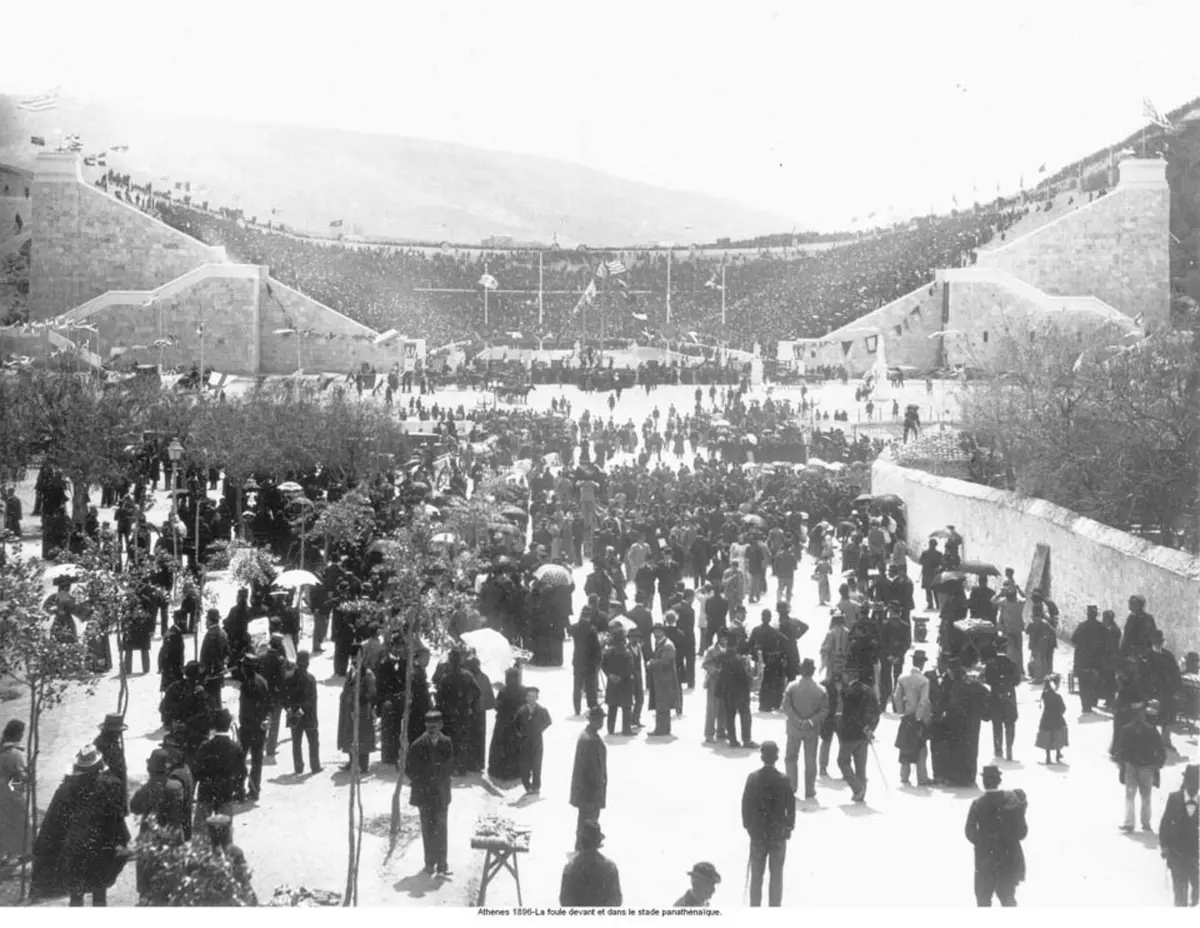
From 6 to 15 April 1896 Athens held the Games of the First Olympiad, the first modern Olympic Games. Greece still used the old Julian calendar, twelve days behind the rest of Europe, so for the Athenians the Games ran from 25 March to 3 April. Only men took part: the International Olympic Committee counts 241 athletes from 14 countries, other counts are lower, and most of them were students and club athletes rather than national teams. They competed in 43 events in athletics, cycling, swimming, gymnastics, weightlifting, wrestling, fencing, shooting and tennis. King George I opened the Games on Easter Monday in the Panathenaic Stadium, the ancient stadium of Athens, rebuilt in white marble for the occasion.
The revival was the work of Pierre de Coubertin, a French aristocrat who wanted to reform education through sport, as he had seen it done in British schools and American colleges. He first called in public for new Olympic Games in 1892 and got no answer. In June 1894 he gathered an international congress on amateur sport in the great amphitheatre of the Sorbonne in Paris, and there the delegates voted to bring the Games back as a modern, international festival held every four years in a different city. They created the International Olympic Committee, made the Greek writer Demetrios Vikelas its first president, and gave the first Games to Athens and the second to Paris.
Greece was nearly bankrupt, and the prime minister, Charilaos Trikoupis, doubted that the country could afford the Games. Crown Prince Constantine took charge of the organising committee and appealed to Greeks abroad for money. The largest gift, 920,000 drachmas from George Averoff, a Greek merchant in Alexandria, paid for the stadium to be rebuilt in marble to the design of the architect Anastasios Metaxas; a velodrome and a shooting range were built at Phaleron and Kallithea. The Americans won nine of the twelve athletics events, and James Connolly, winner of the triple jump on the first afternoon, became the first Olympic champion in some 1,500 years. Winners received a silver medal, a diploma and an olive branch, runners-up a copper medal and a branch of laurel; there were no gold medals.
The race the Greeks most wanted to win was new. The French scholar Michel Bréal had proposed a run from Marathon to Athens in memory of the messenger said to have brought the news of the victory over the Persians in 490 BCE, and he gave the cup for it. On 10 April seventeen runners set off on a rough road of about 40 kilometres. Spyridon Louis, a 23-year-old villager from Marousi, north of Athens, took the lead in the second half and entered the stadium alone before tens of thousands of spectators; the crown prince and his brother George ran the last stretch beside him. He won in 2 hours 58 minutes 50 seconds, more than seven minutes ahead of the next man, another Greek.
The Games ended on 15 April, a day late because of rain, with the king handing out the prizes and the champions walking round the track behind Louis. The American athletes, among others, asked for the Games to stay in Athens for ever, but Coubertin, IOC president from 1896 to 1925, kept them moving from city to city, the rule they still follow. The marathon became a standard race, the hymn sung at the opening became the official Olympic anthem in 1958, and the marble stadium received Olympic athletes again at the Athens Games of 2004.
What happened
- 1894
Coubertin's international congress on amateur sport opens in the great amphitheatre of the Sorbonne in Paris, with 78 delegates from nine countries. After his address the audience hears the ancient Hymn to Apollo, newly found at Delphi.
The Sorbonne, Paris: the congress of June 1894 that revived the Games and founded the International Olympic Committee met in its great amphitheatreThe congress votes to revive the Olympic Games as an international festival every four years, founds the International Olympic Committee with Demetrios Vikelas as president, and gives the first Games to Athens in 1896 and the second to Paris in 1900.
The Sorbonne, Paris: the congress of June 1894 that revived the Games and founded the International Olympic Committee met in its great amphitheatre- 1895
With Prime Minister Trikoupis doubting that bankrupt Greece can pay for the Games, Crown Prince Constantine's organising committee holds its first meeting and appeals to Greeks at home and abroad for money.
The ancient stadium of Athens is being rebuilt in marble, paid for by George Averoff of Alexandria with 920,000 drachmas and designed by Anastasios Metaxas; eighteen months prove too short, and painted wood stands in for marble in places.
The Panathenaic Stadium, Athens: rebuilt in marble with Averoff's money; the opening, the athletics, the marathon finish and the prize-giving- 1896
Easter Sunday (24 March in the Greek calendar): the marble statue of Averoff by Georgios Vroutos is unveiled at the stadium gate in pouring rain, the prelude to the Games.
The Panathenaic Stadium, Athens: rebuilt in marble with Averoff's money; the opening, the athletics, the marathon finish and the prize-givingEaster Monday (25 March in the Greek calendar): before a crowd of tens of thousands, the crown prince asks his father to open the Games, King George I declares them open, and a choir sings Samaras's Olympic Hymn.
The Panathenaic Stadium, Athens: rebuilt in marble with Averoff's money; the opening, the athletics, the marathon finish and the prize-giving- 3:30 p.m.
The first event of the modern Games, a heat of the 100 metres, is won by Frank Lane of Princeton. Ten minutes later James Connolly of Boston wins the triple jump and becomes the first Olympic champion in some 1,500 years.
The Panathenaic Stadium, Athens: rebuilt in marble with Averoff's money; the opening, the athletics, the marathon finish and the prize-giving A full day in the stadium: the 1,500 metres goes to the Australian Teddy Flack, the shot put and the long jump to Americans, and the weightlifting to a Briton and a Dane, while the fencers meet in the Zappeion.
The Panathenaic Stadium, Athens: rebuilt in marble with Averoff's money; the opening, the athletics, the marathon finish and the prize-giving- 2:00 p.m.
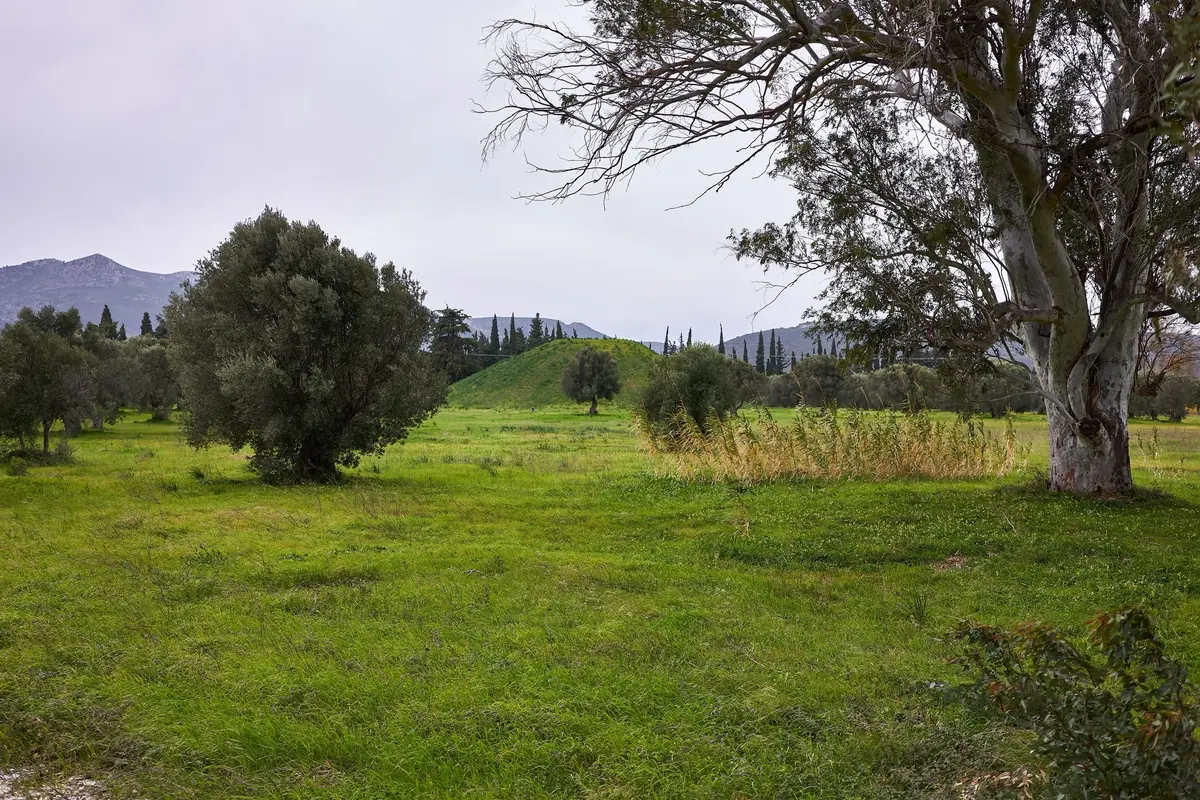
Seventeen runners start from Marathon on a rough road of about 40 kilometres. Flack and the Frenchman Albin Lermusiaux lead early and drop out; Spyridon Louis of Marousi wins in 2:58:50, more than seven minutes ahead of Charilaos Vasilakos; Spyridon Belokas, third over the line, is disqualified, and the Hungarian Gyula Kellner is given third place.
Marathon: the village where the first marathon started on 10 April 1896 The swimming races are held in the cold open sea of the Bay of Zea at Piraeus; for the 1,200 metres the swimmers are taken out by boat and race back to shore. The Hungarian Alfréd Hajós wins the 100 metres and the 1,200 metres.
The Bay of Zea at Piraeus: the swimming races in the open sea on 11 AprilIn wind, rain and cold the twelve-hour cycling race at the Neo Faliro velodrome, the last contest, is won by the Austrian Adolf Schmal; the rowing races at Phaleron are called off because of the high sea.
The velodrome at Neo Faliro: the cycling, built for the Games, later rebuilt as the Karaiskakis football stadiumAfter a day's delay for rain, King George I hands out silver medals, diplomas and olive branches in the stadium; the champions walk round the track behind Louis with the Greek flag, an Oxford student recites a Pindaric ode, and the king declares the first Olympiad closed.
The Panathenaic Stadium, Athens: rebuilt in marble with Averoff's money; the opening, the athletics, the marathon finish and the prize-giving