Zhou dynasty (China)
“China's longest dynasty, which invented the Mandate of Heaven and whose long decline, the Spring and Autumn and Warring States ages, produced Confucius, Laozi and the states that Qin would unite.”
The Zhou were a people of the Wei river valley in what is now Shaanxi, west of the Shang kings whose vassals they had been. In about 1046 BCE their king Wu led an army across the Yellow River and destroyed the Shang army at Muye; the last Shang king died in his burning palace. A bronze bowl cast a week later, the Li gui, names the day. Wu died soon after, and his brother the Duke of Zhou ruled for the boy king Cheng, put down a revolt of Shang loyalists and Zhou princes, and built a second capital at Luoyi, near modern Luoyang, to hold the eastern plain. The Zhou explained their victory with an idea that outlived them by three thousand years: Heaven gives its mandate to a virtuous house and takes it away from a wicked one, as it had taken it from the Shang.
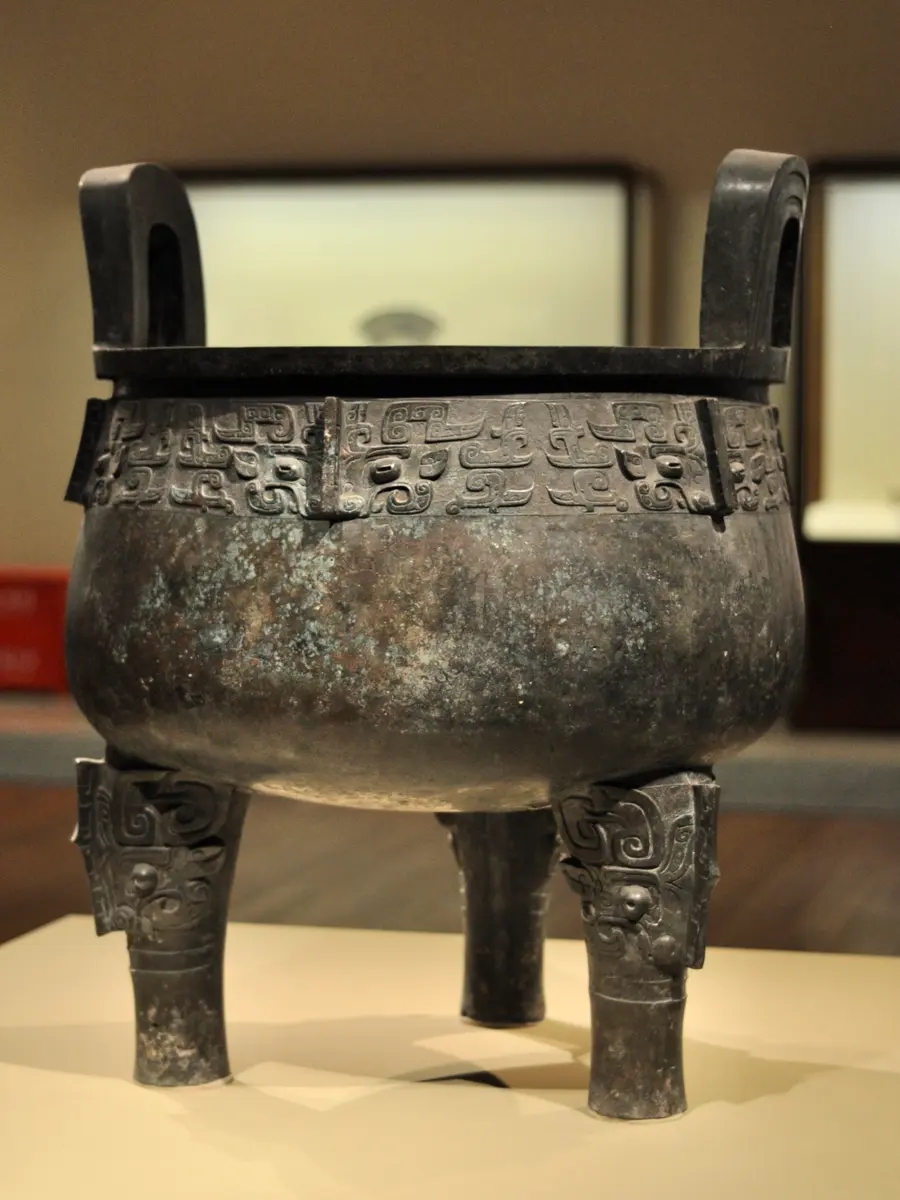
The kings could not govern so large a land from one city, so they gave walled towns and their peoples to relatives and allies, who ruled as lords, sent soldiers and tribute, and came to court to receive bronze vessels inscribed with the king's words. For about two centuries this order held; the great dings and basins of the tenth and ninth centuries, with their long inscriptions, are its record. Then it frayed. In 841 the nobles drove out King Li, and in 771 nomads from the west, called in by an angry father-in-law, sacked the capital and killed King You. His son Ping moved the court east to Luoyi in 770, and from then on the Zhou kings reigned without ruling.
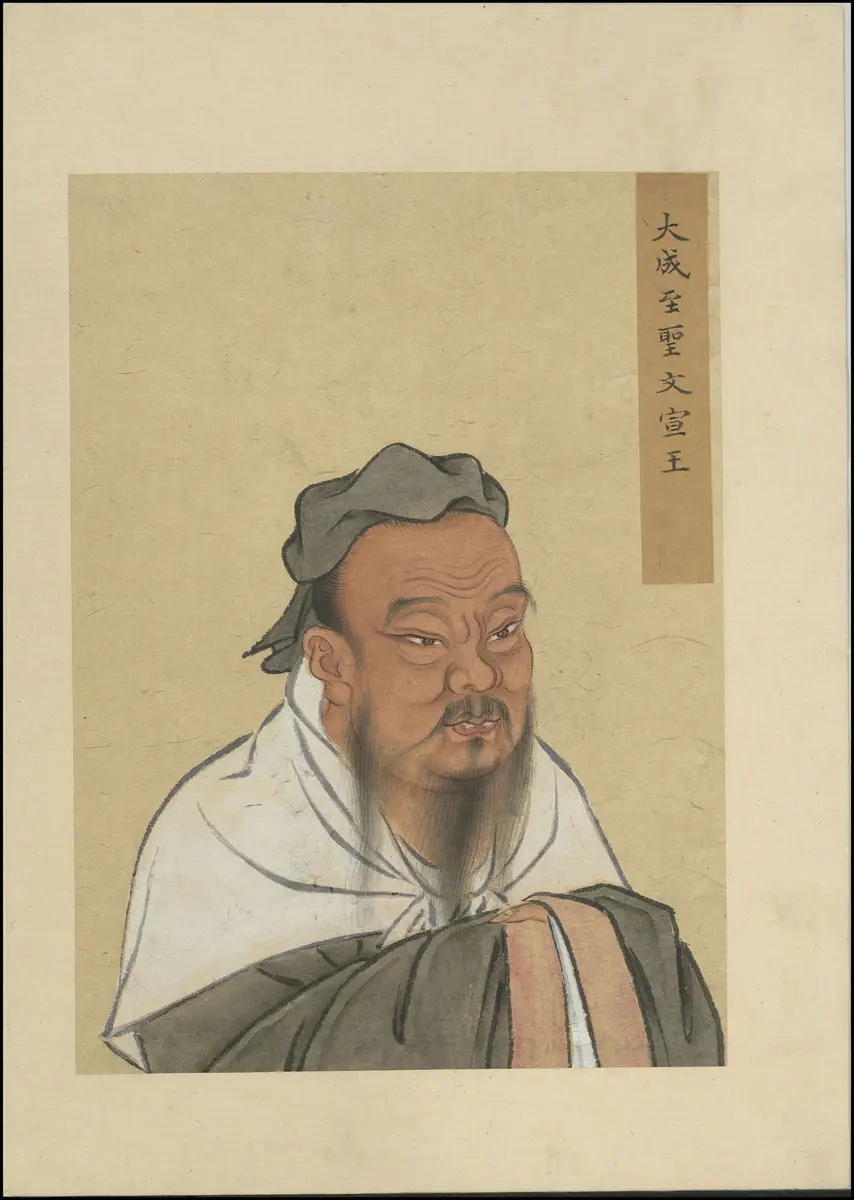
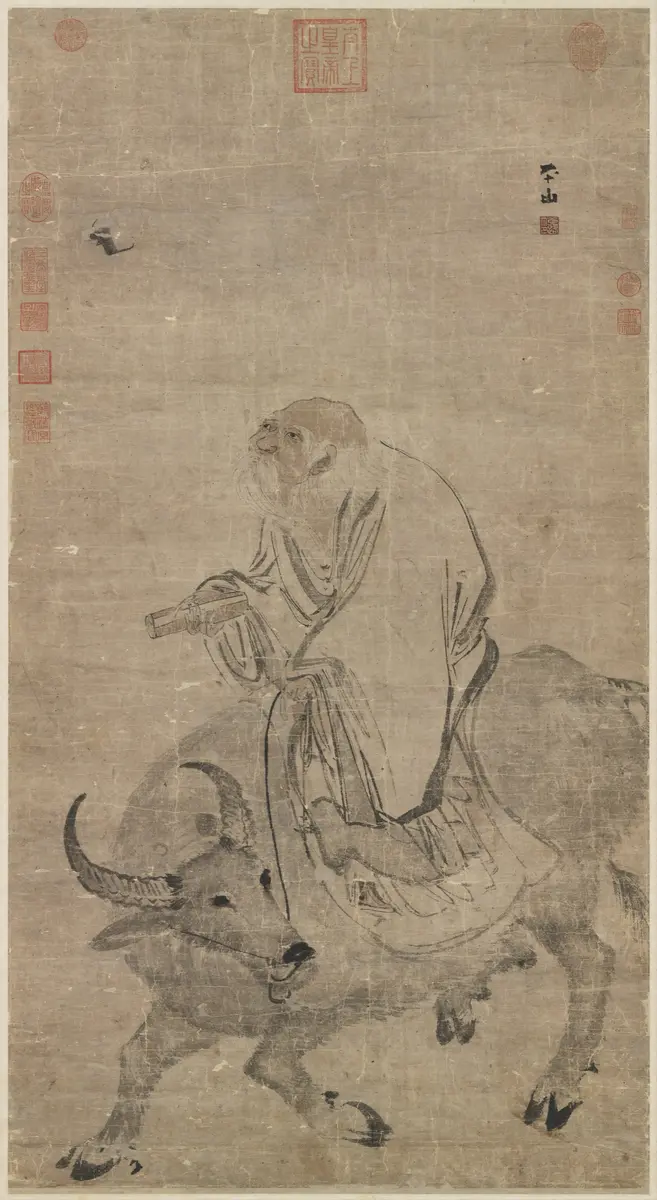
The five centuries that followed are called the Spring and Autumn period, after the chronicle of Confucius's home state of Lu, and then the Warring States. First a few strong lords, Duke Huan of Qi the earliest, acted as 'hegemons' who kept order in the king's name; then the states swallowed each other until seven remained, their rulers calling themselves kings. War changed: iron tools and ox-drawn ploughs fed larger populations, conscript infantry armed with crossbows replaced the lords' chariots, states built long earth walls along their borders, and reformers like Shang Yang in Qin replaced hereditary nobles with appointed officials, taxes and uniform measures. It was also the age of China's great teachers. Confucius (551–479) wandered from court to court preaching the ritual order of the early Zhou; Mozi, Mencius, the Daoist authors of the Laozi and Zhuangzi, the strategist Sunzi and the Legalists all argued over how to rule and how to live.
The end came quietly. The royal domain around Luoyang had shrunk to a small state among giants. In 260 Qin destroyed the army of Zhao at Changping, and in 256 its troops took the Zhou capital; King Nan died that year and Qin annexed what was left of his land. Thirty-five years later the king of Qin finished conquering the other states and made himself First Emperor. The Zhou had lasted some 790 years, longer than any dynasty after them, and every later Chinese ruler claimed the Mandate of Heaven they had invented. Their bronzes, their classics and the philosophies born in their last centuries are the foundation of Chinese civilisation.
What happened
- 1046 BCE
King Wu of Zhou leads his army and allies across the Yellow River and destroys the Shang host at Muye; the last Shang king dies in his burning palace, and the Li gui, cast days later, records the day.
Muye, near Xinxiang: where King Wu destroyed the Shang army about 1046 BCE - 1043 BCE
King Wu dies and his brother the Duke of Zhou rules for the boy King Cheng; two other brothers and the Shang heir rebel in the east, and the duke spends three years crushing them.
- 1038 BCE
The duke founds an eastern capital, Luoyi, near modern Luoyang, to hold the conquered plain; the He zun records King Cheng's speech there in his fifth year.
Luoyang: the eastern capital Luoyi (Wangcheng and Chengzhou), the kings' seat from 770 to 256 BCE - 997 BCE
King Kang has the Da Yu ding cast for his officer Yu: the Shang lost Heaven's mandate through drink, it says, and the Zhou must not.
Zhouyuan, between Qishan and Fufeng: the Zhou homeland, where the Da Yu ding and the Shi Qiang pan were found - 900 BCE
Under King Gong the scribe Qiang casts a basin praising the seven kings from Wen to Gong and his own ancestors, the earliest written history from China.
Zhouyuan, between Qishan and Fufeng: the Zhou homeland, where the Da Yu ding and the Shi Qiang pan were found - 841 BCE
The nobles drive out the tyrannical King Li and govern together until his son comes of age; from this year Sima Qian's chronology of China runs without a gap.
- 827 BCE
King Xuan is enthroned and tries to restore the kingdom; the Mao Gong ding carries his 500-character charge to the Duke of Mao.
- 771 BCE
The Marquis of Shen, whose daughter King You has set aside, brings in the Quanrong nomads; they sack the capital Haojing and kill the king.
Haojing (Fenghao), near Xi'an: the Western Zhou capital, sacked in 771 BCE - 770 BCE
King Ping moves the court east to Luoyi; the Eastern Zhou and the Spring and Autumn period begin, and the kings never again command the lords.
Luoyang: the eastern capital Luoyi (Wangcheng and Chengzhou), the kings' seat from 770 to 256 BCE - 679 BCE
Duke Huan of Qi, advised by Guan Zhong, is recognised by the other lords as hegemon, the first of the strongmen who keep order in the king's name.
- 551 BCE
Confucius is born at Qufu in the small state of Lu.
Qufu: Confucius's home town in Lu, his temple and his grave - 500 BCE
Iron tools and ox-drawn ploughs, canals, cast coins and growing towns change the Zhou lands; the states grow richer and their wars larger.
- 497 BCE
Civil war breaks out among the great clans of Jin, the strongest of the northern states; at Houma they bury oaths of loyalty written on jade and stone.
Houma (Xintian): the capital of Jin, where its clans swore the covenants before the state broke up - 479 BCE
Confucius dies at Qufu and is buried by the river north of the town; his disciples' memories become the Analects.
Qufu: Confucius's home town in Lu, his temple and his grave - 453 BCE
The Zhao, Han and Wei clans destroy the Zhi and share Jin among themselves; in 403 the Zhou king recognises them as lords, and the age of the Warring States has begun.
Houma (Xintian): the capital of Jin, where its clans swore the covenants before the state broke up - 441 BCE
Qi begins a long wall of earth and stone along its southern border against Jin and Yue, the oldest of the walls that the First Emperor would later join into one.
The Great Wall of Qi across Shandong, begun in the fifth century BCE - 433 BCE
Marquis Yi of Zeng is buried at Leigudun with 64 bronze bells, each sounding two notes, and a court's worth of lacquer, bronze and jade.
Leigudun, Suizhou: the tomb of Marquis Yi of Zeng, about 433 BCE, with its 64 bells - 356 BCE
Shang Yang begins his reforms in Qin for Duke Xiao: a harsh uniform law, conscription, rewards for farming and fighting, appointed officials instead of hereditary lords.
Xianyang: the capital of Qin from Shang Yang's reforms in 350 BCE - 350 BCE
Qin's capital moves to Xianyang; Shang Yang's second reforms redivide the land, reform taxes and make weights and measures uniform.
Xianyang: the capital of Qin from Shang Yang's reforms in 350 BCE - 344 BCE
The ruler of Wei calls himself king; the other lords follow, and even the pretence that they serve the Zhou king is dropped.
- 338 BCE
Duke Xiao dies and the Qin nobles have Shang Yang torn apart by chariots; his system survives him.
- 300 BCE
A tutor of the Chu royal house is buried at Guodian near Jingmen with 804 bamboo slips, among them the oldest copy of the Laozi; Mencius, Zhuangzi and the other teachers of the Hundred Schools are at work in these decades.
Jingmen: the Guodian tomb with the oldest copy of the Laozi, about 300 BCE - 260 BCE
After a two-year campaign Qin's general Bai Qi traps and destroys the army of Zhao at Changping and kills the prisoners; no state can now stop Qin.
Changping, near Gaoping: where Qin destroyed Zhao's army in 260 BCE - 256 BCE
Qin's troops take the Zhou capital at Luoyang; King Nan dies and Qin annexes the royal domain, ending the dynasty after some 790 years. In 221 the king of Qin, having conquered the other states, makes himself First Emperor.
Luoyang: the eastern capital Luoyi (Wangcheng and Chengzhou), the kings' seat from 770 to 256 BCE