Abraham-Louis Breguet
“The Swiss-born Paris watchmaker who invented the tourbillon and made the thin, elegant watch fashionable for the courts of Europe.”
Abraham-Louis Breguet was a Swiss-born watchmaker who worked in Paris and is often called the greatest watchmaker who ever lived. Between the 1770s and his death in 1823 he invented or perfected a long list of devices that are still in watches today, from the self-winding watch and the shock-proof balance to the tourbillon, and he gave the watch a new look: slim, plain, with clean numerals and the thin, open-tipped hands that still carry his name. Kings, emperors and their families bought from him, from Louis XVI and Napoleon to the Tsar of Russia and the future George IV.
He was born on 10 January 1747 in Neuchâtel, then a small principality ruled by the King of Prussia, into a Protestant family of French origin. His father died when he was eleven, and his stepfather, a watchmaker, sent him at fifteen to learn the trade from a master in Versailles. He also took evening classes in mathematics at the Collège Mazarin in Paris under the Abbé Marie, who became his mentor. In 1775 he married Cécile L'Huillier and opened his own workshop on the Quai de l'Horloge, on the Île de la Cité. Their only son, Antoine-Louis, was born in 1776; Cécile died four years later.
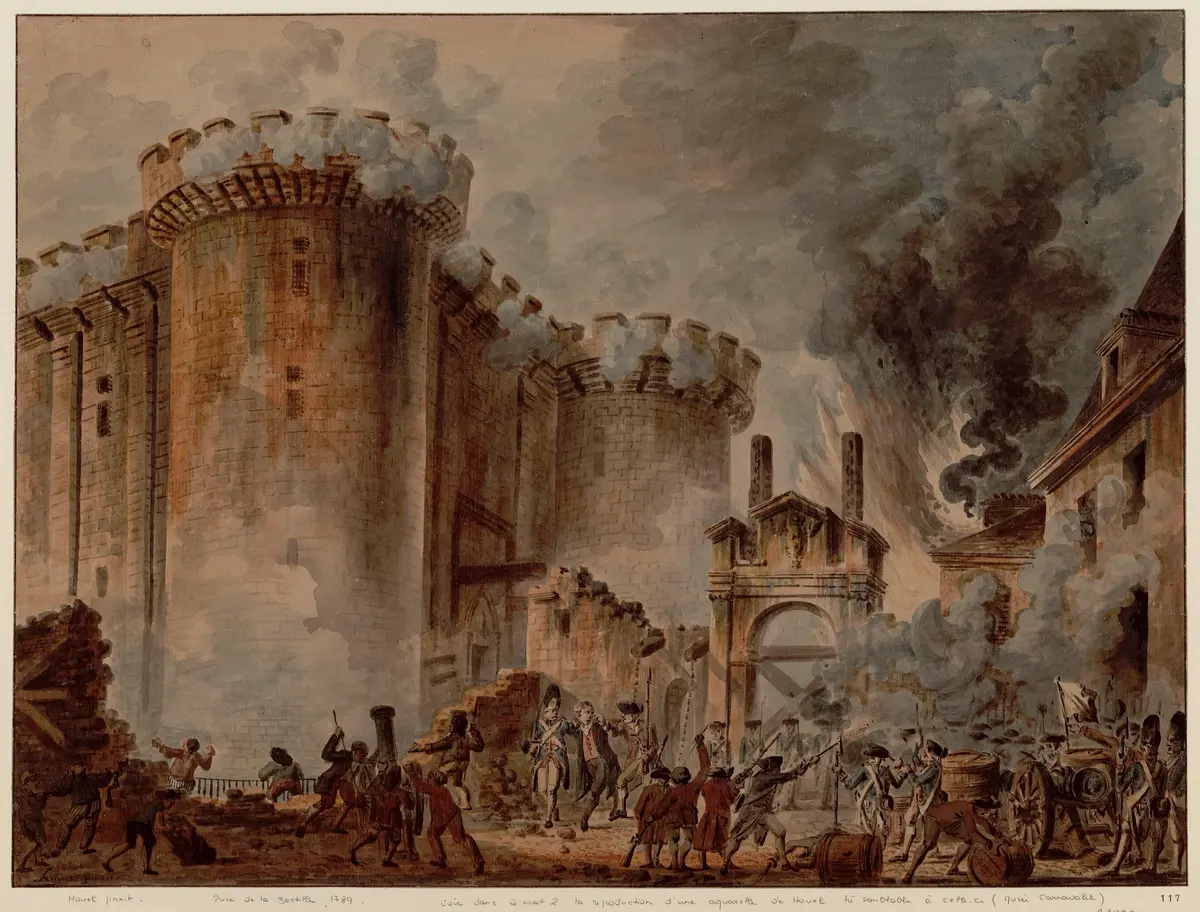
His first fame came from the 'perpétuelle', a watch that wound itself as its owner walked, which delighted the court at Versailles in the 1780s. The Revolution put him in danger, and in August 1793 he left Paris for Switzerland, working in Geneva, Neuchâtel and Le Locle while his Paris workshop struggled on. He came back in May 1795 full of new ideas: the cheap and reliable one-handed 'subscription' watch, the 'tact' watch that could be read by touch inside a pocket, the 'sympathique' clock that set and wound a watch overnight, the first modern carriage clock, and in 1801 his patent for the tourbillon, a rotating cage that evens out the errors a watch makes as it changes position.
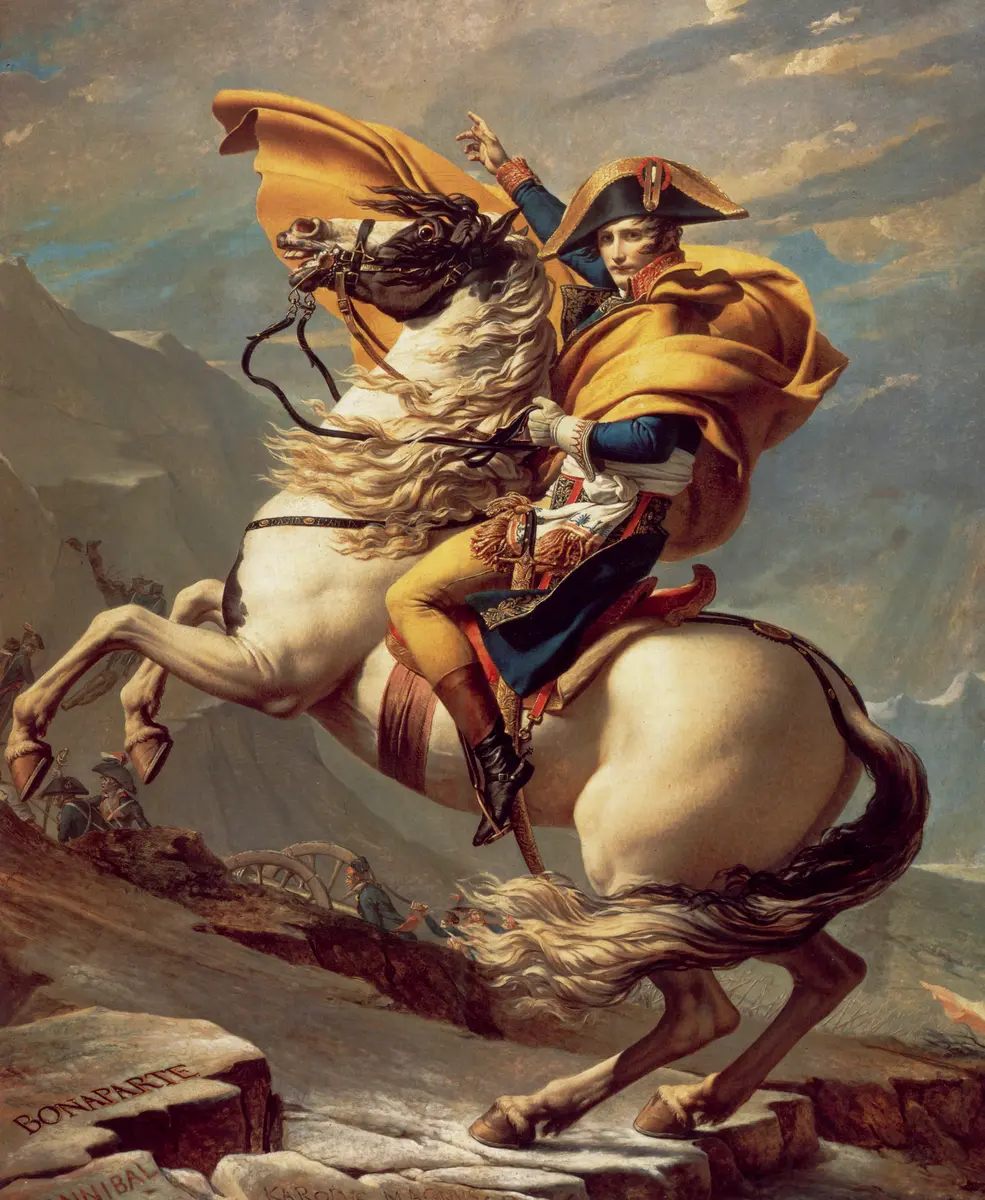
Breguet's watches were also a matter of fashion. Men's dress around 1800 left no room for the thick 'onion' watches of the old regime, and he made his thin enough to sit in a waistcoat or breeches pocket, with engine-turned (guilloché) cases and enamel dials of great restraint. Napoleon bought three timepieces before sailing for Egypt in 1798, Napoleon's sister Caroline, Queen of Naples, bought thirty-four, and in 1810 she ordered from him the first watch made to be worn on the wrist. His business reached its height around 1803, and he opened a shop in Saint Petersburg in 1808.
In old age he was honoured as a scientist as much as a craftsman: a member of the Bureau des Longitudes in 1814, watchmaker to the French Royal Navy in 1815, a member of the Academy of Sciences in 1816, and a knight of the Legion of Honour. He died in Paris on 17 September 1823, aged seventy-six, and is buried in the Père Lachaise cemetery. His son and grandson ran the firm after him; it still trades under his name, and his inventions, from the overcoil balance spring to the tourbillon, remain the vocabulary of fine watchmaking.
What happened
- 1747
Abraham-Louis Breguet is born in Neuchâtel, then a principality of the King of Prussia, to Jonas-Louis Breguet and Suzanne-Marguerite Bolle, a Protestant family of French origin.
Neuchâtel, then a principality of the King of Prussia: born here on 10 January 1747; one of the Swiss towns he stayed in during his exile of 1793–95- 1758
His father dies, aged thirty-nine. The next year his mother marries Joseph Tattet, a watchmaker, who introduces the boy to the trade.
- 1762
At fifteen he goes to France and is apprenticed to a watchmaker in Versailles. He later studies mathematics at evening classes in the Collège Mazarin in Paris under the Abbé Marie, who becomes his mentor and introduces him at court.
Versailles: apprenticed here to a watchmaker from 1762, at fifteen - 1775
He marries Cécile L'Huillier in the church of Saint-Sulpice and opens his own workshop on the Quai de l'Horloge, on the Île de la Cité, in a house that looks onto the river on one side and the Place Dauphine on the other.
Quai de l'Horloge, Île de la Cité, Paris: his workshop and home from 1775 (No. 51, later No. 79, today No. 39), where he died in 1823 - 1776
His only son, Antoine-Louis, is born.
- 1780
His first self-winding 'perpétuelle' watches appear, wound by the movement of the wearer as he walks; they make him famous at Versailles. About this time his wife Cécile dies.
- 1783
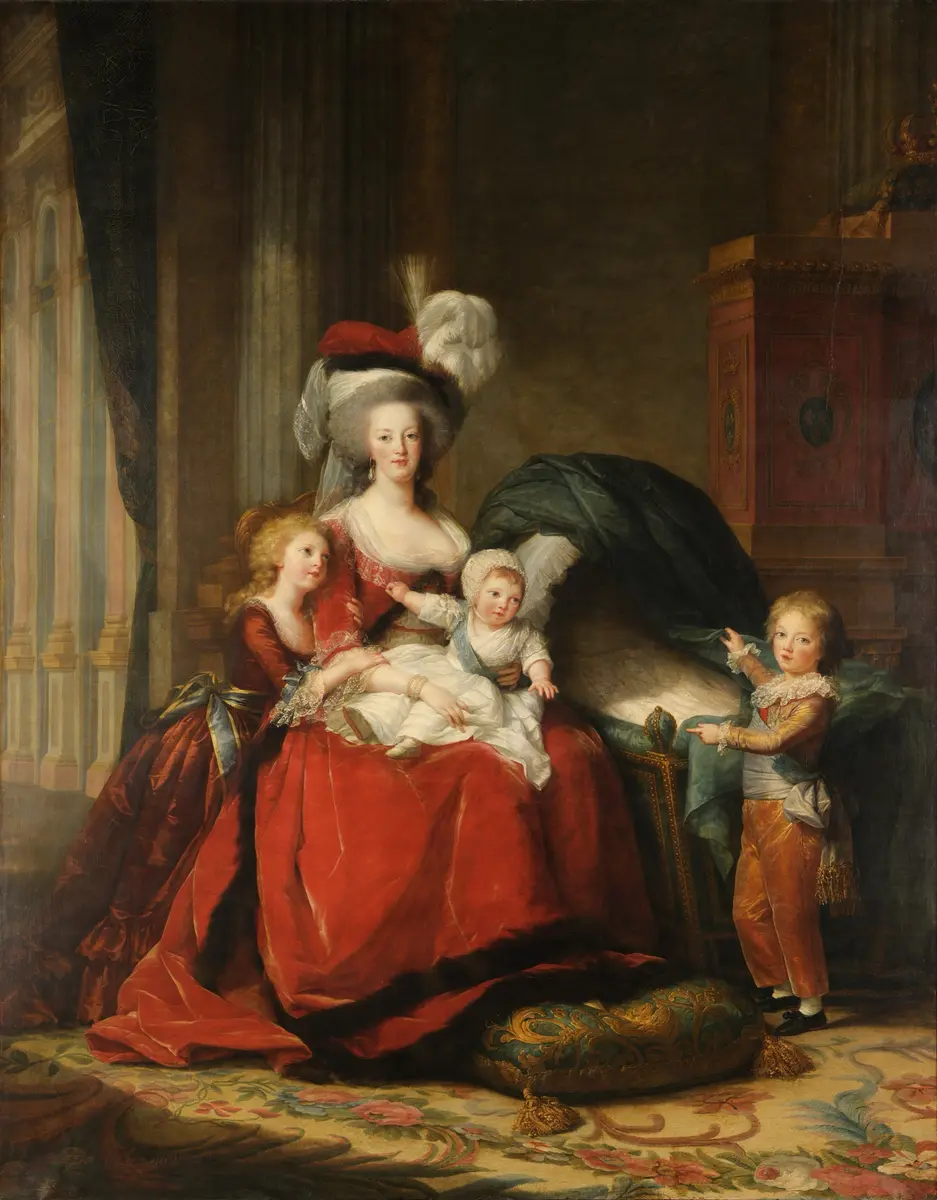
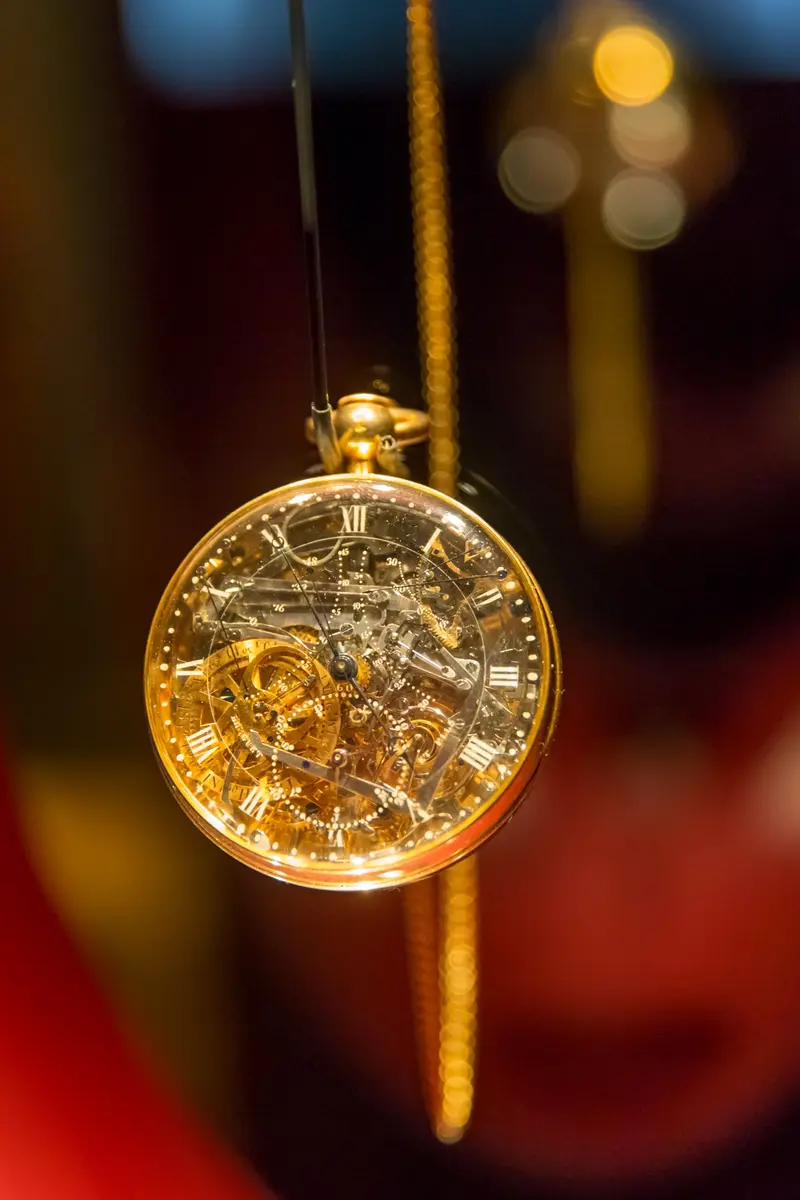
He fits his repeating watches with a gong-spring and designs the thin, open-tipped 'Breguet hands' and his Arabic numerals. One of the queen's guards orders watch No. 160, the 'Marie-Antoinette', with every complication then known.
Quai de l'Horloge, Île de la Cité, Paris: his workshop and home from 1775 (No. 51, later No. 79, today No. 39), where he died in 1823 - 1784
He is received as a master of the Paris clockmakers' guild; his clients now include the leading figures of the court.
- 1786
His first dials decorated with engine-turning (guilloché) appear, and the government asks him to study a Royal Clock and Watch Manufactory for Paris.
- 1787
He goes into partnership with the dealer Xavier Gide; their firm, Breguet & Compagnie, trades in watches and jewellery.
- 1789
The first of three journeys to England, in 1789, 1790 and 1791, where he befriends the chronometer maker John Arnold and seeks payment from English clients such as the Prince of Wales.
- 1790
He invents the 'pare-chute', a spring-mounted bearing that protects the balance of a watch from shocks.
- 1791
The partnership with Gide is dissolved over politics and business. Thinking of moving to London, he takes his son there.
- 1793
In the Terror he leaves Paris with his family for Switzerland, staying in Geneva, Neuchâtel and Le Locle; in Paris his workshop carries on under Boulanger.
Neuchâtel, then a principality of the King of Prussia: born here on 10 January 1747; one of the Swiss towns he stayed in during his exile of 1793–95- 1794
He sets up a small workshop in Le Locle and works out many of his later inventions. The Paris workshop, never closed, is ransacked and has to move.
Le Locle, in the Jura of Neuchâtel: he set up a small workshop here in 1794, during his exile from the Terror - 1795
After the Terror he returns to Paris and reorganises the business. This year he first describes the 'sympathique' clock and develops his overcoil balance spring, the 'Breguet spring'.
Quai de l'Horloge, Île de la Cité, Paris: his workshop and home from 1775 (No. 51, later No. 79, today No. 39), where he died in 1823- 1796
The workshop moves back to its old premises on the Quai de l'Horloge. He builds the first modern carriage clock, small and glazed on four sides, and in June loses an election to the Académie des sciences to Lazare Carnot.
Quai de l'Horloge, Île de la Cité, Paris: his workshop and home from 1775 (No. 51, later No. 79, today No. 39), where he died in 1823 - 1797
A printed brochure launches the 'souscription' watch: large, one-handed, simple and reliable, ordered with a quarter of the price paid down. Some 700 are made, most between 1798 and 1805.
- 1798
General Bonaparte, preparing the expedition to Egypt, buys a repeating watch, a travel clock and a perpétuelle. At France's first National Industrial Exhibition Breguet shows the sympathique clock and wins a gold medal.
He patents his constant-force escapement.
- 1799
His first 'tact' watch goes on sale: an arrow on the outside of the case can be felt with the fingers, so the owner can tell the time inside a pocket without the rudeness of looking at a watch in company.
- 1801
He is granted a patent (7 Messidor Year IX) for the tourbillon, a cage that carries the balance and escapement round once a minute to even out the errors of a watch held in different positions.
- 1802
A second gold medal at the National Industrial Exhibition.
- 1803
His sales reach their peak, 196 timepieces in a year, most of them exported; they stay strong until 1810.
- 1804
The Ottoman navy minister Ali Effendi orders the finest possible repeating watch for Sultan Selim III; Breguet later makes watches with Turkish numerals for that market.
- 1805
First purchase by Caroline Murat, Napoleon's youngest sister and later Queen of Naples, who becomes his most important customer, with 34 clocks and watches bought between 1808 and 1814.
- 1808
To serve his Russian clients he opens a shop in Saint Petersburg and receives the title of Horologist to the Tsar and the Imperial Russian Navy.
- 1809
Tsar Alexander I buys a sympathique clock and later orders pedometers to measure the marching pace of his troops.
- 1810
The Queen of Naples commissions the first watch designed to be worn on the wrist; it remains a one-off.
- 1811
Alexander I bans French goods from Russia and Breguet has to close his Saint Petersburg shop; he complains to Napoleon, appoints an agent in Istanbul and anonymously publishes a treatise on animal force and voluntary movement.
- 1812
The Princess de Valençay buys tourbillon watch No. 2571 from Breguet et Fils for 1,600 francs. The first off-centre dials appear this year.
- 1814
He is appointed to the Bureau des Longitudes. With the Bourbons back on the throne English buyers return: the Prince Regent, the future George IV, buys a sympathique clock and watch, and Tsar Alexander I visits him in Paris.
- 1815
Louis XVIII names him watchmaker to the Royal Navy, succeeding Pierre-Louis Berthoud; from 1815 to 1823 the firm sells 78 marine watches and chronometers.
- 1816
A royal decree of Louis XVIII makes him a member of the Académie des sciences.
- 1817
He publishes, at Brest, his 'Instructions on the use of marine watches', a handbook for navigators.
- 1819
He sits on the jury of the Industrial Exhibition, which includes a retrospective of his work.
- 1820
He makes the 'double-seconds' observation chronometer, a forerunner of the chronograph; the firm of father and son also makes scientific pieces such as watch-thermometers.
- 1822
Breguet et Fils publishes its first trade catalogue, 'Horlogerie pour l'usage civil et pour les sciences'.
- 1823
Just after serving on the jury of the 1823 Industrial Exhibition, he dies at home on the Quai de l'Horloge in the night of 16 to 17 September, aged seventy-six. He is buried in the Père Lachaise cemetery; his son Antoine-Louis takes over the firm.
His grave in the Père Lachaise cemetery, division 11