Christiaan Huygens
“The Dutch scientist who found Saturn's moon Titan and its ring, built the first pendulum clock, and explained light as a wave (Huygens' principle): Europe's leading man of science between Galileo and Newton.”
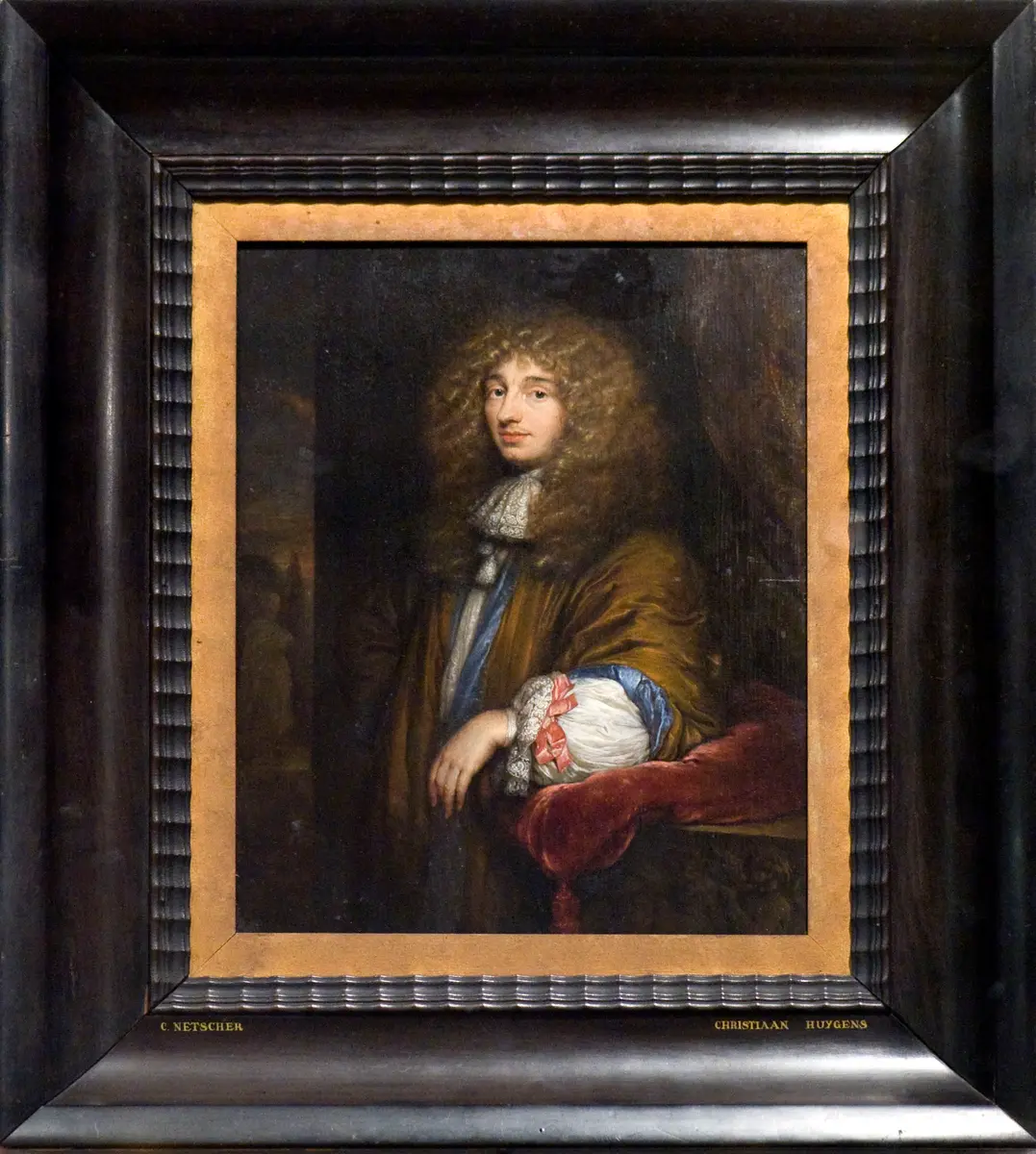
Christiaan Huygens was the Dutch mathematician, astronomer and physicist who stood between Galileo and Newton as the leading man of science in Europe. With telescopes he and his brother made themselves, he found Saturn's largest moon, now called Titan, in 1655, and worked out that the strange 'handles' other astronomers had seen on Saturn were a thin, flat ring around the planet that touches it nowhere. He turned the pendulum into the regulator of a clock, the first clock accurate enough for astronomy, wrote the first printed book on probability, found the laws of collision and of the force on a body moving in a circle, and argued that light travels as a wave. The idea that every point of a wave front sends out its own small waves is still called Huygens' principle.
He was born in The Hague on 14 April 1629 into one of the most cultured families of the Dutch Republic. His father, Constantijn Huygens, was secretary to the Princes of Orange, a famous poet and a friend of Descartes, who sometimes visited the house and praised the boy's geometry. Christiaan and his brothers were taught at home until sixteen: Latin, Greek, French, music, drawing and mathematics (at thirteen he built himself a lathe). He studied law and mathematics at Leiden from 1645, with Frans van Schooten as his mathematics teacher, and then at the new College of Orange in Breda. But instead of a career as a diplomat he chose, with an allowance from his father, to live at home and study nature. The years from 1650 to 1666 in The Hague were the most fruitful of his life.
From 1655 he and his brother Constantijn ground lenses and built telescopes better than any others of the time. On 25 March 1655 he saw a small star beside Saturn and, watching it night after night, proved it was a moon. To claim his explanation of Saturn's shape without yet giving it away, he hid it in 1656 in a scrambled Latin sentence, and in his book Systema Saturnium (1659) he solved it: Saturn is 'surrounded by a thin, flat ring, nowhere touching, and inclined to the ecliptic'. The same book showed the Orion Nebula and dark bands on Jupiter and Mars, and that autumn he made the first drawing of a marking on Mars, the dark patch now called Syrtis Major. On Christmas Day 1656 he built the first pendulum clock, and in 1657 he published his short treatise on the mathematics of games of chance.
In 1666 Louis XIV's minister Colbert brought him to Paris as the leading member of the new Royal Academy of Sciences, with the largest pension and rooms in the king's library. He stayed for fifteen years, through serious illnesses and through the war France waged on his own country from 1672, and there he published Horologium oscillatorium (1673), his masterpiece on the pendulum, and taught the young Leibniz mathematics. He worked out his wave theory of light there and in The Hague; on 6 August 1677 it explained the double refraction of Iceland spar. In 1681 illness sent him home for good: Colbert died in 1683, and as a Dutch Protestant from a family close to William of Orange he had no future in Paris.
In his last years he lived in The Hague and at Hofwijck, his father's country house near Voorburg, building ever longer 'aerial' telescopes without tubes, testing marine clocks on long voyages, and visiting England in 1689, where he met Newton. He admired the Principia but never accepted a force of attraction acting across empty space. His Treatise on Light appeared in 1690. Never married and often ill, he died in The Hague on 8 July 1695, aged 66; his book on life on other planets, Cosmotheoros, came out after his death. For most of the 18th century Newton overshadowed him, but his wave theory came back in the 19th century, and in 2005 the European space probe that landed on Titan carried his name.
What happened
- 1629
Christiaan Huygens is born in The Hague, the second son of Constantijn Huygens, secretary to the Prince of Orange and a celebrated poet, and Suzanna van Baerle.
The Hague: Huygens was born here on 14 April 1629, lived here with his father until 1666 and again after 1681, and died here on 8 July 1695- 1637
His mother, Suzanna van Baerle, dies. His father has the children taught at home: languages, music, drawing and mathematics; Descartes, a visitor to the house, admires the boy's geometry.
- 1645
He enters the University of Leiden to study law and mathematics; his mathematics teacher is Frans van Schooten. His father draws Mersenne's attention to his work on falling bodies, and a correspondence begins.
Academy Building, Leiden: the university where he studied law and mathematics under Frans van Schooten from 1645 to 1647- 1647
He moves to the new College of Orange at Breda, where his father is a curator, to go on with law until August 1649.
- 1649
He travels to Denmark with a Dutch diplomatic mission, hoping to go on to Descartes in Stockholm, but the weather stops him. After William II's death in 1650 he gives up a diplomat's career and studies nature at home on an allowance from his father.
- 1651
His first book on mathematics, the Theoremata on the quadrature of the hyperbola, ellipse and circle, shows the error in Gregory of Saint-Vincent's claim to have squared the circle.
- 1654
He publishes De circuli magnitudine inventa on the size of the circle, which makes his name among mathematicians, and with his brother Constantijn begins to grind lenses by a new method.
- 1655
With the first telescope he and his brother have built, he notices a small star beside Saturn. Following it over the next nights, he proves it is a moon circling the planet about every sixteen days: Saturn's largest moon, later named Titan.
The Hague: Huygens was born here on 14 April 1629, lived here with his father until 1666 and again after 1681, and died here on 8 July 1695He makes his first journey to Paris, until September, meeting Gassendi, Roberval and Boulliau; he hears of Pascal and Fermat's work on chance and, like his brother, buys a doctorate in law at Angers.
- 1656
He observes the Orion Nebula and sees separate stars at its centre; his engraving of it, printed in 1659, is one of the first pictures of a nebula.
He announces the moon in a short pamphlet, De Saturni luna observatio nova, and hides his explanation of Saturn's shape in it as a scrambled string of letters, to claim priority before he is ready to publish.
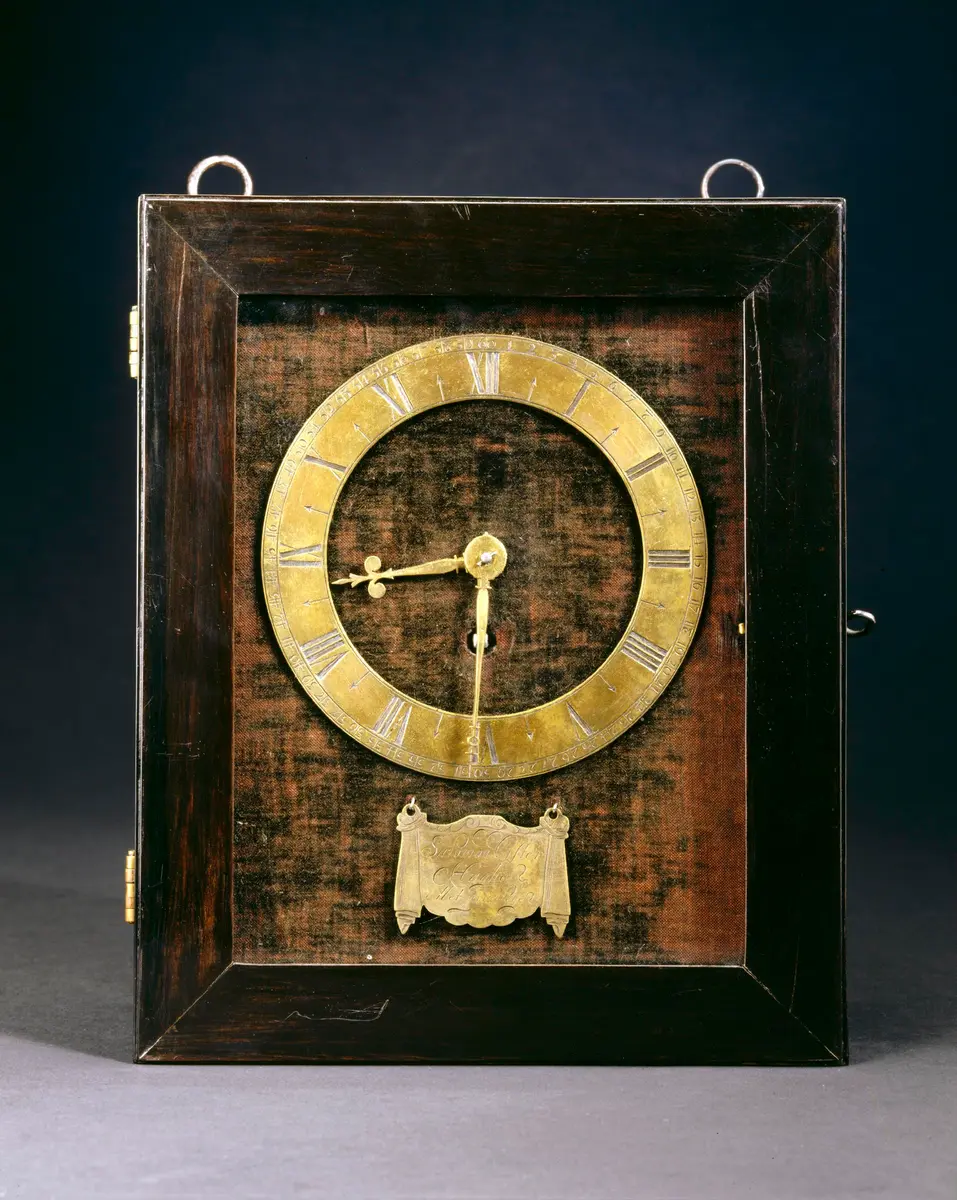
On Christmas Day he has a working model of a clock regulated by a pendulum, the first pendulum clock. The story of the clock is told in its own entry.
- 1657
His treatise on reckoning in games of chance, De ratiociniis in aleae ludo, is printed in van Schooten's Exercitationes mathematicae: the first printed book on probability, it introduces the idea of expected value.
The States General grant the privilege for the new pendulum clocks, made for him by the Hague clockmaker Salomon Coster, two days after the application.
- 1659
Systema Saturnium is printed at The Hague, dedicated to Prince Leopold of Tuscany (the dedication is dated 5 July). It solves the anagram: Saturn is surrounded by a thin, flat ring, nowhere touching it and tilted to the ecliptic, which explains all its changing shapes.
The Hague: Huygens was born here on 14 April 1629, lived here with his father until 1666 and again after 1681, and died here on 8 July 1695He draws Mars through his telescope and records a large dark triangular marking, the feature now called Syrtis Major: the first drawing of a recognisable place on another planet.
Having followed the dark spot night after night, he notes in his diary that Mars seems to turn once in 24 hours, like the Earth.
- 1660
On his second stay in Paris, until March 1661, he attends the weekly meetings at Montmor's house; in December Pascal visits him and he shows him his telescopes.
- 1661
In London he attends the meetings at Gresham College of the group about to become the Royal Society, shows his telescopes, which prove better than the English ones, and sees Boyle's air pump.
- 1663
On a second visit to London he is elected a Fellow of the Royal Society, on 22 June in England's Julian calendar.
- 1666
At Colbert's invitation he moves to Paris as the leading member of Louis XIV's new Royal Academy of Sciences, with the largest pension and an apartment in the king's library.
Rue Vivienne, Paris: the king's library, where the Royal Academy of Sciences met and Huygens lived from 1666 to 1681The Academy of Sciences meets for the first time, in the king's library. Huygens proposes much of its programme, modelled on the Royal Society's experiments.
Rue Vivienne, Paris: the king's library, where the Royal Academy of Sciences met and Huygens lived from 1666 to 1681- 1669
He explains his theory of the cause of gravity to the Academy, and his rules for the collision of elastic bodies, found as early as 1656, are published at last.
- 1670
After a grave illness early in the year, during which he arranges for his unpublished papers to go to the Royal Society, he returns to The Hague to recover; he is back in Paris in June 1671.
The Hague: Huygens was born here on 14 April 1629, lived here with his father until 1666 and again after 1681, and died here on 8 July 1695- 1672
France invades the Dutch Republic and William III comes to power, with Huygens' father and brother in his service; Christiaan stays at the Academy under Colbert's protection. In Paris he meets the young Leibniz and teaches him modern mathematics.
- 1673
Horologium oscillatorium, his book on the pendulum clock and the mathematics of the pendulum, curves and circular motion, is published in Paris, dedicated to Louis XIV. The same year he builds an engine driven by gunpowder with his assistant Denis Papin.
- 1675
He makes a watch regulated by a spiral balance spring, which leads to a bitter quarrel over priority with Robert Hooke.
- 1676
Ill again, he goes home to The Hague for two years, studying the strange double refraction of Iceland spar and the speed of light, and welcomes Rømer's finding that light takes time to travel.
The Hague: Huygens was born here on 14 April 1629, lived here with his father until 1666 and again after 1681, and died here on 8 July 1695- 1677
He finds that his wave theory explains the double refraction of Iceland spar, if waves spread through the crystal as spheres for one ray and as flattened spheroids for the other, and becomes convinced the theory is right.
The Hague: Huygens was born here on 14 April 1629, lived here with his father until 1666 and again after 1681, and died here on 8 July 1695- 1678
Back in Paris, he presents his Treatise on Light to his colleagues at the Academy, with the principle that every point of a wave sends out its own small waves.
Rue Vivienne, Paris: the king's library, where the Royal Academy of Sciences met and Huygens lived from 1666 to 1681- 1681
A serious illness sends him back to The Hague, meaning to stay only for a while; he never returns to Paris.
The Hague: Huygens was born here on 14 April 1629, lived here with his father until 1666 and again after 1681, and died here on 8 July 1695 - 1682
The Hague clockmaker Johannes van Ceulen completes the planetarium Huygens designed for the Academy on Colbert's order, a clockwork model of the planets' motions; after Colbert's death Huygens keeps it himself.
- 1683
Colbert dies. Without his protector, and as a Protestant from a family close to William of Orange, Huygens stays in Holland, living in The Hague and at Hofwijck, the family's country house near Voorburg.
Hofwijck, Voorburg: his father's country house on the Vliet, where Christiaan spent much of his last years; now a museum of the Huygens family - 1684
In Astroscopia compendiaria he describes the aerial telescope, a lens on a tall pole linked to the eyepiece by a cord, with no tube, so that lenses of enormous focal length can be used.
- 1686
His marine clocks are tested on a long sea voyage, his last attempt to solve the problem of finding longitude at sea.
- 1687
His father, Constantijn Huygens, dies in The Hague at the age of 90.
The Hague: Huygens was born here on 14 April 1629, lived here with his father until 1666 and again after 1681, and died here on 8 July 1695- 1689
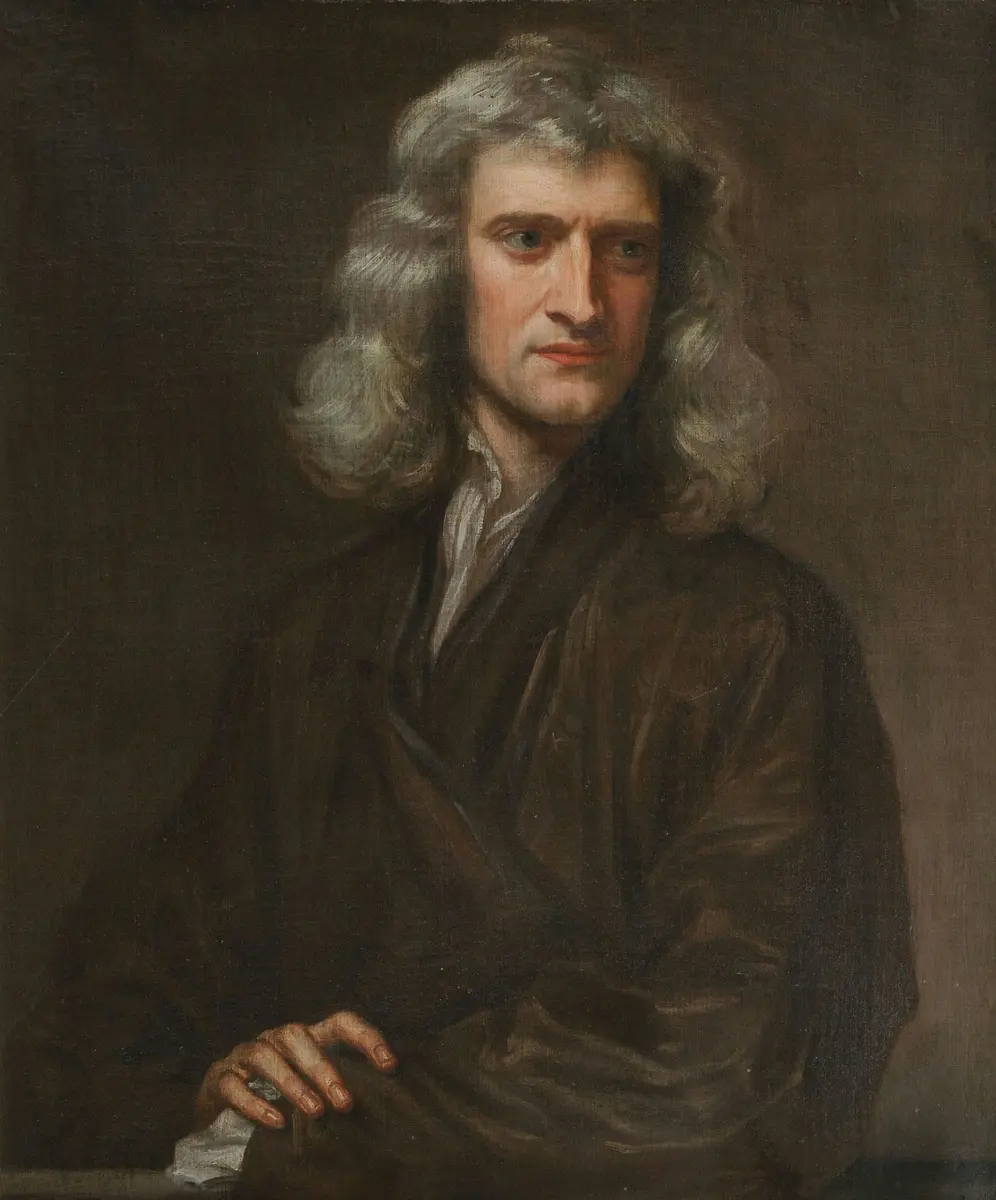
He visits England until September, meets Newton and Boyle, and lectures to the Royal Society on his own theory of gravity. He admires the Principia but finds Newton's attraction across empty space 'absurd'.
- 1690
He signs the preface of his Treatise on Light at The Hague; the book, with his Discourse on the Cause of Gravity, is printed at Leiden by Pieter van der Aa that year.
- 1691
He and his brother give the Royal Society a lens of 122 feet focal length for an aerial telescope; it is still in the Society's collection.
- 1694
He falls ill again and does not recover. In his last years he writes Cosmotheoros, a book on the planets and the possibility of life on them, published after his death.
- 1695
He makes the final corrections to his will.
Christiaan Huygens dies in The Hague, aged 66, after much suffering. He is buried in the Grote Kerk, where his father also lies.
Grote Kerk (St James's Church), The Hague: the family's church, where Christiaan, like his father, is buried in an unmarked grave in the choir