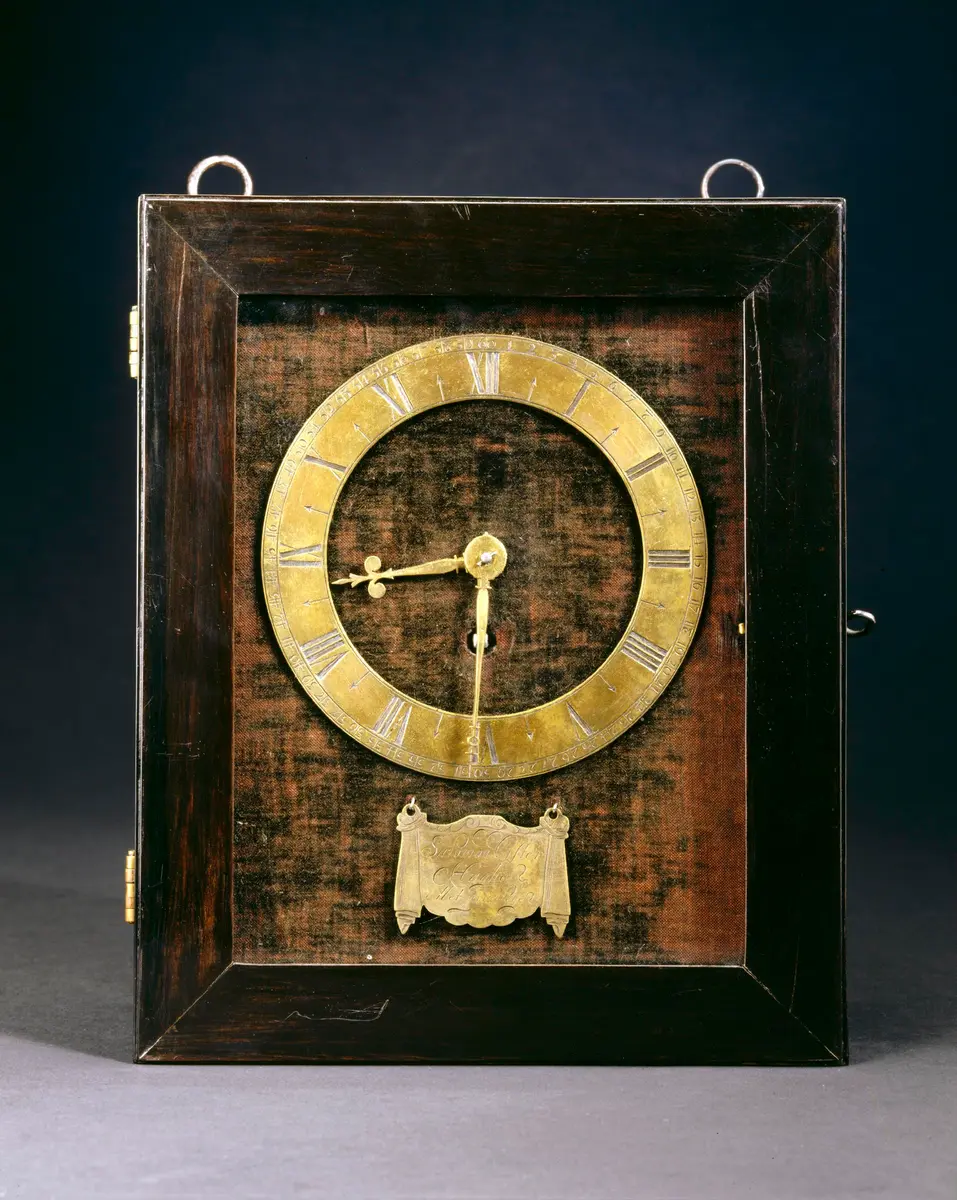
The pendulum clock
“On Christmas Day 1656 Christiaan Huygens made the first clock governed by a pendulum; the Hague clockmaker Salomon Coster built and sold them from 1657, and they spread across Europe.”
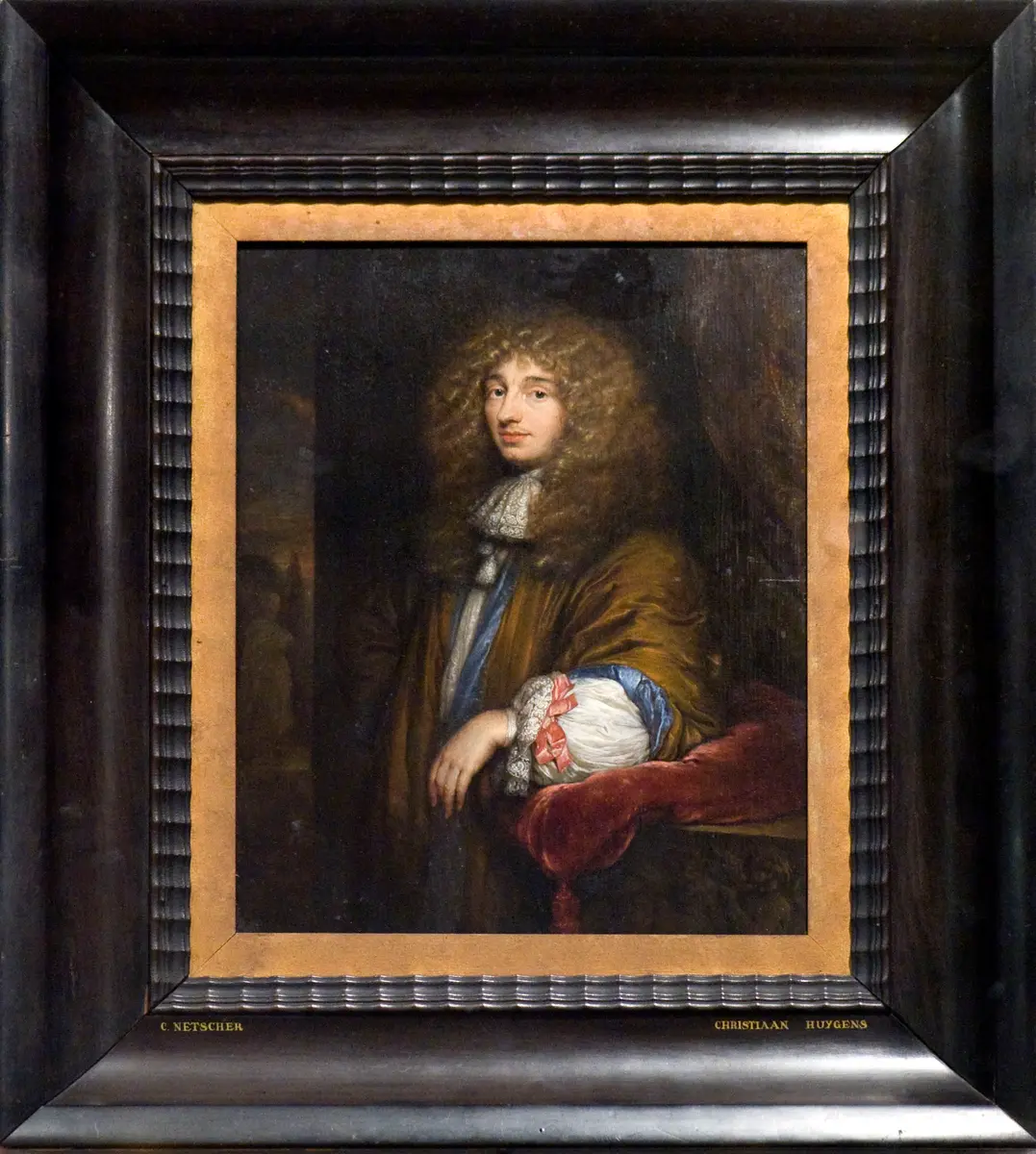
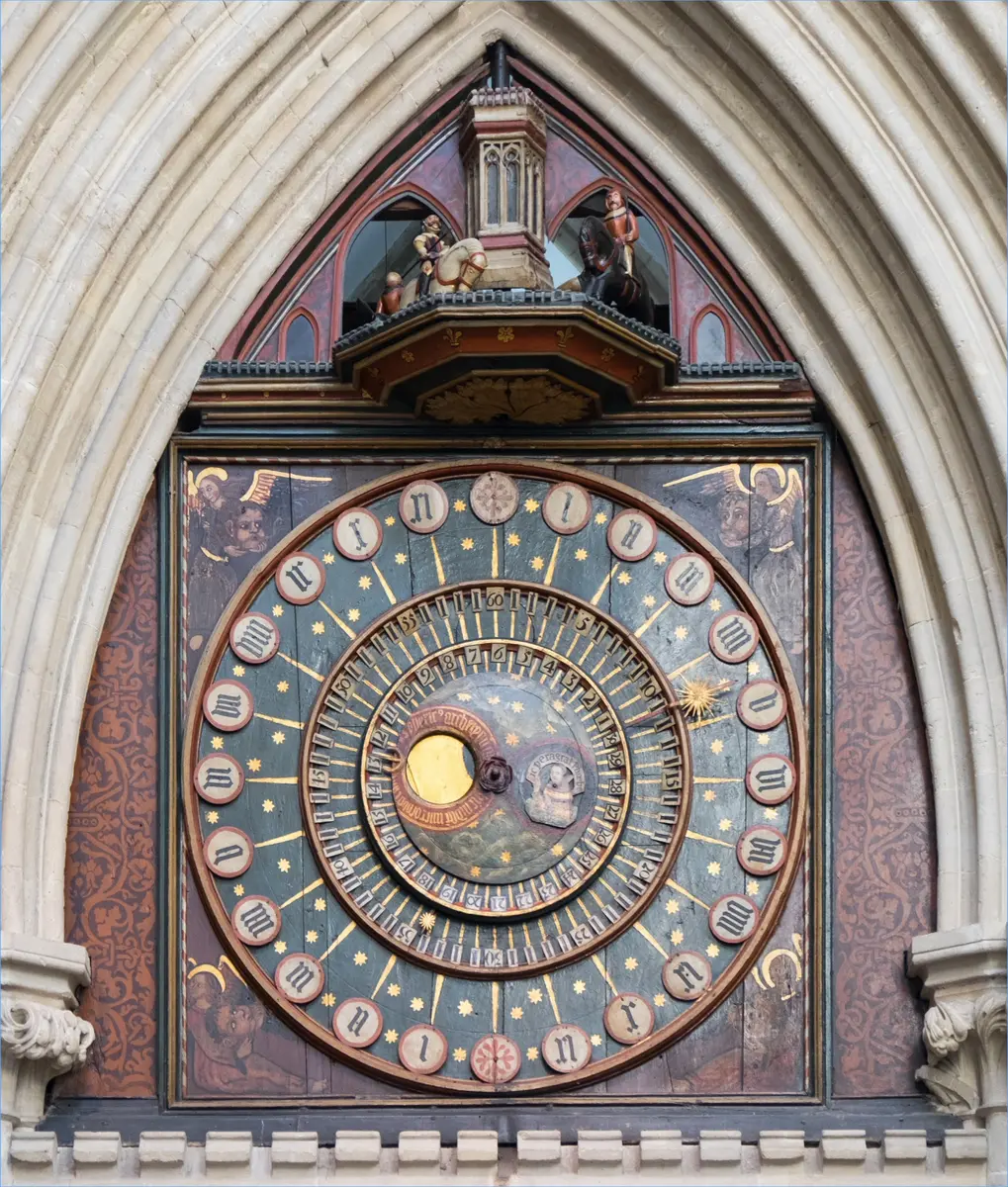
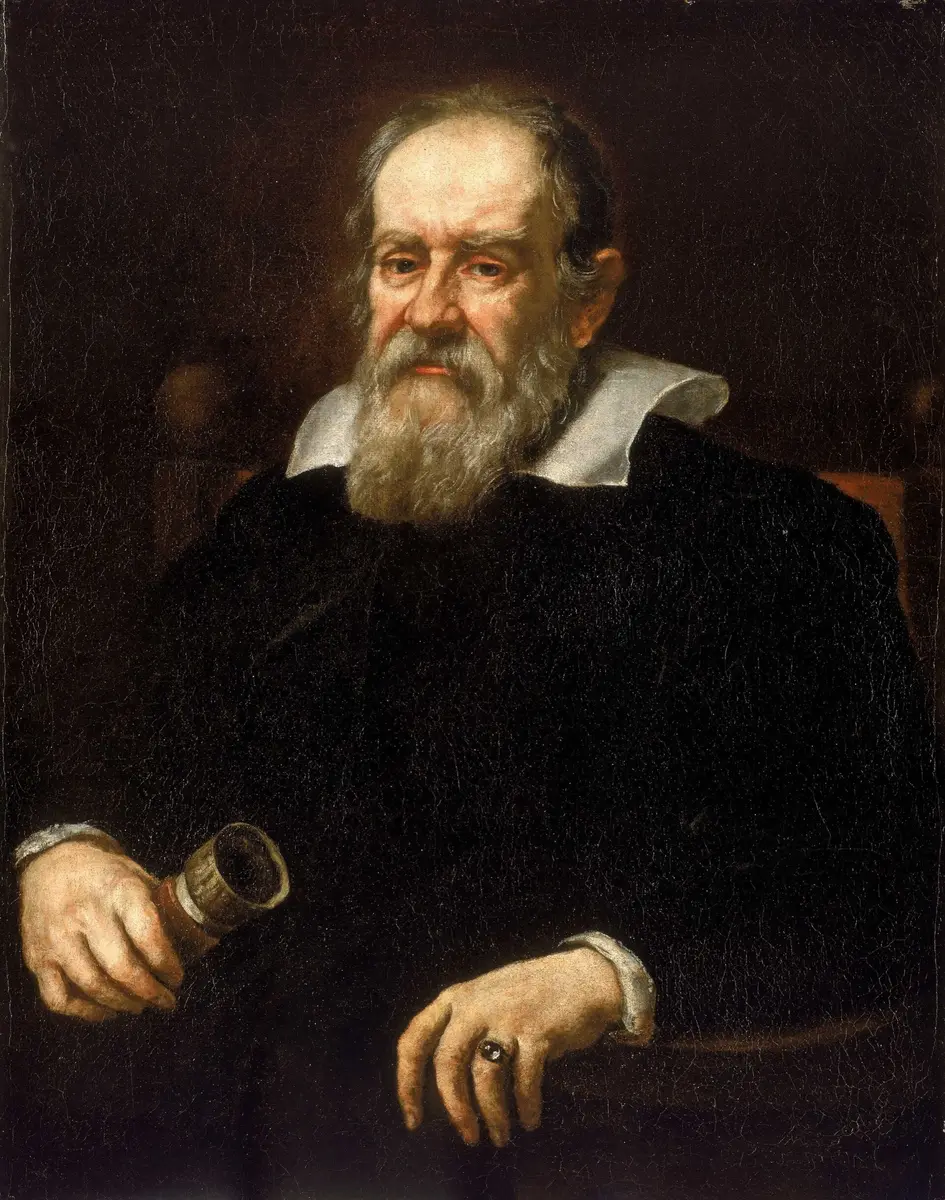
On Christmas Day 1656, in The Hague, the 27-year-old Dutch mathematician Christiaan Huygens made the first model of a clock kept in time by a pendulum. Clocks driven by weights and gear-wheels had existed since the Middle Ages, but their speed was set by a swinging bar or wheel that has no natural beat of its own, so even good clocks drifted by many minutes a day. Galileo had noticed that a swinging weight takes almost the same time for every swing, and in 1641, old and blind, he worked out with his son how a pendulum might govern a clock; the son started building it in 1649 and never finished. Huygens solved the practical problem: the clock gives the pendulum a tiny push on every swing, and the pendulum, in return, sets the pace of the whole clock.
Huygens was a scientist from a wealthy family, not a craftsman, so a Hague clockmaker, Salomon Coster, built the clocks. On 16 June 1657 the States General gave Coster the sole right to make and sell them, and the States of Holland followed in July. One of his first clocks, signed 'met privilege 1657' (with privilege), survives in Rijksmuseum Boerhaave in Leiden. News travelled fast. By April 1658 a public pendulum clock was running in the fishing village of Scheveningen, the London clockmaker Ahasuerus Fromanteel sent his son John to work in Coster's shop from September 1657 to May 1658, and by October 1658 Fromanteel was advertising in a London newspaper clocks that 'go exact'. Huygens described his invention in a short book, Horologium (1658). Rivals copied it, and in 1659 Galileo's last pupil, Vincenzo Viviani, sent the Medici a drawing of Galileo's design to claim the idea for Italy.
Huygens kept improving the clock. A simple pendulum is not perfectly regular: a wide swing takes slightly longer than a narrow one. He found that a weight swinging along a curve called a cycloid takes exactly the same time whatever the size of its swing, and he added curved metal 'cheeks' beside the pendulum's cord to force it onto that path. He hoped above all to use his clocks to find longitude at sea, which needs an exact clock carried on board. In 1664 the States of Holland granted him a patent for a marine clock, and in March 1665 the Royal Society's new journal reported that two pendulum clocks, fitted for the sea by the Scottish Earl of Kincardine, had guided Major Robert Holmes's ships back from West Africa straight to the Cape Verde island of Fogo, when the pilots' reckonings were far out. In 1666 Huygens moved to Paris as a leading member of Louis XIV's new Academy of Sciences, and on 1 April 1673 his great book Horologium oscillatorium, with the full mathematics of the pendulum, came off the press there.
The pendulum clock was the first really accurate timekeeper. English clockmakers soon added the anchor escapement and a long pendulum that beats once a second, which needed a tall case to protect it: the longcase or 'grandfather' clock. By 1676 the Royal Observatory at Greenwich had pendulum clocks precise enough for astronomy, and for almost three centuries, until quartz clocks in the twentieth century, the best clocks in the world were pendulum clocks. At sea they were never reliable enough to solve longitude; that needed John Harrison's chronometers of the next century. But Huygens' clock turned time from something guessed at into something measured, in homes, observatories and laboratories alike.
What happened
- 1656
In The Hague, Christiaan Huygens makes the first model of a clock governed by a pendulum: the clockwork gives the pendulum a small push on every swing, and the pendulum's steady beat sets the pace of the clock.
The Plein, The Hague: the square where the Huygens family house stood; Christiaan lived and worked in The Hague when he made the first pendulum clock- 1657
Huygens writes to his old teacher Frans van Schooten in Leiden that he has lately invented 'a new type of construction for a time piece', so accurate that there is real hope of using it to find longitude at sea.
The Plein, The Hague: the square where the Huygens family house stood; Christiaan lived and worked in The Hague when he made the first pendulum clockHe tells the Paris mathematician Claude Mylon, without details, that he has a new invention of great use to astronomy and for finding longitude.
The States General give the Hague clockmaker Salomon Coster the sole right, for 21 years, to make and sell the new pendulum clocks; Huygens, a gentleman scientist, leaves the craft to him. Coster's first clocks carry the words 'met privilege' (with privilege); one dated 1657 survives in Leiden.
Binnenhof, The Hague: seat of the States General and the States of Holland, which granted Coster his privileges in June and July 1657 and Huygens his marine-clock patent in 1664The States of Holland and West Friesland grant Coster the same privilege for their province.
Binnenhof, The Hague: seat of the States General and the States of Holland, which granted Coster his privileges in June and July 1657 and Huygens his marine-clock patent in 1664John Fromanteel, 19-year-old son of the London clockmaker Ahasuerus Fromanteel, starts work as a journeyman in Coster's workshop to learn how the pendulum clocks are made; he stays until May 1658.
The Plein, The Hague: the square where the Huygens family house stood; Christiaan lived and worked in The Hague when he made the first pendulum clock- 1658
Huygens publishes Horologium, a short Latin booklet printed in The Hague by Adriaan Vlacq and dedicated to the States of Holland, describing his pendulum clock and claiming the invention.
The Plein, The Hague: the square where the Huygens family house stood; Christiaan lived and worked in The Hague when he made the first pendulum clockThe Rotterdam clockmaker Simon Douw secretly examines the inside of Scheveningen's public pendulum clock, Huygens later alleges before a notary; one of the first public clocks with a pendulum is already running on the village tower.
Old Church, Scheveningen: the village church, whose tower carried one of the first public pendulum clocks by April 1658The States General grant Douw an almost identical patent. Huygens calls him 'a stupid and shameless man', and the quarrel drags on into 1659 without a clear result.
Binnenhof, The Hague: seat of the States General and the States of Holland, which granted Coster his privileges in June and July 1657 and Huygens his marine-clock patent in 1664In the London newspaper Mercurius Politicus (21–28 October), Ahasuerus Fromanteel advertises clocks 'that go exact and keep equaller time than any now made without this Regulater', made by him, 'who made the first that were in England', at his house on Bankside and at the Mermaid in Lothbury.
Lothbury, City of London: Ahasuerus Fromanteel sold the first English pendulum clocks at the sign of the Mermaid here, near Bartholomew Lane, from 1658- 1659
Salomon Coster dies, two years after building the first pendulum clocks; other Hague makers, among them Pieter Visbagh, carry on making 'Hague clocks' under the privilege.
In Florence, Galileo's last pupil Vincenzo Viviani writes to Prince Leopold de' Medici with a drawing of the pendulum clock Galileo had devised at Arcetri in 1641, which Galileo's son began to build in 1649 and never finished, to claim the idea for Galileo.
Villa Il Gioiello, Arcetri, near Florence: Galileo's home, where in 1641 he worked out with his son how a pendulum could govern a clockHuygens finds that a weight swinging along a cycloid takes exactly the same time whatever the size of its swing, and designs cycloid-shaped cheeks to guide his pendulum's cord onto that curve.
The Plein, The Hague: the square where the Huygens family house stood; Christiaan lived and worked in The Hague when he made the first pendulum clock- 1662
Huygens writes to Sir Robert Moray in London of a small pendulum clock for finding longitude, hanging from five-foot ropes in his room and running without stopping, but not yet tried at sea.
The Plein, The Hague: the square where the Huygens family house stood; Christiaan lived and worked in The Hague when he made the first pendulum clock- 1664
The States of Holland grant Huygens a fifteen-year patent for his marine clock; he shows one to the assembly and explains how it can find longitude.
Binnenhof, The Hague: seat of the States General and the States of Holland, which granted Coster his privileges in June and July 1657 and Huygens his marine-clock patent in 1664- 1665
The first issue of the Royal Society's Philosophical Transactions reports Major Robert Holmes's trial: sailing home from Guinea, his two pendulum watches, fitted for the sea by the Earl of Kincardine, put his ships thirty leagues from the Cape Verde island of Fuego while his pilots were 80 to 100 leagues out, and they sighted it the next day.
Fogo, Cape Verde: the 'Isle of Fuego' that Holmes's pendulum watches found when his pilots' reckonings were far out- 1666
Having moved to Paris at Colbert's invitation, Huygens is among the members at the first meeting of Louis XIV's Academy of Sciences, which he leads for fifteen years, living in the royal library.
Rue Vivienne, Paris: the Bibliothèque du Roi, where the Academy of Sciences met and Huygens lived from 1666 and finished Horologium oscillatorium- 1672
At Versailles, Louis XIV signs the royal privilege for printing Huygens' book on the pendulum clock.
Rue Vivienne, Paris: the Bibliothèque du Roi, where the Academy of Sciences met and Huygens lived from 1666 and finished Horologium oscillatorium- 1673
Horologium oscillatorium comes off the press in Paris, dedicated to Louis XIV: the clock described in full, the cycloid, and the first complete mathematics of the pendulum.
Rue Vivienne, Paris: the Bibliothèque du Roi, where the Academy of Sciences met and Huygens lived from 1666 and finished Horologium oscillatorium