Guglielmo Marconi
“The Italian who turned radio waves into working wireless telegraphy, sent the first signal across the Atlantic in 1901, shared the 1909 Nobel Prize and ended his life as a pillar of Mussolini's regime.”
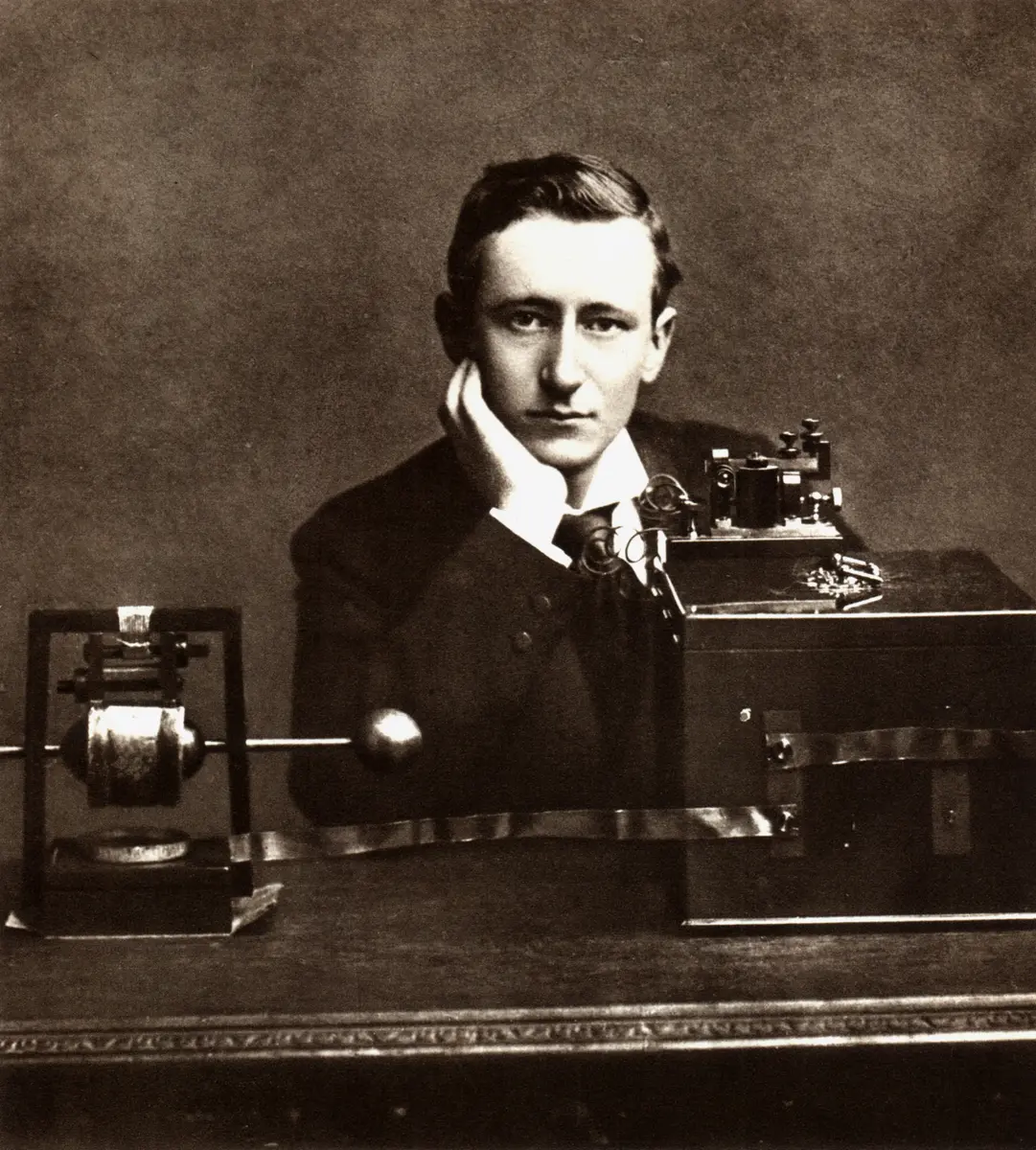
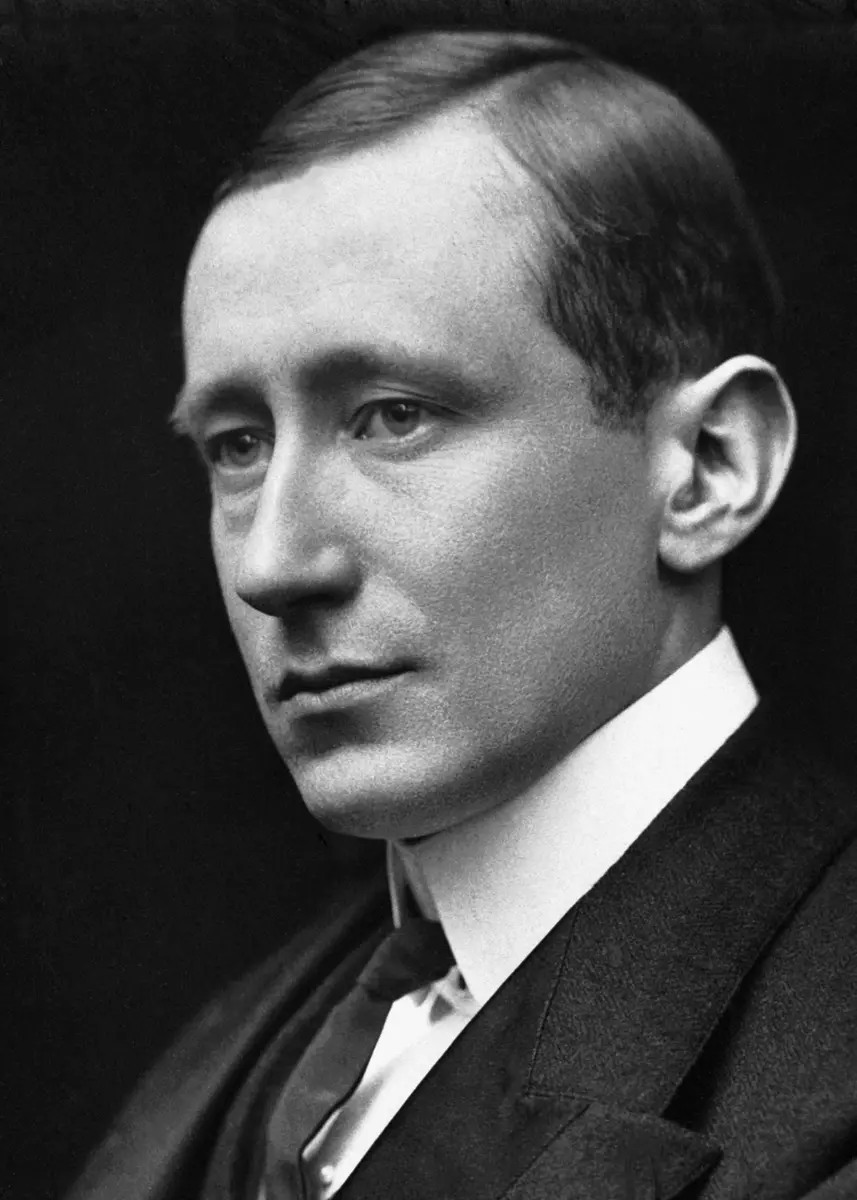
Guglielmo Marconi was the Italian inventor and businessman who turned invisible electric waves into a working system of wireless telegraphy: messages in Morse code sent through the air, with no wire between sender and receiver. In 1901 he reported the first wireless signal across the Atlantic, he built the company that ran much of the world's wireless traffic before the First World War, and in 1909 he shared the Nobel Prize in Physics with the German physicist Ferdinand Braun. In his last years he was also one of the best-known public figures of Mussolini's Fascist Italy.
He was born in Bologna on 25 April 1874, the second son of Giuseppe Marconi, a wealthy landowner, and Annie Jameson, who came from the Irish whiskey family. He never went to university: he was taught by private tutors and attended physics lessons in Livorno. In 1894, after reading about Heinrich Hertz's electric waves, he began experimenting in the attic of the family's country house, Villa Griffone, near Bologna, and in the summer of 1895 he sent signals about two kilometres, over a hill. Italy showed little interest, so in February 1896 he went to London with his mother. There he applied for the first patent for wireless telegraphy, won the support of William Preece, chief engineer of the Post Office, gave demonstrations on Salisbury Plain and across the Bristol Channel, and in July 1897 founded the company that became Marconi's Wireless Telegraph Company.
Marconi's gift was to push range, publicity and business together. His company equipped ships and coastal stations and reported yacht races from the sea. On 12 December 1901, on Signal Hill in St John's, Newfoundland, he and his assistant George Kemp heard the three clicks of the letter S sent from Poldhu in Cornwall; only the two of them heard it, and doubts remain, but signals received on the liner Philadelphia in February 1902 convinced most experts. In 1907 his stations at Clifden in Ireland and Glace Bay in Canada opened a regular transatlantic service. By 1912 his firm dominated world wireless: the operators on the Titanic were Marconi employees, and Marconi gave evidence to the American inquiry into the disaster. The same year a British government contract with his company led to the 'Marconi scandal', in which ministers were accused of buying shares with inside knowledge; Marconi himself was not accused. In private life he married Beatrice O'Brien in 1905, with whom he had three children, and in 1927 Maria Cristina Bezzi-Scali, the mother of his daughter Elettra.
Marconi served Italy in the First World War as an army and navy officer, went on its mission to the United States in 1917 and signed the 1919 peace treaties with Austria and Bulgaria. From 1919 his yacht Elettra was his floating laboratory: there he showed that short waves, sent in a narrow beam, could cross the world with little power, and from 1926 his 'beam' stations linked Britain with Canada and the rest of the Empire. He joined the Fascist Party in 1923, became president of Italy's National Research Council in 1928 and of the Royal Academy of Italy in 1930, sat on the Fascist Grand Council, and lent his fame to the regime abroad. The Marconi Foundation says that he later tried to restrain the party's pro-German and anti-Jewish leanings; his biographer Marc Raboy concludes that he served Mussolini faithfully until his death.
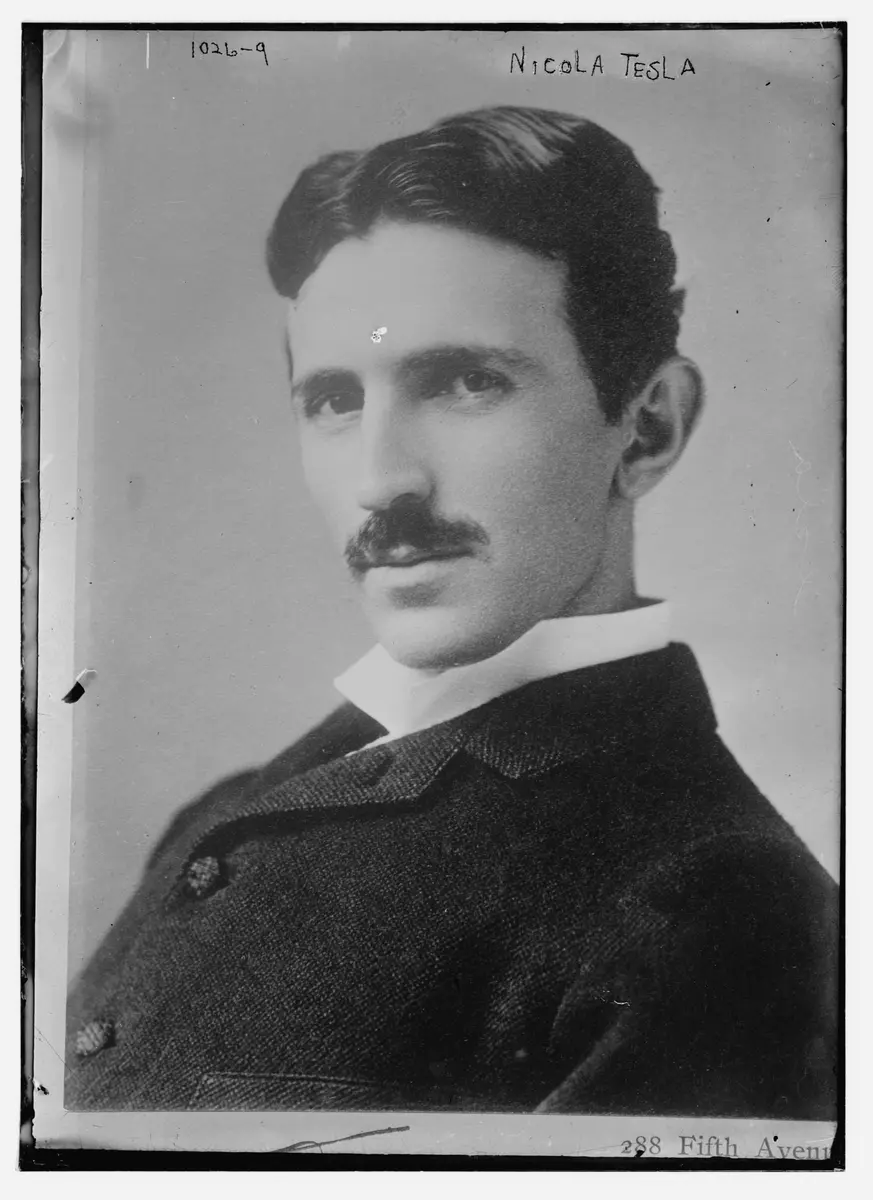
Marconi died of a heart attack in Rome on 20 July 1937, and the next day radio stations around the world went silent for two minutes in his honour. He lies in a mausoleum at Villa Griffone. Who 'invented radio' is still argued: Oliver Lodge, Jagadish Chandra Bose, Alexander Popov and Nikola Tesla all did important work before or beside him, and in 1943 the US Supreme Court struck down the broad claims of his American tuning patent because Lodge, Tesla and John Stone Stone had got there first, while leaving his fame as the first to achieve successful radio transmission untouched. What is not in doubt is that Marconi turned an experiment into a practical, worldwide system of communication.
What happened
- 1874
Guglielmo Marconi is born in Bologna, the second son of Giuseppe Marconi, a wealthy landowner, and Annie Jameson, an Irishwoman of the whiskey-distilling family. He is baptised in the cathedral of San Pietro.
Bologna: born on 25 April 1874 in a wing of Palazzo Dall'Armi Marescalchi on Via IV Novembre, where a plaque marks the house- 1894
After reading about the electric waves of Heinrich Hertz, who died early that year, Marconi turns the attic of Villa Griffone, the 'silkworm room', into a laboratory and starts trying to signal without wires.
Villa Griffone, Pontecchio (now Pontecchio Marconi), near Bologna: the family's country house, where he made his first experiments in 1894-95; his mausoleum stands in its grounds - 1895
In the summer, with an aerial connected to the earth and a sensitive coherer, he sends signals from the garden of Villa Griffone over the Celestini hill, about two kilometres away; his helper on the far side answers with a gunshot.
Villa Griffone, Pontecchio (now Pontecchio Marconi), near Bologna: the family's country house, where he made his first experiments in 1894-95; his mausoleum stands in its grounds - 1896
Finding little interest in Italy, he travels to London with his mother, whose family helps him make the right contacts.
He applies for British patent 12,039, the first patent for wireless telegraphy. Through his cousin Henry Jameson Davis he is introduced to William Preece, chief engineer of the Post Office, who backs his trials.
On Salisbury Plain he demonstrates his system to the Army and the Navy; in new trials there in March 1897 he reaches about 6.4 kilometres, raising his aerials on balloons and kites.
- 1897
Signals cross the Bristol Channel, nearly 14.5 kilometres of open water.
Back in Italy he shows his system to the Italian navy at La Spezia, signalling to warships up to 19 kilometres away.
The Wireless Telegraph and Signal Company is registered in London, with Marconi's patents behind it and his cousin Jameson Davis among its founders; in 1900 it becomes Marconi's Wireless Telegraph Company.
- 1898
He reports the Kingstown regatta near Dublin by wireless from a boat at sea, one of the publicity coups that make his name.
- 1899
Wireless crosses the English Channel for the first time, between the South Foreland lighthouse and Wimereux near Boulogne, about 50 kilometres.
He equips two ships to report the America's Cup yacht races to New York newspapers; the excitement leads to the founding of the American Marconi Company.
- 1900
He files British patent 7777, 'Improvements in Apparatus for Wireless Telegraphy', for tuned ('syntonic') circuits that let several stations work without interfering. It becomes his most famous patent, and the subject of long lawsuits.
- 1901
A gale wrecks the great ring of twenty masts at his new station at Poldhu in Cornwall, built for the transatlantic test; a simpler fan of wires between two masts replaces it.
Poldhu, Cornwall: his great transmitting station, from which the letter S was sent across the Atlantic in December 1901- 12:30 p.m.
On Signal Hill in St John's, Newfoundland, listening through an earphone to a wire held up by a kite, Marconi and George Kemp hear the three clicks of the letter S sent from Poldhu, about 3,500 kilometres away. His diary notes signals at 12:30, 1:10 and 2:20.
Signal Hill, St John's, Newfoundland: where he and George Kemp heard the transatlantic signals on 12 December 1901 He announces the result to the press, to acclaim and some scepticism, and soon leaves Newfoundland when the Anglo-American Telegraph Company threatens to sue over its monopoly there.
Signal Hill, St John's, Newfoundland: where he and George Kemp heard the transatlantic signals on 12 December 1901- 1902
The American Institute of Electrical Engineers holds its annual dinner in his honour in New York; Edison, who cannot come, praises the 'monumental audacity' of jumping a wave across the Atlantic.
On board the liner Philadelphia, messages from Poldhu are printed on tape before witnesses up to 2,000 miles by night but only 700 miles by day: Marconi has found the 'daylight effect' of the upper atmosphere.
Poldhu, Cornwall: his great transmitting station, from which the letter S was sent across the Atlantic in December 1901The first complete messages cross the Atlantic, from his new station at Glace Bay, Nova Scotia, to Poldhu.
Poldhu, Cornwall: his great transmitting station, from which the letter S was sent across the Atlantic in December 1901- 1905
He marries Beatrice O'Brien, daughter of the 14th Baron Inchiquin, of Dromoland Castle in County Clare; they will have three children, Degna, Giulio and Gioia.
- 1907
His stations at Clifden in Ireland and Glace Bay in Nova Scotia open the first regular commercial wireless service across the Atlantic, beginning with press messages.
- 1909
In Stockholm he gives his Nobel lecture: he and Ferdinand Braun share the 1909 Nobel Prize in Physics for the development of wireless telegraphy. He admits he 'never studied physics or electrotechnics in the regular manner'.
- 1912
Four days after the Titanic sank with Marconi operators on board, he gives evidence on the first day of the US Senate inquiry in New York, explaining how his company staffs ships' wireless rooms.
- 1913
A House of Commons select committee reports on the 'Marconi scandal': ministers, including Lloyd George and the Attorney General Rufus Isaacs, brother of the Marconi company's managing director Godfrey Isaacs, had bought shares in American Marconi while the government negotiated an Imperial wireless contract with the British company. The majority clears them; a minority report criticises them. Marconi himself is not accused.
- 1914
He is named a senator of the Kingdom of Italy, and in Britain an honorary Knight Grand Cross of the Royal Victorian Order.
- 1917
After serving as an army officer and, from 1916, as a naval commander, he crosses the Atlantic with Italy's war mission to the United States.
- 1919
He buys a steam yacht, renames it Elettra, and fits it out as a floating laboratory, where he takes up short waves again.
As one of Italy's plenipotentiary delegates to the Paris Peace Conference, he signs the Treaty of Saint-Germain with Austria; later that year he also signs the treaty with Bulgaria.
- 1922
In a lecture to the Institute of Radio Engineers in New York he foretells the coming of radar: using radio echoes to detect ships in fog or darkness.
- 1923
In trials between Poldhu and the Elettra, cruising in the Atlantic and the Mediterranean, a 1-kilowatt short-wave transmitter is heard 2,250 kilometres away, louder than far stronger long-wave stations: the start of the short-wave beam system.
He joins Mussolini's National Fascist Party, which he will support for the rest of his life.
- 1924
The British Post Office contracts the Marconi company to link Britain with the Empire by short-wave beam; the first beam station, to Canada, opens in 1926.
- 1927
His first marriage having been ended, he marries Maria Cristina Bezzi-Scali in Rome; their daughter Elettra is born in 1930.
- 1928
He becomes president of Italy's National Research Council (Consiglio Nazionale delle Ricerche).
- 1929
He is given the hereditary title of marchese.
- 1930
He becomes president of the Royal Academy of Italy, the regime's showcase of culture and science, and he also sits on the Fascist Grand Council.
- 1931
He opens Vatican Radio, which he has built for Pope Pius XI, and introduces the first radio message ever given by a pope.
Rome: where he lived in his last years as a senator and president of the Royal Academy of Italy, opened Vatican Radio in 1931 and died on 20 July 1937- 1932
He sets up the world's first microwave radiotelephone link, between Vatican City and the pope's summer residence at Castel Gandolfo.
Rome: where he lived in his last years as a senator and president of the Royal Academy of Italy, opened Vatican Radio in 1931 and died on 20 July 1937 - 1933
On a world tour that Mussolini was 'very anxious' he should make, Chicago's World's Fair holds a 'Marconi Day'; President Franklin Roosevelt comes to Chicago for a few hours and asks to see him.
- 1934
At Sestri Levante on the Italian Riviera, the Elettra enters harbour with her windows blacked out, steered only by his microwave radio beacon.
- 1935
In Italy he gives a practical demonstration of the principles of radar.
- 1937
Guglielmo Marconi dies of a heart attack in Rome, aged 63. The next day radio stations around the world fall silent for two minutes; after a state funeral he is laid to rest near Bologna, and later in the mausoleum at Villa Griffone.
Rome: where he lived in his last years as a senator and president of the Royal Academy of Italy, opened Vatican Radio in 1931 and died on 20 July 1937