The radio
“In 1895–1901 Guglielmo Marconi turned Hertz's electric waves into wireless telegraphy, sending a signal across the Atlantic; by 1920 radio had become broadcasting.”
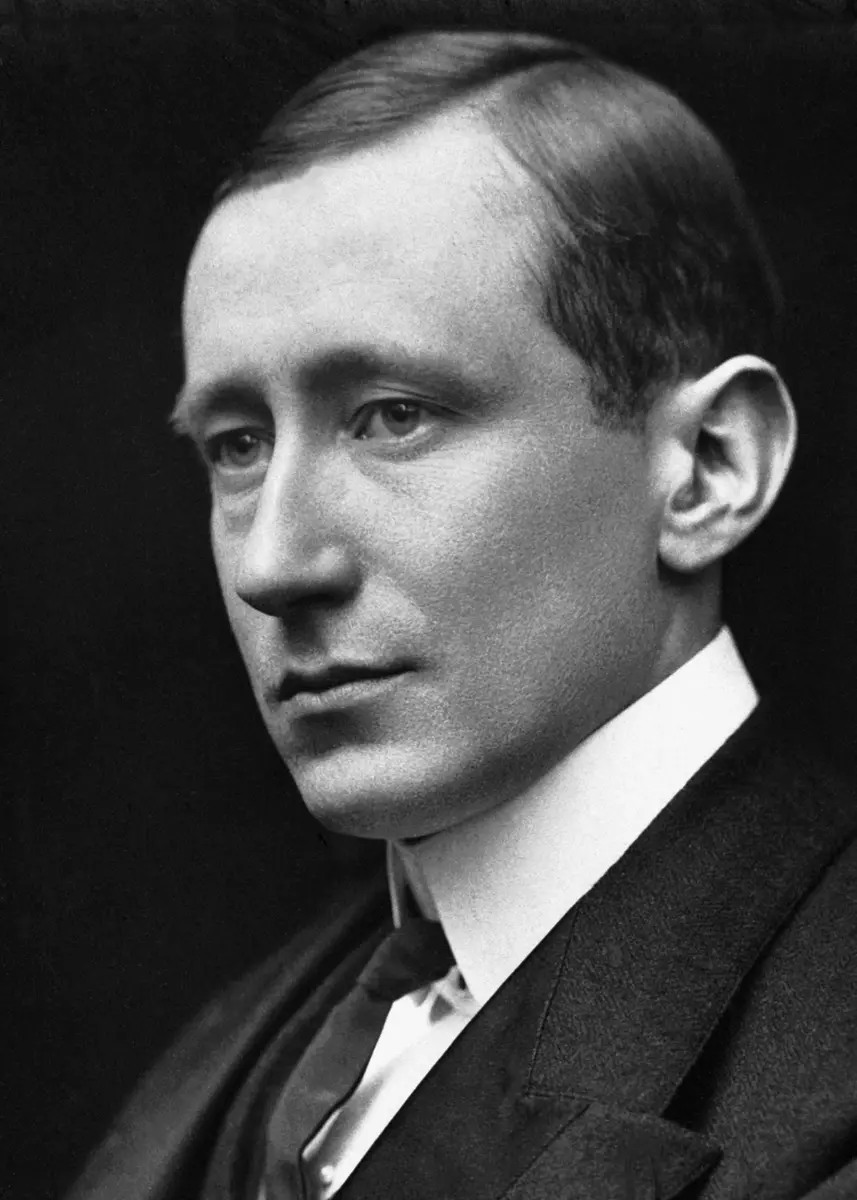
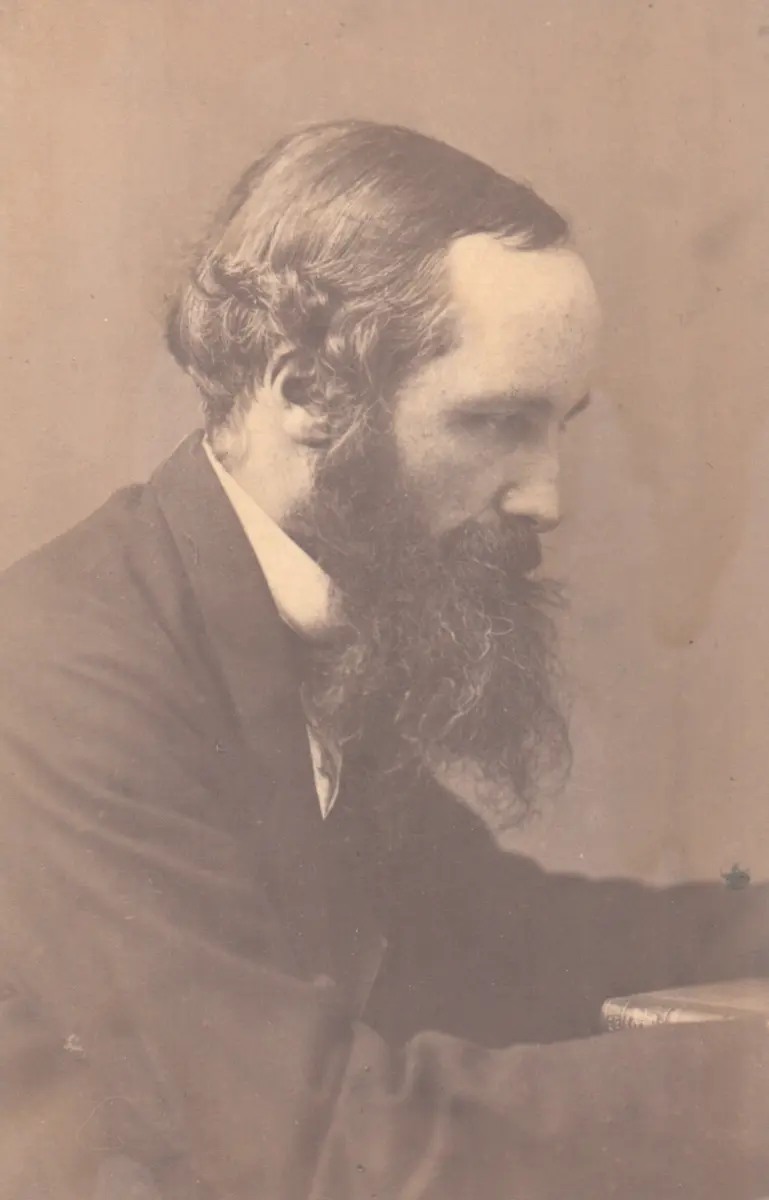
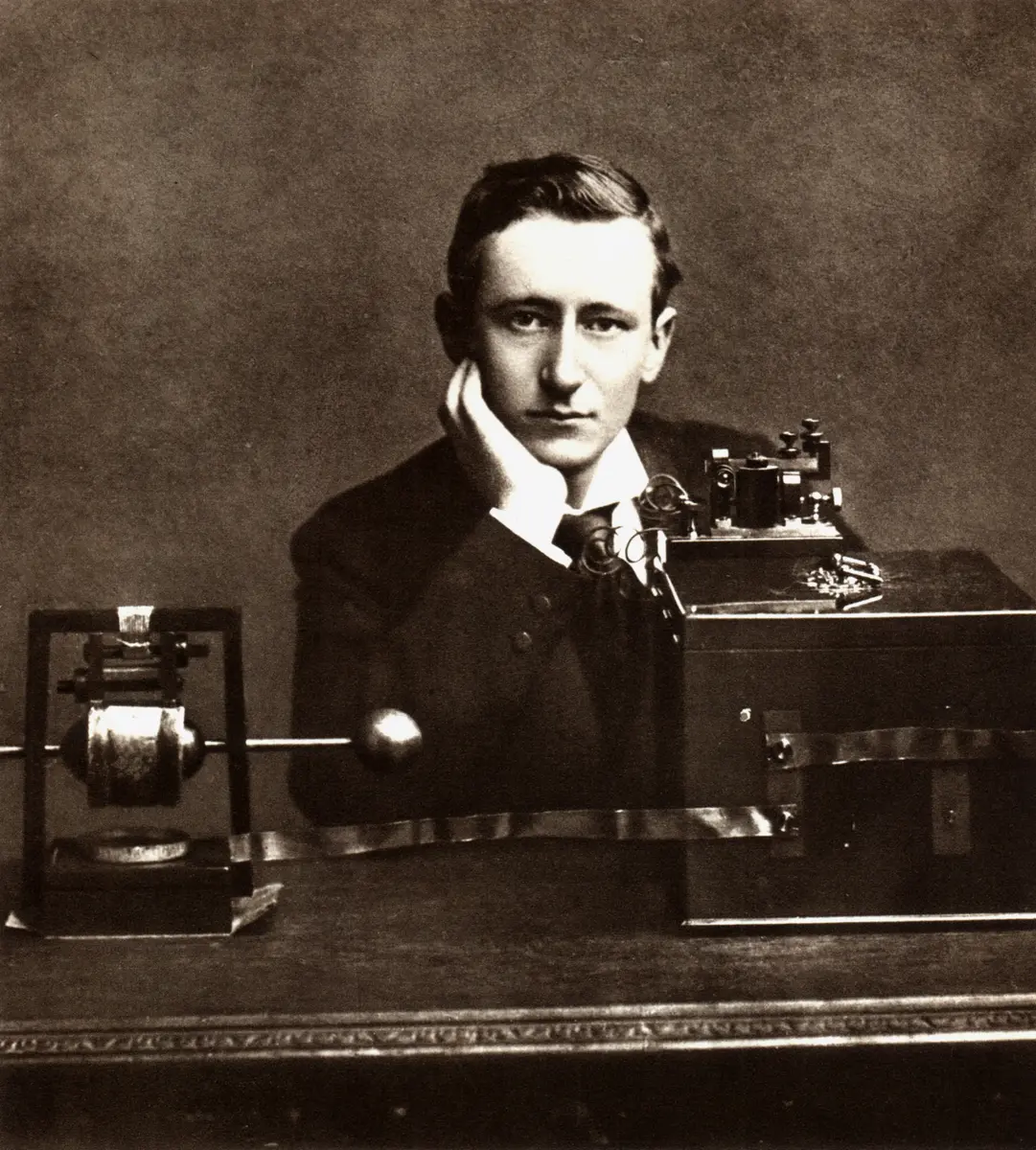
Radio is the sending of messages through the air by invisible electric waves, with no wire between sender and receiver. James Clerk Maxwell's equations had predicted such waves in the 1860s and 1870s, and in 1886–88 Heinrich Hertz made and detected them in his laboratory at Karlsruhe, but he saw no practical use for them. In 1894, the year Hertz died, several people began to turn his waves into signals. In Britain Oliver Lodge showed signals passing between two buildings in Oxford; in Calcutta Jagadish Chandra Bose rang a bell through walls with very short waves; in St Petersburg Alexander Popov showed a receiver on 7 May 1895; and in the attic of his family's country house near Bologna, a 20-year-old called Guglielmo Marconi set out to send messages as far as possible.
Marconi's advantage was not one single discovery but a working system and the will to push its range. He connected his transmitter and receiver to a tall wire aerial and to the earth, improved the coherer, a glass tube of metal filings that detects the waves, and in the summer of 1895 sent signals about two kilometres, over a hill behind the house. Italy showed little interest, so in February 1896 he took his apparatus to London, where William Preece, chief engineer of the Post Office, backed him. He applied for British patent 12,039 on 2 June 1896, demonstrated to the Army and the Navy on Salisbury Plain, made a bell ring without wires in a London lecture hall that December, and in May 1897 sent signals across the Bristol Channel. In July 1897 his patent was granted and his company was founded.
Range grew year by year: across the English Channel in 1899, to ships at sea, and on 12 December 1901 to Newfoundland. That day Marconi and his assistant George Kemp, listening with an earphone to a wire held up by a kite on Signal Hill in St John's, heard the three dots of the letter S sent from Poldhu in Cornwall, about 3,500 kilometres away. Only the two of them heard it, and doubts remain about what they heard, but two months later messages from Poldhu were printed on tape aboard the liner Philadelphia before witnesses. Radio waves clearly followed the curve of the Earth, and wireless became a global business. New parts made it better: Ambrose Fleming's valve (1904), the first electronic tube, and Reginald Fessenden's continuous-wave transmitters, which could carry a voice; Fessenden's claimed Christmas Eve broadcast of 1906 rests only on his own later account.
At sea, wireless saved lives. When the Titanic sank on 15 April 1912, its Marconi operators called for help and the Carpathia, which heard them 58 miles away, rescued about 700 people; within months new laws and an international convention required ships to keep a radio watch. After the First World War, valve transmitters made speech and music easy to send, and radio changed from a private message service into broadcasting for everyone. On 15 June 1920 the singer Nellie Melba sang from Marconi's works in Chelmsford to listeners across Europe, and on 2 November 1920 the station KDKA in East Pittsburgh broadcast the results of the American presidential election to the public, the start of regular broadcasting in the United States. This entry ends there.
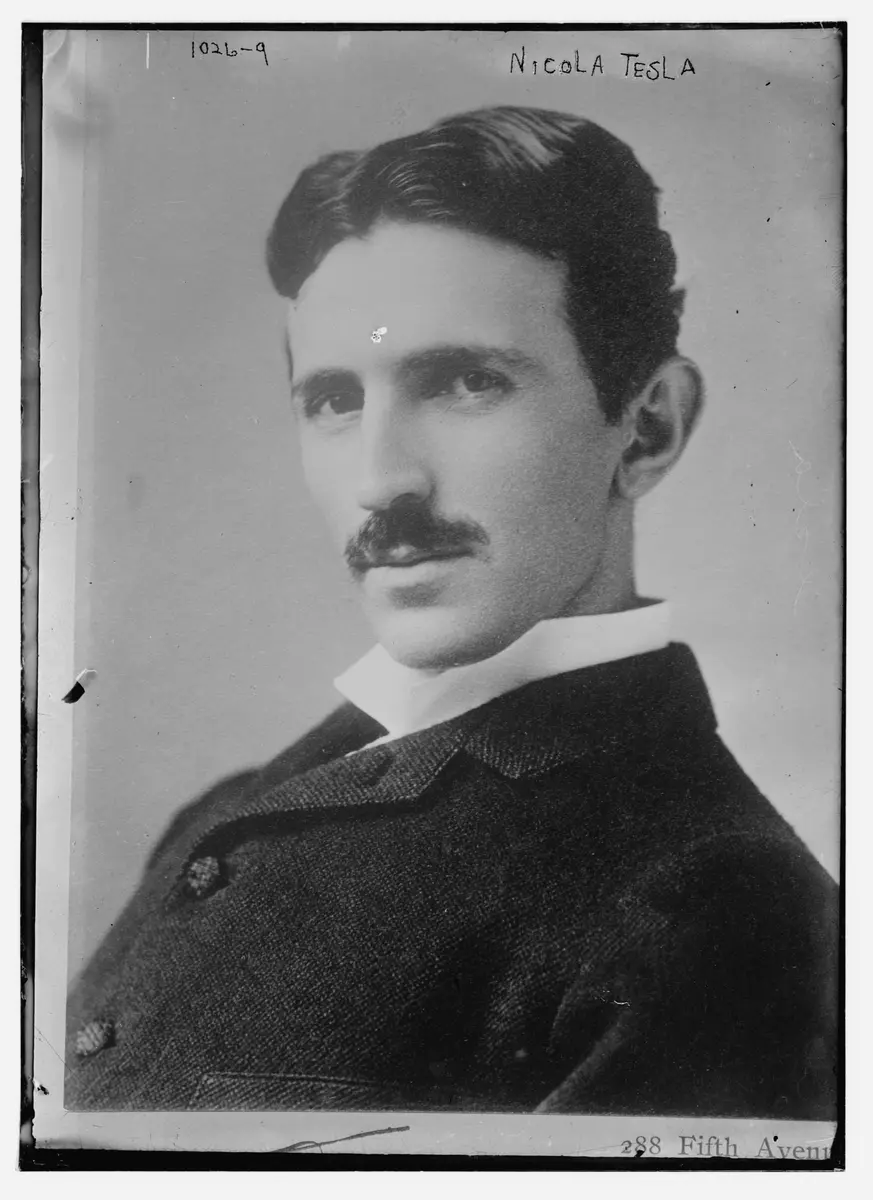
Who invented radio is still argued. Marconi did not discover the waves, and Lodge, Popov, Bose, Tesla and others built important pieces before or beside him; in 1943 the US Supreme Court struck down the broad claims of one of his later patents on tuning, finding that Lodge, Tesla and John Stone Stone had got there first, while noting that Marconi's fame as the first to achieve successful radio transmission rests on his original patent, which was not in question. What is not in doubt is that Marconi was the first to make wireless a practical, long-distance system and a world industry, and he shared the 1909 Nobel Prize in Physics with Ferdinand Braun for it. Every radio, television, mobile phone and Wi-Fi network today uses the same idea: information carried by electric waves through space.
What happened
- 1894
After Heinrich Hertz dies early in the year, articles about his electric waves reach the 20-year-old Guglielmo Marconi, a friend of the Bologna physicist Augusto Righi. In the attic of Villa Griffone, his family's house at Pontecchio, he starts building a spark transmitter and a coherer receiver.
Villa Griffone, Pontecchio (now Pontecchio Marconi), near Bologna: the Marconi family house, where Marconi experimented in the attic in 1894–95 and sent signals over the hill behind it in the summer of 1895At the Royal Institution in London, Oliver Lodge lectures on 'The Work of Hertz and his Successors' and sends and detects electric waves across the theatre with a coherer.
At the British Association's meeting in Oxford, Lodge sends signals between two buildings: a bell rings and a galvanometer moves at the receiver. It is the first public show of signalling with Hertzian waves in Britain, though no readable message is sent.
Oxford University Museum of Natural History: Oliver Lodge's demonstration to the British Association on 14 August 1894, with the receiver in the museum and the transmitter in the Clarendon Laboratory nearby- 1895
At Presidency College in Calcutta, Jagadish Chandra Bose sends waves only millimetres long over 23 metres and through two walls, ringing a bell and firing a little gunpowder at a distance.
Presidency College (now Presidency University), Calcutta: Jagadish Chandra Bose's demonstration of very short radio waves in 1895In the summer, Marconi joins his transmitter and receiver to a tall aerial and to the earth and sends signals from the garden of Villa Griffone over the Celestini hill, about 2 kilometres away; a gunshot from beyond the hill tells him they have arrived.
Villa Griffone, Pontecchio (now Pontecchio Marconi), near Bologna: the Marconi family house, where Marconi experimented in the attic in 1894–95 and sent signals over the hill behind it in the summer of 1895In St Petersburg, the naval instructor Alexander Popov shows the Russian Physical and Chemical Society a receiver with a coherer, aerial, relay and bell, built to record lightning, which picks up a spark transmitter up to 64 metres away (25 April by Russia's old calendar).
St Petersburg University: Alexander Popov showed his receiver to the Russian Physical and Chemical Society on 7 May 1895- 1896
Finding little interest in Italy, Marconi brings his apparatus to London. William Preece, engineer-in-chief of the Post Office, takes him up and lends him the engineer George Kemp.
Marconi applies for British patent 12,039, 'Improvements in transmitting electrical impulses and signals, and in apparatus therefor', the first patent for a system of wireless telegraphy.
On Salisbury Plain, Marconi demonstrates his system to the Army and the Royal Navy; the results are promising but still tentative.
At Toynbee Hall in London, during Preece's lecture 'Telegraphy without Wires', a bell rings in a box that Marconi carries around the hall whenever Preece makes a spark, with no wire between them. The show makes Marconi famous.
Toynbee Hall, Whitechapel, London: William Preece's lecture of December 1896, where Marconi's box rang a bell with no wire to the transmitter- 1897
In new trials on Salisbury Plain, with aerials raised by balloons and kites, Marconi signals over about 6 kilometres.
Marconi and the Post Office send the first wireless signals across open sea, between Flat Holm island and Lavernock Point in the Bristol Channel, and then from Brean Down in England, nearly 15 kilometres away.
Lavernock Point, near Penarth: the Welsh end of the first signals across open sea, to and from Flat Holm in May 1897British patent 12,039 is accepted (its US twin, 586,193, follows on 13 July). That month Marconi's cousin Jameson Davis helps him found the Wireless Telegraph and Signal Company in London; that summer, at La Spezia, he signals to Italian warships up to 19 kilometres away.
- 1899
Wireless crosses the English Channel between South Foreland and Wimereux, 50 kilometres; in September Marconi equips two ships to report the America's Cup yacht race to New York newspapers.
- 1900
Marconi takes out British patent 7777 for 'tuned or syntonic telegraphy', which lets several stations work on different wavelengths without interfering; his company becomes Marconi's Wireless Telegraph Company.
- 1901
A gale wrecks the great ring of twenty masts at Marconi's new station at Poldhu in Cornwall; a simpler fan of wires between two masts takes its place.
Poldhu, on the Lizard in Cornwall: Marconi's transmitting station, which sent the letter S across the Atlantic on 12 December 1901 (the Marconi Monument marks the site)- 12:30 p.m.
On Signal Hill in St John's, Newfoundland, listening with an earphone to a wire held up by a kite, Marconi and George Kemp hear the three clicks of the letter S sent from Poldhu, about 3,500 kilometres away; Marconi's diary notes 'Sigs. at 12:30, 1:10 and 2:20'. He announces it on 16 December.
Signal Hill, St John's, Newfoundland: where Marconi and Kemp heard the signals from Poldhu on 12 December 1901, beside Cabot Tower - 1902
On board the liner Philadelphia, messages from Poldhu are printed on tape by a Morse inker before witnesses, far out in the Atlantic, answering the doubters; Marconi also notices that signals carry much farther at night.
- 1904
Marconi's tuning patent is granted in the United States as No. 763,772; in 1943 the Supreme Court will hold its broad claims invalid, finding that Lodge, Tesla and John Stone Stone had anticipated them.
John Ambrose Fleming, scientific adviser to the Marconi company, applies for a patent on his 'oscillation valve', a vacuum bulb that detects wireless signals: the first electronic tube. In 1906 Lee de Forest adds a third electrode, making a tube that can amplify.
- 1906
At Brant Rock, Massachusetts, Reginald Fessenden demonstrates his high-frequency alternator transmitter to invited engineers, sending speech by continuous waves linked to the telephone network.
Brant Rock, Marshfield, Massachusetts: Reginald Fessenden's station, with the voice and music transmissions of December 1906According to Fessenden's own account, written in 1932, Brant Rock broadcasts a short programme of speech, phonograph music, a violin solo and a Bible reading to ships at sea on Christmas Eve, and again on New Year's Eve. No report from 1906 has been found.
Brant Rock, Marshfield, Massachusetts: Reginald Fessenden's station, with the voice and music transmissions of December 1906- 1909
When the liner Republic sinks in the Atlantic, her wireless calls bring help in time: the first of many rescues at sea by radio.
Marconi and the German physicist Ferdinand Braun share the Nobel Prize in Physics for their work on wireless telegraphy.
- 1912
- 12:15 a.m.
After the Titanic strikes an iceberg, her Marconi operators Jack Phillips and Harold Bride send the distress call CQD at 12.15 a.m. The Carpathia, 58 miles away, hears it, races north and picks up the first lifeboat at 4.10; 711 of the 2,201 people on board are saved.
President Taft signs the US Act to Regulate Radio Communication, which, with the London Radiotelegraphic Convention of the same year, brings licences and rules for ships and stations after the Titanic.
- 1919
In Pittsburgh, the Westinghouse engineer Frank Conrad plays a phonograph record over his experimental station 8XK; so many amateurs ask for more that he begins regular evening concerts.
- 1920
- 7:00 p.m.
At seven in the evening, Dame Nellie Melba sings into a microphone at the Marconi works in Chelmsford, in a concert arranged by the Daily Mail; she is heard across Europe and more than a thousand miles away.
Marconi's New Street works, Chelmsford: Nellie Melba sang from its broadcasting station on 15 June 1920 Westinghouse's station KDKA, broadcasting from a shed on a factory roof in East Pittsburgh, reads out the returns of the Harding–Cox presidential election to anyone with a receiver, the start of scheduled public broadcasting in the United States.
The former Westinghouse works at East Pittsburgh (Keystone Commons): KDKA broadcast the 1920 election returns from a shed on its K Building