Nikola Tesla
“The Serbian-American inventor of the alternating-current motor and power system that beat Edison's direct current and still runs the world's electric grids.”
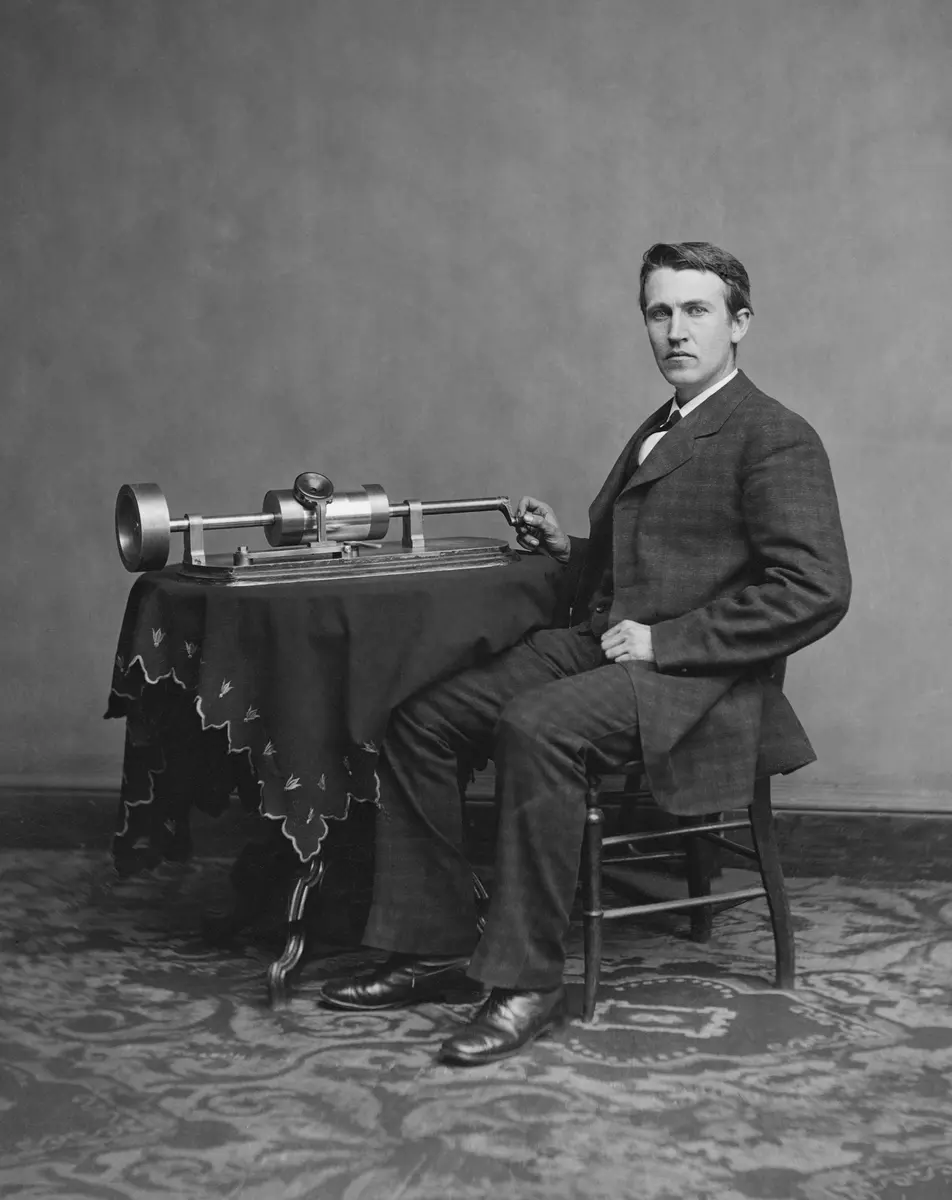
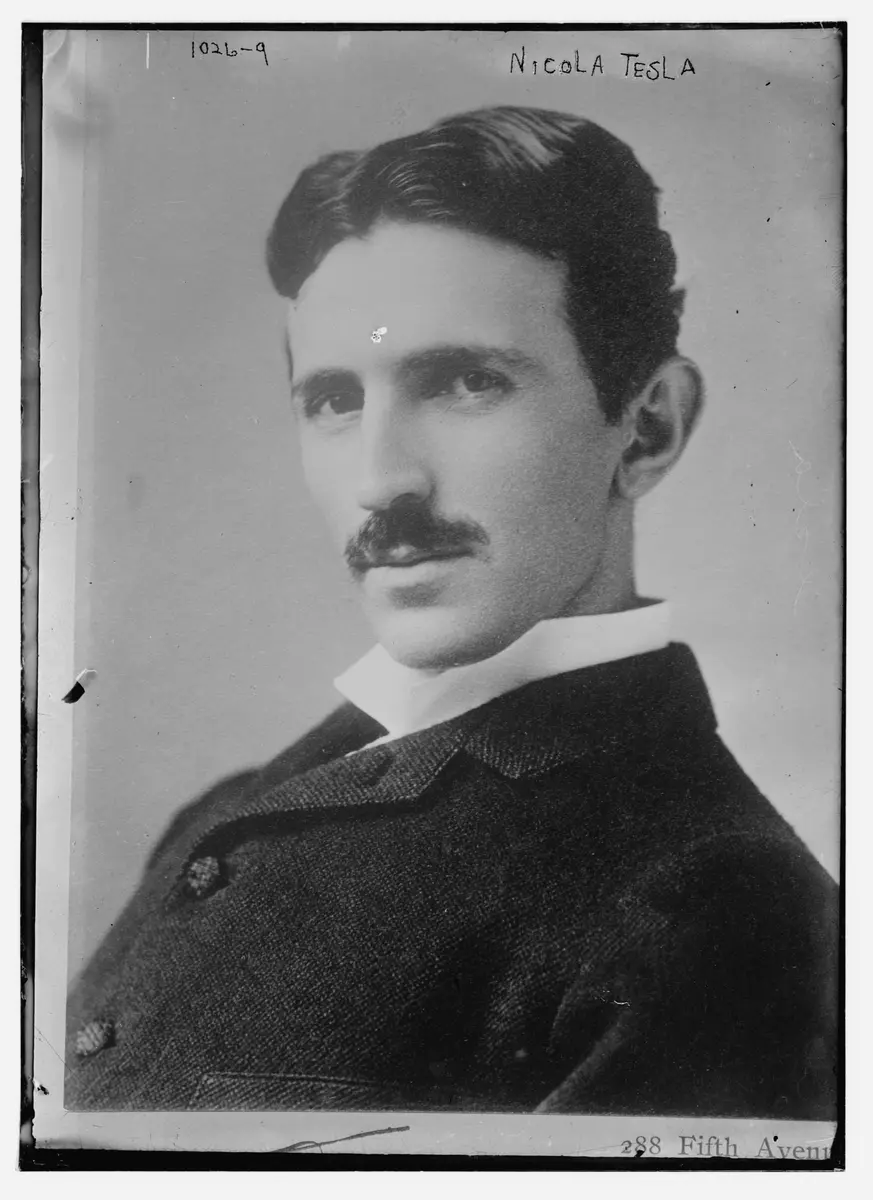
Nikola Tesla was a Serbian-American inventor and electrical engineer, best known for the alternating-current (AC) induction motor and the 'polyphase' system of generators, transformers, lines and motors that goes with it. George Westinghouse bought his patents in 1888, and with them won the 'war of the currents' against Thomas Edison's direct current: the power stations and grids of the whole world still work on his principle. He also invented the Tesla coil, a transformer for very high voltages and frequencies, steered the first radio-controlled boat, and was one of the pioneers of radio. He held 112 American patents, and since 1960 the unit of magnetic flux density, the tesla, carries his name.
He was born at midnight between 9 and 10 July 1856 in Smiljan, a village in Lika, then part of the Austrian Empire and now in Croatia, the son of a Serbian Orthodox priest. His father wanted him to become a priest too, but after a near-fatal illness he let him study engineering at the Polytechnic in Graz. There, watching a Gramme dynamo, Tesla began to look for a motor without sparking brushes. The answer came to him, by his own account, in 1882, during a walk in a Budapest park: alternating currents could make a magnetic field turn, and the turning field would drag the motor round. He worked for Edison's European company in Paris and Strasbourg, and in June 1884 he arrived in New York with a letter of introduction to Edison himself.
The partnership did not last: within a year he had left Edison's company after a quarrel about pay, and for a while he dug ditches to live. In 1887 new backers gave him a laboratory in Manhattan, and 1888 brought his motor patents, his lecture to the American Institute of Electrical Engineers and the sale to Westinghouse. In the 1890s he lit lamps without wires, lectured in New York, London and Paris, and in 1893 saw Westinghouse light the Chicago World's Fair with his system. In 1895 the great power station at Niagara Falls, built on his patents, began to work, and in November 1896 its power reached Buffalo, 20 miles away: proof that alternating current could carry electricity over long distances. In 1898 he steered a model boat by radio before a crowd in Madison Square Garden; in 1899 he made artificial lightning in a laboratory at Colorado Springs.
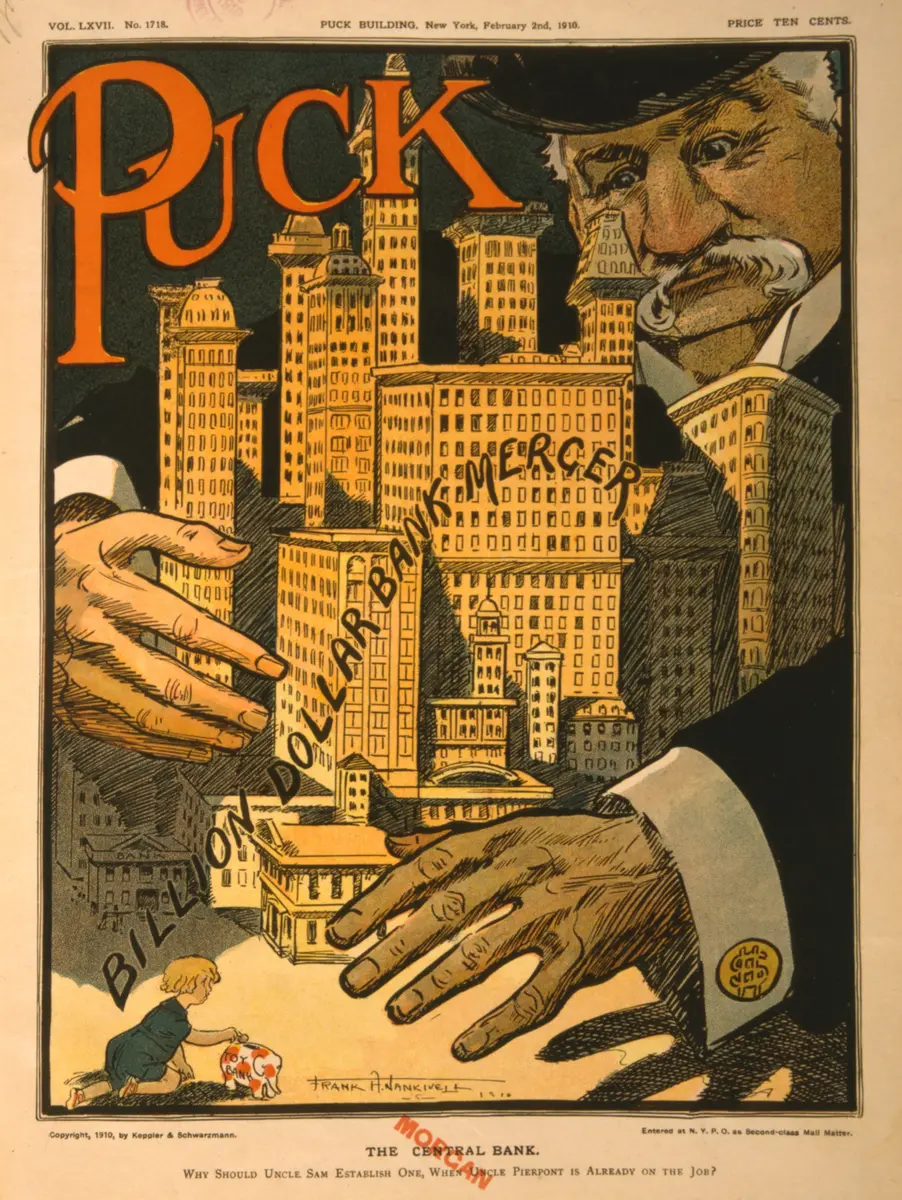
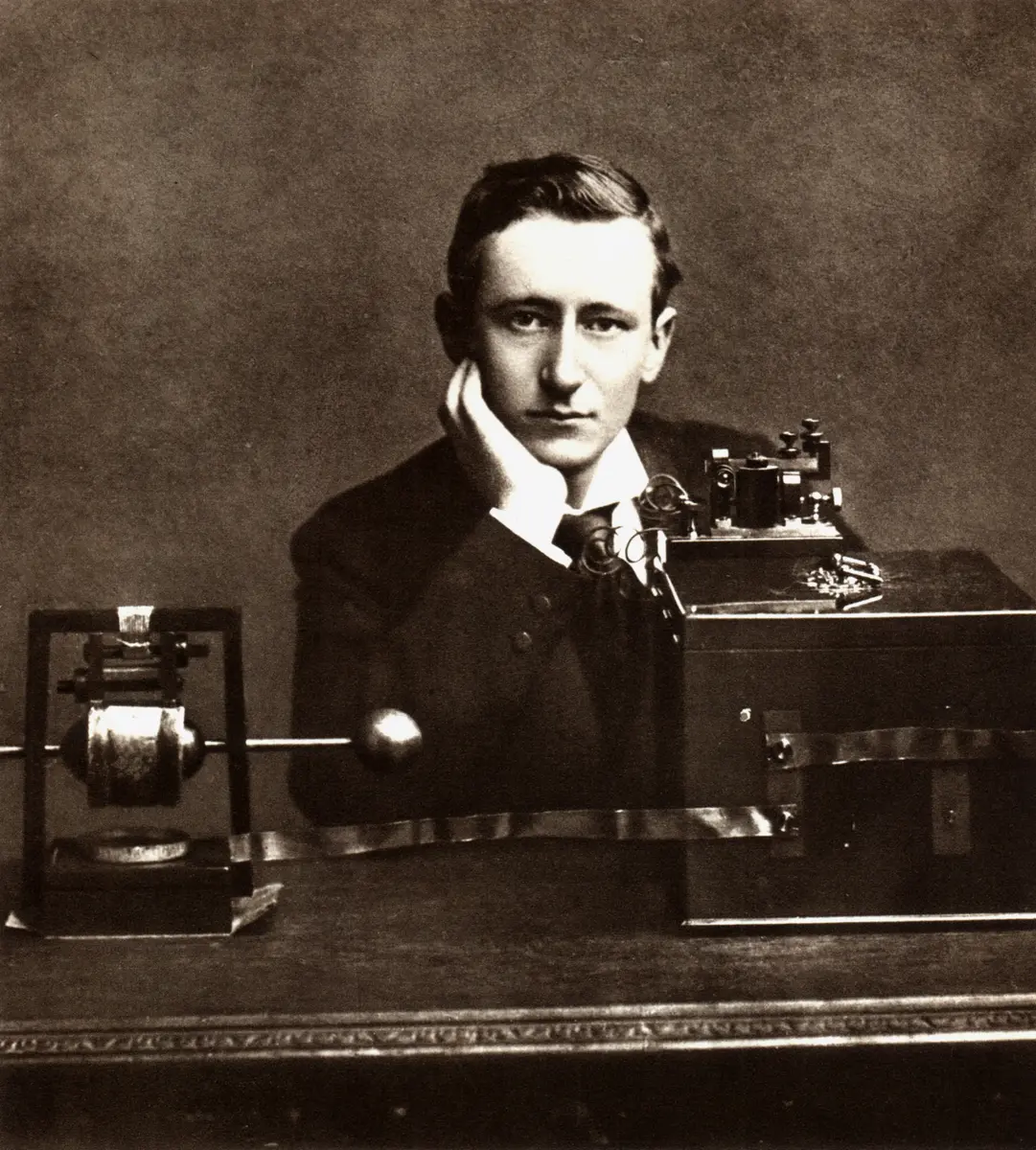
His greatest plan failed. With $150,000 from the banker J. P. Morgan he built a laboratory and a 187-foot tower at Wardenclyffe on Long Island from 1901, meant to send messages, and in Tesla's mind also power, across the oceans without wires. But in December 1901 Guglielmo Marconi sent a radio signal across the Atlantic with far simpler equipment, Morgan refused more money in 1903, work stopped in 1906, and in 1917 the tower was blown up for scrap to pay his debts. Tesla kept announcing inventions, from bladeless turbines to a 'death beam', but never had a laboratory again. Poor and alone, he lived his last ten years in the Hotel New Yorker in Manhattan, where he died on 7 January 1943, aged 86.
His fame grew after his death. In June 1943 the US Supreme Court struck down the broad claims of Marconi's main radio patent, naming Tesla among the earlier inventors (often retold as the court calling Tesla the inventor of radio, which it did not). His papers went to Belgrade, where the Nikola Tesla Museum opened in 1955 and has kept his ashes since 1957. A brilliant, eccentric showman whose promises often ran ahead of what he could build, he is remembered as the man whose motor and power system run the electric age, and in 2003 a new electric-car company took his name.
What happened
- 1856
Nikola Tesla is born at midnight between 9 and 10 July in the parish house at Smiljan, in Lika, then part of the Austrian Empire, the fourth of five children of Milutin Tesla, a Serbian Orthodox priest, and Djuka Mandić, a clever maker of household devices.
Smiljan, Lika: Tesla's birthplace, the parish house beside the church of Saints Peter and Paul, now the Nikola Tesla Memorial Centre (opened on 10 July 2006)- 1873
After school in Gospić he finishes the higher school at Karlovac (Carlstadt). Back home he nearly dies of cholera; his father, who wanted him to be a priest, promises him engineering school instead.
- 1875
He enrols at the Polytechnic School in Graz, Austria, aged 19. A Gramme dynamo, run in class first as a generator and then as a motor, sets him thinking about a motor without the sparking commutator, using alternating current.
- 1878
His scholarship gone, he leaves Graz without a degree and works as a draughtsman in Maribor; after his father's death he studies for a time at the university in Prague (1880).
- 1881
He moves to Budapest to work on the new telephone exchange that the Puskás brothers, friends of his family, are building with Edison's equipment, and soon improves it.
- 1882
Walking at sunset in Budapest's city park and reciting Goethe's Faust, by his own later account, he suddenly sees how alternating currents could make a magnetic field turn and drag a motor round, and draws the diagram in the sand with a stick.
He joins the Continental Edison Company in Paris, which builds dynamos and lighting plants under Edison's patents, and is sent to fix power plants in France and Germany.
- 1883
On a job in Strasbourg he builds his first induction motor after working hours and runs it, but finds no backer in Europe.
- 1884
He reaches New York with four cents, some poems and a letter from Charles Batchelor, Edison's man in Paris, and goes to work for Thomas Edison, repairing and improving his direct-current dynamos.
- 1885
Having left Edison's company in a quarrel about pay (he later said Edison had promised him $50,000 and then called it a joke), he files his first patent application, for an arc lamp, and backers set up the Tesla Electric Light & Manufacturing Company in his name; they soon drop him, leaving him only stock.
- 1887
After a hard year digging ditches in Manhattan, in the spring he founds the Tesla Electric Company with Alfred S. Brown of Western Union and the lawyer Charles F. Peck, with a laboratory at 89 Liberty Street, where he builds his AC motors.
He files the application for patent No. 381,968, an 'electro-magnetic motor'; with the others filed that autumn it describes a whole system of generators, transformers, lines and motors for alternating current.
- 1888
The first patents of his polyphase system are granted, among them Nos. 381,968, 382,279 and 382,280.
He lectures to the American Institute of Electrical Engineers at Columbia College on 'A New System of Alternate Current Motors and Transformers', and shows his motors.
George Westinghouse buys the rights to his polyphase patents, by PBS's account for $60,000 in cash and shares and a royalty of $2.50 for each horsepower sold, and hires him for some months in Pittsburgh, where the system is fitted to 60 cycles.
- 1891
In a lecture to the electrical engineers at Columbia College he shows lamps lit by currents of very high frequency, some of them without any wire.
Patent No. 454,622 is granted for a lighting system worked by his resonant high-frequency transformer, the Tesla coil. The same year he becomes an American citizen.
- 1892
He lectures in London to the Institution of Electrical Engineers and, the next evening, at the Royal Institution, then repeats the lecture in Paris: the demonstrations make him famous in Europe.
- 1893
The World's Columbian Exposition opens in Chicago, lit at night by Westinghouse's alternating current, which had underbid General Electric; Tesla shows his own polyphase exhibit under the Westinghouse banner, and on 25 August lectures at the fair.
Having chosen alternating current in May, the builders of the Niagara Falls power station order three 5,000-horsepower two-phase generators from Westinghouse; the plant is built on Tesla's patents.
- 1895
Fire destroys his New York laboratory, with his notes, papers and machines.
The Adams station at Niagara Falls first delivers power to a customer, the Pittsburgh Reduction Company (later Alcoa), half a mile away.
Adams station, Niagara Falls, New York: the Niagara Falls Power Company's plant built on Tesla's polyphase patents, in service from 26 August 1895, sending power to Buffalo from November 1896- 1896
He works in a new laboratory at 46 East Houston Street on high-frequency coils, X-ray pictures and the transmission of signals without wires.
Just after midnight the switch is thrown and power from Niagara reaches Buffalo, 20 miles away, first for its streetcars: alternating current has carried power over a long distance.
Adams station, Niagara Falls, New York: the Niagara Falls Power Company's plant built on Tesla's polyphase patents, in service from 26 August 1895, sending power to Buffalo from November 1896- 1898
At an electrical exhibition in Madison Square Garden he steers a small boat around an indoor pool by radio, its lights flashing answers to questions from the crowd; the patent (No. 613,809) is granted on 8 November.
- 1899
He arrives in Colorado Springs, where, with money from John Jacob Astor, he builds an experimental station on the prairie with a giant coil and a tall mast, makes artificial lightning, and studies the earth as a conductor.
Dickenson Alley photographs him in the station beside his 'magnifying transmitter' and its huge sparks, a picture staged by combining two exposures.
- 1900
Back in New York, he publishes 'The Problem of Increasing Human Energy' in the Century Magazine, with the Colorado photographs; the essay wins the interest of J. P. Morgan.
- 1901
Morgan gives him $150,000, in return for 51 percent of his patent rights in wireless, to build a transatlantic station. On 200 acres at Wardenclyffe, Long Island, a brick laboratory designed by McKim, Mead & White rises from the summer (finished in February 1902), followed by a 187-foot tower over a 120-foot well.
Wardenclyffe, Shoreham, Long Island: Tesla's laboratory (1901-02) and the site of his 187-foot tower, demolished in 1917; now the Tesla Science CenterGuglielmo Marconi sends a radio signal, the letter S, across the Atlantic from Cornwall to Newfoundland, without anything like Tesla's tower; Tesla says Marconi is using his patents, but his investors begin to doubt.
- 1903
Answering his pleas, Morgan writes that he will advance no more money. In the nights that follow, the unfinished tower throws out flashes of light that startle Long Island.
Wardenclyffe, Shoreham, Long Island: Tesla's laboratory (1901-02) and the site of his 187-foot tower, demolished in 1917; now the Tesla Science Center- 1906
With no money, work at Wardenclyffe stops: his assistant leaves and the workers abandon the site, while Tesla stays on, in debt, at the Waldorf-Astoria hotel.
- 1915
Unable to pay what he owes, he signs Wardenclyffe over to a lawyer of the Waldorf-Astoria.
- 1917
The American Institute of Electrical Engineers presents him its Edison Medal for his work on polyphase and high-frequency currents; in his speech he praises Edison.
Dynamite brings down the Wardenclyffe tower, sold for scrap by the hotel's company to cover his debts; newspapers wrongly report that the government blew it up as a German spy station.
Wardenclyffe, Shoreham, Long Island: Tesla's laboratory (1901-02) and the site of his 187-foot tower, demolished in 1917; now the Tesla Science Center- 1931
On his 75th birthday he is on the cover of Time magazine, and some seventy scientists and engineers, Albert Einstein among them, send letters of congratulation.
- 1933
Living on little money and moving from hotel to hotel, he settles in the Hotel New Yorker, his home for the last ten years of his life.
Hotel New Yorker, Eighth Avenue, Manhattan: his home for his last ten years, where he died in room 3327 on 7 January 1943 - 1934
The New York Times reports on its front page his claim of a 'death beam' that could bring down 10,000 aircraft 250 miles away; he hoped it would make war impossible, but it was never built.
- 1943
He dies alone in room 3327 of the Hotel New Yorker, aged 86. Two days later the Office of Alien Property takes away his papers and belongings.
Hotel New Yorker, Eighth Avenue, Manhattan: his home for his last ten years, where he died in room 3327 on 7 January 1943