J. P. Morgan
“The New York banker who rebuilt America's railroads, created U.S. Steel and General Electric, and in 1895 and 1907 acted as the country's central bank before the Federal Reserve existed.”
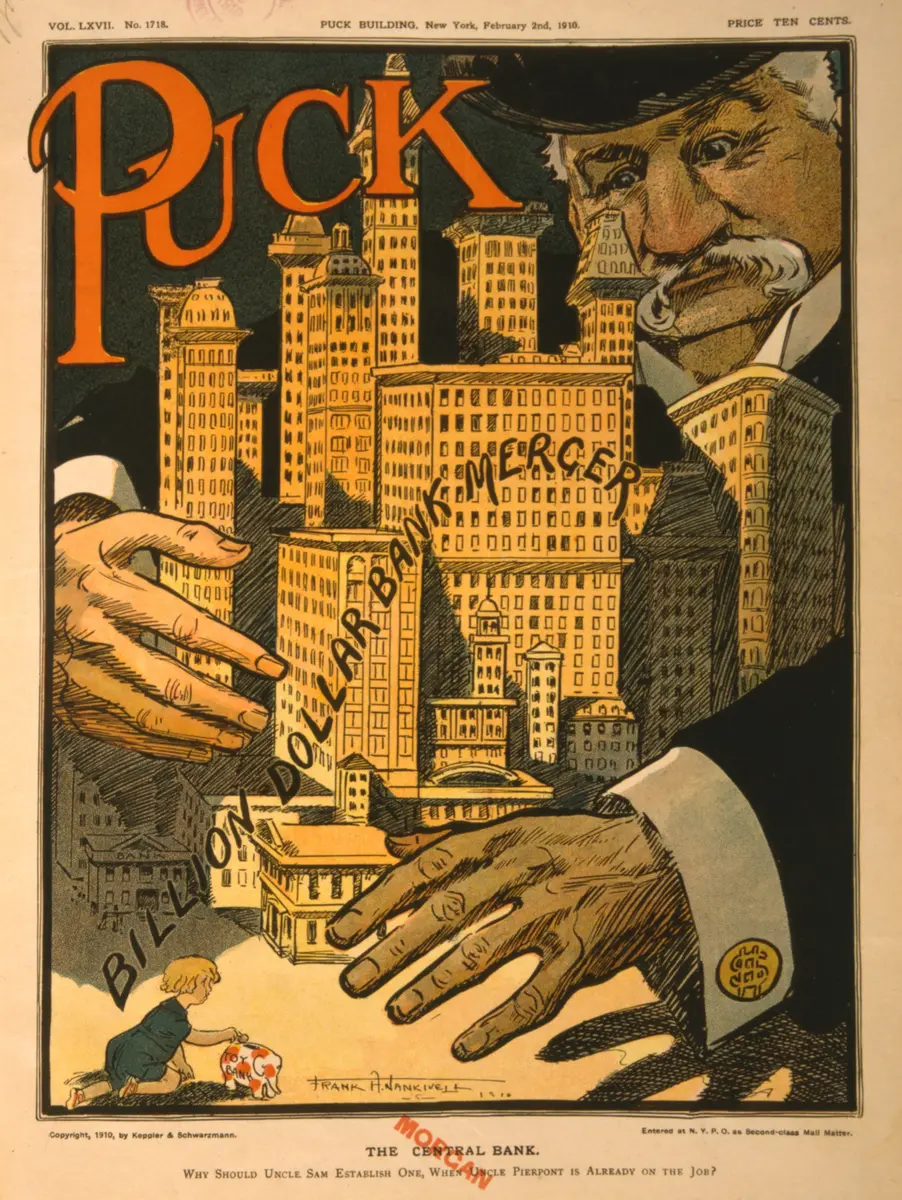
John Pierpont Morgan was the most powerful banker of America's industrial age. From his firm on the corner of Wall and Broad streets in New York he channelled European, above all British, money into American railroads and industry; he took over bankrupt railroads and rebuilt their finances, a cure people came to call 'Morganization'; and he put together some of the largest companies the world had seen: General Electric in 1892, United States Steel in 1901, the first corporation worth more than a billion dollars, and International Harvester in 1902. Twice, in 1895 and in 1907, when the United States had no central bank, he acted as one, first to save the Treasury's gold reserve and then to stop a banking panic. Admired as the man who kept the system steady and feared as the head of a 'money trust', he dominated American capitalism until his death, and his private library in New York is now a public museum.
He was born in Hartford, Connecticut, on 17 April 1837, in his grandfather's house at 26 Asylum Street, the son of Junius Spencer Morgan, a dry-goods merchant, and Juliet Pierpont. When he was fourteen the family moved to Boston, where he went to the English High School, and then on to London, where his father became a partner of the American-born banker George Peabody; the firm later became J. S. Morgan & Co. Pierpont finished his education in Europe, at a school at Vevey in Switzerland and at the University of Göttingen in Germany, where a professor urged him toward an academic career. He chose banking instead. In 1857 he started as an accountant with Duncan, Sherman & Co., Peabody's agents in New York; in 1861 he became the New York agent of his father's firm, and from 1864 to 1871 he was a partner in Dabney, Morgan & Co.
In July 1871 he and the Philadelphia banker Anthony J. Drexel founded Drexel, Morgan & Co., which built itself a white marble office on the south-east corner of Wall and Broad, facing the Sub-Treasury, and soon became the leading source of United States government financing. With his father in London the firm sold American bonds to British investors. In 1885 Morgan made peace between the New York Central and the Pennsylvania railroads, which were ruining each other in a rate war, and from then on he reorganized line after line and put his own men on their boards; after the panic of 1893 he rebuilt the Erie, the Northern Pacific and the Southern, and by 1902 he controlled about 5,000 miles of track. He was Thomas Edison's banker from the founding of the Edison Electric Light Company in 1878, had his own house on Madison Avenue lit by Edison's system in 1882, and in 1892 arranged the merger that made General Electric. In February 1895, with the Treasury's gold almost gone, he and August Belmont agreed to supply the government with three and a half million ounces of gold, some 62 million dollars, and to stop the drain. That year the firm became J. P. Morgan & Co.
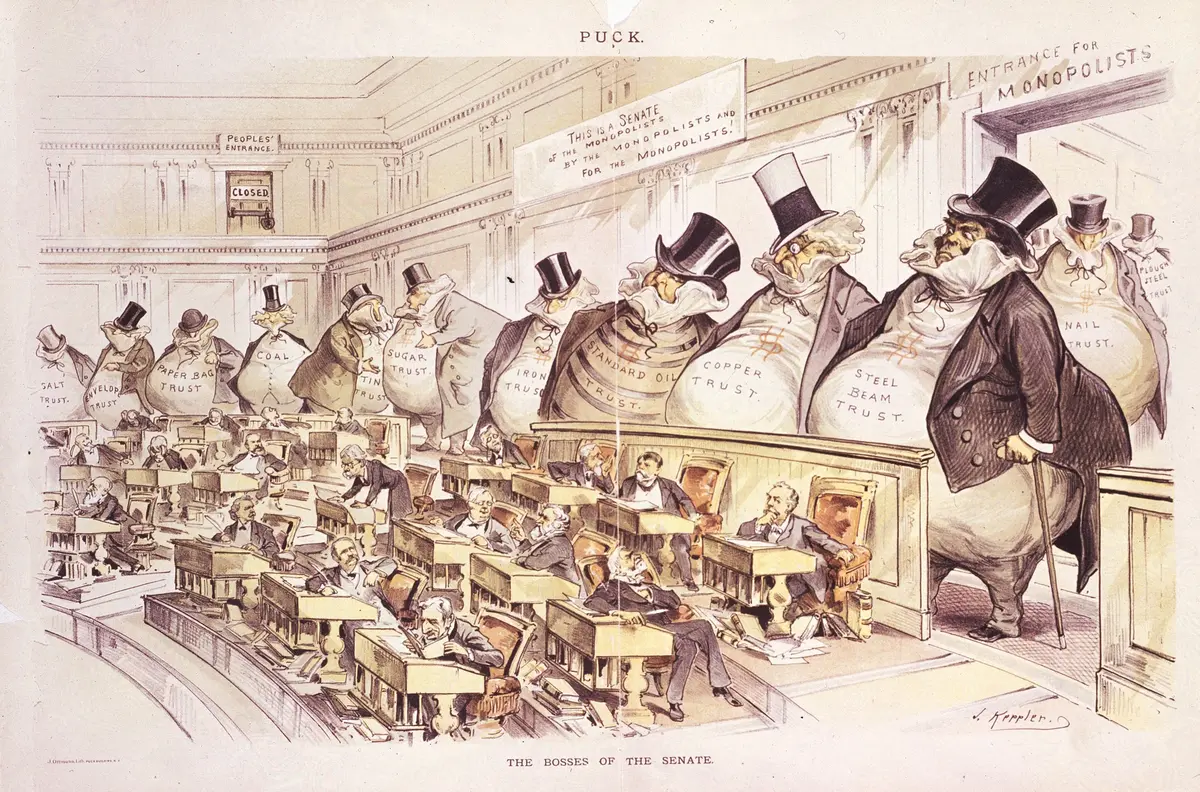
In 1901 he bought out Andrew Carnegie and joined Carnegie's company with Federal Steel and six other steel makers in the United States Steel Corporation, financed with 1.1 billion dollars of shares and 304 million of bonds. The same year he and James J. Hill placed the Great Northern and the Northern Pacific railways under one holding company, Northern Securities, which President Theodore Roosevelt's government sued and the Supreme Court broke up in March 1904. In October 1907 runs on New York's trust companies started a panic. Morgan, then seventy, took charge from his library and his office: he decided which firms were worth saving, raised 23.5 million dollars in minutes to keep money flowing on the Stock Exchange, and in the night of 3 November kept the presidents of the trust companies locked in his library until, before five in the morning, they signed for a 25 million dollar rescue loan. The rescue showed that one private man held more power over the nation's credit than its government. In December 1912 a House subcommittee under Arsène Pujo questioned him about the 'money trust', and he told its counsel that credit rests first on character, 'before money or anything else'.
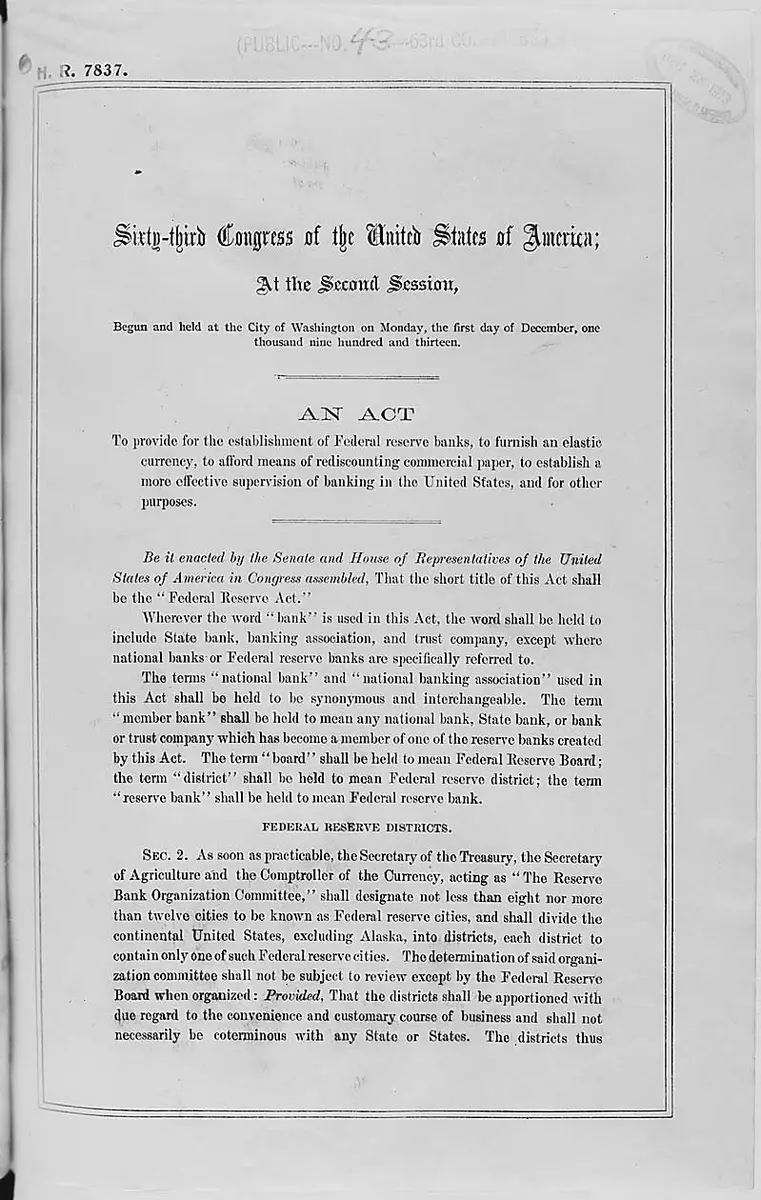
Morgan was also one of the greatest collectors of his time: medieval manuscripts, early printed books, drawings, paintings and works of art of every age. Between 1902 and 1906 the architect Charles McKim built him a library beside his house at Madison Avenue and 36th Street; his son J. P. Morgan Jr. made it a public institution in 1924, today the Morgan Library & Museum, and many of his works of art went to the Metropolitan Museum of Art and, through his son, to the Wadsworth Atheneum in Hartford. He died at the Grand Hotel in Rome on 31 March 1913, on his way home from Egypt, and after a funeral at St George's Church in New York he was buried in the family plot at Cedar Hill Cemetery in Hartford. Nine months later, on 23 December 1913, President Woodrow Wilson signed the Federal Reserve Act, giving the country the central bank whose work Morgan had done himself in 1907. His bank survives as part of JPMorgan Chase.
What happened
- 1837
John Pierpont Morgan is born in Hartford, Connecticut, in his grandfather's house at 26 Asylum Street, the son of Junius Spencer Morgan, a dry-goods merchant, and Juliet Pierpont.
Hartford, Connecticut: born on 17 April 1837 in his grandfather's house at 26 Asylum Street (the point is the city's, not the house's)- 1851
At fourteen he moves with his family to Boston, where he goes to the English High School; his father then joins the London banker George Peabody as a partner.
- 1856
After a school at Vevey in Switzerland he studies at the University of Göttingen in Germany. A professor urges him toward an academic career, but he wants to be a banker like his father.
- 1857
He starts work in New York as an accountant with Duncan, Sherman & Co., the American agents of George Peabody's London firm, in the year of a great financial panic.
- 1861
At twenty-four he sets up in business for himself as the New York agent of his father's London house.
- 1864
He becomes a partner in Dabney, Morgan & Co., which he leaves in 1871.
- 1871
Drexel, Morgan & Co. is formed with Anthony J. Drexel of Philadelphia, backed by Junius Morgan in London. The firm soon moves into the white marble Drexel Building, built for it in 1872 on the corner of Wall and Broad, facing the Sub-Treasury.
The corner of Wall and Broad streets: the Drexel Building, home of Drexel, Morgan & Co. and then of J. P. Morgan & Co., stood here from 1872; the outline is the firm's own building of 1913–14, 23 Wall Street, which replaced it on the same corner- 1878
The Edison Electric Light Company is incorporated in New York with Egisto Fabbri, a partner of Drexel, Morgan & Co., among its founders; Morgan's firm becomes the banker of Edison's lighting business.
- 1882
In the spring the Edison Electric Illuminating Company installs a lighting plant for Morgan's new house at 219 Madison Avenue; a neighbour soon complains of its noise and smoke.
- 1885
He brokers peace between the New York Central and the Pennsylvania railroads, which have been ruining each other with a rate war, and begins the long run of railroad reorganizations that people call 'Morganization'.
- 1890
His father Junius, head of J. S. Morgan & Co. in London, dies after a carriage accident.
- 1892
Morgan arranges the merger of Edison General Electric with its rival Thomson-Houston; the new company is called simply General Electric.
- 1895
Drexel, Morgan & Co. is renamed J. P. Morgan & Co.
The corner of Wall and Broad streets: the Drexel Building, home of Drexel, Morgan & Co. and then of J. P. Morgan & Co., stood here from 1872; the outline is the firm's own building of 1913–14, 23 Wall Street, which replaced it on the same cornerWith the Treasury's gold reserve close to running out, Morgan sees President Grover Cleveland in Washington. He and August Belmont contract to deliver three and a half million ounces of gold, about 62 million dollars, for government bonds, and to stop the drain on the Treasury.
- 1901
J. P. Morgan & Co., as managers of a syndicate, sign the contract that brings Andrew Carnegie's company and seven other steel makers into the United States Steel Corporation, incorporated in New Jersey four days before: the first billion-dollar corporation, with Morgan at the head of its board.
Morgan and James J. Hill put the Great Northern and the Northern Pacific railways under one New Jersey holding company, the Northern Securities Company, with a capital of 400 million dollars.
- 1902
He forms International Harvester and the shipping combine International Mercantile Marine, while President Theodore Roosevelt's government sues to break up Northern Securities.
- 1904
The Supreme Court decides against the Northern Securities Company, the first great victory of Roosevelt's trust-busting.
- 1906
His library beside his house on East 36th Street, designed by Charles McKim and begun in 1902, is finished.
The Morgan Library & Museum on East 36th Street: the library Charles McKim built for him in 1902–06 beside his house, where the bankers sat through the night of 3 November 1907 - 1907
With a run on the Knickerbocker Trust under way, Morgan comes back by train from a church convention in Richmond, Virginia, and goes straight to his library, where his partners are waiting.
The Morgan Library & Museum on East 36th Street: the library Charles McKim built for him in 1902–06 beside his house, where the bankers sat through the night of 3 November 1907After Benjamin Strong's quick look at its books, Morgan declines to save the Knickerbocker Trust, which closes its doors once nearly 8 million dollars have been withdrawn. The panic spreads to the other trust companies, and Morgan now organizes their support.
The corner of Wall and Broad streets: the Drexel Building, home of Drexel, Morgan & Co. and then of J. P. Morgan & Co., stood here from 1872; the outline is the firm's own building of 1913–14, 23 Wall Street, which replaced it on the same cornerWith call money at 100 per cent and brokers about to fail, Morgan calls the presidents of the big banks to his office and raises 23.5 million dollars in minutes for loans on the floor of the Stock Exchange.
The corner of Wall and Broad streets: the Drexel Building, home of Drexel, Morgan & Co. and then of J. P. Morgan & Co., stood here from 1872; the outline is the firm's own building of 1913–14, 23 Wall Street, which replaced it on the same corner- 9:30 p.m.
More than fifty bankers gather in Morgan's library. He locks the doors and keeps the key; at about 4.15 the next morning the trust company presidents sign up for a 25 million dollar loan, and at 4.45 they are let out.
The Morgan Library & Museum on East 36th Street: the library Charles McKim built for him in 1902–06 beside his house, where the bankers sat through the night of 3 November 1907 President Roosevelt allows U.S. Steel to buy the Tennessee Coal, Iron and Railroad Company from a brokerage house in trouble. The news reaches the Stock Exchange before the opening, and the panic ends.
- 1912
On his second day before the Pujo committee's 'money trust' investigation in Washington, Morgan tells its counsel Samuel Untermyer that credit rests not on money or property: 'the first thing is character ... Money can not buy it.'
- 1913
On his way home from Egypt, Morgan dies in his sleep at the Grand Hotel in Rome, aged 75. His body goes by train to Paris and by ship to New York.
The Grand Hotel on the Piazza delle Terme in Rome, today the St. Regis Rome: he died here on 31 March 1913