Gilded Age (US)
“America's boom after the Civil War, about 1870 to 1900: railroads, steel, oil and banks made giant fortunes and monopolies, while panics, strikes and slums showed what the gold leaf covered.”
The Gilded Age is the name Americans give to the decades after the Civil War in which the United States grew into an industrial giant. The name comes from a satirical novel by Mark Twain and Charles Dudley Warner, The Gilded Age: A Tale of Today (1873), about land speculators and bought politicians in Washington. Gilded means covered with a thin layer of gold over something cheaper, and the word stuck as a verdict on the whole era: its shine hid corruption, poverty and violence. Historians draw its edges differently. Britannica keeps it to the 1870s, the Library of Congress speaks of the rise of industrial America from 1876 to 1900, and the historians of the Federal Reserve stretch it, in finance, from 1863 to 1913. This entry follows the common use, from about 1870 to 1900.
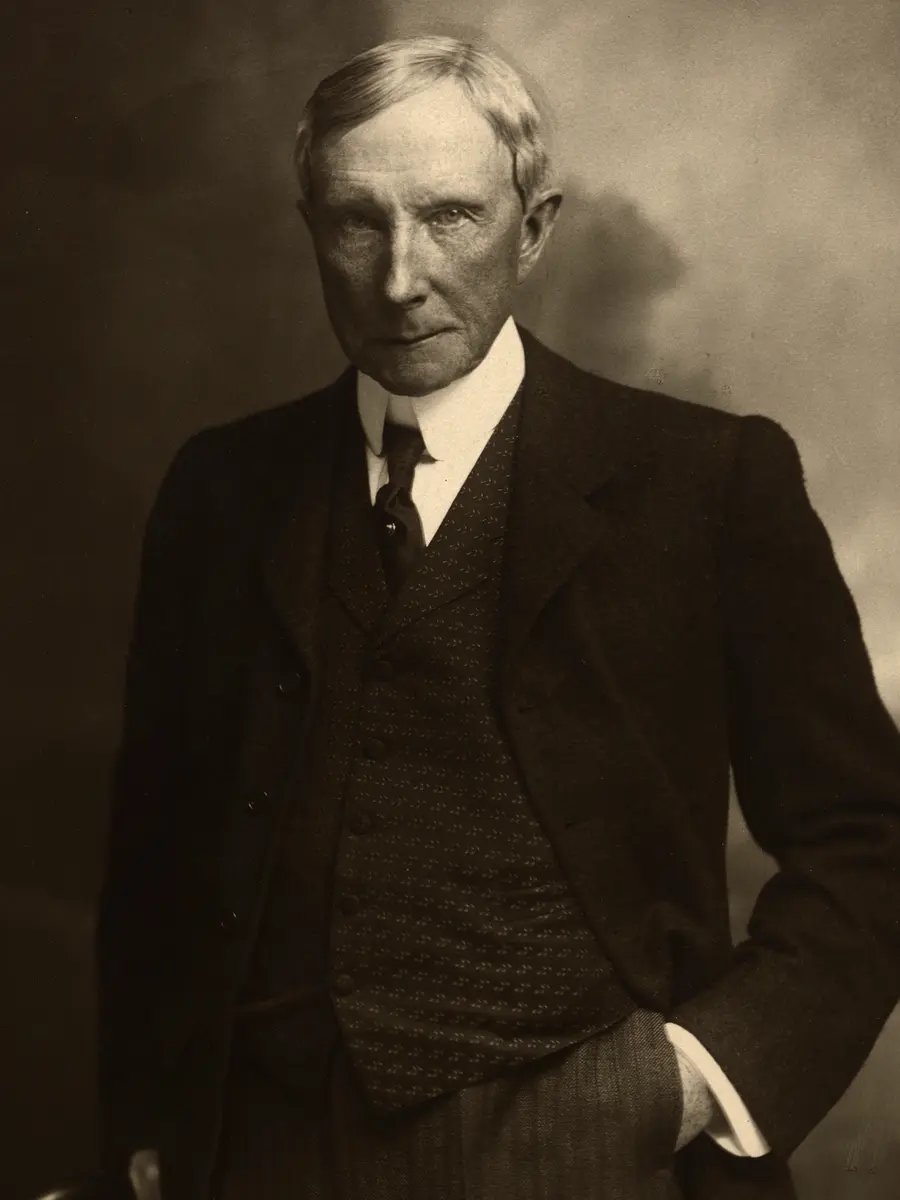
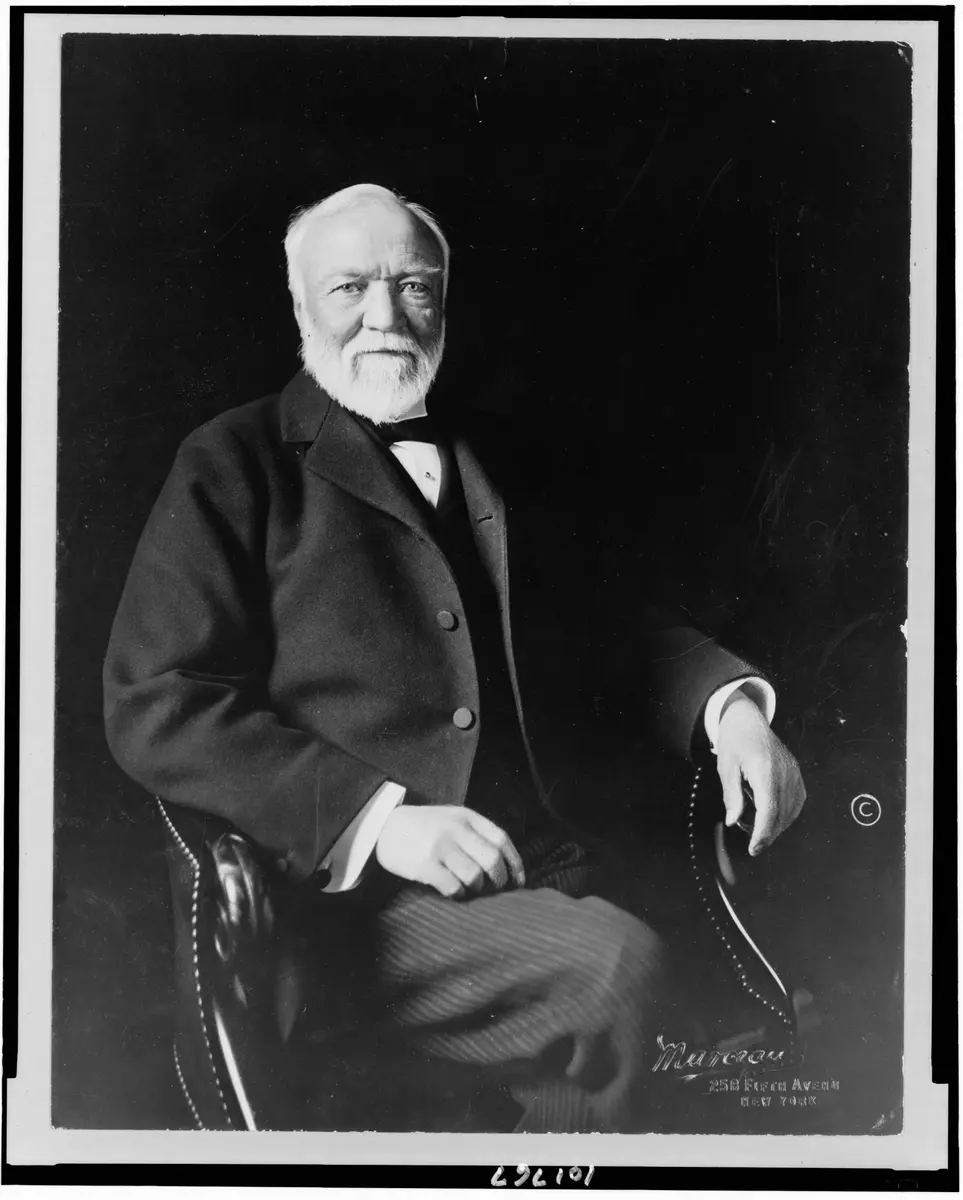
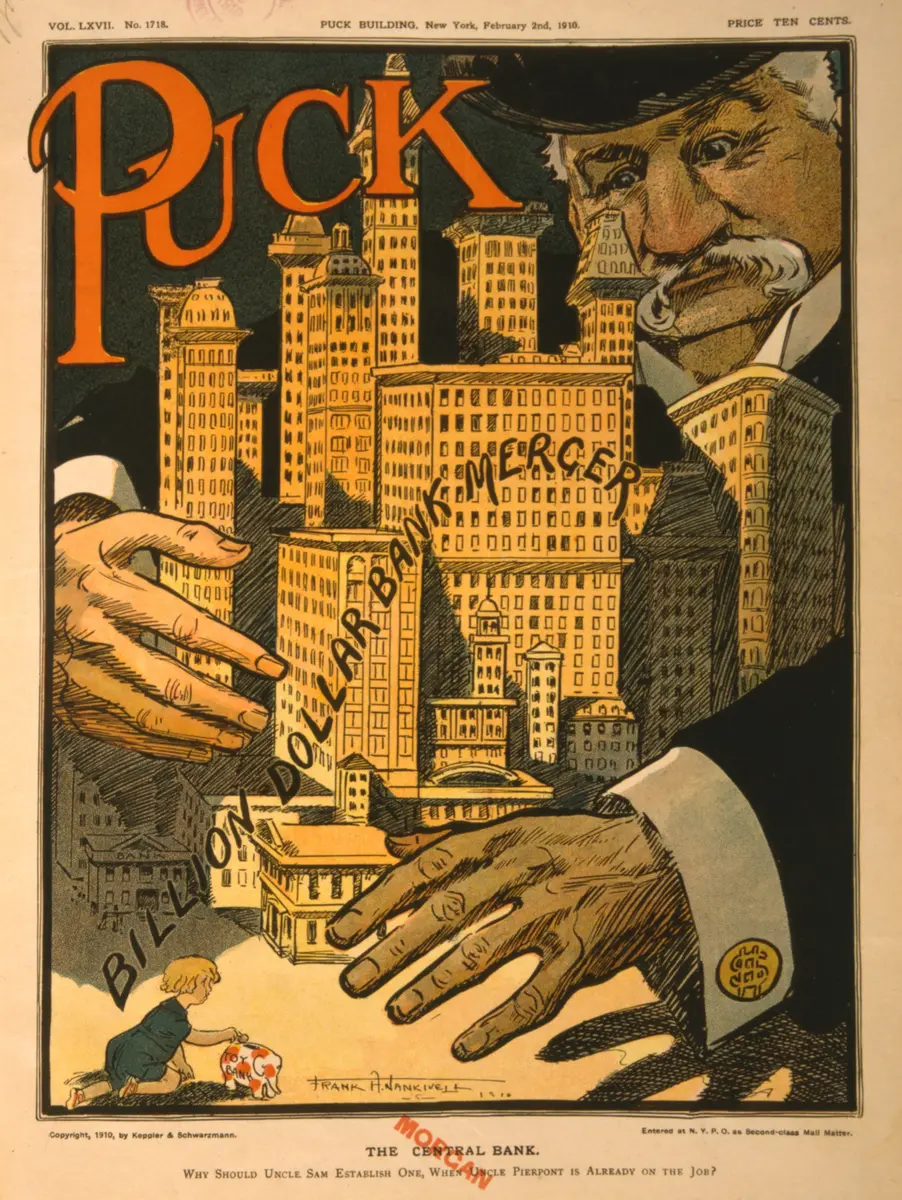
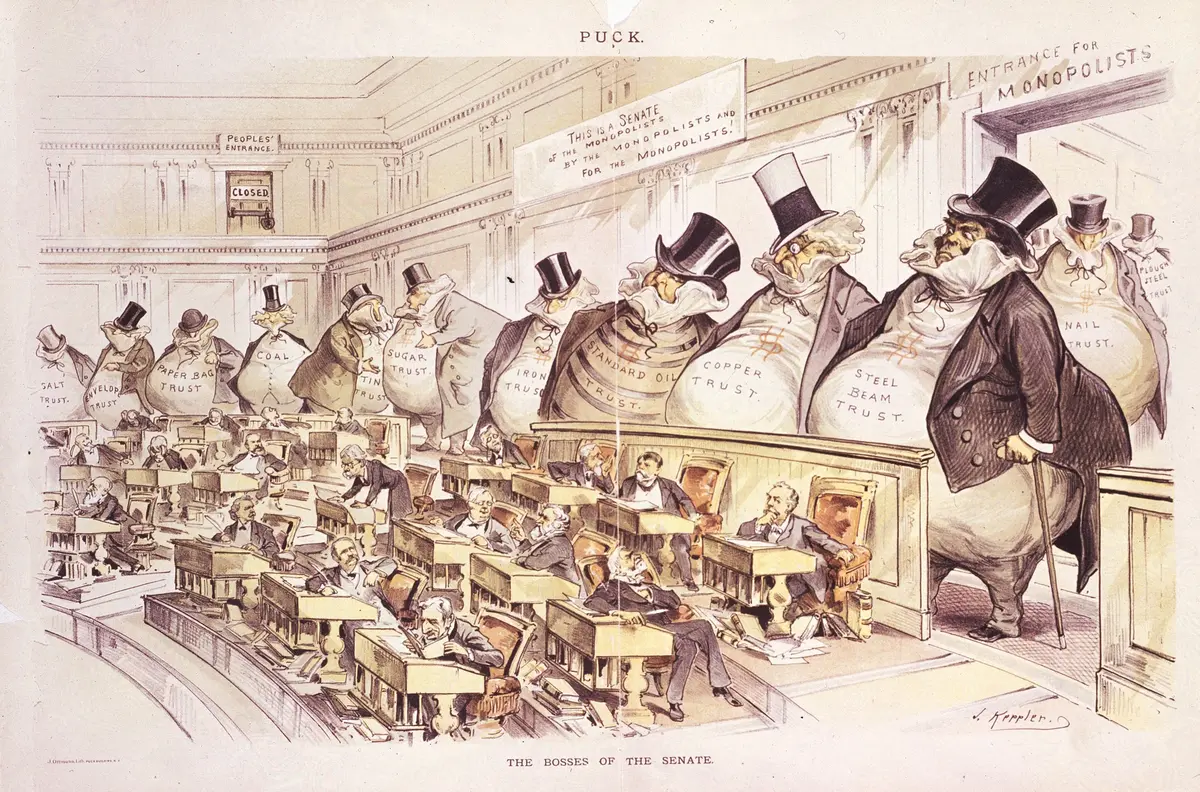
The engine was the railroad. The first line across the continent was finished at Promontory Summit, Utah, on May 10, 1869, and in the next two decades companies laid new track at a pace never seen before, more than 13,000 miles in 1887 alone, paid for with bonds sold in New York and Europe. In a single generation the population doubled and the country became the world's first producer of food, coal, oil and steel. A few men made enormous fortunes: Cornelius Vanderbilt and Leland Stanford in railroads, Andrew Carnegie in steel, John D. Rockefeller in oil, J. P. Morgan in banking. Admirers called them captains of industry, critics robber barons. They built monopolies, and in 1882 Standard Oil invented the trust, a board that ran a whole industry's companies as one. Money also bought politics, from the Tweed ring that looted New York City to the Senate that cartoonists drew as the servant of the trusts. Washington's answers were weak: the Interstate Commerce Act of 1887 put the railroads under the first federal regulation of any industry, and the Sherman Anti-Trust Act of 1890 outlawed trusts on paper, until the Supreme Court emptied it in 1895.
The boom broke again and again. In September 1873 the bank of Jay Cooke, deep in railroad bonds, failed; the New York Stock Exchange closed for ten days for the first time, and a depression followed that lasted until 1879. The panic of 1893 was worse: hundreds of banks closed, industrial output fell by about 15 percent and unemployment reached 17 to 19 percent. Workers answered wage cuts with the most widespread strikes the country had seen: the railroad strike of July 1877, put down by militia and federal troops; the eight-hour movement that ended in the Haymarket bomb in Chicago in 1886; the battle with Pinkerton guards at Carnegie's Homestead steel works in 1892; the Pullman strike of 1894, broken by soldiers and a court order. Millions of immigrants, now more and more from southern and eastern Europe, came through Castle Garden and, from 1892, Ellis Island, and many crowded into tenements like those Jacob Riis photographed in How the Other Half Lives (1890). In the West the army crushed the last resistance of the Plains peoples at Wounded Knee in December 1890, and the census of that year declared that the frontier of settlement was gone.
The era ended in a fight over money. Farmers and debtors, squeezed by falling prices, wanted silver coined freely beside gold; at the Democratic convention of July 1896 William Jennings Bryan won the nomination with his 'Cross of Gold' speech. The Republicans raised about four million dollars, mostly from business, for William McKinley, who won by some 600,000 votes and in 1900 signed the Gold Standard Act. With prosperity back and the new century, the protest became the Progressive Era: reformers, journalists and presidents such as Theodore Roosevelt went after the trusts with the Sherman Act and the slums with new laws, and after one more panic, in 1907, Congress created the Federal Reserve in 1913 to end the cycle of bank panics that had marked the Gilded Age.
The Gilded Age left the United States its modern shape: national corporations and Wall Street, the big industrial city, a nation of immigrants, the Brooklyn Bridge and the Statue of Liberty, and the marble 'cottages' of the rich at Newport. It also left its questions, which Americans still argue: how wealth should be shared, whether government exists to protect property or the people industry leaves behind, and how much money may buy in politics.
What happened
- 1871
Harper's Weekly prints Thomas Nast's 'Let Us Prey': 'Boss' Tweed and his ring as vultures over the picked-over remains of New York City, one of the cartoons that helped bring the ring down.
- 1872
Railroad building reaches 7,439 miles of new track in a year, much of it paid for with bonds sold in Europe; new lines are outrunning the traffic to fill them.
- 1873
Mark Twain and Charles Dudley Warner publish The Gilded Age: A Tale of Today, a satire of speculators and bought congressmen; its title becomes the era's name.
Jay Cooke and Co., a bank heavily invested in the Northern Pacific Railway, goes bankrupt; the Panic of 1873 begins.
For the first time in its history the New York Stock Exchange closes its doors; trading resumes only after ten days. At least a hundred banks fail, and a depression lasts until 1879.
New York Stock Exchange, Broad and Wall Streets: closed for ten days from September 20, 1873, and the panic of May 5, 1893- 1877
President Hayes withdraws the last federal troops guarding the Republican governments in Louisiana and South Carolina: Reconstruction is over, and the North turns to business.
Workers of the Baltimore and Ohio at Martinsburg, West Virginia, answer a 10 percent wage cut by stopping the trains; the strike spreads along the lines to Baltimore, Pittsburgh and Chicago.
Martinsburg, West Virginia: the railroad strike begins in the B&O yards, July 16, 1877In Pittsburgh guardsmen from Philadelphia charge the crowd at the tracks; as many as twenty people are killed, and that night the crowd burns the Pennsylvania Railroad's engines, cars and buildings around the roundhouse where the soldiers shelter.
Pittsburgh: the deadliest days of the 1877 strike and the burning of the Pennsylvania Railroad's yards, July 21 and 22- 1882
The Standard Oil Trust is formed: nine trustees take over the shares of all the Standard companies and run them as one, the model for the trusts that follow.
- 1883
The Brooklyn Bridge opens, with President Chester Arthur at the ceremony and fireworks over the East River; its main span is the longest in the world.
Brooklyn Bridge, New York: opened May 24, 1883At noon the North American railroads switch to Standard Railway Time, replacing the many local times with four zones; the country's clocks follow the railroads.
- 1886
At a meeting for the eight-hour day near the Haymarket in Chicago a bomb is thrown at the police; eight officers and an unknown number of the crowd die. Eight anarchists are convicted without credible evidence that they threw or planned the bomb, and four are hanged in 1887.
Haymarket, Des Plaines Street, Chicago: the bomb of May 4, 1886President Grover Cleveland accepts the Statue of Liberty, France's gift, at its dedication on Bedloe's Island, after New York's first ticker-tape parade.
Liberty Island (then Bedloe's Island), New York Harbor: the Statue of Liberty dedicated October 28, 1886- 1887
The Interstate Commerce Act puts the railroads under a federal commission, the first federal regulation of an American industry.
United States Capitol, Washington: the Senate of 'The Bosses of the Senate', and the Congress that passed the Interstate Commerce Act (1887) and the Sherman Act (1890)- 1889
Puck prints Joseph Keppler's 'The Bosses of the Senate', the trusts as giant money bags ruling the senators.
United States Capitol, Washington: the Senate of 'The Bosses of the Senate', and the Congress that passed the Interstate Commerce Act (1887) and the Sherman Act (1890)- 1890
Jacob Riis publishes How the Other Half Lives, with photographs of New York's tenements and alleys made with flash; it leads to the city's first serious tenement laws.
Mulberry Bend, Manhattan: the slum Jacob Riis photographed and wrote a chapter on; its site is now Columbus ParkCastle Garden closes as an immigrant depot, after more than 8 million arrivals since 1855; the federal government takes over immigration.
Castle Garden (Castle Clinton), the Battery: New York's immigrant depot from 1855 to April 18, 1890President Benjamin Harrison signs the Sherman Anti-Trust Act, passed 51 to 1 in the Senate and 242 to 0 in the House, the first federal law against trusts.
United States Capitol, Washington: the Senate of 'The Bosses of the Senate', and the Congress that passed the Interstate Commerce Act (1887) and the Sherman Act (1890)At Wounded Knee Creek, South Dakota, the 7th Cavalry kills some 150 to 300 Lakota of Big Foot's band; organized resistance on the Plains is over.
Wounded Knee, South Dakota: the massacre of December 29, 1890- 1892
The federal immigration station on Ellis Island opens; Annie Moore, fifteen, from Ireland, is the first of more than 12 million immigrants to pass through it.
Ellis Island: the federal immigration station from January 1, 1892At Carnegie's steel works at Homestead, near Pittsburgh, locked-out workers fight the Pinkerton guards the company has brought in by river; at least three guards and seven workers die (see The Homestead Strike).
- 1893
The World's Columbian Exposition opens in Jackson Park, Chicago: the white palaces of the 'White City' show off American wealth and industry until October 30.
Jackson Park, Chicago: the World's Columbian Exposition, May 1 to October 30, 1893Panic on the New York Stock Exchange: prices crash, and the Panic of 1893, one of the worst in American history, begins.
New York Stock Exchange, Broad and Wall Streets: closed for ten days from September 20, 1873, and the panic of May 5, 1893At the American Historical Association's meeting in Chicago, Frederick Jackson Turner reads 'The Significance of the Frontier in American History', starting from the 1890 census's verdict that there is no frontier line any more.
The panic peaks: from mid-July to mid-August 340 banks suspend payments, and the country slides into a depression with unemployment of 17 to 19 percent.
- 1894
Workers at the Pullman Palace Car Company walk out after talks over their falling wages fail; the company had laid off thousands after the panic of 1893.
Pullman, Chicago: George Pullman's company town and works, where the strike of 1894 beganThe American Railway Union, led by Eugene Debs, refuses to work trains carrying Pullman cars; the boycott stops railroad traffic across much of the country.
A federal injunction and regular army troops break the boycott; Debs is jailed and the union is broken by mid-July.
- 1895
The Breakers is finished at Newport for Cornelius Vanderbilt II, of the railroad family, the largest of the summer 'cottages' of the rich.
The Breakers, Newport, Rhode Island: Cornelius Vanderbilt II's 'cottage', 1893 to 1895 - 1896
At the Democratic convention in Chicago William Jennings Bryan attacks the gold standard: mankind must not be crucified 'upon a cross of gold'. He is nominated the next day.
William McKinley, backed by a Republican campaign fund of some four million dollars, mostly from business, defeats Bryan by about 600,000 votes: gold and the Republicans win.
- 1900
McKinley signs the Gold Standard Act, which formally puts the dollar on gold and settles the money question of the age.