Thomas Edison
“The American inventor of the phonograph, a long-lasting electric light and the first central power station, who turned invention into a team industry at Menlo Park.”
Thomas Alva Edison was the American inventor who gave the world the phonograph, a practical electric light bulb and the first system for bringing electric power into homes and offices, and who helped start the recorded-sound and film industries. He received 1,093 US patents. Just as important, he turned invention into organised teamwork: at Menlo Park, New Jersey, he built what is often called the first industrial research laboratory, where machinists, chemists and mathematicians worked on many projects at once. The newspapers called him the 'Wizard of Menlo Park', and he became the most famous inventor of his age.
He was born in Milan, Ohio, on 11 February 1847, the youngest of seven children, and grew up in Port Huron, Michigan. He went to school only briefly, was taught mostly by his mother, and was hard of hearing from childhood. From the age of twelve he sold newspapers on the trains to Detroit, learned telegraphy from a station agent, and from 1863 worked as a travelling telegraph operator across the Midwest. In Boston he invented an electric vote recorder that no lawmakers wanted, his first patent, and in January 1869 he left his job to invent full time. In New York and Newark he improved stock tickers and telegraphs; his quadruplex of 1874 sent four messages over one wire at once.
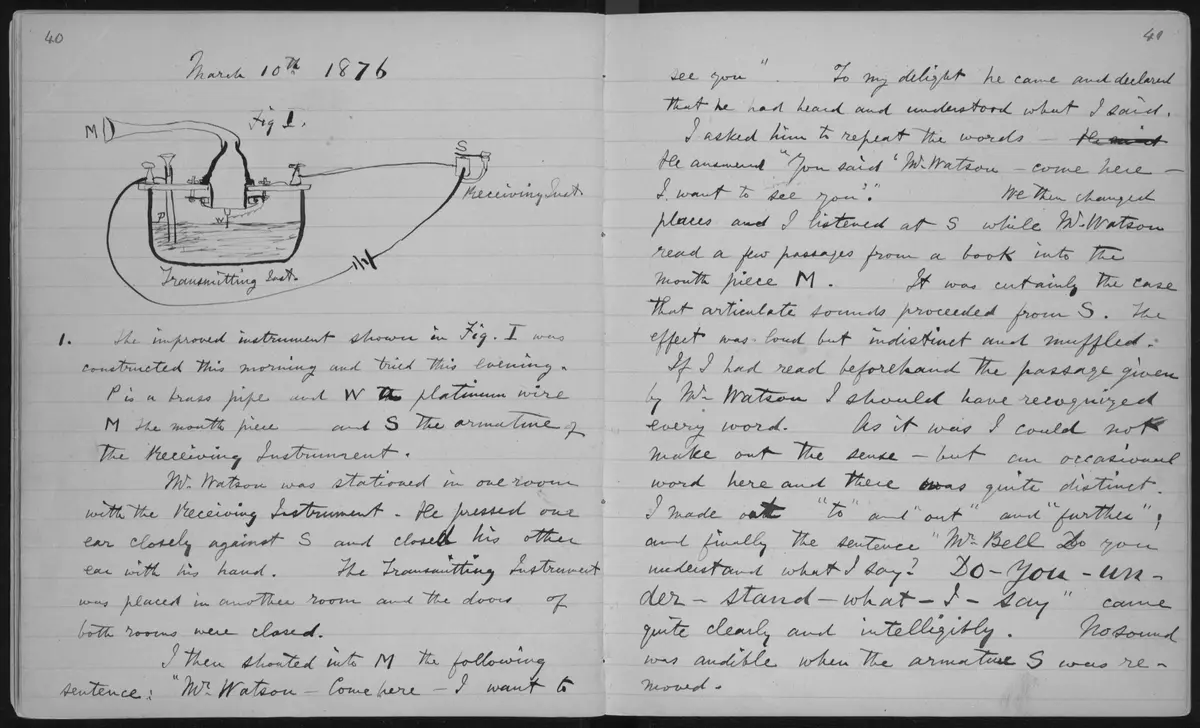
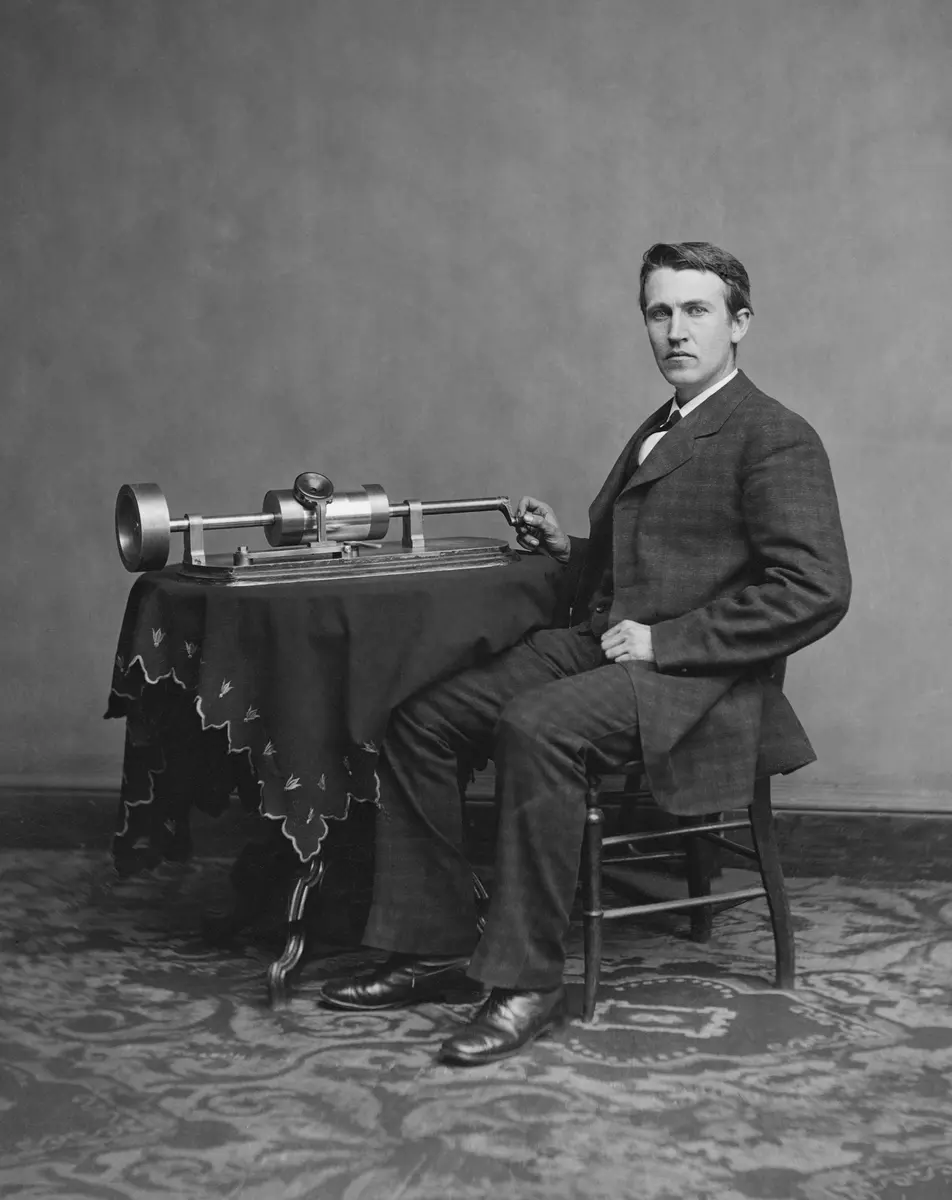
In 1876 he moved his team to the village of Menlo Park. There, in a few busy years, he made Alexander Graham Bell's telephone practical with a carbon transmitter, invented the phonograph in 1877 (the first machine that could record a voice and play it back), and set out to replace gas light. On 22 October 1879 a lamp with a filament of carbonised cotton thread glowed for thirteen and a half hours, and on New Year's Eve crowds came by train to see Menlo Park lit by electricity. Edison was not the first to make an electric lamp, but he made one that lasted, and he designed everything it needed: dynamos, cables, meters, fuses and switches. On 4 September 1882 his Pearl Street station began to supply customers in lower Manhattan, the model for the power stations that followed.
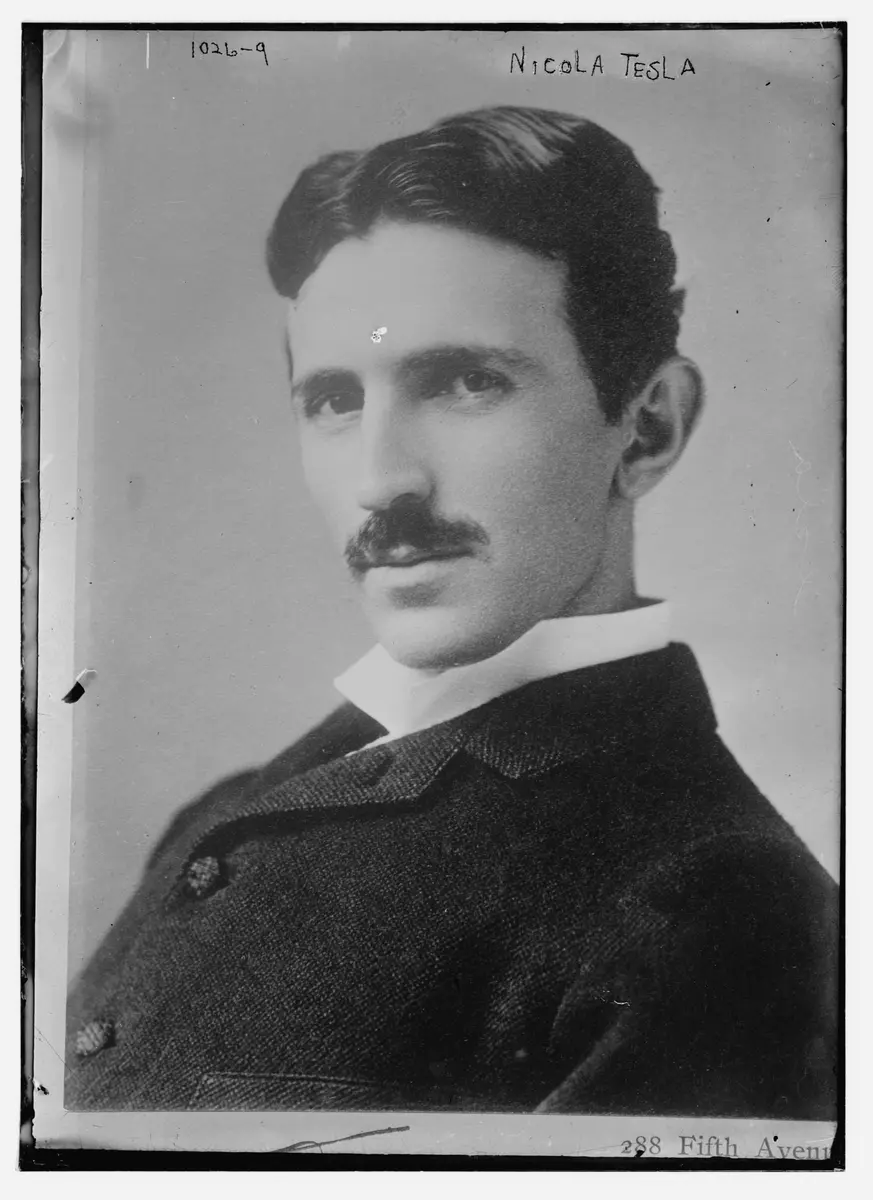
In 1887 he opened a far larger laboratory at West Orange, New Jersey, near Glenmont, the house where he lived with his second wife, Mina Miller (his first wife, Mary Stilwell, had died in 1884). His team improved the phonograph, now with wax cylinders, and, led by W. K. L. Dickson, built the Kinetoscope and the first film studio, the Black Maria. He also fought hard against alternating current, the rival system promoted by George Westinghouse and built partly on Nikola Tesla's inventions: his laboratory helped the engineer Harold Brown kill animals with AC to show that it was deadly. AC won anyway, and in 1892 his electrical companies disappeared into General Electric, without his name. A ten-year attempt to mine iron ore in northern New Jersey cost him a fortune, but phonographs, films and later a storage battery kept his business alive.
In his last decades Edison was a national legend: he led a naval advisory board in the First World War, went camping with his friend Henry Ford, and in 1929 Ford celebrated fifty years of the electric light by rebuilding the Menlo Park laboratory in his museum at Dearborn, Michigan. Edison died at Glenmont on 18 October 1931, and President Hoover asked Americans to dim their lights in his honour. Historians now stress how much his success owed to his teams, his investors and his skill with the press, but his idea of organised invention, with research, development and manufacture under one roof, still shapes how new technology is made.
What happened
- 1847
Thomas Alva Edison is born in Milan, Ohio, a town of about 1,500 people, the seventh and last child of Samuel and Nancy Edison.
Milan, Ohio: the house where Edison was born on 11 February 1847, now the Thomas Edison Birthplace Museum- 1854
The family moves to Port Huron, Michigan, where his father works at the Fort Gratiot army post. His schooling is short and patchy; his mother teaches him at home, and he reads widely in his father's books.
- 1859
At twelve he starts selling newspapers and sweets on the Grand Trunk Railway's trains between Port Huron and Detroit. He reads in the Detroit library during the layover and later prints his own paper, the Weekly Herald, on the train.
- 1862
He pulls the small son of James Mackenzie, station agent at Mount Clemens, out of the path of a moving freight car; in thanks, Mackenzie teaches him telegraphy.
- 1863
He takes his first post as a telegraph operator, for the Grand Trunk at Stratford Junction, Ontario. For the next five years he moves from office to office (Indianapolis, Cincinnati, Memphis, Louisville), becomes a fast press-wire operator, and tinkers with his instruments to improve them.
- 1869
An operator in Western Union's Boston office since the spring of 1868, he resigns to devote himself to his inventions.
His first patent, US 90,646 for an 'electrographic vote-recorder' (applied for in October 1868), is granted. No legislature buys it, and he resolves, as the National Park Service tells it, to invent only things the public wants.
- 1870
After a year in New York improving stock tickers, he opens his first real workshop with the mechanic William Unger, the Newark Telegraph Works in Newark, New Jersey. From now on he always has a shop of his own.
- 1871
He marries Mary Stilwell, a sixteen-year-old who worked for one of his Newark companies. They will have three children: Marion, Thomas Jr. and William.
- 1874
After tests between New York and Boston, his quadruplex telegraph, which sends four messages over one wire at the same time, goes into commercial service on Western Union's lines.
- 1875
He sells his quadruplex rights to Jay Gould, Western Union's rival, starting years of lawsuits. Western Union's president says Edison has 'a vacuum where his conscience ought to be', yet stays his champion.
- 1876
His father has built him a laboratory at Menlo Park, a hamlet on the railway between New York and Philadelphia; it is finished on 25 March, and Edison moves in with his family and staff a few days later, promising 'a minor invention every ten days and a big thing every six months or so'.
Menlo Park, New Jersey (now in Edison township): his laboratory from 1876 to 1882, where he made the phonograph and the electric lamp; the Edison Memorial Tower stands on its site- 1877
Working on the telephone, he finds that a point on a vibrating diaphragm can dent paraffin paper and play the sound back. His assistant Charles Batchelor later recalled that 'Mary had a little lamb' were the words of an early paper-strip trial.
Menlo Park, New Jersey (now in Edison township): his laboratory from 1876 to 1882, where he made the phonograph and the electric lamp; the Edison Memorial Tower stands on its siteThe machinist John Kruesi has just built the tinfoil cylinder phonograph from Edison's sketch. Edison takes it to the New York office of Scientific American, where, the editors wrote, it 'inquired as to our health' and bid them good night.
- 1878
First public showing of his improved carbon telephone transmitter, at the Franklin Institute in Philadelphia. A carbon button whose resistance changes with the pressure of the voice makes Bell's telephone loud and clear enough for everyday use.
The New York Daily Graphic calls him 'The Wizard of Menlo Park', the nickname that sticks; reporters and visitors crowd the laboratory.
Menlo Park, New Jersey (now in Edison township): his laboratory from 1876 to 1882, where he made the phonograph and the electric lamp; the Edison Memorial Tower stands on its siteIn Washington he shows the phonograph to the National Academy of Sciences and sits for Mathew Brady's camera. The next day he demonstrates it to Congress and, late at night, to President Rutherford Hayes at the White House.
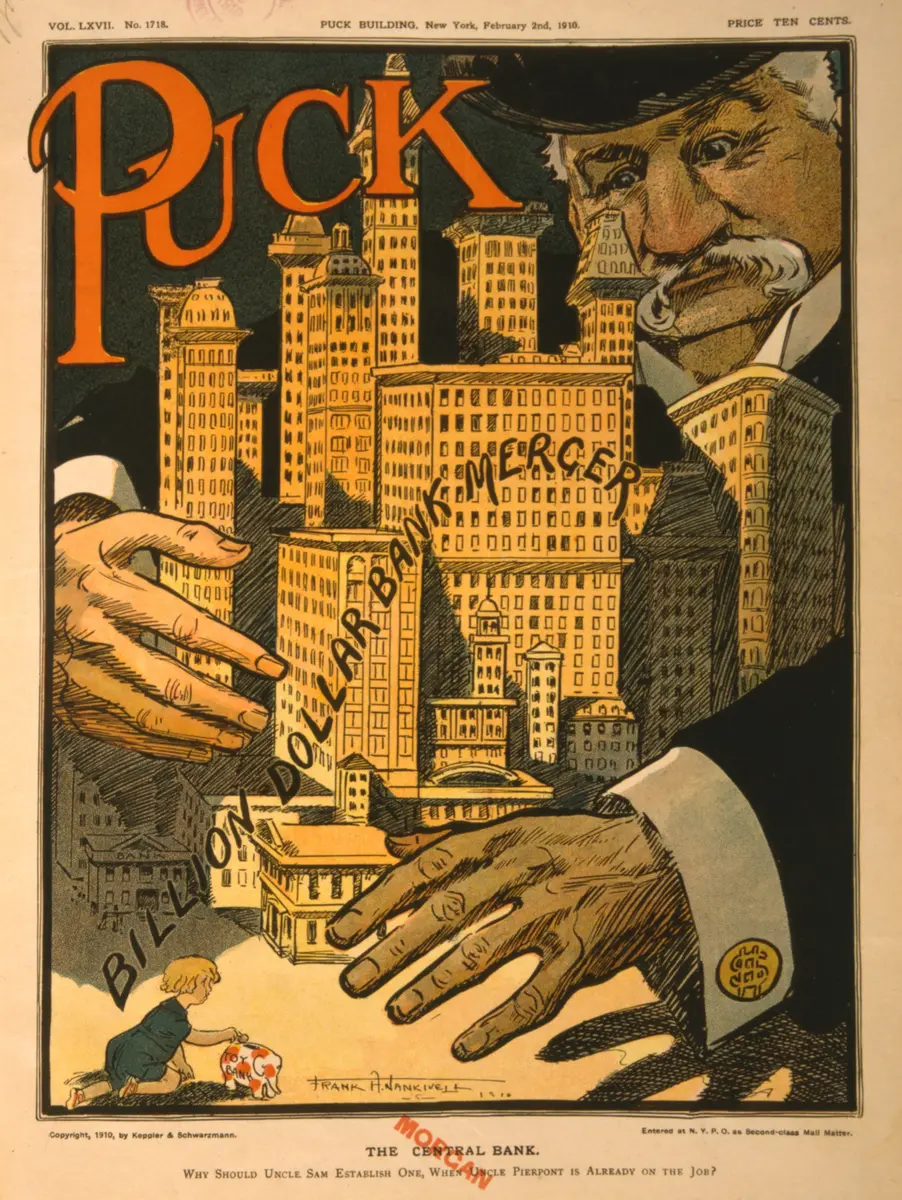
He has turned to electric light. Investors connected with Western Union and with J. P. Morgan's bank, Drexel, Morgan & Co., form the Edison Electric Light Company to pay for his research in return for its patents.
- 1879
In the early hours, Batchelor and Edison test a filament of carbonised cotton sewing thread in a bulb emptied of air. It glows for thirteen and a half hours, the first lamp with real commercial promise; within weeks, carbonised cardboard does even better.
Menlo Park, New Jersey (now in Edison township): his laboratory from 1876 to 1882, where he made the phonograph and the electric lamp; the Edison Memorial Tower stands on its siteNew Year's Eve at Menlo Park: extra trains bring hundreds of visitors through stormy weather to see the laboratory lit by 25 lamps, the office by eight, and the street and nearby houses by twenty more.
Menlo Park, New Jersey (now in Edison township): his laboratory from 1876 to 1882, where he made the phonograph and the electric lamp; the Edison Memorial Tower stands on its site- 1880
US patent 223,898 for his 'Electric-Lamp' is granted: a high-resistance carbon filament in an all-glass bulb emptied of air. From July he tests bamboo filaments, which become standard in Edison lamps.
- 1882
In the afternoon, standing in J. P. Morgan's office at Drexel, Morgan & Co., Edison gives the signal that starts the Pearl Street station, the first permanent central power station for electric light (a trial station under London's Holborn Viaduct had opened in January). About 85 customers with some 400 lamps are lit on the first day.
Pearl Street Station, lower Manhattan: his first central power station, opened on 4 September 1882 to light the 'First District'- 1884
Nikola Tesla, a young engineer from Edison's company in Paris, invited by Charles Batchelor, comes to New York and goes to work for Edison. Edison will not back Tesla's own ideas, and Tesla soon leaves to work on his own.
Mary Edison dies at Menlo Park. Their daughter Marion later remembered her father 'shaking with grief'.
Menlo Park, New Jersey (now in Edison township): his laboratory from 1876 to 1882, where he made the phonograph and the electric lamp; the Edison Memorial Tower stands on its site- 1886
He marries Mina Miller, daughter of Lewis Miller, a founder of the Chautauqua Institution, in Akron, Ohio. He has already bought Glenmont, a large house in Llewellyn Park, West Orange, where they live from that spring.
Glenmont, Llewellyn Park, West Orange: his home from 1886, where he died on 18 October 1931- 1887
At the end of the year his new laboratory opens at West Orange, less than a mile from Glenmont: a three-storey main building with a library, machine shops and stock rooms, and four low buildings for physics, chemistry and metallurgy, 'the best equipped & largest Laboratory extant', as he wrote.
West Orange, New Jersey: the laboratory he opened at the end of 1887 and used until his death, with the Black Maria film studio; now Thomas Edison National Historical Park - 1888
After a long push to perfect his improved wax-cylinder phonograph (the park's record says 48 hours without stopping), he is photographed slumped beside the machine by his assistant W. K. L. Dickson.
West Orange, New Jersey: the laboratory he opened at the end of 1887 and used until his death, with the Black Maria film studio; now Thomas Edison National Historical ParkIn the war of the currents against George Westinghouse's alternating current, Harold P. Brown, with Edison's assistant Arthur Kennelly measuring, kills two calves and a horse with AC at Edison's laboratory for the Medico-Legal Society, which is choosing the current for New York's new electric chair. Edison's laboratory has helped Brown kill dogs and other animals with AC since July.
West Orange, New Jersey: the laboratory he opened at the end of 1887 and used until his death, with the Black Maria film studio; now Thomas Edison National Historical Park- 1889
He testifies on electric power and electrocution in Kemmler v. Durston, the court challenge to New York's electric chair.
- 1892
Edison General Electric, formed in 1889 from his manufacturing companies, merges with its rival Thomson-Houston as the General Electric Company, and his name is dropped. Bankers, not Edison, had controlled it.
- 1893
The Black Maria is finished at West Orange, the world's first film studio according to the National Park Service. It turns on a circular track and its roof opens to let in the sun; the staff named it after the black police wagons of the day.
West Orange, New Jersey: the laboratory he opened at the end of 1887 and used until his death, with the Black Maria film studio; now Thomas Edison National Historical Park- 1894
'Edison Kinetoscopic Record of a Sneeze', dated 7 January, becomes the first motion picture to receive a copyright; Dickson and Heise copyright about 75 films that year.
West Orange, New Jersey: the laboratory he opened at the end of 1887 and used until his death, with the Black Maria film studio; now Thomas Edison National Historical ParkThe first kinetoscope parlour opens at 1155 Broadway, New York: customers pay to look into cabinets showing short films, the start of the American film business.
- 1895
Through the mid-1890s he spends most of his time at his iron-ore works at Ogden in the hills of northern New Jersey, crushing low-grade rock and pulling out the iron with magnets to make briquettes for steel mills.
- 1896
The Vitascope, a projector invented by Thomas Armat and sold under Edison's name, shows films on a screen at Koster and Bial's Music Hall in New York.
He attends a meeting of the Association of Edison Illuminating Companies in Brooklyn; Henry Ford, there too, later recalled it as their first meeting. They become close friends.
- 1900
He stops the Ogden works, beaten by the rich iron ores of Lake Superior, after spending about $2.5 million of his own money. 'We had a hell of a good time spending it,' he said.
- 1909
After ten years' work he begins making his 'A' type alkaline storage battery. Meant for electric cars, it finds its market in railway signals, buoys and miners' lamps, and becomes his most profitable product.
- 1915
The Secretary of the Navy, Josephus Daniels, asks him to head the new Naval Consulting Board; during the war he works on ways to detect submarines.
- 1928
He receives a special medal voted by Congress, presented by Treasury Secretary Andrew Mellon at a ceremony broadcast by radio.
- 1929
Light's Golden Jubilee: fifty years after the carbon-thread lamp, Henry Ford opens Greenfield Village at Dearborn, Michigan, with the Menlo Park laboratory rebuilt in it. President Hoover and more than five hundred guests attend.
- 1931
He signs his last patent application; his US patents number 1,093 in all.
- 3:21 a.m.
Edison dies at Glenmont, aged 84, after two years of failing health. President Hoover asks Americans to dim their lights in his honour.
Glenmont, Llewellyn Park, West Orange: his home from 1886, where he died on 18 October 1931