Henry Ford
“The Michigan farm boy who built the Model T, put it on a moving assembly line and paid $5 a day, bringing the car to ordinary families; he also spread antisemitic propaganda through his own newspaper.”
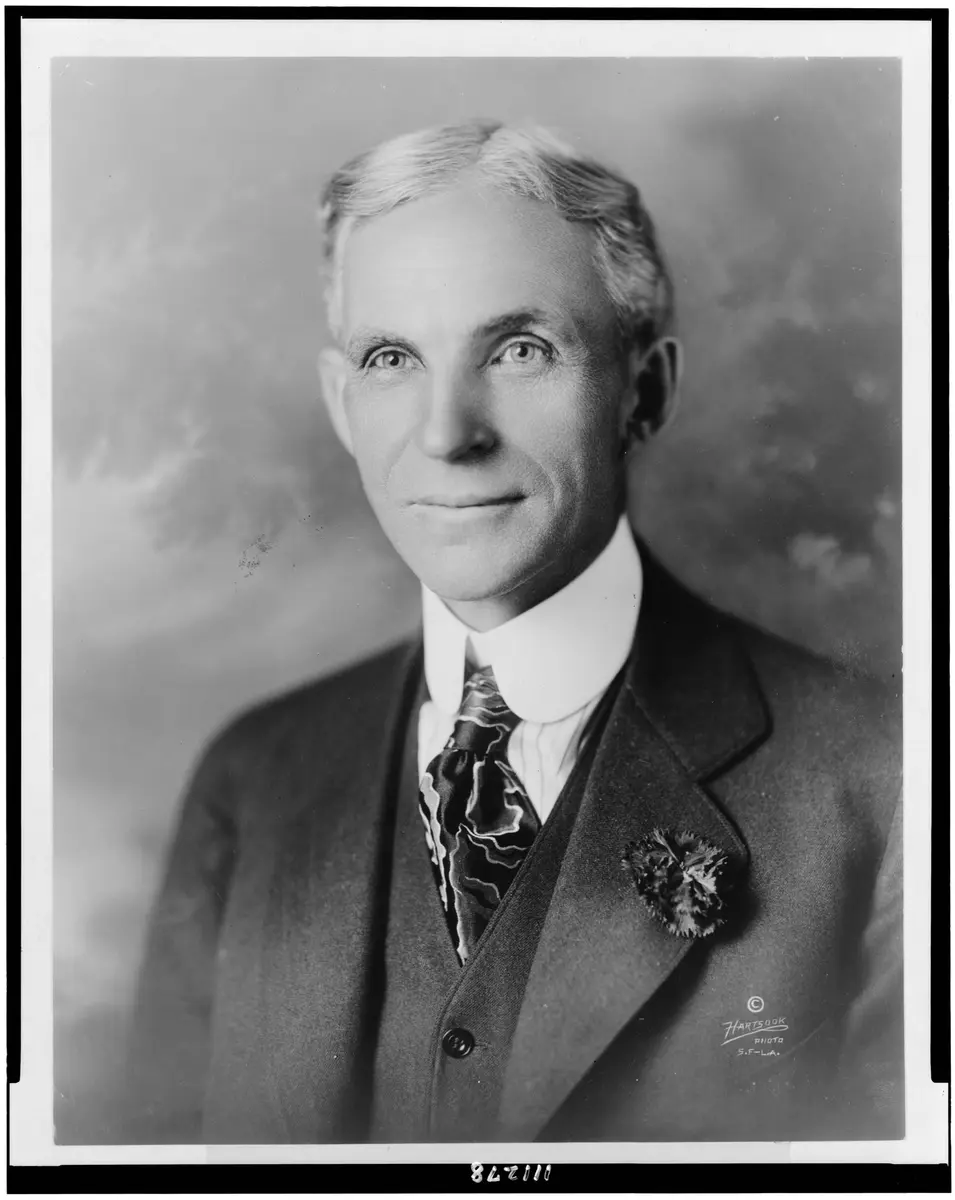
Henry Ford was the American industrialist who founded the Ford Motor Company and turned the motor car from a rich man's toy into something ordinary families could buy. His Model T of 1908 was simple, tough and cheap, and the moving assembly line his engineers built at Highland Park, Michigan, in 1913 and 1914 cut the time to assemble its chassis from about twelve and a half hours to an hour and a half. In January 1914 he more than doubled the basic wage of his factory workers, to five dollars a day. Mass production, high wages and ever lower prices together reshaped industry and daily life far beyond Detroit. Ford was also a stubborn, suspicious man and a committed antisemite whose newspaper spread hatred of Jews to hundreds of thousands of readers.
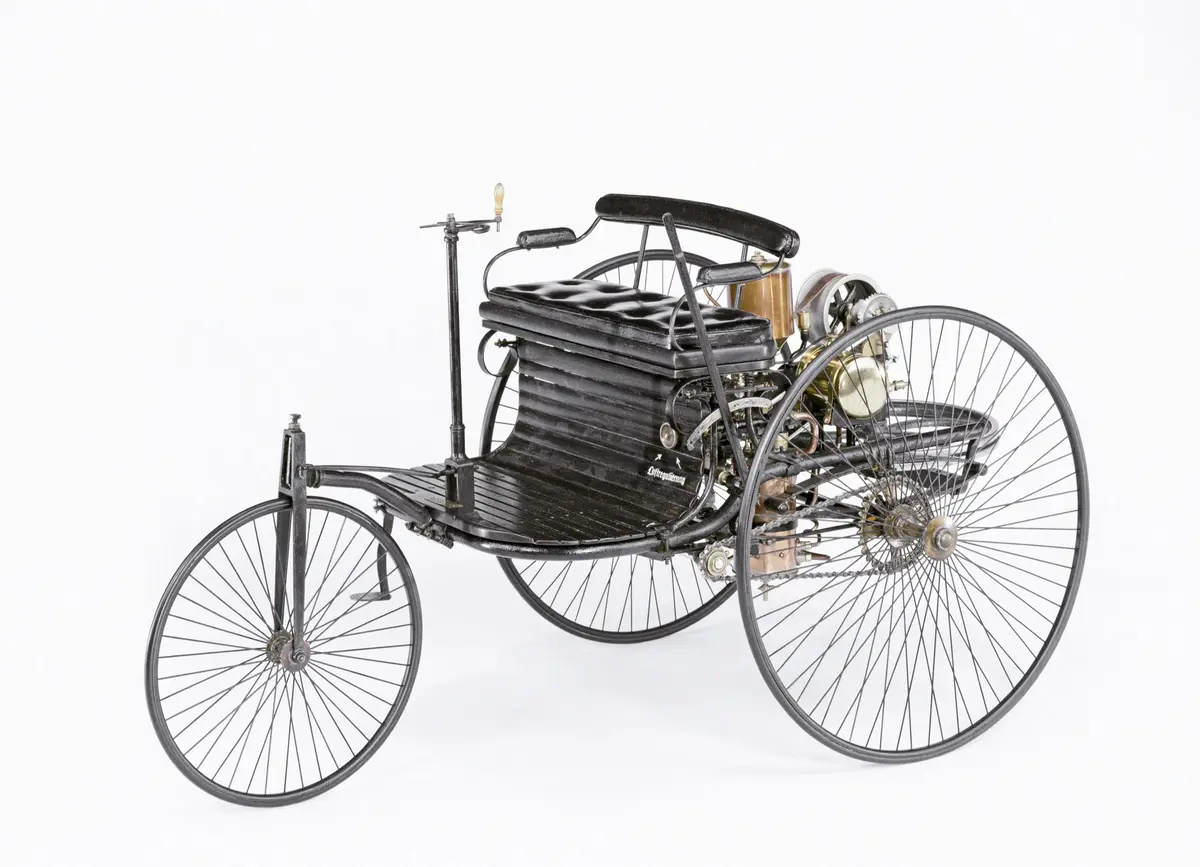
He was born on 30 July 1863 on his father's farm in Springwells Township, west of Detroit, in what is now Dearborn; his father, William Ford, had come from Ireland in 1847. Henry disliked farm work but loved machines, and at sixteen he walked to Detroit to become an apprentice machinist. Back home he ran a sawmill and repaired steam engines, and in 1888 he married Clara Bryant. In 1891 he became an engineer at the Edison Illuminating Company in Detroit, rising to chief engineer, and in his spare time built a light petrol-driven car on bicycle wheels, the Quadricycle, which he first drove on 4 June 1896. Two companies built around his cars failed, one of them reborn without him as Cadillac, but a racing win over Alexander Winton in 1901 and his '999' racer made his name.
The Ford Motor Company was incorporated in June 1903 with $28,000 in cash from a dozen investors. It sold its first car a month later, won a long patent fight over the Selden patent in 1911, and from 1909 made nothing but the Model T. At Highland Park, opened in 1910, parts, sub-assemblies and finally whole chassis moved past workers who each did one small task. On 5 January 1914 Ford announced the five-dollar, eight-hour day, and the turnover of his workforce fell sharply; to qualify, workers had to let the company's Sociological Department inspect their homes and habits. By May 1927 fifteen million Model Ts had been built, about half the world's cars in their time, and the price had fallen from $950 to under $300. The huge River Rouge complex at Dearborn, built from 1917, turned iron ore, coal and sand into finished cars, and the family, having bought out the other shareholders in 1919, owned every share.
Fame also made Ford a public figure with strong and often ignorant opinions. In December 1915 he sailed on the chartered 'Peace Ship' to talk Europe out of the First World War and was widely mocked; in 1918 he narrowly lost an election for the United States Senate. His weekly newspaper, The Dearborn Independent, ran from May 1920 a series of articles called 'The International Jew', built on the forged Protocols of the Elders of Zion and pushed through Ford dealers across the country; the articles were reprinted as books, and Hitler knew and praised them. Ford apologised in 1927 only to end a libel suit, and in 1938 he accepted Nazi Germany's highest award for foreigners. He fought trade unions with his own 'Service Department': guards and Dearborn police fired on the Hunger March of 1932, killing four men, and union organisers were beaten at the Rouge in 1937. Ford signed with the United Auto Workers only in 1941, the last of the big carmakers to do so.
His obstinacy cost him the lead in the industry: he kept the outdated Model T too long, and the Model A of December 1927 was soon outsold by Chevrolet. He spent his later years on causes of his own, from a rubber plantation town in the Brazilian rainforest, Fordlândia, to Greenfield Village, an outdoor museum of the rural America his cars had helped to end. In the Second World War his Willow Run plant built more than eight thousand B-24 bombers. After his son Edsel died in 1943 he took charge again, until his grandson Henry Ford II replaced him in 1945. He died at Fair Lane, his estate in Dearborn, on 7 April 1947, aged 83, and lies in the family cemetery on Joy Road in Detroit; his shares went to the Ford Foundation. He is remembered both as the maker of the affordable car and the well-paid factory job and as a powerful spreader of antisemitism, whose writings hate groups still cite.
What happened
- 1863
Henry Ford is born on his father's farm in Springwells Township, west of Detroit, the eldest son of William Ford, an Irish immigrant, and Mary Litogot.
The Ford farm, Springwells Township (now Dearborn), near today's Ford and Greenfield Roads: born here on 30 July 1863; the farmhouse was moved to Greenfield Village in 1944- 1879
At sixteen he leaves the farm for Detroit. After six days at the Michigan Car Works he becomes an apprentice machinist at James Flower & Bros., earning $2.50 a week, then moves to the Detroit Dry Dock engine works to learn about steam engines.
- 1888
Back in Dearborn, where he runs a sawmill and repairs Westinghouse steam engines, he marries Clara Bryant on her 22nd birthday. They build a small house on land his father has lent him.
- 1891
He moves back to Detroit to work as a night engineer for the Edison Illuminating Company, keeping the steam engines of an electric station running.
- 1893
His only child, Edsel Bryant Ford, is born.
He is made chief engineer of the Edison company's main plant, on call day and night but free to experiment. The family moves to 58 Bagley Avenue, and at the end of the year his first small petrol engine, clamped to the kitchen sink, sputters into life.
- 1896
He drives his first car, the Quadricycle, out of the shed behind his home after knocking out part of the brick wall to get it through. Later that year, at a convention of Edison companies in New York, he meets his hero Thomas Edison, who tells him to keep at it.
- 1899
With the backing of the Detroit businessman William H. Murphy and his friends, the Detroit Automobile Company is formed with Ford as chief engineer, and he leaves the Edison company. It builds few cars, and he quits in January 1901.
- 1901
In a ten-mile race at Grosse Pointe he beats Alexander Winton, the best-known American racer, in a car of his own, and becomes the talk of the motor world.
The Henry Ford Company is formed to build his cars, but he leaves after four months; reorganised without him, it becomes the Cadillac Motor Car Company.
- 1902
He builds two big racers, the '999' and the 'Arrow'. With the cyclist Barney Oldfield at the wheel, the 999 wins the Manufacturers Challenge Cup at Grosse Pointe, and the coal dealer Alexander Malcomson becomes his partner.
- 1903
The Ford Motor Company is incorporated with $28,000 in cash from twelve stockholders, among them Malcomson, his clerk James Couzens and the machinists John and Horace Dodge. A banker, John S. Gray, is president and Ford vice-president.
The company sells its first car, a two-cylinder Model A assembled at a rented wagon shop on Mack Avenue in Detroit from parts made by others, the chassis by the Dodge brothers.
- 1904
The Ford Motor Company of Canada is incorporated near Windsor, Ontario, across the river from Detroit.
- 1906
Ford becomes president of the company; as some of the first stockholders sell out, he becomes its majority owner (58 percent by 1909, according to Britannica).
- 1908
The first Model T is offered to the public: a simple, sturdy four-cylinder car 'for the great multitude'. Orders pour in, and from 1909 it is the only car Ford makes.
- 1910
Production moves to the new Highland Park plant on Woodward Avenue, a four-storey factory of concrete and glass designed by Albert Kahn on the site of a former racetrack.
Highland Park Ford Plant, Woodward Avenue, Highland Park: the Model T factory from 1910, where the moving assembly line began in 1913 and the $5 day in 1914- 1911
After six years of hearings, an appeals court rules that the Selden patent does not cover his cars, ending the licensed makers' claim on every petrol car. The fight makes him a popular hero.
- 1913
The first moving assembly line starts at Highland Park, for flywheel magnetos: each worker does one small task as the parts slide past. Lines for transmissions and engines follow, and from August 1913 for the whole chassis.
Highland Park Ford Plant, Woodward Avenue, Highland Park: the Model T factory from 1910, where the moving assembly line began in 1913 and the $5 day in 1914- 1914
Ford announces a minimum pay of five dollars for an eight-hour day, against $2.34 for nine hours before, with three eight-hour shifts a day; the next day some 10,000 men crowd the gates. To qualify, workers must pass inspection by the company's new Sociological Department.
Highland Park Ford Plant, Woodward Avenue, Highland Park: the Model T factory from 1910, where the moving assembly line began in 1913 and the $5 day in 1914Three chain-driven lines at Highland Park assemble 1,212 chassis in a day, at 93 minutes of labour each; the previous September, standing still, a chassis took 12 hours 28 minutes.
- 1915
Henry and Clara Ford move into Fair Lane, their new stone house and 1,300-acre estate on the Rouge River at Dearborn. That month the millionth Ford is built.
Fair Lane, Dearborn: the estate on the Rouge River where Henry and Clara Ford lived from December 1915 and where he died on 7 April 1947The 'Peace Ship', the liner Oscar II, sails from Hoboken with Ford and more than a hundred pacifists and reporters to press the warring nations of Europe to make peace; he announced the plan on 24 November. Mocked by the press, he leaves the party in Norway and returns home.
- 1917
Building begins at the River Rouge in Dearborn, on some 2,000 acres he has bought since 1915; its first products are Eagle Boats, submarine chasers for the US Navy, in 1918.
Ford River Rouge Complex, Dearborn: built from 1917, Ford's 'ore to car' plant; the Hunger March of 1932 and the Battle of the Overpass of 1937 took place at its gates- 1918
Running for the US Senate in Michigan at President Wilson's request, he loses narrowly to Truman Newberry, a campaign he believes was stolen from him. That month he buys his hometown weekly, The Dearborn Independent.
He suddenly resigns as president in favour of his son Edsel, 25, who takes office on 1 January 1919; Henry keeps the real power.
- 1919
Having lost the Dodge brothers' suit, which forces him to pay a large dividend, Ford threatens to start a new company to build a cheaper car. The frightened shareholders sell, and by July the Ford family owns every share. That summer he wins his libel suit against the Chicago Tribune, which called him an 'ignorant idealist', but only six cents in damages.
- 1920
The Dearborn Independent begins 'The International Jew: The World's Problem', a front-page series built on the forged Protocols of the Elders of Zion. It runs for 91 issues, is pressed on readers through Ford dealers and is reprinted in four volumes.
- 1927
The fifteen-millionth Model T leaves the line at Highland Park, with Henry and Edsel posing for the cameras, and Model T production ends; the plants close for months to retool for a new car.
Highland Park Ford Plant, Woodward Avenue, Highland Park: the Model T factory from 1910, where the moving assembly line began in 1913 and the $5 day in 1914To end Aaron Sapiro's libel suit, whose trial began in March, Ford signs a statement drafted by Louis Marshall of the American Jewish Committee, retracting the attacks on Jews in his paper and in 'The International Jew'. The Independent closes at the end of the year.
The new Model A is shown to the public, with crowds in New York and across the country. It is built at the Rouge, now able to turn iron ore into a finished car.
Ford River Rouge Complex, Dearborn: built from 1917, Ford's 'ore to car' plant; the Hunger March of 1932 and the Battle of the Overpass of 1937 took place at its gates- 1928
Two ships leave for the Amazon to found Fordlândia, a company town on a million-hectare concession on the Tapajós River granted in 1927, meant to grow Ford's own rubber. Leaf blight, pests and unrest ruin it, and in 1945 the company sells the plantations to Brazil for a fraction of their cost.
- 1929
At Light's Golden Jubilee, with Edison and President Hoover, Ford dedicates his Edison Institute, with Greenfield Village and the museum of American life he has been collecting.
- 1932
Thousands of jobless workers march from Detroit to the Rouge plant with demands for Ford. Dearborn police and Ford's Service Department men meet them with tear gas, fire hoses and gunfire: four marchers are killed and dozens wounded; no one is ever charged.
Ford River Rouge Complex, Dearborn: built from 1917, Ford's 'ore to car' plant; the Hunger March of 1932 and the Battle of the Overpass of 1937 took place at its gates- 1937
At the Battle of the Overpass, Ford Service men beat Walter Reuther, Richard Frankensteen and other United Auto Workers organisers handing out leaflets at the Rouge plant; photographers capture the attack.
Ford River Rouge Complex, Dearborn: built from 1917, Ford's 'ore to car' plant; the Hunger March of 1932 and the Battle of the Overpass of 1937 took place at its gates- 1938
On his 75th birthday, Nazi Germany's consul in Cleveland presents him with the Grand Cross of the German Eagle, the highest honour the regime gives foreigners. He accepts it.
- 1941
After a strike that shut the Rouge in April, Ford signs his first contract with the United Auto Workers, covering 123,000 workers, the last of the big carmakers to do so.
- 1942
The first complete B-24 Liberator bomber is built at Willow Run, Ford's vast new plant west of Detroit; by June 1945 it has built more than eight thousand.
- 1943
Edsel Ford dies at 49. On 1 June his father, nearly 80, is elected president of the company again.
- 1945
After a stroke earlier in the year, Ford gives up the presidency to his grandson Henry Ford II.
- 1947
Henry Ford dies in the evening at Fair Lane, aged 83, after an afternoon visit to Greenfield Village. About 100,000 people file past his coffin, and he is buried in the family cemetery on Joy Road in Detroit.
Fair Lane, Dearborn: the estate on the Rouge River where Henry and Clara Ford lived from December 1915 and where he died on 7 April 1947